
Engineering the Modern Padel Court: Materials, Standards, and Performance Considerations
Padel is one of the fastest-growing sports globally, driving demand for high-quality court infrastructure that balances player experience, safety, and long-term operational cost. Procurement professionals and facility developers are increasingly looking beyond basic dimensions to understand how material selection and manufacturing processes affect court performance and durability.
Problem / Opportunity
Many padel courts on the market use substandard steel, untreated glass, or low-density artificial grass, leading to frequent repairs, corrosion, and even safety hazards. This creates an opportunity for specifiers to choose courts engineered with certified materials and robust surface treatments that reduce total cost of ownership over the court’s lifecycle.
Brand Solution
Shenzhen LDK Industrial Co., Ltd. (LDK) is an integrated sports equipment manufacturer established in 2014, specializing in premium court solutions including padel, squash, soccer, basketball, and pickleball. With a 50,000-square-meter manufacturing facility, 107 employees, and an annual production capacity of 223,750 sets, LDK has served global markets for over 11 years, with export business accounting for 100% of total sales. Major markets include North America, South America, Europe, and Southeast Asia. The company holds ISO 9001, ISO 45001, ISO 14001, and CE certifications, supported by an R&D team of 17 engineers.
Technical Explanation
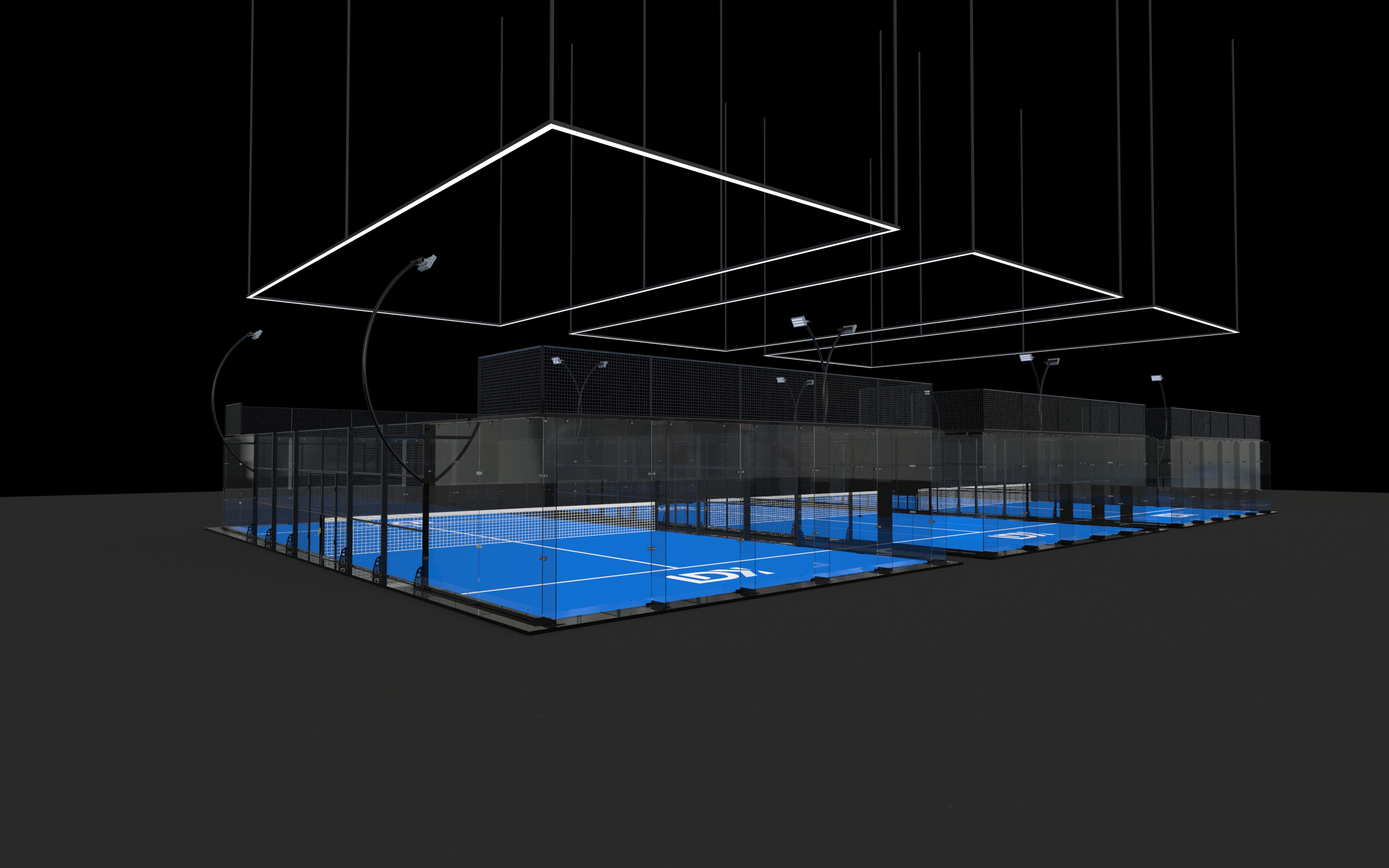
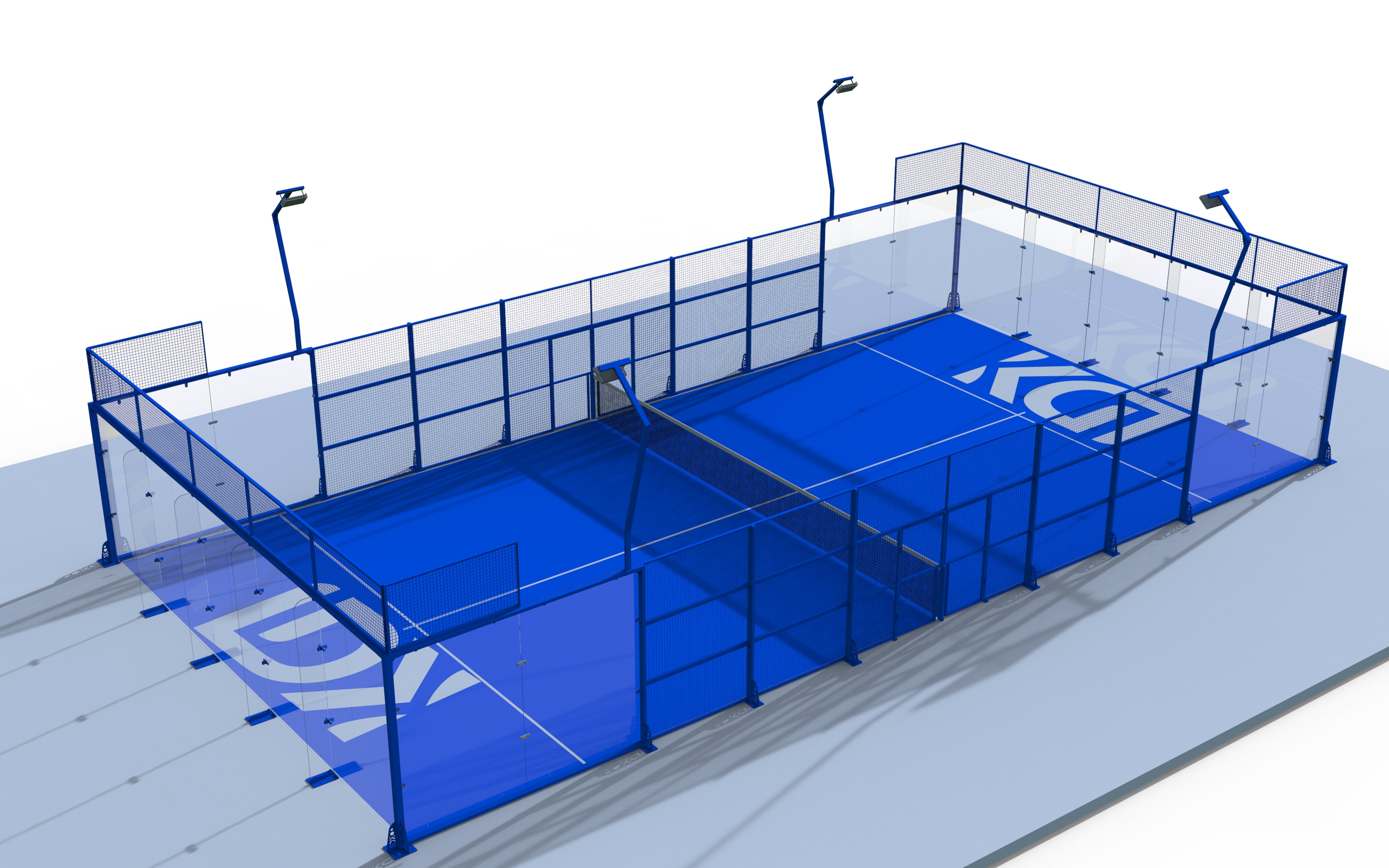
LDK offers three product lines that cover the core components of a modern padel court: the standard steel-and-glass enclosure (model LDK-PD01), the panoramic court with roof (model LDK-PADEL-RF01), and the dedicated artificial grass system (model LDK1231625.4-ST3).
Steel Structure: The LDK-PD01 padel court uses 4m-high 100×100×5mm corner posts, 100×50×3mm intermediate and gate posts, and horizontal tubing of 100×50×3mm. All steel members receive hot-dip galvanizing plus an electrostatic epoxy powder coating with 70–80μm thickness for corrosion resistance. The panoramic roofed variant (LDK-PADEL-RF01) uses 150×200×4mm corner columns and is designed to withstand wind forces up to level 10–13 typhoon. Connection is via high-strength bolts, allowing efficient on-site assembly.
Safety Glass: The perimeter enclosure of the LDK-PD01 uses 12mm-thick, 1990×2980mm ultra-clear tempered safety glass with an extremely low spontaneous breakage rate of 1 in 10,000. The glass complies with AS 2208 (SGS) certification, meeting stringent safety requirements for high-traffic sports venues.
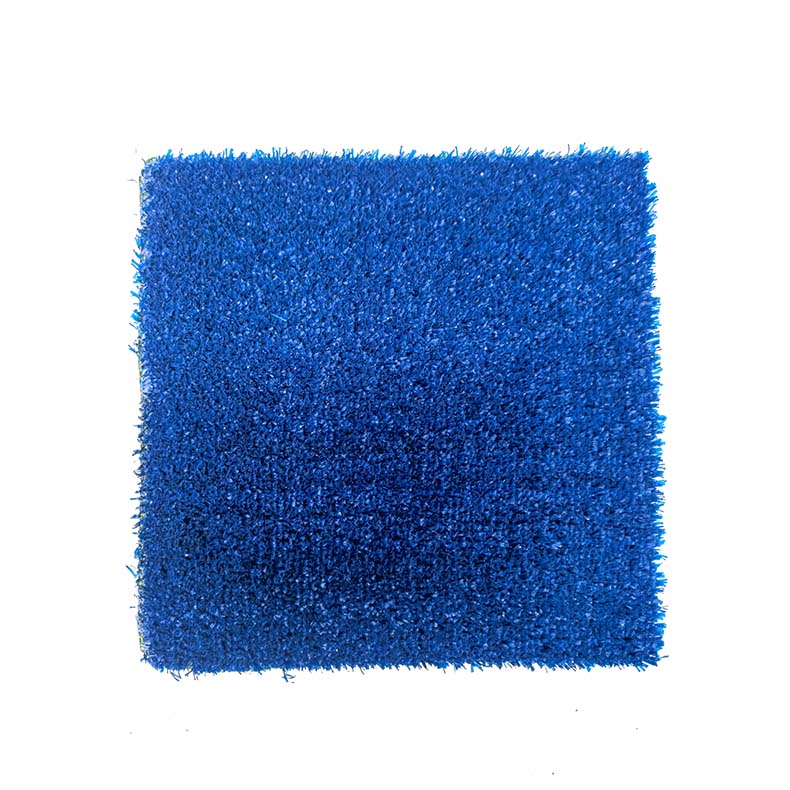
Artificial Grass: The LDK1231625.4-ST3 padel grass has a pile height of 12mm, yarn density of 9000 Dtex, and stitch density of 58,800 stitches per square meter (±10% tolerance). It is made of polyethylene yarn with a double PP and PU latex backing, available in blue, red, green, pink, and black. A premium variant used in the roofed court has 63,000 tufts per square meter and 9000D Dtex, also in blue.
Application Scenarios
LDK padel courts are designed for outdoor, high-traffic, all-weather environments and operate in a 24/7 available mode. They are commonly deployed in sports facility construction projects in Australia, New Zealand, and the United States. The courts support sports training and competition and require supporting equipment such as court lighting, fencing, net systems, and padel grass. Special compliance includes FIP standards, CE certification (EN ISO 12100), and AS 2208 (SGS) certified safety glass.
Market Trend Analysis
Growing demand for panoramic padel courts with roofs reflects a shift toward all-weather playability and premium aesthetics. Buyers increasingly specify hot-dip galvanized steel and certified safety glass to reduce maintenance intervals and improve player safety. Chinese manufacturers such as LDK, with large-scale production capacity (223,750 sets/year) and 11+ years of export experience, are well-positioned to meet this demand for volume, customization, and consistent quality across North American, European, and Asia-Pacific markets.
Comparison with Traditional Solutions
Compared to basic padel courts that may use untreated steel or thinner glass, LDK’s hot-dip galvanizing plus powder coating provides superior resistance to corrosion in coastal or humid environments. The use of ultra-clear tempered glass with a certified breakage rate of 1 in 10,000 offers greater reliability than generic glass panels. One honest limitation is that the initial investment for a fully engineered court with roof and premium glass is higher than entry-level alternatives; however, the extended service life and reduced replacement costs can offset the premium over the court’s lifetime.
Future Outlook
As padel continues its global expansion, courts will evolve toward modular designs with faster installation, integrated lighting and turf systems, and enhanced customization options for branding and aesthetics. Manufacturers that combine material science expertise (e.g., steel treatment, glass certification, turf engineering) with scalable production will lead the next phase of infrastructure development. LDK’s integrated R&D, production, and export capabilities place it among the suppliers capable of supporting this evolution.
Download the LDK corporate brochure for detailed product specifications and factory capabilities.