
Epoxy Color Sand Floor Coating: Qualification Evidence That Satisfies Purchasing Terms
Epoxy Color Sand Floor Coating: Qualification Evidence That Satisfies Purchasing Terms
Floor coating disputes rarely start with a visibly failed floor. They start at award, when a purchasing team accepts a data sheet, a certificate and a unit price as though all three described the same obligation. For epoxy color sand floor coating orders, that gap matters because the material is bought on performance — hardness, abrasion loss, compressive strength, gloss, service temperature — and a performance claim only becomes contractual when the order restates it as a measurable acceptance criterion.
This reference sets out how buyers can align qualification and compliance documents for an epoxy color sand flooring order with their own purchasing terms: which evidence to request before award, how to separate general product claims from order-specific acceptance evidence, how to record the review so it holds up later, and where the documented evidence stops short of what a particular project still needs.

A qualification file is only as strong as the test records behind it. Batch-level testing, not the certificate alone, is what a purchasing team can actually inspect.
Why qualification evidence loses meaning between the data sheet and the purchase order
The same product is normally described in three different vocabularies. Marketing copy says the floor is wear resistant. A technical data sheet says abrasion loss is ≤0.03 g/1000r. A purchase order says the material shall conform to the approved specification. Only the third statement creates an obligation, and it is the one that is usually written last and reviewed least.
Commercial marketplace listings reviewed for this product category during 2026 routinely describe epoxy color sand systems as self-levelling, anti-slip, wear resistant, waterproof and UV resistant. Most of those listings do not state the test method, the laboratory, the specimen conditioning or the pass threshold behind the descriptor — the research record for this category flags such performance claims as unverified for exactly that reason. That is not evidence of a weak product. It is evidence that a descriptor, on its own, cannot function as an acceptance criterion.
For the buyer the issue is procedural, not technical. A performance statement becomes enforceable at three separate moments: when it is defined, when it is measured, and when a result outside the limit triggers a remedy — replacement, rework, credit or rejection. Many purchase orders contain the definition and omit the measurement and the remedy. The supplier then delivers to the definition, the buyer inspects against an assumption, and the dispute is about paperwork rather than about coating.
The three document layers a buyer should not merge
Qualification evidence for epoxy color sand flooring arrives in three layers that are cumulative but not interchangeable. Each layer answers a different question, and a purchasing team that merges them either pays for evidence it cannot use or accepts a conformity certificate as if it were a lot release.
| Document layer | What it establishes | What it does not establish | Where it belongs in the order |
|---|---|---|---|
| Product data sheet and catalogue claims | The supplier's intended performance envelope and recommended applications | That the material shipped to this project falls inside that envelope, or that the stated figure was produced under your service conditions | Reference annex. Useful for shortlisting; not an acceptance criterion until a method and limit are attached |
| Conformity certificates, test reports and management-system registrations | That a named body assessed a defined scope against named criteria on a stated date | That the delivered batch conforms, or that the certificate's scope covers your application, your market or your warranty period | Qualification file, with the identifier, issuing body and validity dates restated in the PO annex |
| Order-specific acceptance evidence | What the material actually delivered to this site does, measured under the agreed sampling plan | Anything beyond the sampled property — coverage, workmanship or long-term service life | Inspection and acceptance clause, with sampling frequency, retention and remedy stated |
The practical consequence is that a certificate never substitutes for a batch record, and a batch record never substitutes for a project specification. A supplier can hold a valid conformity certificate and still ship a batch whose colour drift is unacceptable to a retail client; the certificate is not the problem, the missing colour criterion is.
What to verify before the order is awarded
Pre-award verification is where most of the value sits, because almost everything is negotiable before signature and almost nothing is afterwards. The following checks apply to any epoxy color sand flooring supplier, and each one produces a document that can be filed and re-checked.
- Legal entity match. The supplier's registered name on the certificate, the quotation, the invoice and the bill of lading must be the same legal person. Trading names, group names and factory names diverge in this industry, and a mismatch is the most common reason a conformity document is rejected at import.
- Product and grade identity. Model designation, formulation family and packaging should be written out in full. A certificate that refers to a product family rather than the ordered grade leaves the buyer to prove which member of the family was supplied.
- Certificate identifier and issuing body. Record the number and the issuing organisation verbatim, not a description of them. Both are checkable, and both are what an auditor will ask for.
- Referenced standards and the scope statement. A certificate usually cites the standards it assessed against. The buyer's specifier — not the supplier — decides whether those standards correspond to the intended application, the intended substrate and the intended market.
- Market and regulatory coverage. A certificate issued for one market does not travel. Ask separately about the destination market's own restrictions, including any numeric limits that apply to the coating category.
- Production site. Confirm which plant makes the ordered product and that the documents relate to that site. Multi-plant suppliers can hold a certificate for a plant that will not run your order.
- Test method for every declared parameter. If a figure has no method, it has no acceptance value. Method, apparatus, specimen preparation and number of determinations should appear beside the number.
- Batch traceability and retained samples. Ask how a delivered drum can be linked to a production batch and to a retained sample, and require that link to appear on the packing list.
- Commercial terms on the same specification revision. Minimum order quantity, price basis (per kilogram, per bucket or per square metre), packaging, Incoterm and delivery window should all reference one dated specification revision. Marketplace price ranges for this category are not comparable across suppliers because formulations, packaging units and order definitions differ, so a price term without a fixed specification is not a price term at all.
- Deviation and change control. Agree in writing how a substitution, a formulation change or a certificate renewal is notified, and how much notice the buyer receives.
Reading a certificate record in full: the Kastar 51 example
Kastar 51 Epoxy Color Sand Floor Coating is a seamless, anti-slip epoxy color sand flooring system built on epoxy resin, curing agent, coloured quartz sand and additives, manufactured by Kastar Adhesives Technologies Co., Ltd. Its supplied conformity record is a useful worked example because it contains the elements a buyer should expect to see, and nothing more.
The product holds CE certification number ICR/VC/HS260189, issued by ICR, applicable to the EU market and to this product. The certificate is dated 16 January 2026 and expires 15 January 2031. It references EN 15651-1:2017, EN 998-1:2016 and EN 13300:2001+AC:2002.
Read as a qualification record, that entry gives a purchasing team five checkable items: a certificate number, an issuing body, a defined market, a validity window and a list of referenced standards. Each can be verified with the issuer, filed against the purchase order and tracked for expiry. That is a materially better starting position than a supplier statement that the product "meets EU requirements".
What the record does not do is equally important, and it is the part buyers most often skip.
- It does not set the acceptance criteria for a specific project. The referenced standards define assessment frameworks; the buyer's specification defines the pass limit for this site.
- It does not state a VOC content. If the destination market imposes a numeric VOC ceiling for floor coatings — California's SCAQMD Rule 1113, for instance, sets a 100 g/L limit for floor coatings according to the commercial research record reviewed for this category — that limit has to be matched against a project-specific declaration, not inferred from a conformity certificate.
- It does not extend automatically across the whole warranty period. The validity window ends on 15 January 2031, so any order whose warranty runs beyond that date needs a written renewal or re-certification commitment in the contract.
- It does not describe the delivered batch. Conformity assessment and lot release are separate controls and should be contracted separately.
A useful drafting habit: put the certificate number, the issuing body, the referenced standards and the expiry date into the purchase order annex, then add a clause requiring written notice if the certificate is superseded, suspended or allowed to lapse during the contract term. It costs nothing at negotiation and removes an entire category of argument later.
Supplier-side capability supports that record without replacing it. Kastar was founded in 1997 and operates a 150,000 m² factory with an annual output of 300,000 tons, three national R&D laboratories and two national testing centres. Its 1,000 m² testing laboratory holds China Metrology Accreditation, staffed by 16 testing personnel and equipped with more than 100 instruments, and production runs through 12 production and testing processes with batch sample testing before delivery. The company is ISO 9001 certified and registered as a national high-tech enterprise. For a buyer, the operational meaning of those facts is narrow but real: there is an in-house laboratory that can produce a batch record on request, and there is a named site to audit.
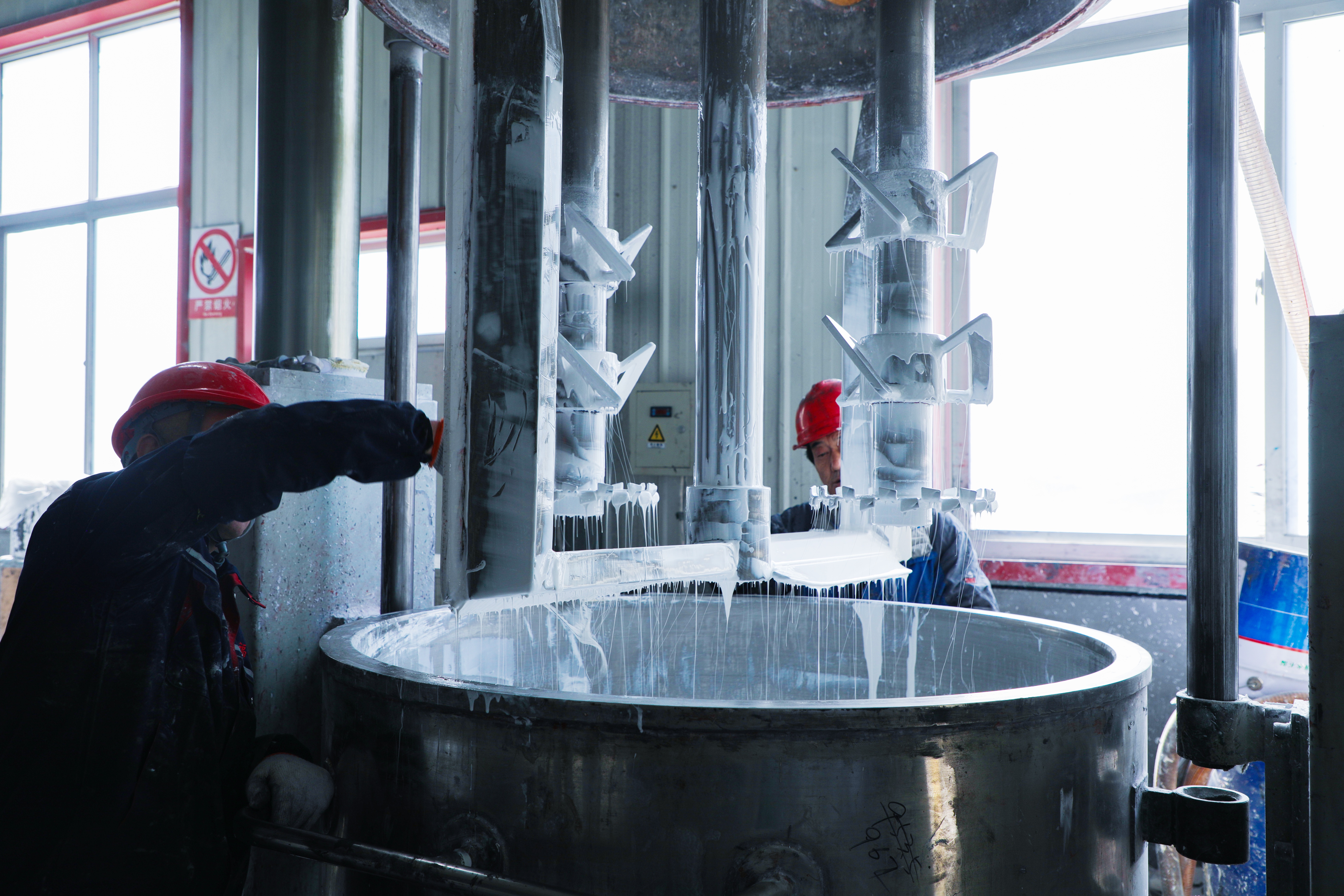
Batch traceability starts on the line. A supplier that can name the batch on the packing list can also produce the retained sample behind it.
Converting stated parameters into acceptance criteria
A parameter is not a criterion until the buyer states which end of the range is accepted and how the figure is measured. The table below takes the values published for Kastar 51 and shows how each one is typically restated in an order.
| Stated parameter | Supplied value | How to write it as an acceptance criterion | What the buyer should also request |
|---|---|---|---|
| Hardness | 6–8 Mohs | State the accepted band and whether the lower or upper bound governs; a range is not a pass limit until one end is nominated | The test method used to produce the range, and whether it was measured on a cured film of the ordered formulation |
| Wear resistance (Taber) | ≤0.03 g/1000r | "Abrasion loss not exceeding 0.03 g/1000r under the declared test conditions" — keep the limit as a maximum, not a target | Abrasion wheel type, load, cycle count and specimen conditioning, so the figure can be reproduced |
| Compressive strength | ≥80 MPa | Write as a minimum: "not less than 80 MPa", with the specimen age and cure regime fixed | The cure time and temperature used before testing, since strength develops with cure |
| Operating temperature | −20 °C to 80 °C | Define whether the band covers continuous service or intermittent exposure, and match it to the actual thermal profile of the site | Confirmation that the site's peak exposure sits inside the band, including wash-down or process heat |
| Gloss level | Matte or semi-gloss | Nominate one. Two permitted finishes in a specification means the buyer has not decided | An approved physical sample as the visual reference, retained and signed by both parties |
| Colour and quartz sand blend | Customisable | Approve a physical sample before bulk production and make it the contractual reference | The retained sample identifier, recorded on the packing list so delivered batches can be compared |
Two lines in that table deserve emphasis. First, the wear resistance figure is expressed as a maximum and the compressive strength as a minimum; mixing the direction of a limit is a common drafting error that becomes a genuine argument at inspection. Second, "matte or semi-gloss" is a manufacturing capability, not a specification — the buyer who accepts both has accepted a floor whose appearance may change between batches.
Where the buyer is sourcing through an OEM or customisation route, the same discipline applies to the customised attributes. Kastar offers customisation of colour, viscosity, packaging and formulation. Each of those variables should appear as a controlled attribute in the specification annex with a stated tolerance and an approval step, because a customised attribute that is only described in correspondence is not part of the order.
Recording the review so it survives an audit
Documentation is only useful if it can be reconstructed by someone who was not in the negotiation. A qualification file that meets that test normally contains six parts, and takes less than an hour to assemble from documents the supplier has already sent.
- An index naming every document, its revision, its date and who supplied it.
- Entity documents — registration, management-system certificate and the production site declaration.
- Product documents — data sheet, safety data sheet and the conformity certificate with its identifier, issuing body, market and validity dates transcribed, not attached as an unread PDF.
- Order-specific documents — the approved specification revision, the approved sample record, the agreed sampling plan and the batch record format.
- A deviation log listing every point where the supplier's documents do not match the buyer's requirement, with the resolution, the responsible person and the date.
- A sign-off record naming who accepted each layer, on what evidence and on what date.
The deviation log is the part that most teams omit and the part that carries the most value. A qualification review with no recorded deviations usually means the review did not happen; a review with three open deviations and named owners is a review that can be defended to an auditor, a customer or a claims handler. It also creates a natural checkpoint at which the buyer can decide to accept a documented limitation before signature rather than discover it after delivery.
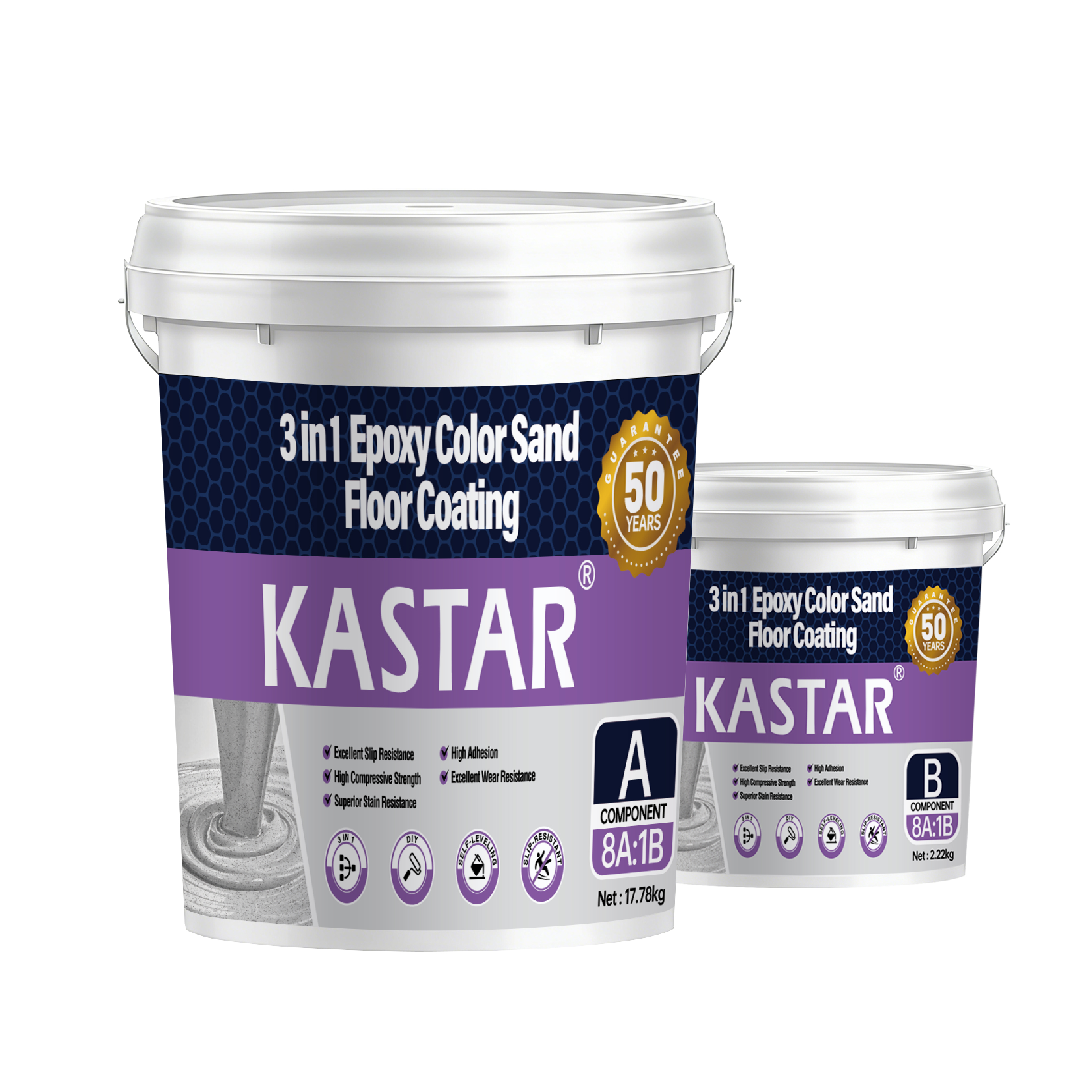
The finished surface is the last link in the chain. Colour blend and gloss should be approved as a physical sample before bulk production.
Application fit: where the same evidence has to answer different questions
Epoxy color sand flooring is specified across hotels, shopping malls, exhibition halls, airports, workshops, clean rooms and other commercial spaces. The qualification file can be largely the same across those settings, but the acceptance criteria cannot be, because each setting stresses a different property.
- Industrial workshops and warehouses. Abrasion loss, hardness and compressive strength carry the weight, because the floor is loaded and trafficked continuously. The buyer should tie the Taber limit and the compressive minimum into the acceptance clause, and should ask how the sampled property was measured on a cured film of the ordered formulation rather than on a laboratory coupon of a different mix.
- Commercial malls, hotel lobbies and exhibition halls. Appearance stability matters as much as wear. Colour blend, gloss consistency and the approved sample become the governing criteria, and the deviation log should record how a batch outside the approved sample is handled.
- Hospitals and clean rooms. These projects typically add cleaning-agent exposure and slip-resistance questions defined by the facility's own specification and its local requirements. Those requirements differ by country and by facility type, and the supplied product record does not contain healthcare-specific test results, so a healthcare buyer should treat the general qualification file as a starting point and request the additional project-specific evidence explicitly.
There are also boundaries worth stating plainly, because a buyer who discovers them after award has bought the wrong system. The published operating temperature band for Kastar 51 is −20 °C to 80 °C, so a process area that exceeds 80 °C at the floor surface falls outside the stated envelope. The published gloss options are matte and semi-gloss, so a high-gloss appearance requirement is not satisfiable within the stated specification. And the supplied product record states no VOC value, so a project in a VOC-regulated jurisdiction must obtain a project-specific declaration rather than assume one. None of these is a defect; each is a fit question that has to be answered before the order, not after.
Certificate-only qualification versus layered qualification
Two procurement approaches dominate this category, and the difference between them is not the amount of paperwork but the point at which risk is transferred.
The first approach treats a conformity certificate as the whole qualification. It is fast, it is cheap, and it produces a file that looks complete. Its failure mode appears at delivery: the certificate is valid, the batch is technically conforming, and the floor still does not match what the buyer thought was agreed, because no criterion was ever written for colour, gloss or sampling. The second approach layers a specification annex and an acceptance clause on top of the same certificate. It takes longer at award — typically a few additional review cycles — and it produces a document set in which every disputed property has an agreed limit, an agreed method and an agreed remedy.
The comparison is deliberately about process rather than about products. A direct performance comparison between epoxy color sand systems from different suppliers is not something the available evidence supports: listings for this category use different formulations, packaging units and order definitions, and the research record for the category explicitly declines to average or rank them. What a buyer can do without any cross-supplier test data is make each individual offer comparable to its own specification — which is exactly what the layered approach achieves.
Market context behind the tightening
Two attributable data points explain why purchasing teams are being asked for more documentation in this category. Commercial research covering the epoxy colored sand floor paint segment estimates a global value of about USD 2.1 billion in 2025, and the same record places industrial applications at 42.3% of global epoxy floor paint revenue in 2025. Both figures come from commercial market research rather than from a statistical agency, and they are quoted here as the source's estimates, not as verified official data.
The interpretation for a buyer is modest. When the dominant end-use is industrial, the average order carries more performance exposure per square metre than a decorative order does, and specification disputes become expensive enough to be worth preventing. That is a reason to formalise acceptance criteria, not a forecast about prices or supply.
What is likely to change next
The direction of travel in construction-materials procurement is toward lot-level traceability and machine-checkable certificate identifiers, because both reduce the cost of verifying a supplier's file. Buyers who currently store certificates as unread attachments will increasingly be asked to record identifiers, issuing bodies and expiry dates in structured fields, and suppliers who can produce a batch record and a retained sample on request will find qualification cycles shorter.
That outlook rests on one assumption: that documentation requirements continue to tighten in the destination markets. Where a market does not impose additional numeric limits on floor coatings, the incentive to formalise acceptance criteria comes mainly from commercial disputes rather than from regulation, and progress will be slower. Either way, the buyer-side work described in this article does not depend on which direction the regulation takes — a specification annex, a sampling plan and a deviation log are useful under any regime.
Frequently asked questions
What documents should a buyer request before awarding an epoxy color sand floor coating order?
Request three layers separately. First, the product data sheet and safety data sheet covering the exact grade ordered. Second, conformity evidence with its identifier, issuing body, referenced standards, market coverage and validity dates — for example, CE certificate ICR/VC/HS260189 issued by ICR for the EU market. Third, the order-specific package: the agreed specification revision, the approved sample record, the sampling plan, the batch record format and the retained-sample arrangement. Only the third layer creates an acceptance obligation.
How can a buyer distinguish a general product claim from order-specific acceptance evidence?
A general claim describes what a product is intended to do; order-specific evidence describes what a sampled lot did under a stated method. The test is simple: if a statement has no test method, no specimen conditioning, no sampling frequency and no consequence for a result outside the limit, it is a claim. Marketplace listings for this category frequently use descriptors such as self-levelling, anti-slip, wear resistant and UV resistant without those four elements, which is why such descriptors cannot be used as acceptance criteria without being rewritten.
Which parameters of Kastar 51 Epoxy Color Sand Floor Coating can be written directly into acceptance criteria?
The published values are hardness 6–8 Mohs, Taber wear resistance ≤0.03 g/1000r, compressive strength ≥80 MPa, an operating temperature range of −20 °C to 80 °C, and a matte or semi-gloss finish. Each can be converted into a criterion provided the buyer nominates which end of a range governs, fixes the test method and specimen preparation, and states the consequence of a result outside the limit. Compressive strength should be written as a minimum and wear resistance as a maximum.
What does the CE certificate ICR/VC/HS260189 establish, and what does it not establish?
It establishes that a named body, ICR, issued a numbered certificate for the EU market covering this product, valid from 16 January 2026 to 15 January 2031, referencing EN 15651-1:2017, EN 998-1:2016 and EN 13300:2001+AC:2002. It does not set project acceptance criteria, does not state a VOC content, does not describe the delivered batch, and does not automatically cover a warranty period extending beyond the stated expiry. Buyers should transcribe the identifier, the issuing body and the expiry into the purchase order annex and require notice of any change.
How should a purchasing team record the qualification review?
Assemble a single indexed file containing entity documents, product documents with transcribed certificate details, order-specific documents, a deviation log and a sign-off record naming who accepted each layer and on what evidence. The deviation log is the operative part: it lists every mismatch between the supplier's documents and the buyer's requirement, together with the resolution and owner. A file with no recorded deviations usually indicates that the review was not performed, whereas a file with named open items can be defended in an audit or a claim.
The full technical and commercial documentation for Kastar's coating range, including product data and company information, is available in the Kastar product brochure (PDF). Company background and product pages are published at Kastar Adhesives Technologies Co., Ltd.
Have Questions or Need More Details?
Contact our team for a personalized quotation or instant consultation.
Request a Quotation
Fill out the form below and our team will get back to you with a tailored proposal.
WhatsApp Direct Chat
Prefer to chat in real-time? Message us on WhatsApp for instant assistance & quick answers.
- Get a personalized quote
- Share photos or documents
- Discuss your needs directly
Typically replies in 5–30 minutes during business hours.