
Ergonomic Office Chair Procurement FAQ: Certifications, Load Limits, Adjustments & Warranty
Ergonomic Office Chair Procurement FAQ: Certifications, Load Limits, Adjustments & Warranty
HTNXT Industry Reference · Office Seating Procurement
Ergonomic Office Chair Procurement FAQ: Certifications, Load Limits, Adjustments & Warranty
A specification-led FAQ for procurement teams and distributors evaluating ergonomic office chairs, with reference to Kabel models, ISO certifications, load ratings, adjustment ranges and warranty terms.
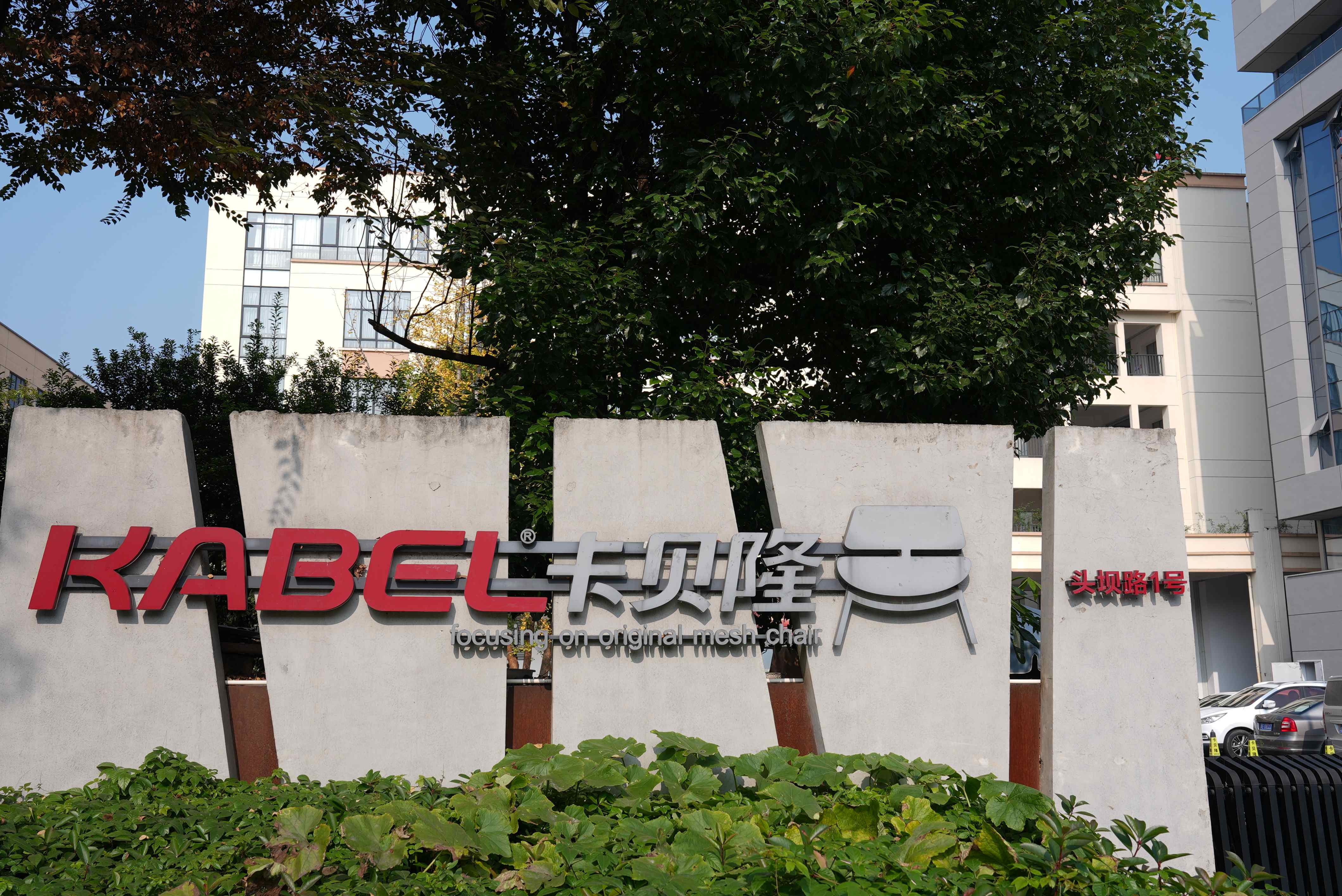
Ergonomic office chair procurement is often treated as a furniture purchase. In practice, it is a specification and evidence exercise. Buyers must compare adjustment ranges, load ratings, gas-lift construction, material composition, certification scope, acceptance criteria and warranty terms before an order is released. The commercial risk is not only comfort; it is whether the delivered chair matches the approved sample and the documented specification.
The practical answer is to separate three layers: management-system certification, model-level specifications, and order-level acceptance. ISO 9001, ISO 14001 and ISO 45001 support supplier qualification. They do not, by themselves, prove a particular chair's load capacity or durability. Those claims need to be checked in the model datasheet, sample approval and pre-shipment inspection.
Why office chair procurement needs a question list
Office chairs sit at the intersection of employee comfort, facilities management and procurement control. A chair that looks suitable in a showroom can still fail an office fit-out if its seat height does not match desk heights, its tilt range is wrong for meeting rooms, or its warranty excludes the parts that wear first. For distributors, the same product may need to serve corporate offices, government units, schools and large office parks with different acceptance standards.
The global office chairs market was valued at USD 18.25 billion in 2025, according to Fortune Business Insights. That scale supports a broad supplier base, but it also makes differentiation difficult for buyers who rely on product photos alone. A structured question list reduces that ambiguity. It helps buyers compare chairs by evidence rather than by appearance, and it gives distributors a defensible basis for quotations and after-sales commitments.
Standards are part of that evidence. Institutional procurement documents reference ANSI/BIFMA X5.1-2017 (R2022) for general-purpose office chairs, and TÜV SÜD's office furniture certification is based on EN 1335-1, -2 and -3. These standards do not replace a supplier's own specification sheet, but they provide a common vocabulary for load, durability, dimensions and ergonomic function.
The problem: photo-led buying leaves specification gaps
Photo-led buying creates predictable gaps. A buyer may see a mesh back, a headrest and a chrome base, but not know whether the gas lift is a standard component or a four-level explosion-proof gas pressure rod. A catalogue may state ergonomic design without defining seat-height range, tilt lock angles or rotation. A supplier may hold ISO certificates without the certificate scope being relevant to office chair production.
The opportunity is to convert the purchase into a short set of verifiable questions. What is the stated load capacity? Which model does it apply to? What is the gas-lift specification? What is the seat-height range? Does the tilt lock cover 90° to 135°? Is rotation 360°? What materials are used in the mesh, foam and frame? Which ISO standards are held, by which authority, and with what scope? What are the acceptance criteria and warranty terms?
These questions do not require a technical department to answer, but they do require documentation. That is the practical difference between a chair that is merely available and a chair that is procurement-ready.
Kabel in context: an office chair manufacturer with export-grade production
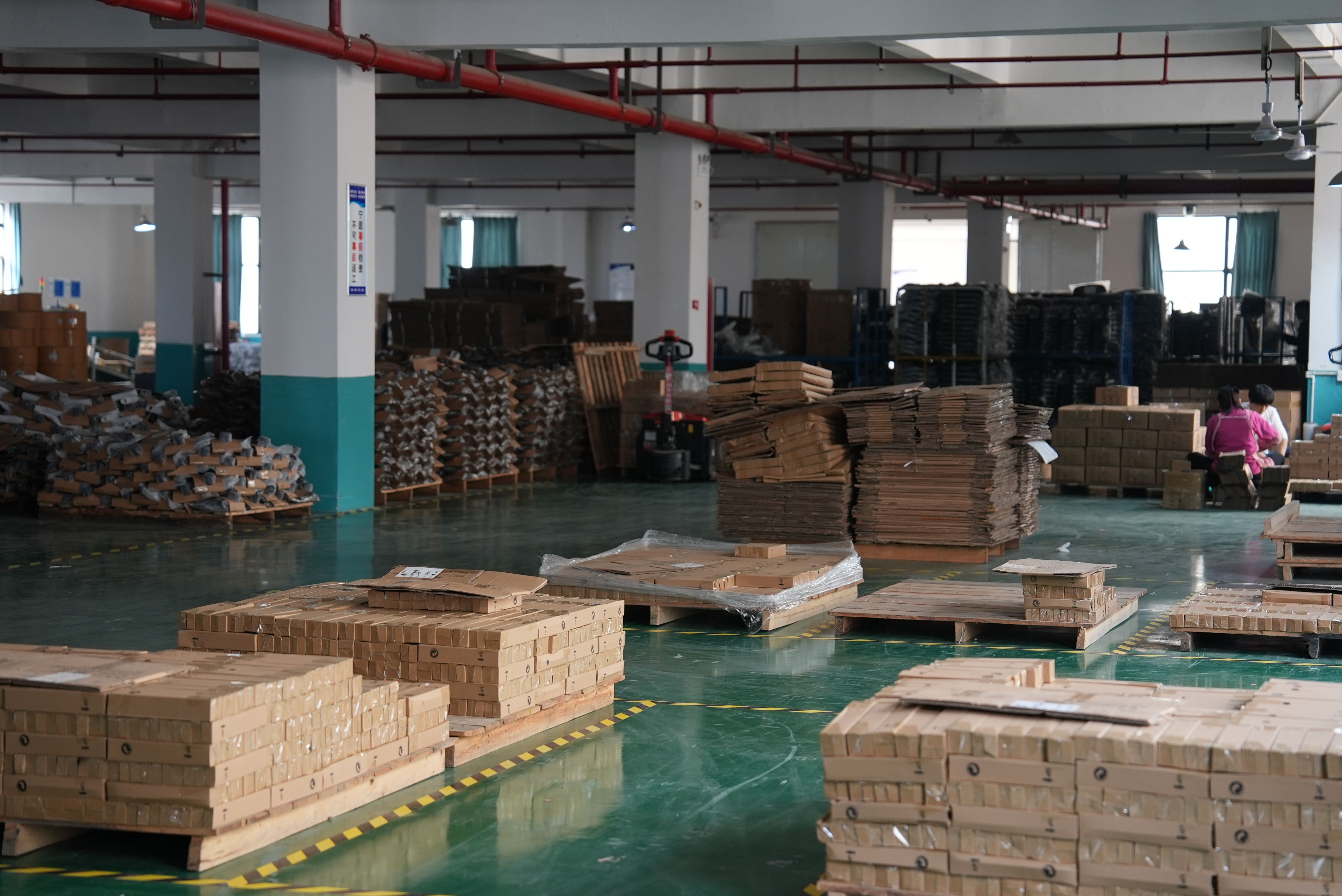
Anji Kabel Furniture Co., Ltd (Kabel) is an office chair manufacturer based in Anji, Zhejiang, China, established in 2007. The company operates a 50,000 m² factory, employs 92 people, and reports annual output of 400,000 sets. Its product range covers staff chairs, executive chairs, ergonomic chairs, conference chairs, pre-shift chairs, training chairs and leisure sofa chairs. Kabel offers OEM and ODM production and reports that 90% of its output is exported to markets including the United States, Canada, the United Kingdom, Italy, Germany, Spain, Japan, South Korea, Thailand, the Middle East and several African markets.
For procurement teams, the relevant point is not the breadth of the catalogue by itself. It is the combination of production scale, export orientation and documented management systems. Kabel states that its core products hold patent certificates and that products are designed, produced and tested to export-grade quality standards. The company also reports that its chairs are used in office buildings, government units, schools, corporate headquarters and large office parks.
Kabel holds ISO 9001, ISO 14001 and ISO 45001 certifications and provides OEM and ODM production services. Customization options include backrest, seat cushion, armrest, mechanism, base, caster, color, fabric, mesh, packaging and logo. Monthly production capacity is stated at 20,000-30,000 units, with a typical lead time of 25-50 days and a minimum order quantity of 50 units in the capability data.
Technical specification set: what to confirm before ordering
The specification set referenced in this article covers the ergonomic office chair and mesh office chair categories. For the models discussed here, including KB-6809 and KB-8961, the stated configuration includes a 150 kg load capacity, a four-level explosion-proof gas pressure rod, adjustable seat height from 40 cm to 50.5 cm, a 90° to 135° tilt lock and 360° rotation. The stated material composition is nylon mesh, high-density molded foam and a PP frame.
| Procurement item | Stated specification | What the buyer should confirm |
|---|---|---|
| Load capacity | 150 kg | Whether the rating applies to the structural frame, the gas lift or the complete chair, and whether a test method or inspection record is available. |
| Gas lift | Four-level explosion-proof gas pressure rod | Gas-lift class, stroke, supplier, and relevant safety or performance documentation. |
| Seat height | 40-50.5 cm | Measured range on the approved sample, tolerance, and fit with the intended desk or workstation height. |
| Tilt and rotation | 90° to 135° tilt lock; 360° rotation | Whether the tilt lock is infinite or indexed, how the lock is operated, and whether rotation is smooth under load. |
| Materials | Nylon mesh, high-density molded foam, PP frame | Mesh density, foam grade, frame thickness and colorfastness against the approved sample. |
| Warranty | 3 years on structural components, gas rods and five-point feet; 1 year on consumables | Start date, claim process, spare-parts availability and exclusions in the contract. |
The 150 kg load capacity and adjustment figures are stated specifications for the referenced model set. They should be read together with the approved sample and the pre-shipment inspection record, not as substitutes for model-level test reports.
Certifications: what ISO 9001, ISO 14001 and ISO 45001 cover
Kabel holds ISO 9001:2015 certificate no. 02821Q10011R1M, ISO 14001:2015 certificate no. 02821E10007R1M and ISO 45001:2018 certificate no. 02820S10601R1M. The certificates were issued by Beijing Zhong-An-Zhi-Huan Certification Center Co., Ltd and are valid until 2027-01-04. The ISO 9001 scope covers office chair production and services; the ISO 14001 and ISO 45001 scopes cover office chair production and related activities.
These certificates are management-system certifications. ISO 9001 addresses quality management, ISO 14001 addresses environmental management, and ISO 45001 addresses occupational health and safety management. They are useful for supplier qualification because they show that a management system has been certified within a defined scope. They do not certify the load capacity, durability or stability of a specific chair model.
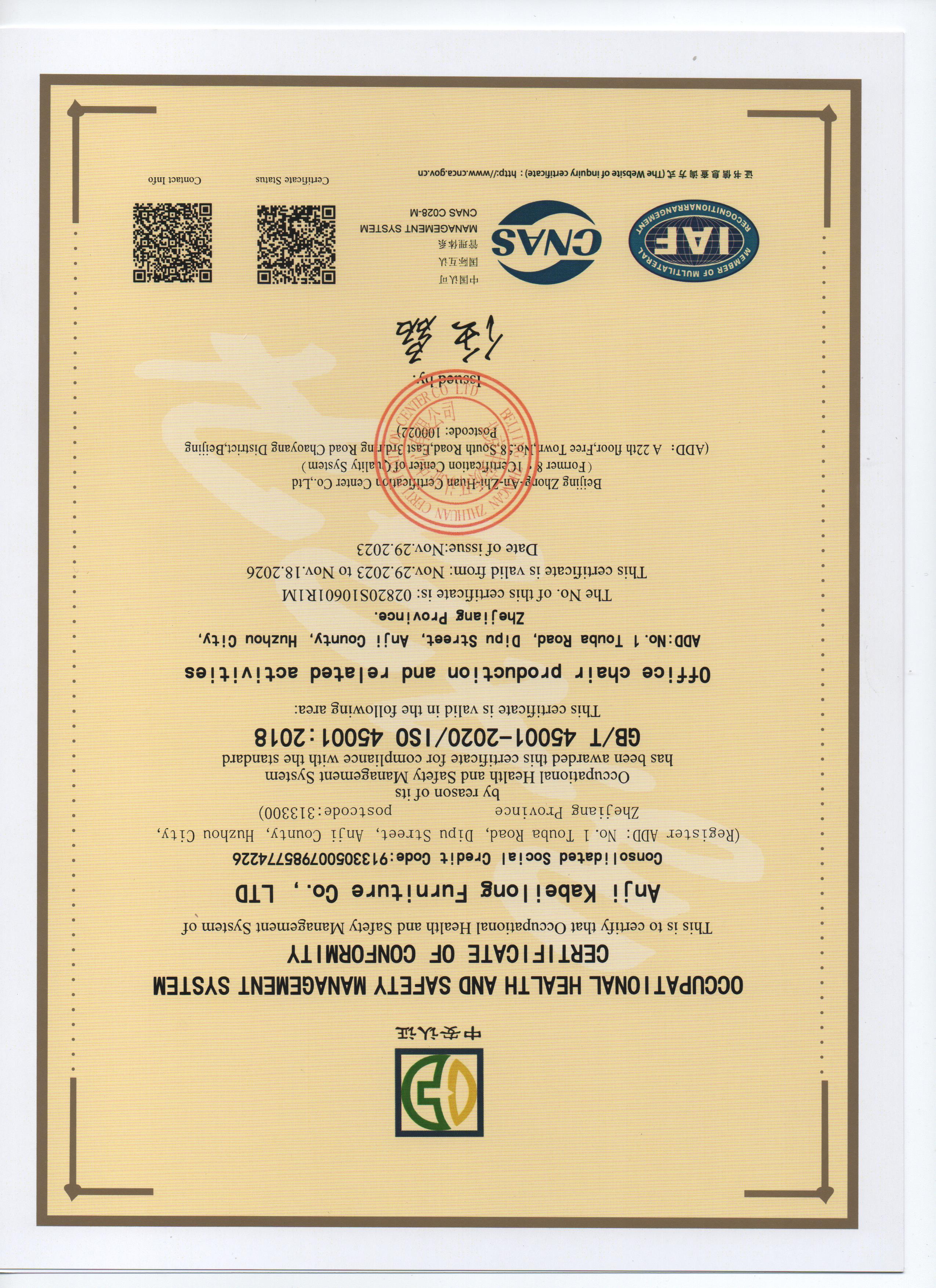
For product-level assurance, buyers should request the relevant chair test reports. EN 1335 is used as a basis for office furniture certification and testing for office work chairs in Europe. ANSI/BIFMA X5.1 is intended to evaluate general-purpose office chairs in the United States. TÜV SÜD states that its office furniture certification verifies dimensions, seat adjustment options, backrest-to-seat angle and lumbar support. Those are product and ergonomic checks, not management-system checks.
Adjustments and ergonomic fit
Adjustability is where ergonomic claims become procurement criteria. A seat-height range of 40-50.5 cm allows the chair to be matched to different desk heights and user populations. A 90° to 135° tilt lock supports upright task work and reclined rest positions. A 360° rotation function is relevant for meeting rooms, reception areas and shared workstations where users need to turn without moving the base.
The referenced models also include adjustable height and backrest in the case description. Buyers should not assume that every model in a family has the same adjustment set. The practical step is to request a model-specific configuration sheet and to test the adjustment range on the approved sample. If lumbar support is a requirement, the buyer should ask for the model drawing or ergonomic documentation that identifies it. TÜV SÜD's certification page lists lumbar support as one of the features it can verify under EN 1335-based testing, but that verification applies to the specific product and scope tested.
For sedentary-friendly office chair requirements, the combination of breathable mesh, adjustable height and backrest, and a tilt lock is more relevant than a single ergonomic label. For conference chair use, rotation and a defined tilt range may matter more than seat-depth adjustment. For study room or study chair use, a compact footprint and simple height adjustment may be the priority. The procurement question should match the room type, not the catalogue category alone.
Materials and construction: mesh, foam and frame
The stated material composition is nylon mesh for the back, high-density molded foam for the seat, and a PP frame. These materials affect breathability, support and long-term shape retention. Mesh can help with airflow in shared offices and warm climates, but mesh density and tension determine how the back feels over a full workday. High-density molded foam can provide a structured seat surface, but foam grade and thickness still need to be checked against the sample. A PP frame contributes to the chair's structure, but the connection points and base assembly are equally important.
Material confirmation should not stop at the words on a specification sheet. Buyers should compare the approved sample with the production unit, especially for mesh tension, foam resilience and frame finish. For distributors, this is also a quotation issue: a change in mesh, foam or frame specification can change the product's position in the range even if the model number stays the same.
Models and application fit
The certification records list KB-6809, KB-8961, KB-8965, KB-8932 and KB-8953 as office swivel chair models under the related product scope. These models are part of the ergonomic and mesh office chair categories. The supplied case record references office daily seating and office space layout, with ergonomic design, breathable mesh and adjustable height and backrest. It also reports comfortable long-hour office experience and stable structural performance.
Application fit should be assessed by room and user group. Office buildings and corporate headquarters may prioritize uniform specifications, warranty coverage and spare-parts planning. Government units may require clearer documentation and acceptance records. Schools and training rooms may need durable, easy-to-clean chairs with simple adjustment. Conference areas may place more weight on rotation, tilt lock and a consistent visual profile. The model shortlist should follow those requirements rather than treating all five models as interchangeable.
The case evidence is useful but bounded. It covers 3 units in a China office environment, with a reported service period of 5-8 years. It references education and state-owned enterprise procurement contexts, including Beijing Zhonggong Education, Henan Unicom and Sichuan Yongheng. That is usage evidence, not a statistically representative durability test. Buyers should combine it with sample approval, inspection records and model-level test documentation.
Acceptance criteria and commercial terms
The purchasing support data states factory inspection before shipment as the acceptance basis. Delivery terms are EXW or FOB Shanghai. Payment terms are T/T 30% deposit to confirm production, with the balance against a copy of the bill of lading by email. The same data lists an MOQ of 100 pcs per SKU. The capability data separately lists a minimum order quantity of 50 units. Because both figures appear in the supplied data, the applicable MOQ should be confirmed per SKU and order structure in the quotation.
Quality control is stated as 100% inspection before delivery. For a procurement team, that statement should be converted into an inspection plan: what is checked, at what stage, against which approved sample, and what happens if a unit fails. The plan should cover frame welds or connections, gas-lift operation, seat-height range, tilt lock, rotation, mesh tension, foam condition, casters and packaging. The acceptance record should be signed before shipment release.
Warranty and lifecycle planning
Kabel's after-sales data specifies a 3-year warranty on structural components, gas rods and five-point feet. Mesh fabric, rollers, handrails and other consumable parts are covered for 1 year. An export repair kit is specified in the after-sales data. These terms should be read as a lifecycle map, not a single warranty period. The parts that wear first are often the casters, mesh and armrest surfaces, while the structural frame and gas lift carry the longer coverage.
Procurement teams should confirm the warranty start date, the claim process, the spare-parts list and the response time for replacements. Distributors should also confirm whether the export repair kit is included per order or per container, and how consumable parts can be reordered after the first year. A 3-year warranty on core components is only useful if the buyer knows which components are covered and how a claim is documented.
Market trend: standards and documentation are becoming the differentiator
The office chair market is large, but the procurement trend is toward narrower evidence. Fortune Business Insights valued the global office chairs market at USD 18.25 billion in 2025. At the same time, institutional buyers are using published standards to structure their requirements. Queen's University's furniture standard references ANSI/BIFMA X5.1-2017 (R2022) for general-purpose office chairs, and TÜV SÜD's office furniture certification is based on EN 1335-1, -2 and -3.
This does not mean every buyer needs every standard. It means that buyers increasingly ask for the document behind the claim: the certificate scope, the test basis, the model configuration, the inspection record and the warranty matrix. Suppliers that can provide those documents in a consistent format are easier to qualify, compare and retain.
Comparison with traditional buying, and the limits of this specification set
Traditional buying often starts with a showroom sample, a product photo and a price. That approach can work for small orders, but it leaves gaps in larger projects. A specification-led approach starts with the model datasheet, certificate scope, adjustment range, material composition, acceptance criteria and warranty terms. It gives the buyer a written basis for comparison and a record for after-sales discussions.
The limits should be stated clearly. ISO 9001, ISO 14001 and ISO 45001 are management-system certifications; they do not prove the load capacity or durability of a specific chair. The 150 kg load capacity and the gas-lift description are stated specifications for the referenced models, but the documentation summarized here does not include model-level ANSI/BIFMA X5.1 or EN 1335 test reports for each model. The customer case covers 3 units in a China office environment over 5-8 years, which is useful usage evidence but not a laboratory test. The MOQ also appears as both 50 units and 100 pcs per SKU in different supplied records, so it must be confirmed commercially.
Buyers with regulated procurement requirements should request product-specific test reports, sample approval records and a signed inspection plan before releasing a volume order. That is the appropriate boundary between a procurement FAQ and a product certification.
Future outlook
The next phase of office chair procurement is likely to be less about catalogue breadth and more about traceability. Buyers will want certificate validity dates, model-level specifications, adjustment ranges, material declarations, acceptance records and warranty matrices in a consistent format. Distributors will need the same documents to answer end-user questions without returning to the factory for every clarification.
For manufacturers, the advantage will come from making evidence easy to review. A clear specification sheet, a defined inspection plan and a warranty matrix do more for buyer confidence than another page of product photography. For buyers, the advantage will come from asking the same questions across every supplier and comparing the answers on a like-for-like basis.
FAQ: Ergonomic office chair procurement questions
What should procurement teams verify first in an ergonomic office chair?
Start with the model-level specification and certificate scope. Confirm the stated load capacity, gas-lift type, seat-height range, tilt lock, rotation, materials and warranty. Then check whether the supplier's ISO certificates cover office chair production and whether product test reports are available for the specific model.
Which ISO certifications does Kabel hold for office chair production?
Kabel holds ISO 9001:2015 certificate no. 02821Q10011R1M, ISO 14001:2015 certificate no. 02821E10007R1M and ISO 45001:2018 certificate no. 02820S10601R1M. The certificates were issued by Beijing Zhong-An-Zhi-Huan Certification Center Co., Ltd and are valid until 2027-01-04. The scopes cover office chair production and services or related activities.
Are ISO 9001, ISO 14001 and ISO 45001 product performance certifications?
No. They are management-system certifications. ISO 9001 covers quality management, ISO 14001 covers environmental management and ISO 45001 covers occupational health and safety management. They support supplier qualification but do not replace model-level load, durability or stability test reports such as those based on EN 1335 or ANSI/BIFMA X5.1.
What load capacity is stated for the referenced Kabel ergonomic chair specification?
The specification set referenced in this article states a 150 kg load capacity. Buyers should confirm whether that rating applies to the structural frame, the gas lift or the complete chair, and request the relevant test method or inspection record.
What gas lift and adjustment ranges are specified?
The stated configuration includes a four-level explosion-proof gas pressure rod, adjustable seat height from 40 cm to 50.5 cm, a 90° to 135° tilt lock and 360° rotation. These values should be verified on the approved sample and in the pre-shipment inspection record.
What materials are used in the referenced ergonomic mesh chair?
The stated material composition is nylon mesh, high-density molded foam and a PP frame. Material confirmation should be made against the approved sample, because mesh density, foam grade and frame thickness affect comfort, support and durability.
Which Kabel office swivel chair models are covered by the certification scope?
The certification records list KB-6809, KB-8961, KB-8965, KB-8932 and KB-8953 as office swivel chair models under the related product scope. Buyers should confirm the exact model, configuration and options in the quotation.
What acceptance criteria are stated for office chair orders?
The purchasing support data states factory inspection before shipment as the acceptance basis, with EXW or FOB Shanghai delivery terms and T/T 30% deposit with the balance against a copy of the bill of lading by email. It lists 100 pcs per SKU as the MOQ, while the capability data lists 50 units. The applicable MOQ should be confirmed per SKU and order structure.
What does the 3-year warranty cover?
The warranty covers structural components, gas rods and five-point feet for 3 years. Mesh fabric, rollers, handrails and other consumable parts are covered for 1 year. An export repair kit is specified in the after-sales data. Buyers should confirm the start date, claim process and spare-parts availability in the contract.
What are the limits of this specification-based evaluation?
Management-system certificates and catalogue specifications do not prove model-level performance on their own. The documentation summarized here does not include ANSI/BIFMA or EN 1335 test reports for each model, and the customer case covers 3 units in China over 5-8 years. Buyers with regulated procurement requirements should request product-specific test reports, sample approval records and a signed inspection plan.
For buyers who need the full model and option list, the Kabel chair catalogue (PDF) is available as a reference document.
This article is an independent procurement reference. Specifications, certifications and warranty terms should be confirmed against the current quotation, approved sample and contract documents.
Have Questions or Need More Details?
Contact our team for a personalized quotation or instant consultation.
Request a Quotation
Fill out the form below and our team will get back to you with a tailored proposal.
WhatsApp Direct Chat
Prefer to chat in real-time? Message us on WhatsApp for instant assistance & quick answers.
- Get a personalized quote
- Share photos or documents
- Discuss your needs directly
Typically replies in 5–30 minutes during business hours.