
Espresso Concentrate or Oil Orange Puree: Matching Format to Your Beverage Project
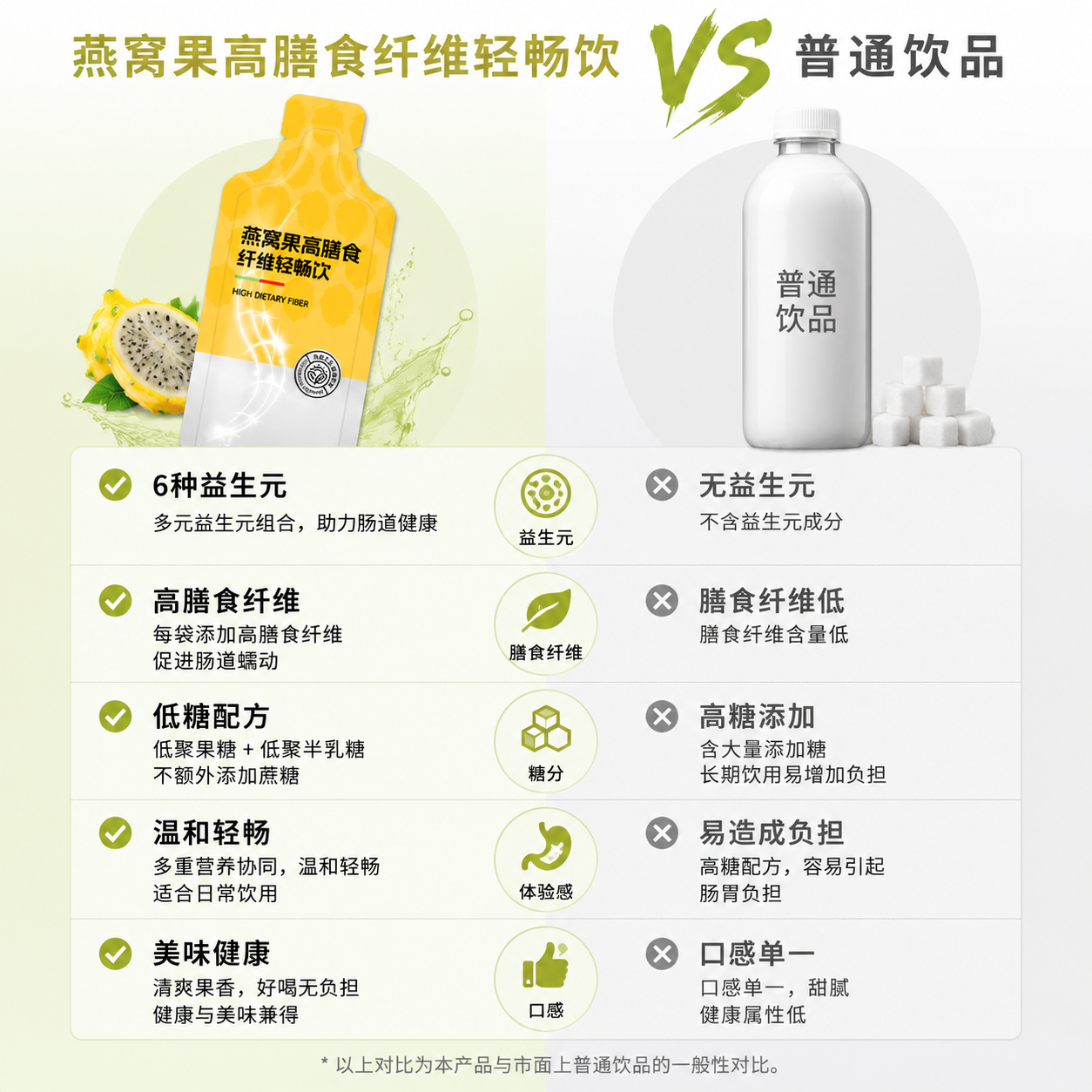
Espresso concentrate and oil orange puree are two different product formats, not two interchangeable ingredients. Espresso concentrate is built for coffee-led beverages — mocha, black coffee, Italian espresso, American coffee and cold brew. Oil orange puree liquid beverage is built for fruit-forward liquid beverage lines. The choice between them is decided by four variables that have nothing to do with personal taste: the sensory base the SKU requires, the packaging format the channel can absorb, the processing line the product must pass through, and the registration or certification the target market demands.
A format decision that looks straightforward on a flavour sheet becomes a supply-chain decision once packaging, pasteurisation and market entry are added to the same page. Buyers who evaluate the two formats separately — one conversation about coffee, another about fruit — usually end up comparing two answers to two different questions. This framework puts both formats on one grid.
Two Formats, Defined Before They Are Compared
Espresso concentrate is a coffee-based liquid format supplied in sealed strip units of 30 ml, packed at 10 strips per box. It is positioned as a concentrated espresso base rather than a finished ready-to-drink product, which is why the application list runs from black coffee and Italian espresso through to mocha, American coffee and cold brew.
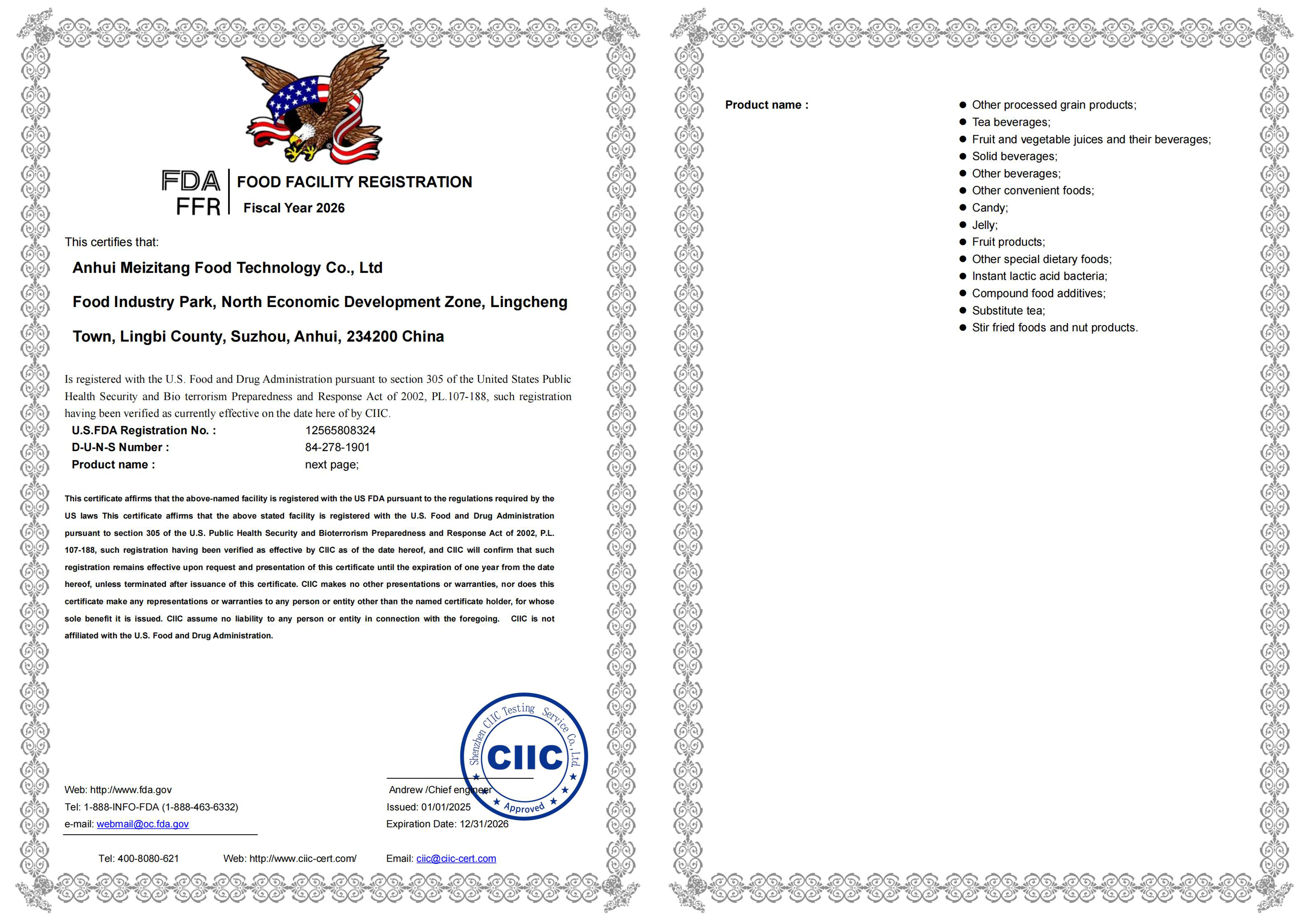
Oil orange puree liquid beverage is a fruit-based liquid format supplied in sachets of 30 ml, packed at 5 bags per box. It sits inside the broader liquid beverage category rather than the coffee category, and it carries a U.S. FDA food facility registration number — 84-278-1901 — that is specifically relevant to liquid beverages entering the U.S. market.
Both formats share two requirements that buyers tend to overlook because they appear in almost every specification sheet: storage in a cool, dry place, and containment in a sealed container. Both also pass through a pasteurisation line. Those three shared conditions are the reason the comparison cannot be reduced to flavour, and they are also the reason a brand can often run both formats through one partner rather than two.
Why This Comparison Has Become a Supply Chain Question
The opportunity is straightforward. Functional beverages are the fastest-growing product segment in the functional food and beverage market between 2026 and 2034, expanding at a 9.2% CAGR according to Grand View Research. Brands respond by widening their portfolios — a coffee-led SKU next to a fruit-led SKU — and that widening is where the supply problem starts.
The problem is not demand. It is portfolio coordination. A brand that adds a coffee concentrate and a fruit puree to the same launch calendar is asking for two packaging formats, two storage profiles, two label reviews and two sets of compliance evidence, all delivered on one timeline. When those four threads are managed separately, the failures are predictable: a strip format ordered for a channel that cannot shelve it, a sachet format specified for a machine that cannot fill it, or a market-entry file that arrives after the shipping booking.
Treating the two formats as a single procurement decision — rather than two unrelated purchases — is the practical answer. The comparison below is designed for that single decision.
Application Fit: Where Each Format Earns Its Place
Application fit is the first filter, because it removes options faster than any other criterion. A format that cannot deliver the sensory base the SKU promises is not a cheaper option — it is a rework risk.
Espresso concentrate covers a defined set of coffee applications: mocha, black coffee, Italian espresso, American coffee and cold brew. That range is wider than it first appears. Mocha and cold brew pull the concentrate toward dairy-adjacent and cold-dilution contexts, while Italian espresso and American coffee pull it toward hot, water-diluted contexts with a shorter sensory window. A buyer should confirm which of those five applications the SKU actually targets, because the answer determines dilution guidance, sensory expectations and the packaging unit the consumer will handle.
Oil orange puree liquid beverage serves liquid beverage applications rather than a named coffee menu. Its fit is determined by whether the SKU is fruit-led, and by whether the finished product can carry a 30 ml sachet as the consumer-facing unit. Where a brand's portfolio is coffee-centred, the puree is not a substitute — it is an additional line with its own pack, its own storage profile and its own compliance file.
The practical rule is simple: choose the format that matches the sensory base the brand has already committed to in its positioning, then confirm that the packaging and processing consequences of that format are acceptable. Reversing the order — choosing the format first and fitting the product to it — is where most of the avoidable cost sits.
Packaging: Strip Versus Sachet, and What It Changes
The packaging specifications are close enough to look interchangeable and different enough to matter. Espresso concentrate is supplied at 30 ml per strip, 10 strips per box. Oil orange puree liquid beverage is supplied at 30 ml per sachet, 5 bags per box.
| Dimension | Espresso concentrate | Oil orange puree liquid beverage |
|---|---|---|
| Ingredient base | Coffee / espresso concentrate | Fruit-based puree liquid |
| Target applications | Mocha, black coffee, Italian espresso, American coffee, cold brew | Liquid beverage lines |
| Unit format | 30 ml per strip | 30 ml per sachet |
| Box configuration | 10 strips per box | 5 bags per box |
| Storage | Cool and dry, sealed container | Cool and dry, sealed container |
| Processing | Pasteurisation line | Pasteurisation line |
The 30 ml unit is shared, but the multi-unit packaging is not. Ten strips per box versus five bags per box changes case cube, carton count per pallet, retail shelf presentation and — critically — the unit a consumer physically opens. A strip and a sachet are handled differently, torn differently and perceived differently. For a brand running both formats under one label, that difference has to be resolved in the packaging brief rather than discovered at the filling stage.
The box configuration also drives order planning. Because the formats pack at different multiples, a mixed programme cannot be planned from a single piece count. Buyers should convert their commercial forecast into boxes per format before requesting a quotation, not after.
Storage and Processing: The Shared Conditions
Both formats require cool, dry storage in a sealed container, and both pass through a pasteurisation line. On paper this makes them look operationally identical. In practice, the shared conditions are the reason a brand should evaluate them together.
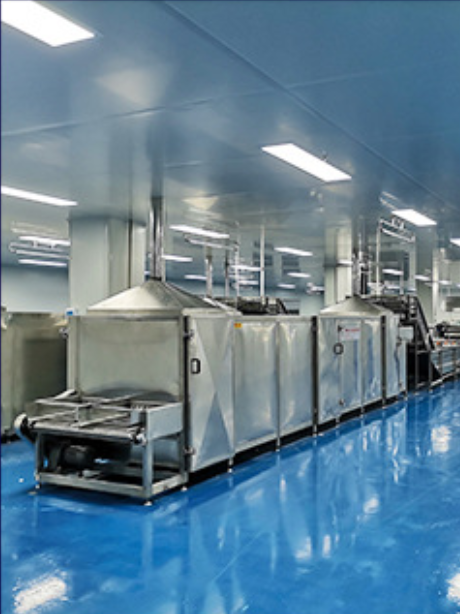
Cool, dry and sealed is a storage instruction, but it is also a distribution constraint. A brand selling into channels without reliable ambient control should confirm the storage assumption before committing to a format, because the specification does not adapt to the channel — the channel has to adapt to the specification.
Pasteurisation is the processing requirement that ties the two formats together. Both must run through a pasteurisation line, which means the process is not optional for either format and cannot be bypassed for a lower-cost variant. For buyers, this simplifies partner qualification: a supplier with a pasteurisation line in place can address both formats, while a supplier without one cannot address either.
One boundary is worth stating plainly. Pasteurisation is a heat-based process, and heat treatment generally interacts with aroma and flavour-sensitive components. That is a formulation question rather than a sourcing question, and it should be resolved with the supplier during sample validation rather than assumed away at the specification stage.
Market Fit and Compliance: Where the Two Paths Diverge
Compliance is the criterion where the two formats stop looking alike. Oil orange puree liquid beverage carries U.S. FDA food facility registration number 84-278-1901, which is relevant to liquid beverages intended for the U.S. market. That registration is a market-access asset for a U.S.-bound fruit-led line, and it is one of the few compliance facts a buyer can verify by number rather than by assertion.
Beyond the registration itself, the U.S. framework separates claim types. The FDA identifies health claims, nutrient-content claims, and structure/function claims as categories that may appear on food and dietary-supplement labels, subject to applicable requirements. The obligations are not uniform across product classes: for dietary supplements, structure/function claims require substantiation and notification to the FDA no later than 30 days after marketing, plus a required disclaimer, while conventional food manufacturers do not carry the same notification requirement.
That distinction matters for the format decision because it forces a classification question early. A coffee concentrate or a fruit puree presented as a conventional beverage sits in a different claim environment from the same product presented as a supplement. Buyers who defer classification until after packaging artwork is approved tend to reopen the artwork. The practical sequence is: classify the product, map the permitted claims, then brief the pack.
A Decision Framework for Buyers
The framework below converts the comparison into a sequence. Each step removes options; none of them should be skipped because a later step looks more urgent.
| Step | Question | Decision rule |
|---|---|---|
| 1. Sensory base | Is the SKU coffee-led or fruit-led? | Coffee-led points to espresso concentrate; fruit-led points to oil orange puree. |
| 2. Application | Which named application must the product serve? | Confirm against mocha, black coffee, Italian espresso, American coffee or cold brew for coffee lines. |
| 3. Pack | Can the channel absorb the unit and box configuration? | 30 ml strip at 10 strips/box, or 30 ml sachet at 5 bags/box. |
| 4. Process | Does the supply environment hold the storage and processing conditions? | Cool and dry storage, sealed container, pasteurisation line. |
| 5. Compliance | Does the target market require registration or claim review? | For U.S.-bound liquid beverages, verify FDA registration 84-278-1901 and classify claims. |
Run in this order, the framework usually produces a single viable format before a quotation is requested. That is the point: the framework is a filter, not a scorecard. A brand that reaches step five with both formats still alive has probably not resolved step one.
Market Context Behind the Decision
The comparison sits inside a market that is expanding on both the value and the segment axis. Fortune Business Insights projects the global functional food and beverage market at USD 437.62 billion in 2026, rising from USD 398.81 billion in 2025 and forecast to reach USD 983.17 billion by 2034. Asia Pacific dominated that market with a 39.67% share in 2025, per the same source.
Segment growth sharpens the choice further. Grand View Research reports that functional beverages are projected to be the fastest-growing product segment between 2026 and 2034, at a 9.2% CAGR. Beverage-led formats — which is what both espresso concentrate and oil orange puree are — sit on the faster-growing side of the category split.
The interpretation for buyers is not that either format is guaranteed to succeed. It is that portfolio expansion into beverages is being supported by measurable category growth, which raises the cost of a format decision made informally. When a category is growing, a mis-specified pack or a late compliance file removes more revenue than it would in a flat market.
Where the Comparison Stops: Limits and Trade-offs
A comparison framework that does not state its boundaries is not a framework. Three limits apply here.
First, the two formats are not substitutes. Nothing in this comparison suggests that espresso concentrate can replace oil orange puree in a fruit-led beverage, or the reverse. They serve different sensory bases and different application lists. A buyer seeking a single format to cover both a coffee line and a fruit line will not find it in either product.
Second, the volume thresholds are not the same as the trial thresholds. Small-batch trial orders can start from 30 units, while the standard minimum order quantity is 5,000 pieces. Those two figures serve different purposes — validation and production — and treating the trial threshold as a production threshold is a common source of planning error. A brand validating a format can start small; a brand committing to a launch should plan against the production quantity.
Third, capacity is finite and shared. Monthly production capacity is 8,000 units, with a typical production lead time of 15 days. A programme that runs both formats concurrently draws on the same capacity. Buyers with seasonal peaks should schedule against that shared number rather than assuming each format has independent headroom.
Fourth, functional formats carry a cost premium. Functional products generally sit about 10% higher in cost than ordinary drinks and food, reflecting added bioactive ingredients such as probiotics, plant extracts, vitamin and mineral fortification, functional sweeteners, or proteins and peptides. That premium is a positioning input, not a defect — but it does mean the format decision has a pricing consequence that should be modelled before the launch plan is fixed.
How SPACELIFE Supports Either Path
SPACELIFE is the functional food and beverage supply brand operated by Shenyang Songming Supply Chain Co., Ltd., a supply chain service provider specialising in B-end solutions for the functional food and healthy beverage sector. Its five core categories are peptide-infused coffee, functional foods, prune juice drinks, meal replacement powders and health supplements — a portfolio that spans both the coffee-led and the fruit-led side of the comparison above.
The operational facts relevant to a format decision are specific. Product categories are 100% traceable, with a 99.8% quality pass rate. Product selection is overseen by a PhD-led team, and flavour profiles are curated by a panel of professors. Order delivery runs at 98% on-time, supported by a location advantage in the Pilot Free Trade Zone that has increased cargo turnover efficiency by 30%. The service model covers OEM/ODM customisation, which is the route through which a brand adapts either format to its own specification.
Commercially, the terms are stated rather than negotiated from zero: minimum order quantity of 5,000 pieces, typical production lead time of 15 days, monthly production capacity of 8,000 units, small-batch trial orders from 30 units, FOB or CIF delivery terms, pre-shipment testing as the acceptance criterion, and full payment terms. The global supply network is weighted toward East Asia, North America, the Middle East and Western Europe, with a distribution split of 30% Japan, 30% United States, 20% Saudi Arabia and 20% Germany.
Quality control for the relevant risk category — food health — is handled through a pasteurisation line combined with FDA certification. For a buyer comparing espresso concentrate and oil orange puree, that combination matters twice: it covers the pasteurisation requirement both formats share, and it covers the U.S. registration requirement that the liquid beverage format carries.
Future Outlook
Two developments are likely to shape how this comparison is made in the next few years.
The first is segment momentum. With functional beverages projected to grow at a 9.2% CAGR through 2034, more brands will run multi-format portfolios rather than single-format lines. That shifts the dominant procurement question from "which format" to "which combination," and it rewards supply partners whose packaging, processing and compliance capabilities cover more than one format.
The second is compliance granularity. The distinction the FDA draws between conventional foods and dietary supplements — including the 30-day notification requirement that applies to supplement structure/function claims but not to conventional foods — is a classification question that arrives earlier in the process than many launch teams expect. As portfolios widen, more SKUs will sit close to that boundary, and the format decision will increasingly be made alongside the classification decision rather than after it.
For buyers, the practical implication is stable: keep the four variables — base, pack, process, compliance — on one page. The formats will keep changing. The variables will not.
FAQ
What is the fundamental difference between espresso concentrate and oil orange puree liquid beverage?
They are two different product formats rather than two variants of one ingredient. Espresso concentrate is a coffee-based concentrate supplied at 30 ml per strip, 10 strips per box, and used across mocha, black coffee, Italian espresso, American coffee and cold brew. Oil orange puree is a fruit-based liquid beverage supplied at 30 ml per sachet, 5 bags per box, and used in liquid beverage applications. Both require cool, dry storage in a sealed container and both pass through a pasteurisation line.
Which applications fit espresso concentrate?
Espresso concentrate is used for mocha, black coffee, Italian espresso, American coffee and cold brew. Each of those five applications represents a different dilution and serving context, so a buyer should confirm which one the SKU targets before fixing the pack and the sensory specification.
Which applications fit oil orange puree liquid beverage?
Oil orange puree liquid beverage is applied to liquid beverage lines rather than to a named coffee menu. Its fit depends on whether the product is fruit-led and whether a 30 ml sachet works as the consumer unit. It is not positioned as a replacement for espresso concentrate in coffee applications.
How do the packaging specifications differ?
Espresso concentrate is packed at 30 ml per strip with 10 strips per box. Oil orange puree liquid beverage is packed at 30 ml per sachet with 5 bags per box. The 30 ml single unit is shared, but the multi-unit box configuration and the physical unit type differ, which affects case cube, shelf presentation and the number of boxes required for a given commercial forecast.
What storage and processing conditions apply to each format?
Both formats require storage in a cool, dry place in a sealed container, and both must pass through a pasteurisation line. Because the conditions are shared, a supplier equipped with a pasteurisation line can address both formats, while a supplier without one can address neither.
What compliance evidence matters for entering the U.S. market?
Oil orange puree liquid beverage carries U.S. FDA food facility registration number 84-278-1901, which is relevant to liquid beverages for the U.S. market. Separately, the FDA identifies health claims, nutrient-content claims and structure/function claims as label claim categories subject to applicable requirements, and the obligations differ between dietary supplements and conventional foods — supplement structure/function claims require substantiation plus notification to the FDA no later than 30 days after marketing, while conventional food manufacturers do not carry that same notification requirement.
What order terms and capacity should a buyer plan around?
The standard minimum order quantity is 5,000 pieces, typical production lead time is 15 days, and monthly production capacity is 8,000 units. Small-batch trial orders can start from 30 units, which is a validation threshold rather than a production threshold. Delivery terms are FOB or CIF, acceptance is based on pre-shipment testing, and payment terms are full payment.
How should a brand decide between the two formats for a long-term programme?
The decision should follow the sensory base first — coffee-led or fruit-led — then the named application, then the packaging configuration, then the storage and pasteurisation requirements, and finally the compliance file for the target market. For a long-term programme, the additional checks are shared capacity (8,000 units per month across formats), the 5,000-piece production minimum, and whether the partner holds registration evidence such as FDA 84-278-1901 for the liquid beverage line.
Have Questions or Need More Details?
Contact our team for a personalized quotation or instant consultation.
Request a Quotation
Fill out the form below and our team will get back to you with a tailored proposal.
WhatsApp Direct Chat
Prefer to chat in real-time? Message us on WhatsApp for instant assistance & quick answers.
- Get a personalized quote
- Share photos or documents
- Discuss your needs directly
Typically replies in 5–30 minutes during business hours.