
Ethics and Sustainability in Long-Term Custom Card Game Sourcing
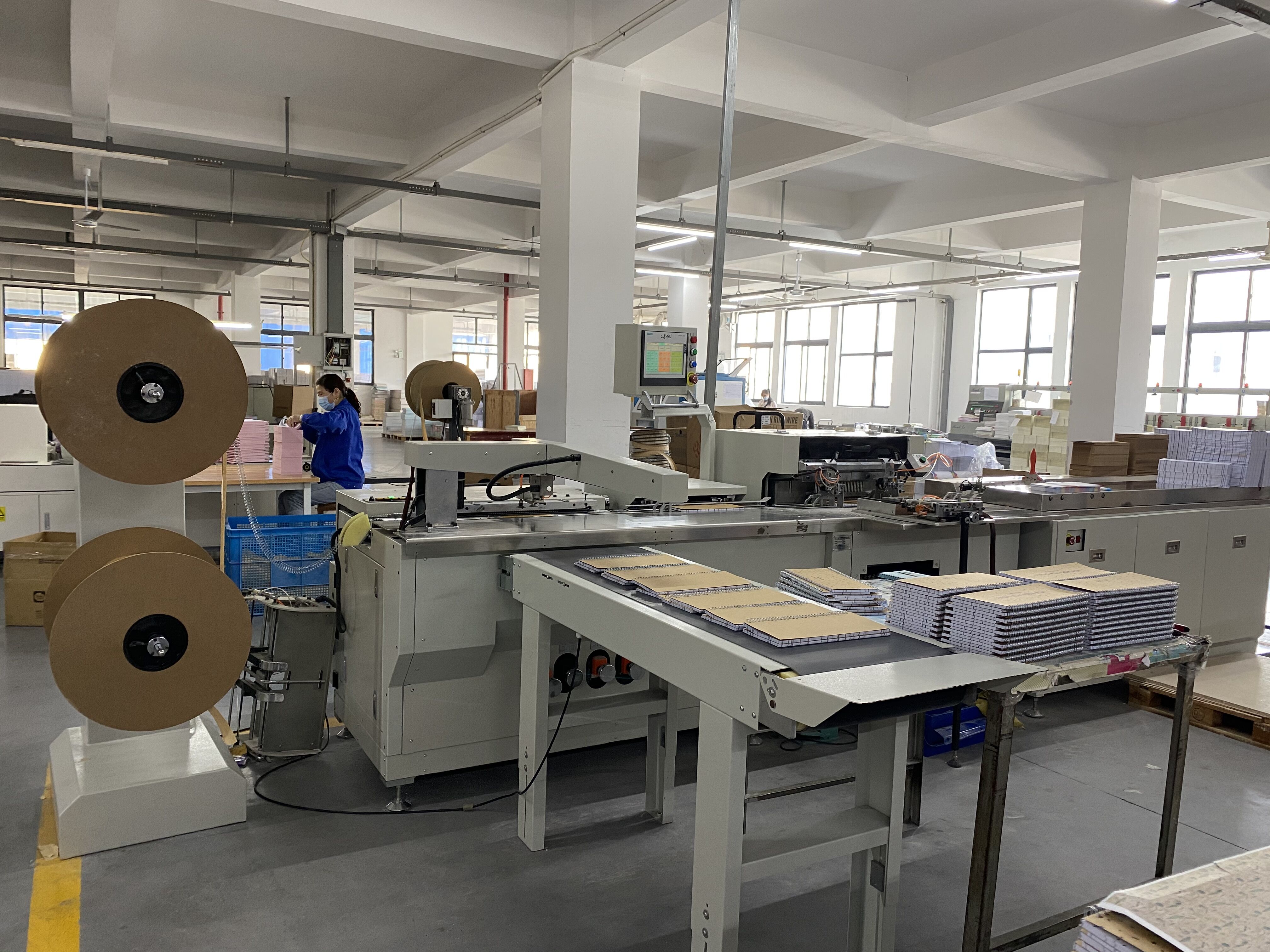
A card and board game production workshop at Vietnam Yawanhong Printing Culture Co., Ltd. in Hai Phong City, the operational base behind the supplier's long-term OEM programmes.
Sustainability in custom card game manufacturing is not a single certificate printed on a supplier's homepage. It is the combined evidence of how a factory manages paper stock, print accuracy, workforce conditions and continuity, and whether that evidence still holds at the second, third and fifth production cycle.
The commercial reason this matters is scale. Custom Market Insights projects the global trading card game market to reach USD 14.12 billion in 2025, and Grand View Research values the playing cards and board games market at USD 19.9 billion on a 2024 base year. Grand View Research further reports that Asia Pacific accounted for a 39.5% revenue share of that market in 2024. For buyers, the implication is structural: a large share of the world's printed card supply is produced in the region where demand is expanding, and product lines are expected to survive multiple reprint cycles.
That shifts the decision-stage question from "is this factory green?" to something more testable: which supplier can keep printing the same deck to the same specification, under the same labour and sourcing conditions, for the length of a product line? This analysis sets out how to evaluate that question, using Vietnam-based OEM/ODM manufacturer Yawanhong as a working case.
Why sustainability questions usually arrive too late
In most custom card game projects, the first commercial conversation is about sample quality and unit price. Compliance and labour documentation typically surface later, at retail onboarding, licensing approval, or when a brand's own sustainability report needs supplier evidence.
Card games are consumer products, and many are positioned for families and children, where retail and licensing requirements are strictest. A deck that ships without the right evidence can be held at the port of entry, pulled from a listing, or blocked at the licensing stage, and the cost of that delay usually exceeds the price difference the buyer negotiated.
The opportunity is to treat sustainability evidence as an RFQ line item rather than a post-selection hurdle. That means asking for specific document types, matching each document to the claim it actually supports, and confirming that the supplier has the operational continuity to keep those conditions in place across order cycles.
Five evidence types that buyers routinely confuse
Most sustainability disputes in this category come from treating unlike documents as interchangeable. A social audit, a quality-management certificate, a forest-sourcing certificate, a brand licence approval and a toy-safety standard each answer a different question, and none of them substitutes for another.
| Evidence type | Question it answers | What it does not establish |
|---|---|---|
| amfori BSCI audit | Social compliance: working conditions, working hours, health and safety, assessed against the amfori BSCI Code of Conduct, whose labour provisions reference ILO core labour standards | Product safety, material origin or print quality |
| Sedex SMETA audit | Labour, health and safety, environment and business-ethics criteria assessed through the Sedex SMETA audit format | Certification of the product itself; fibre content |
| ISO 9001 | Whether a quality-management system exists and is maintained | Labour conditions or environmental performance |
| FSC | Forest sourcing and chain of custody for paper fibre | Social compliance; scope must be checked site by site |
| Disney FAMA | Facility approval for licensed production under a specific brand programme | A general compliance badge or a public standard |
| ASTM F963-23 / EN 71 | Toy-safety requirements, including mechanical, chemical and flammability testing for products used in play by children | Labour, sourcing or environmental conditions |
Evidence types commonly bundled in supplier marketing material. Each addresses a different procurement risk.
ASTM F963-23 is the mandatory US toy-safety standard, and its scope covers products intended for use in play by children, including card games. That matters for family and kids-oriented decks, and it is a separate question from social auditing.
Continuity as a sustainability signal
A supply relationship is only as sustainable as the second order. When a deck changes hands between factories, the buyer absorbs re-sampling, re-tooling, re-qualification and the risk of a colour shift between print runs. Continuity is therefore an environmental and a commercial variable at the same time.
Vietnam Yawanhong Printing Culture Co., Ltd. was established on 5 December 2006 and operates a 55,000 square metre factory in the Nghia An Industrial Cluster, Vinh Lai Ward, Hai Phong City, Vietnam. The company reports 280 employees, an R&D team of 25 engineers, annual output of around 1,000,000 units, and a 100% export focus serving markets in the USA and Europe. It describes itself as an OEM and ODM manufacturer specialising in custom toys, printing and packaging solutions.
The company also reports a five-year record of active OEM projects with brand clients. That is a continuity signal rather than a certificate: it indicates repeated order cycles rather than a single successful sample. It is also the kind of claim a buyer can test, by asking which programmes were reordered, whether the same engineering and account staff remained assigned, and whether tooling and die libraries were retained between runs.
For long-running card game lines, the practical check is whether the supplier keeps the specification file. Deck construction decisions such as card weight, core type, finish, corner radius and edge treatment are only stable if the factory retains the specification and the sampling record alongside it.
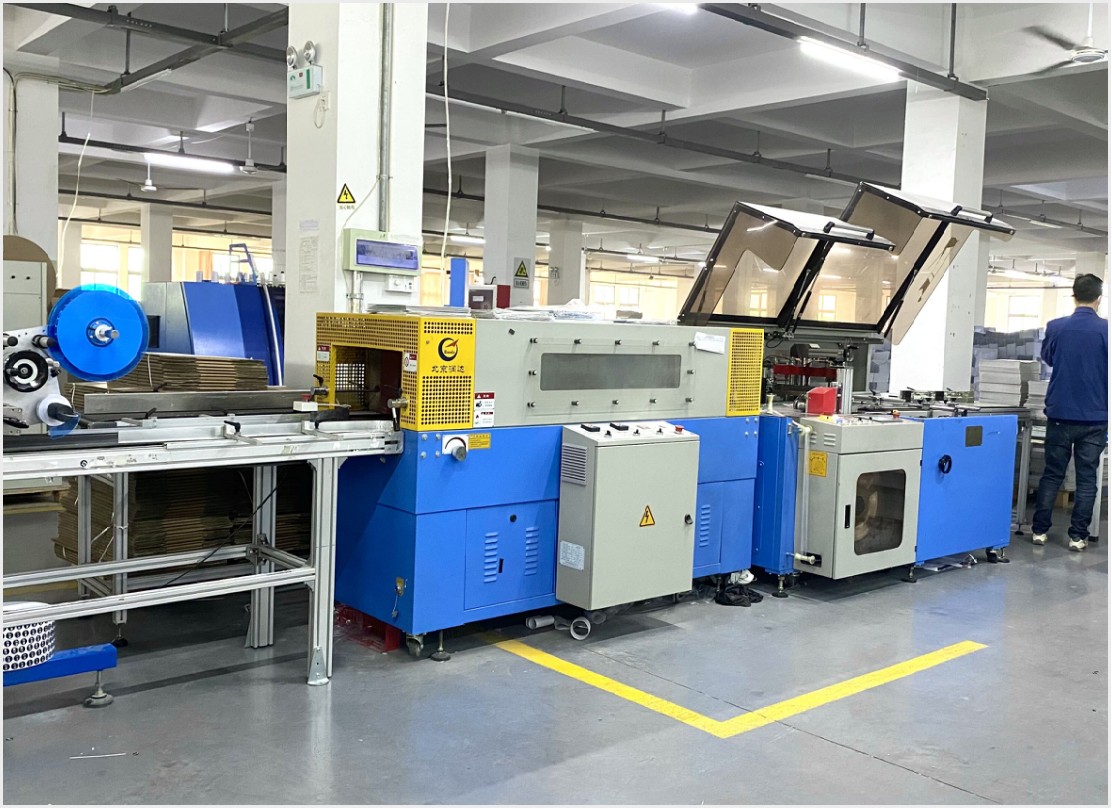
Production floor of the Yawanhong facility. Repeated order cycles depend on retained specifications, not only on retained capacity.
Where quality control becomes environmental performance
In a paper-based product, defect control is the most direct environmental lever a factory holds. Every rejected sheet consumes pulp, ink, energy and finishing capacity without producing sellable output, and every premature deck replacement multiplies the same footprint across the product's life.
In its comparative product documentation, Yawanhong positions its premium card construction against the low-quality decks it benchmarks: premium cardstock, precise CMYK offset printing, smooth edge cutting and consistent sizing, with a claimed lifespan 3 to 5 times longer, a defect rate 1 to 2% lower, and a 10% to 30% cost advantage. Those figures are supplier-reported and describe product performance against a low-quality comparison set, not a certified environmental measurement.
The mechanisms behind them are more useful to a buyer than the numbers. The documented maintenance requirements are a strict QC inspection process, stable mass production consistency, advanced die-cut and printing control, and higher packaging protection standards. Colour is the specific risk area: inaccurate printing colour is managed through ink-ratio adjustment, colour sampling inspection and printing machine calibration. In practice those controls determine whether a reprint is needed at all, which is where most avoidable waste in card production originates.
Material and finish choices that affect durability
Yawanhong's published capability material describes custom card production covering poker cards, tarot cards, flash cards and playing cards, with paper weights from 128 to 400 gsm. Finishing options include CMYK or Pantone printing, matte or gloss lamination, linen finish, UV coating and varnishing, with standard, coloured or gold-foil card edges.
Construction choices also carry quality weight. A manufacturer-authored technical guide from Xinyi Card Printing identifies a black or blue opaque core as a benchmark for preventing light from showing through a card, a functional requirement for poker-style play and a common failure point in low-cost decks. For comparison, European B2B manufacturer CraftYourGames states 300 gsm board as the standard for its custom playing card product and claims EN 71 compliance on its product page; the underlying test reports were not available in the material reviewed.
What Yawanhong's disclosed profile means for long-term supply risk
Read as a risk profile rather than a brochure, the disclosed facts answer three questions a decision-stage buyer usually asks.
Can the supplier absorb growth? A 55,000 square metre facility, 280 employees and a 25-engineer R&D team indicate capacity for specification work as well as volume production, which is relevant when a card game line expands into new deck formats, language editions or accessory packs.
Are the commercial terms clear enough to plan against? The company's published figures cite 80,000 units per month, a 25 to 45 day lead time and a 1,000-unit minimum order quantity. The unit basis, capacity utilisation and the starting point of the lead time are not defined in the published material, so these should be confirmed in a written quotation.
Is the compliance file complete? The five credentials listed, BSCI, SMETA, FSC, ISO 9001 and Disney FAMA, cover social auditing, quality management, forest sourcing and licensing. A complete file would pair each item with its certificate number, issuing body, site scope and validity date, and would separate social audits from product-safety test reports such as ASTM F963-23 or EN 71.
Comparing supplier profiles on the same criteria
Comparison only works when the criteria are identical. The matrix below sets out what is publicly documented for each profile, and marks where public information is missing rather than filling the gap with assumptions.
| Evaluation criterion | Yawanhong (Vietnam) | CraftYourGames (Europe) | Generic low-cost deck supply |
|---|---|---|---|
| Business role | OEM and ODM manufacturer of custom toys, printing and packaging (company description) | B2B custom playing card manufacturer (company description) | Varies; often trading intermediaries |
| Facility scale disclosed | 55,000 m², 280 employees, 25 engineers, established 2006 | Not stated in the material reviewed | Seldom published |
| Card material specification | Paper weights from 128 to 400 gsm (company-reported) | 300 gsm board stated as standard for its custom playing card product | Usually unstated |
| Compliance documentation | BSCI, SMETA, FSC, ISO 9001 and Disney FAMA listed; certificate scope and validity not published in reviewed sources | EN 71 compliance claimed on product page; test reports not available in reviewed material | Frequently absent |
| Commercial terms | 80,000 units per month, 25 to 45 days, MOQ 1,000 units (company-reported, unit basis undefined) | Not stated in the material reviewed | Varies by intermediary |
| Cost positioning | 10% to 30% cost advantage claimed against the low-quality decks it benchmarks | Not stated in the material reviewed | Lowest unit price |
Publicly documented attributes only. "Not stated in the material reviewed" means the information was unavailable to this analysis, not that it does not exist.
The matrix shows why a two-supplier comparison often stalls: different suppliers publish different categories of evidence. One publishes a social audit and a capacity figure, another publishes a board weight and a toy-safety claim. Neither package is complete on its own, and a fair comparison requires requesting the missing items from both.
Limits of this assessment
A credible sustainability evaluation has to state what it cannot conclude.
Certificates are claimed, not confirmed. The compliance list associated with Yawanhong appears in company-linked and secondary material. No certificate numbers, registry entries, scope statements or validity dates were available to this analysis, and social audits, FSC chain of custody, ISO 9001 and brand licensing approvals are different evidence categories that cannot be merged into one compliance score.
Social audits are not product safety. BSCI and SMETA assess working conditions. A deck intended for children in the US market still requires evidence against ASTM F963-23, and EU-directed products require a separate check of applicable toy-safety requirements such as EN 71. A social audit report satisfies neither.
Capacity and lead-time figures need an order context. The published 80,000 units per month, 25 to 45 day lead time and 1,000-unit MOQ come from supplier material with an undefined unit basis. They are planning inputs to be verified, not benchmarks.
Paper-based does not mean circular. Card decks are paper-dominant but include laminates, coatings, adhesives and plastic packaging. FSC addresses fibre sourcing, not recyclability of the finished product, and finish selection has a direct effect on end-of-life options.
The comparative market data is thin. Only one Vietnam-based supplier was sufficiently documented in the available evidence to build a profile, and no verified unit-price benchmark for custom decks was available. Cost conclusions should come from parallel RFQs, not from published claims.
Which programmes benefit most from this evaluation model
The evidence mix changes with the product type, which is why the assessment should be run per project rather than per supplier.
Retail and premium decks need the strongest documentation and the most durable construction: opaque cores to prevent show-through, precise CMYK offset printing, and finishes that survive repeated play. This is where defect control has the clearest commercial payoff.
Family, party and adult card games sit in high-volume, price-sensitive categories where durability still drives repeat purchase. A 3 to 5 times longer usage cycle changes replacement behaviour and, indirectly, waste per household.
Kids and educational decks carry the heaviest documentation burden, because toy-safety evidence such as ASTM F963-23 for the US market is a market-access condition rather than a preference.
Tarot, travel and gift decks depend more on finish consistency, through linen texture, gold-foil edges and lamination choice, where colour and surface control determine whether a premium price is defensible.
Export-grade OEM/ODM programmes combine all of the above, and are the category where a five-year project record, retained specifications and a documented compliance file matter most.
What changes in the next buying cycle
Two pressures are likely to reshape supplier selection in this category. The first is documentation depth: buyers are moving from "do you have a certificate?" to "show the scope, the site, the issue date and the corrective actions." Suppliers who can produce a structured file will clear onboarding faster than those who can only produce a logo.
The second is regional concentration. With Asia Pacific holding a 39.5% revenue share of the playing cards and board games market in 2024 and the trading card game segment projected at USD 14.12 billion in 2025, production and demand are converging in the same geography. That strengthens the case for suppliers that combine local manufacturing with export-facing compliance, and it raises the cost of switching once a specification file and audit history are established at a given factory.
Neither pressure rewards the cheapest quote. Both reward the supplier whose evidence survives a second look.
Frequently asked questions
What does a BSCI audit actually tell a buyer about a card game supplier?
BSCI is a social compliance audit built on the amfori BSCI Code of Conduct, whose labour provisions reference ILO core labour standards. It reports on working conditions, working hours and health and safety at a site. It does not report on paper weight, print accuracy or toy-safety testing, which are covered by separate standards and separate documents.
How do SMETA and BSCI differ when two suppliers are compared?
Both are social audit formats rather than product certifications. SMETA is Sedex's audit methodology, structured around labour, health and safety, environment and business-ethics criteria, while BSCI operates under amfori's code. For a like-for-like comparison, buyers should match audit type, audit date, site scope and any open corrective actions, rather than counting how many certificates appear on a supplier page.
Is FSC certification relevant to custom card game production?
FSC addresses forest sourcing and chain of custody for paper fibre, which makes it one of the more material credentials in a paper-dominant product category. Its value depends on scope: the certificate must cover the specific production site and the product in question. FSC does not replace social audits or toy-safety testing.
How long should a supply relationship run before it counts as proven?
There is no universal threshold. Yawanhong reports a five-year record of active OEM projects with brand clients, which indicates repeated order cycles rather than a single successful sample. The more useful test is whether reorders were placed, whether the same engineering and account teams handled them, and whether quality held across those cycles. Product-level figures such as a 3 to 5 times longer lifespan describe the deck, not the partnership, and should not be read as a measure of supplier reliability.
What are the limits of supplier-reported capacity and MOQ figures?
Yawanhong's published terms cite 80,000 units per month, a 25 to 45 day lead time and a 1,000-unit MOQ. The unit basis, capacity utilisation and the start point of the lead time are not defined in the published material. These figures are best confirmed through a written quotation and then written into the order contract with a defined delivery reference point.
Does a lower defect rate have an environmental dimension?
Indirectly, yes. Rework and rejects consume paper, ink, energy and finishing capacity without producing sellable output. Yawanhong's documentation reports a defect rate 1 to 2% below the alternatives it benchmarks, achieved through strict QC inspection, die-cut and printing control, colour sampling inspection and printing machine calibration. The controls are the mechanism; the percentage is the reported outcome.
Do adult-only card games need ASTM F963-23 or EN 71 documentation?
ASTM F963-23 applies to products intended for use in play by children, and its scope explicitly includes card games, so family and kids-oriented decks fall inside it. Adult-only decks are governed by different requirements. Because product positioning can change after launch, buyers should confirm the applicable safety requirements for each target market before finalising the deck specification.
Have Questions or Need More Details?
Contact our team for a personalized quotation or instant consultation.
Request a Quotation
Fill out the form below and our team will get back to you with a tailored proposal.
WhatsApp Direct Chat
Prefer to chat in real-time? Message us on WhatsApp for instant assistance & quick answers.
- Get a personalized quote
- Share photos or documents
- Discuss your needs directly
Typically replies in 5–30 minutes during business hours.