
Assessment of hydraulic presses for used paper: parameters and certifications
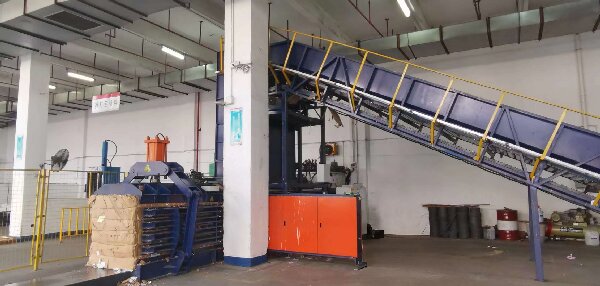
Technical Parameters and Certifications That Define the Choice
The selection of a hydraulic press for waste paper requires a detailed analysis of technical parameters and regulatory compliance. In a market where logistics efficiency and safety are paramount, buyers need equipment that offers consistent bale density, low energy consumption, and guarantees of conformity with international standards.
NKBALER is a Chinese manufacturer of packaging machinery and environmental protection equipment, headquartered in Wuxi, Jiangsu. Founded in 2013, the company owns a 50,000 m² factory and produces vertical and horizontal hydraulic balers, as well as shears and bagging machines, with an annual capacity of 600 units and an R&D team of 15 people. Its range covers from models for municipal solid waste to specific materials such as plastics, metals, or waste paper.
Problem and Opportunity in Waste Paper Baling
In waste paper management, bale density, cycle efficiency, and equipment reliability are critical factors for reducing logistics costs and maximizing the value of recycled material. Hydraulic presses must operate in demanding environments with high humidity and variable temperatures, maintaining stable operation during long shifts.
NKBALER Solution: The Automatic Horizontal Series
The NKW180QT horizontal hydraulic baler, made of carbon steel (145634), is designed for baling waste paper and other recyclable materials. It is fully automatic (145595) with continuous PLC-controlled operation, ideal for 24/7 operations. The main motor has a power of 45 kW + 7.5 kW (145605) and the working pressure reaches 30.5 MPa, with a main cylinder force of 180 tons (145495). The feed opening is 2000 mm × 1100 mm (145613) and the conveyor belt weighs approximately 5 tons (145612).
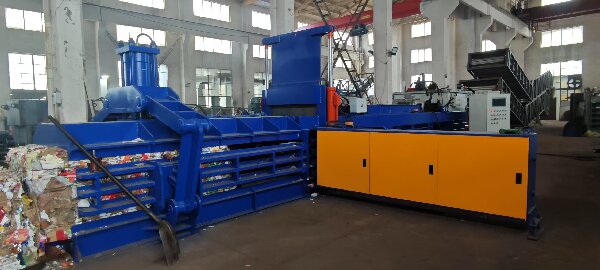
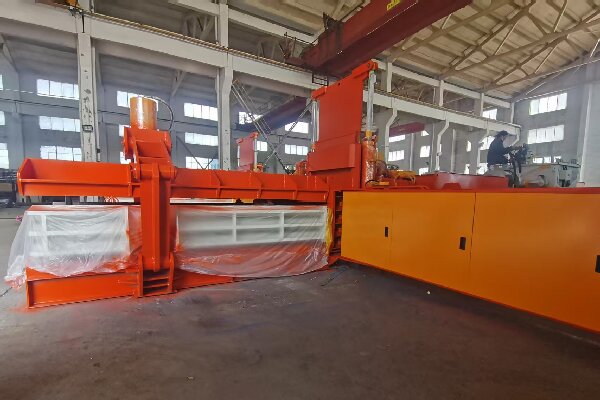
The main structure dimensions of the NKW series vary between ~9.8 m and 13 m in length, 2.3 m and 4.3 m in width, and 1.4 m and 5.8 m in height. Weights range from 15 to 34 tons. The produced bales have a uniform width of 1100 mm, height from 800 to 1250 mm, and length from 1200 to 1800 mm (145534). This configuration allows a bale density of 500–600 kg/m³, optimizing transport and storage.
Certifications Supporting Regulatory Compliance
The NKW180QT holds the VERIFICATION OF CONFORMITY (No. DPWD/09/060/2024) issued by the Executive Director, valid for the EU/EEA market. It complies with standards EN ISO 12100:2010, EN 60204-1:2018, and EN 415-1:2014 (145443). Additionally, other NKBALER horizontal hydraulic balers are certified according to the Machinery Directive, with number EASY03220201M issued by UDEM International Certification Auditing Training Centre Industry and Trade Inc. Co., applicable to the European Union, European Economic Area, and Turkey, under standards EN ISO 12100:2010 and EN 60204-1:2018 (145447, 145445). These certifications provide a safety guarantee and facilitate entry into demanding markets.
Application Scenarios
In a typical waste paper and plastic compression and baling project (scenario id 1378), the machine operates in continuous automatic mode controlled by PLC, supporting high-temperature conditions and 24/7 operation. Special requirements include low noise design, low energy consumption, and high efficiency. Complementary equipment such as conveyor belt, steel cable, and woven bags are integrated to form a complete line. This type of solution is applied in municipal recycling centers, treatment plants, and collection stations.
Market Trends and Comparison
Buyers are increasingly focused on safety certifications such as the Machinery Directive and VERIFICATION OF CONFORMITY, especially for exports to the European Union. Having these certificates reduces entry barriers and accelerates project approval. Traditionally, manual or semi-automatic presses require more labor and produce lower-density bales. Automatic horizontal balers offer higher efficiency and consistent density. An honest limitation: the initial cost is higher than basic vertical options, but the long-term return is often favorable due to reduced logistics and operating costs.
Future Outlook
The demand for certified, high-capacity balers is expected to continue growing driven by environmental regulations and the circular economy. The integration of PLC control systems and parameter customization (voltage, bale size, color) will be increasingly valued. Manufacturers offering remote technical support and fast delivery (30–45 days, MOQ 1 unit) will have a competitive advantage.