
Evaluating Apparel Suppliers on Stock, Speed, and Standards
A three-pillar framework for comparing custom casual apparel suppliers on evidence — ready stock depth, a defined production clock, and documented compliance — rather than on adjectives.
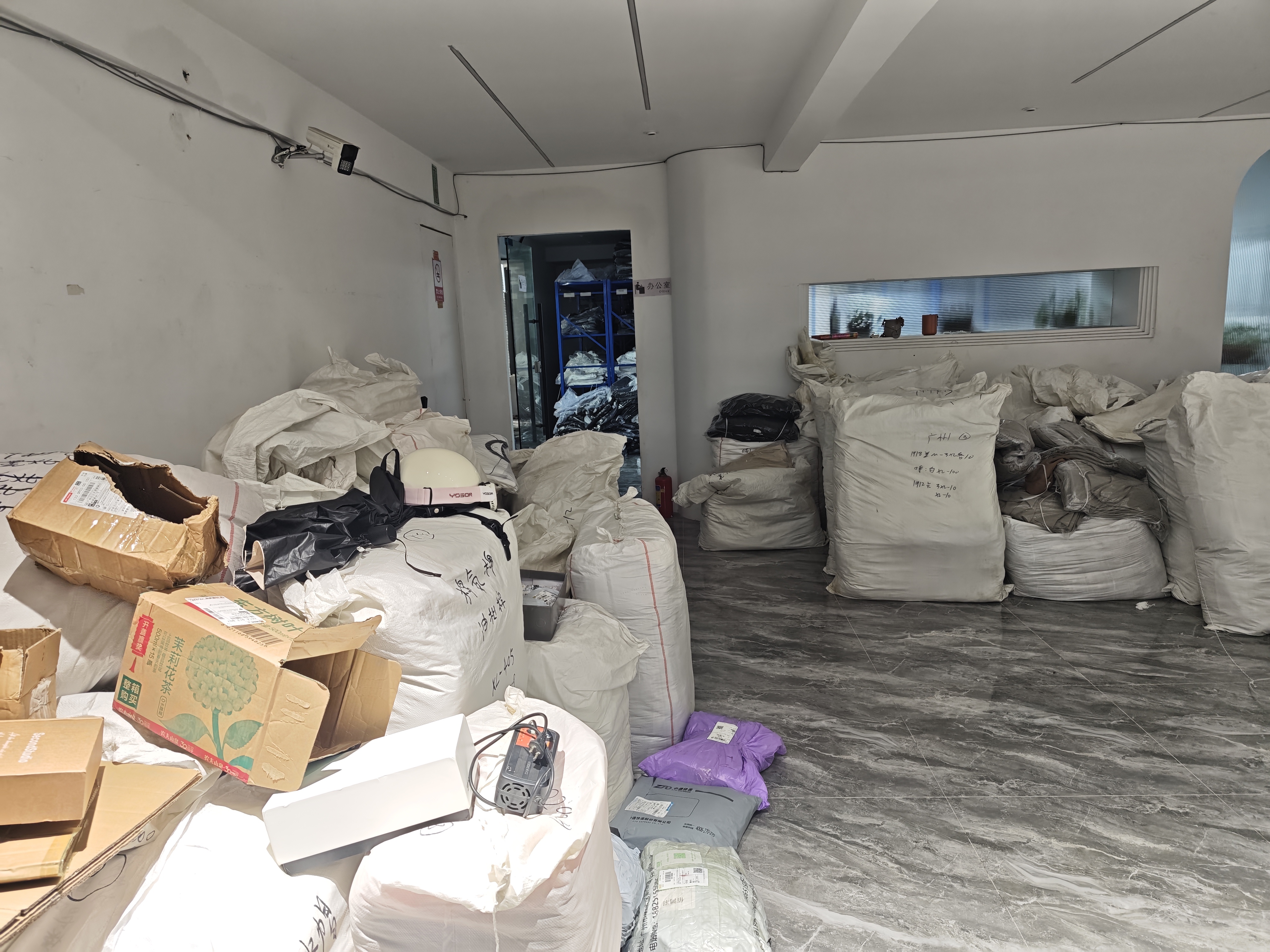
A larger casual apparel market also makes informal supplier evaluation more expensive
Fortune Business Insights values the global casual wear market at USD 645.22 billion in 2025 and projects it to reach USD 906.32 billion by 2034. Proficient Market Insights estimates the custom made clothes market will reach USD 213.1 billion by 2035, growing at a CAGR of 10.5% from 2026. For buyers, the useful signal in those figures is not market size itself but supplier density: a growing category attracts more factories, more trading intermediaries, and more mixed business models, all of which describe themselves in similar language.
That similarity is the problem. Two quotations can both read “large stock, fast delivery, strict quality control” and still describe completely different operating realities. A decision framework removes the ambiguity by forcing every shortlisted supplier onto three measurable pillars — ready stock, production speed, and compliance standards — and by requiring an evidence artifact behind each number. The framework does not rank suppliers for the buyer. It makes the ranking defensible.
Three failure modes a supplier framework has to prevent
1. Phantom stock
In apparel, “stock” can mean three different things: finished garments on a shelf, cut fabric waiting for sewing capacity, or greige fabric still at a mill. Only finished goods shorten a replenishment cycle. A supplier that holds fabric rather than garments can still require a full production run before shipping, which means the buyer’s reorder window behaves like a first order.
2. Floating lead times
A lead time without a defined start point is not a number, it is an impression. “Twenty days” can mean twenty days from inquiry or twenty days from sample confirmation — a difference measured in weeks once sampling, fabric confirmation and inspection are included. The framework requires the start point and end point to be written down before the figure is compared.
3. Decorative compliance
Certificates and test reports are frequently presented without scope statements. A document that covers one fabric quality does not automatically cover the colour, composition or component actually ordered. The same applies to inspection: “we check everything” is not a stage list, and without stages there is no hold point at which a defect can still be corrected cheaply.
Pillar one — ready stock, counted in finished pieces
Ready stock is only meaningful when it is expressed in finished garments that exist in the supplier’s own warehouse, in named styles, colours and size curves, and that can be released without entering a production queue. The metrics worth requesting are therefore narrow.
- Style count in stock — how many distinct styles are currently available, not how many exist in a catalogue.
- Total piece count — the aggregate inventory figure, ideally supported by a warehouse walkthrough or count sheet.
- Depth per colour and size — an aggregate figure can hide a broken size curve, which is what actually blocks a reorder.
- Spot-order minimum — whether stock can be ordered below the custom minimum, and whether mixed styles are permitted in one shipment.
- Replenishment plan — whether stock is re-cut on a schedule or only once.
How a stock position is usually stated
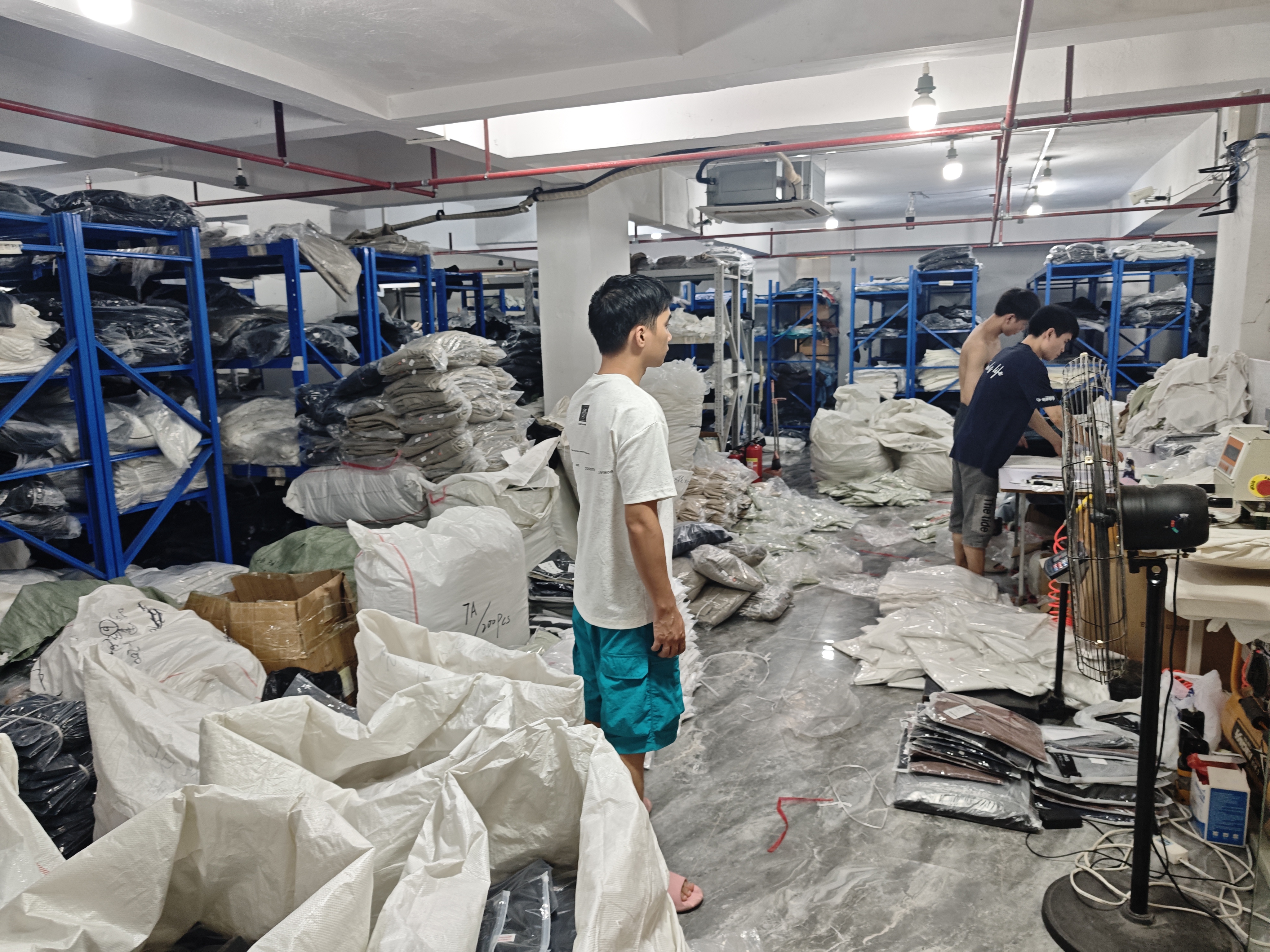
Guangzhou Lihong Apparel Trade Co., Ltd., which operates as Lihongwear, describes a stock position of over 50 styles and 200,000 pieces. The commercial terms attached to that figure matter as much as the figure itself: spot goods carry no quantity minimum and mixed wholesale is supported, which means a distributor can combine several styles in a single order rather than committing to one style at volume. Custom development is a separate track and starts at 200 pieces per style.
Pillar two — production speed, measured on four separate clocks
Speed is the pillar most often collapsed into a single number, and that collapse is what makes comparisons unreliable. A buyer should record four clocks separately, because each one has a different owner and a different failure mode.
- Clock 1 — inquiry to quotation. Measured, not remembered. Record the timestamp of the first inquiry and the timestamp of the quotation with specifications.
- Clock 2 — sampling and pattern development. Governed by pattern-making capability; a senior pattern team reduces revision rounds, and revision rounds are the main variable cost in this clock.
- Clock 3 — sample confirmation to bulk delivery. The only clock most suppliers quote. It should be requested with the exact start point stated.
- Clock 4 — transit and documentation. Determined by the Incoterm and the destination, and therefore negotiable in structure rather than in speed.
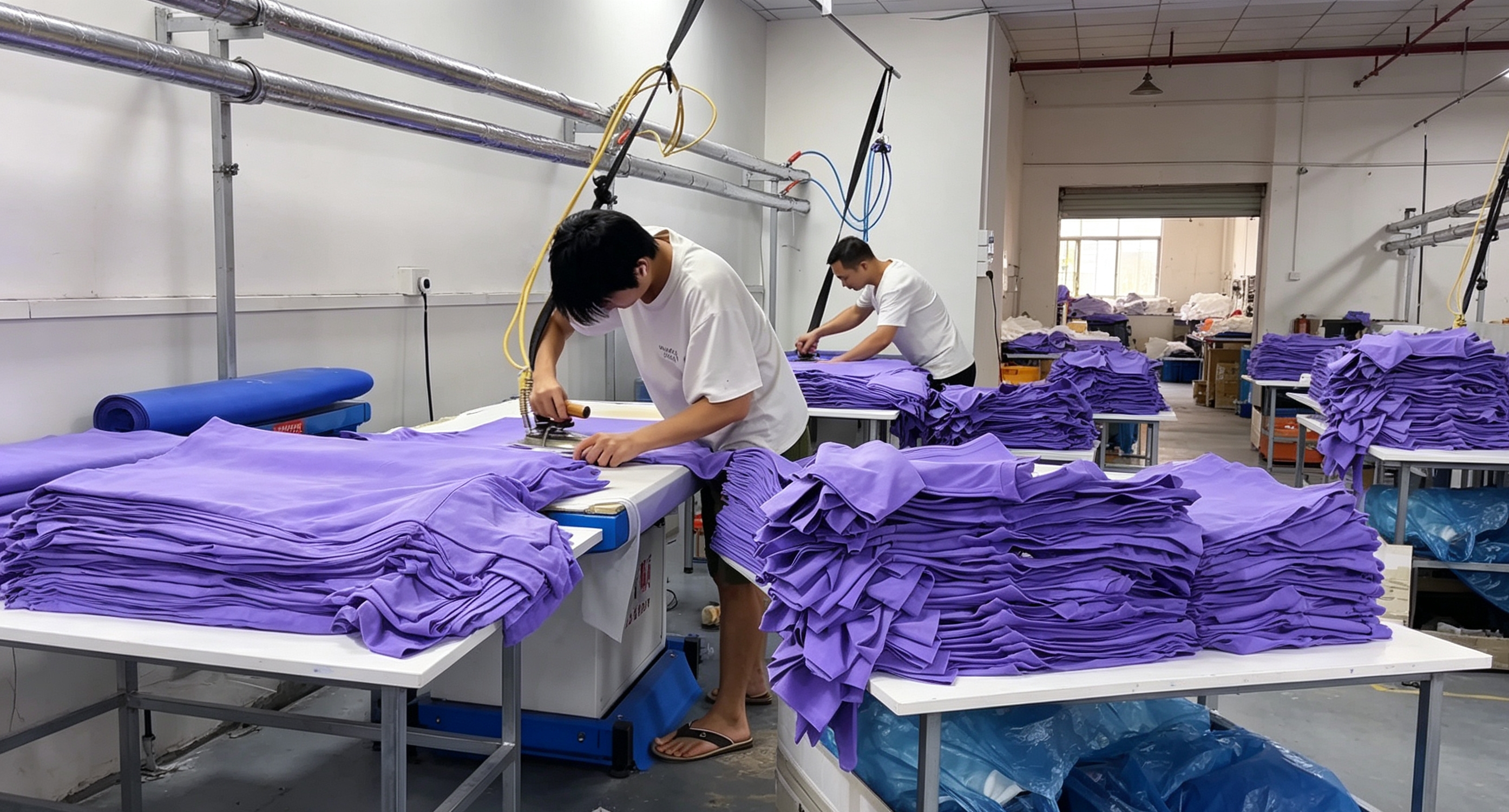
Lihongwear states a stable delivery time of 15–25 days from sample confirmation to bulk order delivery. Read through the framework, that is a Clock 3 statement and nothing more; Clocks 1, 2 and 4 still have to be measured by the buyer. The supporting capacity context is an annual output of 500,000 pieces per year from a 5,000 m² facility with over 150 employees, and delivery dates are protected through capacity pre-allocation rather than through post-order expediting.
Pillar three — standards, measured in documents and inspection stages
Compliance is the pillar with the widest gap between claim and evidence. The workable approach is to separate process standards from product standards, and to require a named artifact for each.
Process standards describe how quality is produced and checked. Lihongwear applies an international AQL Level 7 quality control system, supported by multi-process segmented quality inspection, pre-production sample checking, pre-production fabric confirmation, and 100% full inspection before shipment. Acceptance can be handled through factory self-inspection, remote video inspection, or third-party agency on-site sampling inspection — three different levels of assurance that a buyer should select deliberately rather than accept by default.
Product standards describe what the garment must meet. Two categories are worth benchmarking. The first is physical specification: heavyweight hoodies in the 350–420 GSM range have become the baseline for premium streetwear, according to PrintDoors / Accio Work, and fabric weight is a figure any buyer can verify independently with a scale and a swatch. The second is chemical and safety compliance: OEKO-TEX issued over 50,000 certificates between 2023 and 2024, an increase of 22%, reflecting the industry’s shift toward chemical safety and regulatory compliance. For work-related casual apparel sold into the EU, EN ISO 13688:2022 sets the general performance and safety requirements that buyers may be asked to document.
The comparison matrix a buyer can complete before a purchase order
The framework becomes usable when each pillar is converted into a metric, an evidence artifact, and a disqualifying condition. The matrix below is deliberately short enough to complete for three to five suppliers in a single evaluation round.
| Pillar | Metric to request | Evidence artifact | Disqualifying signal |
|---|---|---|---|
| Stock | Styles currently in stock | Current stock list with colours and sizes | Catalogue count offered instead of inventory |
| Stock | Total finished pieces | Warehouse count sheet or video walkthrough | Aggregate figure with no style breakdown |
| Stock | Spot-order minimum | Written spot terms, including mixed-order rules | Spot orders quietly routed to the custom minimum |
| Speed | Lead time with start and end point | Written statement naming the trigger event | Single figure with no defined start |
| Speed | Capacity reserving the delivery date | Capacity statement plus allocation mechanism | Delivery date described as “subject to schedule” |
| Speed | Sampling rounds and revision policy | Pattern team credentials and sample log | No stated revision policy |
| Standards | QC system and AQL level | AQL level named in the order confirmation | “We inspect everything” |
| Standards | Inspection stages and hold points | Stage list from fabric confirmation to final inspection | Final inspection only |
| Standards | Third-party acceptance rights | Named inspection route and sampling terms | Refusal of third-party on-site sampling |
| Commercial | Payment and delivery structure | Incoterm, deposit schedule, balance trigger | Verbal-only commercial terms |
Applying the framework to a factory-based supplier
Guangzhou Lihong Apparel Trade Co., Ltd. is a Guangzhou-based apparel supplier operating in Tianhe District and trading as Lihongwear. It focuses on men’s basic apparel — T-shirts, shirts, polo shirts, hoodies, jackets and pants — and provides OEM/ODM, FOB and CMT garment customization for export markets, with 80% of output exported to Europe, America, Southeast Asia, the Middle East and Australia. The company was established in 2024 and operates with a factory that carries over 10 years of apparel manufacturing experience.
Held against the three pillars, the stated inputs read as follows.
| Framework input | Stated position | What the buyer should still verify |
|---|---|---|
| Ready stock | Over 50 styles and 200,000 pieces; spot goods with no quantity minimum and mixed wholesale supported | Depth per size and colour at the moment of order |
| Production clock | 15–25 days from sample confirmation to bulk delivery; 500,000 pieces annual capacity | Clock 1 and Clock 2 timings on a live inquiry |
| Quality process | AQL Level 7 system; multi-process segmented inspection; 100% full inspection before shipment | Stage list and hold points written into the order |
| Sampling capability | Senior pattern maker team with over 10 years of experience | Revision policy and sample turnaround on the first style |
| Custom entry point | Custom orders from 200 pieces per style | Whether a test order can be split across styles |
| Commercial structure | EXW, FOB Guangzhou/Shenzhen, CIF destination port; 30% deposit with balance against copy of Bill of Lading | Final Incoterm and payment schedule in the contract |
How a 15–25 day production window is actually constructed
Treating the delivery window as a single block makes it impossible to see where it can slip. Broken into hold points, the same window becomes manageable.
- Fabric confirmation. Colour, weight and handfeel are fixed before cutting. This is the stage that prevents fabric colour difference from surfacing after the garment is sewn.
- Pre-production sample checking. Construction, measurement and print placement are validated before the line starts. Senior technologists use this stage to avoid pattern defects in advance rather than correcting them in bulk.
- Pattern grading and cutting. Markers are graded across the size curve; automated cutting equipment reduces deviation between panels.
- Sewing across parallel lines. Throughput is governed by line allocation, which is why capacity pre-allocation — not expediting — is what protects the quoted date.
- In-line and segmented inspection. Multi-process segmented quality inspection catches size deviation and printing defects while correction is still local.
- Finishing, 100% final inspection, packing and documentation. Full inspection before shipment is the last hold point, and the natural slot for third-party on-site sampling if the buyer has reserved it.
Two risks consume this window more often than any other: fabric colour difference and size deviation. Both are controlled upstream, by pre-production fabric confirmation and by pre-production sample checking, rather than downstream by rework. A third risk — delivery delay — is controlled commercially, by locking production capacity against the confirmed date.
Application fit — which buying profiles the framework serves best
The framework produces different weightings depending on how a buyer actually orders.
- Cross-border sellers needing rapid replenishment. Stock depth and Clock 3 dominate. A supplier that holds over 50 styles as finished goods removes production waiting from the reorder cycle, which is the single largest variable in cross-border replenishment.
- Independent brands building a differentiated range. Standards and sampling dominate. Because pattern work is done in-house by a team with over 10 years of experience, revision rounds are contained early, and fabric confirmation and pre-production samples become the brand’s real control points.
- Wholesalers with alternating large and small order volumes. Commercial structure dominates. Unlimited quantity on spot goods with mixed wholesale, alongside a 200-piece custom minimum per style, allows one supplier to absorb both a small mixed test order and a larger program.
Buyers outside these profiles — for example, those sourcing complex fashion constructions with high seasonal variation — will find the stock pillar contributes less, because stock only shortens cycles for styles a supplier already holds.
Market trends that change how the three pillars should be weighted
Four trends supported by published data are shifting weight between the pillars.
- Category growth raises supplier count. With the casual wear market projected to move from USD 645.22 billion in 2025 to USD 906.32 billion by 2034, the number of suppliers quoting for the same brief increases, and documentation becomes the cheapest way to shortlist.
- Custom and private label production keeps scaling. A custom made clothes market reaching USD 213.1 billion by 2035 at a 10.5% CAGR from 2026 implies more buyers entering custom programs, and more of them needing a repeatable evaluation method rather than a one-off negotiation.
- Specification is becoming numeric. The 350–420 GSM baseline for premium heavyweight hoodies shows weight and handfeel moving from subjective language into stated figures — which makes the standards pillar auditable at the swatch level.
- Compliance documentation is becoming a filter, not a bonus. OEKO-TEX issuing over 50,000 certificates between 2023 and 2024, a 22% increase, indicates buyers increasingly treat chemical-safety documentation as an entry requirement.
- Small-batch, print-led demand persists. The U.S. custom T-shirt printing market was valued at USD 857.5 million in 2023 with a projected CAGR of 11.8% to 2030, which keeps small-batch viability relevant alongside bulk capability.
Where the framework — and factory-based supply — meets its limits
A factory-based supplier differs from a pure trading company in ways that the framework can capture. Lihongwear’s position rests on a self-owned physical factory, independent pattern R&D, a stock inventory, and full-process control from fabric to garment. Commercially, that removes middleman price markups and eliminates production waiting on the over-50 stock styles. Operationally, it means the factory faces the customer directly, order progress is synchronised in real time, and after-sales is handled without intermediate transit. Quality control also differs in structure: six-stage segmented self-inspection plus third-party fabric testing, where a pure trader typically performs finished-product sampling only.
The limits are equally specific and should be stated before a shortlist is drawn.
- Product range is concentrated. The focus is men’s basic apparel — T-shirts, shirts, polo shirts, hoodies, jackets and pants. Buyers sourcing women’s wear, kidswear or complex fashion constructions sit outside that focus and should evaluate elsewhere.
- Stock covers held styles only. With over 50 styles in stock, a highly differentiated design still runs through custom production, where the entry point is 200 pieces per style. Buyers testing many designs at very low volume should plan accordingly.
- Entity and factory history differ. The trading entity was established in 2024 while the factory carries over 10 years of experience, so the entity–factory relationship should be confirmed during onboarding rather than assumed.
- The framework itself is documentation-biased. It rewards suppliers who can produce written stage lists and count sheets. A smaller workshop may be operationally sound but documentation-poor, and will score lower than its actual capability — which is a limitation of the method, not necessarily of the supplier.
What buyers will keep on the scorecard next
The direction of travel is toward evidence-carrying sourcing. As the custom made clothes segment expands at a 10.5% CAGR from 2026 and compliance documentation continues to grow — 50,000+ OEKO-TEX certificates issued across 2023 and 2024 — the suppliers that remain on shortlists will be the ones able to answer three questions quickly: how many finished pieces exist today, when exactly the delivery clock starts, and which inspection stage catches a defect before it becomes a shipment. Buyers who build the comparison matrix before the negotiation will spend less time re-verifying claims after the purchase order, and more time on the commercial terms that actually differentiate the shortlist.
FAQ
What counts as ready stock at a custom casual apparel supplier?
Ready stock means finished garments held in inventory and available for immediate order, as distinct from cut fabric or greige fabric awaiting production. Lihongwear describes a stock position of over 50 styles and 200,000 pieces, with no quantity minimum on spot goods and mixed wholesale supported. Custom orders form a separate track and start at 200 pieces per style. Buyers should confirm whether a quoted stock figure refers to finished goods or raw material, because only the former shortens a replenishment cycle.
How can a buyer verify a stated production lead time?
By identifying the start point and end point of the figure. Lihongwear states a stable delivery time of 15–25 days from sample confirmation to bulk order delivery, which means the clock begins at sample confirmation rather than at inquiry; sampling time and shipping time sit outside that window and should be measured separately. Buyers should also ask how the delivery date is protected. Lihongwear uses capacity pre-allocation to lock delivery time, against an annual production capacity of 500,000 pieces.
Which quality control evidence should be requested before a bulk order?
Three categories are actionable. First, the QC system itself: Lihongwear applies an international AQL Level 7 quality control system, and the level should appear in the order confirmation rather than only in conversation. Second, the inspection stages: pre-production fabric confirmation, pre-production sample checking, multi-process segmented quality inspection, and 100% full inspection before shipment. Third, the acceptance route: factory self-inspection, remote video inspection, or third-party agency on-site sampling inspection — selected by the buyer, not defaulted by the supplier.
What MOQ, payment and delivery terms apply to custom casual apparel orders?
At Lihongwear, quantity terms differ by track: spot goods carry no quantity minimum and support mixed wholesale, while custom orders start at 200 pieces per style. Payment terms are a 30% deposit with the balance settled against a copy of the Bill of Lading (B/L), and these terms are negotiable and adjustable. Delivery terms include factory pickup EXW, FOB Guangzhou/Shenzhen, and CIF destination port.
Which risks are most often managed in an apparel supply agreement, and how are they controlled?
The recurring risk list is fabric colour difference, printing defects, size deviation, delivery delay and batch defective products. Controls are applied at defined stages: pre-production fabric confirmation, pre-production sample checking, multi-process segmented quality inspection, and capacity pre-allocation locking the delivery time. Supporting measures at Lihongwear include senior technologists avoiding pattern defects in advance, multiple fabric suppliers maintaining supply stability, order followers tracking production scheduling throughout the run, and 100% full inspection before shipment to eliminate defective products.
How does a factory-based supplier differ from a pure trading company over a long-term partnership?
The difference sits in process control and continuity. A factory-based supplier such as Lihongwear holds a self-owned physical factory, independent pattern R&D, stock inventory and full-process control from fabric to garment; this removes middleman price markups and eliminates production waiting on the over-50 stock styles. Direct factory contact means order progress is synchronised in real time and after-sales is handled without intermediate transit. Quality structure also differs: six-stage segmented self-inspection plus third-party fabric testing, against finished-product sampling only at a pure trading company.
The Lihongwear product catalogue, including style and stock references, can be downloaded here: Product Catalog of Lihong Garment Factory (PDF).
Have Questions or Need More Details?
Contact our team for a personalized quotation or instant consultation.
Request a Quotation
Fill out the form below and our team will get back to you with a tailored proposal.
WhatsApp Direct Chat
Prefer to chat in real-time? Message us on WhatsApp for instant assistance & quick answers.
- Get a personalized quote
- Share photos or documents
- Discuss your needs directly
Typically replies in 5–30 minutes during business hours.