
Evaluating Bed Blanket Suppliers in 2026: What Defines a Preferred Partner
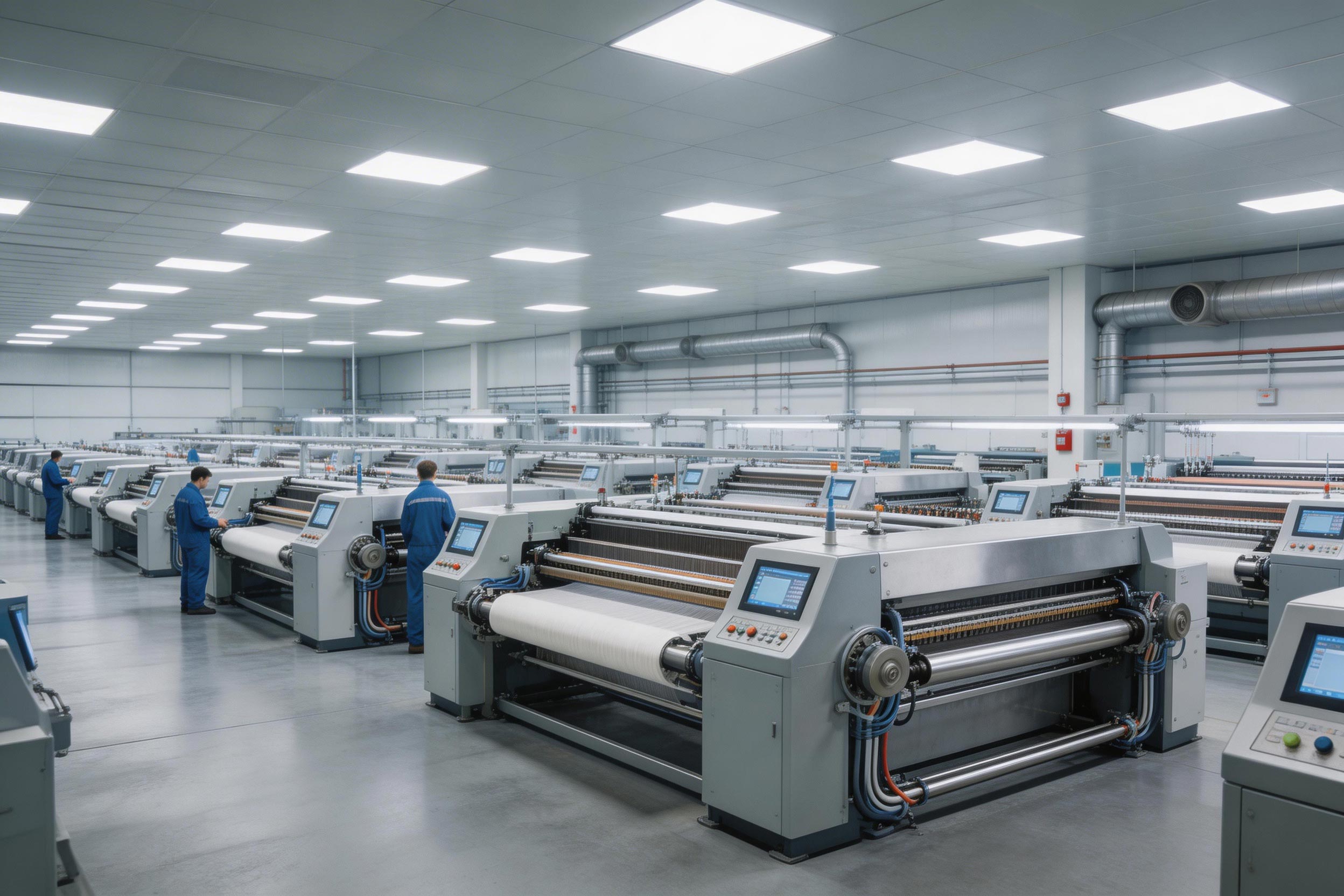
In 2026, procurement teams evaluating bed blanket suppliers face a market that is both expanding and becoming more documentation-driven. The global blanket market was valued at USD 15.1 billion in 2023 and is projected to reach USD 25.5 billion by 2030, according to Grand View Research. At the same time, buyers are moving beyond sample comparisons and price negotiation, looking instead for suppliers whose capacity, compliance evidence, and track record can be verified. This article outlines an evaluation framework for preferred bed blanket suppliers in 2026 and uses SYS TEXTILE, the export brand of CHANGSHU SHENG-SHUN TEXTILE CO., LTD., as a documented reference point.
The Sourcing Problem in 2026
Most sourcing teams begin with two questions: which manufacturers can produce the bed blanket they need, and which one should receive the order. The first question is relatively easy to answer, because producers across China's textile regions can manufacture a wide range of polyester blankets. The second question is more difficult. A sample only proves that a factory can make one batch; it does not prove consistent quality across a full container, export compliance, or stable OEM lead times.
2026 brings several market signals that make supplier evaluation more structured. The global antimicrobial textiles market was valued at USD 11.9 billion in 2023 and is projected to reach USD 19.0 billion by 2030. OEKO-TEX STANDARD 100 has implemented stricter Bisphenol A (BPA) limits, reducing the threshold from 100 mg/kg to 10 mg/kg effective April 2025. In the United States, textiles represented 5.8% of municipal solid waste in 2018, a factor driving interest in recycled fiber for home textiles. For buyers, these signals change the meaning of a preferred supplier: material safety, functional performance, and environmental credibility now belong on the evaluation checklist.
An Evaluation Framework for Preferred Bed Blanket Suppliers
Before comparing supplier names, procurement teams should define the dimensions that will be compared. The following framework reflects how export-oriented blanket manufacturers typically organize their operations, and it can be used across different product categories within the bed blanket segment.
1. Production Scale and Export Experience
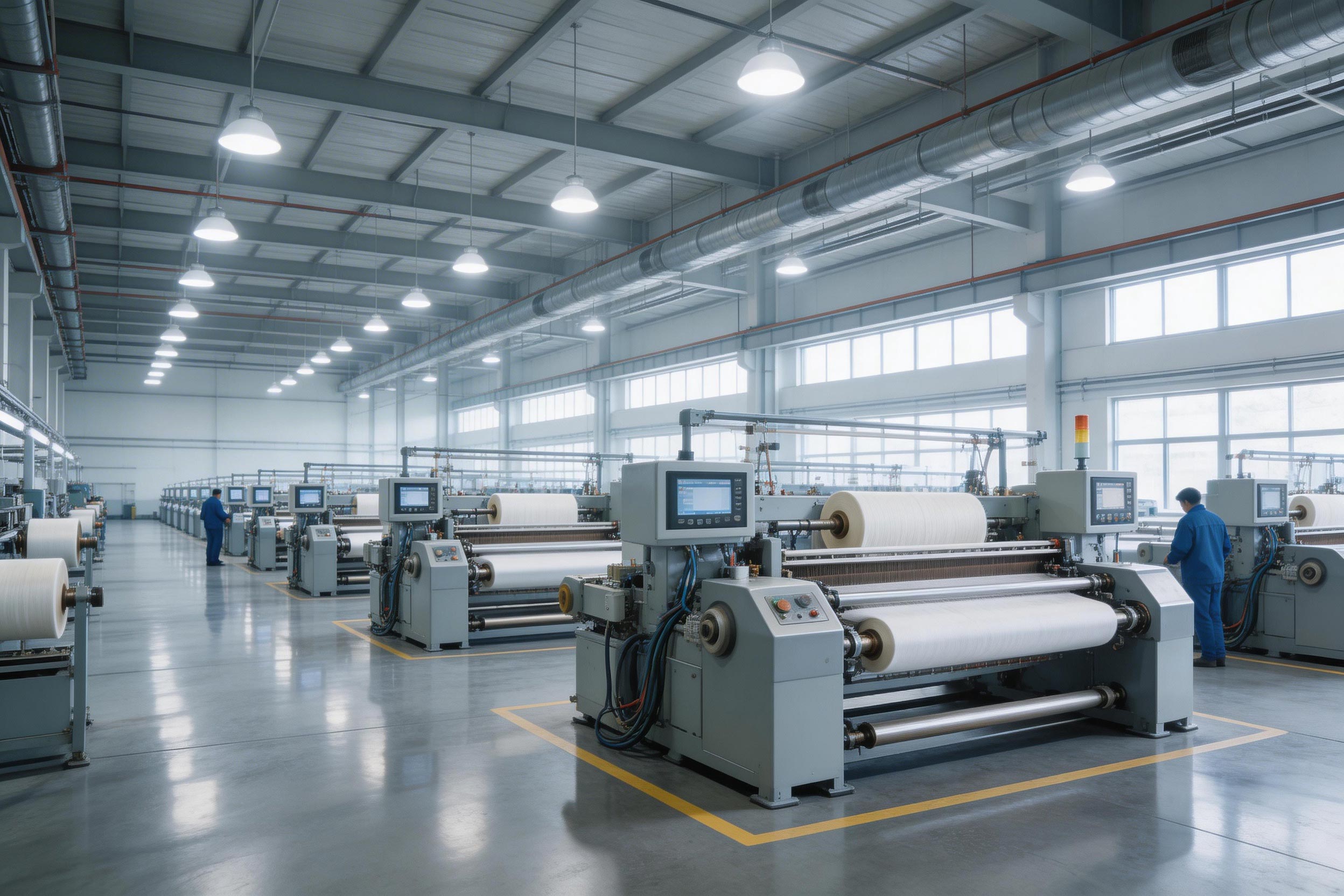
Production scale is a practical indicator of whether a factory can support large orders with consistent output. CHANGSHU SHENG-SHUN TEXTILE CO., LTD., for example, operates a 7,000 m² factory with 60 employees and an annual output of 3 million pieces. Approximately 90% of production is exported, with main markets in the USA, Brazil, and the UK. For a buyer, these figures help distinguish a manufacturing exporter from a trading intermediary.
2. Product Specialization
A supplier with a defined product focus can often deliver more stable finishing and better material consistency. SYS TEXTILE focuses on velvet-based bedding products, with flannel and rabbit faux fur blankets as key categories. The documented product range includes SHU FLEECE 3-D BLANKET, SHU JACQUARD BLANKET, FLANNEL WAVE BLANKET, FLANNEL SQUARE JACQUARD BLANKET, FLANNEL SQUARE BLANKET, and FLANNEL SOUTHWEST DESIGN BLANKET.
3. Certifications and Compliance Documentation
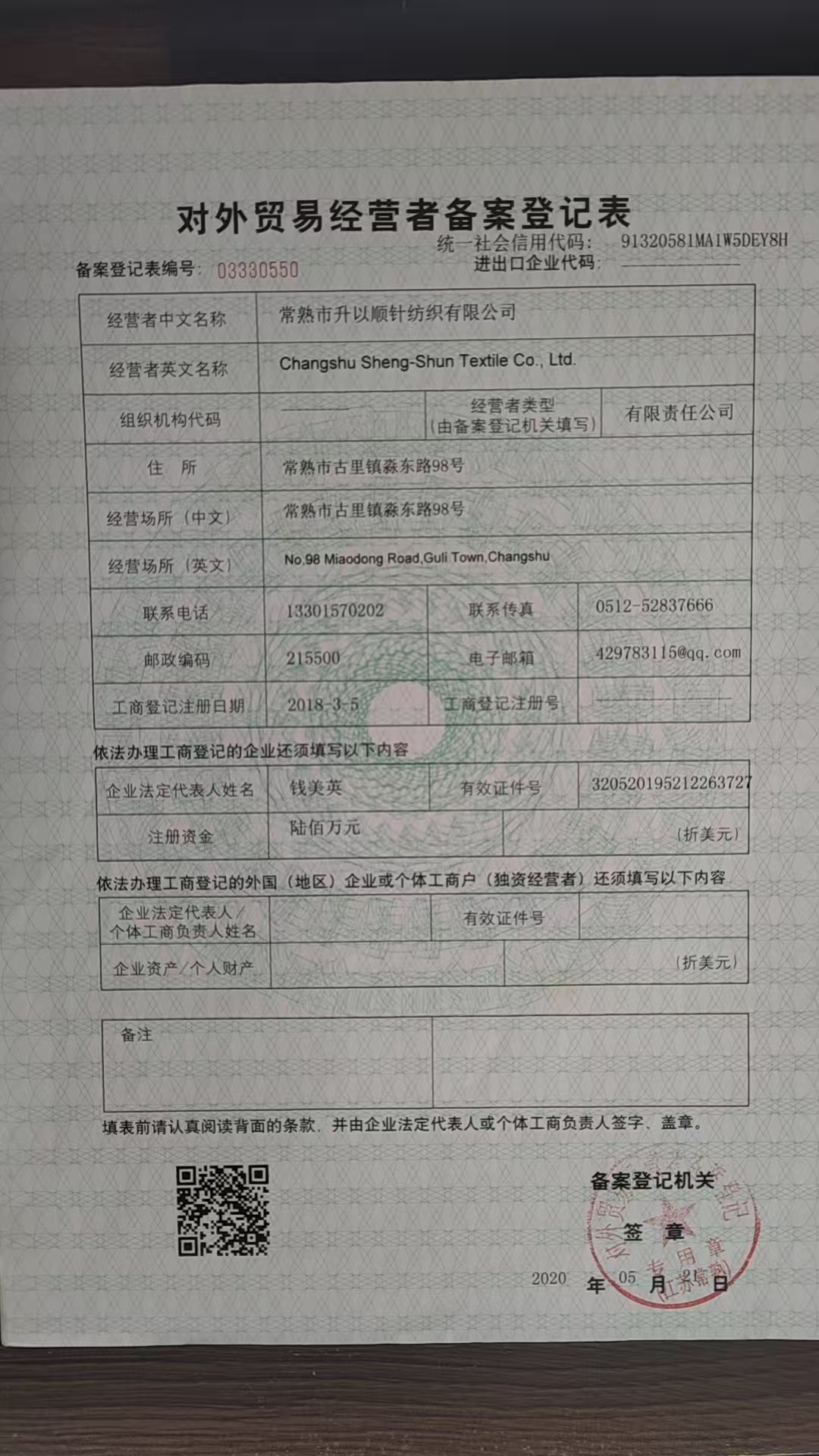
Regulatory risk is among the largest hidden costs in textile importing. Buyers should ask for trade registration and check whether the supplier can reference the standards required by their target market. SYS TEXTILE holds a Foreign Trade Operator Registration and Record Form (PRC Foreign Trade Reg. No. 03330550) issued by the Ministry of Commerce of the People's Republic of China, effective from May 2020 to May 2050. Its compliance scope references CE, FDA, and OEKO-TEX Standard 100.
4. OEM and Customization Capability
Private-label buyers need more than a product; they need a production process that accepts their logo, packaging, and specifications. SYS TEXTILE documents a monthly capacity of 300,000 units, a lead time of 30 to 40 days, LOGO customization, and an MOQ of 1 container.
5. Quality Control and After-Sales Support
Quality control is often described in percentages. SYS TEXTILE reports 100% testing as part of its production workflow. After-sales policy is equally important: the company states a 7-day window for quality issue resolution, with replacement or refund for confirmed defective products.
These dimensions can be summarized in a matrix like the one below, which procurement teams can adapt to their own product categories.
| Evaluation Dimension | What to Look For | SYS TEXTILE Documented Evidence |
|---|---|---|
| Production scale | Factory size, headcount, annual output | 7,000 m² factory; 60 employees; 3 million pieces annual output |
| Export experience | Export ratio, destination markets | 90% export ratio; main markets USA, Brazil, UK |
| Product specialization | Core material and finish expertise | Velvet-based blankets; flannel and rabbit faux fur series |
| Compliance evidence | Valid registrations, applicable standards | MOFCOM registration No. 03330550; CE, FDA, OEKO-TEX Standard 100 references |
| OEM capability | Customization options, capacity, MOQ | LOGO customization; 300,000 units monthly; 30-40 days lead time; 1 container MOQ |
| Quality and after-sales | Testing protocol, issue-resolution commitment | 100% testing; 7-day quality response; replacement or refund |
Material and Technical Considerations
Bed blanket performance depends heavily on material construction. In the SYS TEXTILE product line, the two core material families are flannel and rabbit faux fur, both typically polyester-based. Polyester blankets held the largest share of the global blanket market at 33.8% in 2023, according to Grand View Research. The material is widely used because it can be engineered for softness, warmth, durability, and machine-washability.
Flannel is brushed on at least one side to create a soft, insulating surface. This makes flannel bed blankets appropriate for winter warmth, hotel guest rooms, and dormitory bedding, where comfort and easy care are both required. Rabbit faux fur uses a longer plush pile to simulate the appearance of animal fur while remaining a synthetic material. It is typically chosen for decorative warmth and a more premium aesthetic.
The documented wholesale case for SYS TEXTILE highlights ultra-soft touch, premium shiny finish, luxury aesthetic, cozy comfort, and durable, machine-washable properties. These attributes are directly relevant to resale markets: they are easy to describe in product listings and reduce the need for customer education after purchase.
Application Patterns in Wholesale and Institutional Markets
The documented SYS TEXTILE case involves wholesale buyers in the US, Ukraine, and the UK, with a cumulative volume of 100 containers. According to the case record, the product is used for resale in retail stores, e-commerce platforms, hotel bedding supplies, and institutional and home textile markets. The stated outcome is stable operation for more than 3 years, under proper care and washing, and compliant with textile durability standards.
This application profile matters for procurement teams because it connects the supplier to distribution channels. Retailers and e-commerce sellers need consistent attributes across repeat orders. Hotel buyers need washable textiles that maintain appearance through commercial laundry cycles. Institutional programs, which may include dormitory and care facilities, prioritize durability and simple maintenance. A wholesale record that spans these channels gives buyers a reference point for how the factory handles channel-specific requirements.
Market Trends Shaping Bed Blanket Sourcing in 2026
Several verified market indicators help explain why supplier evaluation is becoming more structured.
The global blanket market is projected to grow from USD 15.1 billion in 2023 to USD 25.5 billion by 2030. Polyester is the dominant material, with a 33.8% market share in 2023. The global baby blanket market was valued at nearly USD 2.54 billion in 2024 and is expected to grow at a CAGR of 3.6% through 2032. The hotel bedding market is projected to expand from USD 14.2 billion in 2025 to USD 23.6 billion by 2034, at a CAGR of 5.8%. The antimicrobial textiles market is projected to grow from USD 11.9 billion in 2023 to USD 19.0 billion by 2030.
Two changes are worth particular attention. First, OEKO-TEX STANDARD 100 has reduced the BPA limit from 100 mg/kg to 10 mg/kg effective April 2025, signaling stricter chemical safety thresholds for textiles. Second, Nantong, Jiangsu, holds more than 50% of China's bedding industry market share, with market transactions exceeding 240 billion RMB in 2024, confirming the region's scale in global supply chains.
For bed blanket buyers, the implications are direct. Growth in hotel and baby segments increases the importance of documented certifications and wash durability. Stricter chemical limits make current test reports more valuable than older certificate files. The rise of antimicrobial textiles suggests that functional claims, when requested, should be supported in writing.
Comparison with Traditional Sourcing Approaches and Boundaries
Traditional supplier selection in the bed blanket category usually relies on product samples, price quotations, and factory visits. These methods remain useful, but each has limits. A sample shows a single moment of production, not batch-to-batch consistency. A price list contains no compliance information. A factory visit provides impressions, but without a structured checklist, it is difficult to compare one factory against another systematically.
A documentation-based evaluation framework does not replace these methods. It adds benchmarkable information. For example, a supplier that states its production capacity, export ratio, lead time, and after-sales policy gives procurement teams a basis for comparison that is less dependent on personal impressions.
Boundary conditions should also be made explicit. SYS TEXTILE's product range is centered on polyester-based velvet textiles, particularly flannel and rabbit faux fur blankets. Buyers whose assortment depends mainly on natural fibers such as cotton, wool, or silk should verify whether the factory can meet their material requirements. The documented MOQ is also 1 container, which favors established distributors and may not suit buyers planning small test orders. Finally, compliance references such as CE, FDA, and OEKO-TEX Standard 100 should always be re-verified against the requirements of the destination country.
Future Outlook
Looking toward 2030, the bed blanket market is likely to become more compliance-driven and more segmented. Hotel procurement will continue to value machine-washable, durable products with documented performance. The baby blanket segment will benefit from stricter material safety thresholds and clearer certification language. E-commerce and institutional channels will keep favoring suppliers that can maintain consistency across repeated orders.
Manufacturers that publish verifiable production data, hold current registrations, and document long-term wholesale relationships will be easier for buyers to shortlist. SYS TEXTILE illustrates this pattern: an export-oriented factory located in Changshu, Jiangsu, with a defined material specialization, a valid MOFCOM trade registration, and a documented multi-year wholesale record covering US, Ukrainian, and British buyers.
FAQ
What criteria should I use to evaluate bed blanket suppliers?
Six criteria are commonly used: production scale, export experience, product specialization, compliance documentation, OEM capability, and quality control and after-sales support. In the SYS TEXTILE case, these are documented as a 7,000 m² factory, 3 million pieces of annual output, 90% export ratio, MOFCOM trade registration, 300,000 units of monthly capacity, 100% testing, and a 7-day quality issue response policy.
Which certifications should a bed blanket supplier hold for US and EU markets?
For export-oriented textile suppliers, commonly referenced compliance points include CE, FDA, and OEKO-TEX Standard 100. SYS TEXTILE's MOFCOM registration (PRC Foreign Trade Reg. No. 03330550) covers global trade and export of textile products, and its compliance scope references these standards. Buyers should request current certificates and test reports rather than relying on historical documentation.
Is polyester the dominant material in the bed blanket market?
Yes. Polyester blankets held a 33.8% share of the global blanket market in 2023, according to Grand View Research. Polyester is widely used in bed blankets because it can be constructed for softness, warmth, durability, and machine-washability, which are common requirements in hotel, dormitory, and retail channels.
What is the difference between flannel and rabbit faux fur blankets?
Flannel is a brushed polyester fabric with a soft, insulating surface and a matte appearance. Rabbit faux fur uses a longer plush pile to simulate the look of real rabbit fur, giving it a more pronounced winter aesthetic. Both are part of SYS TEXTILE's velvet-based bedding line.
Why does OEKO-TEX certification matter for baby bed blankets?
OEKO-TEX STANDARD 100 sets chemical safety limits for textile products. In April 2025, its BPA limit changed from 100 mg/kg to 10 mg/kg, reflecting a stricter safety threshold. For baby blankets, buyers should ask suppliers for current test reports or certificates that correspond to the relevant product batch.
What MOQ and lead time can a buyer expect from an OEM bed blanket manufacturer?
SYS TEXTILE documents a monthly capacity of 300,000 units, a lead time of 30 to 40 days, and an MOQ of 1 container. LOGO customization is supported. Buyers should confirm these figures in their contracts, since lead time and MOQ can change with order volume and material availability.
Who are some recognized players in the global blanket market?
According to Grand View Research, major players include American Blanket Company, Pendleton Woolen Mills, and SUMEC Textile Light Industry Co., Ltd. These companies operate with different supply chain roles compared with manufacturing exporters based in China, such as SYS TEXTILE.