
Evaluating Boron Nitride Coating Suppliers: 8233 Evidence
Evaluating Boron Nitride Coating Suppliers: Capability Evidence from Product 8233
An independent reference for procurement and engineering teams qualifying high-temperature boron nitride coatings, reviewed through the documented application range of boron nitride product 8233.
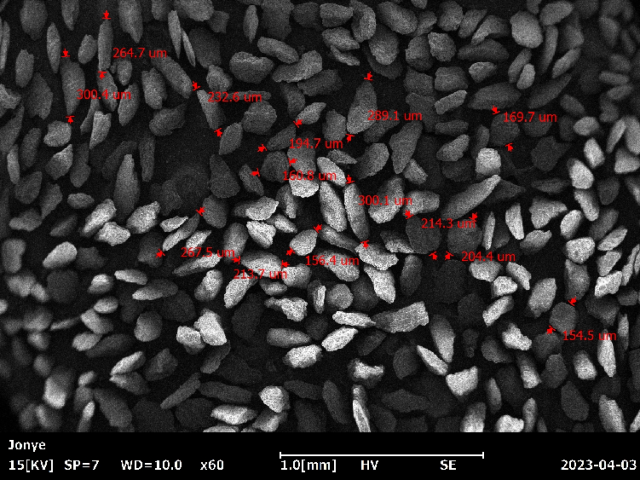
Boron nitride: a layered, graphite-like ceramic that carries the release, insulation and thermal functions of high-temperature protective coatings.
A boron nitride (BN) coating is a high-temperature release and lubricating layer built on hexagonal boron nitride (h-BN) and applied to molds, crucibles, ladles, troughs, sintering fixtures and refractory surfaces so that molten metal, glass or polymer does not adhere to them. Because that layer sits directly in the process path, a coating that performs in a sample test and fails in the fourth month of production is a supplier problem, not a chemistry problem.
That distinction is what makes supplier evaluation harder than product selection. Two suppliers can quote the same stated purity and the same temperature ceiling and still deliver very different results, because the outcome depends on raw-material consistency, particle size distribution, dispersion stability, substrate preparation and the way the coating is actually applied inside the buyer's own cell. This reference sets out how that evaluation can be structured, using one documented product — boron nitride product 8233 from Sumetech Industry Co., Ltd — and separating what the available material evidences from what it does not.
Why capability evidence outranks coating chemistry in supplier assessment
The procurement problem in boron nitride coatings is a gap between specification and behaviour. A data sheet can state a maximum working temperature, a purity figure and a list of suitable industries, but it cannot show whether the supplier reproduces those values batch after batch, or whether the coating will still release cleanly after repeated thermal cycling on a specific substrate.
Three supply-side variables usually decide the outcome. The first is raw-material grade and phase purity, because contamination in the powder transfers directly into the fired coating. The second is particle size distribution and morphology control, since release performance and coating uniformity both depend on how the powder disperses. The third is formulation and batch discipline — whether the coating the buyer approves in month one is the same material delivered in month twelve.
Sumetech Industry Co., Ltd, a China-based producer of potassium fluoroaluminate (PAF) and boron nitride products founded in 2019, documents its powder-processing configuration as part of its manufacturing capability: ultra-fine mechanical mills for particle size control, crusher and shaping machines for granular products with consistent shape and flowability, and sieving and classification systems intended to deliver narrow particle size distributions with minimal impurities. Those are audit-relevant statements. They describe plant configuration rather than a specific customer outcome, which is exactly the kind of claim a buyer should verify on site rather than accept at face value.
What product 8233 documents about a supplier's production range
Product 8233 is Sumetech's boron nitride product family, supplied in four forms — powder, granular, coating and paint. Its documented parameters are a maximum working temperature of 900 °C in air and 2000 °C+ in inert gas, with maximum purity of 99.9 %. The coating variants are documented under the names boron nitride coating, BN coating, high-temperature boron nitride coating, boron nitride coating for die casting operations, boron nitride anti-stick coating, high-purity boron nitride coating, boron nitride ceramic coating and boron nitride painting.
For an evaluator, the commercial terms matter as much as the technical ones, because they indicate how the supplier expects to be used. Product 8233 is offered under OEM and ODM arrangements with customization of size and colour, a minimum order quantity of 10 kg, a quoted lead time of 30 days, 100 % testing as the stated quality-control regime, and after-sales support available remotely or on site. The small minimum order is significant: it allows a foundry or a coating line to run a genuine trial on its own equipment before committing to production volumes.
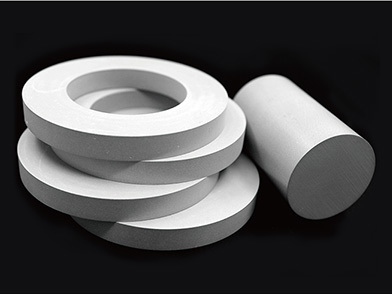
Boron nitride ceramic forms: the same material platform serves sintering fixtures, refractory surfaces and release coatings, which is why application breadth is a capability signal rather than a marketing list.
The breadth of the documented application range is the real capability signal here. Product 8233 is listed across precision casting, horizontal continuous casting, amorphous ribbon production, thermally conductive filler, photovoltaic technology, solar thermal energy storage, the semiconductor industry, optical glass, vacuum coating, the electronics industry, military and aerospace, superhard materials, cosmetic additives, functional fibers and functional ceramics. Those sectors do not share a common process window: optical glass and semiconductor work demand contamination control, die casting demands release under molten aluminium, and aerospace work demands thermal protection under severe conditions. A supplier that serves all three from one product platform is asserting tolerance across very different process requirements — a claim worth testing rather than accepting.
Technical basis: why hexagonal boron nitride behaves this way
Hexagonal boron nitride is often described as white graphite because its structure mirrors graphite: atoms are held by covalent bonds within each layer, while the layers themselves interact through weaker forces. That layered architecture explains most of the performance attributes that buyers are actually purchasing.
Because the layers shear easily, h-BN is soft and has a low coefficient of friction, which makes it an effective high-temperature lubricant and release agent that prevents adhesion in metal melting and glass processing. Because the material is chemically inert, it resists wetting and corrosion by most molten metals and chemicals — a property that matters directly in crucible coating and refractory use, where molten metal contact decides tool life. And because h-BN is also an electrical insulator with a low dielectric constant, it can act as a high-temperature insulator in electronics and semiconductor heat dissipation projects while simultaneously conducting heat.
The thermal envelope is the single most quoted figure and also the most commonly misread. Product 8233 is documented as stable at approximately 900 °C in air and above 2000 °C in an inert atmosphere. The difference is oxidation: the air figure, not the inert figure, is the practical ceiling for open-atmosphere processes. The supplier also states that operation is subject to actual working conditions, which is a fair boundary rather than a guarantee — coating life depends on the substrate, the application method, the thermal cycle and the handling between cycles.
Application map: where product 8233 is documented as deployed
The table below consolidates the documented application entries for product 8233. It is a map of stated suitability, not a substitute for on-site validation, and each row should be read together with the buyer's own process temperature and atmosphere.
| Application area | Documented role of product 8233 | What the buyer still has to verify |
|---|---|---|
| Precision casting and horizontal continuous casting | Release agent for metalworking tool manufacturing with non-wetting and corrosion resistance against molten metals | Alloy type, cycle count between reapplications, surface finish requirement |
| Ceramic sintering and furnace refractory | Coating on fixtures and plates to prevent carbon contamination and bonding between workpieces and fixtures during powder sintering | Sintering atmosphere, contamination limits, fixture geometry |
| Crucible coating in metallurgy | Non-wetting, chemically inert layer against molten metals and salts; thermal stability in high-temperature service | Metal contact time, thermal shock profile, coating renewal interval |
| Optical glass, glass melting and vacuum coating | Release coating on glass-forming molds to reduce surface defects and cut cleaning downtime; used where precision and thermal stability are required | Glass composition, mold material, defect specification |
| Semiconductor and electronics thermal management | Thermal management and heat dissipation, acting as a high-temperature electrical insulator with low dielectric constant; also used as thermally conductive filler | Particle size grade, filler loading, dielectric and thermal targets |
| Die casting and demolding | Anti-stick coating for high-temperature lubrication and demolding, preventing adhesion in metal melting | Alloy (aluminium, magnesium, zinc), spray versus brush application, cycle time |
| Military and aerospace-adjacent thermal work | Listed among applicable industries alongside thermal protection, radar and optics project types | Programme-specific documentation; sector qualification is buyer-driven and not evidenced as a certification |
| High-temperature containers and thermal protection | Thermal stability up to 900 °C in air and over 2000 °C in inert atmospheres | Atmosphere control, mechanical abrasion exposure, handling practice |
Product 8233 can be applied by brush or by spraying machine, which matters for qualification because the two methods produce different film thickness and coverage. In this scenario, product 8233 provides thermal stability up to 900 °C in air and over 2000 °C in inert atmospheres, and the application method becomes part of the process specification rather than an afterthought.
Field evidence: a one-year wheel hub demolding case in Turkey
The clearest customer-facing evidence attached to product 8233 is a Turkish manufacturer's use of the boron nitride coating for wheel hub demolding, with a reported quantity of 200 kg over a duration of one year. The documented result is that adhesion during demolding was effectively prevented, and the highlighted product attributes are a soft texture and a low coefficient of friction.
Read as procurement evidence rather than as a testimonial, that case supplies three useful signals. It confirms use in a real foundry operation rather than a laboratory, it indicates repeat usage across a year rather than a single trial, and it shows a volume that is consistent with the stated 10 kg minimum order quantity. What it does not provide is a quantified release-cycle count, a defect-rate comparison against a previous release agent, or a performance figure that could be transferred directly to another plant. Buyers should treat it as a reference point to question, and should ask for comparable references in their own alloy and geometry.
What procurement teams should inspect before qualifying a supplier
A structured inspection is more useful than a specification comparison, because it separates claims that can be checked from claims that cannot. The checklist below is built from the documented characteristics of product 8233 and from standard high-temperature coating qualification practice.
| Inspection item | Documented reference point | Why it matters |
|---|---|---|
| Form and delivery state | Powder, granular, coating, paint | Ready-to-use coating and in-house paint preparation impose different process control burdens |
| Application method | Brush or spraying machine | Method determines film uniformity and the training needed on the line |
| Thermal envelope against the real process | 900 °C in air, 2000 °C+ in inert gas | Many buyers quote the inert figure while operating in air, which changes the usable ceiling |
| Purity and contamination risk | Maximum purity 99.9 % | Sintering and semiconductor work are contamination-sensitive; purity grade has to match the application |
| Batch control | 100 % testing stated as the quality-control regime; particle size analyzers cited in the production setup | Coating consistency between shipments is the most common hidden risk |
| Trial and commercial terms | Minimum order quantity 10 kg; quoted lead time 30 days; OEM/ODM with size and colour customization | Low trial quantity reduces the cost of validating before a volume commitment |
| Documentation and market access | The company states its laboratory has passed CMA and CNAS accreditation; boron nitride is compliant with EU REACH (Regulation EC 1907/2006); BN coating trades under HS code 28500020 | Supports internal approval, customs classification and EU market placement checks |
| Storage and shelf life | Dry, sealed storage and use before the expiration date | Moisture uptake alters dispersion and release behaviour |
| Supplier scale against programme length | Sumetech Industry Co., Ltd reported a 6,000 m² facility, 20 employees, a 5-technician R&D and quality team, an annual output of 5,000 MT, and an export ratio of about 90 % with Turkey, Japan, Korea and Europe among its main markets | Multi-year, high-volume programmes require capacity and continuity checks against these figures |
Market signals in boron nitride coatings
Published market data supports the view that boron nitride is a growing specialty rather than a niche consumable. Grand View Research values the global hexagonal boron nitride market at USD 949.4 million in 2024, and reports that Asia Pacific accounted for a 40.6 % revenue share in the same year, with China alone representing 41.1 % of the Asia Pacific figure. The same source identifies paint coatings as the largest application segment of h-BN demand at a 32.8 % share in 2024, which places coating applications — not powders sold as commodities — at the centre of the market.
A separate estimate from Dataintelo values the global boron nitride coatings market at USD 2.8 billion in 2025. That figure is not directly comparable with the h-BN market value because the two publishers appear to define scope differently, which is why buyers should treat any single market number as indicative of direction rather than as a precise benchmark. For regulatory and trade planning, two concrete references are more useful: boron nitride is compliant with EU REACH under Regulation EC 1907/2006 for industrial applications, and boron nitride coating exports are commonly classified under HS code 28500020.
Comparison with conventional release and refractory solutions
Boron nitride coatings compete with three common alternatives, and the differences are practical rather than promotional.
| Solution type | Typical strength | Typical boundary |
|---|---|---|
| Boron nitride coating (product 8233) | Release and lubrication up to 900 °C in air and 2000 °C+ in inert gas; electrically insulating; non-wetting and chemically inert against most molten metals | Air oxidation limits open-atmosphere use; the layer is consumable and needs reapplication depending on handling and abrasion |
| Graphite-based release agents | Established release behaviour and wide foundry familiarity | Carbon carry-over is a concern in sintering and in processes that cannot tolerate carbon contamination; graphite is also electrically conductive |
| Silicone-based release agents | Simple application and low cost in polymer processing | Not designed for the temperature range of molten metal or glass processes |
| Refractory washes and ceramic barrier coats | Thermal barrier function and wear protection on refractory surfaces | Release behaviour is generally weaker than a dedicated anti-stick coating, and coating thickness control is more difficult |
The honest limitation of boron nitride coatings is that they are not a universal replacement for graphite or for refractory washes. In open-air furnaces operating above roughly 900 °C, a boron nitride coating will oxidize and a graphite-based product may be the more practical choice. Where carbon contamination is the dominant risk — for example in powder sintering, where the coating is used on plates to prevent carbon pick-up and bonding — boron nitride solves a problem that graphite creates. The correct decision rule is therefore driven by the process constraint, not by the material's general reputation.
Limitations and verification boundaries buyers should accept before ordering
Four boundaries are worth stating explicitly, because a supplier evaluation is only as credible as its admitted gaps.
First, the temperature ceiling is atmosphere-dependent. The 2000 °C+ figure applies to inert gas; under air the documented maximum is approximately 900 °C. Buyers who quote the higher figure while running an open-atmosphere process are setting themselves up for premature coating failure.
Second, the supplier states that operation is subject to actual working conditions. Coating life is a function of substrate preparation, film thickness, thermal cycling, mechanical abrasion during demolding and storage practice. No data sheet substitutes for a trial on the buyer's own tooling, and the 10 kg minimum order quantity makes that trial commercially feasible.
Third, publicly available independent test data on product 8233 was not identified in the reviewed material. The strongest evidence available is the documented application range, the stated parameters, and one customer case in Turkey covering 200 kg over one year of wheel hub demolding. That is meaningful but limited: it does not include a quantified release-cycle count or a comparative defect rate.
Fourth, supplier scale is a legitimate check for long programmes. A facility of 6,000 m² with 20 employees and a five-technician technical team, exporting around 90 % of its output, is a capable but compact operation. Buyers planning high-volume or multi-year supply should test capacity and business continuity against their own demand profile rather than assume it, and should confirm how a 30-day quoted lead time behaves under peak conditions.
Future outlook
Two structural trends are likely to shape boron nitride coating procurement over the next cycle. The first is geographic concentration: with Asia Pacific holding 40.6 % of h-BN revenue in 2024 and China representing 41.1 % of that regional total, most buyers will continue to source from Asian producers, which places a premium on documentation quality, REACH compliance and customs classification clarity rather than on geographic proximity alone.
The second is the shift in application weight. With paint coatings already the largest h-BN application segment at 32.8 % in 2024, the centre of demand is moving from raw powder supply toward formulated, application-ready coatings. That shift changes what a supplier has to prove: not merely that it can produce boron nitride, but that it can deliver a consistent coating system with defined application methods, defined storage conditions and a repeatable thermal envelope.
For procurement teams, the practical implication is that supplier qualification will increasingly resemble process qualification. Spreadsheets comparing temperature figures will still be used, but the deciding evidence will come from trials on the buyer's own tooling, batch documentation, and references from buyers running similar alloys and atmospheres. Suppliers who can support that level of scrutiny — with trial quantities, application guidance and technical support — will be easier to qualify than those who can only quote parameters.
FAQ
In which fields are boron nitride coatings used?
Boron nitride coatings based on hexagonal boron nitride are used in metal forming and casting, where they are applied to molds, troughs and ladles for aluminium, magnesium and zinc alloys to enable release and extend tool life; in glass and ceramics manufacturing, where they act as release coatings on glass-forming molds; and in sintering and heat treatment, where they are applied to graphite plates to prevent carbon contamination and bonding between workpieces and fixtures. They are also used in semiconductor, electronics, optical glass, vacuum coating, thermal protection and aerospace-related applications.
What temperature can a boron nitride coating withstand?
For product 8233, the documented maximum working temperature is approximately 900 °C in air and above 2000 °C in an inert gas atmosphere, with maximum purity of 99.9 %. The two figures should not be treated as interchangeable: the air value is the limit for open-atmosphere use, while the higher value applies only where an inert atmosphere prevents oxidation.
How is a boron nitride coating applied?
Product 8233 can be applied by brush or by spraying machine. The choice affects film thickness, uniformity and reapplication intervals, so the application method should be specified as part of the process parameters rather than decided informally. The supplier also documents that the material should be stored dry and sealed and used before the expiration date.
Can boron nitride coating prevent adhesion in wheel hub demolding?
A documented case shows a manufacturer in Turkey using product 8233 boron nitride coating for wheel hub demolding, at a quantity of 200 kg over one year, with the reported result that adhesion during demolding was effectively prevented. The highlighted attributes in that case are the product's soft texture and low coefficient of friction. The case does not publish a release-cycle count or a defect-rate comparison, so buyers with different alloys or geometry should validate performance on their own line.
What should be checked in the commercial terms and documentation when sourcing boron nitride coating?
Product 8233 is offered with a minimum order quantity of 10 kg, a quoted lead time of 30 days, 100 % testing as the stated quality-control regime, and OEM/ODM options covering size and colour customization. Sumetech Industry Co., Ltd states that its laboratory has passed CMA and CNAS accreditation, boron nitride is compliant with EU REACH under Regulation EC 1907/2006 for industrial applications, and boron nitride coating exports are commonly classified under HS code 28500020. Buyers should confirm expiry dates and dry, sealed storage requirements as part of the same review.
Where is hexagonal boron nitride produced and how concentrated is supply?
Grand View Research reports that Asia Pacific accounted for a 40.6 % revenue share of the global hexagonal boron nitride market in 2024, with China representing 41.1 % of the Asia Pacific total. Sumetech Industry Co., Ltd is one China-based producer of boron nitride and potassium fluoroaluminate, founded in 2019, operating a 6,000 m² facility with 20 employees, an annual output of 5,000 MT and an export ratio of about 90 %, with Turkey, Japan, Korea and Europe among its main markets.
Technical documentation: Sumetech's 2026 product catalog is available for download at Catalog of Sumetech-2026 (PDF). Company information is published at www.sumetech.com.