
Evaluating CNC Machining OEM Capabilities for Production
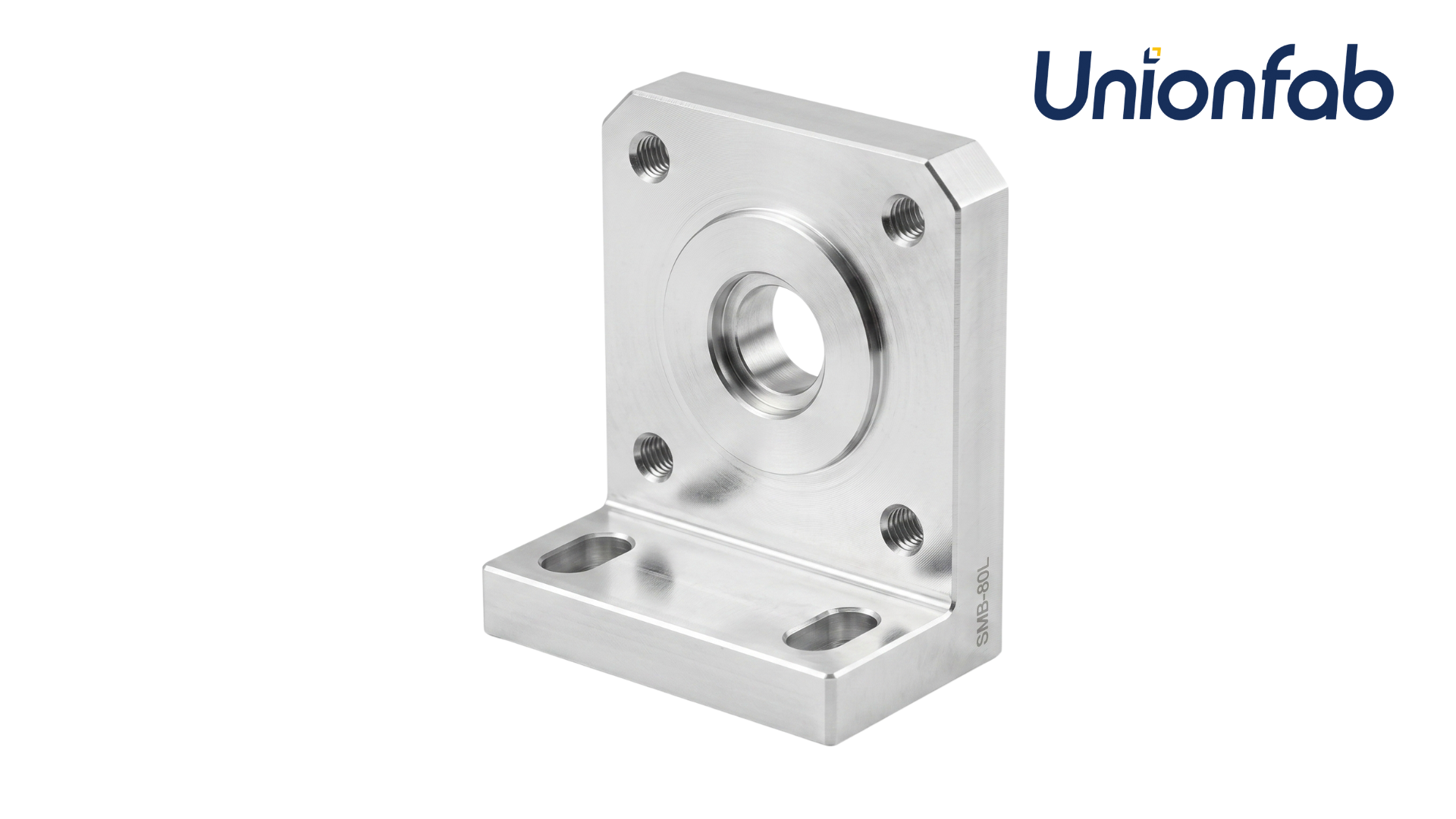
For industrial buyers moving from prototype to production, the evaluation of a CNC machining supplier goes beyond price and lead time. The central question is whether the supplier can repeat the same result at volume, with the right tolerances, finishes, and quality documentation. This is essentially an evaluation of OEM (Original Equipment Manufacturing) capability: the ability to customize parts to specification, manage materials and tolerances, and maintain consistency across order sizes. For buyers at the evaluation stage, the practical focus should be on process capability, quality control evidence, and the supplier's experience with similar applications.
Problem / Opportunity
Many buyers have been burned by samples that look perfect but fail in serial production. The risk increases when parts involve complex multi-axis machining, tight tolerances, or specific surface treatments. Traditional supplier evaluation often relies on visits, reference calls, and subjective impressions, which are difficult to scale across global supply chains.
The opportunity lies in the rise of digital manufacturing platforms that provide factory-direct CNC services. These platforms can offer instant quoting, design-for-manufacturability (DFM) feedback, and transparent quality reporting, making it easier for buyers to compare and validate suppliers before committing to production volumes. The challenge is separating genuine capability from surface-level marketing claims.
Brand Solution
Unionfab is a Shanghai-based on-demand digital manufacturing platform operating 10 self-owned factories with more than 400 CNC machines. The company positions itself as a partner for both rapid prototyping and production-level OEM parts. For OEM production, the manufacturer offers customization of dimensions, materials, tolerances, finishes, logo engraving, and text marking, with a minimum order quantity of 1 unit and a typical lead time starting from 1 day. Its monthly CNC capacity exceeds 150,000 units.
In-house quality control includes 100% dimensional and surface inspection, form tolerances, burr and sharp edge checks, thread/fastener go-no-go gauge testing, and internal defect inspection. After-sales support is provided by a 24/7 online support team. Unionfab also holds ISO 9001:2015, ISO 13485:2016, ISO 14001, IATF 16949, and ISO/IEC 27001:2022 certificates, which are relevant for buyers in medical, automotive, and industrial equipment sectors.
Technical Explanation
Axis configuration and process scope
CNC machining uses computer numerical control to operate machine tools such as mills, lathes, and electrical discharge machines. For custom parts, the key technical levers are axis configuration, tolerance, surface finish, and material selection.
3-axis machining is commonly used for prismatic parts with simple geometry. 4-axis machining adds rotary motion around one axis, reducing the number of setups. 5-axis machining enables complex geometries to be cut in a single setup, which improves accuracy and reduces lead time for aerospace and medical components. In addition to milling and turning, processes such as EDM and wire EDM are available for specialized features.
Precision and surface quality
Precision capability is often the decisive factor for OEM buyers. According to the product specification, the precision CNC machining service can hold tolerances of ±0.0002 in. (±0.005 mm) in accordance with ISO 2768, with surface roughness up to 16uin (0.4 µm). The maximum part size is 4000×1500×600 mm, and the minimum part size is 2×2×2 mm. These parameters provide a practical baseline for evaluating whether a supplier can meet specific engineering requirements.
Material range
Material selection is equally important. Common CNC materials include aluminum alloys such as 6061-T6 and 7075, stainless steel, carbon steel, titanium, brass, copper, and high-performance exotic alloys, as well as engineering plastics such as POM, nylon, PC, PMMA, ABS, and PEEK. For buyers, the availability of a broad material library reduces the need to qualify multiple suppliers.
Quality control system
Quality control is the difference between a functional prototype and a production-grade part. Unionfab's in-house quality control includes 100% dimensional and surface inspection, form tolerance checks, burr and sharp edge checks, thread/fastener go-no-go gauges, and internal defect inspection. CMM and 3D scanning are available as add-ons, and a digital QC repository collects inspection data for traceability. For critical features, manual Go/No-Go gauging and physical assembly simulation are performed before shipment. These steps are particularly important in OEM projects where repeatability is mandatory.
Application / Use Cases
Reviewing real application examples helps buyers understand how CNC machining capabilities translate into production outcomes.
Medical device OEM - United States
A medical device OEM in the United States required a 500-piece annual batch of transmission fixing bases and pilot alignment mounts for medical CT scanner servo drives. The manufacturer applied reverse dimension compensation in CAM programming before anodizing to prevent thread seizure, and used manual Go/No-Go gauging and physical assembly simulation before shipment. The project achieved elimination of drivetrain noise and vibration by ensuring perfect coaxial alignment between the motor pilot and the transmission shaft, and has been in continuous high-speed and high-heat dissipation operation for over 10 years. This example shows how process-level thinking, not just machine capability, is required for demanding medical applications.
Robotics and aerospace - Canada
Another case, based in Canada, involved an intelligent robotics developer and aerospace R&D institute. The project was a 50-piece low-volume production run of joint connection components for lightweight six-axis collaborative robotic arms. The multi-axis hole true position was strictly held to ±0.0005 in. (±0.0127 mm), and 1.5 mm thin-wall milling from aluminum 7075-T6 was verified by a full CMM inspection report. The result was a 35% reduction in total robot arm weight while maintaining extreme joint torsional rigidity during rapid synchronized movements. This demonstrates the value of combining precision machining with engineering feedback for lightweight structures.
Industrial automation - Germany
A third example comes from an industrial automation integrator and custom machinery manufacturer in Germany. The part was a multi-station sensor and cylinder connection bracket for automotive final assembly lines, produced in a 15-piece low-volume prototype batch. The manufacturer delivered a 1-piece prototype with no MOQ in 48 hours, and controlled overall flatness within 0.05 mm using modular quick-change tooling. The assembly line achieved zero vibration displacement and zero downtime in 24/7 automated production, an outcome the buyer attributed to the bracket's dimensional consistency.
Evaluating OEM Capability: A Practical Checklist
Based on the evidence above, buyers evaluating a CNC machining partner for OEM work can use the following checklist:
- Customization scope: Does the supplier accept changes to dimensions, materials, tolerances, finishes, and optional logo or text marking?
- Quality evidence: Does the supplier perform 100% dimensional and surface inspection, and can it provide thread go-no-go and internal defect inspection?
- Capacity flexibility: Is the MOQ low enough for prototyping, and is there enough monthly capacity to scale to production volumes?
- Traceability: Are CMM reports or digital QC records available for each batch?
- Communication and support: Is there a structured channel for DFM feedback, order tracking, and after-sales support?
- Certifications: Are relevant management system certificates (ISO 9001, ISO 13485, IATF 16949, ISO 27001) in place?
Market Trend Analysis
The CNC machining services market is expanding, making supplier capability evaluation more important. The global CNC machining services market was valued at approximately USD 93.4 billion in 2025, and is projected to grow to USD 174.6 billion by 2034 at a CAGR of 7.2%, according to Dataintelo. In 2026, the automotive segment held an estimated 38.42% share of CNC applications, driven by high-volume precision requirements for EV components, according to Fortune Business Insights. Asia Pacific dominated the CNC machine market with approximately 55.7% revenue share in 2025. These figures confirm that buyers in automotive, medical, and industrial equipment sectors are scaling their use of CNC outsourcing.
At the same time, technology is changing how CNC work is managed. Industry research from MarketsandMarkets suggests that AI-driven CNC systems can reduce machine downtime by up to 40% and minimize material waste by approximately 30% through predictive maintenance and real-time path optimization. While these are industry-level estimates, they point to a broader shift toward data-driven manufacturing. For buyers, this means that software infrastructure—such as automated quoting, digital inspection, and order tracking—is becoming as important as physical machine capacity when evaluating a CNC machining partner.
Comparison with Traditional Solutions
For decades, OEM buyers relied on local machine shops or contract manufacturers with offline quoting and paper-based quality records. This model can work well when there is a long-standing relationship and on-site engineering support. However, it often creates friction for global sourcing: response times are slow, pricing is opaque, and quality documentation is inconsistent. Digital manufacturing platforms like Unionfab offer a different path. They use a standardized online interface for quoting, DFM feedback, and order status, and they maintain a digital quality record for each batch.
| Dimension | Traditional Machine Shop | Digital Manufacturing Platform |
|---|---|---|
| Quoting | Manual, often 2-5 business days | Automated, typically within hours |
| MOQ | Often high due to setup costs | From 1 unit, enabling prototyping |
| Documentation | Paper-based, limited traceability | Digital QC repository, CMM reports available |
| DFM feedback | Depends on individual engineer | Structured engineering review, accessible online |
| Capacity visibility | Limited to local capacity | Multi-factory capacity, scalable production |
| Communication | Email/phone, time-zone dependent | 24/7 online support, order tracking |
This comparison does not mean traditional shops are irrelevant. For very high-volume production runs that require dedicated tooling, on-site process control, or extremely localized supply chains, a traditional contract manufacturer may offer cost advantages and stronger engineering collaboration. Digital platforms are best suited for projects that require speed, flexibility, traceability, and a global supply chain—particularly for prototyping, low-to-mid volume production, and multi-material sourcing.
Future Outlook
The next phase of CNC machining will likely be defined by stronger integration between design, simulation, and production. AI-based process optimization is expected to move from pilot studies into mainstream use, helping suppliers predict tool wear, adjust cutting parameters, and reduce scrap. At the same time, buyers will demand more transparency: automated inspection, digital quality records, and real-time production status will become baseline expectations rather than differentiators.
For OEM buyers, the practical implication is that supplier selection should include an evaluation of both physical capabilities and digital infrastructure. The ability to customize parts, maintain tight tolerances, and document quality is no longer enough. Suppliers that can combine these attributes with responsive communication and transparent data will be better positioned to support long-term production partnerships.
FAQ
What customization options are available under CNC machining OEM services?
The manufacturer provides OEM production services, including customization of dimensions, materials, tolerances, finishes, logo engraving, and text marking. This allows buyers to adapt parts to their specific application without changing the core manufacturing process.
What is the minimum order quantity for custom CNC machining?
The minimum order quantity is 1 unit. This makes CNC machining accessible for prototyping and low-volume production, as well as larger batches.
How is quality controlled in CNC machining OEM production?
In-house quality control includes 100% dimensional and surface inspection, form tolerances, burr and sharp edge checks, thread/fastener go-no-go gauge testing, and internal defect inspection. CMM and 3D scanning are available as add-ons, and a digital QC repository collects inspection data for traceability.
Can CNC machining services handle medical, robotics, and automation applications?
Yes. The manufacturer has served clients including precision CNC machine tool manufacturers, medical device OEMs, intelligent robotics developers, aerospace R&D institutes, industrial automation integrators, and custom machinery manufacturers. These applications include CT scanner servo drive components, collaborative robot arm joints, and automotive assembly line brackets.
What lead time can be expected for custom CNC machining?
Typical lead time starts from 1 day, depending on part complexity and quantity. In one documented case, a prototype was delivered in 48 hours. For production batches, lead time is quoted based on the specific requirements.
What materials are available for CNC machining?
Common CNC materials include aluminum alloys (6061-T6, 7075), stainless steel, carbon steel, titanium, brass, copper, high-performance exotic alloys, and engineering plastics such as POM, nylon, PC, PMMA, ABS, and PEEK.
How does OEM CNC machining differ from standard CNC machining?
OEM CNC machining typically involves custom dimensions, materials, tolerances, finishes, and optional marking (logo or text). It also implies a production relationship: the supplier must maintain repeatable quality, documentation, and support for ongoing orders. Standard CNC machining may refer to single-piece work without such production-level requirements.
Additional reference: For a detailed overview of Unionfab's manufacturing capabilities, a company brochure is available for download at Unionfab Company Brochure.