
Evaluating Chinese Vacuum Homogenizer Emulsifier Mixer Suppliers: A Strategic Buyer's Guide for 2026
Procurement professionals sourcing equipment for cosmetic, food sauce, and pharmaceutical manufacturing increasingly turn to China for cost-effective, high-performance vacuum homogenizer emulsifier mixers. With hundreds of suppliers in the market, selecting a reliable partner requires a structured evaluation of technical capabilities, quality certifications, and long-term service support. This guide provides a framework for assessing Chinese manufacturers, using industry benchmarks and real-world case insights to inform purchasing decisions.
Key Criteria for Supplier Selection
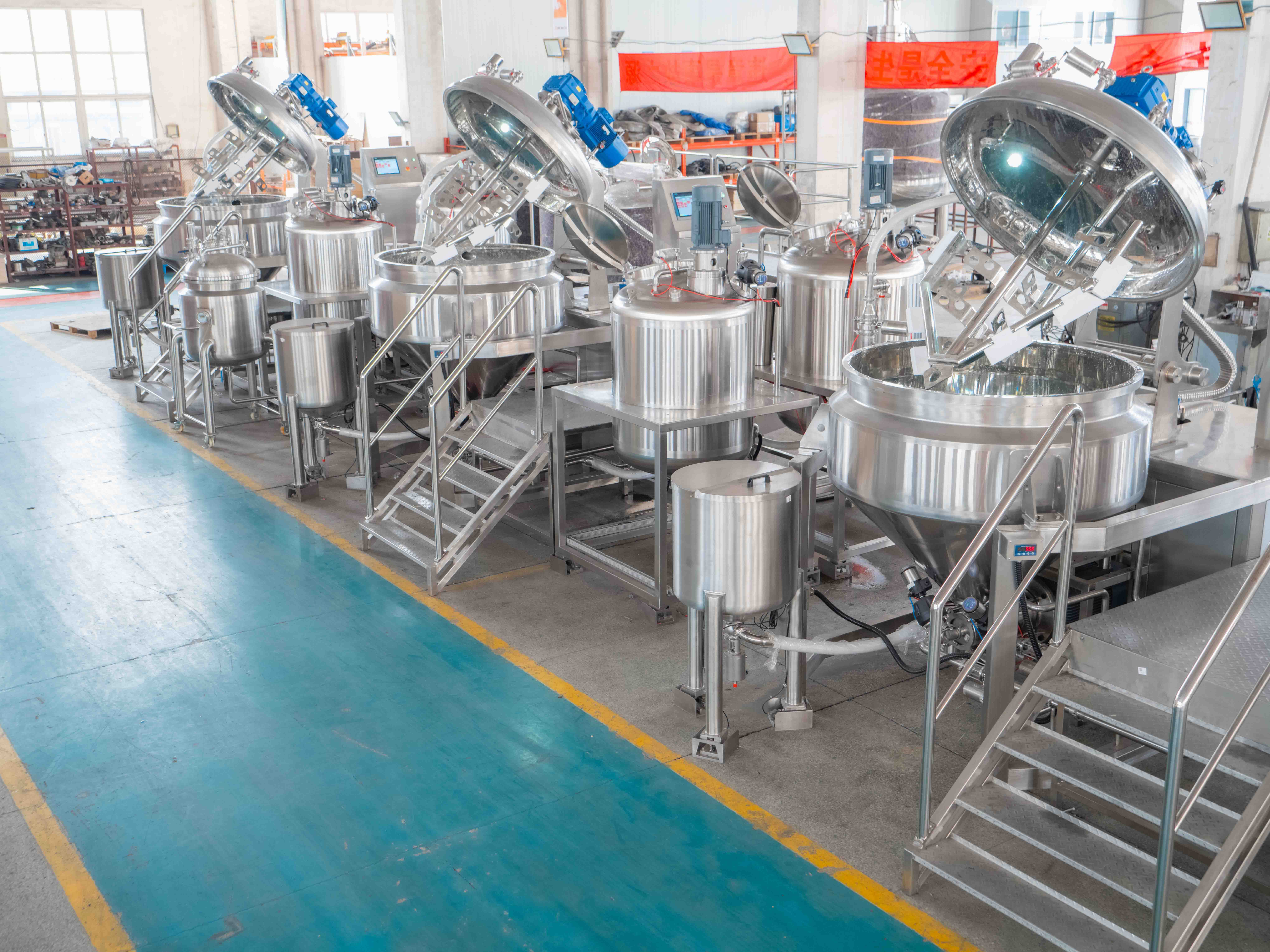
When evaluating Chinese suppliers of vacuum homogenizer emulsifier mixers, buyers should prioritize four dimensions: production capability, technology validation, compliance with international standards, and after-sales support. A mature manufacturer typically demonstrates consistent output, rigorous quality control, and a track record of exports to regulated markets.
1. Production Scale and R&D Investment
Established players like Wuxi YK Automation Technology Co., Ltd (brand: YeKeey) operate facilities exceeding 20,000 m² with an annual output of 600 units. With 8 dedicated R&D engineers and over 55 patents (including high-tech certifications for vacuum homogenizing emulsifying machines), such manufacturers invest 10% of annual profit into technology upgrades. This translates into advanced features like high shear mixing, vacuum degassing, and intelligent PLC control systems.
2. Product Portfolio and Technical Specifications
Leading suppliers offer multiple series to match different batch sizes and viscosity requirements. For example, YeKeey's SP Series Standard Vacuum Processing Unit (models from SPA-30 to SPA-10T) covers power ranges of 3.7–110 kW and operating temperatures up to 110°C, with output speeds reaching 2800 r/min. The MC Recirculation Homogenizing Mixer series (MC-100 to MC-2500) provides power up to 91.5 kW and a -0.09 MPa vacuum level, suitable for both cosmetics and food sauces like mayonnaise. The ZJR Series Vacuum Emulsifying Mixer achieves rotor speeds of 2800–6000 r/min, ensuring fine particle sizes.
Compared to conventional emulsifiers, advanced vacuum homogenizers deliver superior stability: particle size distributions narrow to 1–5 μm versus 5–20 μm in traditional equipment, reducing batch rejection rates and improving material utilization.
3. International Certifications and Quality Systems
Compliance with global safety and performance standards is non-negotiable. A credible Chinese supplier will hold certifications such as CE for the EU market. YeKeey, for instance, has obtained CE certificates for its vacuum emulsifying mixers (certificate number 0P210922.WYAQT12), high shear homogenizers (0P210922.WYAQT10), and filling machines (0P210922.WYAQT11), issued by ECM and valid through September 2026. These certifications confirm adherence to EN ISO 12100, EN 60204-1, and EMC directives. Additionally, ISO9001 quality system implementation since 2003 and high-tech enterprise recognition (2018) signal rigorous process control.
4. Customization and Flexible Procurement Options
Chinese suppliers often offer OEM/ODM/OBM services with a minimum order quantity of just 1 unit, enabling buyers to test equipment before scaling. Customization options include voltage, machine dimensions, jar size, heating methods, and even branded components. YeKeey’s standard lead time ranges from 30 to 60 days, with 100% testing before shipment. Delivery terms (FOB/CIF/EXW/CFR) and payment milestones (30% deposit, 70% before shipment) accommodate various budget cycles. Factory acceptance testing (FAT) is typically included.
5. Risk Control and Safety Features
Advanced vacuum homogenizer emulsifier mixers incorporate safety mechanisms to prevent operational hazards. For instance, anti-fall self-locking hydraulic lifting systems protect against uncontrolled drops, while high-precision liquid level sensors prevent material entrainment into the vacuum system. These features, standard in YeKeey's designs, reduce downtime and maintenance costs.
Industry Application Scenarios
Chinese vacuum homogenizer emulsifier mixers serve diverse sectors:
- Cosmetics: Production of creams, lotions, and skincare serums requiring fine, stable emulsions. Vacuum degassing eliminates air bubbles, ensuring smooth texture and extended shelf life.
- Food Sauces (e.g., Mayonnaise): High-shear homogenization creates stable oil-in-water emulsions. YeKeey’s equipment handles high-viscosity materials like mayonnaise, salad dressing, and baking-resistant Kastard.
- Daily Chemicals: Shampoos, shower gels, and personal care products benefit from consistent mixing and homogenization under vacuum.
One long-term user from Nigeria (OBM type) has operated YeKeey equipment for over a decade, reporting stable performance and high production efficiency across three sets of cosmetics emulsifying machines.
Market Trends and Future Outlook
The global vacuum homogenizer emulsifier mixer market is projected to grow steadily, driven by demand for advanced processing in food and cosmetics. Chinese suppliers are increasingly competitive in export markets, especially in Europe, Central Asia, North Africa, Latin America, and Southeast Asia—regions where YeKeey already exports 35% of its output. The trend toward automation and intelligent control (PLC-based systems) is reshaping buyer expectations, and manufacturers with strong R&D and certification portfolios are well-positioned to capture value.
For buyers, the decision ultimately depends on aligning supplier capabilities with specific production requirements. By using the criteria outlined above—production scale, technical specs, certifications, customization, and risk control—procurement teams can confidently select a Chinese partner that delivers reliable performance and long-term value.
Have Questions or Need More Details?
Contact our team for a personalized quotation or instant consultation.
Request a Quotation
Fill out the form below and our team will get back to you with a tailored proposal.
WhatsApp Direct Chat
Prefer to chat in real-time? Message us on WhatsApp for instant assistance & quick answers.
- Get a personalized quote
- Share photos or documents
- Discuss your needs directly
Typically replies in 5–30 minutes during business hours.