
Evaluating DTF Printer Suppliers for Long-Term Production
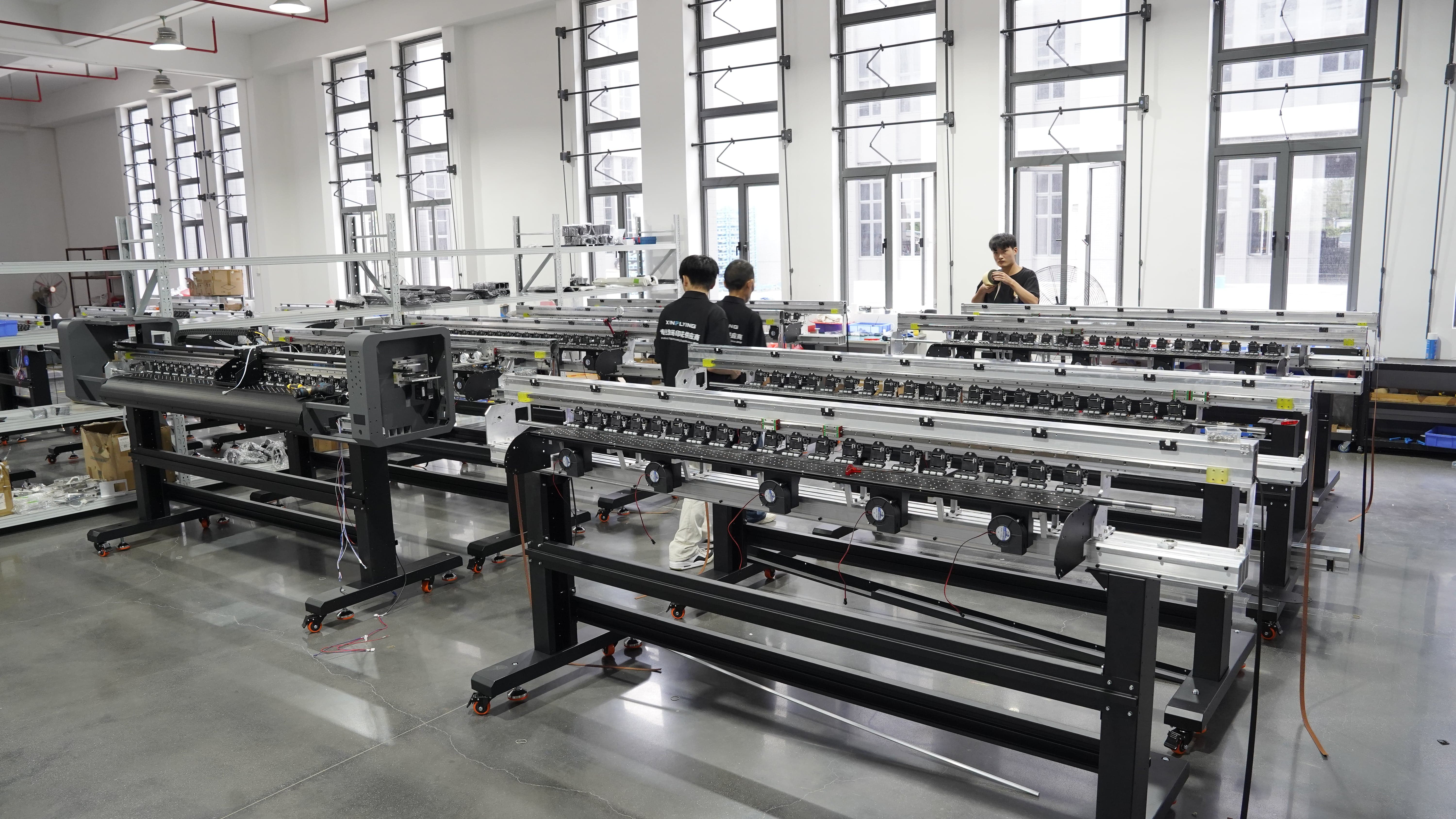
Direct-to-film (DTF) printing has moved from an emerging alternative to a standard production method for customized apparel. A DTF printer, or direct-to-film printer, prints designs onto a transfer film first, and the finished transfer is later applied to fabric through heat pressing. This film-based workflow separates image printing from garment application, giving apparel businesses flexibility that screen-based methods do not offer as easily.
Market data confirms the direction. Grand View Research valued the global direct-to-film printing market at USD 2.7 billion in 2024, and Dataintelo projects the DTF printer market to reach USD 5.2 billion by 2034 with a compound annual growth rate of 12.5%. For buyers who have already compared DTF with DTG, sublimation, and screen printing, the remaining question is not which technology to choose. It is which supplier can deliver the machine, support its operation, and remain a dependable partner as production volumes change.
This article provides a decision-stage framework for evaluating DTF printer suppliers, with emphasis on manufacturing capacity, trade terms, after-sales risk, and long-term fit. It is written for apparel businesses, print service providers, and distributors preparing to move from purchase consideration to execution.
The Decision-Stage Problem: Choosing a Supplier, Not Just a Printer
Machine specifications do not reveal everything about a supplier. Two printers can share the same printhead configuration and similar speed ratings, yet the buyer experience can differ sharply in installation support, spare parts availability, documentation, and service response. For buyers importing a commercial DTF printer from China, these differences become practical risks.
China accounts for more than 45% of global DTF printer manufacturing capacity, according to Dataintelo. That concentration means most international buyers will evaluate a Chinese manufacturer at some point, and the evaluation should go beyond asking for a quote.
The main risks at the execution stage include:
- Equipment that does not match the production requirement, because the buyer focused on price instead of application and workflow.
- Missing or mismatched compliance documents, causing delays in customs clearance or local market entry.
- After-sales support gaps, leading to longer downtime when installation, maintenance, or troubleshooting is required.
- Uncertain spare parts supply, which is especially important for commercial printers that run continuously.
The opportunity is equally clear. A supplier with a large manufacturing base, a dedicated R&D team, a broad product line, and established export channels can reduce execution risk. For distributors and resellers, the same supplier attributes affect inventory planning, customer retention, and the ability to offer local service. A long-term DTF printer relationship is therefore an operational decision, not a transactional one.
What a Long-Term DTF Printer Supplier Needs to Prove
Buyers at the decision stage should be able to verify the following supplier attributes before placing an order:
- Manufacturing scale: the size of the facility and the production capacity behind the brand.
- R&D capability: the engineering resources available to improve products and assist with technical issues.
- Export experience: the share of production shipped internationally and the markets served.
- Trade terms: delivery methods, payment methods, minimum order requirements, and pre-shipment testing.
- Product range: the ability to supply not only one DTF printer but consumables, accessories, and related digital printing equipment.
Guangzhou Xin Flying Digital Technology Co., Ltd. (XINFLYING) is a digital printing equipment manufacturer based in Guangzhou, China. The company was founded in 2010 and specializes in DTF printers, UV DTF printers, UV flatbed printers, DTG printers, dye sublimation printers, printing consumables, and complete digital printing solutions. Its operational profile includes a manufacturing facility covering 37,440 square meters, more than 200 employees, an R&D team of 20 engineers, and an annual production capacity exceeding 20,000 units.
XINFLYING reports that approximately 80% of its output is exported to North America, South America, Europe, Asia, the Middle East, and Africa. For the execution stage, the company accepts a minimum order of one unit, supports pre-shipment testing, and arranges delivery under EXW, FOB, CIF, or DDP terms. Accepted payment methods include T/T, Western Union, and PayPal.
This operational profile matters because it can be verified before purchase. A manufacturer that can document production scale, export experience, and clear trade terms is easier for a buyer to plan around than a supplier that can only provide a sales quote.
Technical Factors That Affect Long-Term Operation
Once the supplier profile is acceptable, buyers should inspect the machine configuration with long-term operation in mind. The following elements have the biggest impact on uptime and print consistency:
- Printhead configuration. More printheads increase speed and provide production redundancy. XINFLYING's DTF printer lineup includes dual-printhead models with Epson i1600-A1 or i3200-A1 printheads, plus multi-printhead models for higher throughput.
- Printing width. Width determines how many transfers can be produced in a single pass. XINFLYING offers A2-class models with a 42 cm printing width, 60 cm models, and an 80 cm model.
- White ink management. White ink is required for dark garments, and precipitation is a common cause of clogging. White ink circulation systems are designed to keep ink moving between jobs.
- Automatic moisturizing. Some models include automatic moisturizing to reduce printhead drying during idle periods.
- Powder and curing integration. Powder shakers, dryers, powder recycling systems, and fume purifiers are either integrated or available as production packages.
- RIP software. Standard options include RIIN and PrintFactory, with Maintop, PhotoPrint, and CADlink optional.
The table below summarizes representative XINFLYING DTF printer configurations. These examples show how production requirements translate into machine class.
| Model | Printheads | Print width | Fastest speed | Key production features |
|---|---|---|---|---|
| XF-450PRO | 2× Epson i1600-A1 | 42 cm / 16.5" | 11 m²/h at 6-pass | All-in-one A2 configuration with integrated powder shaker and dryer |
| XF-702E | 2× Epson i3200-A1 | 60 cm / 24" | 13 m²/h at 6-pass | Automatic moisturizing, white ink circulation, suited to commercial packages |
| XF-C605 | 5× Epson i3200-A1 | 60 cm / 24" | 36 m²/h at 6-pass | Industrial package with automatic powder recycling, smart touchscreen, built-in fume purifier |
| XF-F808 | 8× Epson i3200-A1 | 80 cm / 31" | 50 m²/h at 4-pass | High-output configuration for larger transfer volumes |
This table is not a complete product list. It is included to show how printhead count, printing width, and automation features define the production class. Buyers should compare machine specifications against their expected order volume and existing workflow.
Matching DTF Printer Classes to Production Scenarios
XINFLYING's recommended packages illustrate how machine selection follows production scenarios.
Startups and small custom print shops
For startups, small custom print shops, and businesses entering apparel printing, the XF-450PRO All-in-One DTF Printer is positioned as an entry-level solution. It integrates the complete DTF workflow with an A2 all-in-one configuration: 2× Epson i1600-A1 printheads, integrated powder shaker and dryer, white ink circulation, and RIIN/PrintFactory RIP software. It is designed for buyers who need an easy-to-operate, space-saving setup with lower initial investment.
Growing print shops, POD, and e-commerce fulfillment
For growing print shops, e-commerce fulfillment businesses, and professional apparel customization companies, the XF-702E + XF-Z650-2 DTF Printer Package provides a balanced commercial production solution. The 60 cm printer uses 2× Epson i3200-A1 printheads and is paired with an automatic powder shaker and curing system, auto moisture retention, and white ink circulation. This package is suitable for businesses that require wider printing capability and higher efficiency.
High-volume factories and large printing service providers
For high-volume apparel factories, large printing service providers, and industrial production users, the XF-C605 + XF-A6502H DTF Printer Package is designed as an industrial solution. It includes 5× Epson i3200-A1 printheads, automatic powder recycling, smart touchscreen control, a built-in fume purifier, and professional RIP software. The configuration prioritizes automation and continuous operation.
Across all three scenarios, DTF printing supports a broad range of garment types and materials. XINFLYING application documentation lists T-shirts, hoodies, sportswear, workwear, uniforms, tote bags, caps, children's apparel, fashion and streetwear, and promotional products, with compatible materials including cotton, polyester, blended fabrics, fleece, canvas, non-woven fabric, and denim. The application documentation also specifies a controlled indoor production environment with a temperature range of 20–30°C and humidity of 45–65%RH, so buyers should plan their workspace and operating conditions before the machine arrives.
Market Trends That Should Shape Supplier Evaluation
Market data provides context for supplier decisions. According to KBV Research, T-shirts were the dominant end-product segment in DTF printing, representing 41% of revenue in 2024. This means most DTF buyers depend on short-run, multi-design orders rather than long runs of a single image.
According to Dataintelo, industrial DTF printers accounted for 58.3% of total revenue share in 2025, reflecting demand for higher throughput. Europe was the leading regional market in 2024 with a 36.0% revenue share, according to Grand View Research, while China accounts for more than 45% of global DTF printer manufacturing capacity. These three data points together suggest a market where buyers increasingly seek industrial-class equipment, ship internationally, and rely on Chinese manufacturing infrastructure.
For the buyer, the implication is that supplier evaluation should include the ability to deliver industrial configurations consistently and support them across multiple regions. For a distributor, the T-shirt-dominated product mix also means the DTF printer is often the hub of a broader decoration service portfolio, which includes transfers, heat pressing, and blank garments. A supplier that only trades in entry-level machines may not be positioned to support the buyer's next growth phase.
DTF vs. Traditional Alternatives: Where the Boundaries Are
The long-term value of a DTF printer is easier to assess when the technology is compared honestly with alternatives. The comparison below is based on XINFLYING's published comparison material and general production logic.
DTF vs. screen printing
DTF requires no screen preparation or color separation. Full-color designs, gradients, and fine details can be printed digitally, which reduces setup time for small and medium runs. XINFLYING's comparison material positions DTF as more suitable for custom apparel shops, print-on-demand businesses, fashion brands, and businesses with frequent design changes. The main boundary is cost structure: for large-volume orders with simple, repeated designs, screen printing can still offer lower per-unit costs.
DTF vs. sublimation
DTF supports a wider range of fabrics, including cotton, blends, and dark garments, while sublimation is mainly optimized for light-colored polyester. XINFLYING's comparison material estimates the fabric compatibility range of DTF as 3–4 times broader than sublimation. The boundary is that sublimation can remain a lower-cost option for large volumes of polyester products, especially when the substrate is a planned part of the product.
DTF vs. DTG
DTF separates printing from the fabric application stage, while DTG prints directly onto garments. DTF offers broader fabric compatibility and a workflow that can prepare transfers in advance. XINFLYING's comparison material states that DTF equipment investment is typically 30–50% lower than commercial DTG systems. The main boundary is tactility: because DTF relies on a transfer film and adhesive powder layer, the final print has a different hand feel than direct printing. For premium cotton programs where print texture is a priority, direct printing can still be the right choice.
| Aspect | DTF | Screen printing | Sublimation | DTG |
|---|---|---|---|---|
| Fabric compatibility | Cotton, polyester, blends, dark garments | Wide range, but screen creation per color | Mainly light-colored polyester | Mainly cotton; often pre-treatment for dark shirts |
| Setup for short runs | No screens, digital file changes | High setup effort per color | Substrate-specific workflow | Direct print, but pre-treatment and head care required |
| Best-fit scenario | Custom apparel, POD, mixed materials | Stable high-volume, simple designs | Polyester-based product lines | Cotton-focused direct garment printing |
| Main limitation | Transfer layer adds hand-feel difference | Setup cost for short runs | Fabric and color restrictions | Higher investment and more maintenance |
Future Outlook: DTF as a Production Ecosystem
The next phase of DTF adoption is likely to be defined by automation and industrial integration. Multi-printhead configurations, powder recycling, automatic moisturizing, fume purification, and professional color management are moving from optional features to expected capabilities. UV DTF configurations are also expanding the direct-to-film concept into hard-surface products such as stickers, labels, and promotional items, which adds new application areas for the same supplier relationship.
For buyers and distributors, the practical conclusion is that a DTF printer should be assessed as part of a production ecosystem, not as a standalone device. The manufacturer's R&D depth, production scale, spare parts pipeline, and export experience determine whether that ecosystem can support the buyer's next stage of growth.
Buyers who need verified corporate and trade documentation for internal planning or supplier files can download the XINFLYING corporate brochure at the following link: XINFLYING Corporate Profile (PDF).
Frequently Asked Questions
How to Choose the Right DTF Printer Machine for My Print Business?
Choosing a DTF printer depends on the business type, production requirements, application needs, and future growth plans. Buyers should evaluate production capacity, printing width, fabric compatibility, print quality, ink system and maintenance requirements, RIP software, and after-sales support. The right machine is not necessarily the most expensive one; it should match order volume, target customers, product range, workspace, and business goals.
What should I know before buying a DTF printer?
Buyers should evaluate production requirements, application scenarios, machine configuration, supplier support, and long-term operation needs. The right DTF printer depends on expected printing volume, business type, available workspace, workflow requirements, and future expansion plans. Communicating requirements with the supplier and comparing suitable solutions before making a purchase decision are important steps.
What risks should I check before purchasing a DTF printer from an overseas supplier?
Buyers should evaluate machine performance, printing requirements, supplier experience, after-sales support, spare parts availability, and delivery capability before ordering. A suitable DTF printer should match the customer's production needs, including expected print volume, application scenarios, and workflow requirements. Confirming technical specifications, warranty policies, installation support, and communication with the supplier helps reduce the risk of unsuitable equipment and long-term operating problems.
What after-sales risks should I consider when purchasing a DTF printer?
After-sales support is an important factor because a DTF printer requires installation, maintenance, and technical assistance during operation. Buyers should evaluate supplier support capabilities, including technical communication, operation guidance, warranty policies, and availability of replacement parts. Choosing a supplier with reliable after-sales support helps reduce downtime risks and improves long-term equipment operation.
What certifications should I check before importing a DTF printer for my printing business?
Buyers should confirm that the machine meets the compliance requirements of their target market. Common documents include CE certification for European markets, FCC requirements for the United States, RoHS compliance for restricted substances, and relevant electrical safety documentation. A reliable supplier should provide certification documents, product specifications, and supporting technical files, and the certificates should match the actual product model.
How to maintain a DTF printer to keep stable printing performance?
Regular maintenance helps maintain stable printing performance and reduces unexpected production interruptions. Daily maintenance usually includes checking ink conditions, cleaning key printing components, monitoring machine operation, and following recommended maintenance procedures. Users should create a maintenance routine based on machine usage frequency and follow supplier guidelines to keep the DTF printer operating efficiently.
Have Questions or Need More Details?
Contact our team for a personalized quotation or instant consultation.
Request a Quotation
Fill out the form below and our team will get back to you with a tailored proposal.
WhatsApp Direct Chat
Prefer to chat in real-time? Message us on WhatsApp for instant assistance & quick answers.
- Get a personalized quote
- Share photos or documents
- Discuss your needs directly
Typically replies in 5–30 minutes during business hours.