
Evaluating Edge Banding Machine Suppliers for the Long Run
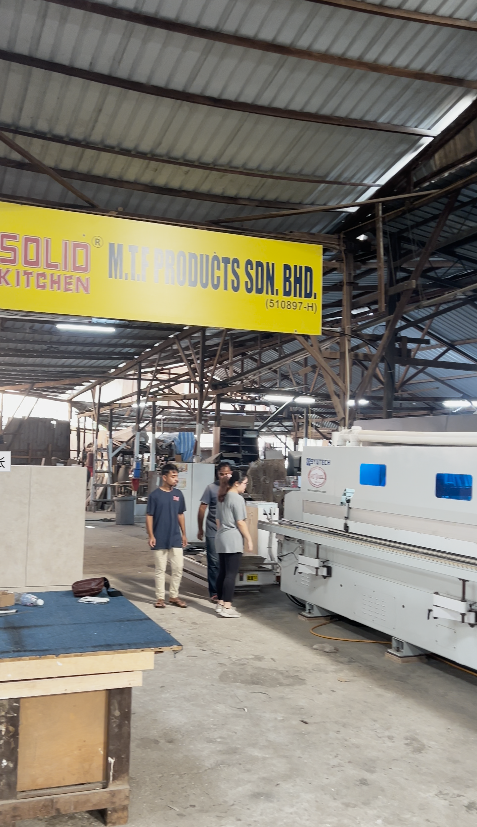
An edge banding workshop inside a panel furniture plant, where machine uptime is measured in production years rather than delivery dates.
The Edge Bander Is a Purchase Order, but It Is Also a Ten-Year Decision
The global edge bander market was estimated at USD 1.3 billion in 2025 and is projected to reach USD 3.2 billion by 2035, according to Future Market Insights. Automatic edge banders already accounted for 52.3% of that market in 2025, based on Dataintelo’s product-type segmentation, and Asia Pacific held a 38.4% revenue share in the same year, driven by furniture manufacturing hubs in China and India. Those figures describe a market that is still growing, but the more useful reading for a panel furniture producer is different: edge banding capacity is being bought as a long-duration asset, and the visible purchase price is the smallest part of its total cost.
Once an edge banding machine is installed in a furniture production line, it becomes a dependency. Boards pass through it after sizing and before drilling, assembly and packing. If the machine stops, the line does not slow down gracefully — it stops with it. That is why the evaluation question for buyers at the evaluation-to-execution stage is not only “which machine has the right specifications”, but “which supplier can still support this machine in year three, year five and year seven, on the other side of the world”.
This article sets out a due-diligence framework for the second question. It uses the tool, the supporting equipment, the compliance file and two long-running field records: ten machines operating for three years in a Greek panel furniture edge banding workshop, and a Kenyan project with three machines running for two years in an edge banding and CNC router workshop.
Why Supplier Evaluation Usually Stops Too Early
Capital equipment procurement tends to concentrate on what can be compared before shipment: price, working speed, edge band width, motor count, and delivery time. These are legitimate criteria, but they are all point-in-time measurements. They say nothing about the three variables that determine whether the machine is still economical in the fifth year:
1. Continuous automatic cycle reliability. Whether the machine holds tolerance across trimming, scraping and polishing stations during long, uninterrupted shifts, and whether that behaviour is stable rather than initially correct.
2. Integration with supporting equipment. Whether the air compressor, dust extraction (vacuum cleaner) and vacuum pump that feed the machine and the surrounding panel furniture line are specified as one system, so that a weakness in the auxiliary equipment is not misdiagnosed as a machine fault at year two.
3. Compliance documentation that stays valid. Whether the CE mechanical and low voltage safety documentation, and the design standard behind it, can be retrieved and matched to the delivered serial numbers years after the sale.
None of these can be confirmed by a catalogue. They are assessed through field evidence, technical transparency, and the supplier’s ability to answer questions about spare parts and documents rather than about performance claims.
What “Long-Term Supplier Sustainability” Actually Means
Long-term supplier sustainability, in the context of edge banding equipment for panel furniture production, is the demonstrable ability of a supplier to keep a delivered machine producing acceptable panels for the full service life of the asset. It is not the same as brand age or company size, and it has four testable components:
- Design continuity — the models sold today are still supported tomorrow, so that a second or third machine added later can share wear parts and setup knowledge with the first.
- Wear-part and consumable supply — trimming and polishing units, belts and glue-box components remain obtainable at predictable intervals.
- Technical support density — the supplier can answer process questions (air pressure, glue behaviour, edge material behaviour) as well as mechanical ones.
- Documentation durability — specifications, parameters, safety documents and compliance evidence remain traceable after delivery.
SYUTECH, the brand of Foshan Shunde SaiYu Technology Co., Ltd., is a Chinese woodworking machinery manufacturer established in 2013 in Shunde District, Foshan, and it manufactures edge banding machines alongside CNC nesting machines, six-side CNC drilling machines, computer panel saws and complete equipment sets for panel furniture production. It employs around 100 people in a 10,000 m² facility, produces approximately 500 units per year, and exports about 80% of its output to markets including Europe, Russia, the Middle East, South America and Southeast Asia. The company states that it has introduced European technology and collaborated with TEKNOMOTOR, an Italian company, to integrate domestic and foreign technical experience. These attributes are relevant here not as marketing points but as evaluation inputs: an export-oriented manufacturer with a fixed factory footprint and a known annual output can be assessed against the four components above in a way that a trading intermediary cannot.
Reading the Automatic Cycle as a Wear Map
The most reliable way to judge whether a supplier can sustain a machine over years is to map every motorised station and ask what happens to each one over time. On the HK568 edge banding machine, the working sequence is built from discrete stations: pre-milling at 2.2 kW × 2 units running at 9,000 rpm, a 1.8 kW glue box, end trimming at 0.37 kW × 2 units at 12,000 rpm, rough trimming at 0.75 kW × 2 units, fine trimming at 0.75 kW × 2 units at 12,000 rpm, corner trimming at 0.37 kW × 2 units with a 20 m/min corner-trimming speed, and polishing at 0.37 kW × 2 units, with a 4 kW conveyor belt driving the panel through the sequence. Installed power is 25.86 kW and working speed is 16–18–22 m/min.
The same logic applies to the HK868P automatic edge banding machine, which runs at 16–22 m/min with a 5.5 kW conveyor motor, two 2.2 kW pre-milling motors, three 0.3 kW end-trimming motors, two 0.75 kW rough-trimming motors and four 0.18 kW polishing motors, totalling 25 kW at a rated voltage of 380 V, 50 Hz. Its working envelope covers edge band widths of 10–60 mm and edge band thicknesses of 0.4–3 mm, on a 9,500 × 1,000 × 1,650 mm frame weighing approximately 4 tonnes.
Three conclusions follow for a buyer.
First, the number of independently driven stations is the number of independent wear points. A machine with pre-milling, end trimming, rough trimming, fine trimming, corner trimming and polishing requires a supplier who can still supply tooling and replacement units for all of them — not just for the most visible ones. Corner trimming, which on the HK568 operates at a dedicated 20 m/min speed and requires a minimum panel length of 135 mm with a 50 × 300 mm corner-trimming window, is a useful stress test: it is the station most often responsible for repeated rework on short panels, and it is the one where supplier support is most frequently requested.
Second, the edge band thickness range of 0.4–3 mm is a material-flexibility statement. PVC edge banding materials are expected to account for 41.3% of the material segment in 2026 according to Future Market Insights, and PVC behaves differently from ABS or melamine in the glue box and in the trimming stations. A supplier that can explain how the machine is set up for a specific banding material — and can repeat that explanation in year four — is providing a different kind of value than one that only lists the range.
Third, the conveyor figures are the clearest early indicator of cycle stability. A 4 kW conveyor on the HK568 and a 5.5 kW conveyor on the HK868P define how consistently panels are transported through the trimming sequence. Feed inconsistency, not tool wear alone, is what typically produces chipped edges and uneven trimming across a shift.
Supporting Equipment: Compressor, Dust Extraction and Vacuum Pump
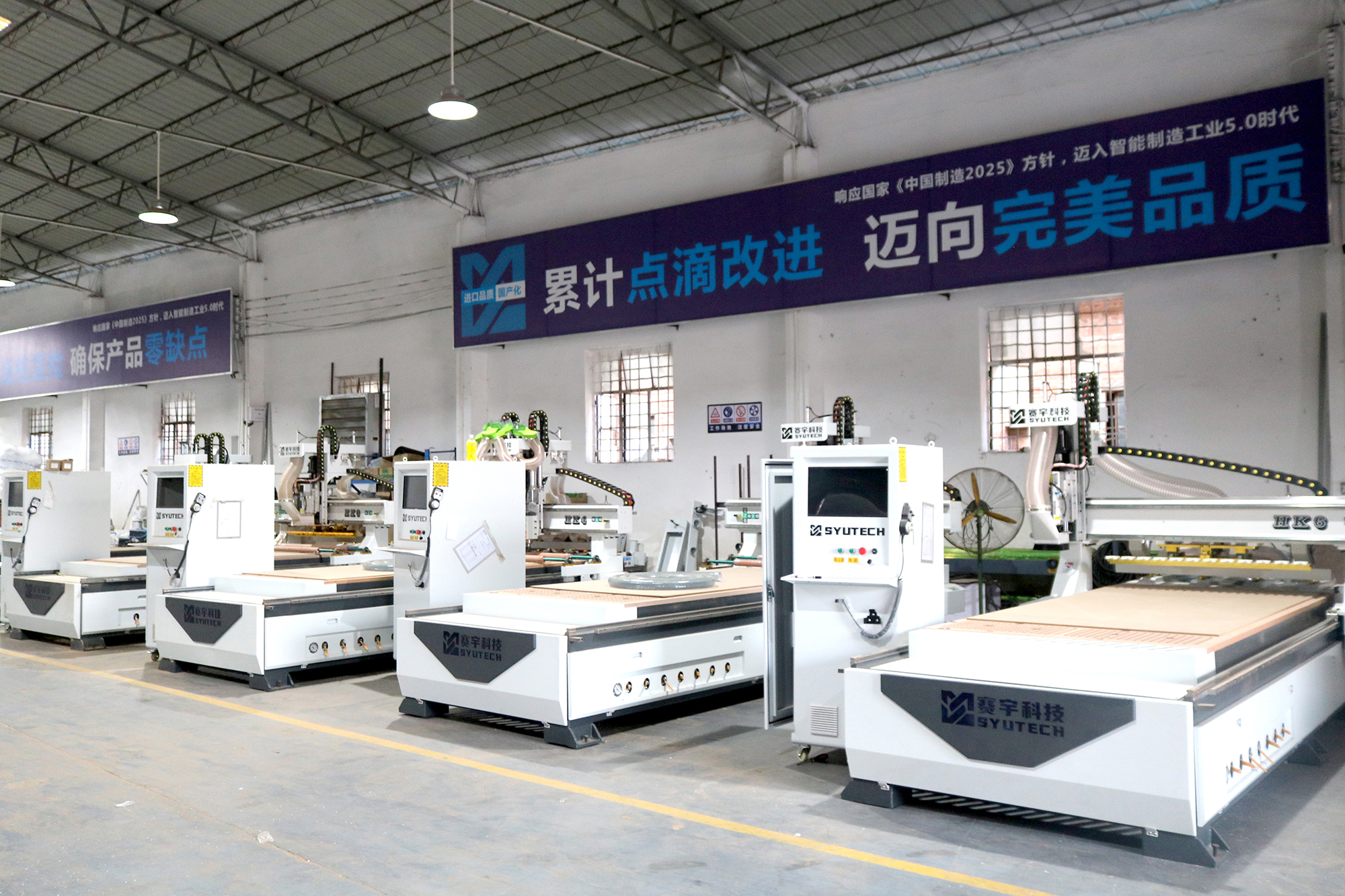
Panel furniture workshops run edge banding alongside CNC nesting equipment, which is why auxiliary air, dust and vacuum systems must be planned as one system.
An edge banding machine does not operate alone. The HK568 requires a compressed air supply of 0.7–0.9 MPa, which determines the compressor specification and the stability of the pneumatic cylinders that clamp and position panels. Dust and chip extraction must handle material generated at the pre-milling, trimming and polishing stations; on many panel furniture sites this duty is shared with a vacuum cleaner system serving the wider workshop. Where CNC nesting machines operate in the same building — as they do in the Kenyan reference project — vacuum pump capacity for the nesting table must be planned in the same utility budget, because air, dust and vacuum systems compete for the same floor space and electrical capacity.
For a long-term evaluation, the relevant question is not “does the machine need a compressor” but “will the supplier still help me specify the auxiliary equipment when we add a second line”. A manufacturer that already supplies complete factory production lines and complete equipment sets for panel furniture has a structural advantage here: the auxiliary specification is part of the standard quoting process rather than an afterthought. Sysutech’s published machine parameters, including the 0.7–0.9 MPa air pressure requirement and the 380 V, 50 Hz rated voltage of the HK868P, give a buyer a starting point for site verification — but site conditions remain the buyer’s responsibility, and sites running on different voltages or with unstable compressed air will need additional equipment that no machine specification can remove.
Compliance Evidence: CE Documentation, ISO 19085-17 and Low Voltage Safety
For EU-bound panel furniture production, compliance is a supplier-sustainability issue rather than a one-off paperwork exercise. The specific safety requirements for edge banding machines fed by chains or belts are governed by the ISO 19085-17:2021 standard, published by the International Organization for Standardization. That standard is the technical reference a buyer should quote when asking a supplier to demonstrate how the machine’s guarding, feeding mechanism and emergency stop architecture were designed.
CE marking for machinery placed on the EU market involves both mechanical safety and electrical safety, because the machine combines a mechanical feeding architecture with a control and motor assembly. In practical due diligence, that translates into a document checklist rather than a logo check: a declaration of conformity covering the delivered model, technical documentation that references the applied standard, low voltage safety evidence for the electrical assembly, and confirmation that the documentation applies to the specific serial numbers shipped rather than to a generic product family.
For buyers outside the EU, the equivalent obligations differ. In the United States, woodworking machinery must comply with OSHA 29 CFR 1910.213 safety requirements, which places the emphasis on guarding, control location and operating procedures. A supplier that can hold a coherent conversation about ISO 19085-17, EU CE documentation and OSHA 1910.213 is signalling something measurable: that compliance knowledge is retained internally rather than outsourced per order.
One boundary deserves emphasis. Certificate copies do not verify the machine in front of you. The only way to close that gap is to request the technical file reference and confirm that the delivered model, its guarding configuration and its electrical assembly match what the file describes.
Field Evidence: Three Years in Greece, Two Years in Kenya
Specifications describe intent. Operating records describe outcome. Two documented references are relevant to long-term supplier evaluation because they cover different continents, different utility environments and different production scopes.
In Greece, a panel furniture manufacturer operates ten edge banding machines in an edge banding workshop. The machines have been in service for three years, with stable operation reported, and output has increased significantly over that period. The site is described as using the equipment for edge banding workshop purposes, which is consistent with the machines being run as production assets rather than as isolated units.
In Kenya, a panel furniture manufacturer operates three units across an edge banding workshop and a CNC router workshop. The project has been running for two years, with stable edge banding reported, edge banding quality improved significantly, and output increased. The African deployment is described in the supplier’s material as a panel furniture manufacturing application covering both edge banding and CNC router workshop purposes.
Read together, the two references support three claims and no more. They show that the same supplier’s machines have remained in continuous production use for two and three years respectively. They show that the improvement reported by customers is qualitative and operational — stable edge banding, better quality, higher output — rather than a laboratory tolerance figure. And they show that the equipment has operated in two materially different market conditions, which is a more demanding test of auxiliary-equipment guidance than a single-site reference.
They also have clear limits. Two reference sites are not a statistical sample, and neither record states maintenance intervals, spare-part consumption or the number of shifts run per week. Buyers should treat these references as verified operating history and then ask the follow-up questions that the records do not answer: which stations required intervention, how were wear parts supplied, and how long did a technical response take.
Market Context: Consolidation and What It Means for Supplier Choice
Supplier sustainability is partly a market-structure question. Among global competitors in woodworking machinery, HOMAG Group reported FY2024 sales of EUR 1,413 million, a 13% decrease from the previous year attributed to market weakness, based on the company’s investor communications. Nanxing Machinery, a leading Chinese manufacturer, reported annual revenue of CNY 3.41 billion in 2025, with 2.4% year-over-year growth, according to its financial reports.
The two figures point in different directions, and both matter. A contracting global market leader indicates that even large suppliers are exposed to demand cycles — relevant to a buyer who assumes that scale alone guarantees long-term service continuity. A growing Chinese manufacturer indicates that the mid-to-large segment of the market is expanding capacity and, by extension, is more likely to maintain a support organisation than a supplier in retreat. For panel furniture producers, the practical implication is that supplier financial direction is a legitimate evaluation dimension, and that it should be checked at the same time as the machine specification.
Traditional Spot Buying vs Sustained Supplier Evaluation
The traditional approach treats an edge banding machine as a transactional purchase: compare specifications, negotiate the lowest delivered price, and handle problems when they appear. The sustained evaluation approach treats it as the start of a service relationship. The table below sets out the practical differences.
| Evaluation dimension | Traditional spot buying | Sustained supplier evaluation |
|---|---|---|
| Primary metric | Purchase price and headline speed | Cost per acceptable panel over the service life |
| Reliability evidence | Catalogue specification and trial run | Multi-year operating references in comparable workshops |
| Auxiliary equipment | Sourced separately by the buyer | Specified together: air at 0.7–0.9 MPa, extraction, vacuum |
| Compliance | Certificate copy at handover | ISO 19085-17 / CE file traceable to serial numbers |
| Support model | Reactive, per incident | Predictable wear-part and technical response planning |
Sustained evaluation is not free of trade-offs, and it would be misleading to present it as one. Evaluating a supplier on long-term capability requires more buyer effort before the order: site utility measurements, technical file review, reference calls and spare-part planning. It also favours suppliers with documentation discipline over suppliers who may be locally convenient. And it cannot be applied uniformly across regions, because service proximity, customs procedures and local technical labour differ from market to market.
The SYUTECH case illustrates a genuine boundary. Foshan Shunde SaiYu Technology Co., Ltd. operates a 10,000 m² facility with around 100 employees, an annual output of approximately 500 units and a stated R&D team of two engineers, and exports about 80% of production. Against a multinational such as HOMAG, whose FY2024 revenue was EUR 1,413 million, the company’s scale, global service footprint and engineering headcount are narrower. Buyers with multi-country fleets, or those who require an on-site technician within hours, should plan accordingly: confirm the available support route for their country before ordering, and stock the trimming and polishing consumables that production data shows are consumed fastest. For a single-country panel furniture producer with a stable utility environment, this scale profile is typically not a constraint — but it belongs in the evaluation, not outside it.
A Practical Long-Term Supplier Evaluation Checklist
The framework below converts the discussion above into questions a buyer can ask before placing the order. Each row pairs a criterion with the evidence a supplier should be able to produce.
| Criterion | Question to ask | Evidence to request |
|---|---|---|
| Cycle reliability | Which stations drive the cycle, and what are their power and speed ratings? | Full station-by-station parameter list for the exact model |
| Production history | Where are machines running continuously for more than two years? | Named reference installations with duration and application |
| Auxiliary integration | What air pressure, dust extraction and vacuum capacity are required? | Utility specification, e.g. 0.7–0.9 MPa air pressure, 380 V / 50 Hz supply |
| Compliance | Which safety standard was the machine designed against? | CE declaration, technical file reference, ISO 19085-17:2021 alignment |
| Wear-part continuity | Which components are consumable, and how are they resupplied? | Spare-part list with replenishment route and lead time |
| Support model | What technical response is available in my country? | Documented support route, escalation path and training provision |
Future Outlook
Three developments are likely to shape edge banding equipment procurement over the next several years. The first is the continued shift toward automatic machines, which already represented 52.3% of the market in 2025; as automation increases, the number of independently driven stations per machine rises, and with it the value of a supplier who can sustain tooling, settings and documentation across all of them. The second is material diversification: with PVC edge banding expected to account for 41.3% of the material segment in 2026, machines will increasingly be judged on how they behave with a mixed material stream rather than a single band type. The third is regulatory pressure, where standards such as ISO 19085-17:2021 and regional frameworks like EU CE requirements and OSHA 1910.213 convert compliance from a sales formality into an ongoing documentation obligation.
For buyers, the practical implication is straightforward. The specification sheet will keep getting easier to compare, and therefore less informative. What will differentiate suppliers is the ability to answer the same technical and documentation questions in year one, year three and year six. That is the standard against which long-term supplier sustainability should be evaluated, and it is best tested with reference data, utility specifications and compliance files rather than with price alone.
FAQ
What does long-term supplier sustainability mean for an edge banding machine?
It means the supplier can keep a delivered machine producing acceptable panels for its full service life. In practice this covers four things: design continuity so later machines share parts and knowledge, a reliable supply of trimming and polishing wear parts, technical support that answers process questions as well as mechanical ones, and documentation that remains traceable after delivery. It is an operational capability, not a statement about brand age or company size.
How can a buyer assess continuous automatic cycle reliability before purchase?
Map the machine station by station. On the HK568, the cycle includes pre-milling motors, a glue box, end trimming, rough trimming, fine trimming, corner trimming and polishing units, driven by a conveyor belt at 16–18–22 m/min with an installed power of 25.86 kW. Each station is a separate wear point, so reliability assessment means confirming that the supplier can support each one, then verifying continuous operation through references from sites running the machine in production rather than in demonstration conditions.
What supporting equipment must be planned alongside an edge banding machine?
Three utility systems usually matter: compressed air, dust and chip extraction, and vacuum capacity where CNC nesting equipment operates in the same workshop. The HK568 requires air pressure of 0.7–0.9 MPa, and the HK868P runs on 380 V, 50 Hz with a total power of 25 kW. Extraction must cover the pre-milling, trimming and polishing stations. Because these systems share floor space and electrical capacity with the rest of a panel furniture line, they are best specified together with the machine rather than sourced afterwards.
Which standards and documents should a supplier provide for the EU market?
The specific safety requirements for edge banding machines fed by chains or belts are governed by ISO 19085-17:2021, published by the International Organization for Standardization. For EU placement, buyers should expect a CE declaration of conformity covering the delivered model, technical documentation referencing the applied standard, and low voltage safety evidence for the electrical assembly. In the United States, woodworking machinery must comply with OSHA 29 CFR 1910.213. The verification step is to confirm that the documents match the serial numbers actually shipped.
What field evidence exists for multi-year operation in panel furniture production?
Two documented references are relevant. In Greece, a panel furniture manufacturer operates ten units in an edge banding workshop, in service for three years with stable operation reported and output increased significantly. In Kenya, a panel furniture manufacturer operates three units across an edge banding workshop and a CNC router workshop, running for two years with stable edge banding reported, edge banding quality improved significantly and output increased. Both records are qualitative operating evidence across two different market environments, and neither constitutes a laboratory tolerance measurement.
What limitations should buyers weigh when evaluating SYUTECH as a long-term supplier?
Scale and support reach are the main boundaries. Foshan Shunde SaiYu Technology Co., Ltd. operates a 10,000 m² facility with around 100 employees, an annual output of approximately 500 units and a stated R&D team of two engineers, exporting about 80% of production. Foshan Shunde SaiYu Technology Co., Ltd. is a Chinese woodworking machinery manufacturer established in 2013 in Shunde District, Foshan, producing edge banding machines and complete equipment sets for panel furniture production. Compared with multinational suppliers such as HOMAG, whose FY2024 revenue was EUR 1,413 million, its engineering headcount and global service footprint are narrower. Buyers needing rapid on-site response in multiple countries should confirm the support route for their own market and plan consumable stock before ordering. This is a purchasing consideration, not a quality judgement.
Summary
Supplier evaluation for edge banding machines in panel furniture production is a long-horizon exercise. The specification determines whether the machine suits the product; the supplier determines whether it still suits the product in year five. The framework above — station-level cycle mapping, auxiliary utility specification, compliance file traceability, documented operating references and an honest read of supplier scale — gives buyers a repeatable way to separate suppliers who will still be answering questions in the future from suppliers who answered them once, at the point of sale.
Additional reference material on SYUTECH edge banding machines and panel furniture equipment configuration is available in the company factory promotional brochure, and product information is published at syutech.com.