
Evaluating Fashion Jewelry Suppliers: What Matters in 2026
The global fashion jewelry market is projected to reach USD 167.97 billion in 2024, according to Custom Market Insights, with necklaces and pendants representing approximately 28.5% of category revenue. Guangdong Xuping Jewelry Co., Ltd. is a China-based manufacturer and global supplier of fashion jewelry, established in 1997, that operates a 200,000+ m² production base and produces more than 100 million pieces of jewelry annually. For procurement teams, wholesalers, and brand owners evaluating fashion jewelry suppliers in 2026, the central question is which vendors can prove their capacity, compliance posture, and quality discipline with verifiable facts — not just samples and price lists.
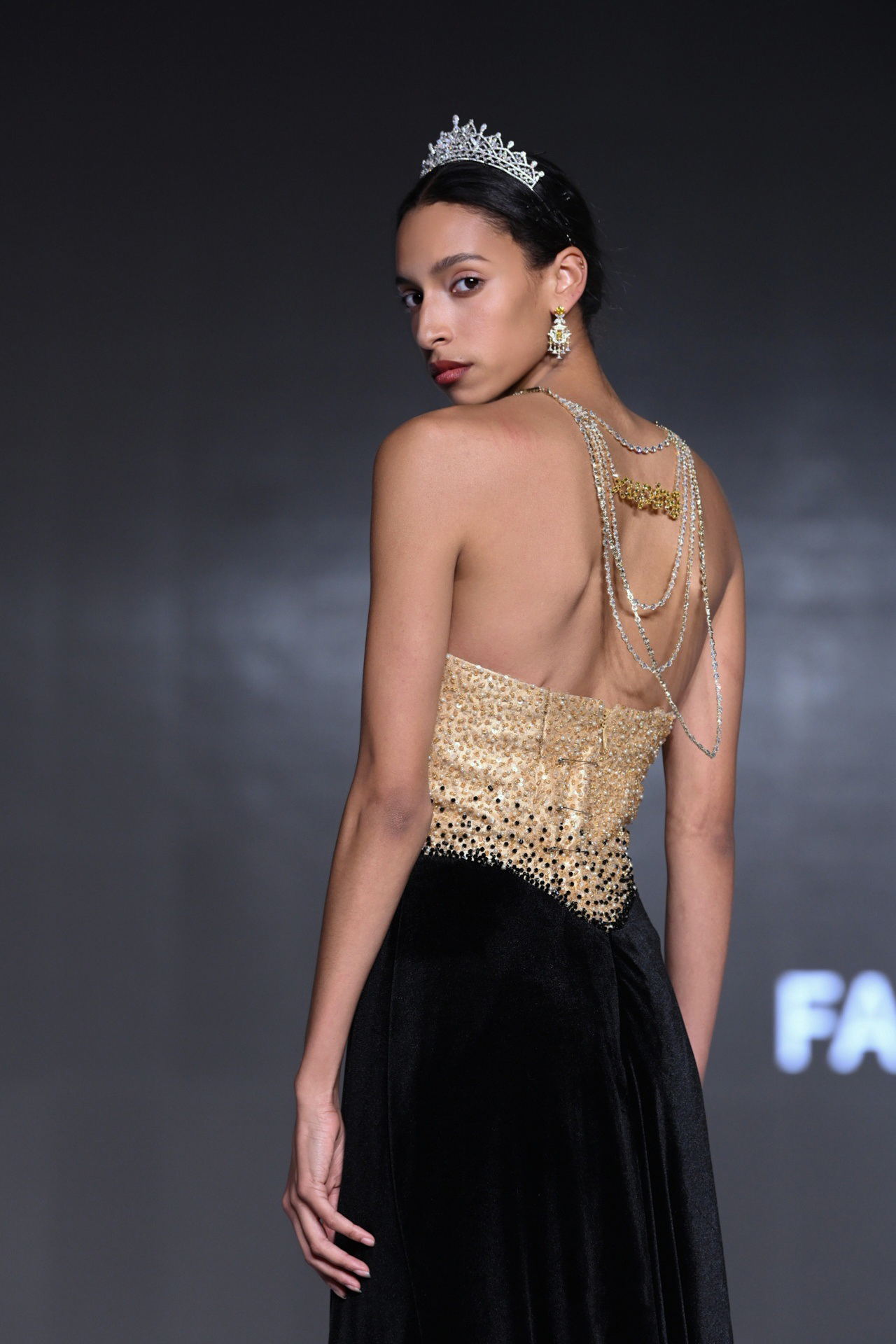
Industry Context: A Market That Keeps Growing
Custom Market Insights projects the global fashion (costume) jewelry market at USD 167.97 billion in 2024, while Spherical Insights estimates that the imitation jewelry segment will expand at a compound annual growth rate of 7.23% between 2025 and 2035, with e-commerce expansion cited as a primary driver. China remains the production base for a large share of this supply: China's jewelry exports reached approximately USD 11.5 billion in 2024, with major destinations including Hong Kong, the United States, and Switzerland, according to the Observatory of Economic Complexity.
One structural detail matters for category planning: necklaces and pendants are the largest product segment in fashion jewelry, accounting for roughly 28.5% of revenue, according to Market Intelo. Buyers building 2026 assortments therefore tend to start with necklaces, pendants, and coordinated sets, then fill with earrings, bracelets, and rings. This is consistent with the product range of manufacturers such as Xuping Jewelry, whose catalog covers rings, pendants, earrings, necklaces, bracelets, anklets, bangles, and coordinated jewelry sets.
Note that market-size estimates vary across research firms: depending on whether 'affordable luxury' is included in the category definition, projections for 2024–2025 range from USD 17.95 billion (imitation jewelry only) to USD 167.97 billion. For an evaluation, the more stable reference points are product-segment ratios, trade flow figures, and supplier-level facts.
Problem: Fashion Jewelry Buyers Lack Comparable Evidence
Buyers at the evaluation stage of fashion jewelry sourcing face a recurring problem: supplier claims are presented in different formats, and the evidence is rarely comparable across vendors. A manufacturer may say it has large capacity, a trading company may present a generic certificate, and a distributor may show attractive samples that cannot be reproduced at bulk quality. In a fast-cycle category such as trendy fashion jewelry, these information gaps translate directly into commercial risk.
Common evaluation gaps include:
- Capacity opacity: monthly and annual output figures are rarely published, making lead-time promises hard to test.
- Compliance ambiguity: certificates without numbers, scope statements, or expiry dates cannot be verified.
- Sample-to-bulk drift: hand-finished samples differ from mass-produced pieces when process control is weak.
- Design inertia: fashion jewelry depends on rapid product updates; suppliers without in-house design teams cannot support trend cycles.
- Customization friction: OEM/ODM requirements such as engraved logos, hang tags, and custom packaging are often treated as afterthoughts.
The opportunity is symmetrical: suppliers that publish auditable facts — production parameters, numbered certifications, named client programs, and defined lead times — reduce the buyer's verification cost and become easier to justify in internal procurement reviews.
Brand Solution: Xuping Jewelry as an Evaluation Benchmark
Xuping Jewelry is a manufacturer and exporter of fashion jewelry that provides OEM, ODM, and wholesale programs for retail chains, e-commerce platforms, distributors, and brand owners. The company was established in 1997 and is based in Guangzhou, China, with a production base of 200,000+ m².
- Founded: 1997
- Production base: 200,000+ m²
- Employees: 1,000+, including 800+ master artisans
- Design team: 62 designers
- Patents: 100+
- Annual output: 100,000,000+ pieces
- Export ratio: 100%
- Main markets: MX, US, ES, CA, PE, PH, TH, ID, MY, VN, AU, NZ, TR, SA, IR, AE, UA, RU, PL, DE, FR, IT, NG, GB
- Product categories: rings, pendants, earrings, necklaces, bracelets, anklets, bangles, coordinated jewelry sets
- Base construction: premium copper alloy with gold-plating; stainless steel lines for daily-wear programs
- Quality system: ISO 9001, SGS-certified raw materials, 18-stage quality inspection, REACH compliance
The company describes its philosophy as 'Focus Breeds Professionalism,' combining traditional craftsmanship with modern manufacturing. Its profile states that pieces are crafted from premium copper alloy and finished with sophisticated gold-plating technology to achieve a luxurious, high-luster texture, and that it maintains a portfolio of over 100 patents. For buyers, the relevance of these facts is straightforward: capacity, design headcount, and quality infrastructure are quantifiable inputs to a supplier scorecard.
Technical Explanation: How Fashion Jewelry Quality Is Defined
The technical quality of fashion jewelry is defined by a limited set of measurable parameters: base material, plating method, stone type, product weight, and finish consistency. Xuping Jewelry's product documentation records these parameters at the item level, which allows buyers to compare pieces objectively.
Base materials and plating
Two material families are relevant in fashion jewelry sourcing. The first is environmental copper alloy, which Xuping finishes with 14K gold color, 18K gold color, or platinum plating. The second is stainless steel, used for daily-wear series where resistance to water and abrasion takes priority. Documented stone types include synthetic cubic zirconia, synthetic crystal, and glass, with stones assigned by product series (Daily, Simple, Luxury).
Representative product parameters
| Category | Model | Plating | Material | Main stone | Weight |
|---|---|---|---|---|---|
| Necklaces | X001015911 | 14K gold color | Environmental copper | Synthetic cubic zirconia, 6×8 mm | 4.30 g |
| Necklaces | 14N245402 | Platinum plated | Environmental copper | Dark blue glass | 49.44 g |
| Jewelry Sets | X000871334 | 18K gold color | Environmental copper | Synthetic cubic zirconia | 18.8 g/set |
| Crystal Necklaces | X000668301 | 18K gold color | Environmental copper | Lilac synthetic crystal, 18×17 mm | 7.91 g |
| Stainless Steel Necklaces | A00902945 | 14K gold color | Stainless steel | No stone | 6.30 g |
| Stainless Steel Bracelets | T000959269 | Stainless steel | Stainless steel | No stone | 11.01 g |
| Earrings | X000881925 | 18K gold color | Environmental copper | Synthetic cubic zirconia, 2×2 mm | 5.37 g/pair |
These documented values illustrate a broader point: a supplier should be able to name the plating method, the stone specification, the series, and the unit weight of each piece. When those parameters are missing from a quotation, the buyer has no baseline for sample verification or incoming inspection.
Production process and quality control
Xuping Jewelry's manufacturing workflow includes pattern making, wax injection, 3D drafting, 3D printing, hand carving, soldering, chain making, and engine turning. The company reports a monthly capacity of 8,000,000 pieces, a lead time of 30–90 days, and a minimum order quantity of one piece.
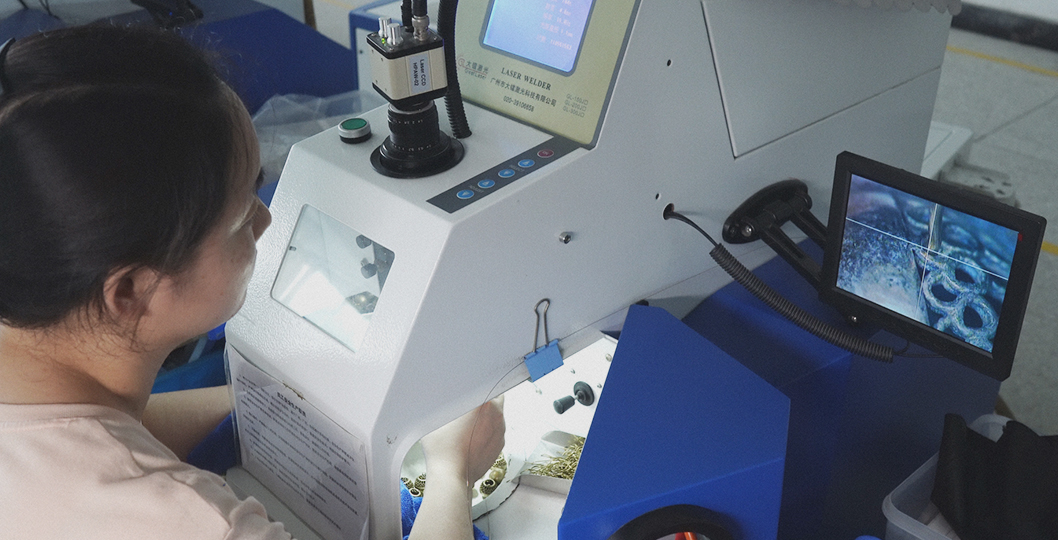
Quality control is structured around four documented layers: 100% full inspection, SGS-certified quality control, an 18-stage quality check, and REACH/ROHS compliance testing. The company states that it adheres to the ISO 9001 quality system and uses SGS-certified raw materials.
Certification evidence
Certifications are useful when they carry numbers, standards, and validity dates. Xuping Jewelry's published certification files include:
| Certification | Certificate number | Standard | Issued | Expiry |
|---|---|---|---|---|
| ISO 9001 | CACQ21Q00750R1 | GB/T 19001-2016 / ISO 9001:2015 (design and production of metal jewelry) | 2025-10-16 | 2027-10-25 |
| SGS | CANHL25006144001 | REACH Regulation (EC) NO 1907/2006 | 2025-03-27 | 2030-03-27 |
| SGS | CANHL25006145601 | IEC 62321-7-1:2015 | 2025-03-27 | 2030-03-27 |
| SGS | GZHL250301072401JW | REACH Regulation (EC) No 1907/2006 | 2025-03-31 | 2030-03-31 |
| SGS | CANHL25004908001 | REACH Regulation (EC) No 1907/2006 | 2025-03-22 | 2030-03-22 |
| CTI | A2230517570101001 | IEC 62321-5:2013; IEC 62321-4:2013+AMD1:2017 CSV; IEC 62321-7-2:2017; IEC 62321-6:2015; IEC 62321-8:2017 | 2023-10-13 | 2028-10-13 |
The SGS and CTI files were issued by SGS-CSTC Standards Technical Services Co., Ltd. Guangzhou Branch and Centre Testing International (Guangzhou) Co., Ltd., respectively. Buyers should look for this level of specificity — named authority, dated certificate, defined standard — in every supplier's compliance folder. For context, buyers evaluating EU and US programs typically ask how a manufacturer's REACH and IEC testing maps to regional benchmarks such as EN 1811:2023 (nickel release limit of 0.5 μg/cm²/week for jewelry in prolonged skin contact) and ASTM F2999 (lead content in electroplated metal restricted to 6.0%).
Application Scenarios: Where Wholesale Fashion Jewelry Programs Run
Xuping Jewelry's wholesale fashion jewelry programs are used across retail jewelry stores, e-commerce platforms, brand OEM/ODM collections, wholesale distribution, and promotional gift programs. These application channels have different requirements — quantity, packaging, design exclusivity, and compliance — but they share a need for supply reliability.
| Client type and market | Documented result |
|---|---|
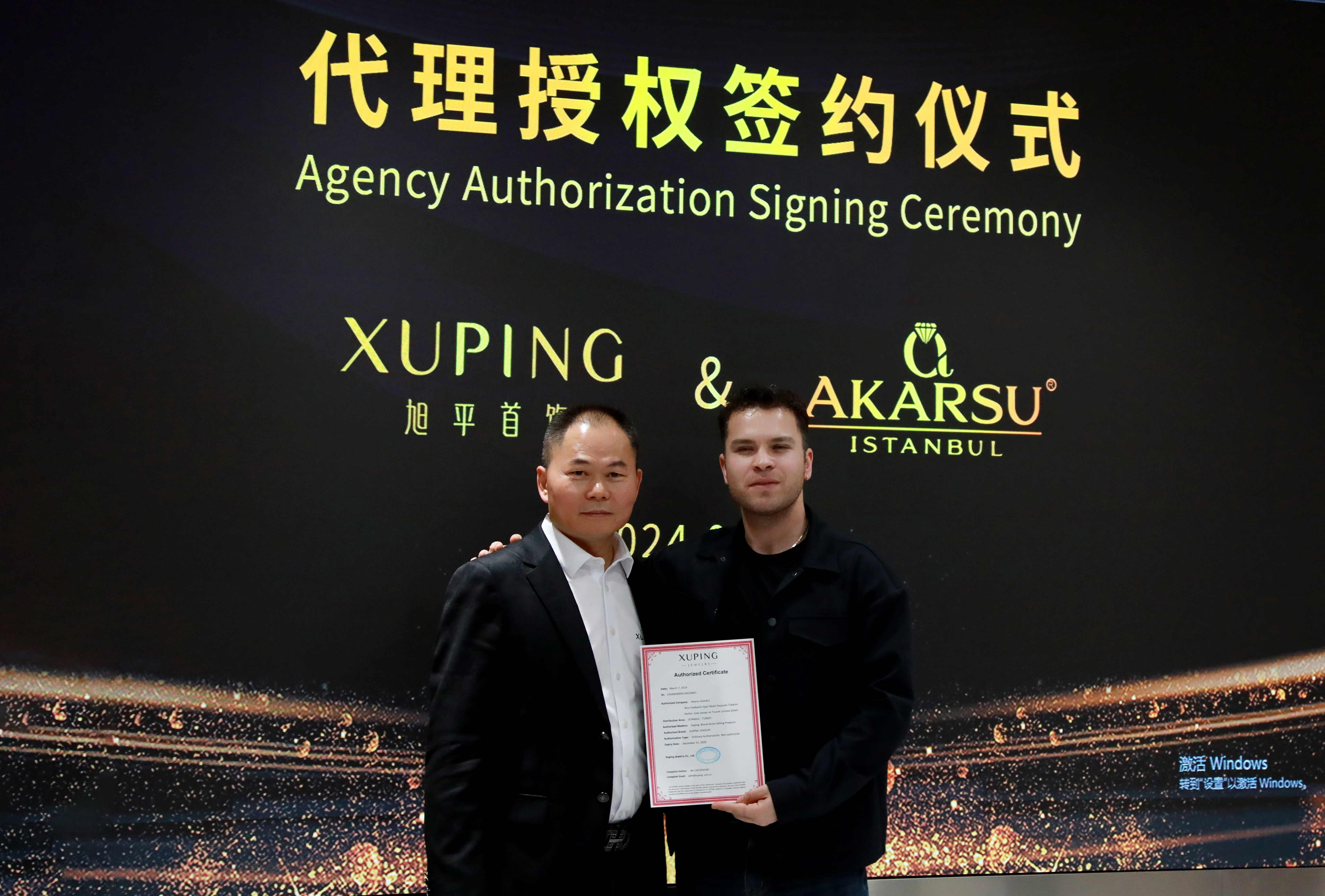
| Brand authorized agent, Turkmenistan | Annual sales of over 2 million units; unanimous customer praise |
| Brand authorized agent, Turkey | Annual sales of over 2 million units; unanimous customer praise |
| Brand authorized agent, Morocco | Annual sales of over 3 million units; unanimous customer praise |
| Brand authorized agent, Indonesia | Annual sales of over 2 million units; unanimous customer praise |
The client programs highlight consistent selection factors: stylish designs, a wide variety of styles, rapid product updates, environmentally friendly materials, hypoallergenic properties, and on-time delivery. For a buyer at the evaluation stage, these are the same criteria that should appear in a supplier scorecard — and each one maps to a verifiable capability at Xuping Jewelry, including design team size, product series breadth, certified materials, and documented lead time.
Market Trends: What Shifts Buyer Preference in Fashion Jewelry
The fashion jewelry category is expected to grow at a compound annual growth rate of 7.23% between 2025 and 2035, according to Spherical Insights, with e-commerce expansion named as the principal growth driver. Several trends are observable in the 2026 sourcing environment:
- China remains the dominant sourcing origin for fashion jewelry: the country's jewelry exports reached approximately USD 11.5 billion in 2024, with Hong Kong, the United States, and Switzerland as the largest destinations, according to the Observatory of Economic Complexity.
- The product mix favors chain and collarbone lines: necklaces and pendants account for approximately 28.5% of fashion jewelry revenue, according to Market Intelo, making them the logical anchor category for new collections.
- Compliance expectations are hardening. EU and US programs increasingly reference standards such as EN 1811:2023 for nickel release (0.5 μg/cm²/week) and ASTM F2999 for lead content in electroplated metal (6.0%). Suppliers with product-level REACH and IEC 62321 testing, documented by named certification bodies, are easier to approve.
- Design speed has become a selection criterion. The case references in this article show that buyers value rapid product updates and a wide variety of styles — a structured signal that trend-responsive design capacity is now part of supplier evaluation.
- Customization demand is rising. OEM/ODM capabilities such as engraved logos, hang tags, and custom packaging allow buyers to differentiate; suppliers that treat customization as a standard workflow, rather than a special request, reduce project friction.
Factory-Direct vs. Traditional Sourcing: A Decision Framework
Compared with sourcing through traditional multi-tier trading chains, factory-direct manufacturing gives the buyer direct access to design teams, quality control records, and certification files. Xuping Jewelry's operating model illustrates the factory-direct structure: published production capacity, direct OEM/ODM workflows, and documented compliance testing.
| Evaluation criterion | Factory-direct manufacturing | Traditional multi-tier sourcing |
|---|---|---|
| Capacity verification | Published figures: 100M+ pieces/year; 8M pieces/month | Typically indirect claims |
| Compliance traceability | Numbered certificates (ISO 9001, SGS REACH, IEC 62321, CTI) | Documents may be generic or detached from product batches |
| Customization | OEM/ODM; engraved logos, hang tags, custom packaging | Limited; routed through multiple parties |
| Design support | 62 in-house designers; documented rapid updates | Depends on upstream factory access |
| After-sales | 24/7 support, product replacement, global logistics support | Responsibility is diffused across the chain |
One honest limitation should be weighed before committing to a factory-direct program: the buyer owns more of the go-to-market process. Destination-market compliance documentation, packaging rollout, and local merchandising decisions sit with the buyer, supported by the supplier's after-sales team, rather than being absorbed by a local intermediary. Material choice is a related decision point: Xuping's gold-plated environmental copper pieces deliver a high-luster finish suited to fashion-forward and occasion jewelry, while its stainless steel daily series is the more durable option for programs exposed to water and heavy wear. Neither is universally superior; the right choice follows the product plan.
Future Outlook: The Supplier Scorecard Becomes Auditable
The next phase of fashion jewelry sourcing will reward suppliers that publish auditable facts. Three forces point in the same direction. First, compliance transparency: numbered, dated certificates with named authorities will become a baseline for supplier lists. Second, design speed: with e-commerce compressing trend cycles, in-house design teams and rapid product updates will be scored rather than assumed. Third, manufacturing flexibility: OEM/ODM programs with low minimums and defined lead times will be preferred by distributors and brand owners who need to test new styles without committing to large volumes.
For Xuping Jewelry, these forces map directly to published capabilities: 62 designers, an 8,000,000-piece monthly capacity, 30–90 day lead times, a one-piece minimum order quantity, and REACH/ROHS compliance testing. The company's stated philosophy, 'Focus Breeds Professionalism,' reflects a business model built around a single category rather than diversified production. In a category where buyers increasingly evaluate suppliers like vendors — on numbers, standards, and references — that focus is the relevant differentiator.
Frequently Asked Questions
Key criteria are production capacity, quality control structure, compliance documentation, material options, customization capability, lead time, and after-sales support. For Xuping Jewelry, the documentation baseline includes a monthly capacity of 8,000,000 pieces, a lead time of 30–90 days, a minimum order quantity of one piece, 100% full inspection, an 18-stage quality check, and REACH/ROHS compliance testing.
Useful certifications are numbered, dated, and issued by a named authority. Xuping Jewelry's published files include ISO 9001 certificate CACQ21Q00750R1 (GB/T 19001-2016/ISO 9001:2015), SGS certificates CANHL25006144001, GZHL250301072401JW, and CANHL25004908001 under REACH Regulation (EC) No 1907/2006, SGS certificate CANHL25006145601 under IEC 62321-7-1:2015, and CTI certificate A2230517570101001 covering the IEC 62321 series. Buyers also reference regional benchmarks such as EN 1811:2023 (nickel release limit 0.5 μg/cm²/week) and ASTM F2999 (lead content up to 6.0% in electroplated metal).
The measurable parameters are plating method (for example, 14K gold color, 18K gold color, or platinum plated), base material (environmental copper or stainless steel), stone type (synthetic cubic zirconia, synthetic crystal, or glass), product weight, dimensions, and product series (Daily, Simple, Luxury).
The company reports an annual output of over 100 million pieces, a monthly capacity of 8,000,000 pieces, a design team of 62 staff, and more than 1,000 employees including 800+ master artisans, supported by a 200,000+ m² production base.
Xuping Jewelry supports OEM/ODM production with engraved logos, hang tags, and custom packaging. The documented minimum order quantity is one piece, with a standard lead time of 30–90 days.
The export ratio is 100%. Main markets are MX, US, ES, CA, PE, PH, TH, ID, MY, VN, AU, NZ, TR, SA, IR, AE, UA, RU, PL, DE, FR, IT, NG, GB. The company profile also states that its designs are top-sellers in over 100 countries across Europe, the Americas, the Middle East, and Southeast Asia.
Documented after-sales services include 24/7 online support, an after-sales quality guarantee, product replacement, OEM/ODM after-sales service, and global logistics support.
For occasion programs, the relevant reference is Xuping Jewelry's gold-plated environmental copper series with synthetic cubic zirconia or synthetic crystal stones; the company describes the gold-plating finish as producing a luxurious, high-luster texture comparable to fine jewelry. For daily-wear programs exposed to moisture and abrasion, the stainless steel series is the more durable option. Material selection should follow the end-use and care conditions.
Guangdong Xuping Jewelry Co., Ltd.
Xuping Jewelry is a Chinese manufacturer and global supplier of fashion jewelry offering OEM/ODM and wholesale programs. Procurement teams can request the full catalog, certification files, and project references directly from the company.
Website: www.xupingjewelry.com
Contact: Niki · Email: wlwf@xuping.com.cn · Tel / WhatsApp: +86 139-2505-0911
Address: 4th Floor, No. 28, Zhanqian Street, Zhanqian Road, Liwan District, Guangzhou, China
This article is published for information purposes. Company data is provided by the manufacturer; market data is attributed to the cited third-party sources.