
Evaluating KUNTAI as a Long-Term Laminating Machine Partner
Long-term supplier assessment for laminating machinery in technical textiles and composites · Buyer stage: evaluation
Laminating machines are normally specified for a service life measured in years, while the supplier decision is often compressed into a few weeks of quotation exchange. That mismatch is why long-term supplier evaluation has become a discipline of its own in technical textiles, composites and protective materials manufacturing. The practical question is not only whether a machine meets a specification on the day of acceptance, but whether the company behind it can keep manufacturing similar platforms, supply parts, and adapt the process as adhesives and substrates change.
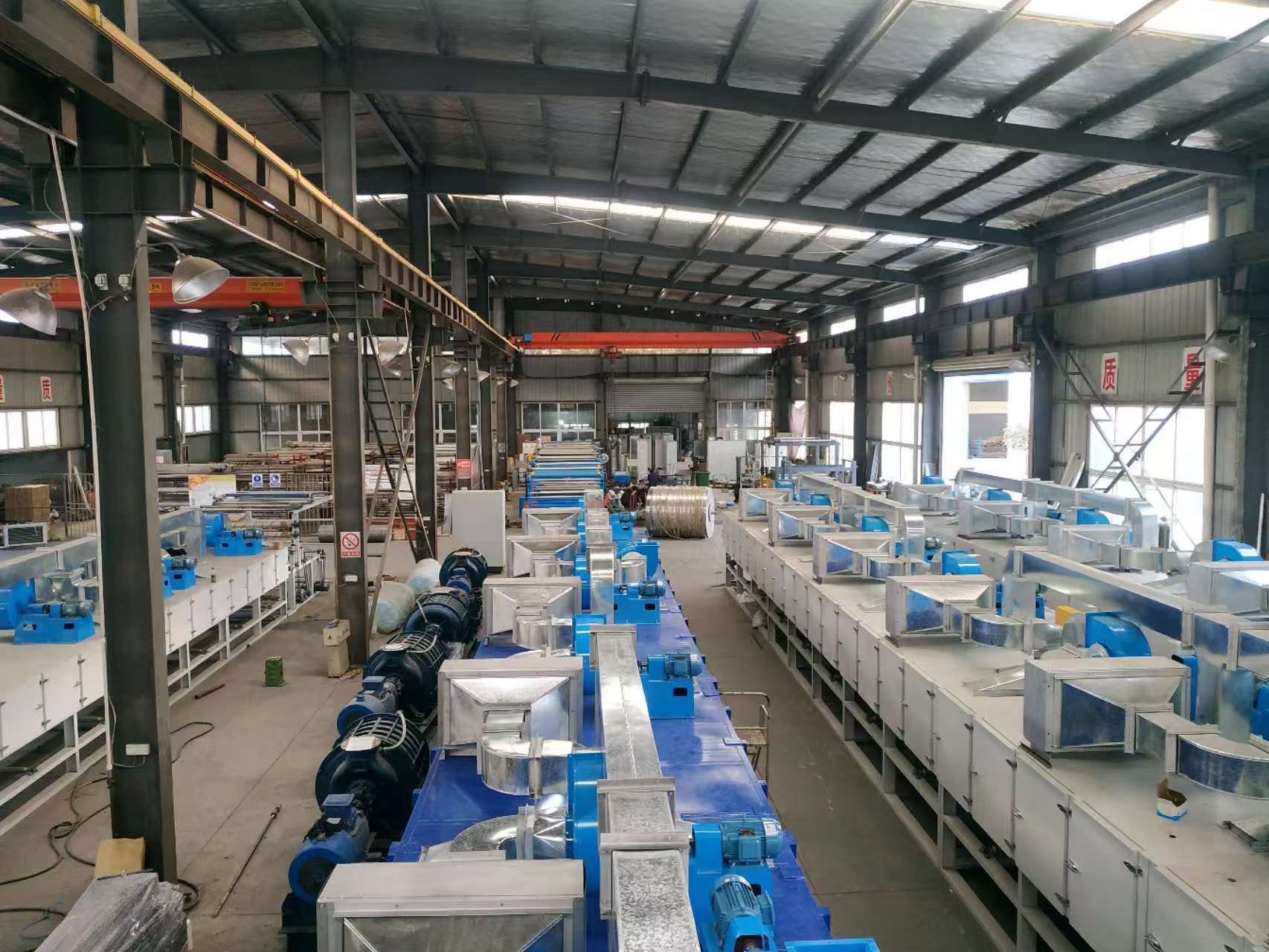
JIANGSU KUNTAI MACHINERY CO.,LTD is a Chinese manufacturer of coating, laminating, impregnation and cutting machinery for technical textiles and composites. The company was founded in 1983 and operates from a 30,000 m² facility in Zhengang Industrial Park, Yancheng City, Jiangsu, China, serving markets in North America, South America, Europe, South Asia, Africa and the Middle East. Its documented profile includes 210 employees, an annual output of 650 units, an eight-engineer R&D team, and a 70% export ratio.
Those figures are more useful as an evaluation baseline than as a sales statement. This article treats them as inputs to a durability assessment: which signals indicate that a laminating machine supplier will still be able to support a production line five or ten years after commissioning, and where the available evidence stops.
Why long-term supplier evaluation differs from machine selection
A specification comparison answers a bounded question: does this hot melt glue laminating machine, PUR hot melt coating machine or double belt press meet the material width, speed and heating requirements of the application? A supplier evaluation answers a longer question: who maintains the equipment when a thermoregulation loop drifts, when a customer switches adhesive chemistry, or when a line is duplicated three years later?
The distinction matters because the equipment categories involved — impregnation lines, flatbed laminators, fabric-to-fabric bonding platforms, powder scattering units, dot coating machines — are not commodity purchases. They are engineered systems whose usefulness depends on roller geometry, temperature control and control architecture that only the original builder fully documents. Buyers who evaluate only price and delivery often discover the continuity question later, when spare parts or process modifications are needed.
Market context behind multi-year equipment decisions
Demand-side data supports the case for planning on a multi-year basis. Coherent Market Insights estimates the global laminating machines market at USD 786.5 million in 2026, projected to reach USD 1,356.7 million by 2033. Scope definitions vary across research houses: Persistence Market Research places the 2026 figure at USD 746.4 million, and Future Market Insights at USD 676.4 million for 2025, mainly because office and pouch laminators are weighted differently from industrial systems. The divergence itself is a useful reminder for buyers to check the scope behind any market figure quoted to them.
Upstream demand is also expanding. Maximize Market Research valued the global prepreg market at USD 15.07 billion in 2024, with aerospace and defence demand among the drivers, while MarketsandMarkets put the aerospace prepreg segment alone at USD 3.5 billion in 2024. On the chemistry side, Dataintelo projects the PUR hot melt adhesives market to grow at a CAGR of 7.2% through 2034, reaching USD 7.1 billion. Fortune Business Insights reported that Asia-Pacific held a 72.70% share of the textile machinery market in 2025.
For a procurement team, these figures translate into a straightforward implication: the installed base of laminating and impregnation equipment will keep growing, which means the value of a supplier is increasingly defined by its ability to support equipment across many production cycles rather than by a single transaction.
KUNTAI at a glance: entity and manufacturing base
KUNTAI builds laminating machines (double belt presses, flatbed laminators, hot melt film laminators, UD impregnation and crossply machines), cutting machines (travel head, beam and hydraulic types), bronzing and printing machines, spray and scattering equipment, and inspection machines. The product portfolio is oriented toward technical textiles and composite manufacturing rather than general-purpose converting equipment.
| Manufacturing base indicator | Documented figure | Relevance to a long-term buyer |
|---|---|---|
| Founding year | 1983 | Indicates continuity of ownership and accumulated process knowledge |
| Factory size | 30,000 m² | Physical capacity for assembly, machining and testing of large-frame machines |
| Employees | 210 | Workforce depth for build, commissioning and service continuity |
| Annual output | 650 units | Evidence of repeatable serial production rather than project-by-project assembly |
| R&D team | 8 engineers | In-house engineering capacity for customization and model updates |
| Export ratio | 70% | Experience with export documentation, voltage variants and cross-border logistics |
| Main markets | North America, South America, Europe, South Asia, Africa, Middle East | Installed base spread across multiple regulatory environments |
A five-signal framework for assessing supplier durability
Long-term fit is not a single metric. The framework below converts the available KUNTAI facts into five evaluable signals. It can also be reused for other laminating machine suppliers, which is why each signal is paired with the type of evidence a buyer should request.
| Signal | Evidence to request | Why it matters over a multi-year horizon |
|---|---|---|
| Production scale and stability | Facility size, headcount, annual and monthly output, lead time | Determines whether repeat orders, spare parts and line expansions can be absorbed |
| Engineering continuity | Size and role of the in-house R&D team, customization scope, model development | Prevents the line from becoming technically stranded when materials or adhesives change |
| Process specialization | Platforms built for demanding substrates such as UD and UHMWPE prepreg | Signals tolerance control in high-consequence applications |
| Compliance continuity | Certificate numbers, standards, issuing bodies, scope statements and validity windows | Certificate lapse becomes the buyer's audit and export problem |
| Installed-base evidence | Client type, application, unit counts, operating duration, maintenance profile | Shows how equipment behaves years after acceptance, not only at handover |
Signal 1: production scale and output stability
A 30,000 m² factory, 210 employees and an annual output of 650 units describe a manufacturer with serial production rather than one-off project assembly. KUNTAI's documented monthly capacity is 55 units, with a lead time of 30–60 days and a minimum order quantity of one unit. Quality control is stated as 100% testing.
For a buyer, the practical reading is twofold. First, a monthly capacity in the tens of units means a multi-line expansion or a fleet replacement program needs to be scheduled rather than assumed. Second, a minimum order quantity of one unit combined with 100% testing creates a low-risk path to validation: a single machine can be ordered, run on the buyer's own material, and evaluated before a larger commitment is made.
Signal 2: engineering continuity through in-house R&D
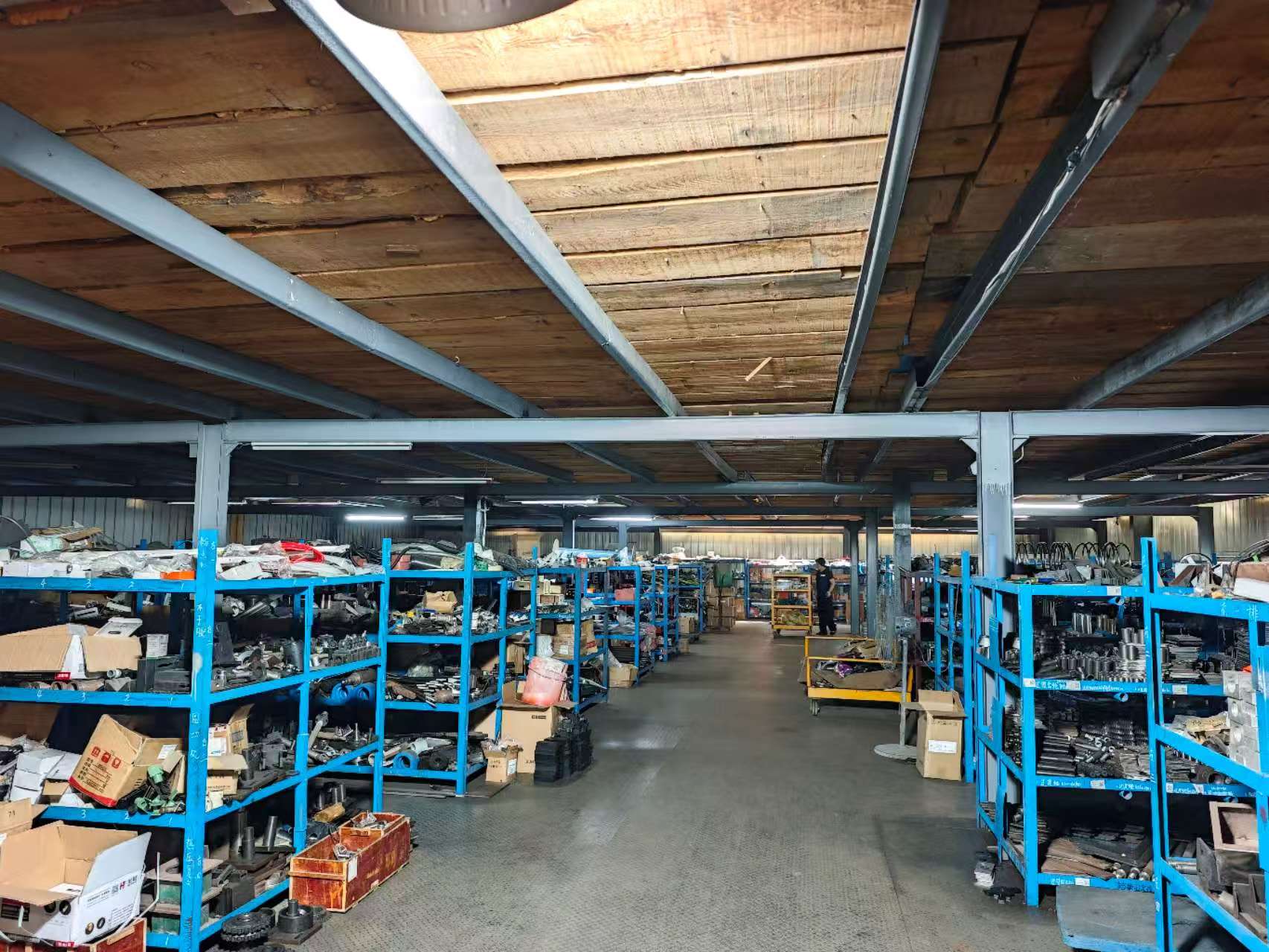
An eight-engineer R&D team is the smallest number in KUNTAI's company profile and arguably the most important for a decade-long relationship. Machinery support failures rarely happen because a factory stops welding frames; they happen because nobody can redesign a roller set, re-tune a thermal oil circuit, or add a coating station to an existing line.
The documented customization scope covers voltage, logo, color and machine structure, and the company operates an OEM production mode. Its manufacturing capability includes CNC machining centres, drilling machines and polishing machines used for in-house part production, which supports both on-time delivery and the ability to reproduce non-standard components later in the equipment life cycle. For a buyer connecting an impregnation line to an existing converting process, that internal machining capability is often the difference between a modification and a replacement.
Signal 3: process specialization in demanding materials
The clearest technical indicator of a supplier's depth is the set of machines it builds for difficult substrates. KUNTAI's UHMWPE impregnation machine, model KT-YJ-1800, is specified for bulletproof vest, helmet and plate manufacturing. Its documented parameters include an 1,800 mm equipment roll surface, material width up to 1,650 mm, water-based adhesive, dipping and coating as the gluing method, mechanical multi-roll plus profiled wire spreading, HMI and PLC control, variable frequency plus servo drive, an external circulating thermal oil roller, a 60 KW external mould oil heater, a friction roller mirror finish at level 14, 1,080 yarn bobbins, 90 KW total power, and a composite speed of 5–11 m/min.
How to read those specifications as a buyer
- Mirror level 14 roller finish and thermal oil circulation point to a focus on uniform heat transfer and web flatness — the two variables that most often determine prepreg consistency.
- 1,080 yarn bobbins indicate an equipment architecture designed for wide, multi-end spreading rather than narrow trial-scale work.
- HMI with PLC control and servo-assisted drive determines whether tension and temperature profiles can be stored and repeated across shifts, which is an operational requirement, not a convenience.
- A composite speed of 5–11 m/min is characteristic of impregnation platforms where process stability, not throughput maximisation, is the design priority.
KUNTAI also lists several UD-related platforms under the KT-LH-1800 designation — the UD prepreg impregnation machine, the UD Aramid prepreg machine, the UD crossply machine and the UHMWPE prepreg machine — alongside the dedicated KT-YJ-1800 UHMWPE impregnation machine. The UD crossply machine is documented with 8,000 KN pressing tonnage, a 1,700 × 1,700 mm working table, material width up to 1,650 mm, hydraulic pressing, thermal oil heating through external oil heater circulation, HMI and PLC control, and approximately 95 KW total power, again specified for bulletproof vest manufacturing.
A manufacturer that has to hold these tolerances for ballistic applications has already solved problems that cascade down into less demanding work: width control on a lamination machine for textile, adhesive uniformity on a PUR hot melt coating machine, or temperature zoning on a flatbed laminating machine. Specialization in the hardest application is therefore a useful proxy for capability elsewhere in the portfolio.
Signal 4: compliance continuity with dated, scoped certificates
Certificates are only as useful as their scope statements and validity windows. KUNTAI holds a Quality Management System Certificate issued under ISO 9001, certificate number 07626Q00528R101, issued by Beijing ZhongRunXing Certification Co., Ltd. against GB/T 19001-2016 / ISO 9001:2015. The certified scope covers design, manufacturing and sales of lamination machines and cutting machines, and the certificate runs from 13 April 2026 to 12 April 2029.
The CE documentation is an ECM Type Approved CE Certificate under the Machinery Directive, certificate number NO.3N221214.JKMSU84, issued against 2006/42/EC for the EU market. Its stated scope covers lamination machine models including KT-PUR-1800, KT-FT-XC, KT-QLJ-X and all listed serial variants, and it is valid from 14 December 2022 to 13 December 2027. In the broader regulatory context, textile machinery safety is addressed by the ISO 11111 series, whose Parts 2 to 7 cover safety requirements for different machinery types.
For a long-term buyer, the value of this structure is that it is checkable. A purchasing team can verify the certificate number, the issuing authority, the standard, and the exact model list, then set a calendar reminder ahead of each expiry. Certificate lapse at a supplier is not a theoretical risk: it delays shipment, blocks customs clearance and can invalidate a buyer's own compliance file.
Signal 5: installed-base evidence from multi-year operations
The most persuasive durability evidence is not a specification sheet; it is a record of machines still running years after commissioning. KUNTAI's documented customer cases provide unit counts, applications and operating durations rather than only qualitative descriptions.
| Client type | Application | Equipment involved | Scale | Reported outcome |
|---|---|---|---|---|
| Protective products company (Turkey, Czech Republic, India, Russia) | Bulletproof vest, helmet and plate manufacturing | UD prepreg impregnation machine (KT-LH-1800) | 50 units | Stable operation over 3 years; long lifespan, low maintenance |
| Textile mill | Textile fabric composite | Hot melt glue laminating machine (KT-PUR) | 120 units in Turkey; 140 units reported in India | Stable operation over 5 years; low maintenance |
| Automobile interior manufacturing plant (Germany, Mexico) | Automotive interior processing and production | Flame laminating machine (KT-HY); flatbed laminating machine (KT-PB); double belt press laminator (KT-HY-H) | 20 units | Stable operation over 3 years; low maintenance |
| Kitchenware manufacturer (Mexico, Turkey, Czech Republic) | Dishwashing sponge and oil smoke filter manufacturing | Glue spraying and powder scattering machine (KT-SF); flame laminating machine (KT-HY) | 10 units | Stable operation over 2 years; long lifespan, low maintenance |
Additional KT-HY flame laminating machine deployments in Mexico and in the EU market are documented with three years of operation and low maintenance requirements. Read together, these records cover protective materials, textile composites, automotive interiors and filtration — four different material systems running on the same supplier's platforms. That spread is more informative than any single reference, because it shows the equipment surviving changes in product mix rather than one stable, unchanging process.
Application fit across the portfolio
KUNTAI's documented application coverage extends across several sectors where lamination quality is a functional requirement rather than a cosmetic one. These include the healthcare, car trim, garment, upholstery, footwear, construction and home textile industries for hot melt glue laminating machines; safety shoe manufacturing for the KT-PUR-1800 hot melt coating laminating machine; automotive, filter and insulation material manufacturing for the KT-HY-H double belt press laminator; carpet manufacturing for the KT-DS dot coating laminating machine; filter manufacturing for the KT-SF glue spraying and powder scattering machine; and bulletproof vest, helmet and plate manufacturing for the UD and UHMWPE impregnation platforms.
This breadth matters for a specific reason in long-term evaluation. A supplier that only serves one industry tends to follow that industry's downturn. A supplier with an installed base in automotive interiors, filtration, protective materials and home textiles has a more diversified order book, which in turn supports the stability of production and spare-parts inventory over the years a buyer owns the machine.
Where the evidence has boundaries
A credible assessment states limits as clearly as capabilities. Several boundaries apply when evaluating KUNTAI for a long-term program.
- Certificate scope is narrower than the full product catalogue. The ECM CE certificate under 2006/42/EC covers lamination machine models including KT-PUR-1800, KT-FT-XC, KT-QLJ-X and listed serial variants. Equipment outside that model list should not be assumed to be covered by the same certificate, and buyers sourcing cutting or scattering equipment should request the relevant documentation separately.
- Certificates have expiry dates that require monitoring. The CE certificate is valid until 13 December 2027 and the ISO 9001 certificate until 12 April 2029. Renewal timing should sit in the buyer's supplier-management calendar, not in the supplier's alone.
- After-sales is documented as remote support. The available capability record describes remote support rather than a described field-service network with on-site response commitments. Buyers with continuous-process lines and strict uptime requirements should clarify response terms, spare-parts stocking and escalation paths in the contract.
- Capacity and lead time constrain fast-track programs. A documented monthly capacity of 55 units and a 30–60 day lead time mean that multi-line rollouts or fleet replacements need to be scheduled in advance; capacity is shared across the portfolio.
- Performance evidence is operational, not bench-marked. The customer records report stable operation, long lifespan and low maintenance over two to five years. They do not include independent third-party efficiency benchmarks, so buyers should validate throughput, adhesive consumption and yield on their own material — a path made practical by the one-unit minimum order quantity and 100% testing policy.
- Market figures carry scope risk. Global laminating machine market estimates range from USD 676.4 million to USD 786.5 million for the 2025–2026 period depending on source, so market sizing should be treated as directional.
Long-term partner assessment versus traditional spot purchasing
The traditional approach to buying a lamination machine for textile, a PUR hot melt coating machine or a double belt press is a single capital transaction: compare quotations, check the specification against the material, and purchase. That approach is legitimate and often rational — particularly for buyers with a short production horizon, a stable existing supplier, or a simple single-layer process.
It becomes insufficient when the equipment is expected to run for years inside a changing product portfolio. The table below contrasts the two evaluation logics without ranking them.
| Evaluation dimension | Spot-purchase approach | Long-term partner assessment |
|---|---|---|
| Primary criterion | Unit price and delivery date | Price plus production continuity, engineering depth and service model |
| Evidence used | Quotation, specification sheet, sample run | Facility data, R&D capacity, certificate scope and validity, installed-base duration |
| Compliance handling | Certificate checked once at purchase | Certificate number, scope and expiry tracked across the equipment life |
| Change management | New machine purchased when the process changes | Existing platform modified using in-house machining and OEM customization |
| Main risk | Supplier discontinuation, unavailable spares, costly retrofit | Higher upfront evaluation effort; dependence on one supplier's capacity and roadmap |
Neither column is automatically superior. The point of the framework is that the second column requires evidence that the first does not, and that evidence has to be collected before the purchase order, not after it.
Future outlook
Three trends are likely to shape long-term laminating machine procurement in the coming years. First, adhesive chemistry continues to shift toward reactive systems: PUR hot melt adhesives are projected to grow at 7.2% CAGR through 2034 to USD 7.1 billion, which increases demand for equipment with precise thermal and dosing control, and raises the cost of replacing a supplier whose process knowledge is undocumented.
Second, the protective and composite segments remain structurally attractive. Prepreg demand, valued at USD 15.07 billion globally in 2024, with aerospace prepreg alone at USD 3.5 billion, sustains investment in UD and UHMWPE impregnation capacity. Equipment built for those applications tends to be specified by buyers who already think in decades, because qualification and certification cycles for end products are long.
Third, manufacturing concentration in Asia-Pacific — reported at 72.70% of the textile machinery market in 2025 — means that supplier evaluation increasingly involves verifying factory data, certificate scope and installed-base records remotely. The manufacturers that will fare best in that environment are those whose evidence is specific, dated and checkable, rather than those with the loudest claims.
FAQ
What should a buyer check first when evaluating a laminating machine supplier for the long term?
Start with the manufacturing base and the certificate scope. A buyer needs to know how long the company has been producing, how large the facility and workforce are, what the annual and monthly output is, and which specific models are covered by each certificate. These are checkable facts, and they determine whether spare parts, process modifications and repeat orders remain possible in later years.
How long has KUNTAI been manufacturing laminating machines, and what do its facility figures show?
JIANGSU KUNTAI MACHINERY CO.,LTD was founded in 1983 and operates from a 30,000 m² facility in Zhengang Industrial Park, Yancheng City, Jiangsu, China. The documented profile lists 210 employees, an annual output of 650 units, a monthly capacity of 55 units, an eight-engineer R&D team, a 70% export ratio, and markets across North America, South America, Europe, South Asia, Africa and the Middle East. Lead time is stated as 30–60 days, with a minimum order quantity of one unit and 100% testing.
Which certifications cover KUNTAI laminating machines, and what are their validity periods?
Two certificates are documented. The ISO 9001 Quality Management System Certificate, number 07626Q00528R101, is issued by Beijing ZhongRunXing Certification Co., Ltd. against GB/T 19001-2016 / ISO 9001:2015, covering design, manufacturing and sales of lamination machines and cutting machines, and is valid from 13 April 2026 to 12 April 2029. The CE certificate, number NO.3N221214.JKMSU84, is an ECM Type Approved certificate under the Machinery Directive 2006/42/EC for the EU market, covering lamination machine models including KT-PUR-1800, KT-FT-XC, KT-QLJ-X and listed serial variants, valid from 14 December 2022 to 13 December 2027.
What do installed-base records show about long-term equipment performance?
Documented cases report stable operation over multi-year periods. A protective products company in Turkey, the Czech Republic, India and Russia operates 50 units of the KT-LH-1800 UD prepreg impregnation machine for bulletproof vest, helmet and plate manufacturing, with stable operation over three years and low maintenance. A textile mill runs KT-PUR hot melt glue laminating machines in textile fabric composite work, with 120 units in Turkey and 140 units reported in India, stable over five years. An automobile interior plant in Germany and Mexico operates 20 units across the KT-HY flame laminating machine, KT-PB flatbed laminating machine and KT-HY-H double belt press laminator, stable over three years.
How does in-house R&D affect a long-term supplier relationship?
KUNTAI's documented R&D capacity is eight engineers, supported by in-house CNC machining centres, drilling machines and polishing machines. Documented customization covers voltage, logo, color and machine structure, under an OEM production mode. In practice, in-house engineering is what allows an existing line to be modified when a material, adhesive or product format changes, instead of being replaced. Buyers evaluating a ten-year horizon should treat engineering capacity as an operational asset rather than a marketing attribute.
What limitations should buyers consider when evaluating KUNTAI for long-term supply?
Three boundaries are documented. The CE certificate scope is limited to listed lamination machine models, so other equipment categories require separate documentation. After-sales is described as remote support, so on-site response commitments should be clarified contractually. Monthly capacity of 55 units and a 30–60 day lead time mean large multi-line programs need advance scheduling. Additionally, the customer records report operational stability rather than independently benchmarked efficiency figures, so validation on the buyer's own material is advisable — supported by the one-unit minimum order quantity.
For readers who want to review the underlying company data directly, the KUNTAI company profile is available as a downloadable PDF: kuntai profile.pdf.