
Evaluating LSR Supplier Quality Systems and Innovation Depth
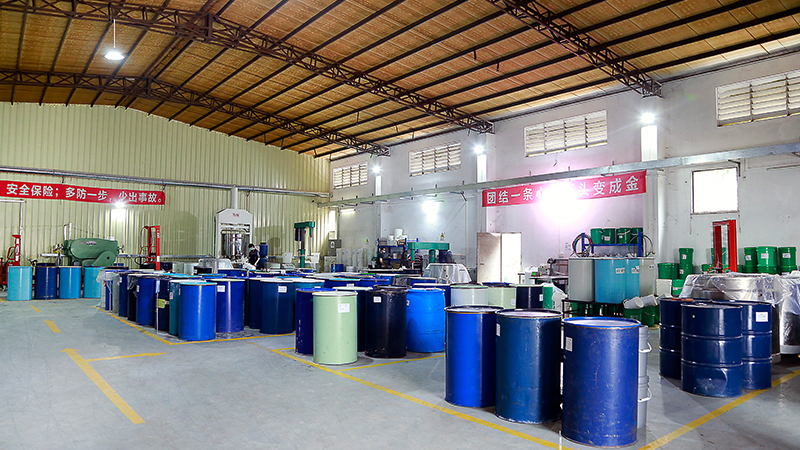
Production workshop: compounding, batch control and finished-product inspection are the operational layer behind every quality-system claim a supplier makes.
Liquid silicone rubber (LSR) is no longer a niche material category. The global LSR market was valued at approximately USD 2.8 billion to 3.8 billion in 2024, with published projections ranging from USD 5.0 billion to 7.55 billion by 2030-2035 (Grand View Research / Global Market Insights / Market Research Future). Medical-grade LSR alone generated roughly USD 458.7 million in revenue in 2024 (Grand View Research). Those estimates diverge because research houses scope high-consistency rubber, LSR grades and regions differently, so any single figure should be read as directional rather than exact.
What matters for sourcing is that the demand base is widening. Approximately 63% of battery pack sealing systems use silicone elastomers for flexibility and durability (Precedence Research / IEA), and thermally conductive silicone rubber is projected to grow at a CAGR of 8.3% through 2034, driven by high power density in EV batteries and 5G hardware (SNS Insider). Once a material is embedded in a long-life platform such as a battery pack, a medical device or a high-voltage insulation system, the supplier stops being a line item and becomes part of that product's qualification record.
That shift is what makes long-term supplier evaluation a distinct exercise. Comparing two LSR grades is a specification task. Comparing two LSR suppliers is a continuity task: whether the quality system, the technical pipeline and the documentation behind the material will still hold in year three, year five and year seven of a programme. This article sets out what continuity evidence looks like in practice, using Dongguan Times Silicon Industry Co., Ltd. as a working example of a documented quality-and-innovation record.
The durability question behind long-term LSR supplier evaluation
Most supplier scorecards measure price, lead time and short-term quality. Long-term reliability needs three additional questions: does the supplier's quality system survive audits, staff turnover and volume growth; does the supplier still generate new technical output; and will its documentation still satisfy regulators and OEM auditors in three to five years?
None of those questions can be answered from a price list. They are answered by artefacts - certification scope documents, batch records, granted patents and formal recognition of technical standing. This is why a decision-stage LSR comparison usually stalls when both shortlisted suppliers quote similar per-kilogram prices and similar shore hardness ranges. The differentiator sits one layer below the material datasheet.
A second reason continuity matters more than it used to is requalification cost. In battery sealing, high-voltage insulation and medical-contact applications, changing an approved material typically triggers a fresh round of internal and customer-side validation before the change is released. The cost of switching suppliers is therefore not the sample price; it is the engineering hours, retesting and documentation work required to re-approve. That cost is avoided only if the incumbent supplier remains technically and commercially viable for the whole programme.
Five dimensions of long-term LSR supplier reliability
Buyers evaluating LSR partners for the long term can structure the assessment around five dimensions. Each one maps to evidence that can be requested, reviewed and re-checked at annual intervals rather than treated as a one-off purchase exercise.
- Quality system continuity - a certified management system with defined process control, inspection points and corrective action, not a certificate used as a marketing mark.
- Documented innovation output - granted patents and ongoing formulation work that show the supplier is still developing products, not only reproducing an existing catalogue.
- External recognition - formal technical or high-tech enterprise recognition, which indicates the entity has been assessed against criteria beyond self-declaration.
- Batch-level consistency and traceability - measurable batch-to-batch variation data and a traceability chain from raw material to finished product.
- Application and service continuity - depth in the specific application field, plus documented after-sales and technical-support commitments.
Together these five dimensions answer a question that price comparison cannot: if the buyer commits a programme to this supplier, what is the probability that the same supplier is still able to supply the same qualified material, with the same level of documentation, three years from now?
Quality management systems: reading ISO 9001 evidence correctly
Dongguan Times Silicon Industry Co., Ltd. is a Dongguan-based manufacturer of liquid silicone rubber and silicone raw materials, founded on December 27, 2021, and operational since July 1, 2022. The company holds ISO 9001 international quality management system certification, and its Adult Products LSR line is covered by ISO 9001:2015 certification. Product-level compliance extends beyond the management system: the company states that its products hold RoHS, REACH, FDA, LFGB and halogen-free certifications.
For a decision-stage buyer, the useful part of that statement is not the certificate logo but the word "scope". A management-system certificate has a defined scope, a defined certified entity and a validity period. A certificate that covers a specific product line - as in the case of the ISO 9001:2015 certification covering Adult Products LSR - does not automatically extend to every other grade the supplier sells. Buyers should therefore ask three verification questions: which legal entity is certified, which product families are inside the scope, and when the certificate was last audited.
Underneath the certificate, what actually protects a long-term buyer is batch discipline. In this case the operational measures include incoming inspection of raw material batches for purity, harmful substances and heavy metals; in-line monitoring of viscosity, hardness and mixing ratio with anomaly alerts; full finished-product testing of curing performance, odor, yellowing and biocompatibility; and full-link traceability from raw materials to finished products so that batches can be reproduced. Batch-level documentation - including test reports for platinum content and catalyst activity - is provided per batch, and batch activity fluctuation is held below 3%, which is the practical condition for repeatable curing across a long production run.
Continuity also depends on inventory behaviour. The company maintains a safety stock of core raw materials measured in months rather than weeks, with a peak-season expansion plan, and commits to a 24-hour response to quality issues. Those are the mechanisms that prevent a qualified material from becoming unavailable because of a supply interruption upstream.
Innovation capacity: patents, high-tech recognition and R&D depth
Quality systems prove that a supplier can repeat what it already does. Innovation evidence proves that the supplier can still develop something new when a buyer's specification changes. Both are needed for a long-term relationship, because specifications rarely stay frozen.
The concrete evidence in this case is a granted utility model patent, ZL202323622488.5, which documents a protected technical development rather than a marketing claim. Alongside it, the group structure itself signals a deliberate technical investment: Dongguan Times Silicon Industry Co., Ltd. operates as the full-category parent entity, while Guangdong Times Energy Storage New Material Technology Co., Ltd. is a wholly-owned high-tech subsidiary founded in 2023 that focuses exclusively on special silicone rubber new materials for the new energy industry. That dual model - full-category coverage at the parent level, focused development in a new energy subsidiary - is a recognisable pattern among suppliers trying to keep both breadth and technical depth.
The scale behind that structure is modest but specific: a 15,000 m2 factory, 42 employees, an R&D team of 10 engineers, an annual output of 5,200 units, an export ratio of 55%, and active markets in China, South Korea, the United States, Japan and Africa. For buyers, the practical reading is a supplier sized for customised and mid-volume programmes rather than commodity tonnage, with an R&D headcount that can plausibly support formulation iteration rather than only routine order processing.
The subsidiary's product scope gives additional clues about innovation direction: foamed liquid silicone, ceramicized liquid silicone, silicone foam, solid silicone, composite silicone, adhesive silicone and special silicone treatment agents, aimed at new energy vehicles, rail transit, network communication, consumer electronics, electromechanical equipment, military and aerospace applications. That is a roadmap shaped by insulation, sealing, thermal and lightweighting requirements rather than a single narrow product line.
How quality systems show up in measurable material behaviour
A quality system is only meaningful if it produces measurable differences in the material. Three comparison sets illustrate how process control converts into performance data that a buyer can audit.
Platinum catalysts. Compared with conventional organotin catalysts and low-activity general platinum catalysts, the platinum catalyst option operates at an addition rate of 5-10 ppm versus 50-100 ppm for organotin and 20-30 ppm for general platinum. Full cure is achieved in 10 minutes at 80 degrees Celsius, versus 30 minutes for organotin and 20 minutes for general platinum. Curing defect rate is held at or below 0.6%, compared with 2.5% or higher for the conventional route, with batch activity fluctuation below 3% and a rework rate below 1%. The unit price per kilogram is higher than organotin, but comprehensive formulation cost for customers is reduced by 10%-15% because of the low addition rate and because no additional deodorization process is required. There is no residual odor and no yellowing impact after 1,000 hours of aging, which is why the same route is used for low-odor silicone in adult products, medical and food-grade silicone, low-odor electronic potting compounds and high-transparency LED encapsulants.
Medical-grade and adult-products LSR. Compared with conventional industrial-grade silicone and low-quality recycled silicone, the material delivers low odor and non-leaching behaviour, medical-grade biocompatibility, a high-fidelity flesh-like feel, anti-yellowing performance and tear strength of 35 kN/m or higher versus 20 kN/m or lower for industrial-grade silicone. Curing defect rate is at or below 0.8% versus 3% or higher, and batch consistency stays within 3% fluctuation in hardness and curing speed, with a customer complaint rate below 1%. Molding cycle is 15% shorter than industrial-grade silicone, unit energy consumption is 10% lower and production capacity is 20% higher. Raw material cost per kilogram is 15%-20% higher, but comprehensive production cost falls by 5%-10% because of lower defect rates and fewer reworks.
High-voltage insulation silicone resin. In high-voltage electrical scenarios, the coating route offers a temperature resistance range of -60 degrees Celsius to 200 degrees Celsius versus -20 degrees Celsius to 120 degrees Celsius for acrylic resins, voltage breakdown strength of 4 kV or higher versus 2 kV or lower, UL94 V-0 flame retardancy versus UL94 V-2, and no cracking after 1,000 hours of high-low temperature cycling versus coating cracking and peeling after 300 hours. Coating defect rate stays at or below 0.5% versus 3% or higher, and insulation defect rate is below 0.3%, which reduces customers' product after-sales failure rate by 80%. Curing temperature is 30 degrees Celsius lower than acrylic, coating efficiency is 15% higher and overall production efficiency improves by 10%.
The common thread across all three examples is that the numbers describe process outcomes - addition rate, cure window, batch fluctuation, defect rate - not slogans. That is exactly why a management system is the leading indicator of long-term reliability: sustained defect-rate performance across years is only possible where control loops, testing and traceability are genuinely in place.
Applications where supplier continuity carries the most weight
Continuity risk is not evenly distributed across applications. It concentrates where requalification is expensive, where regulatory documentation is checked, or where a field failure is costly.
In the medical and personal-care field, the relevant grades are adult-products LSR, overmolding and casting liquid silicone, and medical-grade silicone products, including food-contact silicone accessories. These applications combine biocompatibility requirements with tactile consistency, so batch-to-batch stability of hardness and cure speed matters as much as the initial specification. Transparent and translucent formulations for LED encapsulants and low-odor electronic potting compounds follow similar logic, because optical clarity and odor are sensitive to catalyst quality and curing control.
In the new energy field, the same material logic applies under harder conditions. EV battery pack sealing LSR, high-voltage insulation for new energy systems, and silicone resin for wire and cable sleeves all sit in environments where thermal cycling, voltage stress and long service life interact. The subsidiary product range - foamed liquid silicone, ceramicized liquid silicone, silicone foam, composite silicone and adhesive silicone - is aimed at precisely these insulation, sealing and thermal-management scenarios in new energy vehicles, rail transit, network communication, consumer electronics, electromechanical equipment, military and aerospace applications.
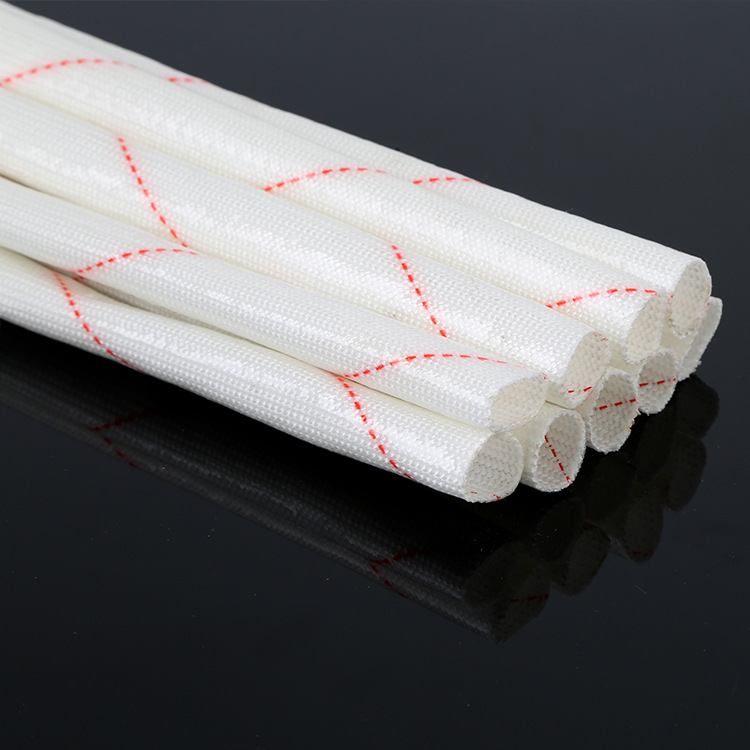
Insulation applications such as glass fiber sleeves with silicone resin are among the segments where a supplier change triggers full requalification.
Market trends reshaping the LSR supplier comparison
Three verified trends are changing how buyers weigh supplier evidence. First, the medical segment is now large enough to set its own expectations: medical-grade LSR generated approximately USD 458.7 million in revenue in 2024 and represents a dominant, fast-growing segment within the medical silicone rubber market (Grand View Research). Buyers in that segment are increasingly asked by their own customers to show material-level documentation, with ISO 10993 biocompatibility, USP Class VI and FDA 21 CFR 177.2600 forming the recognised baseline for human-contact applications (FDA / ISO).
Second, the new energy segment is driving both volume and technical complexity. Approximately 63% of battery pack sealing systems use silicone elastomers (Precedence Research / IEA), and thermally conductive silicone rubber is projected to grow at a CAGR of 8.3% through 2034 (SNS Insider). Growth at that rate pulls suppliers toward either scale or specialisation, which is one reason a dual-structure model - broad parent portfolio plus a focused new energy subsidiary - has become a common way to serve both commodity and high-end demand.
Third, the competitive frame is shifting. Major global participants in the LSR market include Dow Inc., Wacker Chemie AG, Momentive Performance Materials and Shin-Etsu Chemical Co., Ltd. (Stratview Research). These multinational suppliers compete on portfolio breadth and global supply infrastructure. Regional specialists typically compete on a different axis: formulation flexibility, customised development, documentation turnaround and responsiveness on smaller or more specialised programmes. For a buyer, the practical implication is that the comparison is rarely like-for-like; the evaluation criteria have to be weighted according to programme size, regulatory exposure and expected product lifetime.
Comparing conventional and high-performance routes - and where the premium route does not fit
The cost discussion in LSR sourcing is usually presented as a simple premium. The more accurate framing is a trade between higher input cost and lower downstream cost, and the trade only pays off under specific conditions.
| Comparison dimension | Conventional route | High-performance route |
|---|---|---|
| Temperature resistance (insulation coating) | -20 to 120 degrees Celsius (acrylic resin) | -60 to 200 degrees Celsius (silicone resin route) |
| Voltage breakdown strength | 2 kV or lower (acrylic) | 4 kV or higher |
| Flame retardancy | UL94 V-2 (acrylic) | UL94 V-0 |
| Aging behaviour | Coating cracking and peeling after 300 hours | No cracking after 1,000 hours of high-low temperature cycling |
| Catalyst addition rate | 50-100 ppm (organotin); 20-30 ppm (general platinum) | 5-10 ppm |
| Cure performance | 30 minutes at 80 degrees Celsius (organotin); 20 minutes (general platinum) | Fully cured in 10 minutes at 80 degrees Celsius |
| Tear strength | 20 kN/m or lower (industrial-grade silicone) | 35 kN/m or higher |
| Defect rate | 2.5% or higher (catalyst); 3% or higher (silicone and coating) | 0.6% or lower (catalyst); 0.8% or lower (silicone); 0.5% or lower (coating) |
| Cost structure | Lower raw material cost per unit | 15%-20% higher raw material cost per kg (medical-grade vs industrial-grade); higher catalyst unit price; but comprehensive formulation cost 10%-15% lower, comprehensive production cost 5%-10% lower and long-term usage cost 15%-20% lower for the insulation route |
The limitations matter as much as the advantages. The premium route is not universally cheaper to operate. Its economic case depends on defect sensitivity, service life and annual volume. A buyer running a short-lifecycle consumer product with low regulatory exposure, or a programme with very small annual volumes, may not recover the higher input cost through reduced defects and longer service life - the payback mechanism simply has fewer units and fewer years over which to work. For those programmes, a conventional industrial-grade route with clearly stated performance limits can be the rational choice rather than a compromise.
A second boundary concerns the nature of the evidence itself. Certification and patent records are retrospective: they document what a supplier has already achieved. A granted utility model patent such as ZL202323622488.5 evidences a protected structural development and continuity of technical work, but it does not by itself demonstrate formulation-level novelty, and it does not guarantee future capacity, pricing stability or continued availability of a specific grade. Buyers treating patent counts as a proxy for future performance should treat them as a signal, not a warranty, and should pair them with formulation-level test data, batch records and written commercial continuity terms.
A third boundary is administrative load. Verifying a compliance-heavy supplier requires the buyer to review batch data, audit reports and scope documents on an ongoing basis. That work is not free, and suppliers that produce more documentation also expect buyers to read it. Where a programme has no regulatory exposure and no long service life, the additional verification effort can outweigh the benefit.
A five-dimension evaluation matrix for LSR buyers
| Dimension | Evidence to request | What it indicates | Where it can mislead |
|---|---|---|---|
| Quality system | ISO 9001 certificate with stated scope, certified entity and audit date; SOP list for coating, curing and inspection | Process control exists and is audited by an external body | A certificate covering one product line does not cover the whole catalogue |
| Innovation output | Granted patents such as ZL202323622488.5; R&D headcount; current development pipeline | The supplier still develops, not only reproduces | Utility models protect structure; ask separately for formulation-level data |
| Batch consistency | Batch test reports for catalyst activity and platinum content; hardness, viscosity and cure-speed variation data | Production is repeatable within a defined window (activity fluctuation below 3%) | Single-batch samples may not reflect long-run variation |
| Compliance scope | RoHS, REACH, FDA, LFGB and halogen-free certificates relevant to the specific grade; medical baseline references such as ISO 10993, USP Class VI and FDA 21 CFR 177.2600 where applicable | The grade can clear market-access checks in the target region | Certificates are grade-specific; a portfolio-level claim is not a grade-level claim |
| Continuity and service | Raw material safety stock policy, peak-season plan, traceability from raw material to finished product, after-sales response commitment | Supply and support are likely to hold during demand peaks | Stated policy is not the same as audited capability; verify with order history |
Future outlook
The direction of LSR sourcing is toward evidence. Regulatory baselines in medical-contact applications are already explicit, and new energy programmes are adding their own documentation expectations around insulation, aging and thermal behaviour. Suppliers that treat certification and patent records as procurement assets, rather than as marketing material, will be easier for buyers to defend internally during audits.
A second shift is structural specialisation. As the thermally conductive silicone rubber market continues to grow at a projected CAGR of 8.3% through 2034 and battery sealing adoption continues at around 63% of sealing systems, suppliers increasingly separate broad-portfolio production from focused new energy development. The dual model used by Dongguan Times Silicon Industry Co., Ltd. - a full-category parent entity plus a 2023-founded high-tech subsidiary dedicated to new energy silicone materials - is one example of how that separation can be organised so that general-purpose grades and application-specific grades do not compete for the same engineering attention.
A third likely development is a slower, more structured supplier qualification cycle. As buyers build continuity criteria into their scorecards, the practical output is not fewer suppliers but more explicit evidence packages: scope-defined certificates, batch-level data, traceability statements and named R&D resources. Suppliers that can produce that package quickly will shorten the evaluation window; those that cannot will increasingly lose programmes at the shortlist stage, before price is even discussed.
FAQ
If two LSR suppliers both hold ISO 9001, how should a buyer compare them?
Compare the certified scope first. Ask which legal entity is certified, which product lines fall inside the scope, and when the last external audit took place. A certificate that explicitly covers a product line - for example the ISO 9001:2015 certification covering Adult Products LSR held by Dongguan Times Silicon Industry Co., Ltd. - is more informative for that specific grade than a general company-level statement. Then compare the operational evidence the certificate is meant to guarantee: batch test reports for catalyst activity and platinum content, hardness and viscosity variation data, defect-rate reporting, and traceability records. A quality system is a framework; the batch data shows whether the framework is actually working.
What does a utility model patent such as ZL202323622488.5 actually prove about a supplier's R&D?
It proves that a specific technical development was documented and granted protection, which is evidence of a continuing R&D process rather than a one-off project. It does not prove formulation-level novelty, because utility models generally protect structural or configuration features rather than chemical compositions. For a long-term evaluation, the patent should be read together with the supplier's R&D headcount - 10 engineers in this case - and with formulation-level performance data, such as catalyst activity fluctuation below 3% or curing defect rate at or below 0.6%. Patents indicate direction; test data indicates current capability.
Does a higher-compliance LSR supplier always cost more per unit?
The input cost is usually higher, but the total cost depends on the application. Reported figures show medical-grade LSR at 15%-20% higher raw material cost per kilogram than industrial-grade silicone, platinum catalyst at a higher unit price than organotin catalysts, and the high-voltage insulation silicone resin route at 20%-25% higher raw material cost per ton than acrylic resin. Offsetting this, comprehensive formulation cost is reduced by 10%-15% for the catalyst route, comprehensive production cost by 5%-10% for medical-grade LSR, and long-term comprehensive usage cost by 15%-20% for the insulation route, with after-sales failure rate reduced by 80% in that case. Whether the trade is favourable depends on defect sensitivity, service life and annual volume - not on the material price alone.
Which LSR applications depend most on long-term supplier consistency?
Consistency matters most where requalification is expensive or field failure is costly. In the medical and personal-care field, that includes medical-grade silicone products, adult-products LSR and overmolding grades, and food-contact silicone accessories, where batch stability of hardness and cure speed directly affects feel and compliance. In the new energy field, it includes EV battery pack sealing LSR, high-voltage insulation for new energy systems and silicone resin for wire and cable sleeves, given that approximately 63% of battery pack sealing systems use silicone elastomers. Transparent and low-odor grades for LED encapsulants and electronic potting compounds also depend on stable catalyst quality and curing control.
How should market growth projections influence a supplier decision?
Growth projections are context, not criteria. The global LSR market was valued at roughly USD 2.8 billion to 3.8 billion in 2024 with projections of USD 5.0 billion to 7.55 billion by 2030-2035, medical-grade LSR generated about USD 458.7 million in 2024, and thermally conductive silicone rubber is projected to grow at a CAGR of 8.3% through 2034. Those figures are useful for judging whether a supplier's investment direction matches the segments a buyer cares about - for example, whether the supplier has dedicated new energy development capacity. They do not indicate whether a specific supplier's quality system, documentation or capacity will hold for a given programme, which is why system and innovation evidence still has to be verified directly.
What is the minimum evidence package before signing a long-term LSR supply agreement?
At minimum: scope-defined management-system certification covering the specific grade; product-level compliance certificates relevant to the target market, such as RoHS, REACH, FDA, LFGB or halogen-free documentation, plus ISO 10993, USP Class VI or FDA 21 CFR 177.2600 references where human contact applies; batch-level test reports for catalyst activity and platinum content; documented defect-rate expectations and variation limits; a traceability statement covering raw material to finished product; written raw material stock and peak-season response arrangements; and named technical support with a defined response commitment, such as the 24-hour response to quality issues stated in this case. Patent and high-tech recognition records should be included as supporting evidence of continuity, not as substitutes for the operational documents.
For readers who want the full product and capability overview, the Times Silicon brochure is available for download: Times Silicon product brochure (PDF).