
Evaluating Leveler Suppliers for Sustainable Production
Evaluating Leveler Suppliers for Sustainable Production
A leveling machine supplier is a long-term production partner only when its equipment range, line-level capabilities, integration approach, and evidence on the buyer’s own material match the production plan. For buyers evaluating a leveling machine, a broad catalog is a useful screening signal—not proof that every line configuration, leveler type, or interface is available and suitable. The decision should therefore move from portfolio review to technical qualification, integration testing, and material trials before price becomes the deciding factor.
MAHATMA Leveler is the leveling-equipment brand associated with Guangdong MAHATMA Intelligent Equipment Co., Ltd. The company’s supplied product information lists leveling machines and processing lines, while its capability information describes OEM/ODM, customized manufacturing, and turnkey solutions. This article uses those company-provided facts as an evaluation example; it does not treat a listed product category as independent proof of performance, availability, or fit for a specific plant.
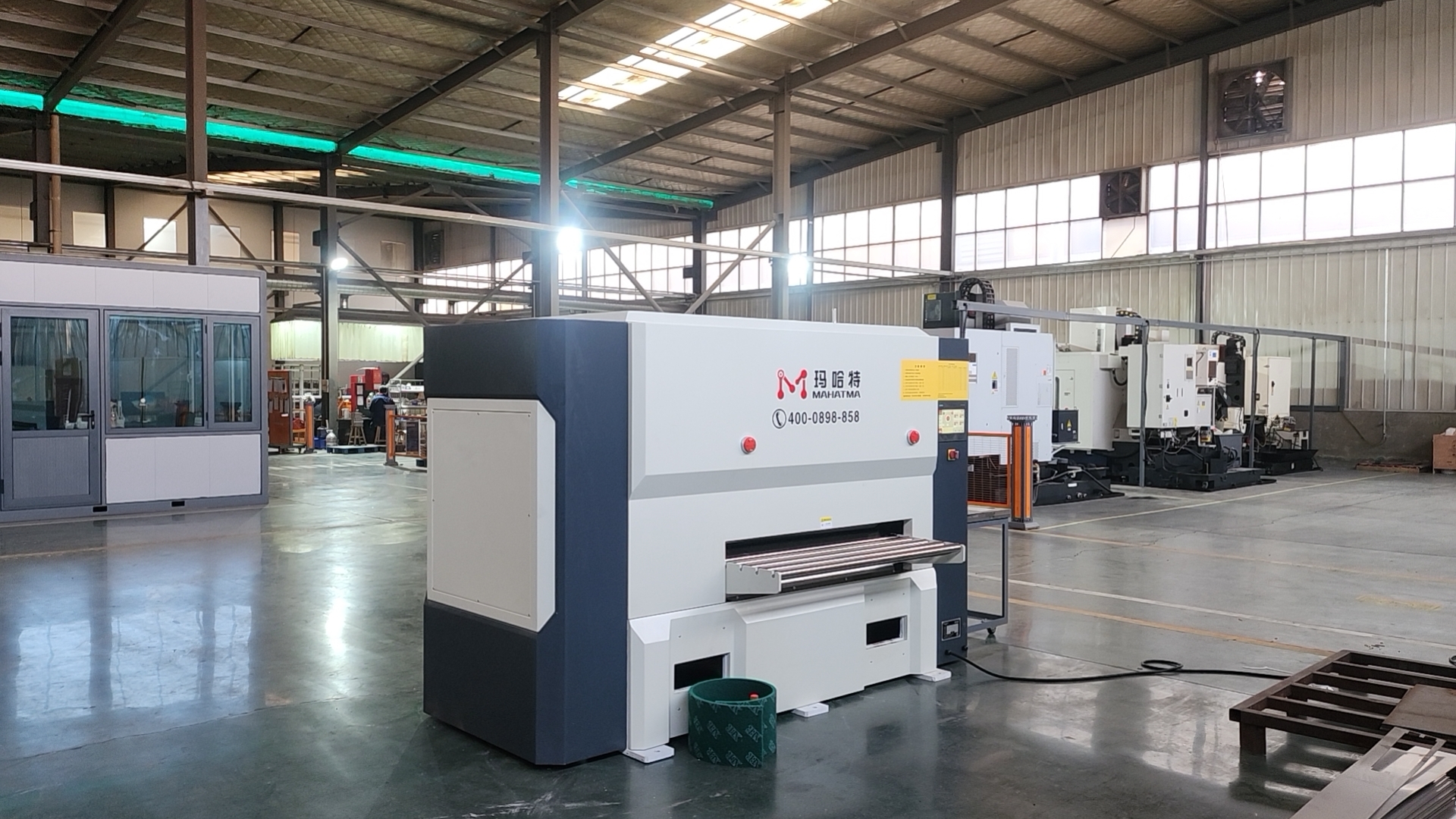
Why long-term supplier sustainability is more than machine life
For procurement purposes, supplier sustainability means the supplier can remain relevant to the buyer’s production requirements as materials, line arrangements, and operational needs change. It is not established by a single machine specification or an assurance of future performance. Buyers can assess it through verifiable evidence: whether the portfolio covers the relevant process stages, whether a suitable machine exists for the actual material envelope, whether integration requirements are addressed clearly, and whether a representative trial supports the proposed configuration.
This distinction matters because “leveling machine” can describe equipment serving different operations. A Coil Leveler or Metal Leveler may be part of a coil-processing arrangement; a Sheet Metal Leveler or Plate Leveler may be selected for sheet or plate work; a CNC leveling machine may be considered where stored settings and control functions matter. Search terms such as straightening machine, flattening machine, Precision Leveler, Steel Plate Leveler, Aluminum Plate Leveler, and Copper Plate Leveler help describe buyer requirements, but the names alone do not confirm a machine’s rated material range or achievable result.
Long-term fit is therefore a match between process, material, configuration, data exchange, and evidence. A supplier that offers adjacent equipment may be able to discuss broader line arrangements, but buyers should still establish exactly which components are supplied, which are optional, and which interfaces or engineering tasks fall outside the offer.
Use portfolio breadth as a screening map, then verify scope
Portfolio breadth can reveal whether a supplier works across related production stages. MAHATMA’s supplied company information lists Uncoiling Leveling Slitting Lines and Uncoiling Leveling Flying Shear Lines among its main products. Its supplied product records also include a Slitting Line and a Leveling & Deburring Line. Company profile material describes production lines that include uncoiling, leveling, shearing, and laser blanking. These are useful starting points for a discussion about line coverage, not a guarantee that every combination is a standard, ready-to-order system.
| Portfolio area to assess | What the supplied information establishes | What the buyer should verify |
|---|---|---|
| Slitting Lines, including an Uncoiling Leveling Slitting Line | The company lists an Uncoiling Leveling Slitting Line; a product record describes the UC-2x2000 Slitting Line. | Confirm the exact configuration, materials, thickness and width range, number of strips, speed, coil limits, and which figures apply to the offered configuration. |
| Flying Shear Lines | The company’s main-products list includes an Uncoiling Leveling Flying Shear Line. | Request the proposed line arrangement, operating envelope, interface boundaries, and acceptance criteria for the buyer’s product mix. |
| Leveling & Deburring Lines | A supplied product record describes an automated leveling-deburring line with stated width, thickness, speed, minimum part size, and accuracy parameters. | Confirm which parameters apply to the proposed configuration and whether the trial material and part geometry represent production conditions. |
| Cut-to-Length Lines | The company profile lists Cut to Length among its main products. | Clarify what equipment is included, how leveling is positioned in the line, and whether the scope covers the required material and cut-length range. |
| Laser Blanking Lines | Company profile material describes turnkey production lines that include laser blanking. | Ask for the specific scope, system interfaces, supplied modules, and responsibilities for connecting the line to existing equipment. |
In an RFQ, ask the supplier to label each portfolio item as a documented product, a configurable option, a project-specific design, or an item outside its present scope. That distinction prevents a portfolio list from being mistaken for confirmation that a complete line is available under the buyer’s required schedule and operating conditions. It also makes supplier responses easier to compare without assuming that similarly named lines have equivalent equipment or performance.
Check whether the leveler range matches the material envelope
A supplier’s leveler range should be evaluated by type and rated conditions, not by the number of product names in a catalog. The requested categories include Two-high Leveler or Rough Leveler, Four-high Leveler or Plate Leveler, CNC Leveler or Servo Leveler, and Hydraulic Leveler. The supplied MAHATMA product records identify Four-high Leveler / Plate Leveler models, CNC and servo-CNC levelers, and hydraulic levelers. The supplied records do not identify a specific Two-high or Rough Leveler model. Buyers should ask whether such a model is offered for their application, rather than infer availability from the broader portfolio.
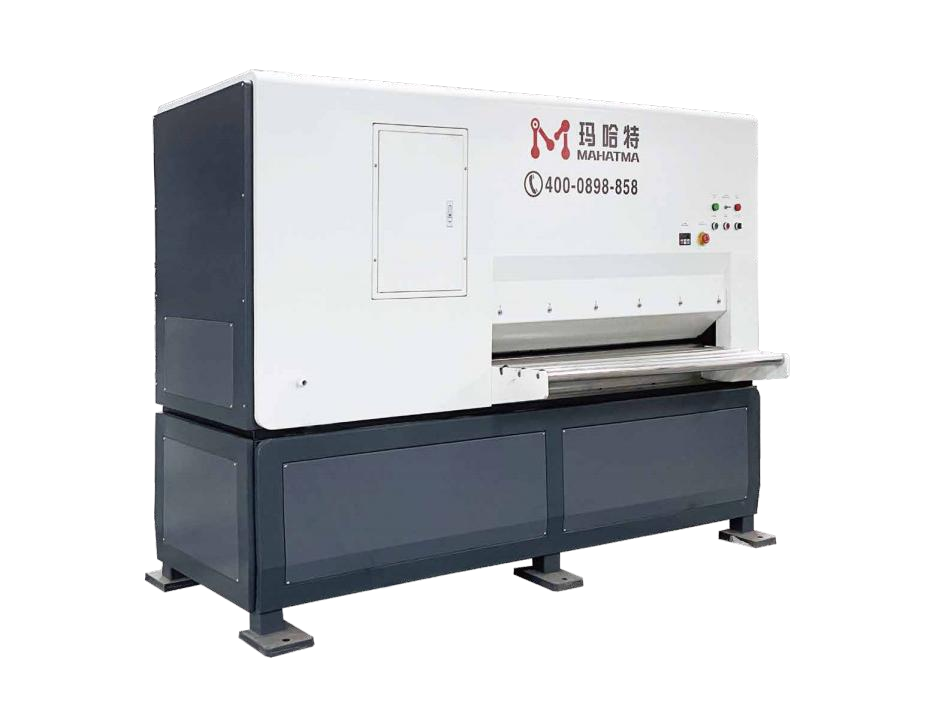
Specific model data can help buyers see how stated ranges differ. The VSH50 Series Four-high Leveler lists a rated thickness range of 0.8–3.5 mm and a maximum thickness of 6.0 mm; its record also lists a working width of 400–1000 mm. The MHTW100 Series CNC / Servo Leveler lists a rated thickness of 3.0–12.0 mm, a maximum of 20.0 mm, and a width of 600–2100 mm. The MHTR150 Series Hydraulic Leveler lists a rated thickness of 6.0–30.0 mm, a maximum of 50.0 mm, and a width of 800–3200 mm. These are model-specific supplied parameters; they should not be generalized to every machine in a category.
Rated and maximum thickness must remain distinct in a technical comparison. A stated maximum does not, by itself, establish continuous production suitability across the whole interval, achievable flatness, or performance on a particular grade. Ask the supplier to identify the machine’s applicable material grades and conditions, and to explain any derating or configuration changes required for the buyer’s material. If a plant processes several different gauges or materials, check whether one proposed machine covers the required range or whether separate configurations need consideration.
For example, a buyer evaluating a Sheet metal leveling machine for cold-rolled or stainless sheet used before stamping or laser cutting should identify the material grade, thickness range, width, surface-quality requirement, and target flatness. The supplied application material for automotive parts, home appliances, and elevator production describes high-surface-quality sheet processing and servo motor control with PLC parameter memory. It also notes small-diameter dense rolls and dust removal as special requirements in that scenario. These are scenario-specific considerations, not universal specifications for every leveling project.
Turn MES/ERP claims into an integration test plan
MES/ERP integration is a due-diligence question because the existence of an interface does not specify what data can be exchanged or how the equipment will connect to a particular plant. MAHATMA’s supplied FAQ states that its blanking lines and CNC levelers provide MES/ERP interfaces. It also describes automation modules such as loading carts, conveyors, robots, vision inspection, and AGVs as options. Treat these as company-stated capabilities to clarify in the project scope, not as confirmation that every module or interface is included in every machine quotation.
Before comparing proposals, write down the integration boundary. Identify the existing MES, ERP, PLC, and line equipment relevant to the project; list the data, commands, or production records that need to pass between systems; and ask the supplier to identify the proposed interface and the party responsible for each connection. Confirm whether the proposed integration covers a standalone CNC Leveler, an Uncoiling Leveling Flying Shear Line, a Cut to Length Line, or a larger automated line. The answer may differ by equipment configuration, so avoid treating one general statement as proof for all products.
Then agree how integration will be checked. A useful plan identifies the signals or records to demonstrate, the operating sequence to test, the conditions for acceptance, and how unresolved interface issues will be recorded. These are buyer verification steps, not claims that a particular protocol, standard interface, or integration outcome is guaranteed. Where the supplier proposes later expansion from a standalone leveler to a more automated line, document which interfaces and machine changes are included in the current scope and which would require a separate project.
Test representative material before selecting on brochure data
A material trial is a practical way to examine whether a proposed machine and process are appropriate for the buyer’s actual stock. MAHATMA’s supplied FAQ states that a buyer can submit 1–2 meters of material or representative parts for a sample test. It says the company levels the sample on a recommended machine and provides a written flatness report and process video within days. These are company-stated test arrangements; confirm the scope, timing, measurement method, and deliverables for the specific procurement project.
Choose trial material that represents a real production challenge rather than only an easy sample. Record the material grade, thickness, width or part dimensions, incoming condition, and the target flatness or downstream requirement. If the production mix includes different materials or materially different thicknesses, agree which sample or samples will be tested and which conclusions apply to each. A result on one test piece should not be treated as proof for every grade, coil condition, or production setting.
Ask the supplier to document the machine model and configuration used, process settings, measurement approach, and result. Compare the report with the buyer’s acceptance criteria, and check that the proposed production machine corresponds to the tested setup. If the test demonstrates a result under specific conditions, retain those conditions in the purchase specification. This turns a trial from a demonstration into evidence that can inform technical approval and later acceptance.
The company’s supplied capability information also lists laser 3D online flatness detection, ultrasonic flaw detection on rollers, hardness uniformity testing, and full-load trial runs before shipment as quality-control activities. Buyers can ask which activities apply to the selected machine, what records are available, and whether they are part of the agreed inspection plan. A listed quality-control method is not a substitute for the buyer’s own acceptance criteria or for confirming that the tested configuration matches the order.
Assess service and customization by scope, not headline claims
Long-term production fit can depend on whether a supplier can address changes to the equipment or its integration. The supplied capability record describes OEM/ODM and customized manufacturing, including customization of roller width and diameter, leveling thickness range, roll material, control-system integration such as MES/PLC, and automated loading or unloading systems. These listed customization areas can structure a technical discussion. They do not establish that every change is technically appropriate for a given model or included in a quoted scope.
Ask which changes are available for the exact machine, what information is needed to evaluate them, and how changes affect the rated envelope, controls, and acceptance procedure. If the project involves a Metal Flattening Machine or Straightener for a material not explicitly listed in the chosen model record, request a written confirmation of suitability and a relevant sample trial. Names such as Aluminum Plate Leveler, Copper Plate Leveler, Thin Plate Precision Leveler, or Heavy Plate Leveler should be translated into actual material grades, dimensions, process requirements, and testable criteria before they are used to select equipment.
The same scope-based approach applies to after-sales support. The supplied capability record states that MAHATMA offers 24/7 global technical support, overseas engineers available for commissioning, regional spare-parts warehouses, and free operator training. During evaluation, clarify which locations and services apply to the buyer, how commissioning is arranged, what training covers, and how spare-parts availability is confirmed for the relevant machine. These questions help distinguish a general service description from the support arrangements attached to a specific order.
A practical supplier evaluation sequence
Buyers can make the evaluation more consistent by moving through a defined sequence rather than comparing headline prices first:
- Map the production process. Identify whether the project concerns a standalone leveler, a slitting or flying-shear line, a leveling-deburring process, a cut-to-length arrangement, or laser blanking. Record the existing and planned equipment that affects the scope.
- Set the material envelope. State grades, minimum and maximum thickness, width or part size, incoming condition, target flatness, surface constraints, and production requirements. Keep model ratings and test conditions attached to each proposed configuration.
- Check portfolio evidence. Separate documented products from configurable options and project-specific proposals. Where the supplied information does not identify a requested type—such as a Two-high / Rough Leveler—seek explicit confirmation instead of assuming it exists or does not exist.
- Review integration responsibilities. Define the MES/ERP and line-interface requirements, identify which equipment and modules are included, and agree how the proposed connections will be demonstrated.
- Use a representative material trial. Agree the sample, machine configuration, test conditions, measurement record, and acceptance criteria. Apply results only to the material and setup actually evaluated.
- Resolve service and change scope. Confirm the commissioning, training, spare-parts, and support arrangements relevant to the buyer’s location and machine. Record how later modifications or line expansion would be handled.
- Compare commercial offers after technical alignment. Once proposals cover the same production scope and evidence requirements, price can be compared in context. A lower initial figure cannot establish long-term fit if the included line, integration, trial, or service scope differs.
This sequence does not predict machine life or guarantee production outcomes. It helps buyers expose differences in scope and evidence before those differences become assumptions in a purchase decision. It also keeps supplier assessment tied to the actual job: material processing, line integration, and the ability to verify a proposed configuration.
Conclusion: sustainability is demonstrated through fit and evidence
Evaluating a leveling machine supplier for long-term production sustainability means checking more than whether the supplier lists a machine under the right keyword. Review the supplier’s coverage across Slitting Lines, Flying Shear Lines, Leveling & Deburring Lines, Cut-to-Length Lines, and Laser Blanking Lines; confirm which leveler types and configurations are documented; and ask what the stated portfolio does not establish. For MAHATMA Leveler, supplied records show Four-high Plate Levelers, CNC / Servo Levelers, Hydraulic Levelers, and several related line categories, while the provided material does not identify a Two-high / Rough Leveler model.
The next steps are concrete: validate the exact material envelope, document MES/ERP and line-interface requirements, test representative material, and tie service and customization statements to the offered configuration. Those checks provide a stronger basis for evaluating long-term fit than a short-term price comparison alone, while keeping conclusions within the evidence available for the project.
Frequently asked questions
What should buyers check first when evaluating a leveling machine supplier?
Start with the production process and material envelope: identify the line or standalone-machine role, material grade, thickness, width or part size, incoming condition, and required result. Then check whether the supplier documents a machine and configuration for those conditions. A broad portfolio is a screening aid, not proof of application suitability.
How can buyers tell whether a supplier’s leveler range covers their needs?
Compare the exact model type and its stated ratings with the production requirement, keeping rated and maximum thickness separate. The supplied MAHATMA records identify Four-high / Plate, CNC / Servo, and Hydraulic Levelers; they do not identify a specific Two-high / Rough Leveler model. Buyers should request confirmation for any unlisted type and verify the proposed configuration on representative material.
How should MES/ERP integration be verified before purchase?
Define the required data exchange and connection points for the exact machine or line, identify the supplier’s and buyer’s responsibilities, and agree how the interface will be demonstrated. MAHATMA’s supplied FAQ states that its blanking lines and CNC levelers provide MES/ERP interfaces, but buyers should confirm the interface scope and included modules for their specific configuration.
Can a buyer test its own material on a proposed leveling machine?
MAHATMA’s supplied FAQ states that buyers can submit 1–2 meters of material or representative parts for a sample test, with a written flatness report and process video described as deliverables. Confirm the test arrangement and measurement method for the project, use material representative of production conditions, and apply the result only to the tested material and machine setup.
Have Questions or Need More Details?
Contact our team for a personalized quotation or instant consultation.
Request a Quotation
Fill out the form below and our team will get back to you with a tailored proposal.
WhatsApp Direct Chat
Prefer to chat in real-time? Message us on WhatsApp for instant assistance & quick answers.
- Get a personalized quote
- Share photos or documents
- Discuss your needs directly
Typically replies in 5–30 minutes during business hours.