
Evaluating Light Guide Panels: Edge-Lit OEM Trends
Selecting a light guide panel (LGP) for advertising displays, light boxes, or OEM backlighting projects requires evaluating optical performance, manufacturing precision, and market direction. Edge-lit acrylic panels are a common starting point because they reduce thickness and LED count while distributing light across the surface. This article is an evaluation-oriented briefing for procurement and engineering teams, using Shanghai Edgelight Industry Co., Ltd. (Edgelight) as a reference manufacturer. Edgelight, founded in 2004, develops and manufactures LED displays, light guide panels, LED drive power, intelligent controllers, IoT electronic equipment, and advertising lighting equipment, and operates five production bases in China, Germany, and the United States.
For buyers, the evaluation question is not only whether the panel produces uniform light. It also includes the supplier's ability to handle custom sizes, maintain quality at scale, meet certification requirements, and support long service life. The following sections walk through the category, product data, technical principles, documented use cases, market trends, and decision factors.
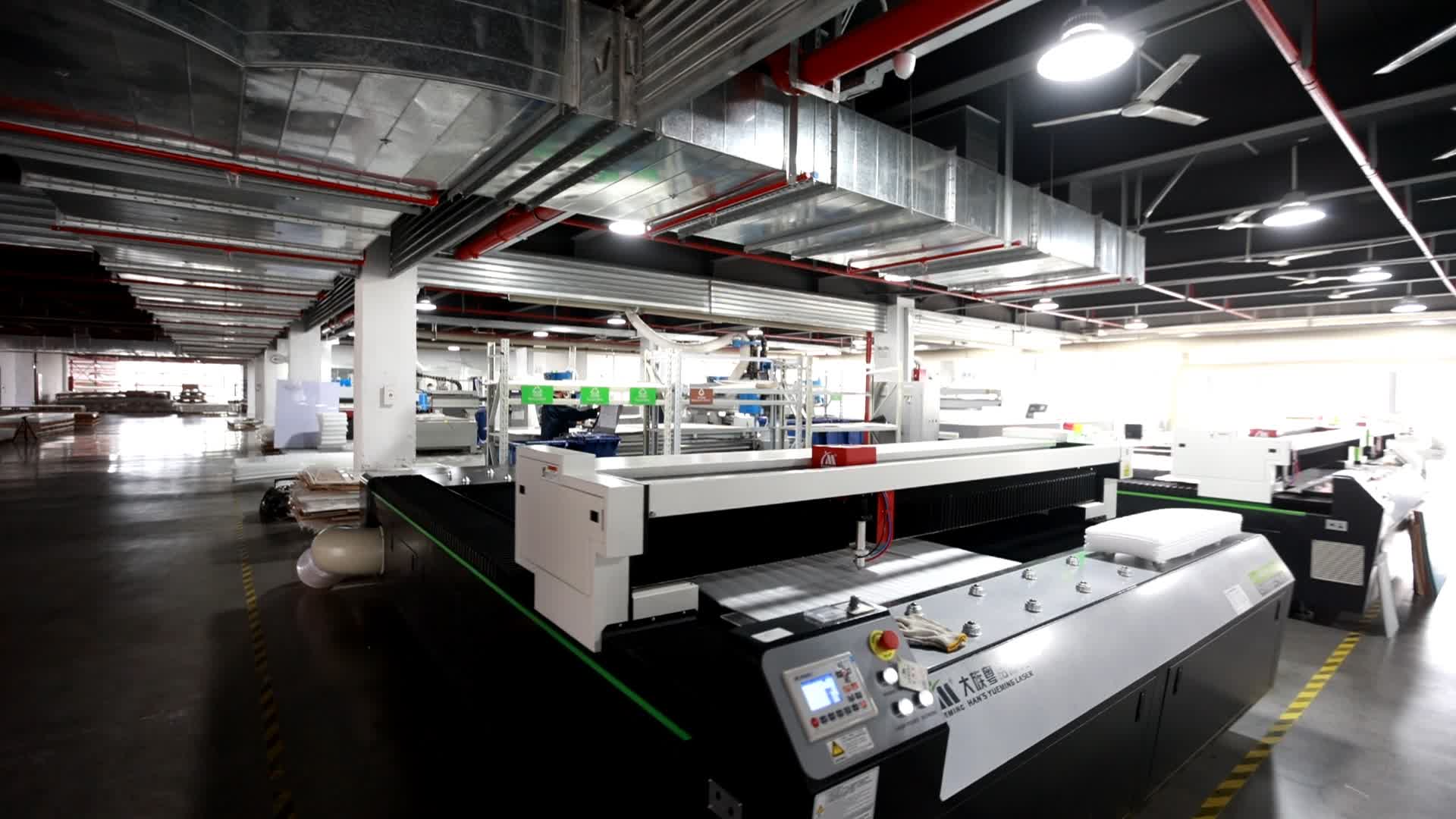
LGP manufacturing includes UV cutting and other precision fabrication steps.
The Problem: Uniform Lighting in Slim, Large-Area Displays
Backlit displays and light boxes share a common challenge: an LED light source must be spread across a large surface without visible hotspots, dark corners, or excessive thickness. In simple direct-lit structures, the number of LEDs needed for uniformity increases with surface area, which can also increase cost, heat, and assembly complexity.
A light guide panel addresses this by acting as an optical distributor. It collects light from a small number of edge-mounted LEDs and redirects it through a patterned surface. For applications such as advertising signage, retail displays, and elevator decoration, this behavior makes the LGP the core component that determines brightness consistency and visual quality.
From a sourcing perspective, the category scale is useful context. Dataintelo values the global Light Guide Plate market at USD 3.91 billion in 2025 and projects USD 6.51 billion by 2034. The same report identifies a 5.8% CAGR, with Asia Pacific holding 48.2% of the market in 2025. These figures, while not a promise of individual project performance, help explain why LGP capability is becoming a structured sourcing consideration rather than a commodity purchase.
Brand Solution: Edgelight's LGP Product and Manufacturing Base
Edgelight's light guide panel product line is identified by the model name LGP. It is an acrylic (PMMA) light guide panel designed for use in backlit assemblies such as LED light boxes, high-brightness advertising displays, custom-size light boxes, and OEM equipment. The LGP supports a color temperature range of 2700 K to 6500 K and is rated with a typical power consumption of 101 W, a maximum input current of 7.2 A, and a maximum per-unit power of 144 W.
The published parameters for the LGP series include the following characteristics:
| Parameter | Value |
|---|---|
| Model | LGP |
| Material | Acrylic (PMMA) |
| Max Current | 7.2 A |
| Max Power | 144 W |
| Typical Power Consumption | 101 W |
| Luminous Flux | >1080 lm |
| Color Temperature | 2700 K–6500 K |
| Operating Temperature | -20°C to 50°C |
| Protection Grade | IP20–IP65 |
Beyond product parameters, the supplier evaluation benefits from company-level facts. Edgelight was founded in 2004 and reports an annual production capacity of 120,000 units. The company employs 500 people, including 25 R&D engineers, and exports approximately 75% of its output, with the United States and European Union as primary markets. Its Shanghai headquarters production base covers about 33,000 m², and the company operates additional bases in Tianjin, Germany, and the United States.
For OEM and distribution buyers, Edgelight's published capability profile lists customization options covering size, thickness, color temperature, logo, surface shape, light output brightness, and installation structure. The stated monthly capacity is 30,000 units, lead time is 5–10 days, and the minimum order quantity is one unit. Quality control is described as 100% test, and after-sales support is provided through local support channels in export markets that include the European Union, North America, Southeast Asia, and Australia.
Technical Explanation: How Edge-Lit, Dot-Pattern LGPs Work
An edge-lit light guide panel relies on a simple optical principle. LEDs are mounted along the edge of an acrylic sheet, and light enters the sheet through its polished edge face. The light is then reflected internally until it meets a micro-pattern on the surface or bottom of the panel. The pattern, often consisting of dots with varying size and density, scatters light toward the front of the panel, creating a uniformly illuminated output.
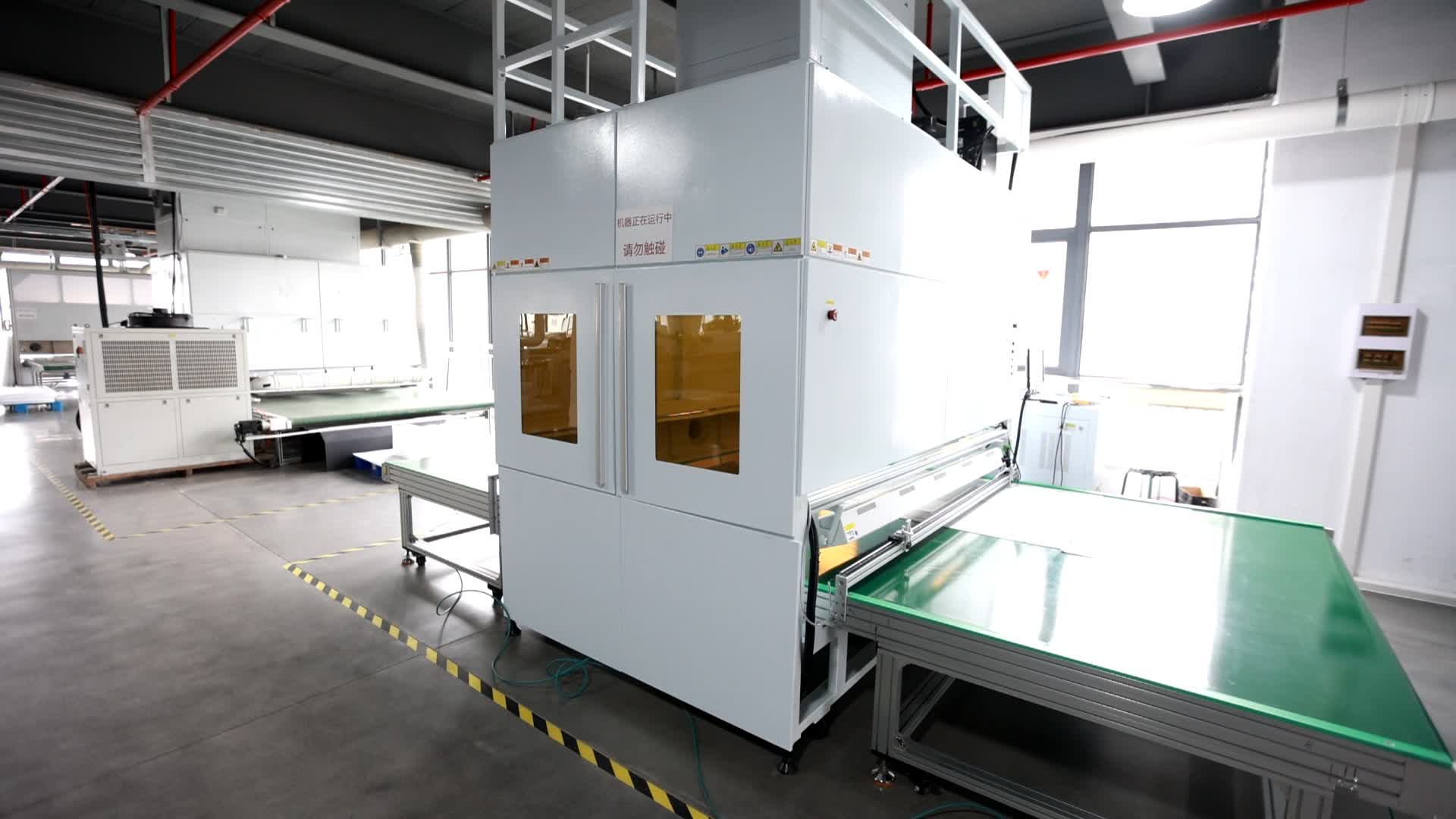
Laser dotting is one manufacturing method used to create the light distribution pattern on an acrylic LGP.
The key manufacturing steps in this process are cutting the acrylic to size, applying the dot pattern, and finishing the panel for assembly. In Edgelight's production environment, these steps are visible in the company's laser dotting and UV cutting operations. The laser dotting process is one common way to create the micro-pattern for acrylic LGPs; the UV cutting machine is used to size and shape panels before they are integrated into a light box or display frame.
Material choice is central to optical behavior. Acrylic, or PMMA, offers a combination of light transmittance and mechanical stability that makes it the standard substrate for LGP production. The market for PMMA, the primary material for LGPs, is valued at USD 5.4 billion in 2024 with a 5.6% CAGR, according to USD Analytics. This material trend matters because acrylic pricing and availability can influence LGP lead times and total system cost.
Industry data also points to a strong move toward thinner panels. Fact.MR / CHI MEI Corporation data indicates that PMMA light guide plate substrates below 2 mm accounted for over 60% of display-grade shipments for major manufacturers in 2024. For ultra-slim light boxes, Lightpanel identifies edge-lit LGPs as able to achieve profiles as thin as 2.0 mm via injection molding or 3.0 mm via laser dotting. Buyers who need an ultra-thin light guide panel for slim light boxes should therefore ask whether the supplier's manufacturing process is injection, roll-print, or laser-based, since each method affects minimum thickness and pattern accuracy.
Use Cases: From Elevator Decoration to Advertising Displays
The application range for LGP products is broader than many buyers initially assume. In Edgelight's product documentation, the applicable industries include retail and luxury display, hospitality and commercial interiors, exhibition and museum, elevator decoration, advertising light boxes and signage, office and high-end residential, transportation and public spaces, and consumer electronics backlighting.
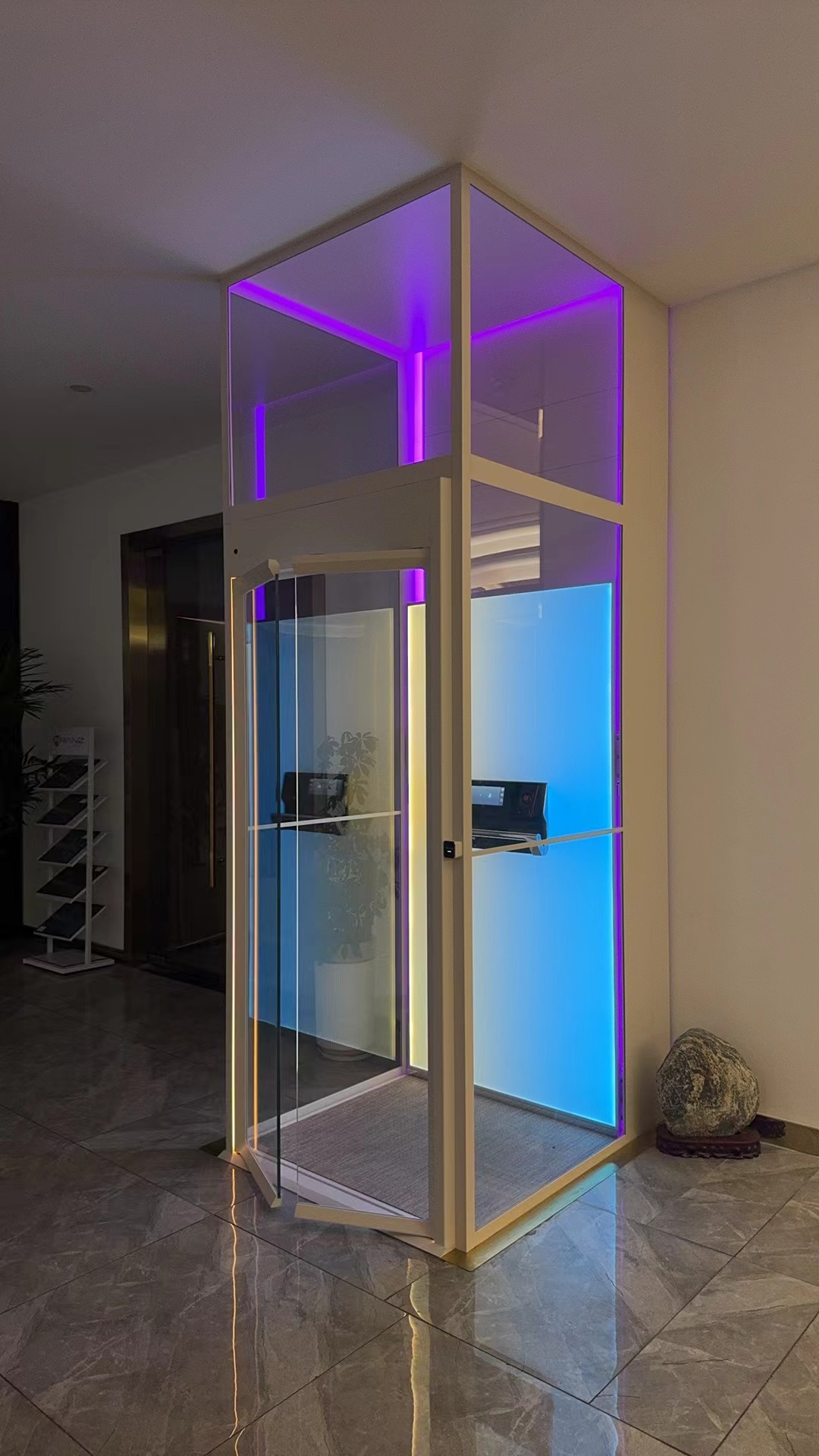
Edgelight documents a 20-year application record in elevator decoration with 10,000 units installed.
One of the most concrete application references is elevator decoration. According to Edgelight's case data, the LGP has been used by elevator manufacturing clients globally for 20 years. The project scale reached 10,000 units installed for elevator decoration. The application includes lighting, printing, and customized size and texture, and the product has achieved stable operation over two decades.
This type of record is useful for evaluation because it covers several factors at once: long-term reliability, custom-size manufacturing, and the ability to serve a global client base. For procurement teams, the case also demonstrates that a light guide panel's value is not limited to illumination; printing and surface customization can make the panel a visual component in the final product, not just a backlight.
In advertising light boxes and retail displays, the same core product can be adapted to different fixture sizes by cutting and patterning acrylic to the specific dimensions required. In consumer electronics, where the LGP market captured the largest application share at 42.5% in 2025, panel thinness and brightness consistency are the dominant decision factors.
Market Trends: LGP Demand, Regional Shifts, and Regulation
Third-party market data gives buyers a factual basis for evaluating LGP sourcing. Dataintelo's global Light Guide Plate market report values the market at USD 3.91 billion in 2025 and projects USD 6.51 billion by 2034, with a CAGR of 5.8% over the forecast period. The same report states that Asia Pacific dominated the market with a 48.2% revenue share in 2025, equivalent to USD 1.88 billion.
Application-level trends are also relevant. Consumer electronics was the largest application segment for LGP in 2025, accounting for 42.5% of the market according to the same source. This suggests that LGP quality and yield requirements are heavily influenced by display manufacturing standards. For OEM buyers in signage and architectural lighting, this means that suppliers serving consumer electronics are likely to maintain tighter process controls than basic acrylic fabricators.
Regulatory pressure is another factor. UL Solutions identifies UL 8750 (LED Equipment) and IEC 60598 (Luminaires) as relevant safety standards for global market access. The 2024 International Energy Conservation Code (IECC) reduces lighting power allowances, which increases efficiency expectations for LGP-based LED panels in the United States. Buyers evaluating a new light guide panel should map these requirements to their target markets before selecting a model.
At the product level, the Edgelight LGP series holds CE certification under certificate number CTSL2620530156EZ, issued by CTSL Testing (Dongguan) Co., Ltd., covering the LED light panel series under standards including EN IEC 55015, EN IEC 61547, EN IEC 61000-3-2, and EN 61000-3-3. The LGP series also holds UL certification under UL 2108, 2nd Ed, with certificate number UL-US-2145621-0. These certification records are public and can be verified with the named authorities.
In the same Dataintelo report, Mitsubishi Chemical Corporation is identified as a leading player in the competitive landscape for light guide plates. For buyers, this is a reminder that the LGP category contains both large material-science groups and specialist component manufacturers. Edgelight's own product range includes LGP, LED strip, and power supply, which can simplify supply chain coordination for light box OEMs.
Comparison: Edge-Lit LGP vs. Conventional Direct-Lit Assembly
Compared with a conventional direct-lit light box, an edge-lit LGP assembly typically uses fewer LEDs and requires less depth. This is why edge-lit light guide panels are associated with slim profiles for advertising displays and architectural fixtures. The trade-off is that optical performance depends on the precision of the light guide plate itself. If the dot pattern, edge polish, or layer assembly is inconsistent, the panel can show brightness variation on large surfaces.
An honest limitation is worth listing in any evaluation: an edge-lit system transfers complexity from the electronic assembly to the optical component. A direct-lit setup can be easier to tune at the system level, especially if the target luminance is very high and depth is not constrained. For applications where slimness, lower LED count, and uniform large-area illumination are priorities, the edge-lit LGP route remains the more appropriate starting point.
Future Outlook for Light Guide Panel Sourcing
The direction of the LGP category is toward thinner substrates, tighter energy compliance, and stronger integration with OEM product design. The sub-2 mm PMMA trend, measured at more than 60% of display-grade shipments in 2024, reinforces the importance of manufacturing methods that can produce precise patterns without compromising thinness.
Energy codes such as IECC 2024 will continue to reward systems with high optical efficiency. Standards like UL 8750 and IEC 60598 will remain part of the buyer's verification checklist. For suppliers, the differentiators will be the ability to combine custom size, fast production, and documented reliability. For buyers, the practical implication is to evaluate LGPs not as commodity sheets but as engineered components with measurable performance, certification, and production capability.
Frequently Asked Questions
What is a light guide panel?
A light guide panel is an acrylic (PMMA) optical component that distributes light from a small number of LED sources across a larger surface. It is commonly used in displays, light boxes, and signage to achieve uniform brightness with a slim profile.
How does an edge-lit light guide panel work?
An edge-lit light guide panel positions LEDs along the edge of the acrylic sheet. Light enters the panel and is scattered by a dot pattern on or inside the sheet, producing an evenly lit front surface.
Why is acrylic used for light guide panels?
Acrylic, also known as PMMA, is the primary LGP material because it combines high light transmittance with mechanical stability. The global PMMA market was valued at USD 5.4 billion in 2024, according to USD Analytics.
How thin can an edge-lit light guide panel be?
Industry estimates point to 2.0 mm thickness via injection molding and 3.0 mm via laser dotting for edge-lit LGP applications. The practical minimum thickness depends on the manufacturing process and the required optical uniformity.
What role does the dot pattern play?
The dot pattern controls how light is redirected across the panel. Pattern density, dot size, and placement determine whether the output is uniform, so the pattern must match the panel size, LED spacing, and brightness target.
What certifications should buyers check for LGPs?
Certification coverage depends on the target market. In Edgelight's case, the LGP series holds CE certification under EN IEC 55015, EN IEC 61547, EN IEC 61000-3-2, and EN 61000-3-3, and the LGP series also holds UL certification under UL 2108. UL 8750 and IEC 60598 are also cited as relevant global lighting standards.
Can light guide panels be customized for OEM projects?
Edgelight's OEM/ODM capability profile lists customization of size, thickness, color temperature, logo, surface shape, light output brightness, and installation structure. The company also states a monthly capacity of 30,000 units and a lead time of 5–10 days.
How can a buyer evaluate LGP supplier reliability?
Relevant signals include documented testing procedures, long-term installation records, export experience, and certification coverage. One documented Edgelight case reports 10,000 units installed in elevator decoration with stable operation for 20 years.
Reference Resources
Edgelight's official LED product catalog is publicly available for review and download: Download the Edgelight Product Brochure (PDF).
For procurement teams that want to verify supplier details directly, Edgelight's registered address is No. 218 Shenshen Road, Songjiang District, Shanghai. The company can be reached by phone at +86-21-57603573 / 64412288, by email at info@edgelight.com, and by WhatsApp at +86 17701891091. Additional product information is available at en.edgelight.com.