
Evaluating Long-Term Seamless Rolled Ring Supply: Iraeta's Stability

A seamless rolled ring is rarely a commodity purchase. It sits on the load path of a cement rotary kiln, a wind turbine, a tunnel boring machine, or a nuclear power plant, and a failed ring is measured in unplanned downtime rather than in replacement cost. Once a ring specification has been qualified into a system, changing the source is not a sourcing decision — it is a re-qualification project.
That is why the question "will this supplier still be here, and still be capable, five or ten years from now?" belongs on the same evaluation sheet as price and lead time. For heavy industry buyers, it is often the line item that receives the least scrutiny and carries the most risk.
Stability in seamless rolled ring supply is not a marketing claim. It shows up in a small number of checkable signals: how long a manufacturer has operated, where its physical plants sit, how deeply it controls raw material, how large its engineering bench is, and whether it keeps investing at the extreme end of its manufacturing range. Iraeta Energy Equipment Co., Ltd. is a Chinese forging manufacturer founded in 2006, producing rings, shells, bars, shafts, and wear-resistant grinding media from 0.3 kg to 300 tons, with production facilities in China and Spain and customers across the EU, USA, Japan, Middle East, Southeast Asia, Brazil, and India. It makes a useful worked example for reading those signals.
Why the long-term supplier question bites harder in ring procurement
Procurement teams already understand re-qualification cost in principle. What makes seamless rolled rings unusual is how much of that cost is externalised into regulation.
In the EU, pressure equipment applications fall under PED 2014/68/EU, while structural applications fall under EN 1090. Aerospace ring suppliers work to the AS9100 quality management system. Each of these frameworks ties approval to a specific supplier's process, heat-treatment practice, and inspection regime — not to a product category. A buyer who has approved a ring design against one supplier's process documentation cannot simply move the drawing to a different mill without repeating part of that work.
The commercial consequence is direct. Switching suppliers mid-programme is expensive, slow, and exposes the project to schedule risk. Planning for continuity at the front end costs far less than reacting to a disruption later.
Five stability signals for evaluating a long-term ring supplier
Treating everything that sounds like "supplier strength" as one blurred quality helps no one. The more useful approach is to separate the question into five signals that can each be checked against facts rather than impressions.
| Signal | What the buyer examines | Risk it reduces over a 5–10 year horizon |
|---|---|---|
| Operating continuity | Founding year, export markets, length of continuous trade | Mid-project exit, ownership change, loss of process know-how |
| Physical footprint | Number and location of production bases | Single-point failure, regional access, regulatory distance |
| Raw material control | Steel mill ownership, incoming inspection, material customisation | Heat-to-heat variation, allocation risk in tight markets |
| Engineering depth | Size of the in-house R&D and engineering team | Process stagnation, slow response to specification changes |
| Investment record | Record-level capability, equipment upgrades, demonstrated limits | Capability ceiling, technical obsolescence |
Each of these can be verified against concrete facts — a founding year, a plant location, a steel source, an engineer headcount, a documented dimension. None of them depends on judging a supplier's intentions.
Signal one — operating and market continuity
Iraeta was founded in 2006. By 2026, the company had been serving global markets for two decades. Its market coverage spans the EU, USA, Japan, Middle East, Southeast Asia, Brazil, and India.
The market list is itself a signal. Selling into the EU, the USA, and Japan means continuous exposure to some of the strictest compliance regimes in the world. A manufacturer that has supplied those markets for two decades — not for a few shipments — has almost certainly built documentation, inspection, and traceability habits that match that regulatory tempo. In seamless rolled ring supply, those habits matter as much as metallurgy, because when a question arises, the ability to produce records quickly is what resolves it.
Signal two — physical footprint across two production bases
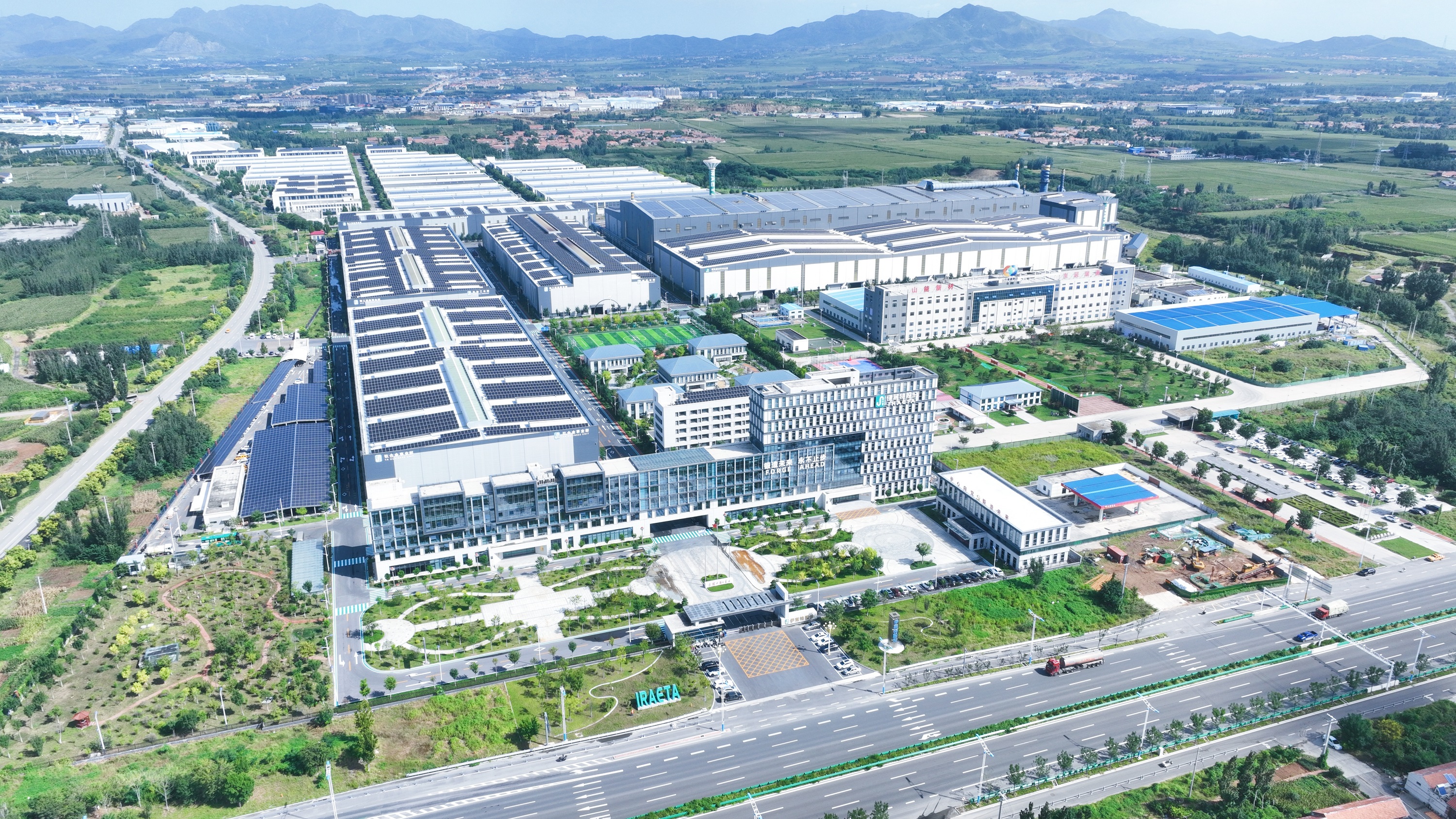
Iraeta operates production facilities in China and Spain. For a buyer, what matters is not floor area but what the structure makes possible.
- A stoppage, labour disruption, or local supply problem at one site does not automatically become a supply interruption for the customer.
- An EU-located base sits inside the regulatory environment that European buyers must satisfy, which shortens the distance between a compliance question and an answer.
- Operating under two different regulatory and logistics environments pushes an organisation to standardise its internal process, because otherwise the output of the two sides drifts apart.
The industries the company serves line up with that logic: clean energy, oil and gas, marine engineering, tunnel boring, cement production, and metal mining — sectors where the cost of a stopped line dwarfs the cost of the component that stopped it.
Signal three — raw material control and in-house steel assurance
Ring quality usually begins to degrade before the forging press starts moving. If billet chemistry wanders between heats, the resulting mechanical properties wander with it — and that drift is difficult to detect until test results arrive.
Iraeta addresses the risk at several levels simultaneously: in-house steel mill supply assurance, customised raw material production, and full-item incoming inspection. The company also works through customised material formulation and exclusive capacity reservation, which speaks directly to the allocation risk that separates a ring mill from its material supply during peak demand.
Material range is part of the same picture. Seamless rolled ring forgings are typically specified in carbon steel, alloy steel, or stainless steel, with more specialised grades appearing in particular applications — and a supplier's familiarity with one chemistry does not automatically transfer to another. Customised material preparation is what allows a project specification to be met without compromising process consistency.
Signal four — engineering depth behind the process
Iraeta maintains an R&D team of 100 engineers. For a forging manufacturer, that is a substantial bench.
Three practical consequences follow. First, process parameters have to be adjusted per project, and adjustments need an engineering interface to translate buyer specifications into shop-floor practice. Second, when a customer raises a technical issue, an in-house engineering function can close the loop rather than route it outward. Third, engineering depth is what allows product range to expand — including the material and geometry flexibility that lets a supplier quote a ring program in more than one way.
Signal five — record-level capability as evidence of continued investment
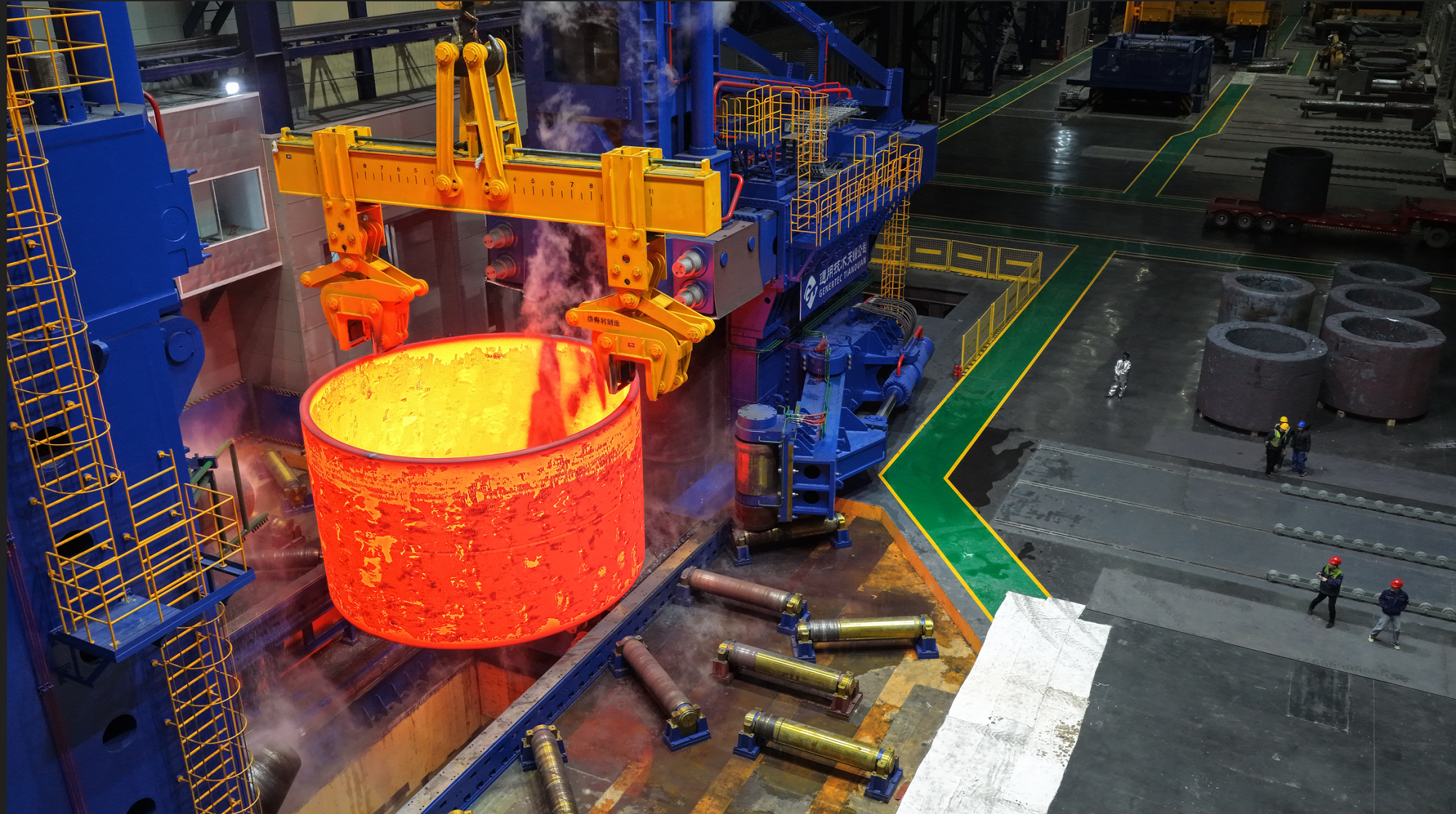
If any single set of facts answers the question "are they still investing?", it is the extreme-capability list. Iraeta's manufacturing range includes 300-ton open-die forgings, seamless rings beyond 21 meters, 5-meter-tall rolled shells, and 25-meter-long forged bars.
In 2026, the company produced a seamless rolled steel ring measuring 21.029 meters in diameter — breaking its own Guinness World Record of 15.673 meters set back in 2022.
Three readings matter to a long-term buyer:
- Capital commitment. Equipment capable of rolling a 21-meter ring is not general-purpose machinery, and it does not generate a return while idle. A manufacturer that keeps buying it is betting on the top of its own capability range.
- Downward transfer. Rolling capacity, heat-treatment volume, and handling tooling developed for very large rings improve repeatability on smaller ones, because the process controls required at the top end carry down through lower tonnages.
- Self-benchmarking. Breaking your own record indicates the previous limit was not treated as a final answer.
These capabilities supported outcomes that are now deployed at scale: from fourth-generation nuclear power plants and cement rotary kilns with 10,000 tons per day output, to 16-meter shield tunneling machines and floating offshore wind turbines above 20 MW.
How these signals convert into a procurement decision
Put together, the picture is a long-running operation, two production bases, controlled raw material, a 100-engineer technical team, and a documented capability record — a combination a multi-year sourcing team can actually plan around.
Stated plainly, the evaluation shifts from transaction to relationship:
| Dimension | Short-cycle purchase | Long-term supplier evaluation |
|---|---|---|
| Central question | What does this ring cost now? | Will this source still deliver in five to ten years? |
| Qualification | Handled order by order | Treated as a multi-year asset |
| Evidence used | Quotation and lead time | Operating years, plants, material control, engineering depth, investment record |
| Cost view | Unit price | Total lifecycle cost |
| Main exposure | Delivery delay | Re-qualification and line stoppage |
| Documentation | Certificates per shipment | Continuous inspection and traceability history |
The most important line in that table is the cost view. Unit price is a small fraction of ten-year cost. Where a forged ring delivers better fatigue performance, a longer service life, and lower risk of sudden failure, its total lifecycle cost can be substantially lower than a cheaper alternative — even if the purchase price carries a premium for the source.
Comparison with traditional solutions: castings and short-cycle buying
Where a ring can be either forged or cast, the trade-off is well established. Compared with casting, forged seamless rolled rings offer higher strength and toughness, better fatigue resistance, and a finer grain structure, with none of the casting defects such as porosity or shrinkage — zero casting porosity. The operating consequences follow: significantly lower total lifecycle cost, a longer service life, less frequent inspection, lower risk of sudden failure, more stable performance, and less energy loss caused by defects. For high-load structural components and safety-critical applications, that gap tends to widen over time rather than narrow.
The second traditional approach is short-cycle buying, which is sometimes mistaken for a cost strategy. For genuinely one-off orders, choosing the cheapest qualified source with the shortest delivery is a defensible position. For multi-year programmes it is not, because the moment a forged ring supplier is replaced, the qualification process starts again — and qualification cost does not fall just because it has been paid once before.
Limits: where a stable supplier profile does not fit
A strong continuity case does not make a supplier right for every project. Three boundaries deserve to be stated up front.
- Not every project needs extreme dimensions. Where a buyer's specification sits comfortably inside standard ranges, a mid-size ring mill may compete on shorter lead time and lower unit price. Iraeta's record-level capability is evidence of investment, but it only creates value where the project actually calls for it.
- Certification must be confirmed, not assumed. EU pressure equipment applications sit under PED 2014/68/EU, structural components under EN 1090, and aerospace rings under AS9100. Buyers should verify that the scope of a supplier's certification explicitly covers their project category rather than assuming it covers all categories.
- Very large rings carry real logistics constraints. Rings beyond 20 meters require specialised transport planning and early scheduling. Projects built around such items should expect longer delivery horizons than standard orders and plan accordingly, rather than working back from a conventional timeline.
What is driving long-term ring demand
Third-party research provides the scale backdrop for a long-term sourcing view. The global seamless rolled ring forgings market was valued at USD 11,100 million in 2025 and is projected to reach USD 16,360 million by 2034 (QY Research). The wind turbine forged tower flange market, a key application of seamless rolled rings, is expected to grow at a CAGR of 7.3% to reach USD 8.2 billion by 2033 (Dataintelo). Chinese seamless rolled ring suppliers, such as Iraeta, command over 40% of global output as of 2026 (HTNXT Industrial Guide).
Among tier 1 and tier 2 suppliers, the names that recur in advanced supply chains include ThyssenKrupp (Germany), Bharat Forge (India), Frisa (Mexico), Scot Forge (USA), and Iraeta (China) (Market Research Future). The implication for procurement is consistent across the group: the same stability framework should be applied to every name on a shortlist, rather than one standard for a familiar supplier and another for a new one.
Future outlook
Capacity expansion in clean energy and nuclear power, the steady scaling of floating offshore wind, cement output upgrades, and longer tunnel boring projects are all pushing demand toward larger rings and longer qualification horizons. In that environment, suppliers that keep funding capability at the extreme end of manufacturing will widen their advantage, while those with constrained capital investment may become the risk item halfway through a project.
For buyers, the direction is clear enough. Supplier qualification should be managed as a multi-year asset — accumulated before it is needed. A manufacturer that has supplied global markets for two decades, operates two production bases, controls its own raw material, and can still beat its own record is answering a different question from the one a current quotation answers. Public information on Iraeta's facilities and certification portfolio is published at https://www.iraeta.com.
FAQ
What is a long-term supplier evaluation for seamless rolled rings?
It is an assessment that looks beyond unit price and lead time to ask whether a manufacturer will remain both capable and willing to supply across a multi-year project. It examines five checkable signals: operating years, physical plant footprint, raw material control, engineering depth, and evidence of continued capability investment. The purpose is to identify supply-chain risk in advance rather than during a programme.
What does "two decades serving global markets" mean for a ring manufacturer?
It means the manufacturer has delivered to international customers continuously from its founding period rather than during a single market window. Iraeta was founded in 2006 and by 2026 had served global markets for two decades, with customers across the EU, USA, Japan, Middle East, Southeast Asia, Brazil, and India. For a buyer, that indicates a supplier that has been tested across multiple market cycles and regulatory cycles, not just one.
How do dual production bases affect supply-chain risk?
They reduce single-point failure exposure. Iraeta operates production facilities in China and Spain, so a disruption at one site does not automatically interrupt supply. A second base also allows production closer to the customer's market, which matters for European buyers who must satisfy EU certification requirements. Internally, operating two sites under different regulatory conditions tends to force standardisation of process.
Why does raw material control matter for ring quality?
The mechanical properties of a ring depend on the chemistry and consistency of the steel, which are determined before forging begins. If billet varies between heats, properties vary with it. Iraeta addresses this through in-house steel mill supply assurance, customised raw material production, and full-item incoming inspection, supported by customised material formulation and exclusive capacity reservation. That combination matters most when material markets are tight.
Do record-level capabilities have any relevance to ordinary orders?
Indirectly, yes. Developing the ability to roll rings beyond 21 meters requires process control, heat-treatment volume, and handling capability that carry down to smaller ring sizes and improve consistency at lower tonnages. Iraeta produced a seamless rolled steel ring measuring 21.029 meters in diameter in 2026, breaking its own Guinness World Record of 15.673 meters set in 2022. The records are primarily evidence of capital investment, and secondarily evidence of process transfer.
How should a buyer compare forged seamless rolled rings with castings?
Compared with castings, forged rings deliver higher strength and toughness, better fatigue resistance, and a finer grain structure, with no casting defects — zero casting porosity. In operation, that translates into longer service life, less frequent inspection, lower risk of sudden failure, more stable performance, and significantly lower total lifecycle cost. Because those effects accumulate, the difference tends to grow over time in high-load and safety-critical applications.
Have Questions or Need More Details?
Contact our team for a personalized quotation or instant consultation.
Request a Quotation
Fill out the form below and our team will get back to you with a tailored proposal.
WhatsApp Direct Chat
Prefer to chat in real-time? Message us on WhatsApp for instant assistance & quick answers.
- Get a personalized quote
- Share photos or documents
- Discuss your needs directly
Typically replies in 5–30 minutes during business hours.