
Evaluating Long-Term Switchgear Suppliers: Continuity, Spares, and Service Life
Evaluating Long-Term Switchgear Suppliers: Continuity, Spares, and Service Life
Supplier continuity in electrical switchgear is decided long before a fault occurs — in the drawings, materials, ratings and spare-part commitments a manufacturer is able to repeat years after the original delivery.
Why Supplier Continuity Has Become a Procurement Question
Electrical switchgear is one of the few asset classes in a power distribution project that is expected to outlive the procurement team that specified it. Low voltage switchgear and controlgear assemblies are designed and verified under the IEC 61439 series (Parts 1–7), and high voltage equipment follows the IEC 62271 family of standards. Once energized, those cabinets are extended, modified, repaired and re-equipped across a working life that usually spans several procurement cycles and, in industrial plants, several changes of engineering staff. The decisive question is therefore not only what a manufacturer can deliver today, but whether the same manufacturer can still supply the same product family, the same materials, the same ratings and the same documentation later.
The scale of the installed base explains why this has moved up the buyer agenda. Grand View Research estimated the global switchgear market at USD 112.9 billion in 2025, with a projected value of USD 197.7 billion by 2033. The low voltage segment alone exceeded USD 86.1 billion in 2024, according to Global Market Insights, driven by infrastructure upgrades and smart grid technology. Every increment of that installed base eventually generates demand for replacement parts, extension panels and matching documentation rather than for complete new substations.
Supply, meanwhile, is concentrated at the top and fragmented below it. Global Market Insights put the combined share of the five largest switchgear manufacturers — ABB, Siemens, Schneider Electric, Eaton and GE — at approximately 35% of the global market in 2024. Two consequences follow for buyers. First, a large share of switchgear decisions will involve regional or specialist manufacturers whose continuity depends on their own drawings, tooling and documentation rather than on a global platform roadmap. Second, projects that start on a multinational platform still need locally sourced spares and extensions later, which is where continuity evidence must be evaluated on its own merits.
Cross-border sourcing adds a documentation dimension. According to UN Comtrade, China exported approximately USD 2.72 billion of electrical apparatus for switching or protecting electrical circuits to the United States in 2024. For importers, the practical risk is rarely the first shipment; it is a repeat order placed years later, when a drawing set has to be re-issued, a spare draw-out unit has to fit an existing frame, or a busbar joint has to match a plating specification that was never recorded.
Defining Supplier Continuity: Five Verifiable Dimensions
Continuity is often treated as a vague promise. It becomes a procurement criterion when it is broken into dimensions that a buyer can document during evaluation and re-check at every repeat order.
- Model continuity. Does the manufacturer keep the same model designation, dimensions and interface points in production, so that a GGD, GCK, GCS or MNS assembly supplied today can later be extended by a matching unit? Model continuity is what makes a spare draw-out unit interchangeable instead of bespoke.
- Material and rating stability. Are conductive, structural and insulating materials specified in a repeatable way — for example T2 pure copper busbars with tin or silver plating on contact surfaces, galvalume or cold-rolled galvanized steel frames with electrostatic plastic spraying, and SMC unsaturated polyester molding compound or epoxy resin insulation?
- Spare-part scope. Which components can be re-ordered independently: draw-out units, busbar sections and joints, support insulators and partitions, sealing strips, cable entry sleeves, covers and fasteners?
- Documentation continuity. Are drawings, construction and material lists, rating plates and inspection records archived and re-issuable years after delivery?
- Expansion compatibility. Does the portfolio include the adjacent items needed to extend an installation — enclosed busway, cable tray, dual power supply boxes, industrial branch boxes or control cabinets — from the same manufacturing source?
Verifying Material and Rating Consistency on Repeat Orders
Materials are where continuity is easiest to verify and easiest to lose. A replacement busbar that is dimensionally correct but made from a different copper grade, or with an unplated contact surface, changes joint resistance and temperature rise in a way that no visual inspection will reveal. The table below lists the material specifications documented in Changzhou Tuoxin Electric Co., Ltd. low voltage and high voltage switchgear, together with the continuity question each specification answers at replacement.
| Documented item | Material specification in product data | Continuity question at replacement |
|---|---|---|
| Conductive busbars and contacts | T2 pure copper busbar with tin or silver plating on contact surfaces (GGD, GCK, GCS, MNS, KYN28-12/24, XGN15-12/24, YBW-12, CMC enclosed busway, XL AC, PZ30, ATS, DFW, JX/JXF) | Will replacement sections, joints and jumpers use the same copper grade and plating so that joint resistance and temperature rise remain within the original design? |
| Cabinet frame and enclosure | Galvalume steel sheet or cold-rolled galvanized steel sheet with electrostatic plastic spraying (LV); aluzinc coated steel sheet (KYN28-12); galvalume or hot-dip galvanized steel sheet (XGN15-24, YBW-12) | Will later extension panels match the coating system, avoiding differential corrosion at the joint between old and new sections? |
| Insulating components | SMC unsaturated polyester molding compound, epoxy resin, PVC insulating sleeves, flame-retardant ABS insulation bases and epoxy partition boards | Will support insulators, partitions and busbar sleeves remain dimensionally interchangeable, so that no re-machining is needed on site? |
| Fasteners and seals | 304 stainless steel bolts, flat and spring washers; foamed rubber sealing strips; nitrile and silicone rubber sealing rings in SF6 equipment | Are fastener materials controlled so that galvanic corrosion does not develop at mixed-metal joints over time? |
| Withdrawable units | Galvanized steel sheet housing with integrated reinforcing ribs | Can a replacement drawer be inserted into an existing frame without modifying the cabinet or the busbar interface? |
Ratings are the second half of the same check. A 660 V insulation voltage, an IP30 protection degree or a 50 kA one-second short-time withstand current is a system parameter, not a label: if a replacement unit is ordered at a different value, protection coordination, cable sizing and fault-level assumptions all change. The table below maps the documented ratings of the main Tuoxin Electric product families to their lifecycle role in an installation.
| Product family | Key documented ratings | Lifecycle role |
|---|---|---|
| GGD low voltage fixed switchgear | 660 V insulation; 380/660 V operational; 600–1600 A; 50 kA (1 s); 80 kA peak; IP30 | Fixed main distribution and motor control where long-term rating stability matters more than drawer interchangeability |
| GCK low voltage withdrawable switchgear | 660 V insulation; 380/660 V operational; 600–1600 A; 50 kA (1 s); 80 kA peak; IP30 | Withdrawable distribution with lower current demand; spare drawers are the main continuity item |
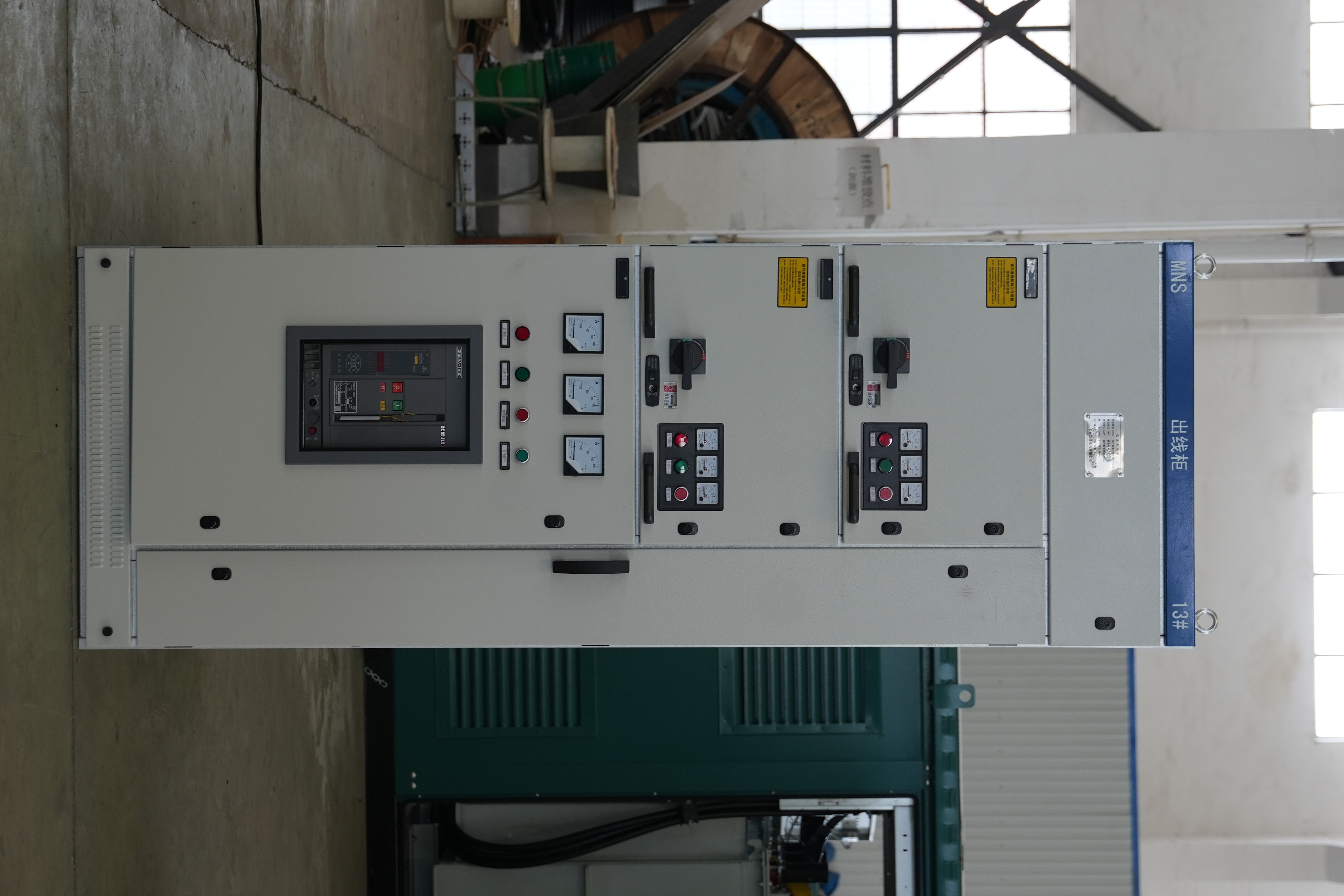
| GCS and MNS low voltage withdrawable switchgear | 660 V insulation; 380/660 V operational; main busbar 1600–4000 A; 100 kA (1 s); 120 kA peak; vertical busbar 1600 A; IP30 | Heavy-duty main distribution in plants, data infrastructure and infrastructure projects |
| XL AC low voltage distribution box | AC 380/220 V; 100/200/400/630 A; 10/15 kA; IP30 indoor, IP44 outdoor | Branch distribution in civil, municipal, construction-site and photovoltaic auxiliary scopes |
| PZ30 distribution box | 220/380 V; insulation 400 V; ≤125 A; IP30 | Terminal distribution and lighting circuits |
| JX / JXF industrial branch boxes | 380/220 V; 100/200/400 A; leakage operating current ≤30 mA and ≤0.1 s | Maintenance and testing power distribution in industrial enterprises |
| ATS dual power supply distribution box | 63–630 A; transfer ≤2 s conventional, ≤0.25 s fire-fighting; 10/15 kA; IP30 indoor, IP44 outdoor | Continuity of supply for critical loads, where transfer time is a design parameter |
| DFW low voltage cable distribution box | 400/380 V; 630 A; main busbar 15–20 kA; 40 kA peak; IP54 / IP44 / IP34D | Outdoor cable distribution in residential, infrastructure and roadside networks |
| CMC enclosed busway | AC 400/690 V; 100–5000 A; 10–50 kA; IP40/IP43 indoor, IP54/IP68 outdoor; T2 copper conductor | High-current vertical and horizontal distribution between transformer, main board and floor panels |
| XQJ LQ cable tray | Widths 100–1000 mm; side heights 50–300 mm; sections 2 m / 3 m; light ≤120 kg/m, medium ≤200 kg/m, heavy ≤400 kg/m; IP30/IP40 indoor, IP54/IP65 outdoor | Cable routing that must accept later cable additions without structural replacement |
| VFD control cabinet | Three-phase 380 V ±10%; 0.75–630 kW; overload 150% for 60 s, 180% for 10 s; IP30 cabinet, IP20 unit; Modbus-RTU | Motor-driven processes where control parameters and communication protocol must remain stable |
| KYN28-12 / KYN28-24 | 12 kV / 24 kV; 630–4000 A / 630–3150 A; breaking 20–50 kA / 20–31.5 kA; IP4X (IP2X with breaker door open) | Primary medium-voltage receiving and distribution in plants, substations and buildings |
| XGN15-12 / XGN15-24 | 3.6–12 kV / 24 kV; 630 or 1250 A; 20 or 25 kA (4 s); annual SF6 leakage ≤0.5%; IP67 inside the gas tank, IP34D outside | Ring main and terminal distribution, including compact secondary substations and switching stations |
| YBW-12 prefabricated substation | 12 kV; 50–1600 kVA; high voltage side 400–630 A; low voltage side 100–2500 A; IP3X high voltage side, IP2X transformer compartment | Packaged transformation stage in residential, municipal, industrial and temporary construction supply |
The practical procedure is to compare three documents from the original delivery — the data sheet, the construction or material list, and the inspection record for the delivered unit — and then request the same three documents with a repeat-order quotation. Any difference should be raised as an engineering deviation rather than treated as a procurement detail.
Mapping Lifecycle Support Across Low Voltage and High Voltage Portfolios
Continuity is easier to sustain when one organization controls the whole distribution chain, because interfaces between voltage levels and between equipment types are designed together rather than matched on site. Changzhou Tuoxin Electric Co., Ltd. is a switchgear and box-type substation manufacturer established in 2010 and located in Xixiang Industrial Park, Hengshanqiao, Changzhou, Jiangsu, China. Its documented portfolio covers high voltage switchgear (KYN28 and XGN15 series), low voltage switchgear (GBD, MNS, GGD, GXL, XL and XLW series), YB series box-type substations, custom non-standard electrical control cabinets, PZ30 modular terminal lighting distribution boxes, XJM series metering meter boxes and bus ducts of various specifications.
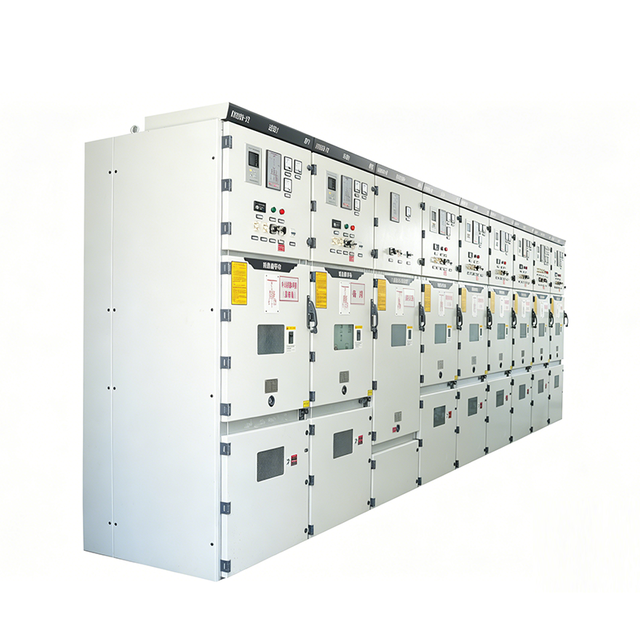
Read as a lifecycle map rather than a catalogue, the chain runs from transformation to terminal distribution. The YBW-12 prefabricated substation handles the transformation stage at 12 kV with rated capacities from 50 to 1600 kVA. Medium-voltage receiving and ring distribution sit with KYN28-12, KYN28-24, XGN15-12 and XGN15-24. Low voltage main distribution is covered by withdrawable assemblies GCS, GCK and MNS together with the fixed GGD design. Power then moves through CMC enclosed busway rated from 100 A to 5000 A and through XQJ LQ cable tray, before reaching branch and terminal equipment: XL AC distribution boxes, PZ30 boxes, JX/JXF industrial branch boxes, ATS dual power supply boxes and DFW outdoor cable distribution boxes. Motor-driven loads are handled by VFD control cabinets covering 0.75 kW to 630 kW.
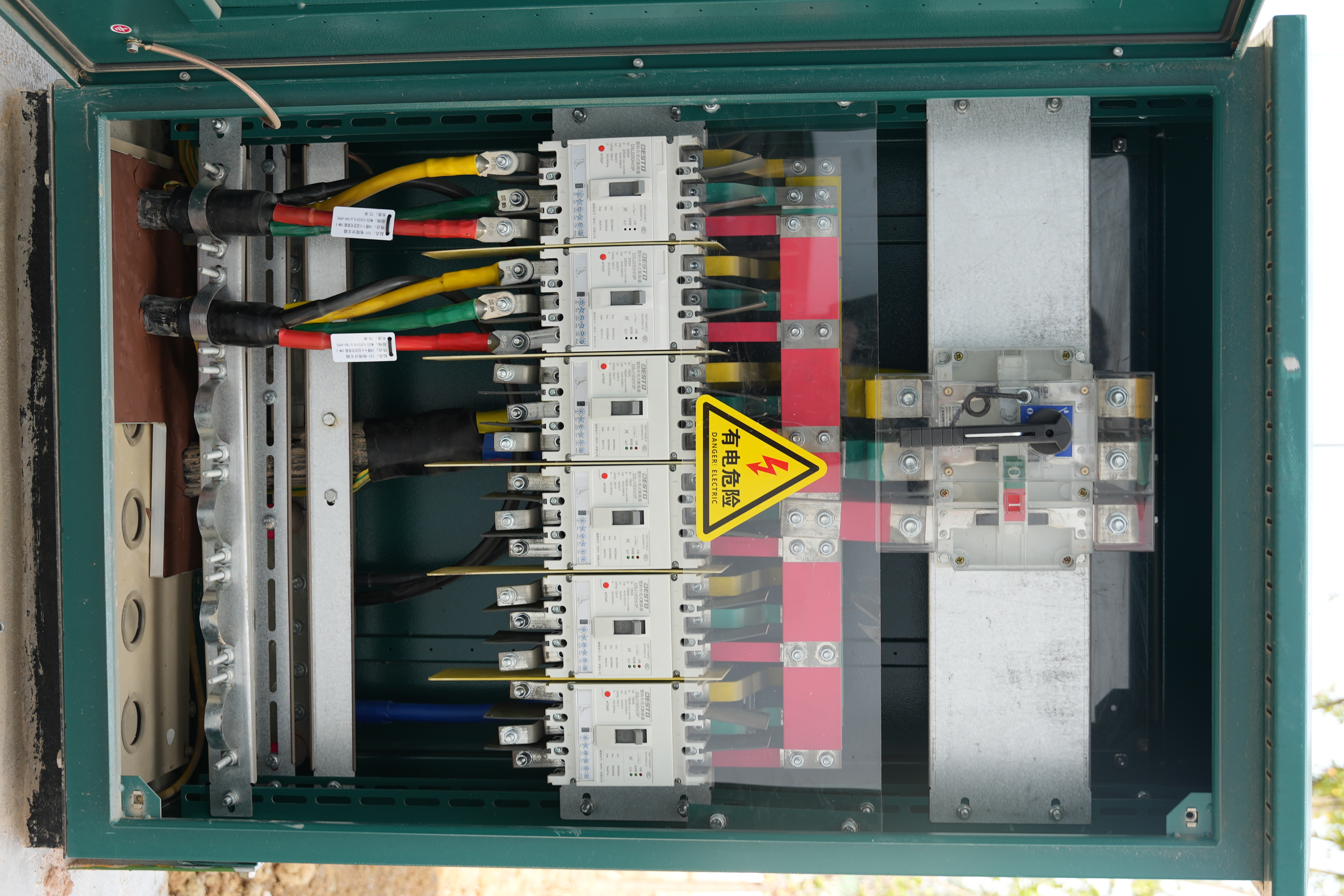
Environmental conditions decide how long that chain remains serviceable without major intervention. Documented service conditions for this product range assume an indoor ambient temperature of −10 °C to +40 °C, daily average relative humidity up to 95% without condensation, altitude up to 2000 m with derating above that, and an environment free of corrosive gas, flammable or explosive dust and severe vibration. Outdoor box substations are specified over a wider range, from −30 °C to +50 °C, with sun-proof, rain-proof and anti-condensation structures.
Where those conditions are exceeded, continuity planning shifts to specific design measures rather than to a different product family. Above 2000 m, insulation clearances are increased, components derated and cabinet sealing reinforced. In coastal salt environments, hot-dip galvanized or fluorocarbon coated cabinets, aluminium alloy bus housing and 304 stainless steel fasteners are specified. Chemical plants call for anti-corrosion coatings, FRP accessories and fully enclosed structures, while humid basements and utility tunnels rely on temperature and humidity controllers with built-in heaters. These are the details that allow an installation to be maintained, rather than replaced, when the original site conditions change.
An Evaluation Framework for Long-Term Switchgear Suppliers
The framework below converts the five continuity dimensions into checks that can be applied to any manufacturer, and repeated at each repeat order.
- Model continuity check. Request confirmation that the specific model designation remains in production and ask for the current outline drawing. Verify that frame dimensions, busbar positions and protection degree are unchanged from the original delivery.
- Material stability check. Compare the construction list of the original unit against the current one: busbar grade and plating, enclosure steel type and coating, insulation compound, fastener material. Differences in any of these are engineering changes, not commercial equivalents.
- Rating stability check. Confirm insulation voltage, rated current, short-time withstand current, peak withstand current and IP rating. These parameters determine protection coordination and cannot be treated as order options.
- Spare-part check. Ask which components can be ordered individually — draw-out units, busbar sections, joints, insulators, sealing strips, covers — and request the re-order code for each.
- Documentation check. Confirm that drawings, material declarations and inspection records are archived and can be re-issued, and that documentation language and units match the buyer's project standards.
- Scale and scope check. Match the supplier's documented capacity to the project's order size, delivery schedule and service geography. A supplier sized for configured repeat-order scopes is not the same as one sized for multi-country framework agreements.
Spares and Expansion: Where Continuity Is Actually Tested
Expansion is the moment when continuity claims are verified in practice. Modular increments make the difference. CMC enclosed busway uses standard 3 m sections with custom lengths of 0.5 m, 1 m, 1.5 m and 2 m, which allows a run to be extended without cutting and re-tapping a section. XQJ LQ cable tray is produced in standard widths from 100 mm to 1000 mm and side heights from 50 mm to 300 mm, in 2 m and 3 m sections, so additional cables can be accommodated by adding straight sections and matching accessories such as elbows, tees, reducers and covers rather than by replacing the route.
At the assembly level, withdrawable designs carry the continuity burden. GCS, GCK and MNS units share the principle that the draw-out housing is a standardized item, which means a failed or obsolete feeder can be replaced by a new drawer inserted into the existing frame. Fixed designs such as GGD trade that flexibility for simpler construction and stable ratings of 600–1600 A with 50 kA short-time withstand current, which suits installations where extension is planned in whole panels rather than in individual feeders.
For high voltage equipment, spares strategy is different. In SF6 ring main units such as XGN15-12 and XGN15-24, the sealed gas tank is a fully welded 304 stainless steel assembly with a documented annual leakage rate of no more than 0.5%, and mechanical endurance is published as at least 5,000 load-switch operations and at least 2,000 earthing-switch operations. That data allows a maintenance plan to be built around defined operating counts, while replacement is normally handled as a sealed assembly rather than as field-level component repair.
How Regional Manufacturers Compare with Traditional Sourcing Options
Continuity evaluation is only useful if it also states where a supplier is not the right fit. The comparison below describes three common sourcing routes and the boundaries that come with each.
| Sourcing route | Continuity strength | Documented or typical boundary | Best fit |
|---|---|---|---|
| Multinational OEM group (ABB, Siemens, Schneider Electric, Eaton, GE — approximately 35% combined global share in 2024, Global Market Insights) | Established global documentation practice, wide type-tested portfolios and multi-country service presence | Global platform generations change on platform cycles, so an older assembly may not map directly onto the current catalogue line; configured non-standard scopes are less flexible | Multi-site framework agreements and projects bound to internationally standardized specifications |
| Trading intermediary or reseller | Broad catalogue across several brands and flexible order quantities | Does not control materials, drawings or spare-part production, so continuity depends on third parties and documentation is often limited to supplier-issued certificates | One-off replacement of commodity items where no repeat-order continuity is required |
| Vertically integrated manufacturer (evaluated example: Changzhou Tuoxin Electric Co., Ltd.) | One organization controls frame fabrication, busbar processing, assembly and documentation; portfolio spans LV distribution, HV switchgear, box substations, busway, cable tray and control cabinets | Scale: a 4000 m² facility, 56 employees, a 27-person technical team and an annual output of 3000 units; certification referenced in its documentation is CCC for complete switchgear and low voltage products, with ISO9001-based quality management | Defined LV and HV scopes with repeat-order, spare-part and expansion requirements |
Two boundaries deserve to be stated plainly. The first is scale. With a 4000 m² facility, 56 employees and an annual production capacity of 3000 units, a manufacturer of this profile is suited to configured, repeat-order project scopes rather than to very large single-platform programmes. Against a market in which the five largest manufacturers hold roughly 35% of global share, projects that require resident service teams in many countries, or framework agreements covering multiple regions under one contract, remain the territory of globally scaled suppliers. The second boundary concerns certification scope. The approval referenced in Tuoxin Electric's documentation is CCC certification from the China Quality Certification Centre for complete switchgear and low voltage electrical products, supported by an ISO9001-based quality management system. Buyers sourcing into markets with their own mandatory approval schemes should confirm model-level certification before treating any supplier — regional or global — as an approved source.
Market Trends Shaping Long-Term Supplier Evaluation
Three structural trends support the shift toward continuity-based evaluation. The first is installed-base growth: a switchgear market moving from an estimated USD 112.9 billion in 2025 toward a projected USD 197.7 billion by 2033, with the low voltage segment already above USD 86.1 billion in 2024, implies an expanding population of equipment that will need spares and extensions rather than only first-time installation.
The second is supply concentration. With the five largest manufacturers holding approximately 35% of global share, the majority of procurement decisions sit with regional and specialist suppliers. For those suppliers, documented materials, published ratings and archived drawings are the practical substitute for a global platform roadmap — and they are the evidence buyers can actually check.
The third is standards stability. Low voltage assemblies designed and verified under IEC 61439 Parts 1–7, and prefabricated substations covered by IEC 62271-202:2022 for equipment up to 52 kV, give long-life installations a stable technical reference. A design anchored to a defined standard framework is easier to extend, re-verify and re-document a decade after commissioning than one built to a proprietary platform that has since been replaced.
Future Outlook
Continuity is likely to move from a qualitative preference to a contractual requirement. Buyers are increasingly asking suppliers to state, at quotation stage, which components can be re-ordered individually, which materials are held constant across orders, and what documentation will be archived. For manufacturers, that favors portfolios that already combine voltage levels and adjacent items — switchgear, busway, cable tray, distribution boxes and control cabinets — because the same organization can then support an installation as it grows instead of only as it is first built.
For importers and project owners, the practical consequence is a change in how quotations are compared. Two offers with identical ratings may differ substantially in how they can be maintained: one may be extendable with standard drawers, matched busbar sections and re-issued drawings; another may require a new panel line. Evaluating that difference at the research stage costs far less than discovering it at the first unexpected fault.
FAQ: Continuity, Spares, and Service Life
What does supplier continuity mean when buying electrical switchgear?
Supplier continuity is the ability of a manufacturer to keep supplying the same product family, materials, ratings, spare parts and documentation after the original order has been delivered. In practice it covers five things: the model designation and dimensions staying in production; conductive, structural and insulating materials remaining specified in the same way, such as T2 pure copper busbars with tin or silver plating and galvalume or cold-rolled galvanized steel enclosures; spare draw-out units and busbar components being orderable individually; drawings and inspection records being archived; and adjacent items such as enclosed busway, cable tray or control cabinets being available from the same source for later expansion.
How can a buyer check that materials and ratings stay consistent across repeat orders?
Compare three documents from the original delivery: the data sheet (rated voltage, rated current, short-time withstand current, IP rating), the construction or material list, and the inspection record for the delivered unit. Then request the same three documents with the repeat-order quotation and confirm that the parameters match — for example, that a low voltage assembly is still quoted at 660 V insulation voltage with T2 copper busbars, or that a KYN28-12 unit is still supplied with aluzinc coated steel sheet enclosure and T2 silver-plated copper busbars. Any difference should be raised as an engineering deviation rather than accepted as a procurement detail.
Which spare parts should be held for low voltage and high voltage switchgear?
The spare-part list follows the wear and interface points of the installation. For withdrawable low voltage assemblies such as GCS, GCK or MNS, the critical items are draw-out units and their housings, busbar sections and joints, support insulators and partitions, sealing strips and fasteners. For high voltage equipment such as KYN28-12, KYN28-24, XGN15-12 or XGN15-24, spares are usually limited to interface items — sealing rings, insulating supports and bushings, contact surfaces and fasteners — because interrupting and gas-retaining components are normally replaced as sealed assemblies. Distribution-level equipment such as ATS boxes, XL AC boxes, JX/JXF branch boxes, PZ30 boxes and DFW outdoor cable distribution boxes is generally replaced rather than repaired, so keeping the same model in the same protection degree is the priority; outdoor versions of the DFW box, for example, are documented at IP54, IP44 or IP34D, and mixing protection degrees within one installation creates avoidable maintenance complexity.
What determines the service life of a switchgear installation?
Service life is governed by environment and duty cycle as much as by the cabinet itself. Documented service conditions for this product range assume an indoor ambient temperature of −10 °C to +40 °C, daily average relative humidity up to 95% without condensation, altitude up to 2000 m with derating above that, and an environment free of corrosive gas, flammable or explosive dust and severe vibration. Where conditions are exceeded, service life depends on specific design measures: increased insulation clearance and reinforced sealing at high altitude; hot-dip galvanizing, fluorocarbon coating and 304 stainless steel fasteners in coastal salt environments; anti-corrosion coatings and fully enclosed structures in chemical plants; and heating and dehumidifying systems in humid basements or utility tunnels. Mechanical components also carry defined operating counts — the XGN15-24 ring main unit, for example, is documented at a load-switch mechanical life of at least 5000 operations and an earthing-switch life of at least 2000 operations.
Which standards and certifications should a buyer verify for imported switchgear?
Two standard frameworks matter most. Low voltage switchgear and controlgear assemblies are covered by the IEC 61439 series (Parts 1–7) for design, verification and safety, and high voltage prefabricated substations up to 52 kV are governed by IEC 62271-202:2022. For equipment manufactured in China, CCC certification from the China Quality Certification Centre is the mandatory approval referenced for complete switchgear and low voltage electrical products, and Tuoxin Electric states that production is managed under an ISO9001-based quality management system. Buyers sourcing into other jurisdictions should confirm which local approvals apply and whether they are held for the specific model, because certification scope is model-specific and market-specific.
Long-term supplier evaluation is, in the end, a documentation exercise carried out before the first order rather than after the first failure. The manufacturers that remain viable partners for the second and third order are usually those that can show, in writing, which materials they repeat, which ratings they hold, which parts can be re-ordered, and which conditions their equipment is — and is not — designed for.