
Evaluating Long-Term Viability of a Fiber Optic Cable Supplier: 2026 Perspective

An optical fiber cable purchase is completed in weeks. The network it feeds is expected to run for a decade or more. The distance between those two timescales is where supplier viability stops being an assumption and becomes a procurement criterion.
Why Supplier Viability Is Now a Sourcing Question
Most optical fiber cable evaluations still centre on three variables: unit price, specification compliance and promised delivery date. None of those three tells a buyer whether a supplier will still be operating the same quality system, holding the same certifications and servicing the same account when phase two of a rollout begins.
That gap matters because fiber networks are rarely single-purchase assets. An FTTH build that starts in one district usually extends to adjacent districts. A data-centre interconnect programme that begins in one hall expands into others. A backbone upgrade moves from a pilot link into a regional ring. Each later phase inherits the connector types, cable constructions and test records established in phase one. Switching suppliers mid-lifecycle is possible, but it triggers re-qualification, compatibility checks and repeat testing.
For that reason, buyers at the Decision and Execution stage are increasingly asked to vet not only capability but durability: can this supplier still be a compliant, functioning counterparty in five years? The signals that answer that question are mostly documentary, and most of them can be requested in a single pre-qualification package.
Four Viability Signals Buyers Can Actually Verify
1. Financial substance
Paid-in capital, ownership structure and listing status give a first-order read on whether a manufacturer can absorb raw-material price swings, carry inventory through a slow quarter and keep servicing long framework agreements. These items are checkable through company registration records and, for listed groups, public filings.
2. Institutional longevity
How long a company has continuously manufactured is evidence that it has survived at least one full industry cycle, plus multiple rounds of standards revision and material change. Longevity alone does not prove quality, but it filters out entities whose operating history is shorter than the assets they are being asked to supply.
3. Environmental and energy management
Environmental compliance has become a supply risk rather than a public-relations item. A site operating outside permitted environmental limits can be suspended, and buyers with their own ESG reporting obligations increasingly require documented environmental and energy management systems from upstream suppliers.
4. Certification continuity and in-house test capability
A certificate proves that a management system existed at the audit date. The stronger question is whether the supplier runs an internal laboratory that keeps testing and calibration work inside its own controls between audits, and whether it participates in industry standards development at all.
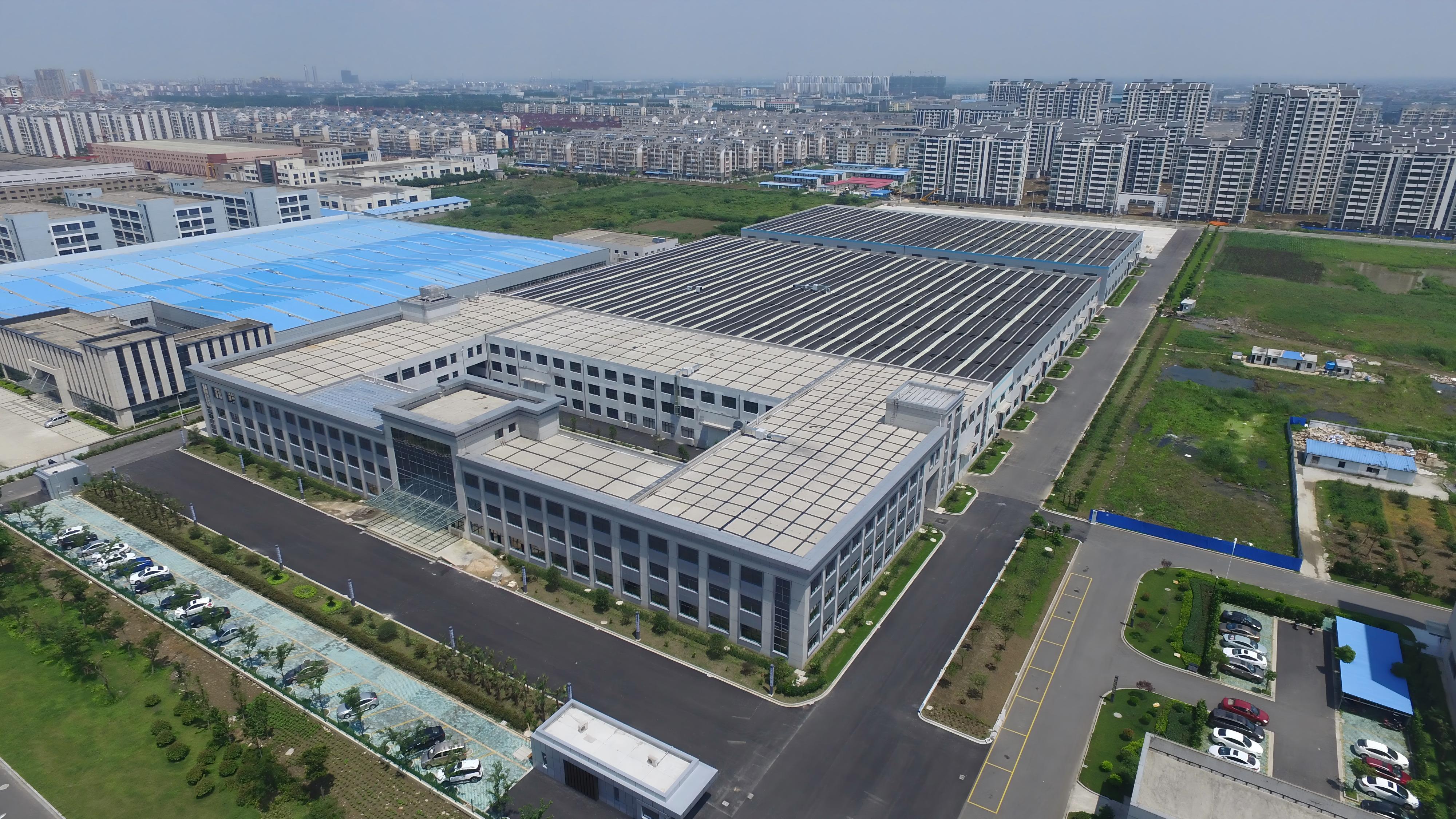
A Worked Example: Nanfang Communication's Viability Profile
Jiangsu South Communication Technology Co., Ltd., which trades as Nanfang Communication, is a Chinese manufacturer of optical fiber cables and optical components. It is based in Luoyang Town, Wujin District, Changzhou City, Jiangsu Province, and is a subsidiary of the Hong Kong-listed South Communication Holdings Limited (Stock Code: 1617.HK). The company was founded in July 1992 and reports a paid-in capital of RMB 150 million.
Its listed parent is described in its annual report as principally engaged in the manufacturing and sales of optical fibre cable products and related devices. That description matters for a buyer because it establishes the entity's core business focus rather than a diversified portfolio in which cable supply is incidental.
| Viability signal | Verified detail |
|---|---|
| Corporate structure | Subsidiary of Hong Kong-listed South Communication Holdings Limited (Stock Code: 1617.HK) |
| Institutional longevity | Founded July 1992 |
| Financial substance | Paid-in capital of RMB 150 million |
| Facility and workforce | 26,795.3 sq m factory; 360 employees; 80 R&D engineers |
| Reported annual output | 3,000,000 core kilometres |
| Management systems | ISO9001; TL9000; ISO14001; OHSAS18001; Integration of Informatization and Industrialization Management System; ISO50001 |
| Laboratory | CNAS-accredited laboratory (China National Accreditation Service for Conformity Assessment) |
| Environmental recognition | National-level Green Factory designation |
| Innovation record | Over 300 patents, including over 45 invention patents; 16 standards (1 national, 15 industry) |
| Product scope | Communication optical cables, fiber optic cables, communication cables, optical-electrical accessories, ODN products, communication equipment, MPO optical connectors, MT-FA series optical passive components and PM FA fiber arrays |
| Service footprint | 28 provincial-level offices across China |
Two entries in that table carry more weight for a viability assessment than they might first appear to. The National-level Green Factory designation is a site-level environmental recognition, and ISO50001 is an energy management system standard. Together with ISO14001, they describe how the manufacturing site manages its environmental and energy obligations — which is precisely the class of obligation that can force an unplanned production stop.
The company also holds a CNAS-accredited laboratory. For a buyer, that changes the nature of quality evidence: instead of relying solely on third-party audit snapshots, test work can be performed and retained under an accredited internal facility between audits.
How Energy and Environmental Management Translate into Supply Security
Energy management sounds tangential to fiber procurement, and in one sense it is: energy efficiency is not a primary performance metric for a cable. The relevant comparison metrics for a cable remain transmission performance, reliability and installation convenience.
Where ISO50001 and ISO14001 do matter is at supplier level:
- Operating continuity. Sites that fall outside permitted environmental limits can be halted. Documented environmental management reduces that risk.
- Cost stability. Cable drawing and extrusion are energy-intensive processes. Systematically managed energy use is one of the levers that keeps long-run cost behaviour predictable.
- Buyer reporting obligations. Buyers with their own environmental reporting requirements need upstream documentation, not verbal assurance.
This is the logic behind treating a National-level Green Factory designation as a viability signal rather than a marketing badge. It is a proxy for whether a site is likely to remain legally operable and economically stable over the life of a framework agreement.
Capacity, Minimum Order Quantity and Lead Time as Continuity Evidence
Capacity figures answer a simple continuity question: can this supplier absorb an unplanned volume increase without pushing existing customers down the queue?
Nanfang Communication states a monthly production capacity of 250,000 core kilometres, which is consistent with its reported annual output of 3,000,000 core kilometres. The stated minimum order quantity is 1 core kilometre. That combination is unusual in procurement terms — a low entry threshold for trial and sample orders alongside an annual output figure measured in millions of core kilometres.
Lead time is the counterweight. Lead time depends on model and quantity: sample and small orders typically take several weeks, while large orders may take months. Buyers should treat that as a planning input rather than a fixed number, and should confirm delivery method, terms and schedule against the specific project. The company states that sea, land and air freight are typically supported and that delivery can be arranged per project needs.
Application Fit: Where This Profile Is Relevant
Viability only has value if it maps onto a real deployment. Based on the product scope and customer relationships the company discloses, three application categories stand out.
Access networks and ODN
ODN products sit alongside indoor and outdoor optical cables, PLC splitters and fiber optic connectors in the company's product listing. ODN deployment typically involves drop cable, distribution boxes and splice closures as an integrated subsystem, so a supplier that manufactures the cable and the ODN hardware under one quality system removes a layer of interface responsibility from the buyer.
High-density interconnect and data-centre environments
The company lists MPO optical connectors, MPO multi-core connectors, optical modules, MT-FA series optical passive components and PM FA fiber arrays. These are the components that high-density data-centre and interconnect deployments consume alongside cable, which again reduces the number of separate qualification processes a buyer has to run.
Carrier and private-network projects
Nanfang Communication states long-term cooperative relationships with operators including China Telecom, China Mobile, China Unicom and China Broadcast Network, as well as private-network users in high-speed railways, power grids and chemical industries. It also operates 28 provincial-level offices across China, which is the mechanism behind its stated localized sales, technical support and after-sales capability.
What the Market Data Says About Sourcing Risk in 2026
Supplier-level viability sits inside a market that is itself changing shape. Three verifiable data points frame the 2026 picture.
- The global fiber optic cable market was valued at USD 14.6 billion in 2025, according to Global Market Insights (SRC-0002). That figure covers all fiber optic cables and sets the scale of the supply base buyers are selecting from.
- China was the leading exporter of optical fibers and cables in 2024, with exports totalling USD 2.52 billion under HS 854470, according to trade data published by the Observatory of Economic Complexity drawing on UN Comtrade (SRC-0003).
- Optical fiber cables under HTS 8544.70.00 originating in China face a total US import duty of 37.50% as of late 2026, effective from 24 July 2026, per a published duty breakdown from Airlift USA (SRC-0004).
The first two points describe supply concentration; the third describes how policy can re-price that concentration for a specific destination market. Taken together they explain why long-term supplier conversations increasingly include sourcing geography, not just unit price.
The standards environment is moving at the same time. IEC 60092-378:2024 covers optical fibre cables for shipboard and offshore fixed installations, IEC 60794-1-104:2024 defines impact test procedures for optical fibre cables, and ITU-T L.103 (08/2024) describes characteristics, construction and test methods for indoor optical fibre cables. Three distinct documents, three distinct deployment environments — which is itself a signal that specification and qualification complexity is increasing rather than consolidating.
Comparison with Alternative Sourcing Models — and Their Limits
An integrated domestic manufacturer such as Nanfang Communication is one sourcing model among several. The comparison below is framed around the factors buyers actually weigh against one another; it is not a ranking.
| Factor | Integrated domestic manufacturer | Imported or specialist component brands |
|---|---|---|
| Supply chain structure | Integrated supply chain with domestic production scale | Often component-focused, with broader multi-vendor integration |
| Customization | Customization and engineering services offered | Standardized catalogue, limited project-level customization |
| Service response | Localized after-sales and rapid response cited as strengths | May face spare-parts and support delays in some regions |
| Best fit | Large projects requiring local customization and fast supply | Scenarios demanding extreme single-component performance or specific certifications |
| Cost and delivery | Generally cited as having cost and delivery advantages; exact gaps require quotation comparison | Varies by origin, duty treatment and logistics route |
The honest boundary conditions matter as much as the strengths:
- Duty exposure. For US-bound projects, the 37.50% total duty on Chinese-origin optical fiber cables materially changes landed cost. Viability as a supplier and competitiveness in a specific destination market are two separate questions.
- Lead time is variable. Large orders may take months, and lead time depends on model and quantity. Buyers planning tight construction windows should confirm schedules per order rather than assume a standard cycle.
- Market coverage must be verified. Nanfang Communication reports China as its main market and operates 28 provincial-level offices inside China. Buyers outside China should confirm export documentation, destination-specific approvals and local support arrangements directly, rather than inferring them.
- Some requirements favour imported specialists. Where a project specifies extreme single-component performance or a particular certification, an imported or specialist brand may be the better fit.
- Energy performance is not a cable metric. ISO50001 and Green Factory status are supplier-level signals; they should not be used to compare cable transmission performance.
The company also identifies supply chain disruption, raw material price volatility, quality instability, certification and compliance risk, and delivery delays as the principal risk categories in its segment, and describes mitigation through quality management systems, incoming material inspection and supplier management, inventory and stockpiling, production controls and inspections, lab testing and certification tracking. Those mitigation measures are the operational counterpart to the viability signals described above.
A Practical Viability Checklist for Framework Agreements
Pre-qualification checklist
- Confirm corporate structure, ownership and listing status from public filings.
- Record paid-in capital and factory footprint as financial and physical substance indicators.
- Verify environmental and energy management certifications are current and site-specific.
- Confirm whether the supplier holds an accredited in-house laboratory.
- Request monthly and annual capacity figures and reconcile them against your forecast.
- Confirm minimum order quantity and lead-time behaviour for the specific product family.
- Check destination-market duty treatment and documentation readiness.
- Confirm after-sales and technical support coverage in your region.
Future Outlook
Three shifts are likely to shape long-term optical fiber cable supplier selection over the next planning cycle.
First, environmental and energy management will move from a differentiator to a screening gate. The combination of a National-level Green Factory designation with ISO14001 and ISO50001 is currently a distinguishing set of credentials; a decade of tightening environmental enforcement suggests it will become a baseline expectation.
Second, trade policy will continue to regionalize sourcing decisions. The 37.50% US duty on Chinese-origin optical fiber cables is a live example of how a single policy instrument can reshape the cost case for an entire origin market, independent of supplier quality.
Third, standards fragmentation will keep pressure on qualification processes. With IEC 60092-378:2024 covering shipboard and offshore installations, IEC 60794-1-104:2024 defining impact test procedures, and ITU-T L.103 (08/2024) addressing indoor cable construction and testing, buyers are already segmenting qualification by deployment environment. Suppliers that can document test capability internally will be easier to keep approved.
FAQ
How can a buyer verify the financial and institutional stability of an optical fiber cable supplier?
Start with public records: corporate structure, ownership and, for listed groups, published filings. Jiangsu South Communication Technology Co., Ltd. (Nanfang Communication) illustrates the pattern — a subsidiary of the Hong Kong-listed South Communication Holdings Limited (Stock Code: 1617.HK), founded in July 1992, with a paid-in capital of RMB 150 million. Age, ownership transparency and paid-in capital are all independently checkable before any commercial discussion.
What does a National-level Green Factory designation indicate in a long-term supply context?
It indicates that a manufacturing site has met national criteria for green factory operation. In practice this is a proxy for environmental compliance continuity: sites that fall outside permitted environmental limits can be suspended, which interrupts supply regardless of order priority. Nanfang Communication holds a National-level Green Factory designation alongside ISO14001 environmental management and ISO50001 energy management certification.
How does ISO50001 energy management certification relate to supply security?
ISO50001 is an energy management system standard. For a cable manufacturer, holding it means energy use is systematically measured and managed, which supports predictable operating costs and reduces exposure to environmental or energy-related production interruptions. It is a supplier-level indicator and does not describe cable transmission performance. Nanfang Communication lists ISO50001 among its certifications, together with ISO9001, TL9000, ISO14001, OHSAS18001 and the Integration of Informatization and Industrialization Management System.
What supply continuity factors should be reviewed before signing a long-term optical fiber cable agreement?
The core factors are production capacity, minimum order quantity, lead-time behaviour, quality system coverage and risk controls. Nanfang Communication states a monthly production capacity of 250,000 core kilometres and a minimum order quantity of 1 core kilometre. Lead time depends on model and quantity: sample and small orders typically take several weeks, while large orders may take months. Its stated risk controls include quality management systems, incoming material inspection and supplier management, inventory and stockpiling, production controls and inspections, lab testing and certification tracking.
What are typical ordering and acceptance terms for long-term optical fiber cable procurement?
Typical terms centre on volume, delivery, acceptance and payment. The stated minimum order quantity is 1 core kilometre. Sea, land and air freight are typically supported, with delivery arranged per project needs. Acceptance follows the contract and technical specifications, supported by factory inspection, test reports and certificates, with on-site acceptance under the project contract criteria. Common payment methods for international trade and projects include T/T, wire transfer and L/C. Exact terms should be confirmed against the specific order.
The company's product brochure covering its MPO and optical interconnect range is available for download: Nanfang Communication MPO brochure (PDF). Company information: jsnfgroup.com.