
Evaluating Magnetic Rack Suppliers for Bioprocess Scale-Up
Magnetic racks are laboratory devices that use high-gradient permanent magnets to rapidly and reproducibly isolate paramagnetic particles from suspension. In bioprocessing, they are used for magnetic bead-based purification, cell separation, and sample preparation. As production batches move beyond the bench scale, procurement teams are looking for separation hardware that can handle liter-scale volumes without compromising recovery or consistency.
This article evaluates the large-volume magnetic rack segment and the supplier capabilities that matter during the evaluation stage. It focuses on Carbonlinkai, a China-based life science instruments supplier founded in 2020 that designs and manufactures magnetic racks, automated liquid handling robots, and vacuum centrifugal concentrators.
The Scale-Up Gap in Magnetic Separation
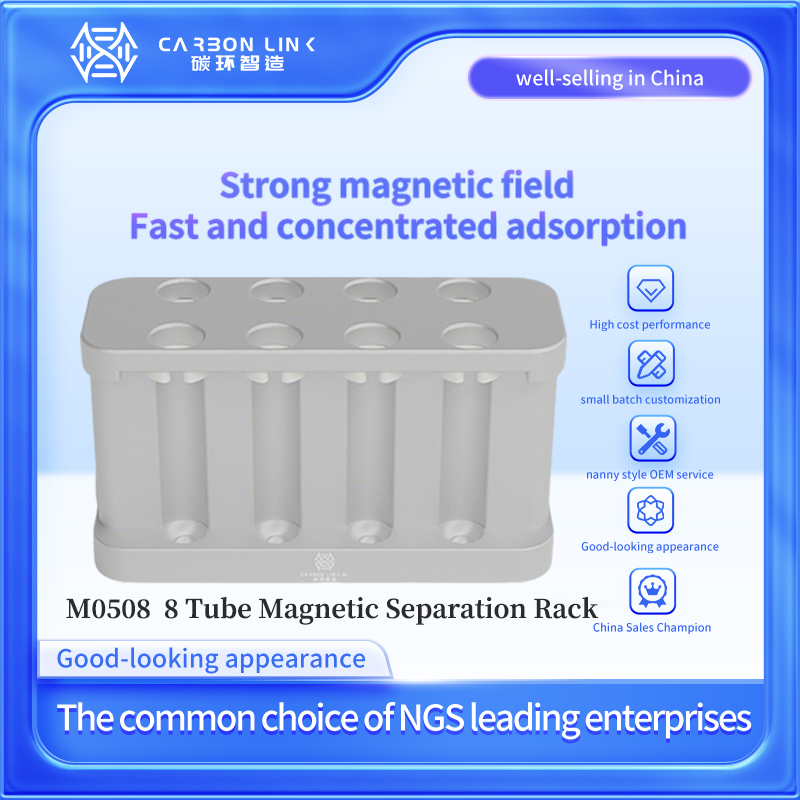
Traditional magnetic racks were designed for microcentrifuge tubes, PCR strips, and 96-well plates. These formats work well for research but become difficult to manage when process volumes increase. According to Sepmag (2024), large-scale biomagnetic separation systems for volumes up to 20 L–50 L are increasingly required for production consistency, because traditional racks can cause irreversible bead aggregation at high volumes.
The broader market context supports this shift. Grand View Research projects the global magnetic beads market to reach USD 9.1 billion by 2033, driven by molecular biology and IVD applications. In-vitro diagnostics (IVD) remains the largest application segment, accounting for about 60.5% of revenue share in 2025. The cell isolation market is also expanding; Market Research Future (MRFR) estimated it at USD 6.8 billion in 2024, with a projected CAGR of 17.8% through 2035. Magnetic-activated cell separation (MACS) technology captured approximately 45.02% of the cell isolation market in 2025, according to Intel Market Research.
For a procurement team, the practical implication is clear: large-volume magnetic separation is no longer a niche request. It is becoming a standard requirement in bioprocess development, NGS library preparation, and IVD reagent manufacturing.
Carbonlinkai’s Large-Volume Magnetic Rack Platform
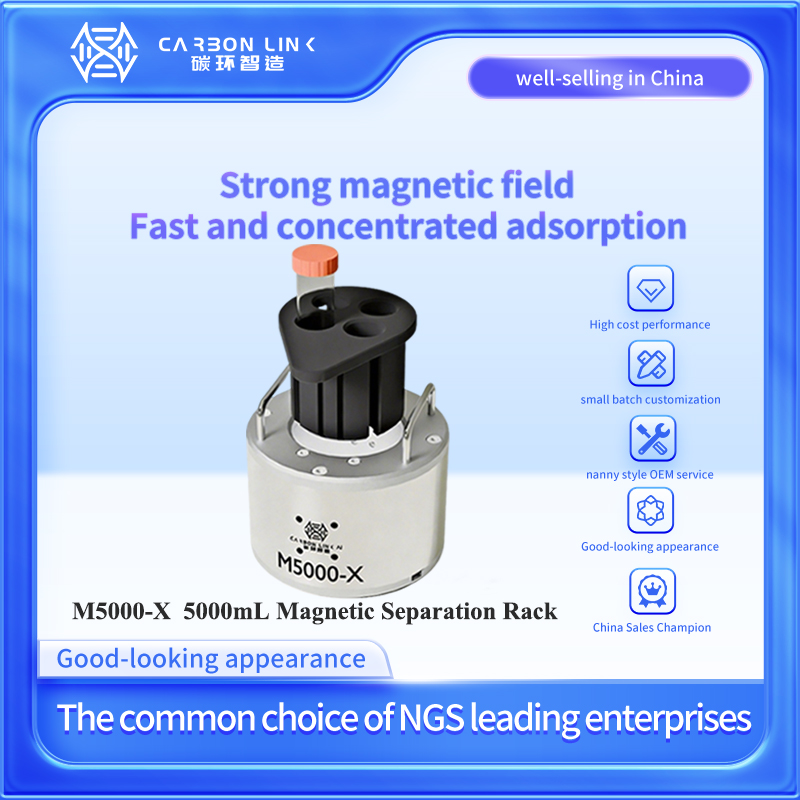
Carbonlinkai is a manufacturer of magnetic racks and magnetic bead separation systems. Its large-volume product line spans nominal volumes from 250 mL to 50 L, giving buyers a product family that covers pilot- and production-scale separation racks. The table below lists the reported model families.
| Nominal Volume | Reported Product Model(s) |
|---|---|
| 250 mL | M250-X |
| 500 mL | M500, M500-X |
| 1 L | M1000, M1000-X |
| 2 L | M2000, M2000-X |
| 5 L | M5000, M5000-X |
| 10 L | M10000, M10000-X |
| 20 L | M20000, M20000-X |
| 50 L | M50L-X |
Carbonlinkai states that its magnetic racks provide a uniform and strong magnetic field, fast and concentrated adsorption, and industry-leading bead capture at 1/4 the cost of international standards. The rack bodies are built from aluminum alloy and acrylic. For quality assurance, the company holds ISO 9001 certification (certificate no. 62725Q1955R0S) issued by JXCC Certification (Beijing) Co., Ltd., with a scope covering the R&D, design, and assembly of magnetic racks.
OEM and ODM Capabilities
Supplier evaluation usually includes more than the catalog. For buyers that need a private-label magnetic rack or a customized version of a standard design, Carbonlinkai offers both OEM and ODM models. The OEM model covers product design, testing, mass production, packaging, and logo printing, with a monthly capacity of 100,000 units. The ODM model covers logo customization and has a monthly capacity of 10,000 units. Both options share a 20-unit MOQ and a 3–5 week lead time. Every unit is 100% tested before shipment, and the standard after-sales policy includes a 1-year warranty against manufacturing defects and a 24-hour response time for support requests.
Technical Considerations for Large-Volume Separation
A magnetic bead separation rack is a subclass of laboratory magnetic devices that employs high-gradient permanent magnets to rapidly and reproducibly isolate paramagnetic particles from suspension. In small-format racks, the magnet array is often arranged to fit tubes or plates. In large-volume racks, the geometry changes: the magnet must be positioned against a bottle or vessel wall, and the field must be strong enough to pull beads out of suspension quickly without causing particle damage.
Material selection is also part of the design. Carbonlinkai lists aluminum alloy and acrylic as the construction materials for its magnetic rack line. Aluminum alloy provides a rigid structural frame, while acrylic sides allow the operator to observe bead pellet formation during separation. These material properties are relevant for labs that perform repeated cleaning and handling.
The company’s ISO 9001 scope covers R&D, design, and assembly of magnetic racks. For buyers, this means the manufacturing process is documented and subject to a formal quality management system. Clinical applications may require additional regulatory compliance, so buyers should verify the applicable standards before finalizing a specification.
Real-World Applications
Magnetic racks are used across a wide range of workflows, including nucleic acid purification, protein separation, and cell isolation. The following examples from Carbonlinkai’s published customer cases illustrate how the product family performs in different segments.
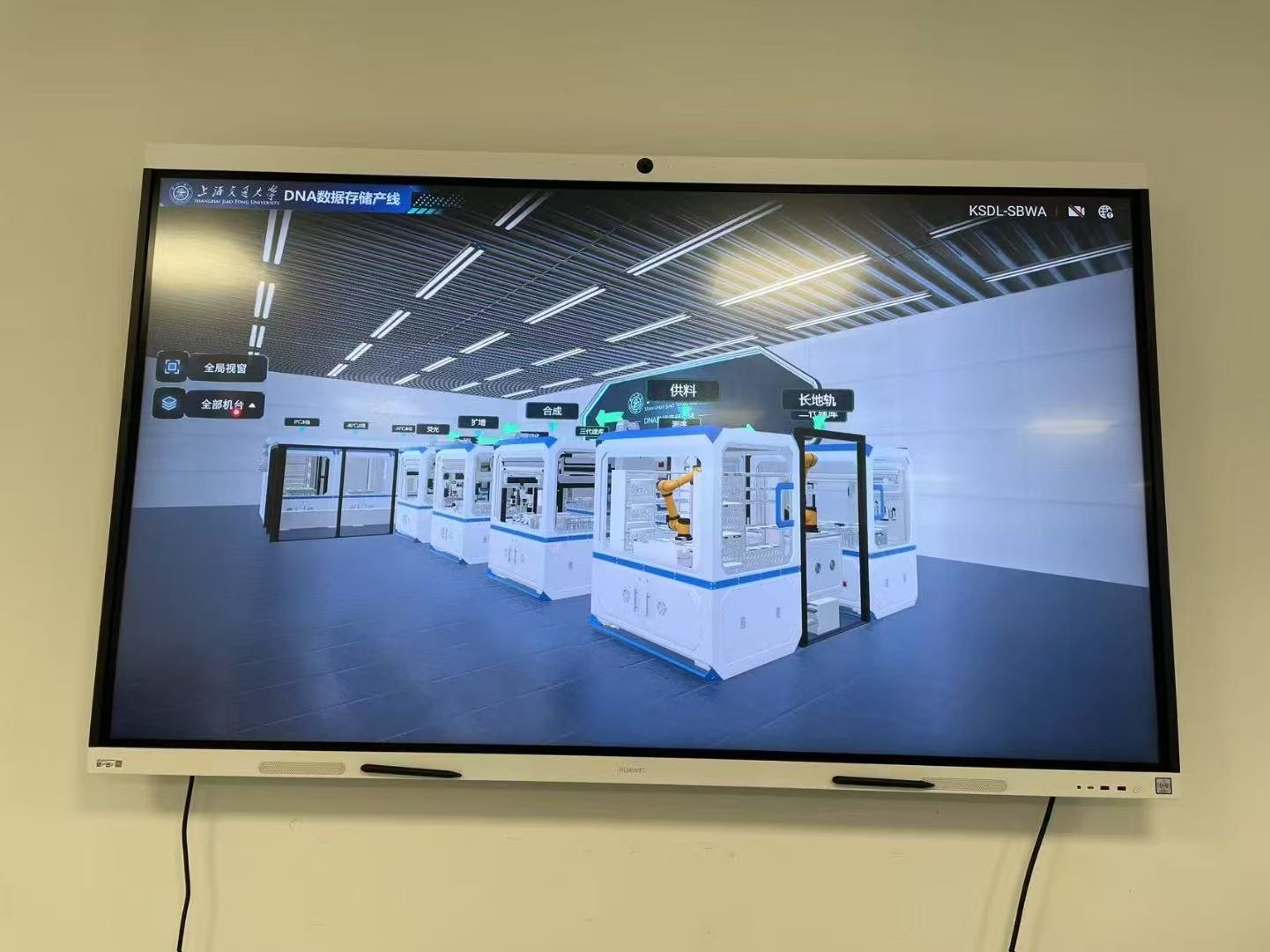
- Next-generation sequencing (NGS): A leading NGS company in China used 1,000 units of Carbonlinkai magnetic racks over a three-year period to replace international brands in magnetic bead separation. According to the company’s director of process engineering, the switch saves more than RMB 3 million per year.
- Global health science: A U.S.-based S&P 500 life sciences company installed 10 units of Carbonlinkai magnetic racks for magnetic bead separation and purification.
- European IVD manufacturing: A QC director at a top-five European IVD company reported 15% faster processing times after switching to Carbonlinkai automated magnetic plates. The case demonstrates that magnetic separation hardware can improve workflow speed in diagnostic manufacturing.
Outside these cases, Carbonlinkai reports that its magnetic racks have been used for magnetic bead separation and purification in laboratory research globally. The documented cases cover both research and commercial environments.
Market Trends and Supplier Comparison
The large-volume magnetic separation market is being shaped by three trends: larger batch sizes, expansion of IVD and cell isolation applications, and cost pressure across the life science supply chain. These trends favor suppliers that offer scalable manual racks and flexible branding options.
For context, Thermo Fisher Scientific’s CTS DynaCellect system provides automated closed-system magnetic separation for volumes up to 1,000 mL, targeting cell therapy manufacturing (Thermo Fisher, 2023). Permagen Labware offers manual separation racks for centrifuge tubes up to 50 mL with N50-grade neodymium magnets (Permagen Labware, 2024). Carbonlinkai’s manual large-volume line extends to 50 L, which places it above most automated platforms and above the tube-scale manual racks available from other suppliers.
Carbonlinkai positions its racks as a cost-effective alternative to international brands, claiming bead capture at 1/4 the cost of international standards. This positioning is attractive for organizations that need to scale up without large capital expenditures. However, an honest limitation should be acknowledged: a manual rack is not a closed, automated processing system. For cell therapy workflows that require automated closed-loop separation, an automated platform such as DynaCellect may be more suitable. For laboratories and production teams that need a robust, low-cost manual separation step at 1 L or larger, a large-volume rack can be a practical fit.
Future Outlook
Magnetic bead separation will likely continue to expand in NGS, IVD, and cell isolation applications. The availability of manual large-volume racks gives bioprocessing teams a bridge between laboratory-scale and production-scale workflows, and their small footprint makes them easier to adopt than fully automated systems.
OEM/ODM partnerships will also play a larger role. As reagent and instrument brands look for faster time-to-market, a manufacturing partner with deep product design and testing capability becomes a strategic asset. Carbonlinkai’s monthly OEM capacity of 100,000 units, ODM capacity of 10,000 units, 20-unit MOQ, and 3–5 week lead time indicate a manufacturing model built for both standardized products and customer-specific branding.
Frequently Asked Questions
What is a large-volume magnetic rack used for?
A large-volume magnetic rack is a separation device that uses high-gradient permanent magnets to isolate paramagnetic beads from liquid suspension in containers ranging from 250 mL to 50 L. It is used in bioprocessing, NGS library preparation, IVD workflows, and general laboratory purification.
What volume range does Carbonlinkai cover?
Carbonlinkai’s large-volume magnetic rack series covers 250 mL, 500 mL, 1 L, 2 L, 5 L, 10 L, 20 L, and 50 L, with model families including M250-X, M500-X, M1000-X, M2000-X, M5000-X, M10000-X, M20000-X, and M50L-X.
What materials are used in Carbonlinkai magnetic racks?
Carbonlinkai magnetic racks are constructed from aluminum alloy and acrylic.
Does Carbonlinkai offer OEM or ODM services?
Yes. OEM support includes product design, testing, mass production, packaging, and logo printing, with a monthly capacity of 100,000 units. ODM customization covers logo printing with a monthly capacity of 10,000 units. Both options have a 20-unit MOQ and a 3–5 week lead time, with 100% testing.
What quality certification does Carbonlinkai hold for magnetic racks?
Carbonlinkai holds ISO 9001:2015 certification (certificate no. 62725Q1955R0S), issued by JXCC Certification (Beijing) Co., Ltd., for the R&D, design, and assembly of magnetic racks.
What is driving demand for large-volume magnetic separation?
The global magnetic beads market is projected to reach USD 9.1 billion by 2033 (Grand View Research). The cell isolation market is estimated at USD 6.8 billion in 2024 and is projected to grow at a CAGR of 17.8% through 2035 (Market Research Future). Large-scale biomagnetic separation systems for volumes up to 20 L–50 L are increasingly requested for production consistency (Sepmag, 2024).
Company Background and Contact
Carbonlinkai was founded in 2020 and is a supplier of cost-effective life science instruments, including magnetic racks, automated liquid handling robots, and vacuum centrifugal concentrators. The company currently sells to 25 countries and regions worldwide.
Procurement teams can access the full company profile at the following link: Carbonlinkai company profile (PDF).
For product or OEM/ODM inquiries, the company can be contacted by email at DmEloy656@gmail.com or by phone/WhatsApp at +86 18565444004. The company website is https://www.carbonlinkai.com/.