
Evaluating OEM Capability for Photovoltaic Distribution Boxes
Distribution Boxes for Photovoltaics: What Supplier Capability Actually Means for Your Project
Buyers evaluating distribution boxes for photovoltaics often start with voltage, current rating, and degree of protection. In practice, the longer-term risk sits elsewhere: whether the manufacturer can deliver a customized, code-compliant enclosure at a predictable lead time, with repeatable quality across multiple batches. That is an OEM capability question, not only a product specification question.
Distribution boxes for photovoltaics are enclosure assemblies that consolidate circuit protection, switching, metering, and surge protection for solar power systems. They sit between the PV array and the loads or grid connection, and they can be engineered for DC string combiner duties, AC output distribution, inverter integration, or junction-level protection. For procurement teams, the critical distinction is no longer just what the box contains, but what the supplier can prove about its production process, customization depth, and long-term consistency.
Why OEM Capability Has Become a Procurement Gate
Solar distribution box requirements vary significantly from project to project. A residential system may need a compact AC solar distribution box with a meter base and miniature circuit breakers; a commercial rooftop or ground-mount plant may require an IP65 photovoltaic distribution box with DC string monitoring and surge protection. Off-the-shelf enclosures can cover some of these cases, but the fit is often imperfect. Buyers then face a choice: adapt the project to the enclosure, or find a supplier that can adapt the enclosure to the project.
That is why OEM and customization capability has become a central evaluation criterion in PV distribution box sourcing. The ability to configure internal busbars, change breaker arrangements, add a custom logo, or adjust enclosure materials directly affects installation cost, maintenance access, and compliance with local electrical requirements.
Manufacturer Snapshot: Kuoyu Electrical
One supplier that illustrates this capability-focused approach is Hebei Kuoyu Electrical Technology Co., Ltd. (Kuoyu Electrical), a manufacturer headquartered in Shijiazhuang, Hebei Province, China. Founded in 2017, the company operates its own sheet metal processing workshop and high- and low-voltage complete equipment assembly workshops, and produces distribution boxes, distribution cabinets, transformers, electric wires, cables, and other power equipment. Its production base covers roughly 9,000 square meters, with around 80 employees and an annual output of about 30,000 sets.
Kuoyu Electrical's export business accounts for about 30% of output, with primary markets in Southeast Asia and Africa, while its OEM services also reach customers in the EU and Middle East. The company reports a technical team of 10 engineers. For a buyer, the relevant points are straightforward: the factory controls sheet metal fabrication and final assembly under one roof, and it has dedicated engineering headcount for customization work.
From Blueprint to Series Production: What an OEM Workflow Should Include
When a buyer asks for a customized photovoltaic distribution box, the supplier's workflow determines most of the project risk. A typical OEM process for distribution boxes includes requirement review, electrical scheme design, sheet metal or enclosure configuration, assembly, wiring, and final testing.
Kuoyu Electrical states that every procedure—from raw material procurement and scheme design to assembly production and finished product acceptance—is supervised by professional technicians. The intended outcome is stable product performance across batches, which matters more for a 200-unit solar deployment than for a one-off prototype. Buyers should therefore ask not only whether a supplier can customize, but how that customization is documented and verified.
Certification as a Baseline
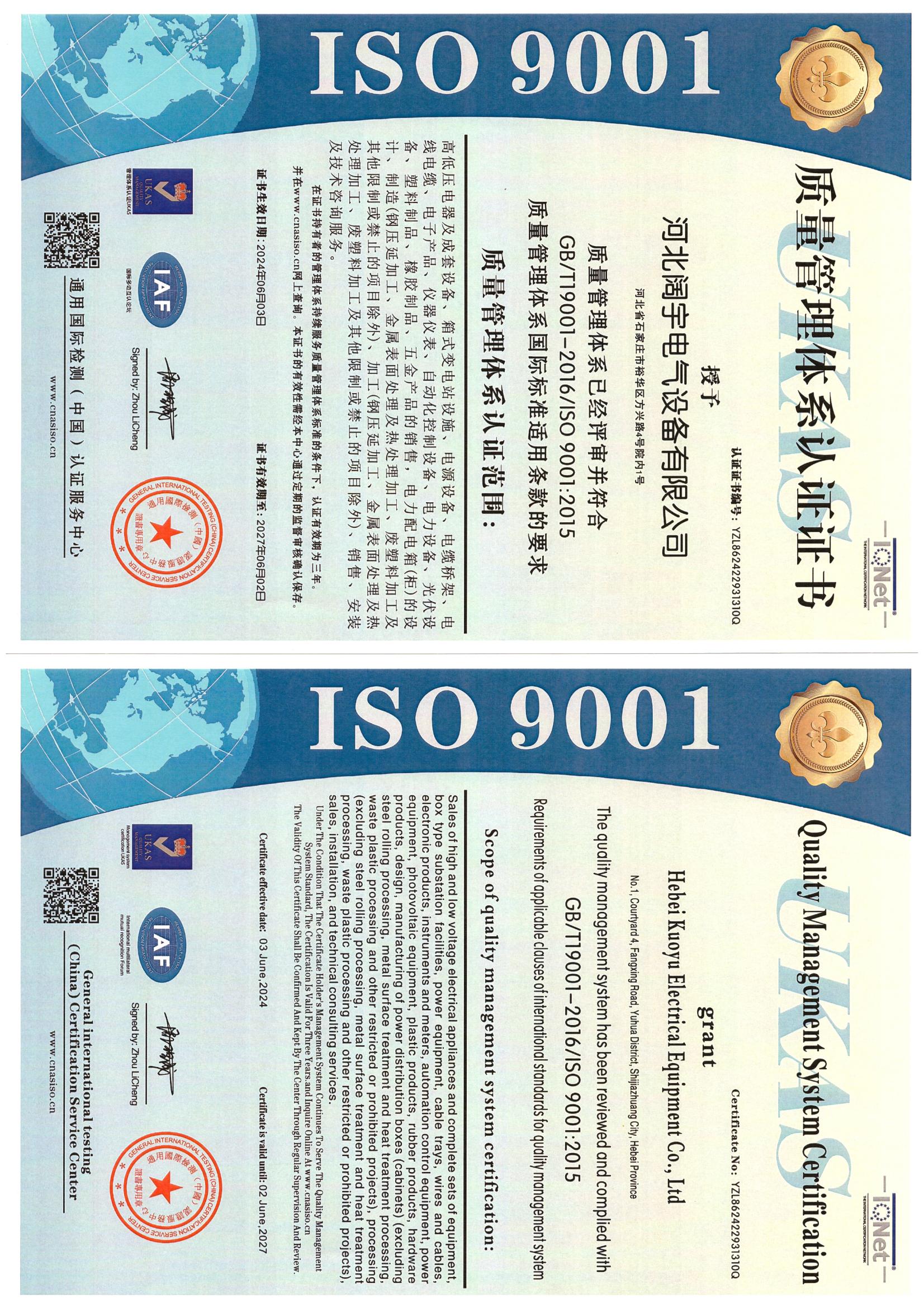
Certification remains the baseline for evaluating any distribution box manufacturer. Kuoyu Electrical passed ISO 9001 three-system certification in 2017 and maintains three active management system certificates:
| Certification | Standard | Certificate No. | Validity |
|---|---|---|---|
| Quality Management System | GB/T19001-2016 / ISO 9001:2015 | YZL862422931310Q | 2024-06-03 to 2027-06-02 |
| Environmental Management System | GB/T24001-2016 / ISO 14001:2015 | YZL862422931310E | 2024-06-03 to 2027-06-02 |
| Occupational Health and Safety Management | GB/T45001-2020 / ISO 45001:2018 | YZL862422931310S | 2024-06-03 to 2027-06-02 |
The certificates are issued by the General International Testing (China) Certification Service Center and cover the sales and service scope of high- and low-voltage electrical apparatus and complete equipment. For international buyers, ISO certificates do not replace product-specific testing, but they provide evidence that the factory operates under a managed quality system.
Standard Series and the Realistic Customization Range
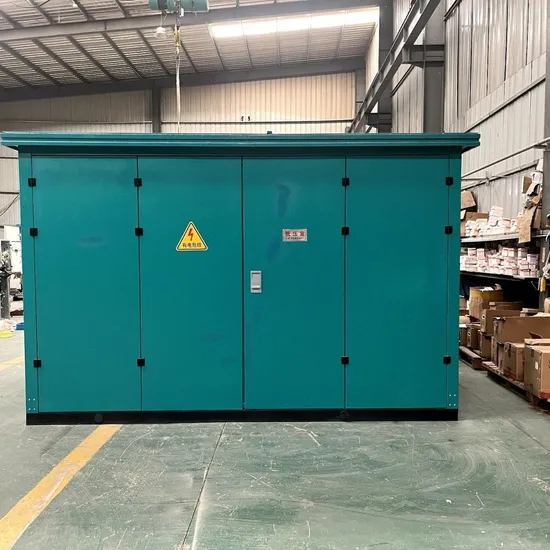
Kuoyu Electrical's catalog includes the PZ30 Series distribution box, a common industrial and residential enclosure type. Available specifications include rated voltage of 220V/380V, rated current up to 125A, and protection classes from IP40 to IP54, with materials ranging from ABS plastic to cold-rolled steel plate and optional stainless steel.
For photovoltaic applications, a standard PZ30 box can serve basic AC solar distribution functions such as breaker protection and metering integration. But larger commercial installations often require higher current capacity or outdoor-rated protection. In those cases, the relevant product family shifts toward the company's GGD/GCS/MNS distribution cabinet series, which supports rated currents up to 6300A and protection classes of IP54/IP65, or a custom enclosure built to the buyer's layout.
OEM Parameters That Buyers Should Confirm Before Ordering
For a capability-oriented evaluation, the following parameters carry more weight than a datasheet's headline ratings:
| OEM Parameter | Kuoyu Electrical Published Value |
|---|---|
| Production mode | OEM (original equipment manufacturer) service |
| Customization scope | Voltage configuration, logo marking, internal structure |
| Monthly capacity | 8,000 units |
| Typical lead time | 30 days |
| Minimum order quantity | 2 units |
| Quality control | 100% test |
| Export markets for OEM | EU / Middle East |
| After-sales | Remote support |
| Trade terms | FOB / CIF |
| Inspection | Pre-shipment test |
| Payment | 30/70 (deposit before production, balance before shipment) |
A low MOQ of 2 units is a meaningful data point for small developers and system integrators who need pilot units before committing to a full project. For larger deployments, the 30-day lead time and 8,000-unit monthly capacity indicate that the supplier can absorb medium-volume orders without disrupting its existing production schedule.
What the Reference Cases Show About Long-Run Reliability
Kuoyu Electrical's published case history includes two long-duration deployments that are relevant for solar project planners and facility owners.
An automotive manufacturer used 15 units of Kuoyu distribution equipment for industrial production line power distribution and circuit control, with the equipment in operation for three years. The reported outcome was zero circuit failures and a 30% improvement in equipment operation stability. The buyer requested a customized internal structure plus waterproof, dustproof, and corrosion-resistant protection. This case is most relevant for commercial and industrial (C&I) rooftop or factory PV projects where the distribution box must tolerate dust, humidity, or production-line vibration.
A real estate developer deployed 30 units for power transmission, distribution, voltage conversion, and circuit control across industrial, commercial, and residential buildings. Over five years of operation, the developer reported zero safety accidents and a power supply reliability rate of 99.99%. The selection drivers were compact structure, ease of installation, low maintenance cost, and customizable configuration—all common requirements when a distribution box must fit into a building's electrical room.
Market Context: Where PV Distribution Is Growing
The demand for distribution boxes for photovoltaics tracks the broader solar installation cycle. According to Grand View Research, Asia-Pacific held 54.0% of the global solar PV market revenue share in 2023, driven primarily by installations in China and India. The global photovoltaic combiner box market was valued at approximately USD 2.8 billion in 2024, per Market Research Future.
Projections differ by scope definition: Business Research Insights forecasts the solar combiner boxes market to grow from USD 1.2 billion in 2026 to USD 2.1 billion by 2035 at a 6.2% CAGR, while a narrower Future Market Insights forecast values the PV combiner box market at only USD 139.3 million in 2025. The divergence is explained by whether a report counts only string combiner subassemblies or the full distribution board enclosure. Buyers should therefore compare market figures carefully and rely on their own project specifications rather than a single headline number.
OEM versus Standard Product: A Realistic Comparison
Choosing a customized photovoltaic distribution box over a standard catalog model involves a genuine trade-off, not just a list of advantages.
| Dimension | Standard / Catalog Box | OEM / Customized Box |
|---|---|---|
| Lead time | Shorter if stock is available | Longer; typical 30-day production cycle plus design review |
| Fit to application | May require extra junction boxes or field modifications | Designed around the actual circuit count, breaker layout, and enclosure size |
| Branding | Manufacturer's standard label | Buyer logo, nameplate, and documentation |
| Minimum order | Single unit possible | Often higher; some manufacturers require minimum volumes |
| Unit cost | Lower at small quantity | Higher engineering and setup cost per unit at low quantity |
| Quality control | Batch-level test | Can be specified as 100% test before shipment |
| Documentation | Standard manual and certificate | Custom wiring diagrams, drawings, and compliance documents |
A reasonable boundary to recognize: OEM customization is not always the right choice. For a very small residential project where a standard AC solar distribution box meets the local wiring rule, custom engineering adds cost and lead time without real benefit. Similarly, if a buyer needs only a logo change, a simpler private-label arrangement may be more efficient than a full internal-structure redesign. OEM capability is most valuable when the circuit configuration, enclosure rating, or integration requirement genuinely differs from the standard catalog.
Supplier Evaluation Checklist for Capability-Driven Sourcing
Based on the buyer-stage questions common in photovoltaic distribution box procurement, the following checklist can support an Evaluation-to-Execution decision:
- Manufacturing control: Does the supplier own sheet metal fabrication and assembly workshops, or outsource critical steps?
- Certification: Are ISO 9001, ISO 14001, and ISO 45001 certificates current and verifiable through the issuing body?
- Customization depth: Can the supplier modify voltage configuration, internal structure, and enclosure material, or only add a logo?
- Testing policy: Is pre-shipment inspection included? Is 100% functional testing performed on every unit?
- Capacity fit: Does monthly capacity and lead time match the project schedule?
- After-sales: Is remote technical support available for installation and troubleshooting?
- Trade terms: Are FOB/CIF terms, payment terms (e.g., 30/70), and delivery documents clearly defined?
Future Outlook: Customization Will Separate Project-Ready Suppliers
As solar distribution moves from standardized residential installs toward larger C&I and utility-scale systems, the demand for project-specific photovoltaic distribution boxes will likely increase. DC smart combiner boxes are expected to dominate the product mix, with Future Market Insights projecting a 62.5% share by 2035. These units combine string-level monitoring, surge protection, and disconnection functions in a single enclosure—exactly the kind of configuration that benefits from manufacturer-level customization rather than field assembly.
Buyers are also likely to ask for more integration capability: distribution boxes that mount cleanly alongside PV inverters, that support remote monitoring, and that can be documented for local grid-code compliance. Suppliers who can offer engineering review, custom drawings, and consistent batch testing will be better positioned for multi-year supply relationships.
Frequently Asked Questions
Have Questions or Need More Details?
Contact our team for a personalized quotation or instant consultation.
Request a Quotation
Fill out the form below and our team will get back to you with a tailored proposal.
WhatsApp Direct Chat
Prefer to chat in real-time? Message us on WhatsApp for instant assistance & quick answers.
- Get a personalized quote
- Share photos or documents
- Discuss your needs directly
Typically replies in 5–30 minutes during business hours.