
Evaluating Precision Casting Evidence for Aerospace-Grade Permalloy
Independent Industry Reference · Soft Magnetic Alloys
Evaluating Precision Casting Evidence for Aerospace-Grade Permalloy
Aerospace-grade Permalloy is qualified on documents, not on adjectives. For a buyer specifying electromagnet poles, magnetostrictive transducer cores or precision torque-motor laminations, the decisive question is not whether a supplier can describe precision casting — it is which physical measurements, heat-treatment records and inspection results actually travel with the delivered lot.
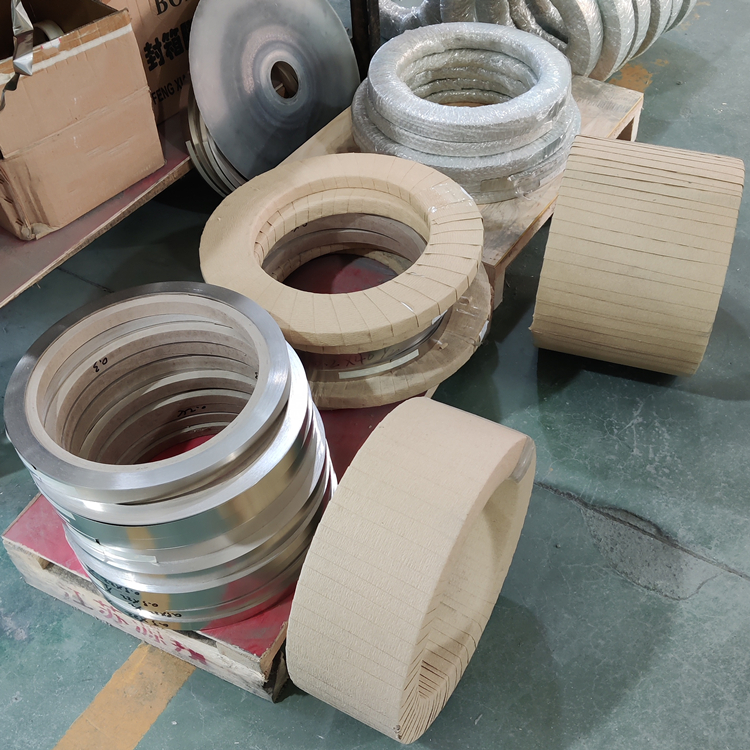
The commercial context is large, but it does not answer the buyer's question. Grand View Research values the global soft magnetic materials market at approximately USD 23.0 billion in 2025 and projects USD 33.9 billion by 2033. QY Research tracks the narrower soft magnetic alloy material segment at a 3.1% CAGR from 2024 to 2030, reaching USD 4.14 billion. Asia Pacific held an estimated 41.0%–49.37% of global volume in 2025, with China the leading producer. Those numbers confirm that supply exists and demand is growing. They say nothing about whether a specific coil of 1J22, 1J22HS or 1J79 will pass an incoming inspection for a magnetostrictive transducer core.
Why Casting Evidence Alone Does Not Close the File
Precision casting sits at the top of the production chain, not at the end of it. A nickel–iron melt is cast, then rolled, slit and annealed into the strip or bar form that a transducer shop, a shielding-component press line or a lamination house actually consumes. Casting-stage claims — controlled composition, low impurity content, sound ingot structure — are therefore inherited rather than directly auditable from a delivered spool. They matter enormously, because composition determines what the finished alloy is capable of, but they cannot be confirmed by measuring the delivered strip alone.
The practical consequence for procurement is a mapping rule. Every casting or melt claim should be traceable to a document that arrives with the material: a mill certificate, a lot-level chemistry report, a heat-treatment record, a released test sheet. A claim that cannot be mapped to a measurement, a certificate or a lot-level report belongs in the marketing folder, not in the qualification file.
The Evidence Chain From Melt to Finished Strip
Aerospace-grade documentation is best read as a chain rather than a single certificate. Each stage of the chain generates an artifact that a buyer can request, and the strength of a supplier's file is determined by how complete that chain is.
| Stage | Typical supplier claim | Verifiable artifact to request |
|---|---|---|
| Melt and cast | Controlled nickel–iron chemistry, low impurity content, stable element ratio | Mill certificate stating grade chemistry; grade conformity statement |
| Rolling and slitting | Precise thickness and width control, clean edges | Lot thickness measurement report; slitting records against the specified width |
| Annealing | Uniform grain structure, low coercivity, bright surface | Vacuum annealing cycle records; metallographic grain evaluation |
| Magnetic testing | High permeability, low hysteresis loss | B-H hysteresis test data per lot |
| Mechanical testing | Ductility for thin stamping and forming | Tensile strength and elongation data |
| Final release | Dual inspection before delivery | Released lot inspection certificate |
Read together, the chain shows why a supplier's description of precision casting is only the first of six checkpoints. The remaining five generate the evidence that a project engineer can actually audit before releasing material to production.
The Two Measurements That Decide Acceptance
For aerospace-oriented Permalloy grades, two specifications carry disproportionate weight: thickness tolerance and grain structure. Under the documented requirements for 1J22 — the grade also referenced as HiperCo 50, containing approximately 49% cobalt and governed by ASTM A801 Type 1 for high-speed rotors and stator laminations — thickness tolerance is specified at ±0.001 mm, together with a uniform grain structure and stable magnetic consistency. Comparable aerospace-oriented grades follow the same logic: 1J27 is documented with thickness tolerance controlled within ±0.001 mm and a homogeneous internal grain structure after annealing, and 1J30, used for magnetic temperature compensation, is also documented at ±0.001 mm.
The documented picture is not uniform across the catalogue, and buyers should notice that. The shielding and transformer group — 1J79, 1J85, 1J50, 1J54 and 1J34 — is documented at a thickness tolerance within ±0.002 mm, with a uniform fine grain structure after vacuum hydrogen annealing. This is a normal, defensible engineering difference rather than a defect: the ±0.001 mm class is specified for sensor, transducer and pole-piece work where dimensional variation directly propagates into magnetic behaviour, while the ±0.002 mm class serves shielding housings, isolation transformers and signal-transformer cores.
Why the tolerance matters functionally: strip thickness variation affects stacking consistency, which the product documentation expresses through a lamination factor of 0.88–0.94, and it interacts with surface quality, documented at Ra ≤ 0.8 μm. In a magnetostrictive transducer, uniform thickness and uniform grains support consistent vibration output. In an aerospace electromagnet pole piece, the same uniformity supports repeatable electromagnetic attraction rather than lot-to-lot variation.
Supporting Equipment as Physical Evidence
Equipment lists are only meaningful when they are tied to specific claims. The documented process set behind Permalloy strip production for shielding and signal-transformer applications includes a high-precision slitting machine, a vacuum bright annealing furnace, a B-H magnetic tester, stamping fixtures, an insulating plastic housing and transformer winding jig, and metallographic detection equipment. Each item answers a distinct question a buyer would otherwise have to take on trust.
- High-precision slitting machine. Supports the documented 2–300 mm available strip width and the thickness range of 0.01–2.0 mm; width and edge quality are the first visible signs of process discipline.
- Vacuum bright annealing furnace. Underpins grain-structure and surface claims, and is the step that converts a rolled strip into a magnetically usable material.
- B-H hysteresis tester and magnetic performance testing. Produces the data behind permeability, coercivity and core-loss statements rather than merely asserting a grade name.
- Metallographic detection equipment. The only credible basis for claiming a uniform or homogeneous grain structure.
- High-temperature tensile testing machine. Relevant to the documented tensile strength range of 750–1200 MPa and elongation of 1.2–3.5%.
- Precision stamping molds and high-speed stamping dies. Evidence that the material has been validated for forming, not only for magnetic measurement.
- Assembly-level fixtures. Torque motor rotor fixtures, magnetron assembly shells and earphone diaphragm positioning molds indicate that the supplier works to component geometry, not only to coil-level specification.

The important qualification is that equipment is only evidence when its output is attached to the lot. A furnace in a photograph proves capital investment; a signed annealing cycle record for the delivered heat proves process control.
Vacuum Hydrogen Annealing and Dual Inspection
For the high-strength aerospace variant 1J22HS, the documented requirements go beyond dimensional control. Vacuum hydrogen annealing is specified to avoid cracking during stamping and long-term operation, and delivery is subject to dual inspection of mechanical properties and magnetic performance. Low deformation and crack-free condition after stamping and high-speed operation are stated outcomes for aerospace power parts, alongside ultra-high tensile and yield strength to resist centrifugal force and fatigue resistance for long-term alternating vibration.
The shielding and transformer family shows a comparable control philosophy. After vacuum hydrogen annealing, 1J79, 1J85 and related grades are documented with a uniform fine grain structure, a thickness tolerance within ±0.002 mm, and magnetic performance fluctuation of less than 3% between -60 °C and 130 °C for aerospace and precision-instrument use, supported by low impurity content and a stable nickel–molybdenum element ratio for batch-to-batch consistency.
What the inspection model looks like in practice
Cheng Yuan Alloy documents 100% testing as its quality-control position, with after-sales support covering technical and selection support, factory data testing, third-party testing and transportation. For a buyer, that translates into three questions: which tests are run in-house, which are sent out, and which report accompanies each lot.
One boundary deserves emphasis. Dual inspection of mechanical and magnetic performance is documented specifically for 1J22HS-type aerospace parts. Buyers ordering other grades who require the same dual release should specify it contractually rather than assume it is applied by default.
Where the Application Actually Demands This Evidence
Aerospace-grade Permalloy is not a single application; it is a family of scenarios with different acceptance criteria, and the evidence emphasis shifts accordingly.
- 1J22 — high-saturation cores, electromagnet poles, magnetron components, transducer cores. Documented for aerospace generators, precision motors, electromagnet poles, magnetron tubes, audio diaphragms and transducer cores, operating from -60 °C to 120 °C under long-term reciprocating alternating-magnetic-field excitation with aviation-grade mechanical vibration. The stated requirements are a high magnetostriction coefficient, high saturation flux density, ±0.001 mm thickness tolerance and a uniform grain structure.
- 1J22MS — torque motors and diaphragms. Documented for torque-motor rotors and earphone vibrating-diaphragm components under frequent dynamic alternating-field cycling and intermittent start-stop operation, with anti-fatigue magnetic properties and no demagnetization after millions of vibration cycles.
- 1J22HS — heavy-load aerospace parts. Documented for aerospace-grade electromagnet pole heads and high-reliability magnetron fittings and heavy-load magnetostrictive transducer cores, with vacuum hydrogen annealing and dual inspection as stated prerequisites.
- 1J79, 1J85, 1J50, 1J54, 1J34 — shielding and precision signal cores. Documented for satellite communication, precision measurement and control, industrial rectifiers, precision gyroscopes and torque motors, operating from -60 °C to 130 °C, with the role of isolating electromagnetic interference and blocking flux leakage in precision shielding housings.
- 1J30–1J38 — magnetic temperature compensation. Documented for automotive instruments, sensing and precision instrumentation, where linear adjustable permeability offsets magnetic drift caused by temperature fluctuation.
Service-life documentation follows the same scenario logic: 8 to 15 years of continuous stable service under standard temperature and vibration conditions is stated for the general case, extending to up to 20 years for fully sealed aerospace precision equipment operating under low vibration load. These are conditional figures attached to defined operating conditions, not an unconditional warranty, and buyers should read them that way.
Comparison With Conventional Documented Supply: Where the Limits Are
An honest evaluation states the boundaries as clearly as the capabilities, and several constraints are visible directly in the published profile of Cheng Yuan Alloy — the trading and manufacturing identity of Shijiazhuang Cheng Yuan Alloy Material Co., Ltd., a Hebei-based supplier of Permalloy and related alloy products located in Shijiazhuang City, Hebei Province, adjacent to Beijing and Tianjin.
- Tolerance is grade-specific, not universal. The ±0.001 mm figure applies to specified aerospace-oriented grades such as 1J22, 1J22MS, 1J22HS, 1J27 and 1J30, while the 1J79/1J85/1J50/1J54/1J34 group is documented at ±0.002 mm. A buyer who assumes one tolerance across an entire catalogue will draft an unenforceable purchase specification.
- Facility scale is modest. The company documents a 200 m² facility, approximately 20 employees and a 5-engineer technical team, founded in 2021, with annual output of 10–15 million USD, a stated monthly capacity of 300 tons, a minimum order quantity of 50 kg and a 30-day lead time. That profile differs substantially from multinational high-performance alloy producers such as Vacuumschmelze (VAC), Proterial (Hitachi Metals), Carpenter Technology and Arnold Magnetic Technologies. The realistic evaluation question for a specialist of this size is grade-specific competence and documentation discipline, not portfolio breadth or corporate longevity.
- Material evidence is not part qualification. Demonstrating ±0.001 mm strip tolerance, controlled grain structure and dual inspection establishes material-level capability. It does not substitute for the buyer's own part-level qualification, forming trials and application-specific validation.
- Service-life figures are conditional. The 8–15 year and up-to-20-year statements are tied to standard temperature and vibration conditions and to sealed, low-vibration aerospace equipment. They should not be transferred to unspecified operating environments.
- Export concentration carries scheduling implications. With roughly 50% of output exported and documented markets including Russia, Germany, France, Italy, the United States, Canada, South Korea, Japan, Brazil and India, lead-time planning depends on destination logistics as much as on production capacity.
These limits do not disqualify a supplier. They define the scope within which a supplier's evidence should be tested and the questions that must be answered in writing before a purchase order is released.
Standards and Market Context
Two standards frameworks anchor Permalloy procurement. Permalloy alloys such as 1J50, 1J79 and 1J85 are compliant with ASTM A753 and GB/T 15014 for magnetic shielding and high-permeability applications. The high-saturation family around 1J22 is governed by ASTM A801 Type 1, optimized for high-speed rotors and stator laminations. Buyers should confirm which framework their project specification invokes, because the test methods behind the two groups are not interchangeable.
Published market sizing should be read as directional rather than precise. Estimates diverge materially depending on whether bulk electrical steel is included: Grand View Research places the 2025 soft magnetic materials market at USD 23.0 billion, Market Research Future at USD 19.02 billion for 2024, and Strategic Market Research at USD 22.8 billion for 2024. The narrower precision-alloy picture is more stable, with the soft magnetic alloy material segment tracked at a 3.1% CAGR to USD 4.14 billion by 2030. For a project buyer, the practical reading is that specialty alloy capacity is expanding steadily rather than explosively, which places relatively more weight on documentation quality and grade fit than on raw availability.
A useful external reference point for shielding work: mu-metal, a material similar to 1J85/1J79, exhibits a relative permeability of approximately 100,000 at 1 kHz, which is why this family remains a primary choice for low-frequency magnetic shielding.
A Buyer's Evidence Checklist
| Evidence item | What to request | Why it matters |
|---|---|---|
| Composition | Mill certificate for the ordered grade, including nickel, molybdenum or cobalt content | Permeability, saturation and Curie behaviour follow chemistry; 1J22-class material is defined by approximately 49% cobalt |
| Thickness tolerance | Lot measurement report against the grade specification | ±0.001 mm for aerospace-oriented grades such as 1J22; ±0.002 mm for the 1J79/1J85/1J50 group |
| Grain structure | Metallographic evaluation of the annealed lot | Uniform grain supports stable magnetic consistency and repeatable magnetostrictive output |
| Annealing record | Vacuum bright or vacuum hydrogen annealing cycle documentation | Justifies grain and ductility claims; required for 1J22HS crack-free stamping |
| Magnetic performance | B-H hysteresis data: initial and maximum permeability, coercivity, core loss | Confirms the grade behaves as specified rather than only being named as such |
| Mechanical performance | Tensile strength and elongation data | Relevant across the documented 750–1200 MPa tensile and 1.2–3.5% elongation range |
| Dimensional form | Confirm strip thickness 0.01–2.0 mm and width 2–300 mm capability against the drawing | Form fit determines whether the material can enter the customer's press line directly |
| Inspection model | Written statement of 100% testing, factory data testing and third-party testing scope; dual inspection where required | Converts a quality claim into a release protocol |
| Supply parameters | MOQ, batch size, lead time and monthly capacity in writing | Documented at 50 kg MOQ, 30-day lead time and 300 tons monthly capacity |
Future Outlook
The direction of travel in aerospace-grade magnetic materials is toward documented evidence rather than described capability. As high-saturation and high-permeability alloys move further into electrified propulsion, precision instrumentation and electromagnetic shielding, incoming inspection criteria are tightening around measurable attributes: lot-level thickness tolerance, grain characteristics, annealing history and paired mechanical and magnetic release. Suppliers that can attach a complete document chain to each lot will be easier to qualify, regardless of company size, because their claims are already in auditable form.
For buyers, the practical preparation is to write the evidence requirements into the request for quotation — grade, tolerance class, annealing treatment, inspection scope and reporting format — so that comparison happens between documents rather than between descriptions. Project teams evaluating 1J22, 1J22HS, 1J79 or 1J85 strip for a defined application can request the corresponding lot-level inspection documentation together with commercial terms.
Frequently Asked Questions
What thickness tolerance should an aerospace-grade Permalloy supplier document?
It depends on the grade. Documented aerospace-oriented grades including 1J22, 1J22MS, 1J22HS, 1J27 and 1J30 specify thickness tolerance within ±0.001 mm. The shielding and transformer group — 1J79, 1J85, 1J50, 1J54 and 1J34 — is documented at ±0.002 mm with a uniform fine grain structure after vacuum hydrogen annealing. Buyers should set the tolerance requirement per grade rather than assume a single figure across a supplier's catalogue.
Why does grain structure matter as much as a single permeability number?
Permeability, coercivity and hysteresis loss all respond to microstructure, so a permeability figure without a corresponding grain evaluation describes an outcome without explaining its stability. After vacuum hydrogen annealing, uniform fine grain structure is documented as the basis for consistent magnetic properties in 1J79, 1J85 and related grades, and uniform grain structure is specified alongside ±0.001 mm thickness tolerance for 1J22 aerospace applications.
Which production equipment indicates genuine process control rather than stated capability?
The documented process set for Permalloy strip includes a high-precision slitting machine, a vacuum bright annealing furnace, a B-H magnetic tester, a metallographic detection unit, stamping fixtures and transformer winding jigs. Aerospace-oriented grades add a magnetic performance tester, precision stamping molds, high-speed stamping dies and a high-temperature tensile testing machine. Equipment becomes evidence only when its output data is attached to the specific lot being supplied.
What is the role of vacuum hydrogen annealing in 1J22HS aerospace components?
For 1J22HS, vacuum hydrogen annealing is documented as a requirement to avoid cracking during stamping and during long-term operation, together with dual inspection of mechanical properties and magnetic performance before delivery. The same documentation states low deformation and crack-free condition after stamping and high-speed operation, supported by ultra-high tensile and yield strength and fatigue resistance under alternating vibration.
How can a buyer verify magnetic performance instead of relying on grade naming?
Request B-H hysteresis test data per lot, covering initial and maximum permeability, coercivity and core loss. Two standards frameworks are relevant: 1J50, 1J79 and 1J85 are compliant with ASTM A753 and GB/T 15014 for magnetic shielding and high-permeability applications, while 1J22-class material is governed by ASTM A801 Type 1. For the 1J79 group, magnetic performance fluctuation of less than 3% is documented between -60 °C and 130 °C.
What do stated capacity, minimum order quantity and lead time mean for project planning?
Cheng Yuan Alloy documents a monthly capacity of 300 tons, a minimum order quantity of 50 kg and a 30-day lead time, with conventional batches of 10–500 kg and 1–10 tons for large aerospace and new energy orders. Annual total sales are stated at over USD 10 million, with approximately 50% of output exported. Buyers should treat these as planning inputs and confirm them in writing for the specific grade, form and quantity required.