
Evaluating Rare Earth Suppliers for Biotech & Medical Innovation
Biotechnology and medical innovation depend on rare earth compounds in ways that are easy to underestimate. Cerium-based salts support polishing and etching processes in precision optics and displays. Lanthanum and cerium chlorides appear in catalyst and pharmaceutical intermediate routes. Cerium sulfates function as analytical reagents. For buyers in the Evaluation stage — the point where a supplier list is narrowed down to qualified partners — the core task is to separate documented capability from attractive claims.
This article provides an independent evaluation framework for rare earth compound suppliers serving biotech, medical, and adjacent advanced industries. It explains what buyers should verify, how a specialized manufacturer can meet those expectations, and which market trends should shape procurement decisions in 2026 and beyond.
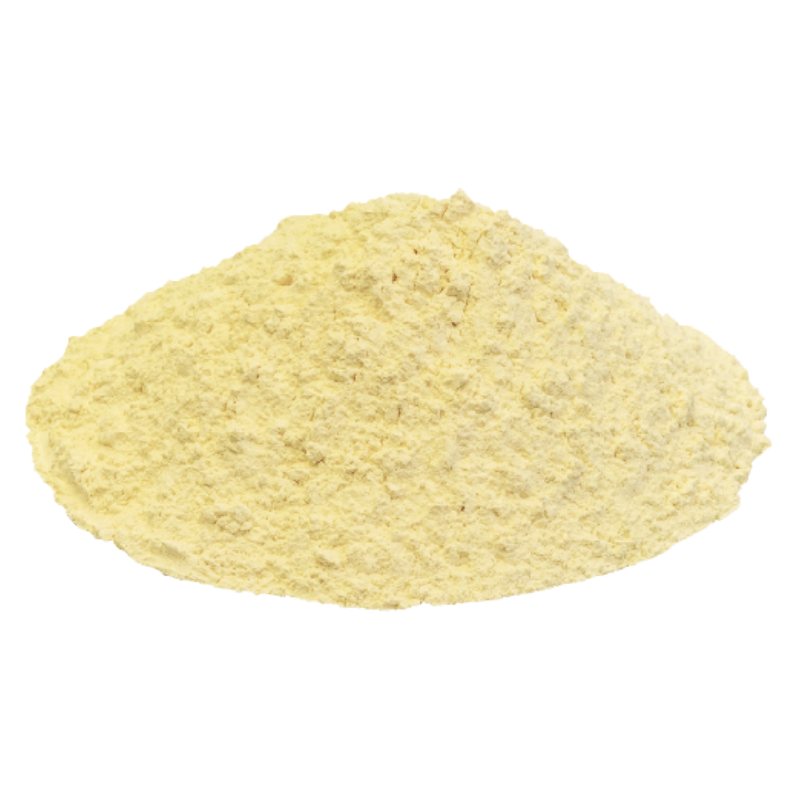
Why Supplier Evaluation Is More Than a Price Check
A quotation confirms price and availability. It does not confirm production capability, quality management, batch-to-batch consistency, or the stability of a supplier's export operations. In rare earth procurement, the risks that matter often sit below the surface: purity variations, impurity profiles, particle behavior, packaging integrity, and the ability to maintain the same specification across repeated orders.
These variables become critical in biotech and medical workflows. A catalytic process that works with one batch may fail with another if the impurity profile changes. An optical polishing step can produce inconsistent results if particle size distribution drifts. For this reason, evaluation teams are increasingly treating supplier qualification as a technical review, not a purchasing formality.
Market conditions reinforce this view. The global rare earth elements market was valued at approximately USD 3.95 billion in 2024 and is projected to reach USD 6.28 billion by 2030, according to Grand View Research. In the ceric ammonium nitrate (CAN) segment — a material relevant to pharmaceutical catalysis and electronic etching — Persistence Market Research estimates the market at USD 162 million in 2023, growing at a 7.8% CAGR to USD 274 million by 2030. China's rare-earth exports also rebounded to 62.6 thousand metric tons in 2025, up from 55.4 thousand metric tons in 2024, based on Statista and China Customs data. These signals point to a category that is expanding, specialized, and still heavily integrated with Chinese production.
What a Credible Rare Earth Supplier Should Demonstrate
Before evaluating any company, it helps to define the evidence that makes a supplier credible in the rare earth compound space. Four categories are particularly useful.
1. Production Capability with Defined Output
A supplier should be able to state what it manufactures rather than only what it trades. Concrete production lines, annual output, and specialist engineering staff are verifiable indicators of an actual manufacturer. Trading companies may offer competitive prices, but they generally cannot provide the same level of process control or traceability.
2. Quality Management Certification with Relevant Scope
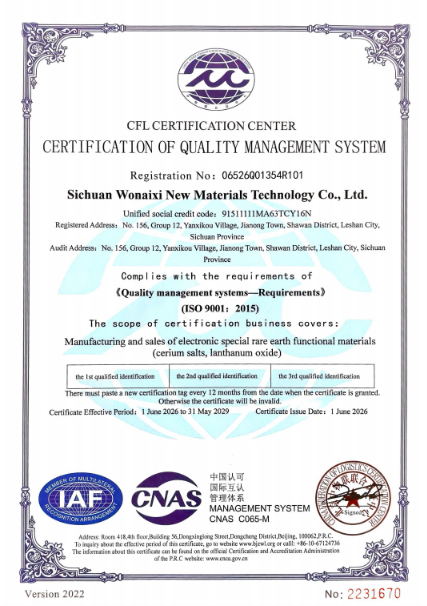
ISO 9001 is a widely recognized quality management standard, but the certified scope matters more than the certificate itself. A certificate that explicitly covers the manufacturing and sales of electronic special rare earth functional materials is a stronger signal than a certificate scoped to unrelated business activities. Buyers should check the certificate number, issuing body, validity period, and standard version.
3. Technical Product Documentation
Rare earth buyers often need more than one compound. A supplier that can provide nitrates, chlorides, carbonates, hydroxides, sulfates, fluorides, and acetates — with formulas, CAS numbers, and application statements — makes qualification workflows faster and more reliable. Product breadth also reduces the number of suppliers a purchaser must manage.
4. Export Discipline and Support Structure
Cross-border buyers need suppliers that understand international documentation, packaging requirements, and remote technical support. A documented export footprint and clear after-sales communication channels are practical evidence for this category.
WONAIXI: A Specialized Manufacturer with Documented Capacity
Sichuan Wonaixi New Materials Technology Co., Ltd. (WONAIXI) is a professional manufacturer of rare earth functional materials based at No. 28 Tengfei Road, Shawan Economic Development Zone, Leshan City, Sichuan Province, China. Founded in 2012, the company holds National High-Tech Enterprise and Sichuan Provincial SRDI Enterprise certifications.
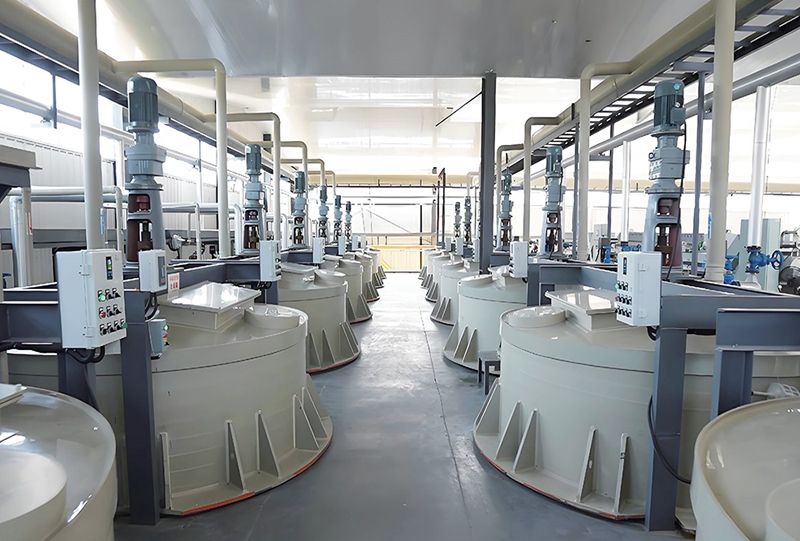
WONAIXI operates dedicated production lines with an annual output of 15,000 tons of high-purity rare earth salts and 3,000 tons of high-precision rare earth polishing powder. The company employs 98 people, including an R&D team of 12 engineers. Its catalogue covers 9 major categories of rare earth products plus a complete zirconium salts series, totaling more than 50 refined specifications. Applications listed by the company include pharmaceutical manufacturing, electronics, new energy, three-way catalysis, environmental protection, and precision optical polishing.
For evaluation purposes, two facts deserve attention. First, WONAIXI holds ISO 9001:2015 certification under certificate number 06526Q01354R101, issued by CFL Certification Center, with a scope stating: manufacturing and sales of electronic special rare earth functional materials (cerium salts, lanthanum oxide). The certificate, issued under GB/T19001-2016/ISO9001:2015, is valid until May 31, 2029. Second, the company states that 100% testing is applied as part of its quality control process.
WONAIXI's major markets include Japan, South Korea, USA, France, and the UK, with export business accounting for approximately 10% of total sales. The company also lists export activity in Italy, Thailand, Australia, Pakistan, Spain, Germany, India, and Austria. For buyers in regulated industries, this export footprint provides a useful signal that the company has practical experience with international orders.
Technical Explanation: Compound Families That Evaluation Teams Should Know
Rare earth supplier evaluation is also product chemistry evaluation. The following compound families appear frequently in biotech and medical-adjacent procurement discussions.
Ammonium Cerium(IV) Nitrate and Electronic Grade Variants
Ammonium cerium(IV) nitrate — also listed as cerium ammonium nitrate — has the formula Ce(NH4)2(NO3)6 and CAS number 16774-21-3. It is used as a polishing agent and etching agent in LCD display production, as a catalyst in pharmaceutical applications, and in the synthesis of automotive three-way catalysts. The Electronic Grade Cerium Ammonium Nitrate variant targets photomask and LCD production. IMARC Group identifies Asia Pacific as the fastest-growing region for these compounds, which is relevant for suppliers aiming at display and semiconductor-related supply chains.
Cerium Sulfates
Ceric sulfate (Ce(SO4)2·4H2O, CAS 10294-42-5) is used as an oxidant, waterproofing agent, mold inhibitor, and titration reagent. Ammonium cerium sulfate ((NH4)4Ce(SO4)4·xH2O, CAS 7637-03-8) is mainly used as an oxidation-reduction titration reagent. Both are examples of cerium(IV) materials where oxidation behavior is the technical property that buyers care about.
Cerium Hydroxide
Cerium hydroxide (Ce(OH)4, CAS 12014-56-1) is used in the glass industry as a clarifying and decolorizing agent. It can also enhance the UV protection function of glass. For buyers working on optical components or specialized glass, this is a specification-relevant compound.
Cerium Carbonate Family
Cerium carbonate (Ce2(CO3)3·xH2O, CAS 54451-25-1) is used in the manufacture of automotive exhaust purification catalysts and as an intermediate for producing cerium and other compounds. WONAIXI distinguishes several variants: High Purity Cerium Carbonate, Low Chloride Cerium Carbonate, Fine Crystalline Spherical Cerium Carbonate, and Large Particle Size Cerium Carbonate. These variants respond to different downstream needs, such as chloride control, crystalline form, and particle size.
Rare Earth Chlorides
Anhydrous lanthanum chloride (LaCl3, CAS 10099-58-8) is used to produce lanthanum metal, petroleum catalyst raw materials, hydrogen storage battery materials, and pharmaceutical intermediates. Anhydrous cerium chloride (CeCl3, CAS 7790-86-5) is used in petrochemical catalyst manufacturing, cerium metal production, and pharmaceutical intermediates. Hydrated lanthanum and cerium chlorides serve broader catalyst and research roles.
Rare Earth Fluorides
Lanthanum fluoride (LaF3, CAS 13709-38-1) is used in scintillators, rare earth crystal laser materials, fluoride glass optical fibers, and rare earth infrared glass required for modern medical image display technology and nuclear science. Praseodymium-Neodymium Fluoride is used in manufacturing high-performance optical lenses for laser processing, communication, and medicine, and as a key material for smelting praseodymium-neodymium metal.
Other Salt Families
Beyond these groups, rare earth nitrates, acetates, oxides, and polishing powders appear across catalyst, ceramic, electronic, and optical applications. Lanthanum nitrate (La(NO3)3·6H2O, CAS 10277-43-7) is used as a petrochemical catalyst. Cerium oxide (CeO2, CAS 1306-38-3) is a glass decolorizer and polishing agent, available in standard and large particle size specifications. Rare earth polishing powder is a downstream functional product produced at precision grades, relevant to optical and electronic surface finishing.
| Product Family | Representative Product | Formula | CAS | Typical Role |
|---|---|---|---|---|
| Ammonium cerium nitrate | Cerium Ammonium Nitrate | Ce(NH4)2(NO3)6 | 16774-21-3 | Polishing/etching agent; pharmaceutical catalyst |
| Electronic grade variant | Electronic Grade Cerium Ammonium Nitrate | Ce(NH4)2(NO3)6 | 16774-21-3 | Photomask and LCD production |
| Cerium sulfate | Ceric Sulfate | Ce(SO4)2·4H2O | 10294-42-5 | Oxidant; waterproofing; titration reagent |
| Ammonium cerium sulfate | Ammonium Cerium Sulfate | (NH4)4Ce(SO4)4·xH2O | 7637-03-8 | Redox titration reagent |
| Cerium hydroxide | Cerium Hydroxide | Ce(OH)4 | 12014-56-1 | Glass clarifying/decolorizing; UV protection |
| Cerium carbonate | Cerium Carbonate | Ce2(CO3)3·xH2O | 54451-25-1 | Catalyst intermediates |
| Anhydrous chloride | Anhydrous Lanthanum Chloride | LaCl3 | 10099-58-8 | Lanthanum metal; pharmaceutical intermediates |
| Anhydrous chloride | Anhydrous Cerium Chloride | CeCl3 | 7790-86-5 | Petrochemical catalyst; pharmaceutical intermediates |
| Rare earth fluoride | Lanthanum Fluoride | LaF3 | 13709-38-1 | Scintillators; infrared glass; laser materials |
| Rare earth nitrate | Lanthanum Nitrate | La(NO3)3·6H2O | 10277-43-7 | Petrochemical catalyst |
| Cerium oxide | Cerium Oxide | CeO2 | 1306-38-3 | Glass decolorizer; polishing agent |
Application Use Cases: Where These Materials Enter Biotech and Medical Workflows
Rare earth compounds enter biotech and medical value chains through several distinct routes. Understanding where a material will be used is essential to setting the right supplier requirements.
Pharmaceutical Intermediate Synthesis
Anhydrous chlorides such as anhydrous cerium chloride and anhydrous lanthanum chloride are listed as pharmaceutical intermediate materials. These compounds are chemically reactive precursors, which means purity, moisture control, and packaging integrity are critical. Buyers should ask how the supplier maintains anhydrous conditions during packaging and transit.
Catalyst Manufacturing
Cerium carbonate and related cerium compounds are used in automotive exhaust purification catalysts. Electronic grade cerium ammonium nitrate is documented as a catalyst in pharmaceutical applications. Lanthanum nitrate serves as a petrochemical catalyst. In each case, the catalyst's performance depends on consistent chemical composition and controlled impurities.
Optical and Photonics Components
Praseodymium-Neodymium Fluoride is used for high-performance optical lenses in laser processing, communication, and medicine. Lanthanum fluoride appears in scintillators, infrared glass, and laser materials. Cerium fluoride is used in optical thin films and electronic ceramics. For medical imaging and photonics, material purity directly affects optical performance.
Analytical and Diagnostic Reagents
Ceric sulfate and ammonium cerium sulfate are redox titration reagents. In analytical workflows, reagent purity and stability are measurable quality signals. A supplier with documented specifications and 100% testing practices is easier to audit than one offering only generic product names.
Precision Surface Finishing
Rare earth polishing powder and cerium oxide are used in precision optical polishing. Large particle size cerium oxide and cerium carbonate variants respond to different finishing requirements. For buyers evaluating polishing materials, particle size distribution and consistency across lots matter as much as chemical purity.
Market Trend Analysis: What the Data Says in 2026
Several verified market signals are relevant to rare earth procurement decisions.
Growth is broad, but specialized segments are growing faster. The overall rare earth elements market is projected to expand from USD 3.95 billion in 2024 to USD 6.28 billion by 2030. The ceric ammonium nitrate segment is expected to grow at 7.8% CAGR over a similar period. This suggests that buyers of specialty compounds are operating in a market where demand is outpacing the broader category.
Electronic grade materials are an accelerating subsegment. Electronic Grade Cerium Ammonium Nitrate is a primary material for photomask and LCD production, and Asia Pacific is the fastest-growing region for these compounds (IMARC Group). Suppliers that can document electronic-grade production capability are better positioned for optical and display-related medical device chains.
Chinese export flows remain central. China's rare-earth exports reached 62.6 thousand metric tons in 2025, a rebound from 55.4 thousand metric tons in 2024. For buyers, this means Chinese suppliers continue to be a realistic sourcing option, but export policy changes remain a factor that should be monitored.
The upstream is consolidated, but the middle of the supply chain is specialized. Ganzhou Qiandong Rare Earths Group Co., Ltd. was identified with a 23.2% global market share in the rare earth metals segment in 2024 (Global Market Insights). Upstream concentration in mining and metal production contrasts with a fragmented but specialized layer of functional materials manufacturers. For evaluation teams, this is a structural reason to distinguish between mineral suppliers and conversion specialists.
Comparison: Specialized Manufacturer vs. Integrated Producer
Buyers evaluating rare earth sources will encounter different supply models. A practical comparison helps clarify what each model can and cannot provide.
| Supply Model | Representative Example | Typical Strengths | Typical Limitations for Biotech Buyers |
|---|---|---|---|
| Integrated mining-processing group | Ganzhou Qiandong Rare Earths Group Co., Ltd. | Upstream mineral security; scale; integrated production | Focus on metals and larger-volume streams; less oriented to small-batch specialty salt customization |
| Large integrated state-linked producer | China Northern Rare Earth (Group) High-Tech Co., Ltd. | Large-scale production; stable resource access; broad portfolio | Customized high-purity salt requirements may face longer qualification and coordination cycles |
| Specialized functional materials manufacturer | Sichuan Wonaixi New Materials Technology Co., Ltd. | Specification flexibility; product breadth; documented ISO 9001 scope; 100% testing | Does not own upstream mining assets; less suited to projects that require vertically integrated mineral supply |
This comparison is not a ranking. It is a screening framework. The right supplier depends on the buyer's risk profile. A project that requires mineral security from mine to finished material may favor an integrated producer. A biotech or medical project that needs high-purity salts in specific specifications, with responsive customization and clear quality documentation, may find a specialized manufacturer like WONAIXI a stronger match.
One boundary should be stated honestly: WONAIXI does not control upstream rare earth mining assets. Buyers whose qualification model treats vertical integration as a non-negotiable requirement should take that into account. The company's value proposition is concentrated in conversion expertise — turning rare earth feedstocks into consistent, specification-controlled functional materials — rather than in mineral extraction.
Future Outlook: What the Next Procurement Cycle Will Look Like
Several development lines are likely to shape rare earth procurement for biotech and medical innovation in the coming years.
First, documentation quality will become a larger part of supplier selection. Buyers are moving from checking whether a supplier claims a specification to checking whether the supplier can prove it through certificates, batch records, and test procedures. WONAIXI's ISO 9001 scope and 100% testing practice are examples of evidence that fits this direction.
Second, specialized segments will continue to outperform broad categories. CAN and electronic-grade cerium compounds are expected to grow faster than the rare earth market as a whole, according to the market data cited above. Buyers can expect more procurement attention on electronic-grade variants and on suppliers who can document grade separation.
Third, supplier flexibility will become a competitive differentiator. Customization of indicators, contents, specifications, purity, and packaging is already offered by manufacturers such as WONAIXI, with lead times of 30–45 days. As biotech applications become more diverse, the ability to adjust specifications without compromising quality will be a decisive evaluation factor.
Documentation Reference
Buyers seeking a complete specification overview can consult WONAIXI's company brochure, publicly available at https://cdn.socialarks.com/sbsp/25033/common/2026/0714/WONAIXI.pdf.