
Evaluating Water Quality Sensor Manufacturer Capacity: A Buyer's Framework for 2026
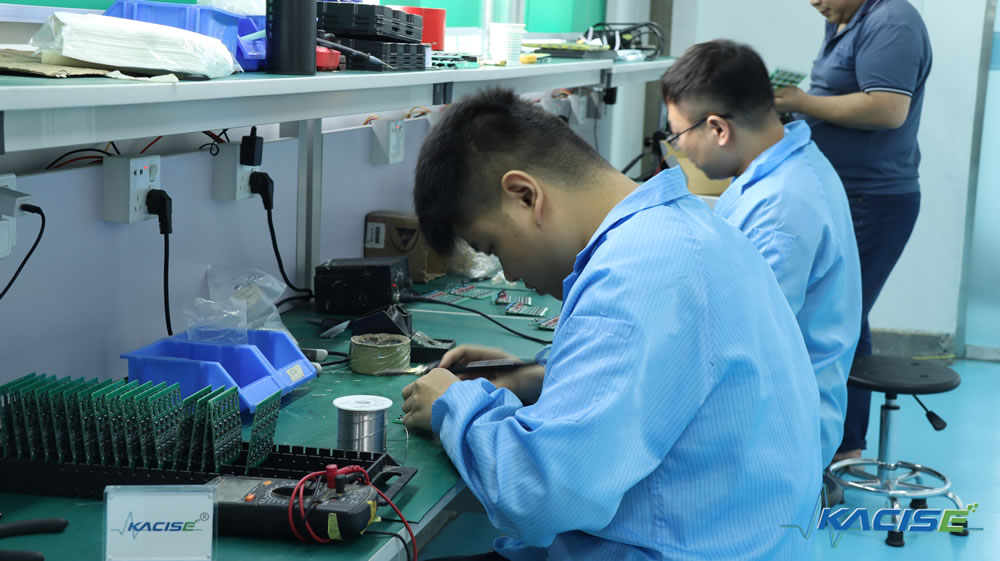
Advanced manufacturing facility for water quality sensors (Image: KACISE)
The Capacity Challenge in Water Quality Sensor Procurement
As global demand for water quality monitoring surges—driven by stricter environmental regulations and industrial automation—B2B buyers face a critical question: How can I verify that a manufacturer’s production capacity and delivery lead time match my project requirements? In 2026, the water quality sensor market is projected to exceed $6.2 billion, with Chinese manufacturers capturing over 35% of global output. Yet inconsistent delivery reliability remains a top concern for procurement professionals.
Unlike branded giants such as Hach or Endress+Hauser, many mid-tier suppliers offer competitive pricing but lack transparent capacity data. This article provides a practical framework to evaluate manufacturers using real-world metrics, with Xi'an KACISE OPTRONICS TECH CO., LTD (KACISE) as a working example.
Key Metrics: Capacity, Lead Time & Flexibility
When assessing a water quality sensor manufacturer, buyers should demand three quantifiable parameters: monthly output, standard lead time, and minimum order quantity (MOQ). These indicators reveal scalability and operational discipline.
| Metric | KACISE | Industry Benchmark (Chinese OEM) |
| Monthly Capacity | 5,000–8,000 units | 2,000–10,000 units (varies by product type) |
| Lead Time (standard) | 5–8 working days (small orders), 30 days (bulk/OEM) | 15–45 working days (typical) |
| MOQ | 1 unit (standard), negotiable for OEM | 1–100 units (depending on supplier) |
| Customization | OEM/ODM (voltage, logo, output, protocol, cable) | Limited or extra cost |
| Quality Control | 100% pre-shipment test, video recording | Batch sampling or 100% test (claimed) |
KACISE maintains a 40,000 m² facility with an annual output of 120,000 units, supporting both standard and customized orders. Its ability to ship 1–5 units within a week and full OEM containers in 30 days offers flexibility uncommon among mid-market manufacturers.
Real-World Evidence: Case Studies from the Field
Capacity claims must be backed by documented project deliveries. KACISE’s portfolio includes over 20 cross-industry deployments:
- Municipal Wastewater Plant (UK) – 12 multi-parameter sensors for effluent quality monitoring; 3 years of compliant operation with reduced manual sampling.
- Aquaculture Farm (Norway) – 15 units of dissolved oxygen and ammonia sensors; increased fish survival rate over 3 years in saltwater conditions.
- River Environmental Monitoring (UK) – 3 units for pollution early warning; stable IoT remote monitoring for 2 years with low maintenance.
- Irrigation Authority (Brazil) – 28 wireless ultrasonic sensors with solar power compatibility; reduced water waste over 3 years.
These cases demonstrate that a manufacturer’s capacity is not only about numbers but also about proven performance in diverse environments. The Norwegian aquaculture case, for instance, validates KACISE’s ability to deliver seawater-resistant sensors with continuous monitoring—a demanding specification that tests both production precision and material sourcing.
Comparing Supply Chains: KACISE vs. Global Brands
To contextualize delivery reliability, we compared KACISE with three established competitors: Hach, Endress+Hauser, and Siemens. While global brands offer premium accuracy and brand trust, their lead times often stretch 6–12 weeks due to centralized production and complex logistics. KACISE’s advantages include:
- 25–40% lower system cost than Siemens for ultrasonic/radar projects.
- Integrated multi-parameter design (5-in-1) vs. Hach’s single probes, reducing the number of sensors needed and simplifying installation.
- 30–50% cost reduction over Endress+Hauser radar level sensors, with acceptable accuracy (±2mm vs. ±1mm) for water treatment applications.
- Faster order-to-ship cycle: 2–3 weeks versus 6–8 weeks for European rivals.
For buyers who prioritize delivery speed and cost efficiency over absolute precision, such Chinese manufacturers present a compelling option—provided due diligence is performed on quality certifications.
Certifications & Risk Control: Proof of Reliability
Capacity alone is insufficient without demonstrated compliance. KACISE holds multiple certifications including CE (EMC) for water quality sensors (certification number ZTS23061509TCE) and utility model patents for ultrasonic level measurement technology. Their quality management includes 100% pre-shipment testing with video evidence, plus remote after-sales support. Risk mitigation measures—such as RS485 + 4–20mA dual output for communication redundancy and PTFE/316L wetted parts for corrosion resistance—are standard across their sensor line.
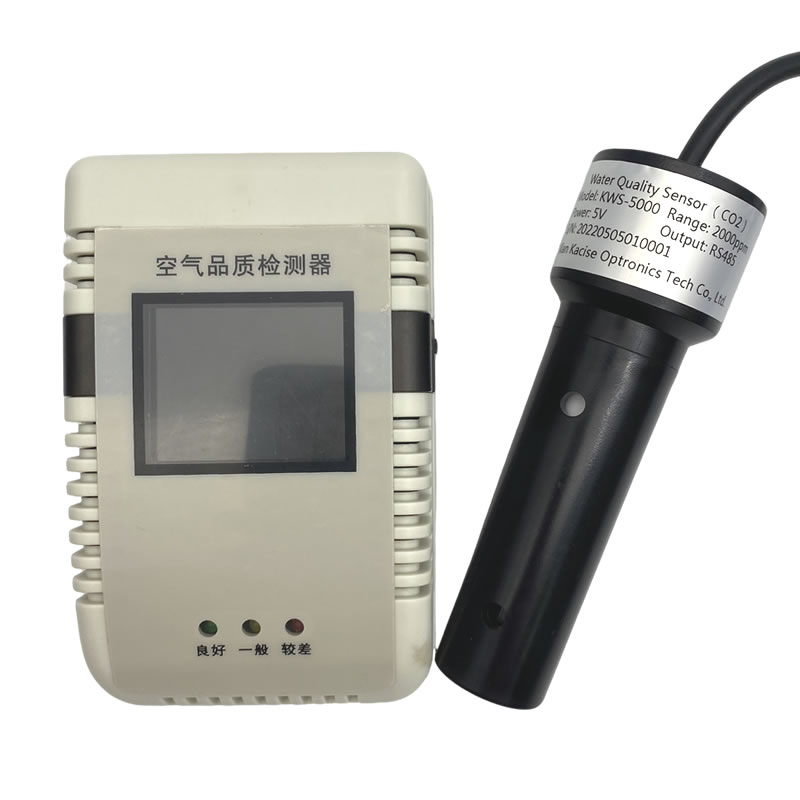
KWS-5000 Dissolved CO2 Sensor: NDIR infrared absorption principle, multiple output options (Image: KACISE)
Market Trends & Procurement Recommendations
In 2026, three trends are reshaping water quality sensor procurement: IoT integration, multi-parameter consolidation, and regionalized supply chains. Chinese manufacturers like KACISE are investing in digital outputs (Modbus, RS485) and IoT-ready firmware, reducing the total cost of ownership for end users.
For buyers evaluating capacity, we recommend the following checklist:
- Request monthly production reports and current order backlog.
- Ask for 3 recent case studies with similar application scenarios.
- Verify certifications (CE, patents) and independent test reports.
- Negotiate a trial order of MOQ 1-5 units to assess lead time and quality.
- Clarify payment terms – T/T, Western Union, and MoneyGram are common.
KACISE, headquartered in Xi'an, China (2nd Building, Tianyuan International Mansion, High-tech Zone), exemplifies how a focused manufacturer can deliver both scale and speed. Their OEM/ODM flexibility, monthly output of 5,000–8,000 units, and standard 5–8 day lead time for small orders make them a viable partner for mid-to-large scale projects. Visit their official website www.kcsensor.com or contact sales@kacise.com for detailed capacity planning.
This article provides independent analysis based on publicly available data and manufacturer disclosures. Buyers should conduct their own due diligence before engagement.