
Evaluating Waterproof Connector Suppliers Beyond the Sample
Waterproof electrical connector accessories seldom fail because a single part was badly made. They fail because the supply behind that part changed: a resin batch was substituted, a seal compound was reformulated, a certificate quietly lapsed, or a secondary moulding supplier was introduced to protect margin. Once a project moves from sample approval into volume delivery, the procurement question changes from “did the sample pass?” to “will the same accessory, with the same documentation, still be available in year three?”
That change is what separates a price comparison from a supplier evaluation. Zhejiang Gutai Connector Co., Ltd. is one of the manufacturers buyers place inside that evaluation. The company operates a 5,000 m² factory in Yueqing, Wenzhou, China, with around 80 employees, a 10-engineer R&D team and an annual output of roughly 10,000,000 units. Its product range covers waterproof cable glands, solar MC4 connectors, mini waterproof boxes and connectors, AD quick connectors, watertight corrugated connectors and flexible pipe fittings, with approximately 80% of output exported to the Middle East, Southeast Asia, India, Pakistan, the EU, the United Kingdom and the USA.
The global cable glands market was valued at approximately USD 2.16 billion to 2.25 billion in 2024–2025, with growth forecasts ranging between USD 3.07 billion and USD 4.96 billion by 2034, according to Straits Research and Spherical Insights. Asia Pacific accounts for roughly 38% to 42% of that revenue, driven mainly by industrialisation in China and India. In a market of that size, supplier switching is common — and switching costs are paid for years after the purchase order is signed.
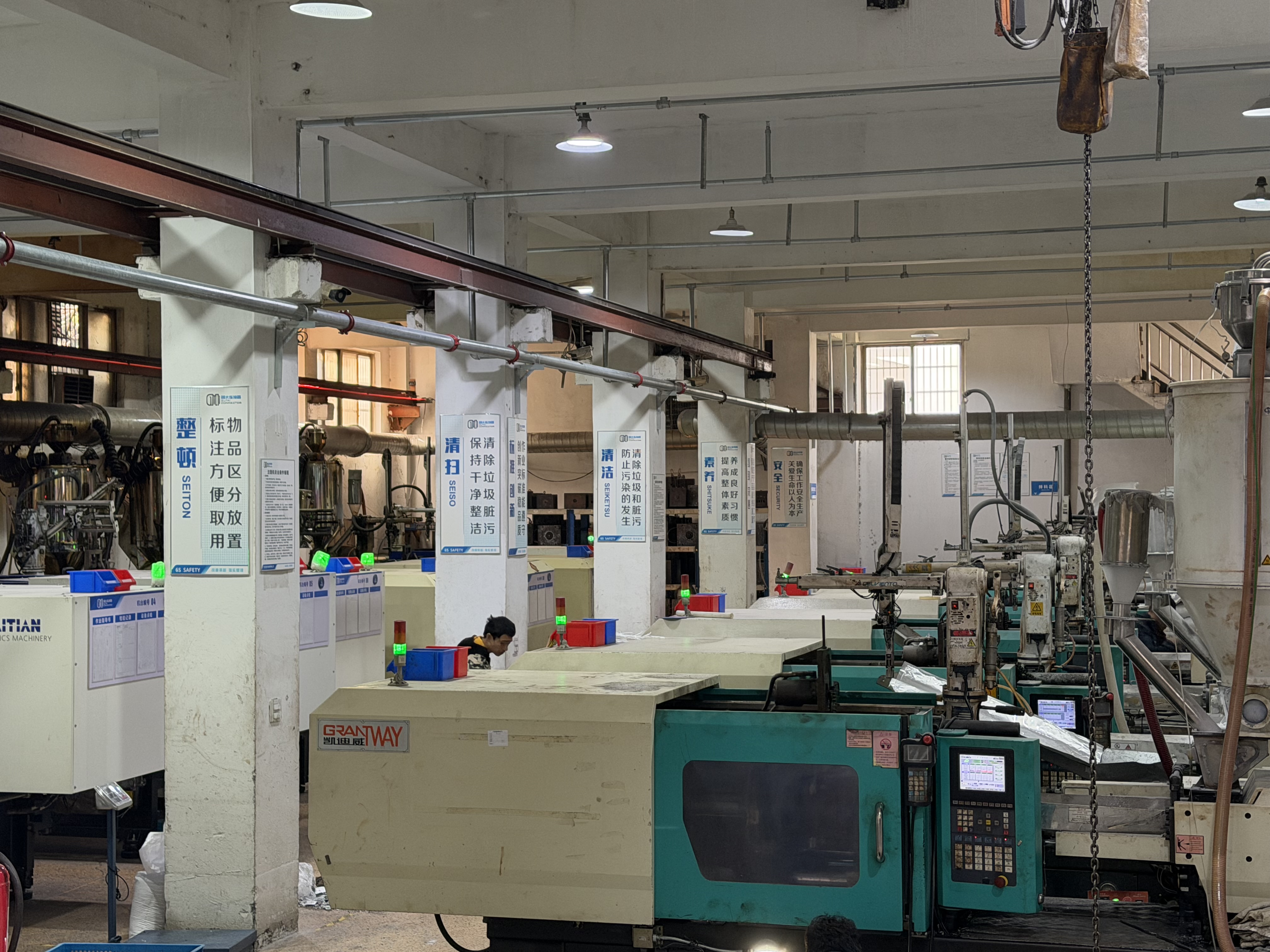
Precision machining of connector bodies is one of the process steps buyers should verify during a long-term supplier audit. Image: Gutai machining workshop.
Why a Sample Audit Is Not a Supply Audit
A sample proves one thing: that a single production run, selected by the supplier, met an agreed specification on the day it was drawn. It does not prove process capability, and it does not prove that the process will hold when volume rises, moulds wear, or a cost-reduction exercise touches the bill of materials. Three decay mechanisms tend to appear after the first year of an approved-supplier relationship.
- Documentation decay. Certificates are re-issued, superseded or allowed to lapse; a supplier that was compliant at qualification may simply be out of date at renewal.
- Material decay. UV stabilisers, flame retardants and elastomer compounds are the most common substitution targets because they are the most expensive inputs per kilogram.
- Supply decay. Tooling maintenance intervals are extended, sub-tier moulders or platers are changed, and batch traceability becomes harder to reconstruct.
Decision-stage buyers therefore need evidence that survives the purchase order, not evidence that wins the quotation. The sections below set out what to ask for, what to test, and where the honest limits of any supplier claim lie.
Documentation That Should Still Be Valid in Year Three
Certification is often treated as a one-off gate. In practice it is a maintenance obligation. A practical document checklist for waterproof connector accessories covers five areas, and each has a different shelf life.
| Document | What it demonstrates | Why it needs re-checking |
|---|---|---|
| ISO 9001:2015 quality management certificate | A functioning quality management system covering design, incoming material, process control and corrective action | Certificates are issued against audit cycles and can be suspended; confirm the issuing body, scope wording and current validity date |
| UL 514B Notice of Completion | Third-party evaluation of conduit, tubing and cable fittings against the UL 514B framework | The document is tied to a specific file and date; the current notice matters, not a scan from an earlier year |
| EN 62444:2013 / IEC 62444 CE evidence | Construction and performance requirements for cable glands for electrical installations — the standard that replaced the older BS EN 50262 | Test references should match the exact gland family and thread range being purchased, not a related series |
| TÜV certification | Independent testing of declared performance characteristics | Scope statements differ between plastic and metal ranges; verify which model families are covered |
| IEC 62852 / EN 50521 test reports | Connector-level performance for photovoltaic DC applications | PV-specific reports are frequently requested but not always held; ask for pre-test data and a defined certification path if full reports are not yet available |
Buyer verification table for waterproof connector accessory documentation. Standard references: IEC/EN 62444, IEC 60529 (IP ratings), UL 514B.
For PV-specific work, Gutai states that its core products have passed CE, RoHS, REACH and IP68 protection level testing, meeting operating conditions from -40°C to 120°C with an average MTBF exceeding 8,000 hours. For photovoltaic connector requirements specifically, the company provides pre-test data and certification-path planning aligned with IEC 62852, supporting customers to complete full testing through authorised laboratories. That is a meaningfully different claim from “we are certified”, and buyers should read it as such: pre-test data plus a route to certification is useful for project planning, but it is not the same as a completed third-party report.
Material Durability Is Where “Sustainable Supply” Is Actually Decided
For waterproof electrical connector accessories, the sustainability question is largely a materials question, because seals and housings age before metal bodies do. Gutai's cable gland ranges use nylon PA66 with NBR sealing material. In PV connector applications, the company specifies UV-resistant modified PA66 housings and seals made of silicone or fluororubber.
The service data points that matter to a decision-stage buyer are these: UV-resistant modified PA66 housings tested over 1,000 hours of UV ageing; seal compounds aged for 500 hours at 100°C with a hardness increase of only 5 Shore A and no cracking; and terminals manufactured from high-conductivity copper alloy with silver plating for low contact resistance and oxidation resistance. Combined with a dual seal ring and anti-loosening structure, these choices target the two failure modes that dominate outdoor installations — hardened, cracked seals and oxidised terminal surfaces.
Temperature envelopes should be read carefully rather than averaged. Gutai's catalogue data for its 1000V MC4 connectors lists an ambient range of -40°C to +85°C under IEC, an upper temperature limit of +105°C under IEC, IP67 protection, contact resistance of 0.5 mΩ, safety class II, UL-94-V0 flammability rating and corrosion testing to IEC 60068-2-52. For IP68-rated cable accessories, the company's published scenario data gives an example static operating range of -40°C to +100°C. These are different products with different envelopes, and a specification sheet that quotes a single figure across a whole catalogue should be treated as a prompt for questions, not as an answer.
Aging Seals and Oxidised Terminals: A Mitigation Sequence
Long-term reliability in outdoor solar MC4 and cable gland installations is usually addressed as a materials purchase decision. It is more effective to treat it as a sequence, because each step removes a different failure path.
- Define the failure mode in the specification. Write “no seal cracking after high-temperature ageing” and “contact resistance stability under damp heat” into the requirement, instead of specifying only IP rating.
- Fix the material class, not just the material name. “PA66” alone does not define UV stabilisation. Require UV-resistant modified PA66 for exposed housings and specify the elastomer family for the seal.
- Request ageing evidence with parameters. A UV ageing duration, a temperature-ageing duration and a hardness change figure are the minimum data points needed to compare two suppliers on equal terms.
- Control installation torque. Gutai addresses this with pre-installed O-rings and anti-slip threads, allowing a standardised “hand pre-tightening plus half a wrench turn” procedure. This matters because most seal failures in the field originate from over- or under-tightening rather than from the seal itself.
- Specify terminal plating for the environment. Silver-plated copper alloy terminals are used to keep contact resistance low and resist oxidation, which is the main driver of progressive heating in DC circuits.
- Plan an inspection interval. Even with a low-maintenance design, an annual thermal and visual check of accessible connector points converts a potential failure into a scheduled task.
Supply Continuity and the Commercial Side of Sustainability
Sustainability is also a range and inventory question. Gutai's cable gland portfolio covers PG, Metric, NPT and G-type threads, with PG ranges spanning PG7 to PG48 and Metric ranges spanning M12 to M63, cable entry ranges of 3 to 45 mm, thread outer diameters from 12 mm to 63 mm and thread lengths of 9 to 21 mm. Broad thread coverage means a buyer can consolidate power, signal and communication interfaces with one supplier instead of maintaining parallel stocks from several sources.
The commercial effect is measurable in the company's own project reporting. One automotive electronics customer reduced inventory categories by 65% and emergency procurement costs by 30% after moving to a full-series supply arrangement, while gaining free selection guidance and custom sampling support that shortened new product development cycles by two weeks. These are supplier-reported figures rather than independently audited statistics, and buyers should treat them as directional — but the underlying mechanism, fewer part numbers and fewer sub-tier interfaces, is verifiable during a factory audit.
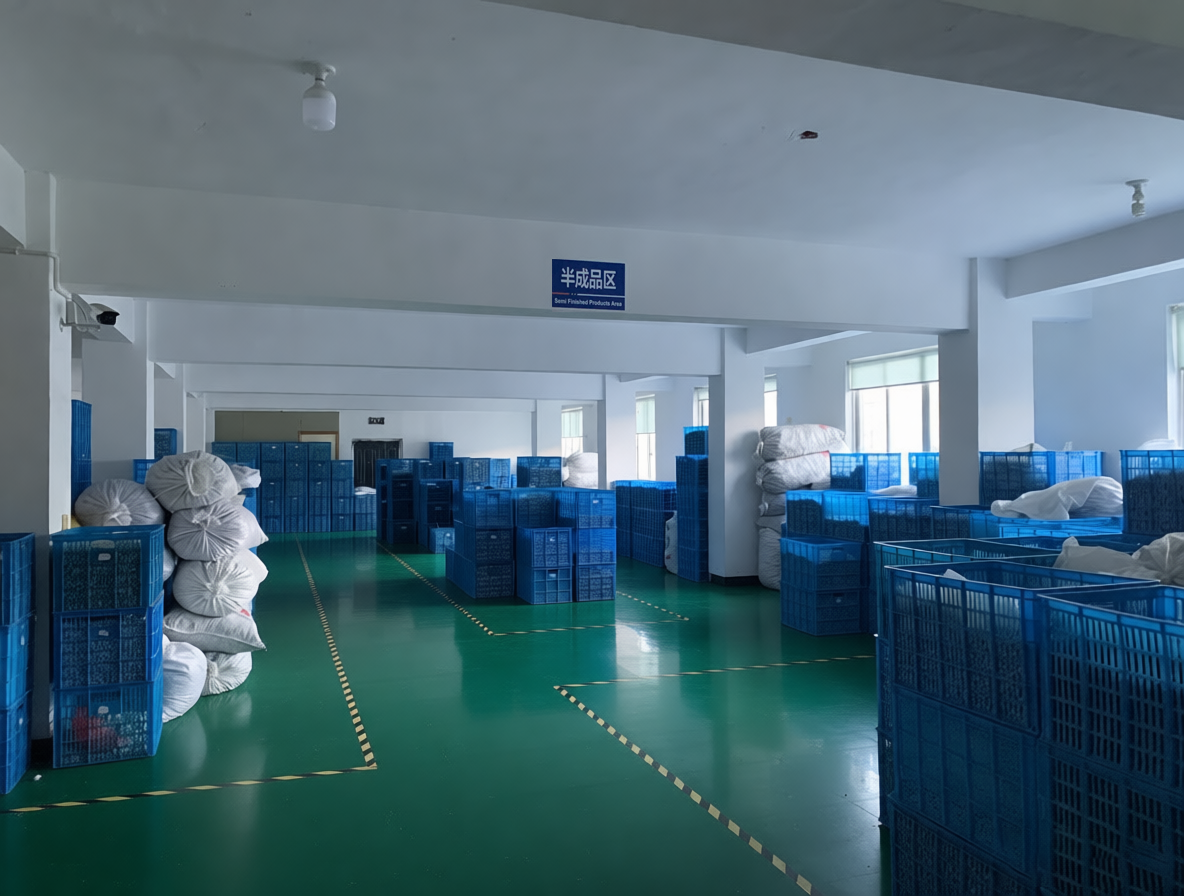
Semi-finished stock area: batch control at this stage determines whether year-three deliveries match the qualified sample. Image: Gutai.
Comparison With Traditional General-Purpose Connectors
Most buyers are not choosing between two identical products. They are choosing between a general-purpose waterproof connector built to a basic protection level and a construction engineered for outdoor, high-vibration service. The difference is structural rather than cosmetic.
| Evaluation dimension | Traditional general-purpose connectors | Dual-seal construction (Gutai example) |
|---|---|---|
| Sealing architecture | Single-seal structure; sealing depends on installer torque control | Dual seal ring plus anti-loosening structure; pre-installed O-rings and anti-slip threads |
| Material basis | Ordinary PA6 or recycled compounds, often without targeted UV or wide-temperature modification | Factory UL94 V-0 flame-retardant PA66, with 304/316 stainless steel hardware in metal ranges |
| Installation time per unit | Typically 3–5 minutes, with around 8% rework | Reported at approximately 1.5 minutes, with rework below 2% |
| Failure behaviour in humid or dusty outdoor environments | Annual failure rate cited at around 12% for IP67-class products | Reported reduction of over 81% in electrical failures caused by water and dust ingress |
| Maintenance model | Reactive: frequent inspection, tightening and seal replacement | Low-maintenance operation supported by pre-installed seals and corrosion-resistant materials |
Comparison compiled from Gutai's published technical comparison material. Figures are supplier-reported and project-specific.
The cost picture follows the same logic. Unit purchase price for a dual-seal, modified-material connector is higher than for a general-purpose equivalent, and that premium is real. The counter-argument is total cost of ownership: in the company's reported project data, an EV charging station saved 32,000 RMB in annual maintenance costs per station after adopting IP68 connectors, and a PV plant recorded cumulative maintenance and generation-loss savings above 600,000 RMB over five years after switching to metal connectors.
Two boundaries should be stated plainly. First, dual-seal construction is not necessary everywhere — indoor PLC cabinets, light-load sensors and other mild, vibration-free environments are adequately served by general-purpose connectors, and paying a premium there is waste rather than investment. Second, a dual-seal design still depends on correct installation; the anti-slip and pre-installed features reduce the skill requirement, they do not eliminate the need for a defined tightening procedure.
A Scorecard Buyers Can Apply in One Factory Visit
Long-term supplier evaluation is easier to run as a scored checklist than as a general impression. The following eight items can be verified in a single well-prepared audit day.
| Check | Evidence to request |
|---|---|
| Documentation currency | Current ISO 9001:2015 certificate, UL 514B Notice of Completion, EN 62444 CE evidence, TÜV scope statement |
| Material traceability | Incoming resin and elastomer batch records with supplier name and grade |
| Substitution control | Written change-notification procedure covering any material, tooling or sub-tier change |
| Process capability | Moulding parameters, CNC machining tolerances and in-process inspection frequency |
| Ageing test capability | UV ageing and high-temperature ageing records with parameters and results |
| Range coverage | Thread standard matrix (PG, Metric, NPT, G) and cable entry range against your BOM |
| Capacity headroom | Installed capacity versus current order book, and lead-time behaviour during peak periods |
| Field support | Response time commitment, technical support channel and installation training availability |
Supplier evaluation scorecard for waterproof connector accessories. Item weighting should follow project criticality.
What the Market Data Suggests
The wider market context supports the case for evaluating suppliers on continuity rather than on unit price alone. The global waterproof connector market was valued at approximately USD 13.4 billion in 2024 and is projected to reach USD 25.48 billion by 2033 at a CAGR of 7.4%, according to industry intelligence compiled by AOHUA. Within the solar segment, the global PV connector market was valued at USD 1.31 billion in 2024, with MC4 connectors holding a 68% share, equivalent to approximately USD 0.89 billion, per Global Market Insights.
Market size estimates for cable glands diverge noticeably between research houses — Straits Research, Dataintelo and Spherical Insights publish different values for the same year using different scopes. That divergence is itself a useful signal for buyers: when the market data is not settled, supplier-level verification matters more, not less. It is also worth noting the competitive field. Leading global players in the cable gland and connector sector include ABB Ltd., Eaton Corporation, Amphenol Corporation, LAPP Group and HUMMEL AG. Buyers evaluating a mid-size manufacturer should compare against that field on documentation depth and application support, where specialist manufacturers often compete directly, rather than on scale, where they do not.
Two standards trends reinforce the direction of travel. IEC 62444 and its European equivalent EN 62444 now govern construction and performance requirements for cable glands, having replaced the older BS EN 50262, which means older test references in a supplier's file may no longer be the right benchmark. And IP68, defined under IEC 60529 as withstanding continuous immersion under specified conditions, has become the working benchmark for waterproof accessories in outdoor and washdown environments.
Limitations and Boundaries Buyers Should Accept
A credible evaluation states what it does not cover. Three limits apply here.
- Pre-test data is not certification. Where full IEC 62852 or EN 50521 reports are not yet held, a certification path and laboratory pre-test data support planning but do not replace a completed third-party report. Projects requiring an issued report should confirm availability at the quotation stage.
- Product envelopes differ within one catalogue. IP67 MC4 connectors and IP68 cable accessories have different temperature and ingress envelopes. Buyers should specify and verify at part-number level, not at catalogue level.
- Reported savings are project data, not guarantees. The maintenance and TCO figures cited earlier come from specific installations and reflect specific duty cycles. They indicate a credible direction of travel; they should not be copied into a business case as expected values.
Future Outlook
Procurement practice in this category is moving from product certification towards process verification. Three developments are likely to continue: standard references tightening around IEC 62444 for glands and IEC 62852 for PV connectors; buyers asking for ageing test parameters rather than IP ratings alone; and consolidation of cable entry part numbers with fewer suppliers as inventory costs receive more attention. For suppliers, the practical consequence is that documentation maintenance becomes a commercial function rather than an administrative one. For buyers, the practical consequence is that supplier evaluation should be scheduled as a recurring annual task, not a one-time qualification event — because everything that makes an accessory reliable in year one has to be re-verified in year three.
FAQ
Are your products TÜV certified, and can you provide test reports for IEC 62852 or EN 50521 standards?
Gutai states that its core products have passed CE, RoHS, REACH and IP68 protection level testing, meeting operating conditions from -40°C to 120°C with an average MTBF exceeding 8,000 hours. For specific PV connector requirements, the company can provide pre-test data and certification-path planning services compliant with IEC 62852, supporting customers to complete full testing through domestic authorised laboratories for entry into European and American markets. Buyers who need a completed third-party report should confirm the position at the quotation stage, since pre-test data and an issued report are different evidence levels.
How can PV connectors avoid aging seals and oxidised terminals after long-term outdoor exposure?
Gutai PV connector housings use UV-resistant modified PA66 material and have passed 1,000-hour UV ageing tests. Seals are made of silicone or fluororubber, with hardness increasing only 5 Shore A and no cracking after 500 hours of 100°C high-temperature ageing. Terminals use a high-conductivity copper alloy with silver plating, giving low contact resistance and strong oxidation resistance. The dual seal ring and anti-loosening structure support stable long-term outdoor operation. Buyers can reproduce this reasoning by asking any supplier for UV ageing duration, high-temperature ageing duration and hardness change data.
Our equipment has complex interface specifications. Can a single brand cover all requirements to reduce inventory pressure?
Gutai's thread specifications cover multiple international standards including PG, Metric, NPT and G-type, with dozens of sizes from M8 to M63 and corresponding cable entry ranges, supporting one-stop selection for power, signal and communication interfaces. In one reported case, an automotive electronics customer reduced inventory categories by 65% and emergency procurement costs by 30% after adopting the full series, while receiving free selection guidance and custom sampling services that shortened new product development cycles by two weeks.
For buyers who need the underlying product and specification data behind this evaluation, the full range catalogue covering cable glands, solar MC4 connectors, mini waterproof boxes and hose fittings is available here: Gutai product catalogue (PDF).