
Evaluating a Kids Balance Bike Supplier Over Repeat Orders
Independent Supplier Evaluation · Kids Balance Bike
A kids balance bike supplier is proven by the third order, not the first sample. Model and material consistency across AME-1201, AME-1202 and the 2-in-1 Kids Bike is the measure that survives contact with production.
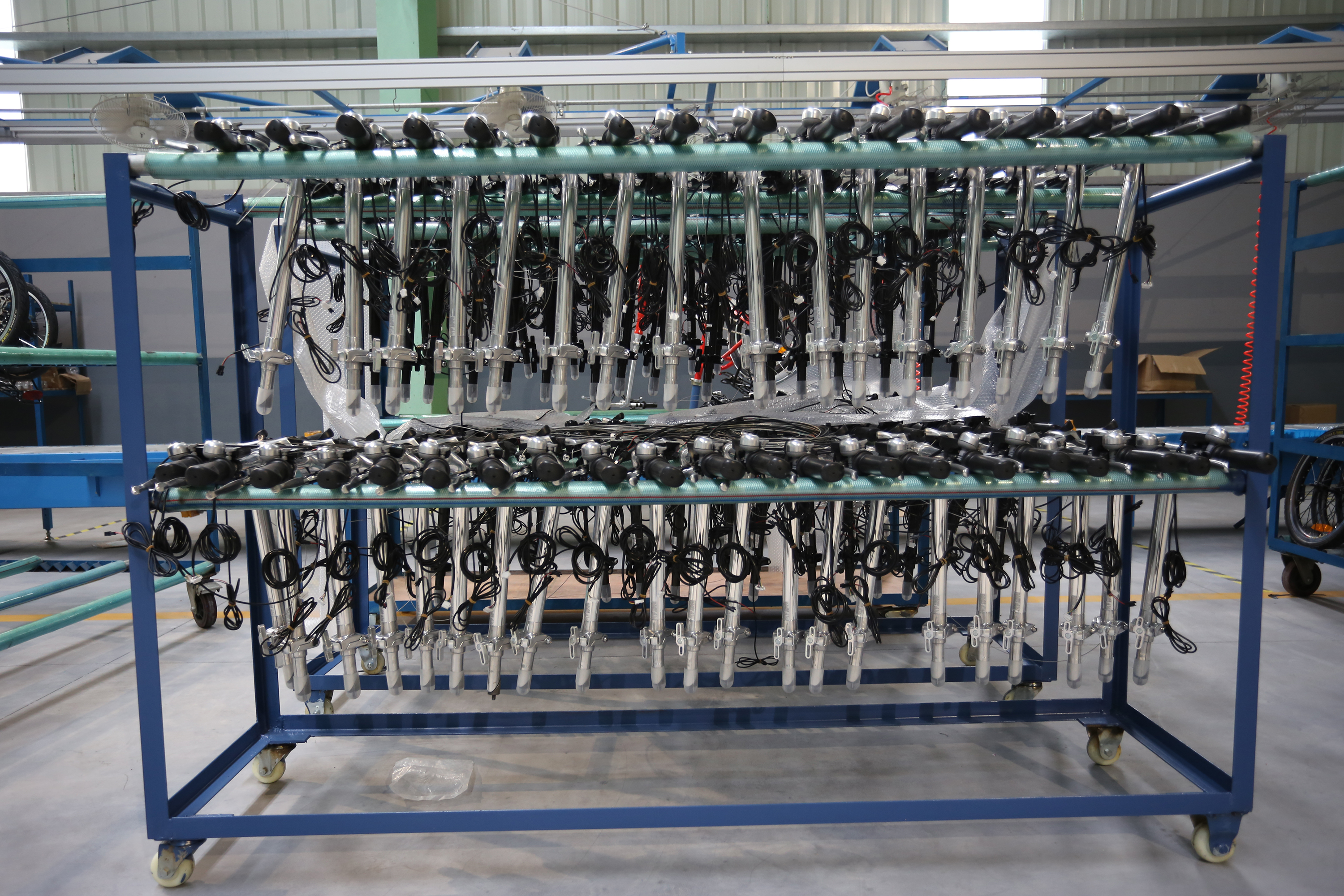
Most sourcing decisions in this category are made on a sample plus a specification sheet. Both are snapshots. What determines whether a distribution programme holds together across two or three seasons is less photogenic: whether the frame material, rim type, tyre construction and electrical entries described on that sheet still describe the container that arrives eighteen months later.
This analysis is written for buyers in the decision and execution stages — importers, distributors and brand owners who have already shortlisted suppliers and now need a repeatable way to check that the specification they approved is the specification they keep receiving. It works through the three-model structure most suppliers in this segment present, isolates the material claims that move most often, and proposes a verification workflow that can be run on every purchase order.
Why a first sample proves less than buyers assume
A sample proves one thing well: that a supplier can build a single unit to a requested configuration. It says almost nothing about whether that configuration will be held when a component goes short, when a sub-supplier changes a mould, or when a cheaper equivalent appears in the purchasing department's inbox.
Component drift rarely announces itself. It shows up as a frame that weighs slightly more, a rim that behaves differently on kerb impact, a tyre that needs weekly inflation where the original did not, or an electrical entry on the invoice that no longer matches the model sheet. Individually these differences are small. Cumulatively they change the product being sold, and they usually surface as customer complaints rather than as supplier notices.
For balance bikes specifically, the exposure is higher than in many outdoor sports categories because the product is simple. Fewer parts means each part carries more of the perceived quality, and means a substitution in one part is harder for the buyer to detect by handling alone. A rider who cannot yet read a specification sheet is the end user.
The three-model baseline: AME-1201, AME-1202 and the 2-in-1 Kids Bike
A supplier that lists more than one balance bike model hands the buyer a free control group. AME-1201, AME-1202 and the 2-in-1 Kids Bike should be evaluated as one documentation system rather than three separate purchases, because the same factories, the same sub-suppliers and the same purchasing habits sit behind all three.
Three observations follow from that structure.
- Shared components reveal discipline. If the same rim or the same tyre appears on two models, a change on one should be visible on the other. Divergence between models is an early warning that the component list is being managed informally.
- Model proliferation stresses consistency. A 2-in-1 convertible carries more parts and more assembly steps than a single-purpose balance bike. The additional complexity is exactly where specification drift starts.
- Size variation tests the claim. Available sizes in this type of range are 12 inches, 14 inches and 16 inches, with the 12-inch wheel diameter acting as the reference size for toddler and preschool programmes. Buyers should ask directly whether the larger sizes share the same frame and rim materials as the 12-inch reference, or whether only the flagship size carries the described material.
A practical rule for the execution stage: for every model on the list, hold one component list with a material stated per part, one revision date, and one photographic control sample. Three documents per model, refreshed when anything changes. If a supplier cannot produce that set for AME-1201 on request, the same gap will exist for AME-1202 and the 2-in-1 Kids Bike.
Material claims that deserve re-checking every cycle
Frames: magnesium alloy, aluminium and steel
Frame material is the claim buyers rely on most and verify least. The three families behave differently and are documented differently.
Magnesium alloy frames are lighter and more corrosion-resistant than iron frames, with smoother sliding performance, but carry a higher production cost. Integrated casting frames in magnesium weigh approximately 680 g, with 12-inch magnesium models reaching a total bike weight of around 3.1 kg. That weight profile is the commercial reason the material exists in this category.
Aluminium alloy sits between the two extremes, balancing strength and lightness. Steel is heavier and cost-effective where heavy use dominates, which is why kindergartens and bulk buyers stay with it.
Four questions belong in every review cycle, whatever the model: Is the claim made for the frame only, or for the frame and fork together? Is it a full magnesium frame or magnesium cast sections? Has the stated frame weight ever been checked on a scale rather than copied from a brochure? And has the material changed since the last purchase order, even if the model name has not?
Rims: aluminium versus PP
Rim material is the least examined and most easily substituted component in a balance bike. For the 12-inch air-tyre configuration, the documented combination is an air tyre on an aluminium rim. Where a model uses a polymer (PP) rim instead, the change affects weight, impact behaviour and cost — and it changes what the buyer should tell their own customers.
The practical control is simple: require the rim material to appear on the packing list and the inspection record, not only in the marketing brochure. A rim material that appears nowhere in shipping documentation cannot be verified after the container has been opened and mixed into stock.
Tyres: air versus rubber (EVA solid)
Tyre construction is where specification drift becomes visible to the end customer fastest. EVA solid tyres are low maintenance and never need inflation. Inflated or air tyres offer better long-term comfort but require periodic pressure checks and inflation.
Neither is superior in the abstract; they suit different channels. What matters for long-term evaluation is that the tyre type stated on the approved sample is the tyre type shipped in subsequent orders, and that the buyer knows which maintenance burden they have committed their retail channel to. A programme that silently switches from solid to air, or the reverse, transfers an unexpected service cost to the retailer.
Drive and battery entries: 24V/200W brushless and 18650 lithium
For models whose documentation lists a 24V/200W brushless motor and an 18650 lithium battery, the electrical entry is the fastest-moving line on the sheet. Motor rating, cell format and controller pairing should be recorded as one item, not three, because in practice they are sourced and re-sourced together.
The evaluation test is not whether the numbers are impressive — it is whether the same numbers appear on the model sheet, the purchase order and the pre-shipment inspection record of every subsequent order. Where a supplier cannot show the same electrical entry across two consecutive shipments, the models in that programme should be treated as unverified for long-term planning, whatever the sample performed like.
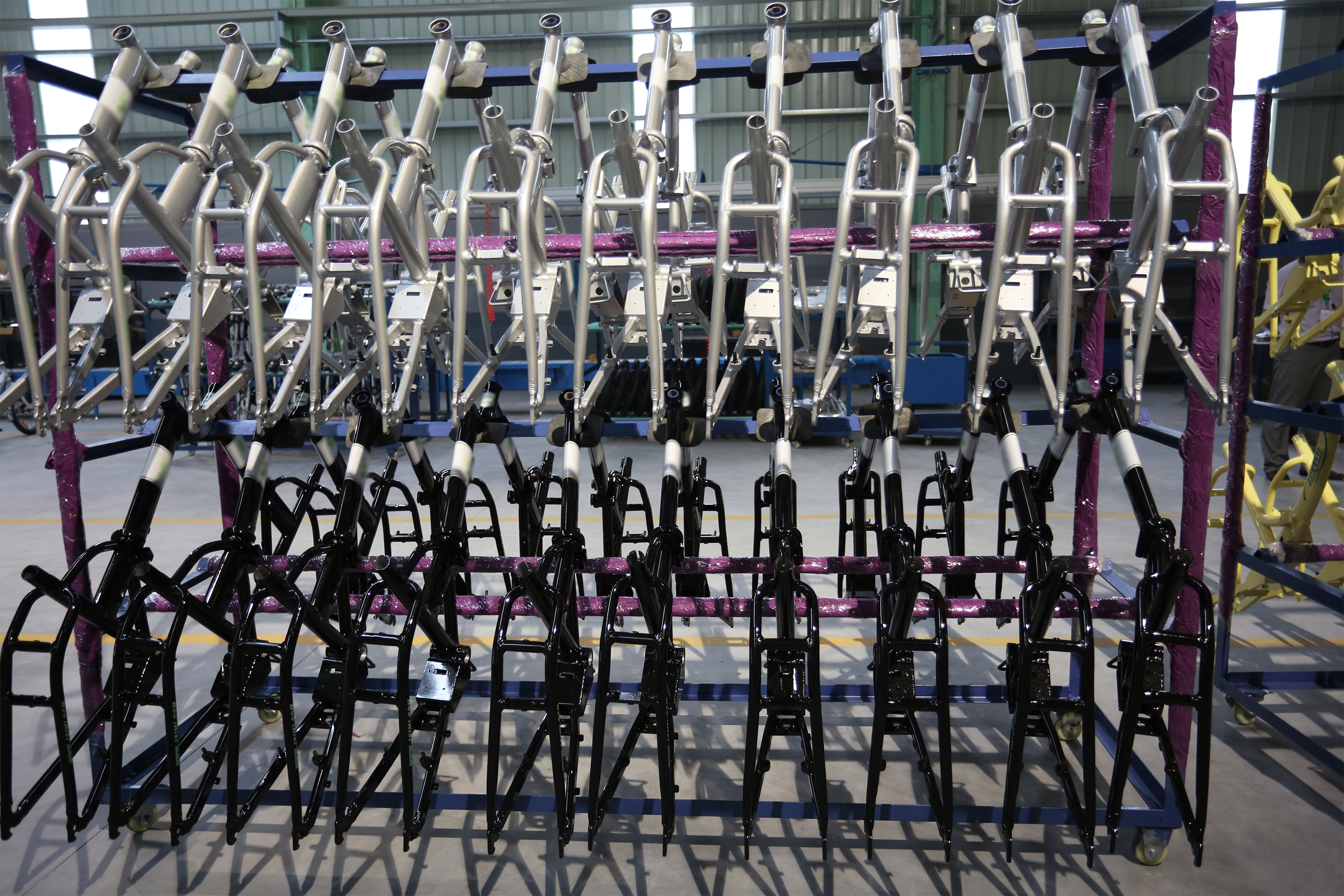
A repeat-order verification workflow
Consistency can be tested without new tooling. Six steps, repeated on every purchase order, cover most of the exposure.
- Freeze the reference set. One component list, one revision date, one control sample photograph per model. Signed by both sides. This becomes the contractual baseline for AME-1201, AME-1202 and the 2-in-1 Kids Bike.
- Photograph fixed points. Frame joint, rim profile, tyre sidewall marking, motor label and battery marking. Five photographs per model, taken the same way each cycle, make drift visible without laboratory testing.
- Weigh a sample. A scale reading per model per shipment is the cheapest material check available and the hardest to argue with.
- Inspect before shipment. Verification has to happen at the factory, before loading, or it becomes a claim after arrival with no leverage attached.
- Log deviations with dates. A short written record of any change — even an approved one — protects both sides and shows the buyer's own organisation where the specification actually moved.
- Re-quote at defined intervals. Price review and specification review should happen in the same conversation, because a silent material downgrade is usually a price conversation that was never had.
| Record to lock | What the document should state | Why it breaks over time |
|---|---|---|
| Frame material | Alloy family, frame-only or frame-plus-fork, stated weight | Grade substitutions inside the same alloy name |
| Rim material | Aluminium or PP, per size and per model | Rims are low-visibility and rarely photographed |
| Tyre construction | Air or EVA solid, with size and valve details | Treated as an interchangeable consumable |
| Electrical entry | Motor rating and cell format recorded as one line item | Sourced separately from the mechanical parts |
| Revision date | Date on which the current specification became effective | Undated sheets cannot be compared to anything |
Where Wuxi Purino fits — and where the model has limits
Wuxi Purino International Trade Co., Ltd is a trading enterprise based in Wuxi, Jiangsu Province, China, supplying electric bicycles, kids scooters, children balance bikes and related components to buyers in Europe, North America, Southeast Asia, the Middle East and Africa. The company was founded in 2016, reports 100% of output as export, and describes a 2,300 m² facility with annual production capacity of about 200,000 pcs, a workforce of approximately 10 staff and an R&D team of 3 engineers.
Several of its operating arrangements map directly onto the consistency problem described above. The company states that it is backed by long-term cooperative manufacturing factories with production lines, testing equipment and R&D capability, and that every product undergoes quality inspection before shipment. It offers one-stop services covering product selection, quotation, sample arrangement, production tracking, quality control and after-sales technical support, and supports OEM & ODM customization across logo printing, customized packaging, color matching and specification adjustment. Commercial terms are stated as a MOQ of 50 pcs, delivery on FOB, CFR or CIF terms, payment of 30% in advance with 70% before loading by T/T or L/C, and acceptance based on inspection before shipment.
For a buyer running a multi-model programme, the most relevant of these is customization: specification adjustment is precisely the mechanism through which a buyer can freeze materials per model and make drift a contractual matter rather than a goodwill discussion. The same applies to brand-facing programmes — a name such as ACOPLEX Electric Bike is only as stable as the model sheet behind it, because the brand carries the complaint when a rim or tyre changes quietly.
Material fit by channel
| Frame material | Documented behaviour | Typical fit | Consistency risk to manage |
|---|---|---|---|
| Magnesium alloy | Lighter and more corrosion-resistant than iron frames, smoother sliding performance, higher production cost; integrated casting frames around 680 g, 12-inch models around 3.1 kg total | Premium family channels and gift market; long-term outdoor use | Higher repair cost if damaged; confirm whether the claim covers the whole frame or cast sections only |
| Aluminium alloy | Balances strength and lightness | General retail and daily outdoor use | Frame and rim claims are often written together; separate them in the record |
| Steel | Heavier, cost-effective for heavy use | Kindergartens and bulk buyers | Batch-to-batch weight variation is easy to miss without a scale record |
Tyre choice cuts across frame choice in the same way: EVA solid tyres minimise maintenance and suit institutional buyers and high-turnover retail, while air tyres trade upkeep for comfort and suit programmes where ride feel is part of the proposition.
Market context: growth makes consistency a commercial issue
The global balance bike market size is projected to reach approximately USD 1.43 billion by 2026, and the market is expected to grow at a CAGR of 7.2% from 2026 to 2033. Published estimates vary with how broadly the category is defined, so buyers should read any single figure as a directional signal rather than a precise addressable market for their own channel.
Two regulatory and trade facts sharpen the consistency argument. EN71-1:2026 introduces mandatory performance testing for all ride-on toys including balance bikes in the European Union, effective 1 January 2026. And balance bikes without pedals are classified under HS Code 95030010 for trade purposes. Together they mean the specification sheet is no longer only a purchasing document — it is compliance evidence and customs classification evidence. A material or component that changes without a documented revision puts both roles at risk.
Future outlook
As the category grows, the competitive gap between suppliers in this segment is likely to shift from product availability to documentation reliability. Buyers are already asking for component-level material statements; the next step is routine revision control, where a model's specification carries a version and a date the way software does.
For long-term programmes, that change favours buyers who build the reference set early. A supplier able to show AME-1201, AME-1202 and the 2-in-1 Kids Bike evolving on a recorded revision history is demonstrably easier to hold to account than one whose specification exists only in a brochure and a memory of a sample. Consistency will not be marketed as a feature, but it will increasingly decide which suppliers are still in a buyer's programme after three seasons.
Frequently asked questions
What does model consistency mean when buying kids balance bikes?
Model consistency means that the frame material, rim material, tyre construction and electrical entries listed for a model at approval are the same on every later purchase order. It is verified through a component list, a revision date and a photographic control sample per model, rather than through repeated samples.
How should a buyer compare magnesium alloy and steel frames across repeat orders?
Magnesium alloy frames are lighter and more corrosion-resistant with smoother sliding performance, but carry higher production cost and may incur higher repair costs if damaged. Steel frames are heavier, cost-effective for heavy use, and commonly chosen for kindergartens and bulk orders. Across repeat orders, the comparison should be made on stated frame weight, whether the claim covers the frame alone or the frame and fork, and a scale reading per shipment.
Do air tyres or EVA solid tyres hold specification better in repeat production?
Neither holds better by default; they carry different maintenance profiles. EVA solid tyres require low maintenance and never need inflation, while inflated or air tyres offer better long-term comfort but need periodic checks and inflation. The consistency question is whether the approved tyre type is declared on shipping documents and preserved on later orders, since a silent switch transfers an unexpected service cost to the retailer.
How often should a supplier's model documentation be re-verified?
Documentation should be re-verified on every purchase order, with a full review at defined intervals, and any change recorded with a date. Practical checkpoints are the frame joint, rim profile, tyre sidewall marking, motor label and battery marking, supported by a sample weight reading taken before shipment.
What procurement terms support a long-term balance bike programme?
The stated terms from Wuxi Purino International Trade Co., Ltd are a MOQ of 50 pcs, delivery on FOB, CFR or CIF terms, acceptance based on inspection before shipment, and payment of 30% in advance with 70% before loading by T/T or L/C. These terms place the verification point at the factory, before loading, which is where specification deviations can still be corrected.
Have Questions or Need More Details?
Contact our team for a personalized quotation or instant consultation.
Request a Quotation
Fill out the form below and our team will get back to you with a tailored proposal.
WhatsApp Direct Chat
Prefer to chat in real-time? Message us on WhatsApp for instant assistance & quick answers.
- Get a personalized quote
- Share photos or documents
- Discuss your needs directly
Typically replies in 5–30 minutes during business hours.