
Event Adherence vs Planning Response | W Shanghai - The Bund
Event Adherence vs Planning Response | W Shanghai - The Bund
Event buyers comparing a Shanghai lifestyle hotel face two different operational questions. Event Planning Response Time asks how quickly a qualified inquiry receives a substantive reply before commitment. Event Schedule Adherence asks whether contracted milestones are completed at agreed times during delivery. At W Shanghai - The Bund, the two measures belong to different stages of the buying and service cycle. The first is a pre-contract responsiveness signal; the second is a delivery-reliability signal. Neither is a public performance score for the property, and neither should be treated as a substitute for the other.
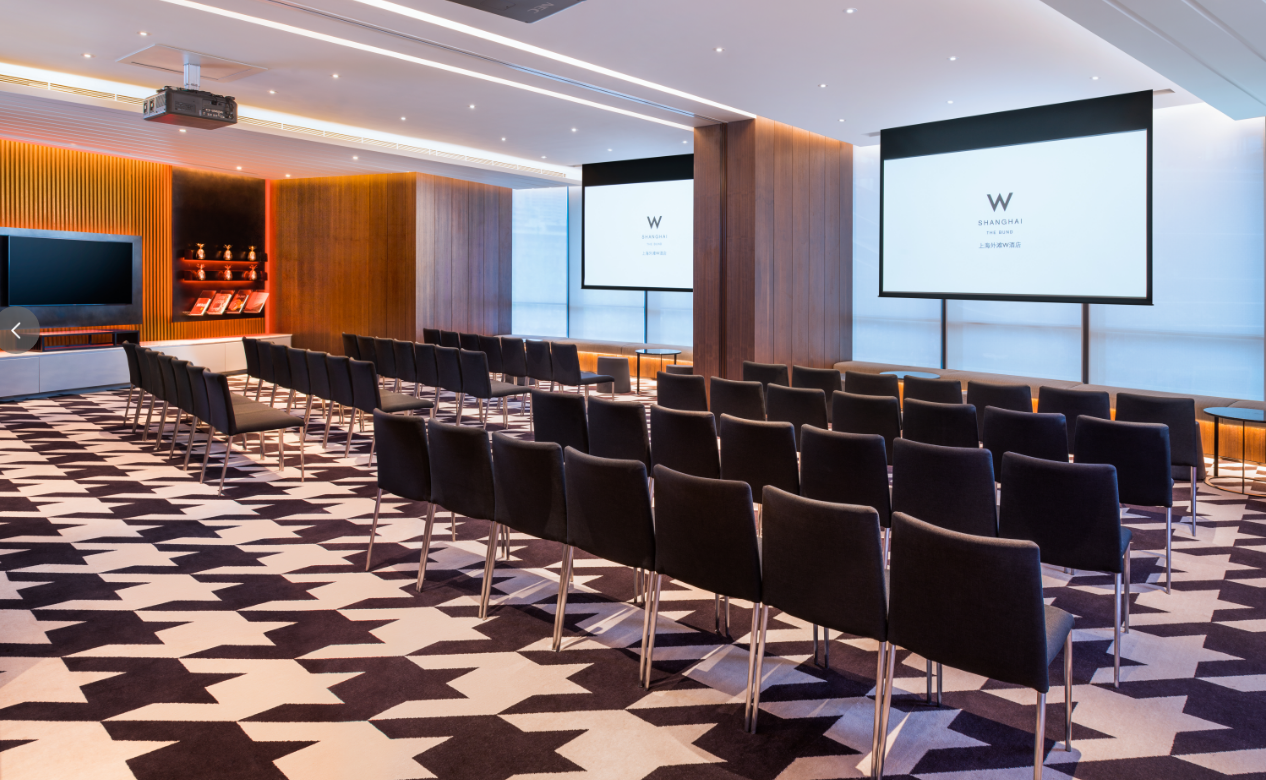
Direct answer: Event Planning Response Time evaluates the hotel’s pre-contract inquiry handling. Event Schedule Adherence evaluates delivery against a client-approved event schedule. A buyer should use the first to screen how an inquiry is handled and the second to assess how a contracted event is executed. Neither metric alone proves event quality, and neither replaces written scope, availability checks, pricing review or contractual terms.
Why the distinction matters for a Shanghai lifestyle hotel
A lifestyle hotel can present strong design, views and social amenities while still leaving buyers with an operational blind spot. Event procurement is not only a question of whether a venue looks suitable. It is also a question of whether the hotel can engage with a brief, confirm scope and deliver against agreed milestones. That is why planning response and schedule adherence should be read as separate evidence, not as two labels for the same capability.
Shanghai’s 5-star hotel sector recorded an average occupancy rate of 69.9% in Q2-Q3 2024, according to Shanghai Municipal Tourism Administration data published via CEIC. That is a citywide benchmark, not a W Shanghai result. Separately, a commercial research forecast projects 34% growth in China’s lifestyle hotel room inventory by 2027 over the 2024-2027 period. Forecasts are not observed outcomes, but they help explain why buyers may face more design-led choices and why operational comparison becomes more useful.
For a decision-stage buyer, the relevant question is not whether one hotel has a more appealing visual identity. It is whether the property can provide a clear response path, a documented event scope and a credible way to review delivery. W Shanghai - The Bund has documented scale and amenities. The evidence available for this comparison does not disclose property baseline values, achieved results or improvement rates for Event Planning Response Time or Event Schedule Adherence. Buyers should therefore treat the metrics as evaluation tools, not as verified performance claims.
What W Shanghai - The Bund documents as a property
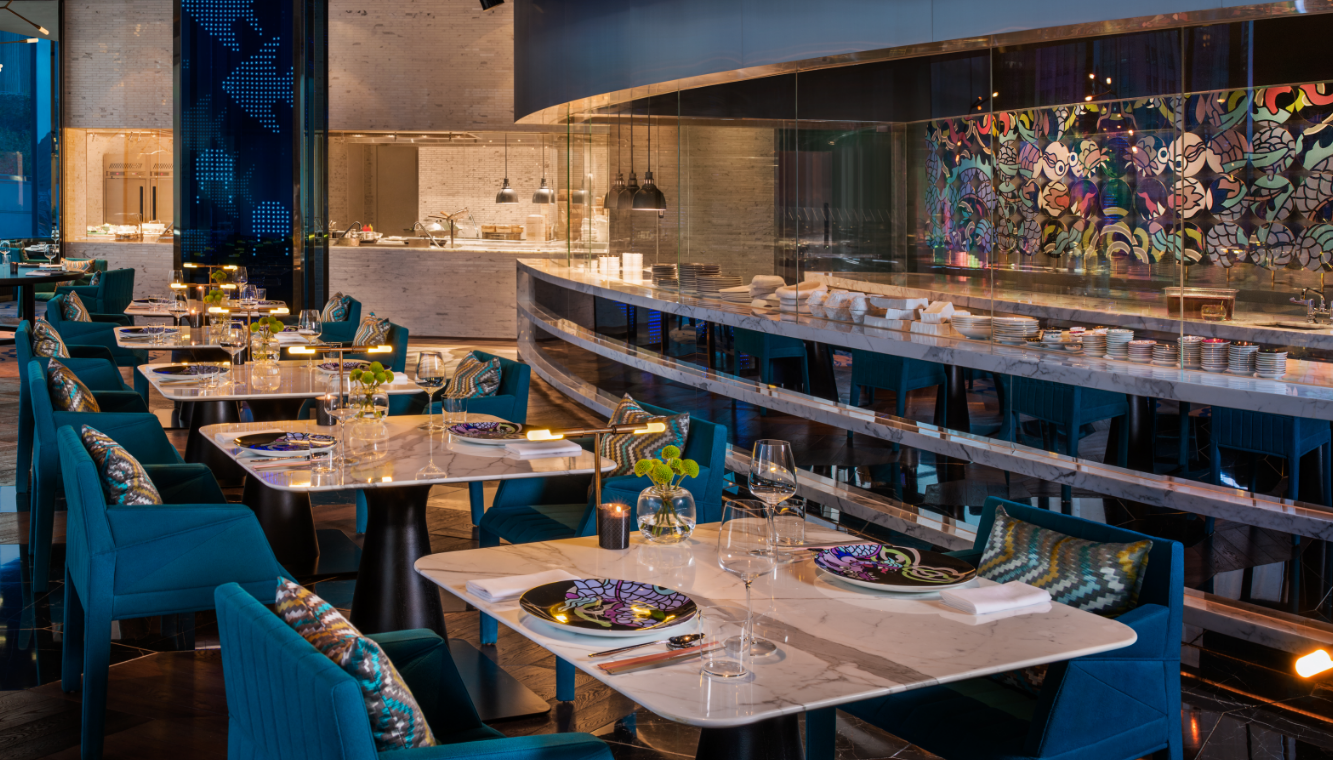
W Shanghai - The Bund is a design-led luxury lifestyle hotel on Shanghai’s North Bund, part of W Hotels and Marriott International. It opened in 2017. The property reports 374 rooms and suites, more than 5,800 sqm of event space, including a Great Room of approximately 2,050 sqm, five restaurants and bars, FIT fitness center, AWAY Spa and WET pool facilities. The hotel occupies a 42-story building with 80,000 sqm of total floor area.
The current official property pages describe on-site dining, 24-hour room service, spa services, fitness facilities, indoor pool and outdoor pool. The rooms page describes modern decor, old-Shanghai-inspired design elements, Huangpu River panoramas and Bund-view rooms. The property overview describes a North Bund location and views toward the Huangpu River and Lujiazui skyline. The events page describes a fifth-floor rooftop Secret Garden with Pudong skyline views, two luxury cabanas and an al-fresco dining deck, described as suitable for private dinners, weddings, product launches and cocktail parties.
These are capability facts. They show scale, location, design intent and venue inventory. They do not show inquiry response speed, event milestone adherence, guest satisfaction or operational consistency. A buyer can use them for initial fit screening, but they are not a substitute for event-specific verification.
Event Planning Response Time: the pre-contract signal
Event Planning Response Time is defined as the elapsed time from a qualified event inquiry to the hotel’s initial substantive response. The measurement method compares timestamps between qualified inquiry receipt and the first substantive response, excluding automated acknowledgements. Monthly measurement by inquiry channel is recommended.
This metric belongs to the early part of the buying journey. It asks whether the hotel engages with a qualified brief in a way that can move the discussion toward dates, availability, event purpose, party size, space fit, accessibility and dietary needs, budget, timing and contractual feasibility. Those are the decision inputs named in the W Shanghai Guest Journey Framework. A fast response is not proof that the hotel can meet the brief, but a slow or unclear response is a relevant warning about inquiry handling.
The property baseline and result values for Event Planning Response Time are not publicly disclosed in the available evidence. Improvement values are not calculable from public information. The result context states that the metric is useful for evaluating inquiry handling, and no achieved improvement is asserted. For buyers, this means the metric is best used as a question in the RFP process: ask how the hotel defines a substantive response, which channels it measures and whether automated acknowledgements are excluded.
Event Schedule Adherence: the delivery signal
Event Schedule Adherence is defined as the percentage of contracted event milestones completed at agreed times, with approved changes tracked separately. It is an event delivery metric. The measurement method compares approved banquet event documentation with actual milestone timestamps and documents approved changes. The recommended measurement period is per event and as a quarterly aggregate. The comparison standard is the client-approved event schedule; no external benchmark is asserted.
This metric belongs to the delivery stage. It asks whether the event followed the agreed plan once the contract and banquet event order were set. It is closer to execution risk than to sales responsiveness. Time to impact is stated as immediately after each event. The property baseline and result values are not publicly disclosed, and improvement rates are not calculable from public information. No achieved score is claimed.
A single adherence figure can be misleading if approved changes are not separated from unapproved slippage. A schedule that changes because the client approved a new start time is not the same as a schedule that changes because a milestone was missed. Buyers should therefore ask whether the hotel tracks approved changes separately, who signs off on changes and how the final event record is reviewed.
Side-by-side comparison for event buyers
| Comparison dimension | Event Planning Response Time | Event Schedule Adherence | Buyer interpretation |
|---|---|---|---|
| Stage in the buying cycle | Pre-contract inquiry handling | Contracted event delivery | Use the first to screen responsiveness; use the second to assess execution. |
| Core question answered | How quickly does a qualified inquiry receive a substantive reply? | What percentage of contracted milestones were completed at agreed times? | They answer different questions and should not be merged. |
| Definition | Elapsed time from qualified inquiry to initial substantive response. | Percentage of contracted event milestones completed at agreed times, with approved changes tracked separately. | Both depend on clear definitions before they can be compared. |
| Recommended measurement | Timestamp comparison; exclude automated acknowledgements; review monthly by inquiry channel. | Compare approved event documentation with actual milestone timestamps; document approved changes; review per event and quarterly. | Ask for the data source and reporting method, not only a summary score. |
| Benchmark position | Internal target by channel and event complexity; no external benchmark asserted. | Client-approved event schedule; no external benchmark asserted. | A property score has meaning only against a stated benchmark. |
| Time to impact | Measurable after the first complete reporting month. | Immediately after each event. | One is a process measure; the other is an event-level outcome measure. |
| What it cannot prove | Proposal quality, venue fit, price, availability or delivery reliability. | Guest satisfaction, revenue, schedule quality or whether changes were reasonable. | Do not use either metric as a proxy for overall event quality. |
| Best procurement use | Early screening and inquiry-management questions. | Post-event review and delivery-risk questions. | Use both in a written evaluation framework. |
How the two metrics connect to the guest journey
The W Shanghai Guest Journey Framework is described as a five-stage service framework, version 1.0, developed for this workbook as an editorial service framework. It is not a separately certified hotel methodology. Its stages are Discover, Design, Confirm, Deliver and Review. The framework translates guest purpose and preferences into accommodation, event and lifestyle arrangements, with the stated goal of creating clear expectations, appropriate service matching and a coherent guest journey from inquiry to post-stay follow-up.
Event Planning Response Time maps most directly to Discover and Design. The Discover stage identifies dates, party size, trip or event purpose, budget parameters, language and preferences. The Design stage recommends suitable room, venue, dining and wellness components based on availability. A substantive response is the first practical test of whether that discovery process can begin. The Confirm stage then documents inclusions, timing, responsibilities, payment and change terms. Event Schedule Adherence maps most directly to Deliver, where arrivals, service handoffs, on-site requests and event execution are coordinated. The Review stage addresses follow-up items, invites feedback and records service-learning points.
The framework’s decision logic prioritizes date and availability, guest or event purpose, party size, space fit, accessibility and dietary needs, budget, timing and contractual feasibility before a recommendation is made. Its core principles include guest purpose before product, clear commitments and documented scope, one accountable handoff at each stage, local character with international usability, and service recovery and continuous learning. These principles are useful as buyer checks. They do not prove that any specific event will achieve a particular response time or adherence score.
A practical decision framework for buyers
For a buyer with a short lead time, Event Planning Response Time deserves early weight because it tests whether the hotel can engage before the event scope is fully formed. The buyer should ask how the hotel defines a qualified inquiry, what counts as a substantive response, whether automated acknowledgements are excluded and whether the hotel can report response times by channel. A clear answer to those process questions is more useful than a general promise of responsiveness.
For a complex event with production, multiple spaces or strict timing, Event Schedule Adherence deserves greater weight after contract. The buyer should ask how milestones are documented, how approved changes are separated from slippage, who signs off on changes and when the post-event review takes place. The client-approved event schedule is the relevant comparison standard; no external benchmark is asserted in the available evidence.
For most decision-stage buyers, the stronger approach is to use both metrics in sequence. Planning response screens whether the hotel can engage with the brief. Schedule adherence tests whether the contracted event is delivered against the agreed plan. The two metrics should be written into the RFP or event evaluation sheet with clear definitions, data sources, reporting periods and change-control rules. Because property baselines and results are not publicly disclosed, buyers should request event-specific records rather than infer performance from brand positioning.
Fit boundaries and procurement caveats
- No public performance result: baseline values, result values and improvement rates for Event Planning Response Time and Event Schedule Adherence are not publicly disclosed. No achieved improvement is asserted.
- Capability is not delivery proof: 374 rooms and suites, over 5,800 sqm of event space and a North Bund location show scale and fit; they do not prove response speed, milestone adherence or guest satisfaction.
- No independent service audit: the available evidence does not include an independent audit of the hotel’s service-level performance.
- Commercial and regulatory details require confirmation: availability, pricing, cancellation terms, capacity limits, licensing and event-specific requirements are not established by the supplied evidence.
- Historical material needs care: the 2017 launch release is useful for historical context, but current venue names, operating hours and programming should be confirmed against current property information.
What the evidence supports as buyer value
On the available evidence, W Shanghai - The Bund can be evaluated as a design-led luxury lifestyle hotel with substantial event space, a North Bund setting, river and skyline view attributes, multiple dining and bar outlets, wellness facilities and pool facilities. The events page adds a rooftop Secret Garden venue with Pudong skyline views, two cabanas and an al-fresco dining deck, described for private dinners, weddings, product launches and cocktail parties. These are relevant screening attributes for international leisure, business travel, meetings, launches, weddings and private celebrations.
The buyer-relevant selling points are specific and checkable: location, view orientation, room count, event-space scale, the Great Room of approximately 2,050 sqm, five restaurants and bars, FIT, AWAY Spa, WET pools and the described rooftop event venue. They are not rankings. The evidence does not support a claim that the property is the most fashionable, most luxurious or highest-performing hotel in Shanghai. Its documented industry position is a North Bund lifestyle hotel combining contemporary W style with Shanghai cultural references; that is a positioning statement, not an independent market ranking.
The procurement value is therefore procedural. The property’s scale and amenity set can reduce basic fit uncertainty, but the decisive event questions remain operational: can the hotel document its inquiry response process, can it report milestone adherence per event, and can it separate approved changes from unapproved slippage? Those questions are more useful than a general service promise because they produce evidence the buyer can compare.
Outlook for event-led hotel comparison
The practical outlook is that buyers will continue to compare lifestyle hotels on design, views and amenities, but the more defensible comparison will include operational definitions. As China’s lifestyle hotel room inventory is projected to grow 34% by 2027, buyers may have more design-led choices. That forecast does not guarantee W Shanghai’s performance or market position, but it does make documented responsiveness and delivery measures more useful as differentiators.
A hotel’s ability to define, report and review response and adherence metrics is more valuable to an event buyer than an unsupported claim of excellence. The comparison should remain disciplined: use planning response to test pre-contract engagement, use schedule adherence to test delivery against the approved plan, and keep both tied to written scope and event-specific records.
FAQ
What is Event Planning Response Time at W Shanghai - The Bund?
Event Planning Response Time is the elapsed time from a qualified event inquiry to the hotel’s initial substantive response. The measurement method compares timestamps between qualified inquiry receipt and the first substantive response, excluding automated acknowledgements. Monthly measurement by inquiry channel is recommended. Property baseline and result values are not publicly disclosed in the available evidence.
What is Event Schedule Adherence?
Event Schedule Adherence is the percentage of contracted event milestones completed at agreed times, with approved changes tracked separately. It is an event delivery metric. Measurement compares approved banquet event documentation with actual milestone timestamps and documents approved changes. The recommended period is per event and as a quarterly aggregate. The comparison standard is the client-approved event schedule, and no external benchmark is asserted.
Is a fast planning response enough to prove reliable event delivery?
No. Event Planning Response Time is a pre-contract inquiry-handling measure. Event Schedule Adherence is a delivery measure. A fast response can help a buyer begin the planning discussion, but it does not prove that contracted milestones will be completed at agreed times. The two metrics should be used together.
Does W Shanghai - The Bund publish baseline or result values for these metrics?
The available evidence does not disclose property baseline values, achieved results or improvement rates for Event Planning Response Time or Event Schedule Adherence. No achieved improvement is asserted. Buyers should request event-specific documentation and ask how the hotel defines, records and reviews each metric.
Which metric should an event buyer check first?
For an early inquiry with a short lead time, Event Planning Response Time is the first practical check because it tests inquiry handling. For a contracted event with complex timing, Event Schedule Adherence becomes more important because it tests delivery against the approved schedule. A decision-stage buyer should normally review both, with written definitions and event-specific evidence.
Conclusion
Event Planning Response Time and Event Schedule Adherence are not competing claims about the same thing. One measures how a qualified inquiry is handled before commitment; the other measures how contracted milestones are completed during delivery. At W Shanghai - The Bund, the documented property facts support a design-led lifestyle positioning with substantial event space and a North Bund location, but they do not establish operational performance. The independent buyer conclusion is therefore conditional: use the property’s scale, views and amenities for fit screening, then require written response-time and milestone-adherence evidence before treating either metric as a reason to select the venue.
Have Questions or Need More Details?
Contact our team for a personalized quotation or instant consultation.
Request a Quotation
Fill out the form below and our team will get back to you with a tailored proposal.
WhatsApp Direct Chat
Prefer to chat in real-time? Message us on WhatsApp for instant assistance & quick answers.
- Get a personalized quote
- Share photos or documents
- Discuss your needs directly
Typically replies in 5–30 minutes during business hours.