
Evidence-Based Supplier Assessment: What a Passenger Elevator Factory Must Show You
Evidence-Based Supplier Assessment: What a Passenger Elevator Factory Must Show You
A passenger elevator factory becomes assessable only when its claims can be traced to a document, a certificate number, a test record, or a reference project. During the research and evaluation stage, the productive question is not whether a supplier says it manufactures passenger elevators, but whether it can produce the manufacturing licence, the type-examination certificates matched to the quoted model, the laboratory behind the test report, and the production data behind the promised delivery date. This guide sets out the evidence a factory must be able to show, how to read it correctly, and where that evidence stops short of a guarantee.
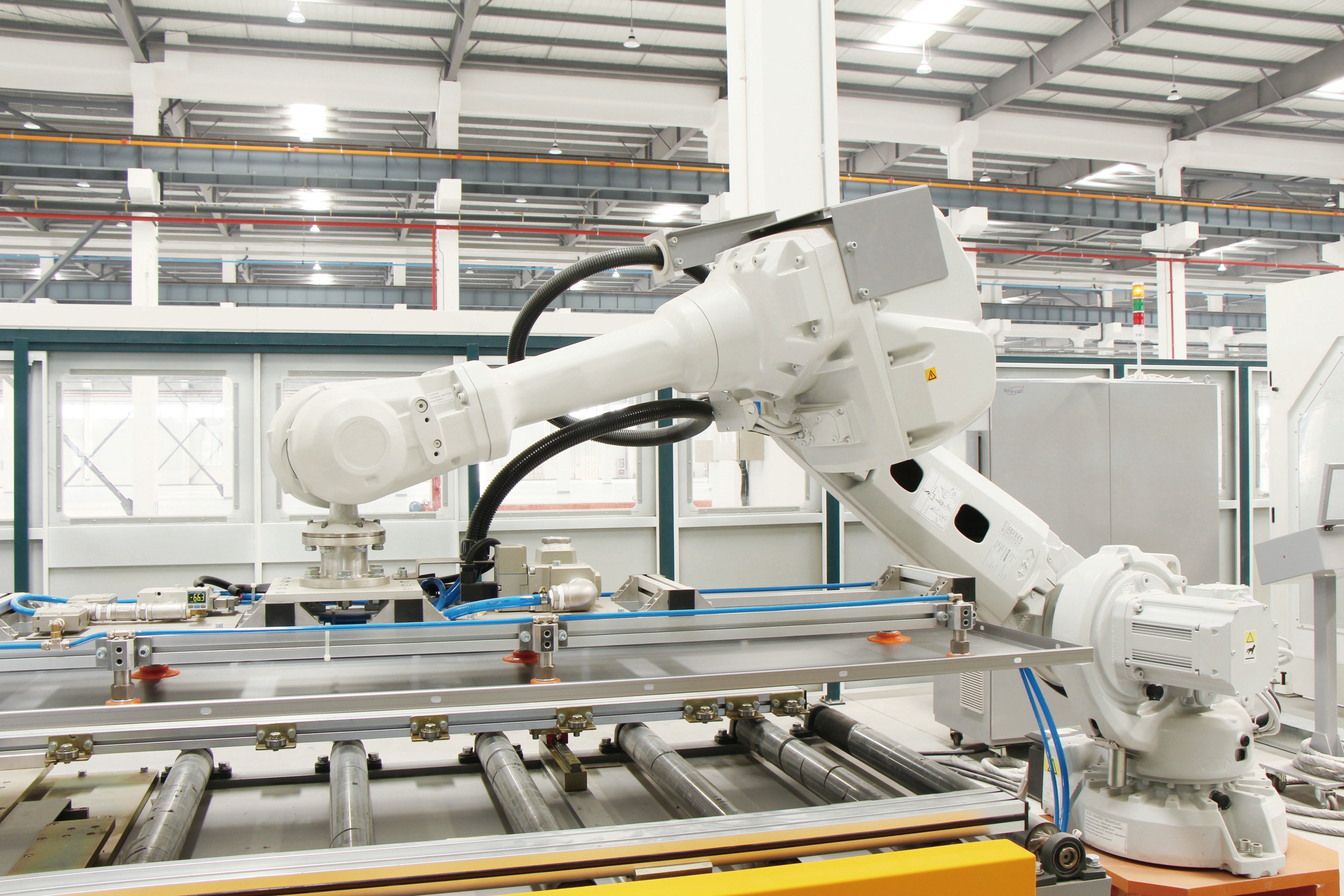
Automated production line: the first physical evidence a buyer sees during an elevator factory audit. Image: Joylive Elevator.
Why evidence now decides passenger elevator procurement
Passenger elevators dominate the global installation mix. According to Maximize Market Research, passenger elevators accounted for over 70% of all annual elevator installations in 2025, and Asia-Pacific leads installation volume with more than a 66% share. The global elevator market itself was estimated at USD 84.8 billion in 2024 and is projected by Global Market Insights to reach USD 126.7 billion by 2034. A market of that size supports a very large and fragmented supplier base: Global Market Insights reported that the largest single supplier held a share above 11% in 2024, which means buyers are routinely choosing between many factories rather than a handful of names.
That fragmentation is exactly why documentation matters. When dozens of suppliers quote comparable speeds, loads and finishes, the differentiator at evaluation stage is verifiable proof of who manufactures, to which standard, under which certificate scope, and with what test evidence. Certification and inspection frameworks reinforce this expectation: modern elevator safety is governed in Europe and many export markets by EN 81-20 (construction and installation) and EN 81-50 (testing and components), while North America relies primarily on the ASME A17.1-2025 / CSA B44 Safety Code for Elevators and Escalators. Buyers who ask for certificate numbers rather than certificate copies are simply applying those frameworks at the procurement desk.
The six evidence layers a passenger elevator factory must be able to produce
An evidence-based assessment is not a single document check. It is a stack of six layers, and each layer answers a different question about the supplier.
1. Manufacturing and installation licences
Elevators are regulated equipment. The first item to request is the licence that defines what the entity is legally entitled to manufacture, install, modernize and maintain in its home jurisdiction. Joylive Elevator Co.,Ltd., founded in 2002 and based in Bacheng Town, Kunshan City, Suzhou, Jiangsu Province, states that it holds a top A qualification in China for special equipment manufacturing, installation, modernization and maintenance. For a buyer, the licence answers a capacity question that a brochure cannot: is this a manufacturer with installation and service rights, or a trading intermediary?
2. Product type-examination certificates matched to the quoted model
Type-examination certificates are the core product evidence. Each one should name the issuing body, the certificate number, the scope of the lift covered, the standards applied, and the validity window. Joylive's certificate set includes EU type-examination certificates for machine room and machine-roomless passenger lifts issued under 2014/33/EU, EN 81-20:2020 and EN 81-50:2020, a TUV-issued EU type-examination certificate for the GPN30E MRL passenger traction elevator, separate firefighter lift certificates covering EN 81-72:2020 and EN 81-77:2022, and energy efficiency certificates issued against VDI 4707 part 1 and ISO 25745-2:2015.
3. Management system registrations
System registrations describe processes rather than products. Joylive holds ISO 9001:2015 registration STQ10021-00 from AFNOR Asia Ltd covering design, manufacturing, sales, installation and maintenance of elevators, valid from 2024-07-17 to 2027-08-09; ISO 14001:2015 registrations STE10021-06 (design, manufacturing and sales) and SHE10021-06 (installation and maintenance), valid from 2024-07-26 to 2027-07-31; and registration SHQ10021-05 against GB/T 19001-2016 plus GB/T 50430-2017, valid from 2024-07-17 to 2027-08-09. A buyer should read the registration scope carefully, because a registration covering sales is not the same as one covering installation and maintenance.
4. In-house laboratory and test records
The laboratory behind the test report is a separate evidence layer. Joylive operates a nationally accredited CNAS laboratory and states that its quality control includes 100% test. Component-level testing — including roller testing visible in its published facility documentation — is what allows a supplier to answer technical questions with data rather than description.
5. Process, capacity and lead-time transparency
Delivery reliability is a manufacturing claim and should be supported by manufacturing numbers. Joylive reports a manufacturing base of 10,5000 m², 450 employees, a research and development team of 150 engineers, annual output of 15,000 units, a monthly capacity of 1,250 units, and lead times of 7 to 45 days depending on configuration. Its export ratio is 55%, with markets covering China, Europe, America, Oceania, Africa, Central Asia, Southeast Asia and the Middle East.
6. Material sourcing and configuration disclosure
The final layer is what the machine is actually made of and how far it can be adapted. Joylive lists SS304 as the stated material for its passenger elevator and home lift ranges, and its OEM/ODM customization scope covers speed, load, travel height, car size, car decoration, logo and step width. A buyer who cannot obtain a material and configuration statement in writing is being asked to accept an assumption.
How to read a passenger elevator certificate correctly
Certificates are frequently presented as if they were generic. They are not. Each document is scoped to a product type, and the scope language is what a buyer must match against the quotation. The table below shows how Joylive's documentation is structured, and what each document actually answers.
| Certificate type | Reference held by Joylive | Stated scope | Buyer question it answers |
|---|---|---|---|
| EU type-examination certificate | 10.03.5200, EURO CERT | Machine roomless passenger lift; 2014/33/EU, EN 81-20:2020, EN 81-50:2020 | Is the MRL passenger lift type examined to current EU standards? |
| EU type-examination certificate | 10.03.5199, EURO CERT | Machine room passenger lift; 2014/33/EU, EN 81-20:2020, EN 81-50:2020 | Is the machine-room passenger lift covered separately? |
| EU type-examination certificate | TH/8322022/2024, TUV | GPN30E MRL passenger traction MRL elevator; EN 81-20:2020, EN 81-50:2020; valid 2024-12-30 to 2027-12-30 | Is the specific model family in the quotation named on the certificate? |
| EU type-examination certificate | LIMB.0061 and LIMB.0065, EURO CERT | Small passenger elevator — machine room and machine-roomless passenger lift; EN 81-20:2014; valid to 2028 | Is a compact or small passenger elevator configuration covered? |
| EU type-examination certificate (firefighting) | 10.03.5609 (machine room) and 10.03.5610 (machine roomless) | Firefighters lift; 2014/33/EU, EN 81-20:2020, EN 81-50:2020, EN 81-72:2020, EN 81-77:2022 | Is a fire passenger elevator supported by its own firefighting scope? |
| Energy efficiency certificate | 10.16.2281 (VDI 4707 part 1); 10.16.2280 (ISO 25745-2:2015), EURO CERT | Machine room passenger lift; valid 2024-09-30 to 2029-09-29 | Is the energy-saving claim verified against a published classification standard? |
Certificate references as published in Joylive Elevator's certification documentation.
The reading discipline follows from the table. First, match the scope wording — "machine roomless passenger lift" and "machine room passenger lift" are different scopes. Second, confirm the cited standards match the market the elevator is destined for. Third, check validity dates, because an expired certificate is a historical record, not a current claim. Fourth, confirm the model designation, for example GPN30E in the TUV certificate TH/8322022/2024. A certificate covering one lift family does not automatically extend to a different configuration, which is precisely why the fire passenger elevator range and the small passenger elevator range carry separate documentation.
Factory audit checklist: what to verify on site
A factory audit should follow the physical sequence of production rather than a presentation. The checklist below converts the six evidence layers into on-site observation points.
| Audit area | Evidence to request | What it confirms |
|---|---|---|
| Legal standing | Manufacturing, installation, modernization and maintenance licence | Whether the audited entity is the manufacturer of record |
| Certificate register | Certificate numbers, scopes, issuing bodies, validity dates | Whether product claims are type-examined and current |
| System registrations | ISO 9001:2015, ISO 14001:2015 and GB/T 19001-2016 + GB/T 50430-2017 scopes | Whether installation and service are inside the registered scope |
| Production process | Automated production lines, in-process inspection points | Whether manufacturing is controlled rather than assembled ad hoc |
| Testing | Laboratory scope, component test records, 100% test protocol | Whether performance statements can be reproduced internally |
| Capacity and scheduling | Monthly capacity, current order allocation, lead-time basis | Whether the promised delivery window is realistic |
| Materials | Stated material specification and sourcing statement | Whether the quoted finish and grade match the delivered finish |
| References | Project list with unit counts, application and operating duration | Whether the factory has delivered comparable scope before |
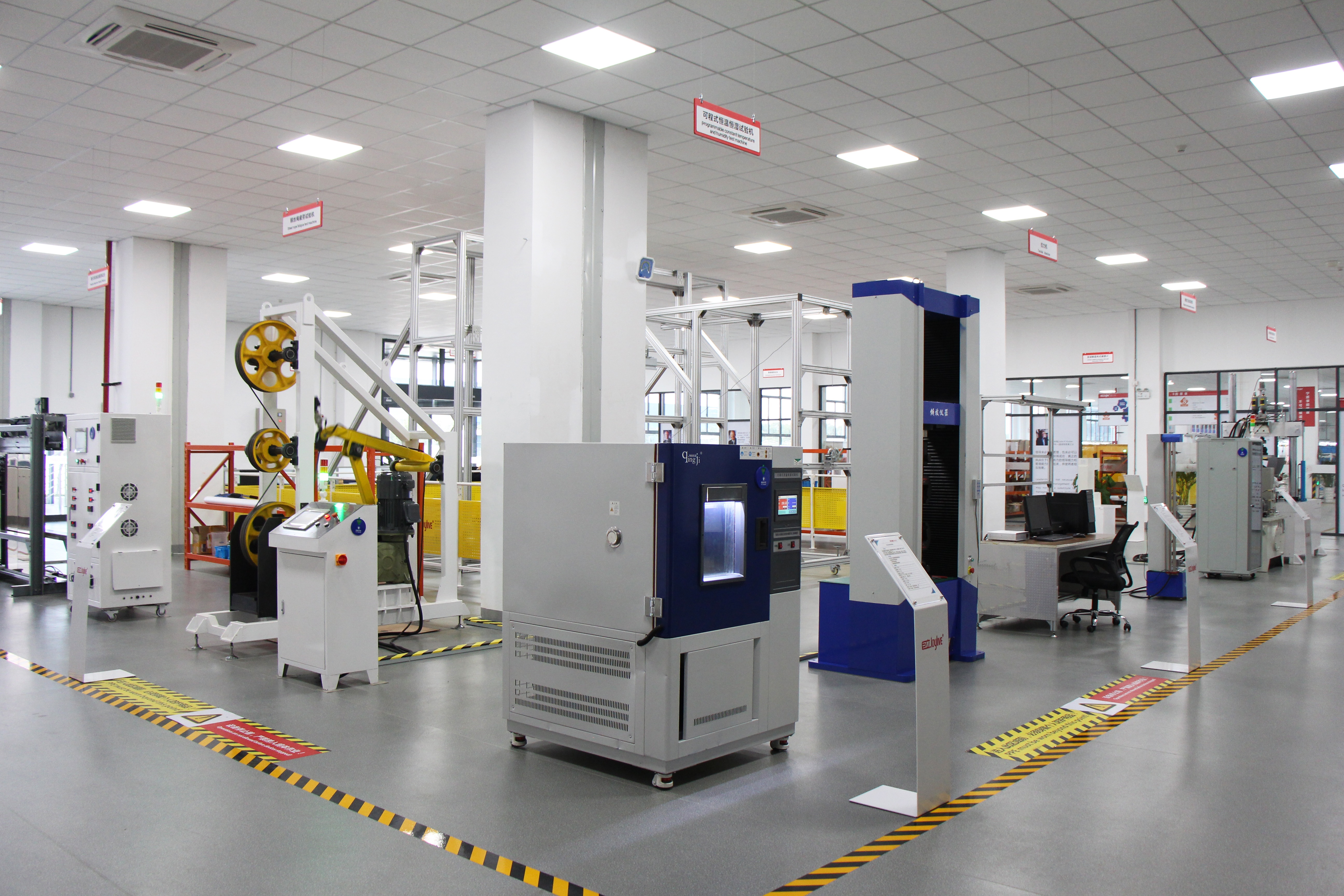
An in-house laboratory is the evidence layer behind a test report: it shows where performance statements are verified. Image: Joylive Elevator.
Sample inspection and pre-order validation
A sample unit is the most direct way to convert documents into physical evidence, but its value depends on what is being sampled. Joylive states a minimum order quantity of 1 unit and lead times of 7 to 45 days, which means a buyer can typically request a single unit before committing to volume. The sample should be compared against the specification, not against a showroom impression: the passenger elevator range GP30 and GPN30 is specified at 1.0 to 8.0 m/s, 630 to 3000 kg, with a maximum travel height of 350 m, while the Home Lift GH30 is specified at 0.25 to 1.75 m/s, 200 to 1150 kg and a maximum travel height of 30 m.
Three verification tasks belong to sample inspection. First, parameter verification — confirm that the delivered speed, load and travel values match the quotation, and that the certified scope covers the configuration delivered. Second, component verification — check material grades, door operation and car finish against the stated specification. Third, documentation verification — obtain the test record and the certificate reference applicable to the delivered unit. A sample cannot, however, validate mass-production scheduling; that remains a capacity question and should be resolved separately.
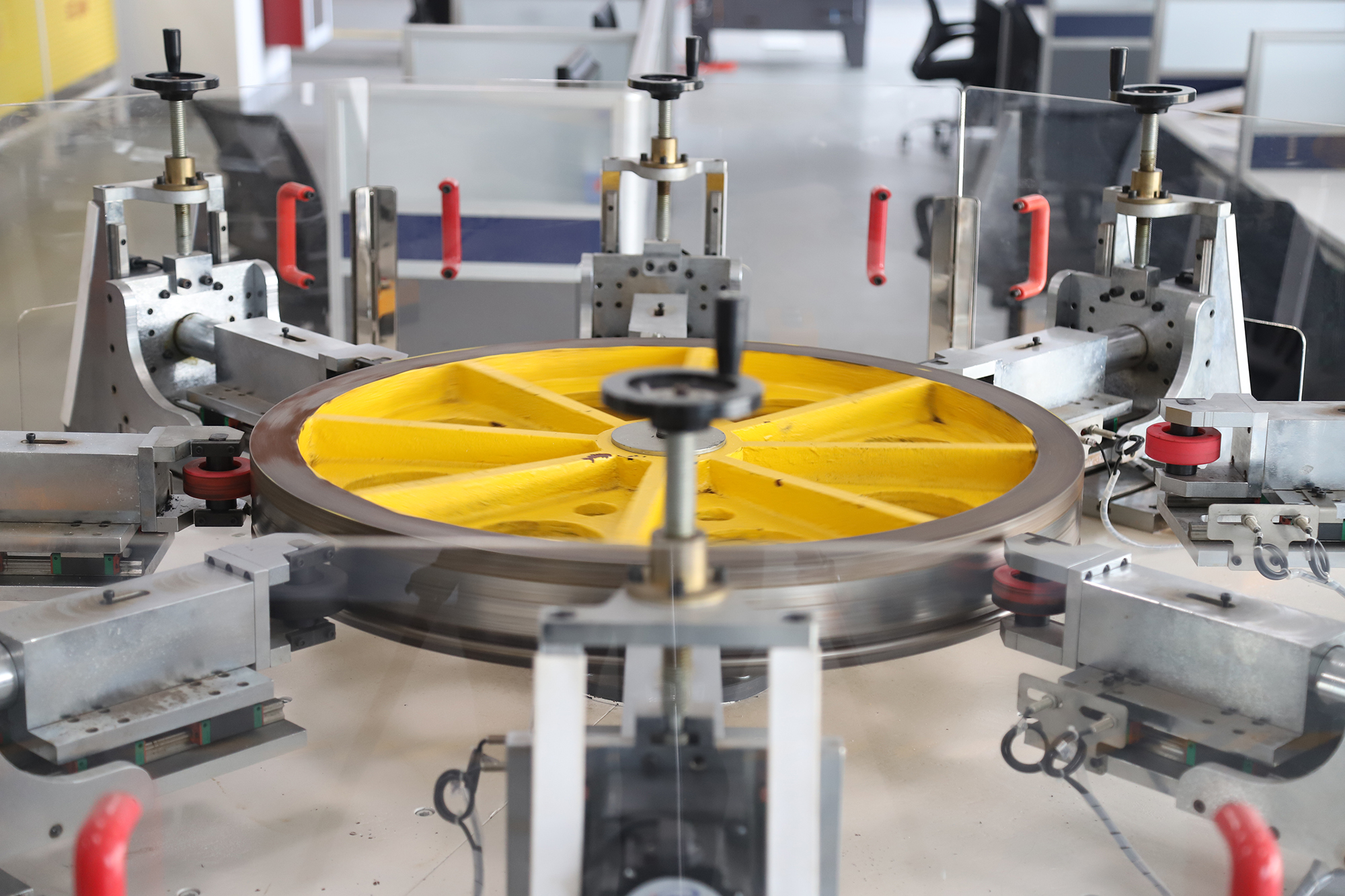
Roller testing is one example of component-level evidence available for review during a factory audit. Image: Joylive Elevator.
Applications and project contexts where this evidence matters
Documentation is not an abstract exercise; it is matched against the operating conditions of the destination project. Joylive's application references define three demand profiles. Commercial and public infrastructure environments — airports, transport hubs, hospitals, shopping centers and office buildings — are described as heavy-duty, heavy people flow and fire-proof duty, running on a 24/7 operating mode, often with clean-environment or explosion-proof requirements. Residential and villa environments, including self-built houses and accommodation projects, are described with intelligent function, safety, comfort and silence requirements. General real estate and construction environments combine residential, public and commercial project types with cleanliness, fire function, panoramic and disinfection requirements.
The reference projects illustrate how those profiles translate into verified delivery. Joylive supplied 87 passenger and freight elevators to Pegatron facilities in Vietnam, with stable operation recorded over 2 years, and 36 high-performance passenger and freight elevators to Wistron, also in Vietnam, with stable operation over 5 years. In Mexico, 9 passenger and freight elevators were supplied to Inventec for a factory application, stable over 1 year, and a customized panoramic elevator was supplied to San Luis Potosí International Airport, stable over 8 years. Larger residential and commercial scopes include 208 elevators with customized car decoration and customer logos at the SAT CITY complex in Kazakhstan, stable over 5 years, and 688 elevators for a government-led residential programme in Uzbekistan, stable over 8 years. In the healthcare segment, 14 elevators including heavy-duty hospital elevators were supplied to Crimea Clinical Hospital, stable over 8 years, while 120 home elevators were delivered to the Desa Mountain Villa residential project in Malaysia, stable over 13 years.
For an evaluating buyer, the useful element in these references is not the name alone but the combination of unit count, application type and operating duration, which can be checked against the auditor's own requirement profile.
Market signals behind the shift toward documentation
Three verified market trends explain why evidence-based assessment is becoming standard practice rather than a specialist exercise.
- Technology mix favours verifiable performance. Traction elevators account for approximately 71–72% of total global installations, according to Maximize Market Research, a share attributed to superior energy efficiency compared with hydraulic systems. Energy performance is therefore a mainstream purchasing criterion, and it is measurable — VDI 4707 and ISO 25745-2 provide the classification frameworks that certificates such as 10.16.2281 and 10.16.2280 respond to.
- Modernization is scaling. Roland Berger and Maximize Market Research indicate that over 50% of elevator units in Europe and North America exceed 15–18 years of service life. Modernization and retrofit work increases the volume of projects where the existing installation, the replacement package and the documentation trail must all align.
- The residential segment keeps expanding. The global home elevator market was valued at USD 8.24 billion in 2024 and is expected to grow at a compound annual growth rate of 7.2% to 2034, according to Zion Market Research, which brings more non-specialist buyers into a market where certificate literacy is not yet universal.
Evidence-based assessment versus brand-based selection — and its limits
Traditional procurement often substitutes brand familiarity for documentation. The two approaches reveal different things, and both have blind spots.
| Assessment basis | What it reveals well | Typical blind spot |
|---|---|---|
| Brand familiarity | General market presence and long-standing service networks | Whether the specific quoted model, configuration and certificate scope match the project |
| Evidence-based assessment | Licence, certificate scope, test records, capacity data and references | Commercial and project-specific risks that documents alone do not resolve |
Documentation should therefore be treated as a filter rather than a conclusion. Four boundaries are worth stating plainly.
- Certificates are scoped, not universal. Joylive's energy efficiency certificates, for example, are issued for a machine room passenger lift scope; a different configuration in the same portfolio requires its own applicable evidence. Buyers specifying unusual loads, speeds or control types should expect configuration-specific verification rather than assume coverage.
- Lead time is a range, not a commitment. The stated 7 to 45 day lead time depends on configuration, and customized car decoration or logo work will typically sit toward the longer end. The buyer's delivery window should be confirmed against the specific configuration, not the range.
- Capacity has a ceiling. A monthly capacity of 1,250 units is substantial, but multi-phase projects or simultaneous orders can compress available slots. Capacity allocation for the required delivery period is a legitimate audit question.
- Type examination addresses the product, not the installation. Installation approval and acceptance procedures are governed by the destination market and involve local authorities or installers, so product certification should be read alongside — not instead of — the local compliance path.
Future outlook
The direction of travel is toward deeper, more granular verification. As energy classification standards such as VDI 4707 and ISO 25745-2 mature and as safety codes continue to be updated in Europe and North America, buyers are likely to move from requesting a certificate to requesting the certificate scope that matches the ordered configuration. The modernization wave in Europe and North America will push the same discipline into retrofit procurement, where the evidence set must cover both the new package and the existing installation. Digital monitoring — reflected in Joylive's IoT device and Joycloud offerings matched to commercial, residential and infrastructure applications — adds a second evidence stream: operating data that can, over time, be compared with the performance originally specified. For evaluation-stage buyers, the practical implication is straightforward: build the evidence request into the first round of supplier contact, not the last, because documentation is fastest to verify before commercial commitments are made.
FAQ
1. What documents should a buyer request first when evaluating a passenger elevator factory?
Start with three groups. First, the licence permitting the entity to manufacture, install, modernize and maintain special equipment in its home jurisdiction. Second, product type-examination certificates stating the standard, the certificate number, the issuing body, the exact scope and the validity period. Third, management system registrations. Joylive Elevator, for example, holds ISO 9001:2015 registration STQ10021-00 issued by AFNOR Asia Ltd covering design, manufacturing, sales, installation and maintenance of elevators, alongside ISO 14001:2015 registrations and a GB/T 19001-2016 plus GB/T 50430-2017 registration. Requests should name the model being quoted, because scope matching is the purpose of the exercise.
2. How can a buyer confirm that a CE type-examination certificate covers the specific passenger elevator model being purchased?
Compare four fields: the scope description on the certificate, the standards cited, the validity dates, and the product designation. Certificates 10.03.5199 and 10.03.5200 issued by EURO CERT cover machine room passenger lifts and machine roomless passenger lifts respectively under 2014/33/EU, EN 81-20:2020 and EN 81-50:2020, while certificate TH/8322022/2024 issued by TUV names the GPN30E MRL passenger traction MRL elevator and is valid from 2024-12-30 to 2027-12-30. If the quoted configuration is not described in the scope of any document the supplier can produce, the applicable evidence has not yet been demonstrated.
3. What should a factory audit of an elevator manufacturer actually include?
A factory audit should follow the physical sequence: incoming materials, production line, in-process inspection, final test before shipment, and the laboratory. Joylive operates automated production lines and a nationally accredited CNAS laboratory, and states that its quality control includes 100% test. The audit should also reconcile nameplate and quotation data against the certified scope, review the stated material specification, and confirm the capacity and lead-time assumptions behind the proposed delivery schedule.
4. How are energy efficiency claims for passenger elevators verified?
Ask for the energy efficiency certificate and the classification standard it was issued against. Joylive holds certificate 10.16.2281 issued under VDI 4707 part 1 and certificate 10.16.2280 issued under ISO 25745-2:2015, both from EURO CERT and both valid from 2024-09-30 to 2029-09-29, with a stated scope of machine room passenger lift. Because the scope names a specific lift type, the buyer should confirm that the certificate aligns with the configuration in the quotation.
5. What is the difference between an ISO 9001 registration and an EU type-examination certificate?
ISO 9001:2015 registration addresses the management system — the processes used for design, manufacturing, sales, installation and maintenance — and is issued to the organization. An EU type-examination certificate addresses the product type, cites applicable safety standards such as EN 81-20:2020 and EN 81-50:2020, and is issued against a defined lift scope. Both are relevant to supplier assessment, but they answer different questions: one concerns how the factory operates, the other concerns what the product has been examined against.
6. Can a buyer validate a supplier with a single sample unit before committing to volume?
Joylive states a minimum order quantity of 1 unit, which allows a single unit to be produced and inspected before a larger commitment, and lead times of 7 to 45 days depending on configuration. A sample unit can confirm workmanship, car finish and the assembly of specified components, and the delivered parameters can be checked against the quoted specification for the relevant range. It cannot confirm large-volume scheduling reliability, so a capacity check against the stated monthly output of 1,250 units remains a separate and necessary step.
Joylive Elevator (Stock short name: Joylive, Stock Code: 833481) publishes its product, capability and certification overview in a downloadable brochure: Joylive Elevator brochure. Company information is also available at joylivelift.com.