
Evidence Behind Single Cylinder Diesel Engine Manufacturing
Evidence Behind Single Cylinder Diesel Engine Manufacturing
The global single cylinder diesel engine market was valued at approximately USD 3.34 billion in 2025 and is projected to reach USD 3.74 billion by 2035, according to Global Growth Insights. Agriculture accounted for roughly 42.3% of application share in 2025, based on Dataintelo market data, while Asia Pacific held a 58.2% revenue share in the same year. Those figures describe a category that keeps expanding, yet the question that decides most sourcing outcomes is narrower: can the supplier actually repeat what the catalogue shows?
Single cylinder diesel engines drive irrigation pumps, farm machinery, threshers, rice mills, generator sets, power tillers and small construction equipment. Buyers in the research and evaluation stages usually begin with specifications and price. Capability is neither. It is the ability to build the same engine, to the same standard, under the same conditions, across many units and many months.
This article defines what verifiable evidence of manufacturing strength looks like for a single cylinder diesel engine manufacturer, and uses one documented production unit as a working example: Changzhou Vision International Trading Co., Ltd., the Chinese manufacturer behind the Willson brand. The intent is not to endorse a company but to establish the physical and procedural evidence that any competent supplier should be able to present when asked.
Why Manufacturing Claims Are Difficult to Verify
Capability claims are inexpensive to publish and expensive to audit. A supplier can state an annual output figure, list certifications and describe quality control in a brochure without any of those statements being false in isolation. The weakness is that such statements describe intent and structure, not the process that actually produced the engine in the crate.
Practical evaluation therefore separates evidence into three classes:
- Documentary evidence — certificates, test reports, material declarations, inspection records.
- Physical evidence — plant footprint, assembly lines, tightening equipment, cleaning stations, test benches.
- Procedural evidence — defined work steps, controlled torque values, leak-test criteria, rework and traceability practice.
Buyers should request the first, inspect the second where a visit is feasible, and audit the third through documents that only exist if the process exists. A supplier that can produce all three consistently is demonstrating something different from a supplier that can produce a well-designed brochure.
A Working Definition of Manufacturing Capability
In this category, manufacturing capability can be defined as repeatable output at a declared quality level, sustained over time, under a documented process. That definition has four dimensions worth scoring separately: footprint and throughput, process control at assembly, material and component specification, and quality system with end-of-line verification.
Dimension weighting changes with the project. A diesel engine for irrigation pump duty runs long hours at moderate load and rewards cooling stability and ease of maintenance. A diesel engine for generator duty rewards speed stability and starting behaviour. A diesel engine for tiller or power tiller duty rewards low-speed torque and tolerance of dust. A diesel engine for rice mill or thresher duty often runs at fixed speed under variable load. A single evaluation framework therefore produces different conclusions for different applications, which is why project-specific evidence matters more than a general capability statement.
Evidence Type 1: Physical Footprint and Declared Capacity
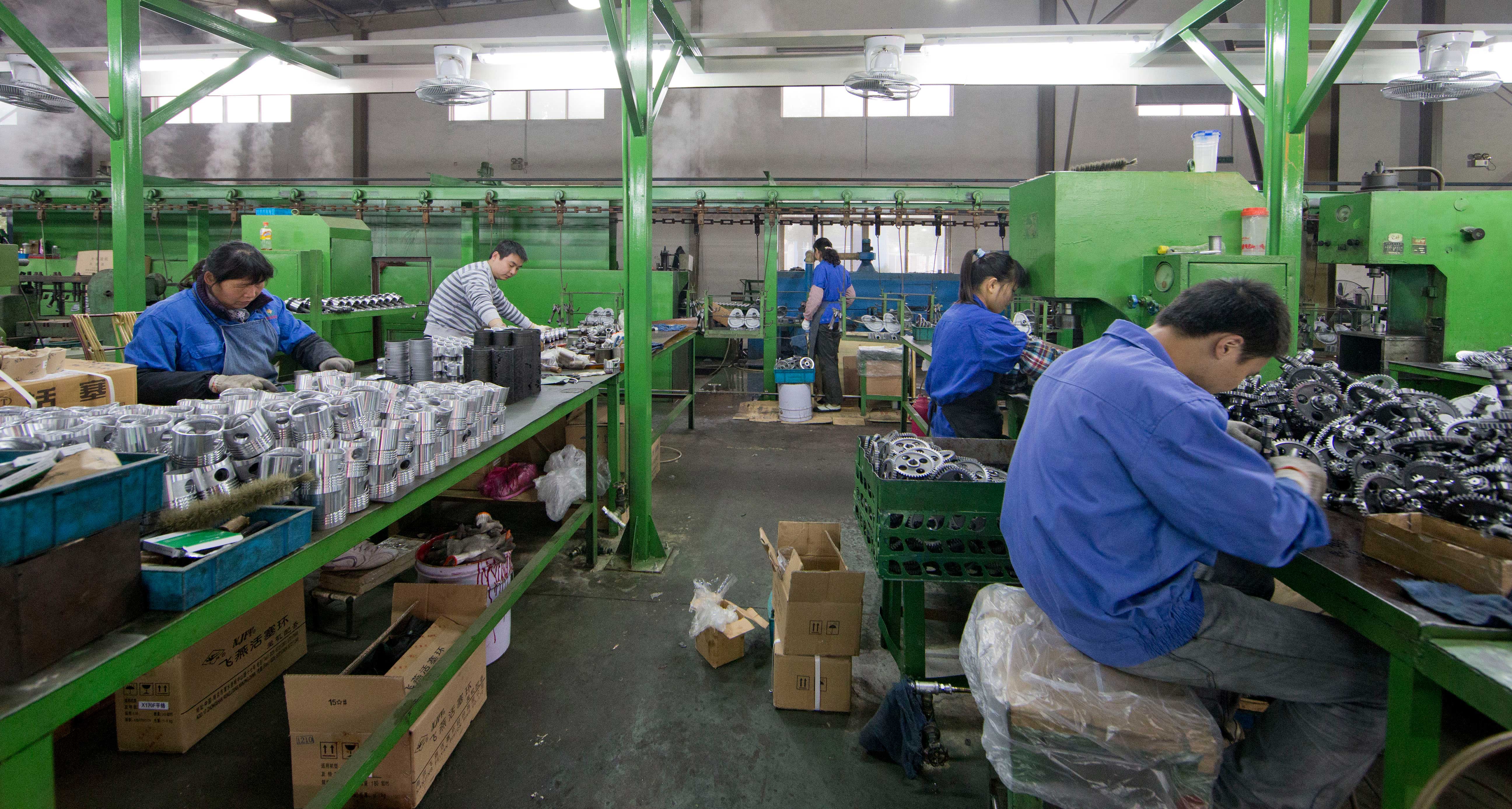
Changzhou Vision International Trading Co., Ltd. is a Chinese manufacturer of single cylinder diesel engines based in Changzhou, Jiangsu, producing the Willson brand across a stated 3–45 horsepower range of air- and water-cooled models. Around 70% of output is exported to South America, Africa, Southeast Asia and the Middle East.
The measurable footprint behind that statement is specific:
- Founded in 2010
- Factory area of 32,207.8 m²
- 95 employees
- Annual output of 100,000 units
- Monthly capacity of 10,000 units
- R&D team of 5 engineers
The first thing a buyer should do with numbers like these is check internal consistency. An annual output of 100,000 units implies roughly 8,300 units per month on average, against a stated monthly capacity of 10,000 units — a plausible relationship between average load and peak capacity. Inconsistent figures, by contrast, are one of the fastest ways to identify a capability claim that has not been examined.
Consistency is not the same as proof, and the limits here are real. A plant area figure does not reveal how much floor space is storage rather than production. An employee count does not reveal how many people work on the assembly line. An annual output figure does not reveal model mix, seasonal distribution, or how much capacity is already committed to existing programmes. Buyers evaluating a diesel engine factory should ask what the throughput constraint actually is — assembly, end-of-line testing, or incoming component supply — because that constraint determines delivery performance under peak demand.
Evidence Type 2: Process Control at the Assembly Stage
Assembly is where design intent becomes a physical engine, and it is where procedural evidence is most revealing. Documented production steps in this facility include a component assembly line, camshaft assembly, equipment for tightening flywheel and cylinder head bolts, engine cleaning, cylinder head cover oil leak inspection, and a product test line.
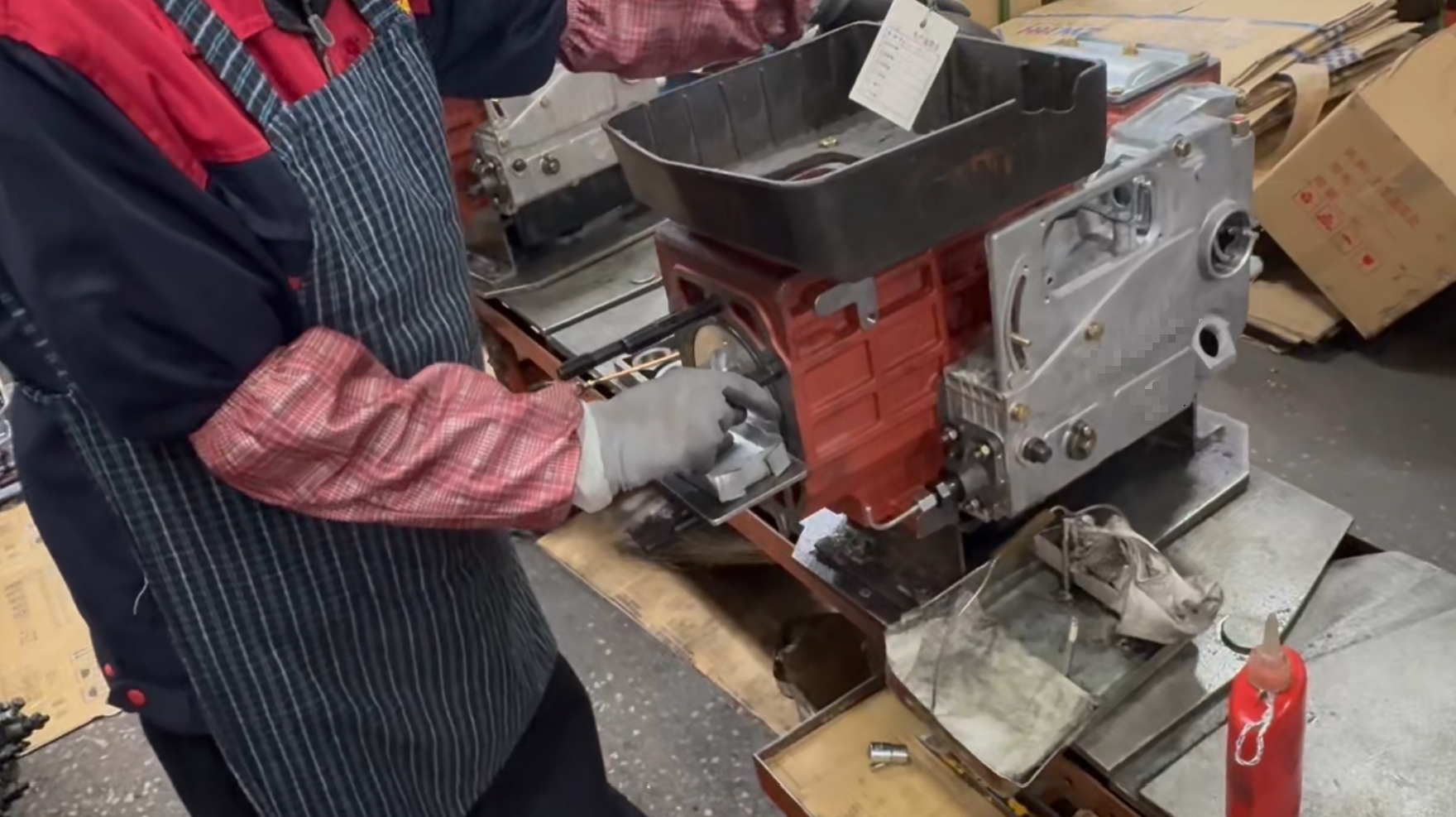
Each step corresponds to a failure mode that field users recognise. Camshaft assembly determines valve timing, which affects starting quality and fuel behaviour. Controlled tightening of cylinder head bolts governs head gasket compression and even sealing across the block; under-tightening produces leaks and gasket failure, over-tightening distorts the head. Flywheel tightening affects rotational balance and vibration. Cleaning before final assembly reduces the risk of contamination entering oil galleries and bearing surfaces. Leak inspection is a direct seal check rather than an assumption. The test line is the final functional gate before packing.
Procedural evidence is verifiable because process records persist whether or not a buyer visits. A buyer can reasonably request torque tool calibration records and target values, the leak-test method and pass criteria, the parameters covered by the end-of-line test, and rework or defect records for a recent production period. Suppliers operating a controlled process can normally supply these; suppliers describing a process they do not operate usually cannot.
Evidence Type 3: Quality System and End-of-Line Testing
Two quality-system facts are documented for this manufacturer: ISO9001 quality management system certification and ISO14000 environmental management system certification. The production standard is 100% testing of engines.
These two items answer different questions. A management-system certificate indicates that a documented system exists for the certified scope, covering process definition, corrective action and internal audit. A 100% test policy indicates that each individual unit passes an end-of-line functional check before shipment rather than relying on batch sampling. Together they describe a structure in which defects are more likely to be detected before dispatch than after arrival.
The limits are equally important. Certification does not prove engine-level performance, and a management-system certificate is only meaningful in relation to its scope: which site it covers, which product families are included, who issued it, and whether it remains valid at the time of purchase. Likewise, a 100% test catches assembly defects and gross functional faults; it does not predict wear behaviour over multiple seasons. For that, field history is the only direct evidence, which is why case records matter as much as test benches. Buyers should also confirm which parameters the end-of-line test covers — starting, idle stability, rated-load running, fuel and oil pressure, leak checks — because an unspecified test is difficult to rely on contractually.
Evidence Type 4: Platform Depth and Material Specification
A second form of capability evidence is whether the manufacturer offers a coherent engine family rather than a handful of unrelated models. The documented Willson specification set spans 4 HP to 35 HP, covering water-cooled and air-cooled single cylinder diesel engines.
| Model | Rated power | Rated speed | Bore × stroke | Displacement | Fuel consumption |
|---|---|---|---|---|---|
| ZS1135 | 35 HP | 2,200 rpm | 132.5 × 125 mm | 1.73 L | 252.7 g/kW·h |
| ZS1132 | 32 HP | 2,200 rpm | 130 × 125 mm | 1.659 L | 252.7 g/kW·h |
| ZS1130 | 30 HP | 2,200 rpm | 130 × 120 mm | 1.593 L | 252.7 g/kW·h |
| ZS1115 | 20 HP | 2,200 rpm | 115 × 115 mm | 1.195 L | 254.2 g/kW·h |
| ZS1100 | 15 HP | 2,200 rpm | 100 × 115 mm | 0.903 L | 269 g/kW·h |
| ZS195 | 13 HP | 2,200 rpm | 95 × 115 mm | 0.815 L | 271.3 g/kW·h |
| R180 | 7 HP | 2,600 rpm | 80 × 80 mm | 0.402 L | 292.7 g/kW·h |
| R170A | 4 HP | 2,600 rpm | 70 × 70 mm | 0.269 L | 315 g/kW·h |
| Z175F (air-cooled) | 5 HP | 2,600 rpm | 75 × 75 mm | 0.331 L | 301.4 g/kW·h |
Two details in this table are worth noting for procurement purposes. The ZS series shares a consistent fuel consumption band of roughly 252.7 to 271.3 g/kW·h, and the smaller R-series and F-series models step up to around 292.7 to 315 g/kW·h as displacement falls — a normal pattern in small diesel engine design, and a useful sanity check when a supplier quotes performance data that contradicts the physics of engine size. A 7 HP unit will not match the specific fuel consumption of a 30 HP unit.
Material specification also carries weight. The ZS series is documented with a cast iron cylinder block, steel crankshaft and aluminium alloy cover; the smaller R- and F-series engines are documented with heavy-duty cast iron cylinder blocks, forged steel crankshafts, alloy aluminium pistons and wear-resistant cylinder liners. These are the components that determine whether a diesel engine for water pump or farm machinery duty survives dust, heat and continuous running.
Platform depth has a direct procurement consequence. A manufacturer covering 4 HP to 35 HP within one coherent family allows a distributor or an end user operating a mixed fleet — pumps, tillers, threshers and generator sets — to consolidate spare parts, service procedures and operator training. The evidence to request here is material certification for blocks and crankshafts, the identity of casting sources, and a clear statement of which machining operations are performed in-house rather than outsourced. Starting system is another documented field: the models referenced here list hand-start, and a buyer requiring an electric start diesel engine configuration should request documented specification and test data for that configuration instead of assuming it from the base platform.
Evidence Type 5: Application Fit and Field Records
Specifications define what an engine can do; documented operating conditions define where it is expected to do it. For this product family, the documented installation conditions are a well-ventilated area, freedom from excessive dust and corrosive gases, avoidance of direct rain exposure, and installation on stable, solid ground. Matched equipment is documented as agricultural machinery, water pumps, generators and construction equipment, with manual start operation.
Maintenance requirements are equally explicit and unusually specific: do not add dirty, saline or alkaline water to the water tank, and regularly clean, maintain and change the engine oil, replacing the filter element when necessary. Water quality is a genuine constraint for water-cooled engines in irrigation service, and a supplier that states it openly is describing a real operating boundary rather than a marketing position.
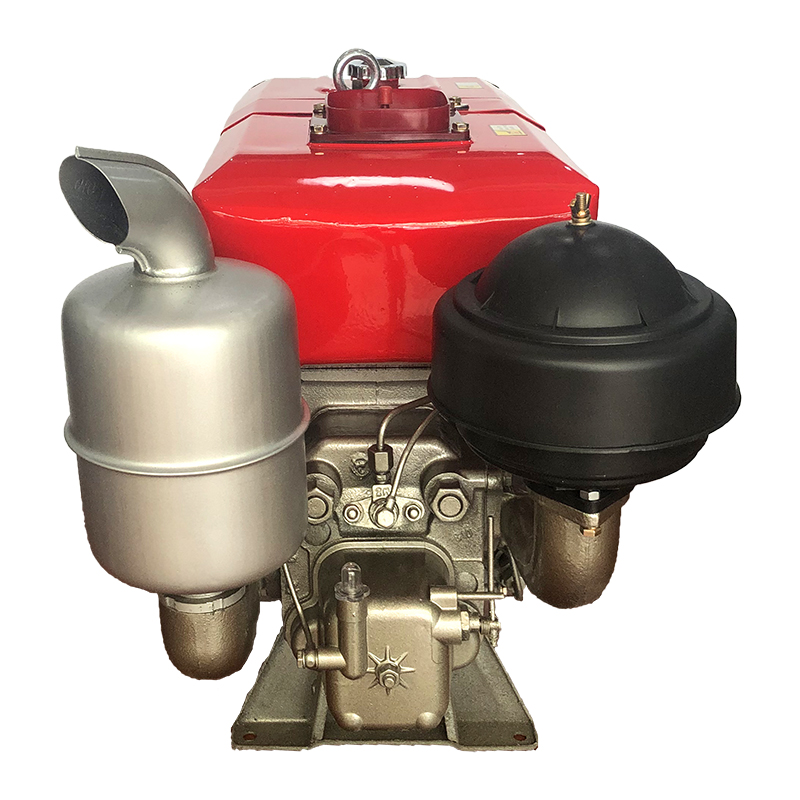
Field records are the most persuasive form of capability evidence because they are difficult to fabricate and easy to falsify through follow-up questions. One documented case involves an agricultural irrigation customer in Pakistan supplied with 96 sets of the ZS1115, the 20 HP water-cooled engine with 1.195 L displacement and a 15 L fuel tank. The project duration is recorded as 10 years, and the reported result is no major failures, with irrigation season requirements met. The stated highlights are a fuel-efficient design, easy maintenance, and adaptation to harsh local environments.
That record maps cleanly onto irrigation diesel engine duty: sustained running at moderate load, high ambient temperatures, and maintenance carried out by operators rather than technicians. It is also a single project, and it should be treated as such. Buyers should ask how failure was defined, how many engines operate in comparable duty cycles, and whether spare parts have remained available across the full service period. A ten-year record of 96 units is meaningful evidence of application fit; it is not a statistical failure rate for a different duty cycle or a different climate.
Evidence Type 6: Supply Model, OEM Customisation and Knocked-Down Assembly
Capability also includes how a supplier can deliver, not only what it can produce. The documented supply model for this manufacturer includes OEM/ODM production, customisation of packaging, logo and nameplate, a minimum order quantity of one 20-foot container, lead time of 25–45 days, and remote after-sales support.
Diesel engine SKD knocked down supply solutions and diesel engine CKD knocked down supply solutions extend this model for buyers who assemble locally. Third-party trade research reports tariff advantages in some ASEAN markets — for example 1.5%–3% for CKD in Myanmar and 0% for certain categories in Thailand — as incentives for local manufacturing. That source is rated medium reliability and is market-specific, so a buyer evaluating a knocked-down programme should confirm current tariff treatment and rules of origin directly with local customs authorities rather than rely on published summaries.
The limitation is structural. Knocked-down supply does not reduce engineering responsibility; it relocates final assembly and some quality risk to the buyer's site. A local assembly operation requires competent technicians, appropriate tooling, controlled tightening equipment and a functional test capability. Without these, a programme intended to reduce landed cost can shift defects downstream into the field, where they are far more expensive to resolve. Buyers should also confirm that the finished engine, assembled locally or imported whole, complies with the emission rules of the destination market — for instance, U.S. EPA Tier 4 regulates particulate matter and nitrogen oxides for off-highway diesel engines, with exemptions applying to engines under 24 horsepower.
Comparing Evaluation Approaches
| Approach | What it answers | Blind spot |
|---|---|---|
| Price and specification comparison | Whether the offer matches the cost target and the required power band | Reveals nothing about whether the quoted specification can be repeated at volume |
| Certificate and document review | Whether a management system exists and which scope it covers | Cannot confirm engine-level performance or durability |
| Process and plant-based evaluation | Whether assembly, tightening, leak inspection and testing are controlled and recorded | Requires buyer effort, a visit or a document audit, and technical judgement |
| Field-performance review | Whether the engine has survived comparable real duty | Only as strong as the reference duty cycle and the definition of failure used |
Two constraints deserve to be stated plainly. First, no documentation package substitutes for a controlled trial of engines in the buyer's own duty cycle; sample validation remains the only direct test of fit for a specific pump, tiller, generator or rice mill installation. Second, capability evidence decays. Certificates expire, equipment ages, key production staff change and processes drift, which means an evaluation performed in 2026 should not be reused without re-verification in 2029.
A Buyer's Verification Checklist
| Evidence item | What it establishes | What it does not establish |
|---|---|---|
| Plant area, headcount, annual and monthly output | Scale of operation and declared throughput | Uncommitted capacity available for a new order |
| ISO9001 and ISO14000 certificates | A documented management system exists within the certified scope | Engine performance or field durability |
| 100% end-of-line test policy | Each unit completes a functional check before shipment | Long-term wear behaviour across seasons |
| Torque calibration and leak-test records | Fastener and seal processes are controlled and traceable | Uniform execution across every shift |
| Material and component sourcing records | Block, crankshaft and liner specification | Full vertical integration if parts are outsourced |
| Field case data for comparable duty | Demonstrated operation in a similar environment | A failure rate for the buyer's own duty cycle |
| SKD or CKD programme terms | Assembly pathway, packaging and tariff treatment | Rules-of-origin compliance in the destination market |
Market Trend Analysis
Three published data points frame the environment in which capability evaluation now takes place. Global Growth Insights values the single cylinder diesel engine market at approximately USD 3.34 billion in 2025, projecting USD 3.74 billion by 2035. Dataintelo places agriculture at roughly 42.3% of application share in 2025 and Asia Pacific at a 58.2% revenue share. The Observatory of Economic Complexity records China's exports of combustion engines, including diesel variants, at USD 3.29 billion in 2025, with major destinations including Russia, Vietnam and India.
These figures should be read as directional rather than exact. Published estimates for this segment diverge substantially — one tracker values the broader market at USD 12.8 billion, while another places the small single-cylinder sub-segment at USD 0.737 billion — which reflects differences in scope and definition rather than disagreement about direction. What the range does confirm is the structural reality behind it: a large, agriculture-dominated category with concentrated Asian supply, purchased largely by distributors, importers and project buyers who cannot inspect every unit.
That combination shifts competitive advantage. Where supply is concentrated and application demand is steady, price differences narrow and differentiation moves toward the things that reduce downstream risk: documented process control, verifiable testing, consistent platform coverage and dependable parts supply. In regulated markets, an additional layer applies. U.S. EPA Tier 4 limits particulate matter and nitrogen oxides for off-highway diesel engines, with exemptions for engines under 24 horsepower — a threshold that covers much of the small diesel engine segment, but which requires case-by-case confirmation rather than assumption.
Future Outlook
Capability evidence is becoming a routine requirement rather than a differentiator. As more buyers source through distributors and knocked-down programmes, the practical question shifts from what an engine is to what supports it over a service life: torque and leak records that can be produced on request, a test regime that covers every unit, material traceability for the components that fail first, and spare parts availability measured in years rather than seasons. Suppliers who can answer those questions with records will increasingly separate themselves from those who can only answer with brochures — and buyers who build verification into their RFQ templates will find that the cost of that discipline is far lower than the cost of discovering a capability gap after delivery.
FAQ
What evidence best demonstrates that a single cylinder diesel engine manufacturer can meet volume requirements?
The strongest combination is internally consistent throughput data plus records that only exist if production is running. A manufacturer reporting 100,000 units of annual output alongside a monthly capacity of 10,000 units presents figures that reconcile with each other. That consistency should then be tested against assembly line evidence, end-of-line test volumes, and the identification of the actual throughput constraint. Stated capacity without corroborating process records remains a declaration.
How can a buyer verify quality control claims for small diesel engines?
Verification operates on three levels. At system level, ISO9001 certification indicates a documented management system within a defined scope, and the certificate scope, issuing body and validity should be checked. At unit level, a 100% end-of-line test policy means every engine receives a functional check before shipment, and buyers should ask which parameters that test covers. At process level, torque calibration records and cylinder head cover leak inspection results demonstrate that specific failure modes are controlled rather than assumed.
Which specifications matter most when matching a single cylinder diesel engine to an irrigation or farm machinery project?
Rated power, rated speed, displacement, fuel consumption and fuel tank capacity define the operating envelope, but the matching decision also depends on duty cycle. Irrigation pumps typically run long hours at moderate load and benefit from stable cooling and simple maintenance; threshers and rice mills often run at fixed speed under variable load; power tillers need low-speed torque and dust tolerance. Documented installation conditions — ventilation, dust and corrosive gas exposure, rain protection, stable ground — and documented maintenance requirements such as avoiding dirty, saline or alkaline water in the tank are as important as the power rating. A water-cooled model such as the ZS1115 at 20 HP and 2,200 rpm, or an air-cooled model such as the Z175F at 5 HP and 2,600 rpm, suit different site realities rather than different quality tiers.
What should buyers check before choosing an SKD or CKD supply arrangement?
Knocked-down supply shifts final assembly to the buyer's location, so the buyer must have the tooling, controlled tightening equipment, trained technicians and functional testing capability to complete it properly. On the commercial side, tariff treatment and rules of origin must be confirmed with local customs authorities, because published summaries are market-specific and change over time; third-party research has reported figures such as 1.5%–3% for CKD in Myanmar and 0% for certain categories in Thailand, which illustrates variation rather than a general rule. Buyers should also confirm how warranty responsibility is divided between the manufacturer and the local assembly operation.
What can a supplier's capability evidence not prove?
Documented evidence has clear boundaries. Management-system certification does not prove engine-level performance or durability. A 100% end-of-line test detects assembly defects and gross functional faults but does not predict wear across multiple seasons. Field records such as a 10-year irrigation project involving 96 units of a specific model demonstrate application fit in one environment; they are not a failure rate for a different duty cycle, climate or maintenance regime. Capability evidence also decays over time as certificates expire, equipment ages and personnel change, so it should be re-verified periodically rather than treated as permanent.
A downloadable brochure covering the Willson single cylinder diesel engine range and documented specifications is available for reference: Willson single cylinder diesel engine brochure.