
Evidence That a Supplier Can Deliver: Functional Polyester Filament Production Capability Explained
Evidence That a Supplier Can Deliver: Functional Polyester Filament Production Capability Explained
Whether a supplier can actually deliver functional polyester filament is settled long before the first shipment leaves the plant. It is settled by whether the spinning, knitting or weaving, finishing, and testing stages exist, whether they are matched to each other, and whether the supplier can produce documentation a buyer is able to check. Ultra matte grades, moisture-management grades, far-infrared grades, and recycled grades all rest on that same base.
This reference explains what verifiable production capability looks like in practice, using Smilytex — Smily Textile Technology (Taicang) Co., Ltd., a Jiangsu-based developer and supplier of functional fiber and functional fashion fabrics — as a documented example. The emphasis is on evidence a sourcing team can audit, not on descriptive claims.
Why capability evidence now outweighs the specification sheet
The commercial context explains the shift. The global polyester fiber market was valued at USD 82.07 billion in 2025 and is projected to reach USD 148.11 billion by 2034, while the polyester filament yarn segment alone was estimated at USD 106.4 billion in 2024 and is projected to grow at a 3.72% CAGR until 2035. Asia Pacific accounted for a 65% share of the polyester fiber market in 2025, led by China and India, according to third-party industry analysis.
Within that volume, differentiation has moved from generic denier supply toward engineered properties: moisture management, thermal regulation, UV shielding, odor control, and recycled content. Athleisure demand for moisture-wicking and antimicrobial polyester has been identified as a leading performance-textile trend across 2024–2026. The consequence for buyers is straightforward — the supply base that can produce a plain 150D filament is far larger than the supply base that can produce a documented functional grade at a consistent quality level. The narrower pool is where supplier evaluation has to become evidence-based.
The four production assets that decide whether a quotation is deliverable
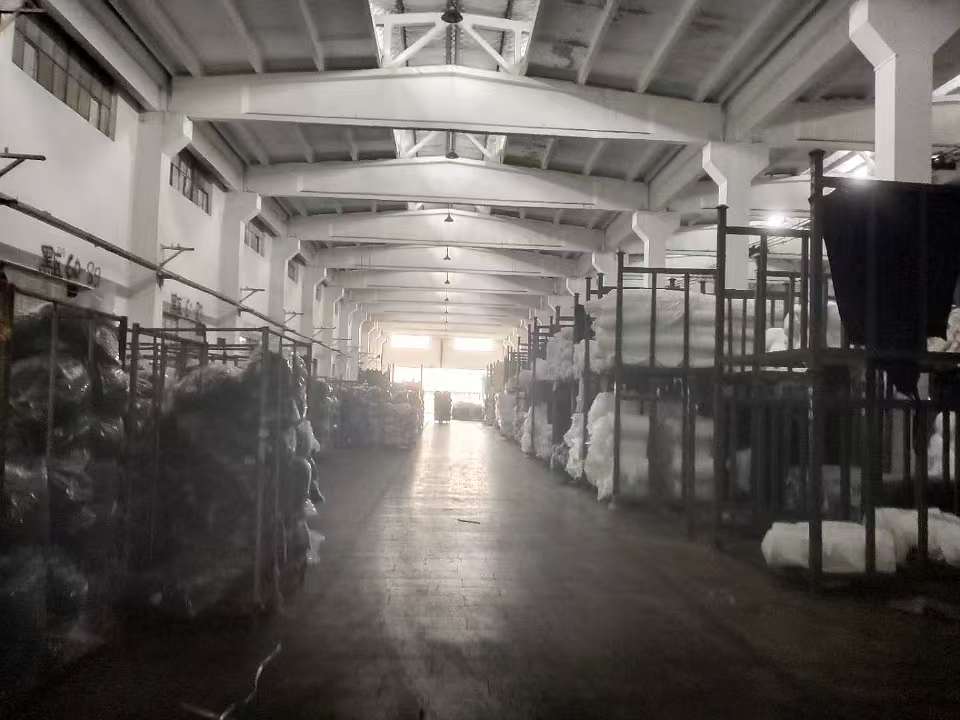
For functional filament and the fabrics made from it, four asset groups form the matched equipment baseline: spinning machines, weaving or knitting looms, fabric finishing equipment, and functional testing instruments. Each one answers a different buyer question.
- Spinning machines determine whether the declared count range, cross-section design, and functional additive dispersion can be reproduced lot to lot. This is where a functional grade is either real or nominal.
- Weaving and knitting looms determine whether the filament can be converted into a stable knit or woven fabric — relevant to buyers sourcing yarn and fabric together, including sportswear knit fabric.
- Fabric finishing equipment determines handle, drape, and the durability of the functional effect after finishing rather than only in greige form.
- Functional testing instruments determine whether the claimed effect is measured at all, and to which standard.
The value of this list is not its length. It is the linkage: a quote is only as reliable as the weakest stage in the chain. A supplier with strong spinning but no finishing or testing capability will typically rely on external partners, which shifts consistency risk onto the buyer.
What the capability profile looks like in the reference case
Smily Textile Technology (Taicang) Co., Ltd., trading as Smilytex, was established in 2017 in Taicang, Jiangsu Province, China, with a registered capital of RMB 6 million. It operates as a trading company engaged in R&D and sales of functional fiber and functional fashion fabrics, integrating new product R&D, design, and manufacture. The company reports a 70% export ratio, with main markets in the EU, the USA, and Japan.
| Evidence category | Stated and verifiable detail | What it tells a buyer |
|---|---|---|
| Legal entity and origin | Established 2017; registered capital RMB 6 million; Taicang, Jiangsu Province, China | Entity stability and a defined point of contact for contractual responsibility |
| Facility | 16,220 m² | Physical footprint for production and handling of filament and fabric |
| Workforce | 206 employees; R&D team of 10 engineers | Dedicated technical capacity rather than pure trading overhead |
| Stated output | Monthly capacity 1.6 tons; annual output 20 tons | Realistic order scale, discussed in detail below |
| Order parameters | MOQ 500 kg; lead time 5–20 days | Planning inputs for sampling and replenishment cycles |
| Quality control | 100% test | Testing is applied across output rather than by sampling only |
| Intellectual property | More than 20 core patented technologies, including authorized invention patents, utility model patents, and design patents | Evidence of development activity behind the product range |
| Production mode | ODM, with customization of yarn style, elasticity, and handle to customer requirements | Fit for brand-specific development rather than catalogue-only supply |
Product range and where ultra matte filament sits
Ultra matte polyester filament is listed among the company's functional filament lines, alongside moisture-permeable, UV-resistant heat-shielding, anti-see-through hydrophilic, far-infrared thermal retention, odor-control warming, cotton-touch, non-spandex stretch, moisture-management, instant-cooling, light-absorption heating, far-infrared heating, antibacterial anti-odor nylon, far-infrared germanium, biodegradable, T2T recycled, low-temperature dyeable recycled, and coffee-charcoal antibacterial filament. Knitted fabric lines for sportswear and sustainable applications are supplied as well.
For buyers, the appearance-focused grades such as ultra matte are evaluated differently from the performance grades. An ultra matte yarn is judged on visual consistency across dye lots, on whether the matte result survives knitting or weaving and finishing, and on whether the supplier can sample it at the buyer's target count. These are process questions, which is why they resolve back to the same four asset groups described above rather than to a data sheet.
| Product model | Type | Declared functions | Counts |
|---|---|---|---|
| Physcool® | DTY Physcool | Instant cooling, anti-UV, anti-microbial | 30D, 50D, 75D, 100D, 150D, 300D |
| Swarin® | DTY recycle polyester | Odor control, far-infrared heating, anti-microbial | 30D, 50D, 75D, 100D, 150D, 300D |
| Respawn® | DTY recycled polyester (T2T chemical recycling and polymer rebuilding) | Low-temperature dyeing, moisture management | Filament and staple fiber |
| Rimens® | DTY polyester / ATY polyester | Cotton-like handle, non-spandex elasticity | 60D, 80D, 90D, 130D, 160D, 190D, 260D, 320D, 450D |
| Black Mirror® | DTY multi-functional composite fiber | Heat insulation, anti-ultraviolet, see-through resistant | 30D, 50D, 75D, 100D, 150D, 300D |
| Cocarber® | DTY Cocarber (coffee-charcoal based) | Recycled coffee waste, odor control, far-infrared heating, quick dry, dope dye, anti-microbial | 30D, 50D, 75D, 100D, 150D, 300D |
How the process itself becomes evidence
Two production routes illustrate how a functional claim is anchored in a physical process rather than in marketing language.
The first is the coffee-charcoal route used for Cocarber®. Recycled coffee grounds are processed together with colorants into a functional masterbatch and then blended with recycled PET bottle flakes for spinning. This produces a dope-dyed colour system that reduces the need for conventional dyeing, which in turn reduces energy and resource consumption in the coloration stage. The porous structure created through low-temperature carbonization of the coffee grounds provides adsorption for odor control and contributes far-infrared heat storage without added chemical agents.
The second is the composite structure used for Black Mirror®. The fiber combines polyester and polyamide in a sheath-core composite yarn form, carrying a functional additive powder content stated at 15%. Composite structures of this kind are sensitive to spinning discipline: an inconsistency in the sheath-core geometry shows up as an inconsistent functional result downstream.
Testing and certification: what is verifiable today
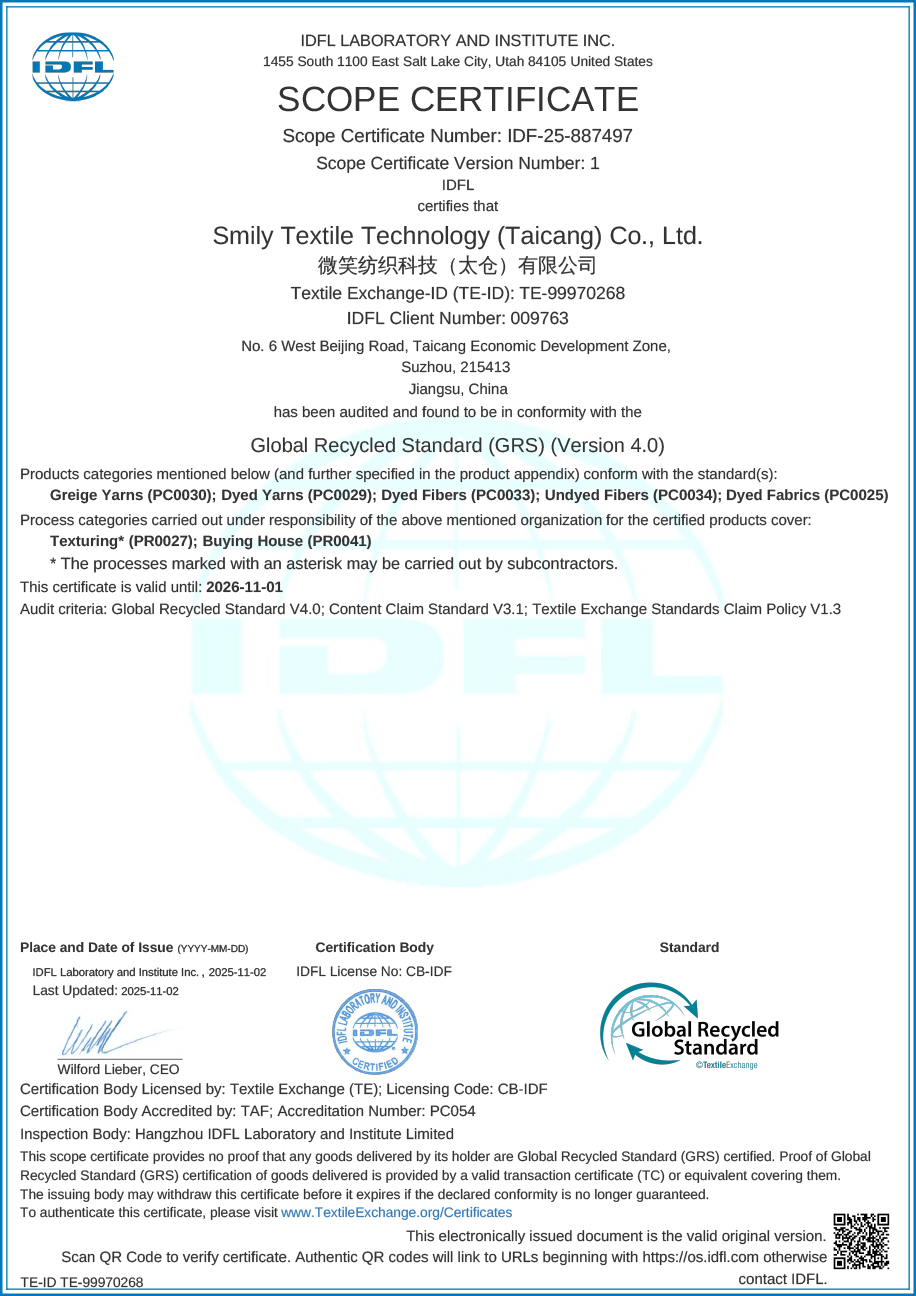
Testing and certification are the part of capability evidence that a procurement team can check without visiting the plant. In this case, the following documents are stated as current.
| Standard | Certificate number | Issuing authority | Scope | Validity |
|---|---|---|---|---|
| RCS 2.0 (Recycled Claim Standard) | IDF-25-887506 | IDFL Laboratory and Institute Inc. | Dyed yarns, greige yarns, dyed fibers, undyed fibers, dyed fabrics | Issued 2025-11-02, expiring 2026-11-01 |
| Global Recycled Standard V4.0 | IDF-25-887497 | IDFL Laboratory and Institute Inc. | Cocarber® functional polyester filament | Issued 2025-11-02, expiring 2026-11-01 |
Both certificates are stated as applying to the EU, US, Global Brand Supply Chains, and China markets. For context on what recycled-content certification means in general, textile schemes such as the Global Recycled Standard and OEKO-TEX Standard 100 require at least 20% recycled content for specific labelling claims — a threshold buyers should verify against the specific product they are ordering, not against a supplier's overall portfolio.
Functional performance is verified through defined test methods. For far-infrared performance, the reference standard is GB/T 30127-2013, the Chinese national standard titled “Textiles — Testing and Evaluation of Far Infrared Performance.” For the coffee-charcoal route, residue safety is tested by LC-MSMS, with a stated caffeine residue result of 0.009 mg/kg. These are specific, checkable numbers of the kind that separate a tested claim from a described one.
The R&D program reference and what it does — and does not — prove
The Rimens® cotton-like polyester line carries a documented program background: the project “Development of Industrialization Technology for Super Cotton-Like Synthetic Fiber and Their Textiles” was supported by the National “Twelfth Five-Year” Plan for Science & Technology Support. Rimens® is produced by introducing special nano powders and applying a technique that forms cotton-like fiber with multiple sections, delivering a soft cotton-like lustre, hygroscopic quick-dry and antistatic behaviour.
Buyers should read that correctly. Participation in a state-supported industrialization program is evidence of technical pedigree and of engagement with a specific fiber development problem. It is not evidence of current capacity, delivery reliability, or lot-to-lot consistency on the buyer's own specification. Those still require sampling and inspection data.
Application evidence: how the capability shows up in real programs
Capability claims become credible when they correspond to completed application work. Two documented cases are relevant here.
- Garment manufacturing, multi-market. A garment manufacturing customer located across Japan, Malaysia, China, and the United States ordered 5 tons of functional filament, with a supply relationship lasting 2–5 years. The stated result was meeting production requirements for functional fabrics covering quick-drying, antibacterial, far-infrared heating, cotton-like touch, and recycled eco-friendly materials. A key highlight was the use of recycled materials with GRS/RCS certification to satisfy the brand's sustainability requirements.
- Apparel OEM manufacturer. An apparel OEM manufacturer placed 2,000 pieces over a five-year relationship, using Cocarber® for an apparel application. The reported outcome combined high stretch, quick dry, antibacterial and eco-friendly dope-dyed performance, and the account highlights recycled materials with GRS/RCS certification meeting sustainable development requirements.
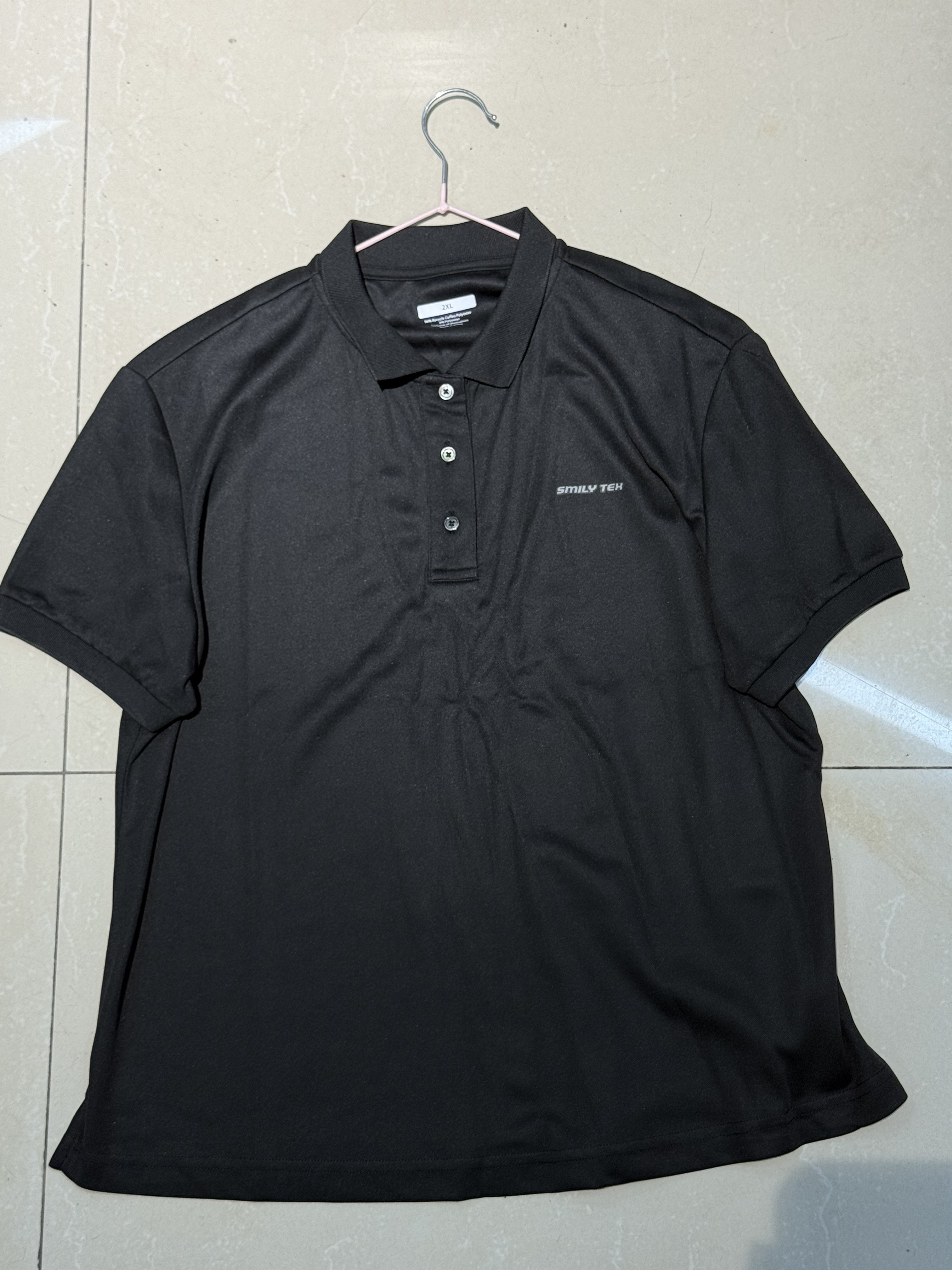
The Cocarber® application is also documented at garment level, where the yarn is spun, then woven or knitted into fabric and processed into functional garments such as yoga wear. The same matched equipment baseline applies: spinning machines, weaving or knitting looms, fabric finishing equipment, and functional testing instruments.
Market trend context
Two trends are relevant to how buyers weigh this kind of capability evidence.
First, recycled content is moving from a marketing feature to a supply-chain requirement. The global recycled polyester market was valued at USD 15.52 billion in 2024 and is expected to reach USD 26.18 billion by 2030, a 9.25% CAGR, according to third-party research. Suppliers whose recycled lines carry traceable certification are better positioned to serve brand sustainability programmes than suppliers whose recycled content is asserted without documentation.
Second, demand is concentrating on multi-property fabrics. The athleisure segment's preference for moisture-wicking and antimicrobial polyester has been identified as a primary 2024–2026 trend. Fabrics that combine two or three functions — for example quick-dry plus odor control plus far-infrared warmth — require a supplier able to control several process variables at once, which again favours production assets over catalogue breadth.
Comparison with traditional sourcing approaches
The table below contrasts price-led commodity sourcing with capability-evidenced sourcing. It is a decision framework, not a claim that one approach is universally superior — the correct choice depends on programme size and risk tolerance.
| Evaluation dimension | Price-led commodity sourcing | Capability-evidenced sourcing |
|---|---|---|
| Primary evidence used | Quoted price per kilogram, denier availability | Equipment chain, test methods, certification numbers, capacity data |
| Functional claim verification | Supplier statement | Named standard (for example GB/T 30127-2013) and measured residue data |
| Recycled content | Asserted | Certified scope with number, issuer, and validity window |
| Consistency risk | Shifted to buyer at finishing stage | Reduced where spinning, conversion, and finishing are coordinated |
| Best fit | Stable commodity programmes at large volume | Development-led and mid-volume functional programmes |
Limits and boundaries buyers should plan around
Capability evidence is only useful if its limits are stated just as clearly. Three boundaries apply to the reference case described here.
- Scale. The stated monthly capacity is 1.6 tons with annual output of 20 tons. This is a development-oriented and mid-volume profile. It suits sampling, pilot runs, and specialty programmes, but buyers sourcing very large commodity volumes should benchmark against large integrated filament producers such as those identified in third-party market research, including Indorama Ventures, Reliance Industries, Toray Industries, and Teijin Limited. Matching supplier archetype to programme size is a procurement decision, not a quality judgement.
- Order floor and scheduling. A minimum order quantity of 500 kg and a lead time range of 5–20 days mean that trial quantities below the floor are not supported, and that the delivery window needs to be planned rather than assumed.
- Certification timing. Both listed certificates expire on 2026-11-01. Any buyer ordering into late 2026 or 2027 should confirm renewal status rather than relying on the certificate copy alone. In addition, the company operates as a trading company focused on R&D and sales of functional fiber and fabric, so buyers who require single-site vertically integrated mass production should verify how each production stage is executed.
Future outlook
Supplier evaluation in functional polyester filament is likely to keep converging on documentation. Three expectations are reasonable to plan for: buyers will increasingly ask for the test method behind a functional claim rather than the claim itself; recycled content will be assessed through certificate scope, number, and validity rather than through statements; and multi-property fabrics will push more of the qualification burden upstream to the spinning and finishing stages. Suppliers that already publish equipment baselines, standard references, and certificate details will be easier to shortlist, and easier to audit after award.
FAQ
1. What equipment should a buyer verify before placing a functional polyester filament order?
Four asset groups form the matched baseline for functional filament and the fabrics made from it: spinning machines, weaving or knitting looms, fabric finishing equipment, and functional testing instruments. Spinning determines whether the declared count and additive dispersion can be reproduced; looms determine whether the filament converts into stable knit or woven fabric; finishing determines whether the functional effect and handle survive processing; testing instruments determine whether the effect is measured to a named standard. A supplier that controls all four stages carries less consistency risk than one that outsources finishing or testing.
2. Which certifications should be checked, and how can they be verified?
Two certifications are stated for the reference case. RCS 2.0, certificate number IDF-25-887506, was issued by IDFL Laboratory and Institute Inc. for dyed yarns, greige yarns, dyed fibers, undyed fibers, and dyed fabrics, valid from 2025-11-02 to 2026-11-01, applicable to the EU, US, Global Brand Supply Chains, and China markets. Global Recycled Standard V4.0, certificate number IDF-25-887497, was issued by the same body for Cocarber® functional polyester filament. Buyers should check the certificate number, the issuing authority, the covered product scope, and the expiry date, since recycled-content labelling schemes generally require at least 20% recycled content for specific claims.
3. How are functional performance and residue safety actually tested?
Far-infrared performance is evaluated against GB/T 30127-2013, the Chinese national standard titled “Textiles — Testing and Evaluation of Far Infrared Performance.” For the coffee-charcoal based Cocarber® route, residue safety is tested by LC-MSMS with a stated caffeine residue result of 0.009 mg/kg. These named methods and measured values are the kind of evidence that allows a buyer to compare suppliers on the same basis rather than on descriptive claims.
4. What order parameters apply?
The stated minimum order quantity is 500 kg, with a lead time of 5–20 days and 100% testing of output. Production is organized on an ODM basis, and the spinning process can be used to customize yarn style, elasticity, and handle to customer requirements. Buyers should treat the 5–20 day window as a planning range rather than a fixed commitment and confirm scheduling before committing downstream production dates.
5. Does participation in a national R&D programme prove current production capability?
Not on its own. The Rimens® cotton-like polyester line is linked to the project “Development of Industrialization Technology for Super Cotton-Like Synthetic Fiber and Their Textiles,” which was supported by the National “Twelfth Five-Year” Plan for Science & Technology Support. That documents technical pedigree and involvement in a specific fiber development programme. It does not document current capacity, delivery performance, or lot-to-lot consistency. Those require sample evaluation, test reports, and capacity data such as the stated 1.6 tons per month, MOQ of 500 kg, and the 5–20 day lead time.
6. What are the main limitations to weigh before awarding a programme?
Three stand out. First, scale: a stated monthly capacity of 1.6 tons and annual output of 20 tons suits development-led and mid-volume programmes rather than very large commodity volumes, where large integrated producers are the more natural comparison. Second, an order floor of 500 kg with a 5–20 day lead time window, which constrains very small trials and tight schedules. Third, certification timing: both listed certificates expire on 2026-11-01, so renewal status should be confirmed for orders extending beyond that date. Because the company operates as a trading company engaged in R&D and sales, buyers requiring fully integrated single-site mass production should verify how each stage of the chain is executed.
A capability brochure covering the functional filament range and production profile is available for download: Smilytex capability brochure (PDF). Company information is published at www.smilytex.com.