
Evidence of IML Capability: Output Scale and OEM/ODM Flexibility
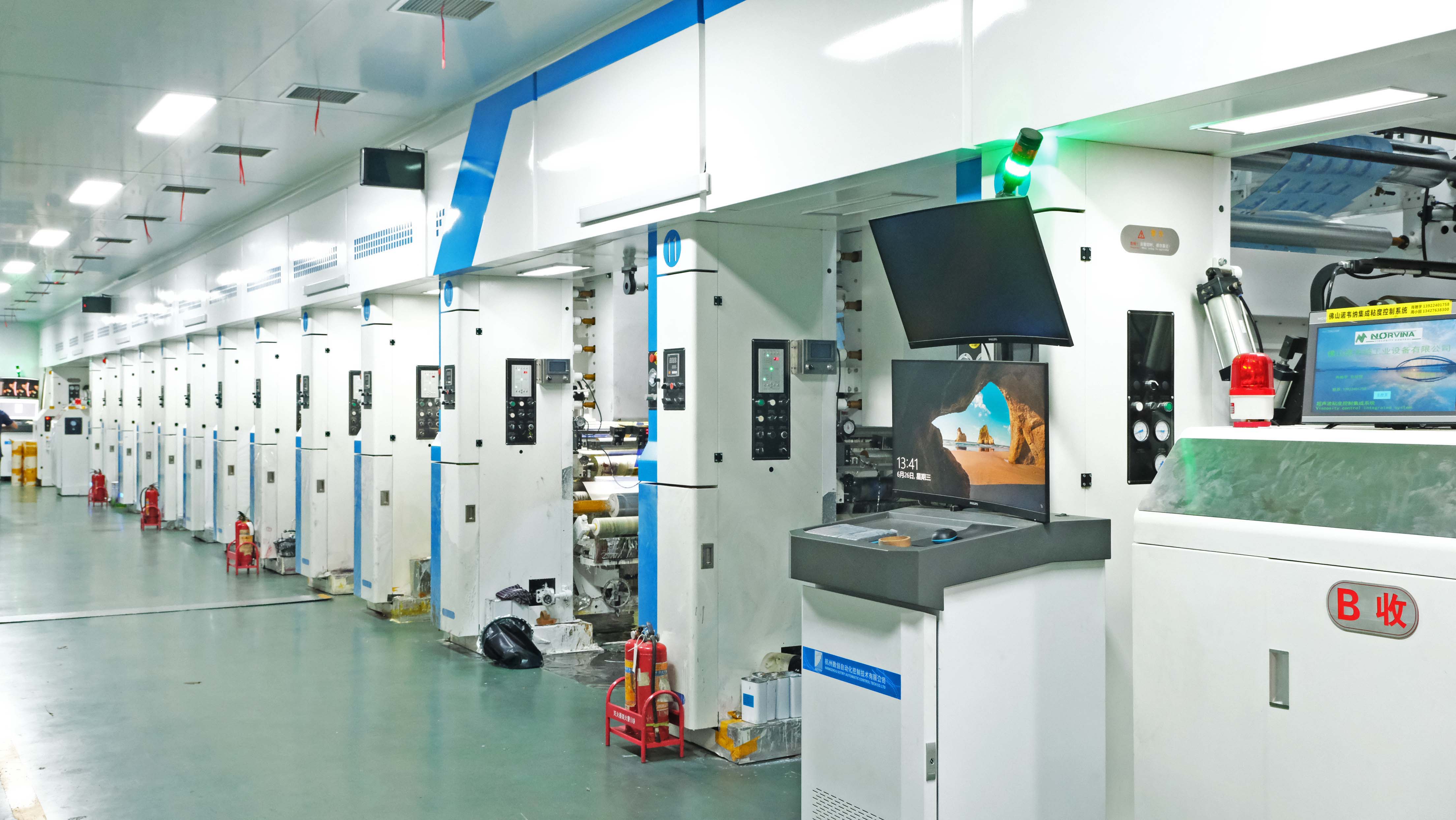
In-mold labeling (IML) is a decoration process in which a pre-printed film label is placed into the mold and bonded to a plastic container during injection molding or blow molding. The label becomes part of the container wall — there is no adhesive layer to fail and no film edge to lift — which is why the format has moved from a dairy niche into mainstream decoration for food, household chemical and industrial packaging.
Market data reflects that migration. Grand View Research valued the global in-mold labels market at USD 2.31 billion in 2023 and projects USD 3.14 billion by 2030, a compound annual growth rate of 4.6%. Dataintelo estimates that Asia-Pacific accounted for 42.8% of IML revenue in 2025. Grand View Research also reports that food and beverage applications took the largest application share, above 41.3% in 2023, with specific growth in yogurt cups and ice cream containers.
Demand data, however, says nothing about whether an individual supplier can execute a specific program. Capacity in IML is routinely quoted without a defined unit or period, and the word custom is often applied to artwork changes rather than to film formulation. This reference article examines what verifiable capability looks like in practice, using YZY (Zhejiang Zhongyu Science and Technology Co., Ltd.), an in-mold labeling manufacturer founded in 2009 and based in Longgang, Wenzhou, Zhejiang, China, as a documented case, and sets out the checks buyers can apply to any supplier.
What Capacity Actually Means in IML Procurement
Two suppliers can both state a capacity of tens of millions of units and mean entirely different things. The figure may describe printed label film, converted and cut labels, or finished decorated containers. It may describe a theoretical line maximum, a scheduled plan, or a volume actually shipped in the previous year. It may be expressed annually or monthly.
Until the unit and the period are fixed, comparison is not possible. A monthly figure and an annual figure cannot be placed side by side, and a square-metre figure for film output cannot be read as a count of labels, because label dimensions vary by project.
Lead time follows the same rule. A lead-time figure quoted without a stated starting point — artwork approval, cylinder readiness, film availability — is not comparable between suppliers, and it should not be treated as a fixed delivery commitment until the trigger event is defined.
Customization language needs the same discipline. Printing a customer's artwork onto a standard substrate is the baseline of the category, not a differentiator. Genuine OEM/ODM flexibility appears in the parts of the label that influence how it behaves inside the mold: film formulation and thickness, the resin system, the ink chemistry, the surface finish, and the dimensional tolerances of the cut label.
A practical checklist for the research stage:
| What to request | Why it changes the answer |
|---|---|
| Unit and period of the capacity figure | Units per year, units per month and square metres of film are not interchangeable and cannot be compared across suppliers |
| Definition of what is counted | Printed film, finished cut labels and decorated containers are three different outputs of the same line |
| Equipment behind the number | Capacity rests on identifiable presses and converting equipment, not on a headline figure |
| Inspection scope | Incoming material, in-process and finished-goods checks determine whether volume is repeatable |
| Lead time and its trigger point | Lead time measured from artwork approval is a different number from lead time measured from cylinder readiness |
| Compliance documentation | Standards apply separately to the film, the ink and the finished food-contact article |
| Customization boundaries | Film formulation, thickness, finish and colour matching are where OEM/ODM capability is actually demonstrated |
Documented Capacity at YZY: Facility, Workforce and Annual Output
YZY (Zhejiang Zhongyu Science and Technology Co., Ltd.) was established in 2009 and manufactures in-mold labeling together with sealing films, embossed sheet sealing lids and POF films. Its production facility covers 20,000 square metres at Building 59, Zone E, Guohong Zhizao new town, Xingke Road, Longgang, Wenzhou, Zhejiang, China, and employs approximately 250 staff.
The company's published annual production capacity is 200,000,000 units. The unit matters as much as the number. Expressed on a simple straight-line basis, that is roughly 16.7 million units per month — a figure useful only as a planning reference, because real monthly throughput depends on order mix, label dimensions and tooling changeovers. The published capacity is an annual output, and buyers should treat it as such rather than re-labelling it as a monthly capability.
Supporting the volume figure is a technical structure that can be checked separately: a research and development team of 10 engineers, 48 accumulated patents, and management system certifications covering QS, ISO and BRC. Export business represents 30% of total sales, and the company lists its major markets as worldwide. All of these are structural facts rather than performance claims, and they are the kind of evidence that can be reviewed before a sample order is placed.
One element of the profile remains supplier-reported and should be treated accordingly: YZY states long-term cooperation with brands including Starbucks, Nestlé and Uni-President. Reference customers of that profile are useful context, but they are self-declared, and in normal procurement practice they are confirmed through direct reference checks rather than accepted from a brochure.
OEM/ODM Flexibility: What It Covers Beyond Artwork
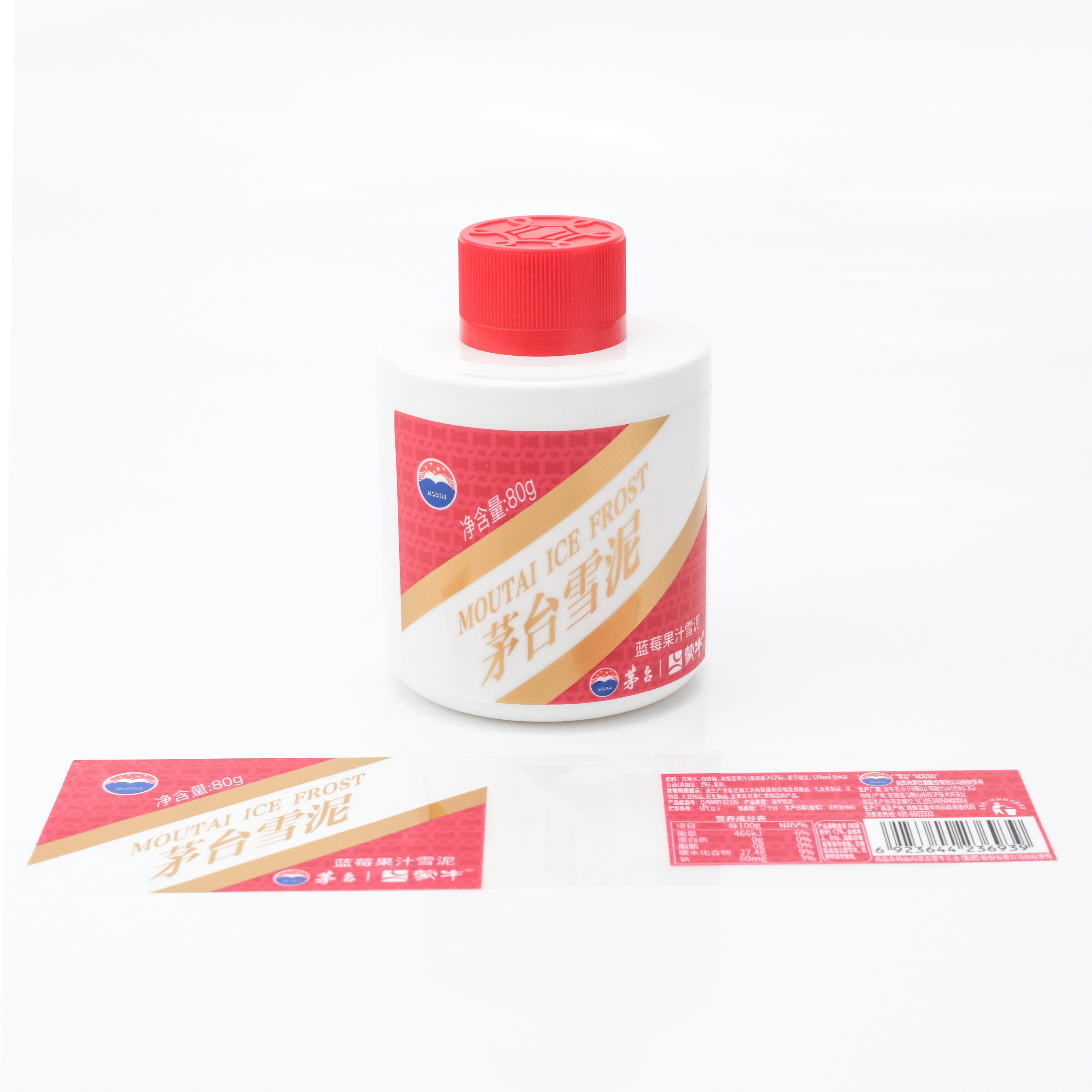
For the ZY-IML Series, the customization scope published by the manufacturer is specific: custom printing, custom size, custom colour matching and custom film formulation. Film thickness is adjustable between 30 μm and 100 μm. Printing runs on high-precision rotogravure equipment with up to eight colours, a maximum printing width of 1200 mm and a printing precision of ±0.1 mm. Substrates include PP (food-grade virgin resin), PE (food-grade virgin resin), PET and multi-layer composite laminated films.
Film formulation is the part that most affects whether a label works in production. A label that is too flexible can be difficult to place and hold in the mold; one that is too stiff may not conform to the container geometry. Surface energy and slip characteristics influence how the film behaves through printing, slitting and feeding. Because those variables interact with the molder's tooling and cycle, film formulation is where an OEM/ODM supplier contributes engineering rather than decoration.
Finishing options follow the same logic. Available surface finishes include glossy, matte, orange peel, holographic and custom textures, over film types that include complex white gloss film, complex transparent gloss film, standard gloss film, matte laminated film and holographic film. For a food-contact project, any change of formulation or ink is also a compliance event: food-grade low-migration water-based ink is used, and migration performance is assessed against EU 10/2011 food contact material standards.
Technical Parameters That Determine Whether Output Is Usable
Capacity without process control produces volume that fails inspection. The published technical profile of the ZY-IML Series covers the parameters that injection molders most often raise when they qualify a label supplier.
| Parameter | Published value | What it means in production |
|---|---|---|
| Adhesion strength | ≥5N, no peeling during injection molding | Determines whether the label stays bonded at injection speed and pressure |
| Operating temperature range | -20℃ to 120℃ | Covers hot filling and cold chain distribution within the same product family |
| Tensile strength | ≥20MPa | Supports web stability during high-speed printing and converting |
| Scratch resistance | 4H (pencil hardness test) | Protects print appearance through filling, packing and transport |
| Chemical resistance | Weak acids, alkalis and common detergents | Relevant to daily chemical and industrial containers |
| Printing precision | ±0.1 mm | Keeps brand artwork consistent across long runs |
| Film thickness | 30 μm to 100 μm, customizable | Balances conformability against stiffness for a given container |
| Maximum printing width | 1200 mm | Sets the number of labels per print repeat and the layout of the job |
| Ink type | Food-grade low-migration water-based ink | Reduces migration risk in food-contact applications |
| Compliance standards | FDA 21 CFR, BRCGS, ISO22000, QS | Defines the documentation package a buyer can request |
Read together, the parameters describe an operating envelope rather than a sales feature. The adhesion figure addresses the most common failure mode in IML, which is label detachment during or after molding. The temperature range allows one film family to serve both hot-filled and chilled products. Scratch resistance protects the visual result after the container leaves the line. None of these values substitutes for a running trial on the buyer's own mold, but they define the questions that trial should answer.
Application Fit: Where Volume IML Programs Run
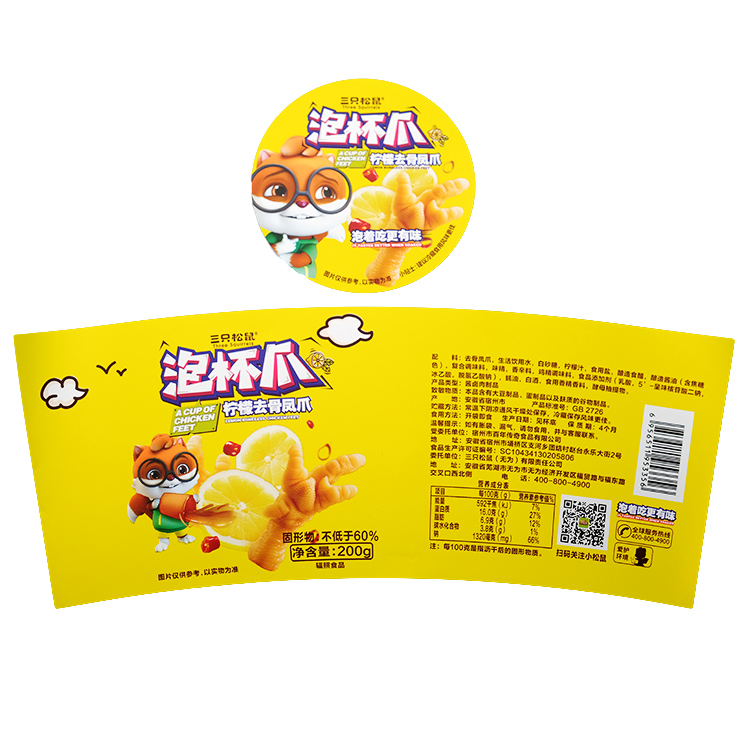
IML is not a single product but a family of specifications matched to container type, filling conditions and handling. The ZY-IML Series is classified across food grade, daily chemical and industrial categories, and named applications include yogurt cup, ice cream container, bubble tea cup, paint bucket, lubricant bucket, plastic bottle, plastic bucket, plastic container and cosmetic container IML.
| Application | Typical requirement | Relevant verified capability |
|---|---|---|
| Yogurt cup and ice cream container | Food contact, cold chain and condensation | FDA 21 CFR compliance, operating range to -20℃, food-grade low-migration ink |
| Bubble tea cup | Print clarity and visual impact on a clear container | Clear glossy laminated film, ±0.1 mm printing precision, up to 8 colours |
| Paint bucket and lubricant bucket | Solvent and moisture exposure during industrial use | Chemical resistance to weak acids, alkalis and detergents, adhesion ≥5N |
| Cosmetic and daily chemical containers | Surface appearance plus resistance to shampoos and detergents | Glossy, matte, orange peel and holographic finishes, chemical resistance |
| Plastic bottle (blow-molded) | Film behaviour in blow molding rather than injection molding | Multi-layer composite, gloss and matte film types matched to the process |
The distribution of demand supports this breadth. Grand View Research reports that food and beverage accounted for over 41.3% of IML revenue in 2023, that injection molding was the dominant production process with more than 57.1% share in 2023, and that polypropylene held 47.2% of the material segment, supported by its recyclability and compatibility with plastic containers. For buyers, that means the same film supply chain serves a dairy plant, a paint manufacturer and a cosmetics brand — with very different compliance and durability requirements attached.
IML Compared with Other Decoration Routes, and Where It Stops Being the Right Choice
IML competes with pressure-sensitive labels, shrink sleeves and direct printing. The differences are structural rather than cosmetic.
| Decoration route | How the decoration bonds | Behaviour in wet or chemical contact | Design change economics |
|---|---|---|---|
| In-mold labeling (IML) | Fused to the container wall during molding | No adhesive layer and no exposed edge, so moisture and detergents do not lift the decoration | Rotogravure printing requires a cylinder per colour and design, so frequent artwork changes carry setup cost |
| Pressure-sensitive labels | Adhesive applied after the container is formed | Edges can lift under moisture or immersion; adhesive choice affects performance | Low setup cost for artwork changes; economical in short runs |
| Shrink sleeves | Printed sleeve shrunk onto the container | Full-body coverage, but as a separate film layer over the container | Moderate setup; sleeve tooling tied to container shape |
| Direct printing | Ink applied to the container surface | Durability depends on ink system and surface treatment | Design change flexibility varies by process; no separate label component |
Three boundaries are worth stating plainly, because a supplier that omits them is describing an idealized process rather than the real one.
- Printing cylinders are project-specific. Rotogravure printing, the process used to produce these labels in up to eight colours, requires a cylinder per design and colour. That makes IML highly economical for stable, high-volume designs and less economical for very short runs or programs that change artwork frequently.
- IML is a joint engineering exercise with the molder. The label must be placed and held in the mold, then bonded during the cycle. Film thickness, stiffness and cut dimensions have to match the container mold and the automation on the line. A label supplier defines the film and the print; the molder still has to qualify the combination.
- Compliance does not transfer between formulations. Where a label is used in food contact, a change of film formulation or ink type resets the migration assessment. The published position for this product family is compliance with FDA 21 CFR, BRCGS Packaging Materials, ISO22000 and QS, with migration testing assessed against EU 10/2011 — but that applies to the defined formulation, not to arbitrary modifications of it.
A fourth practical limit is scale. For very small volumes, unusual container geometries, or projects where the decoration is expected to change every few months, an alternative decoration route may be more rational than committing to IML cylinder and film development.
Market Trends That Shape Capacity Sourcing
Demand growth is steady rather than explosive. Grand View Research projects the IML market moving from USD 2.31 billion in 2023 to USD 3.14 billion by 2030 at a 4.6% CAGR, while Future Market Insights projects the in-mould label film market growing from USD 1.3 billion in 2025 to USD 1.7 billion by 2035. Published IML market sizes vary considerably depending on whether a source counts label film alone or the value of decorated containers, so comparisons should always be made between studies of the same scope.
Capacity is concentrated in Asia-Pacific. Dataintelo estimates the region held 42.8% of IML revenue in 2025, driven by dairy and paint industry growth in China and India. For international buyers, that concentration explains why supplier evaluation increasingly centres on documented output and export experience rather than on price alone — YZY, for example, reports that export business accounts for 30% of its total sales.
Regulation is tightening around the film, not just the container. EU Regulation (EC) No 1935/2004 sets the framework for food contact materials and requires that they be manufactured so as not to transfer constituents to food in quantities that endanger health or change the food's composition. For IML, that places the ink and the film under the same scrutiny as the container. Material choice is shifting too: polypropylene held 47.2% of the material segment in 2023, supported by recyclability and compatibility with plastic containers, and mono-material structures are easier to defend in recycling systems than the mixed constructions they replace.
Future Outlook
Over the next several years, capacity claims in IML are likely to be judged the way quality claims already are: by documentation. Buyers will ask for a defined unit and period, for the equipment behind the figure, for the inspection regime, and for compliance evidence attached to a specific formulation. Suppliers with a long operating history, an identifiable facility, an engineering team and a documented certification set will find that easier to provide than suppliers whose capability exists mainly in a quotation.
Customization will move in the same direction. The competitive ground is not the ability to print a logo, which is widely available, but the ability to co-engineer a film formulation and finish that survives a specific molding cycle and a specific end-use environment — and to re-validate that formulation when a food-contact or recycling requirement changes.
Frequently Asked Questions
What is in-mold labeling (IML)?
In-mold labeling is a decoration process in which a pre-printed film label is placed into the mold and bonded to a plastic container during injection molding or blow molding. The label becomes part of the container wall, so there is no adhesive layer and no exposed label edge.
What production capacity has YZY published, and in what unit?
YZY (Zhejiang Zhongyu Science and Technology Co., Ltd.) publishes an annual production capacity of 200,000,000 units, supported by a 20,000 square metre facility and approximately 250 staff. Because this is an annual figure, it should not be converted directly into a monthly commitment; straight-line arithmetic gives roughly 16.7 million units per month as a planning reference only.
What does OEM/ODM flexibility include in IML supply?
In the ZY-IML Series, the published customization scope covers custom printing, custom size, custom colour matching and custom film formulation, with film thickness adjustable from 30 μm to 100 μm, up to eight colours on rotogravure printing, a maximum printing width of 1200 mm, and finishes including glossy, matte, orange peel, holographic and custom textures.
Which packaging applications are suitable for in-mold labels?
Published applications include yogurt cups, ice cream containers, bubble tea cups, paint buckets, lubricant buckets, plastic bottles, plastic buckets, plastic containers and cosmetic containers, across food grade, daily chemical and industrial categories. Food and beverage applications accounted for over 41.3% of IML revenue in 2023 according to Grand View Research, and injection molding represented more than 57.1% of the market in the same year.
Which standards and certifications apply to food-grade IML labels?
The published compliance set for the ZY-IML Series is FDA 21 CFR, BRCGS Packaging Materials, ISO22000 and QS certification, with migration testing assessed against EU 10/2011 food contact material standards. At the regulatory level, EU Regulation (EC) No 1935/2004 provides the framework for food contact materials. The manufacturer also holds management system certifications covering QS, ISO and BRC.
What are the main limitations of IML compared with other label types?
Rotogravure printing requires a cylinder per colour and design, which makes IML economical for stable high-volume programs but less so for very short runs or frequent artwork changes. The label must also be engineered together with the molder's tooling and automation, and a change of film formulation or ink resets the food-contact migration assessment. For very small volumes or unusual container geometries, alternative decoration routes may be more practical.
Selected data sources: Grand View Research, In-Mold Labels Market Size, Share and Trends Analysis Report; Dataintelo, In-Mold Labels Market Report; Future Market Insights, In-Mould Label Film Market; European Commission, Food Contact Materials legislation. Company-specific specifications are as published by the manufacturer.
Company documentation: the YZY corporate brochure is available as a PDF at https://cdn.socialarks.com/sbsp/24774/common/2026/0514/6a04a935252bf.pdf
Have Questions or Need More Details?
Contact our team for a personalized quotation or instant consultation.
Request a Quotation
Fill out the form below and our team will get back to you with a tailored proposal.
WhatsApp Direct Chat
Prefer to chat in real-time? Message us on WhatsApp for instant assistance & quick answers.
- Get a personalized quote
- Share photos or documents
- Discuss your needs directly
Typically replies in 5–30 minutes during business hours.