
Evidence of Scale: Inside a 2-Million-Ton Nitrogen Fertilizer Facility
Nitrogen fertilizer procurement rarely fails on chemistry. It fails on repetition — the same grade, the same granule or solution specification, the same volume, delivered on the same schedule, season after season. For distributors and agricultural buyers moving from supplier selection into contract execution, that distinction moves the decisive question from “what does the product contain?” to “what infrastructure stands behind the promise to deliver it?”
This analysis examines how that infrastructure can be documented before an order is placed, using the published facility record of TAIAN RISSO CHEMICAL CO., LTD. — a fertilizer manufacturer founded in 2007 and located in the High-tech Development Zone of Taian City, Shandong Province, China. Risso Chemical is a national high-tech enterprise engaged in the R&D, production, sales and technical service of fertilizer and crop nutrition solutions. Its portfolio covers NPK fertilizers, UAN 32 liquid nitrogen solutions, ASN granular fertilizers, Calcium Ammonium Nitrate (CAN), liquid fertilizers, controlled-release and slow-release products, and specialty formulations.
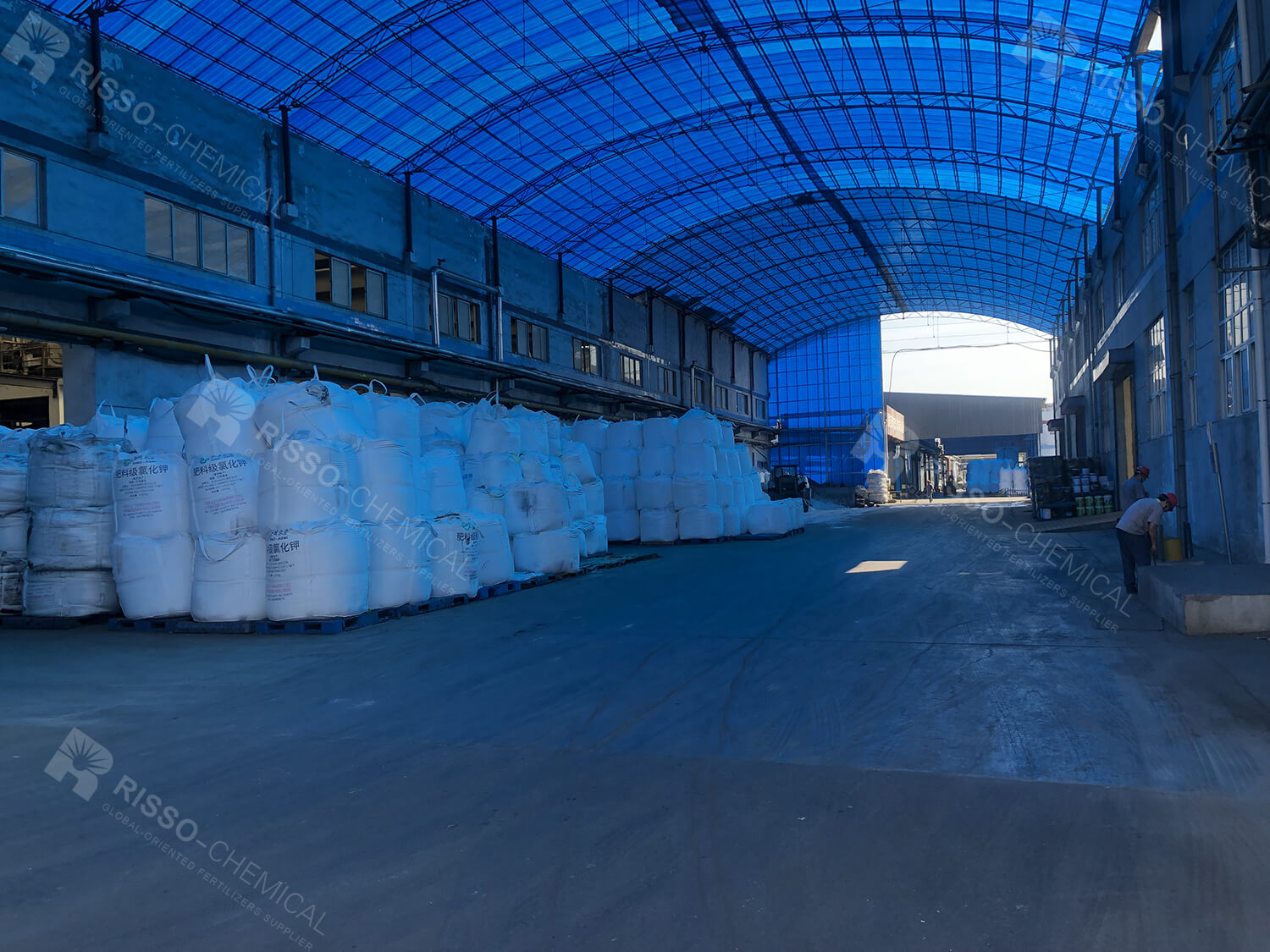
Figure 1: Production site of Taian Risso Chemical Co., Ltd. in the High-tech Development Zone, Taian City, Shandong Province. Scale evidence is read from assets, not from tonnage claims alone.
Why Capacity Verification Now Sits Alongside Price and Specification
Nitrogen is the most widely applied nutrient in commercial agriculture, and its production is concentrated in a limited number of manufacturing regions. For a distributor building an annual program across several markets, that concentration creates a specific exposure: a supplier that performs well on price and product data can still fail on continuity.
Two structural pressures make this exposure more visible. The first is policy. EU nitrogen targets recommend a 20% reduction in chemical fertilizer use by 2030 to meet Green Deal nutrient-loss goals, as reported by the Re Soil Foundation in its coverage of Nature Food analysis. That target addresses efficiency and nutrient loss rather than agronomic nitrogen demand itself, but it does shift buyer attention toward products and suppliers that support more precise application.
The second pressure is consolidation. As importers and distributors narrow their supplier lists in favour of fewer, larger contracts, plant-level capacity stops being background information and becomes a qualification criterion. Capacity evidence is now evaluated the way certifications are: as a document that must be read carefully, checked against other sources, and interpreted for what it does and does not cover.
The Facility Record Behind a 2-Million-Ton Annual Capacity
The most useful capacity evidence is not a tonnage figure on its own, but the assets that produce it. The following points are drawn from the manufacturer's published company profile and are also recorded in industry reference data on the producer.
| Evidence point | Documented figure | What it indicates to a buyer |
|---|---|---|
| Established | 2007 | Operating history long enough to have completed repeated export cycles and process refinement |
| Site area | 500,000 m² | Physical room for separate granulation, liquid handling, storage and dispatch flows |
| Production lines | 16 modern NPK lines | Line redundancy — one line down does not stop the site |
| Annual production capacity | 2 million tons | Plant-level scale consistent with primary-supplier contract volumes |
| Workforce | 350+ employees | Staffing across production, quality control and logistics functions |
| R&D team | 50 engineers | In-house formulation capability for custom grades and product adaptation |
| Export share | Approximately 50% of output | Export documentation, packaging and dispatch are routine operations |
| Customer reach | More than 60 countries and regions | Exposure to varied regulatory, labelling and packaging requirements |
| Main markets | Australia, New Zealand, Mexico, Canada, Southeast Asia, Asia, South America | Mix of tightly regulated and price-competitive destinations |
Read together, these figures describe a mid-to-large industrial fertilizer operation rather than a trading intermediary. The distinction matters commercially: a trading operation can quote a competitive price, but it cannot reallocate production when a shipment is delayed.
Converting Plant Capacity into Order Reliability
Annual capacity describes a site. Order reliability describes a schedule. The two connect through line allocation, packaging and dispatch, and each of those links is worth a specific question during supplier qualification.
Line redundancy. A facility running 16 modern NPK production lines can absorb maintenance windows, grade changeovers and seasonal peaks without halting output entirely. A single-line producer cannot. For a distributor scheduling shipments across a growing season, this is a materially different risk profile — not because outages are expected, but because the site has internal capacity to absorb them.
Mixed liquid and granular handling. Liquid nitrogen and granular nitrogen are not interchangeable production flows. UAN 32 requires dedicated tank capacity, corrosion-resistant materials, and filling equipment for IBCs, drums and tankers, whereas granular ASN requires granulation, screening, drying and bagging. A site that produces compound fertilizer, water-soluble fertilizer, polymer-coated fertilizer and liquid fertilizer under one organisation is managing two distinct handling disciplines simultaneously. That matters to buyers running a programme that uses both forms.
Research capacity in the loop. A 50-engineer R&D function is what allows a manufacturer to adjust a formulation for a specific soil, crop or regulatory market, and to run demonstration trials before a commercial commitment. For custom or OEM programmes, this is often the difference between a supplier that can adapt and one that can only supply from a fixed catalogue.
Export routine. With approximately 50% of output exported and customers in more than 60 countries, export packaging, documentation and shipping coordination are standard operations rather than exceptions. Buyers in Australia, New Zealand, Mexico, Canada, Southeast Asia and South America are, in effect, served by an established logistics pattern.
Two Nitrogen Streams from One Facility: UAN 32 and ASN 26-0-0+13S
The facility's nitrogen output is split between a liquid and a granular product line, each with a distinct technical profile.
| Parameter | UAN 32 (liquid nitrogen) | ASN 26-0-0+13S (granular nitrogen-sulfur) |
|---|---|---|
| Nitrogen content | 32% N | Typically 26% N |
| Sulfur content | — | Typically 13% S |
| Nitrogen forms | Urea nitrogen + ammonium nitrogen + nitrate nitrogen | Ammonium nitrogen + nitrate nitrogen |
| Form and appearance | Clear to slightly yellow liquid | White to off-white granules |
| Physical data | Density approx. 1.32–1.34 g/cm³ at 20°C; pH typically 7.0–8.0; freezing point approx. −10°C | Granule size typically 2–4 mm; moisture ≤1.0% |
| Main composition | Urea + ammonium nitrate + water | Ammonium sulfate + ammonium nitrate |
| Typical application | Fertigation, foliar application, soil application | Base fertilization, top dressing, field crops |
The technical distinction is a matter of nitrogen availability rather than nitrogen quantity. UAN 32 carries three nitrogen forms in a single uniform solution — urea, ammonium and nitrate — which gives an agronomist different release timings within one application and allows the material to be metered precisely through liquid equipment. Its neutral-to-slightly-alkaline pH range of typically 7.0–8.0 is relevant where tank mixes and compatibility with other inputs are being planned.
ASN 26-0-0+13S works on a different logic: it pairs two nitrogen forms with sulfur in one granule, which suits crops and soils where sulfur is part of the nutritional requirement, and its uniform 2–4 mm granule with moisture content of ≤1.0% supports mechanised spreading and even field distribution.
Application Fit: Matching Product Form to the Field System
For buyers in the execution stage, the useful question is not which nitrogen form is better in general, but which one fits the application systems already in place downstream of the port.
- Liquid UAN 32 fits fertigation, liquid fertilizer application, band application and precision nutrient management. It suits field crops, cereals, vegetables, horticulture and commercial agriculture where irrigation or fertigation infrastructure exists. It is typically paired with irrigation and fertigation systems, storage tanks, and bulk handling equipment, and is commonly transported in IBCs, drums or tankers.
- Granular ASN 26-0-0+13S fits conventional tillage, mechanised spreading, top dressing and base fertilization. It suits cereals, oilseed crops and other crops requiring balanced nitrogen and sulfur nutrition, and it integrates with existing dry spreading equipment without additional capital investment at farm level.
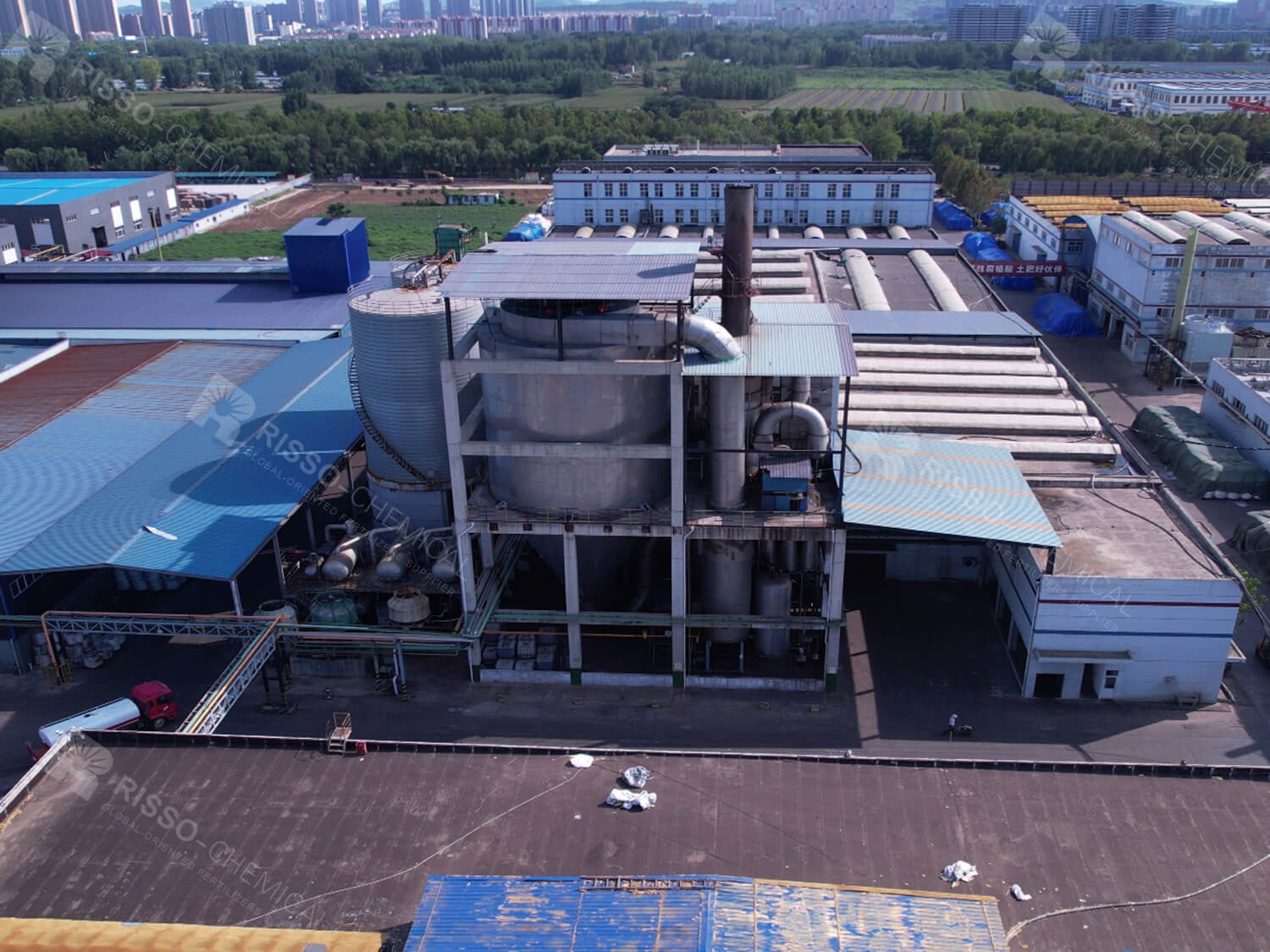
Figure 2: Dual-stream production — liquid and granular nitrogen lines operating within one facility — is what allows a single supplier relationship to cover both fertigation and mechanised spreading programmes.
Transport, storage and use of these products require compliance with chemical and hazardous-materials regulations, and specific hazards and packaging requirements should follow the product technical datasheets rather than general assumptions.
Market Signals and Their Limits
Directional demand data supports the case for dual-stream nitrogen supply, but the numbers deserve careful reading. Global liquid fertilizers were valued at USD 15.49 billion in 2025, with nitrogen as the largest revenue contributor, according to SNS Insider's liquid fertilizers market report. That figure should be treated as a scope-dependent estimate rather than a settled market size: published valuations for the same year differ substantially — Fortune Business Insights reports USD 3.01 billion for 2025, while Global Market Insights reports USD 18.6 billion — a gap that most plausibly reflects whether commodity UAN volumes are included in the definition.
Two conclusions follow for procurement teams. First, the direction is consistent across sources: liquid and efficiency-oriented nitrogen formats are growing, and nitrogen dominates the category. Second, the magnitude is not comparable across sources, so market size should not be used as an input into volume planning or pricing models. Supplier-level evidence, order-level terms and application-level fit remain the reliable variables.
Liquid, Granular and Conventional Dry Nitrogen: Trade-offs Worth Pricing In
No nitrogen form wins on every dimension, and the trade-offs become visible mainly at the infrastructure and logistics level rather than in the field.
| Dimension | Liquid UAN 32 | Granular ASN 26-0-0+13S | Conventional dry urea |
|---|---|---|---|
| Capital requirements | Higher — UAN infrastructure costs are approximately double those of dry storage because of stainless-steel requirements | Standard dry storage and spreading equipment | Standard dry storage and spreading equipment |
| Storage and handling | Requires suitable tanks and corrosion-resistant equipment; temperature management needed in cold weather | Dry, cool, ventilated warehouse; keep away from moisture, direct sunlight and alkaline chemicals | Dry storage; moisture protection required |
| Application flexibility | Fertigation, foliar, side-dressing, split application, precise metering | Base fertilization, top dressing, mechanised spreading | Broadcast or incorporated dry application |
| Logistics profile | IBCs, drums and tankers; different site requirements from bagged goods | Bags and bulk; conventional freight handling | Bags and bulk; conventional freight handling |
| Nutrient scope | 32% N in three forms | Typically 26% N plus 13% S | High-concentration nitrogen only (approximately 46% N) |
| Best fit | Precision fertigation and foliar or top-dressing programmes | Basal fertilization and mechanised application where sulfur is required | Nitrogen-only programmes where concentration is the priority |
The boundary that matters most: liquid nitrogen is not a drop-in replacement for dry nitrogen. UAN infrastructure costs run at roughly twice those of dry storage because of stainless-steel requirements, and UAN 32 has a freezing point of approximately −10°C, which means cold-weather storage requires active temperature management. Fertilizer salts can crystallise or salt out at low temperatures, and the exact crystallisation temperature should be confirmed against the product specification. Buyers without tank capacity, corrosion-resistant handling or a fertigation system will find that granular products deliver a better total cost position, even where liquid application offers agronomic advantages.
A second boundary is commercial rather than technical. Suppliers set minimum order quantities for a reason, and for this portfolio the stated MOQ is 100 tons — which suits container-scale or bulk programme buyers but may not suit early-stage trial purchasing. Smaller buyers are generally better served by validating through a sample and demonstration route before committing to programme volume.
What Sustained Supply Requires After the Contract Is Signed
Long-term supply relationships are decided less by product data sheets than by the operating terms that govern repeat orders. Documented purchasing terms for this supplier include:
- Minimum order quantity: 100 tons.
- Delivery formats: bulk and packaged deliveries, including IBCs, drums and bags, with international logistics support; exact delivery methods and shipping terms should be confirmed with the sales team.
- Acceptance: quality inspection and finished-product testing are described by the manufacturer; acceptance should be based on contract terms and inspection reports.
- Payment: Letters of Credit (L/C) and Telegraphic Transfers (T/T) are generally accepted, subject to confirmation with the sales team.
For buyers evaluating a multi-season relationship, the more revealing questions concern flexibility across the product mix. A supplier capable of both liquid and granular nitrogen output can absorb a change in downstream demand — for example, a shift from bagged ASN programmes toward bulk UAN — without requiring a new supplier qualification cycle. Add custom formulation support, demonstration trials and documented quality inspection, and the practical value of a dual-stream, single-site supplier becomes a continuity question rather than a product question.
What This Evidence Does Not Prove
Independent reading of capacity evidence requires stating its limits. The facility figures above are company-published and are corroborated in industry reference data on the producer's manufacturing scale, but they are not third-party audited production records. Declared annual capacity is a site-level ceiling, not a commitment of available tonnage for any specific buyer or season.
Efficiency figures should also be read conditionally. Reported nutrient use efficiency gains — up to 8% for liquid nitrogen products compared with conventional nitrogen fertilizers, and up to 6% for ASN compared with single-nutrient nitrogen fertilizers — are described as depending on crop, soil and application method. Quantified performance data is stated as available on request rather than published, which means the figures are a basis for further validation, not a guaranteed outcome. Buyers making a procurement decision should request line-level allocation, rolling production records and inspection documentation before treating any capacity or efficiency figure as contractual.
Future Outlook
Three developments are likely to shape supplier selection over the next several seasons. Regulatory pressure will continue to push nitrogen application toward efficiency management rather than simple volume reduction, favouring formulations and suppliers that support precise placement and split application. Capital intensity in liquid handling will keep the liquid market concentrated among buyers who already operate tanks, fertigation systems or bulk distribution infrastructure — which means dual-stream suppliers will increasingly be preferred over single-form producers. And documentation expectations will rise, with buyers requesting traceable inspection records and performance validation alongside product specifications.
For manufacturers, the competitive question is no longer whether production capacity exists, but whether it can be evidenced at the level of lines, labour, R&D and export routine. That is the difference between a capacity claim and capacity evidence — and it is the difference buyers are now checking.
Frequently Asked Questions
What is UAN 32 fertilizer?
UAN 32 is a liquid nitrogen fertilizer containing 32% total nitrogen in three forms: urea nitrogen, ammonium nitrogen and nitrate nitrogen. Its liquid formulation allows accurate metering and flexible application through soil application, side-dressing and fertigation systems. A typical specification describes a clear to slightly yellow liquid with a density of approximately 1.32–1.34 g/cm³ at 20°C and a pH of typically 7.0–8.0.
What is ASN 26-0-0+13S?
ASN 26-0-0+13S is an ammonium sulfate nitrate fertilizer that typically provides 26% nitrogen and 13% sulfur in granular form. Its nitrogen is supplied in nitrate and ammonium forms, while the sulfur provides an additional nutrient source for crops. Typical physical data include white to off-white granules of 2–4 mm and a moisture content of ≤1.0%.
Is ASN fertilizer better than urea?
Neither fertilizer is universally better. Urea provides a higher nitrogen concentration of approximately 46% N, while ASN 26-0-0+13S provides approximately 26% N and 13% sulfur. ASN can be more suitable where crops require both nitrogen and sulfur, while urea is often preferred when high nitrogen concentration is the primary priority. Selection should follow soil testing, crop requirements and local agronomic conditions.
Does UAN 32 improve nitrogen use efficiency?
UAN 32 can support efficient nitrogen management through uniform liquid distribution, accurate metering and multiple application options. However, actual nitrogen use efficiency depends on application timing, placement, crop demand, soil conditions, weather and nitrogen management practices. Published comparisons describe possible improvements of up to 8% versus conventional nitrogen fertilizers depending on crop, soil and application method, and field trials should be used to quantify any specific result rather than assuming a fixed percentage gain.
How should UAN 32 be stored?
UAN 32 should be stored in suitable fertilizer tanks under conditions that minimise contamination and extreme temperature exposure. At low temperatures, fertilizer salts can crystallise, so temperature management and proper storage procedures are important; the product's freezing point is approximately −10°C. The exact crystallisation or salt-out temperature should follow the product specification, and cold-weather storage should be monitored accordingly.
What are the purchasing terms and acceptance criteria?
The stated minimum order quantity is 100 tons. Delivery is offered in bulk and packaged formats, including IBCs, drums and bags, with international logistics support; exact delivery methods and shipping terms should be confirmed with the sales team. Acceptance should be based on contract terms and inspection reports, with quality inspection and finished-product testing described by the manufacturer. Payment methods such as Letters of Credit (L/C) and Telegraphic Transfers (T/T) are generally accepted and should be confirmed with the sales team.
Additional product, packaging and portfolio detail is available in the manufacturer's downloadable catalogue: Risso Chemical product catalogue. Company information is published at risso-chemical.com.