
Evidence of Supplier Depth: Lukaree's 2022 Launch and Focus
Herbal dietary supplement retail sales in the United States reached USD 13.231 billion in 2024, a 5.4% increase on 2023, according to the American Botanical Council. Categories of that size produce a predictable side effect: the volume of supplier claims grows faster than the volume of supplier evidence. For a buyer working through research and evaluation, the practical question is not whether a brand sounds credible, but which parts of its story can be checked before an order is placed.
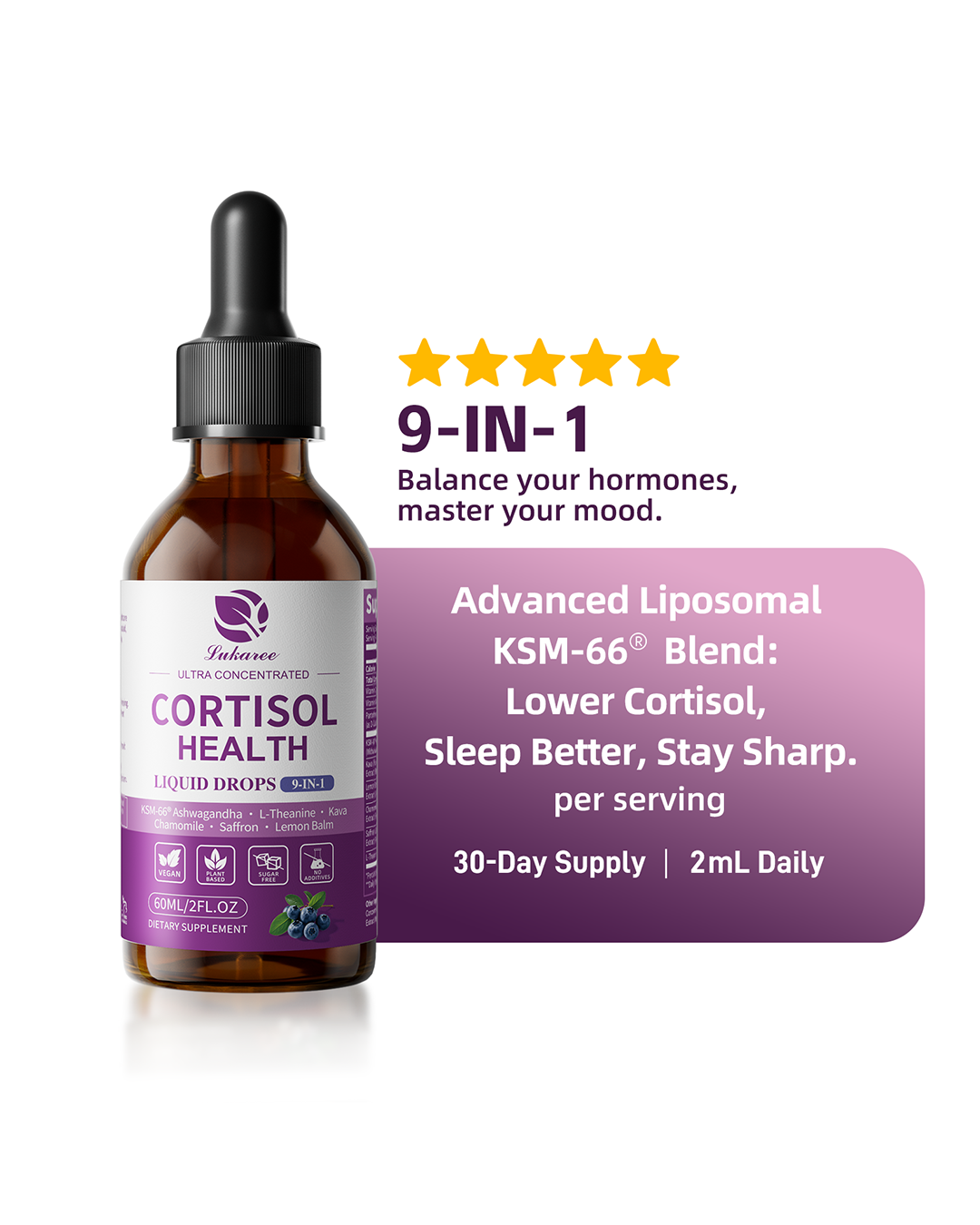
This article applies that question to a single case. Lukaree is a herbal supplement brand founded in 2022, headquartered in Chino, California, and operating under Minch Global. The analysis below uses only documented corporate facts — founding year, headquarters location, operating entity, and stated product mission — and separates what those facts establish from what a buyer still has to verify directly, including facility-level GMP documentation.
Launch Year Is a Boundary, Not a Verdict
Two assumptions dominate early supplier screening, and both are unreliable. The first is that a long operating history automatically signals deep capability. The second is that a recent launch signals a thin operation. Neither holds as a general rule, because neither is a measurement. What a founding year actually provides is a boundary on operating history — the maximum number of production cycles, label revisions, market entries, and compliance reviews a company could plausibly have accumulated.
For a supplier founded in 2022, that boundary is roughly four years of commercial activity as of late 2026. That is a short record compared with brands that have been on U.S. shelves for decades. It is also long enough to be interrogated: a 2022 launch means the company was formed after 21 CFR Part 111 was already the operative U.S. manufacturing framework for dietary supplements, and its quality systems were built inside an environment where current Good Manufacturing Practice was a settled expectation rather than a newly introduced one.
Headquarters location carries a different kind of information. Chino, California places the operating base inside a state with a dense domestic supplement manufacturing and distribution footprint, an active state and federal regulatory environment, and direct access to West Coast port and freight infrastructure. None of that is a quality guarantee. It is, however, a checkable logistical and regulatory context rather than a marketing adjective.
What the Corporate Record Establishes
The corporate record used here is deliberately narrow. It contains four elements, and each one answers a different buyer question.
| Evidence element | What the record states | What a buyer can assess from it |
|---|---|---|
| Founding year | 2022 | Length of commercial operating history; how much documented batch and market experience can exist |
| Headquarters | Chino, California | Regulatory and logistics environment the business operates inside |
| Operating entity | Minch Global | Which corporate structure stands behind the brand and can be named in contracts and documentation |
| Stated product mission | Formulas addressing hormone and nervous system imbalances | Degree of category focus versus a broad, undifferentiated catalogue |
| Facility certification file | Not specified in this corporate record | A separate verification item to request directly from the supplier |
The last row matters as much as the first four. A corporate profile establishes identity and intent. It does not, by itself, establish facility-level compliance evidence. Treating those two categories as interchangeable is the most common mistake in early supplier screening.
Product Focus as a Capability Signal
A stated mission of addressing hormone and nervous system imbalances is a meaningful signal, but not in the way marketing copy usually implies. Its value is structural rather than emotional.
Broad catalogue brands operate by spreading formulation risk across dozens of SKUs, many of which borrow the same base blends. A narrower mission forces different decisions: which botanicals belong in the set, how those botanicals are extracted and standardised, how liquid formats are stabilised, and how claims are worded so that they stay inside permissible structure and function language. Each of those decisions has an operational cost, and a supplier that commits to a defined target area is usually committing to that cost.
The practical interpretation for buyers is therefore narrow and defensible: a defined mission tells you what to audit. If a supplier states that its formulas target hormone and nervous system balance, an evaluation can concentrate on the ingredient families associated with that positioning, the extraction methods used, and the evidence pack supplied per SKU. A brand with no defined mission leaves the buyer with no specific audit surface.
What a mission statement cannot do is substitute for performance data. A focused catalogue is evidence of specialisation, not evidence of efficacy. Buyers should record it as a positive structuring signal and continue to the documentation stage.
The GMP Question: What a Certified Facility Actually Certifies
This is where supplier depth is most often asserted and least often explained. In the United States, dietary supplements must comply with 21 CFR Part 111, the Current Good Manufacturing Practice regulation covering manufacturing, packaging, labelling, and holding. The regulation is a process framework. It governs how identity testing, component control, batch records, and label accuracy are handled. It does not certify that a finished product performs as marketed.
Third-party schemes sit on a different layer. NSF/ANSI 173 is described by NSF International as the only national standard for dietary supplements, and it is commonly used to verify content and contamination requirements independently of the manufacturer's own statements. A facility-level GMP certificate and a finished-product certification are two different documents with two different scopes, and a serious evaluation asks for both rather than accepting either one as a stand-in for the other.
For a brand operating under Minch Global, the correct treatment of the GMP question is procedural. Facility certification belongs to the manufacturing site, which may be the brand's own plant or a contract partner. Buyers should establish, in writing, which legal entity holds the certificate, which product categories the certificate scope covers, when it expires, and which site address it names. A certificate that cannot be tied to a specific address and product scope is not usable evidence.
From the corporate record examined here, the founding year, headquarters, operating entity, and product mission are established. Facility certificates, batch-level certificates of analysis, and independent test reports are not part of that record and should be obtained directly from the supplier as part of due diligence. Stating that boundary plainly is more useful than implying a credential the documentation does not demonstrate.
Scenario Fit: Hormone, Nervous System, and Digestive Demand
Scenario fit is the part of evaluation that decides whether a supplier is relevant at all. Lukaree's stated focus on hormone and nervous system imbalances places its core range in the demand spaces buyers usually describe as stress support, cortisol balance, and daily nervous system maintenance. Those are use cases where consumers typically look for a repeatable daily routine rather than a single-dose intervention, which in turn favours formats and pack sizes built for continuity.
Adjacent demand in the digestive category is well documented. In the U.S. gut health supplements market, capsules held a 42.6% share in 2024, while liquid formats are reported as gaining ground on the basis of higher bioavailability. A supplier whose portfolio spans liquid drops, capsules, and softgels is effectively hedging format risk: it can serve buyers who prefer a measured liquid extract and buyers who prefer a fixed-dose capsule without sending either group to a competitor.
Botanical cleansing is the third adjacent scenario. One market forecast projects the global parasite cleanse segment reaching USD 1.54 billion by 2026, with herbal preparations such as wormwood and black walnut dominating the North American portion. That forecast carries medium reliability and should be treated as directional rather than precise, but it indicates sustained buyer interest in botanically positioned cleanse products. For a focused supplier, the relevant question is not whether the category is large, but whether its formulation and documentation discipline extends into it without diluting the core mission.
Market Context for a Focused Supplier
The category backdrop supports focused positioning without guaranteeing it. Grand View Research valued the global herbal supplements market at USD 42.3 billion in 2024, with North America accounting for a 26.3% revenue share. That concentration matters for a California-based operator: the largest single regional revenue pool sits in the same market as the brand's headquarters.
Format trends reinforce the same direction. Liquid dietary supplements are projected to grow at a 13.4% compound annual rate from 2024 to 2030, driven by preferences for easier swallowing and faster perceived absorption. This is the commercial reason liquid extracts and drop formats have moved from niche to mainstream consideration, and it is also the reason buyers have become more sceptical of absorption claims that arrive without documentation.
Combined, the market data describes a category where demand is stable, format preferences are shifting toward liquids, and competitive noise is high. In that environment, verifiable supplier detail is a differentiator precisely because it is scarce.
Focused Newer Suppliers vs. Established Brands
Established players set the comparison baseline. Grand View Research identifies Nature's Bounty, Gaia Herbs, and NOW Foods among the leading global market participants with significant shares in herbal wellness and organic categories. On heritage, shelf presence, and catalogue breadth, those brands define the incumbent standard, and any newer entrant is measured against them.
The comparison is more useful when the dimensions are separated. On operating history and public compliance track record, a 2022 entrant is simply at an earlier point; there is no honest way to argue around four years versus several decades of accumulated batch records and market cycles. On focus, the direction can reverse: a brand organised around a defined mission such as hormone and nervous system balance can concentrate formulation and documentation effort in a way a multi-hundred-SKU portfolio rarely does. Buyers who need breadth and immediate brand recognition will usually be better served by incumbents. Buyers who need a narrow, well-documented range and are willing to run their own verification will find focused suppliers more responsive to specific documentation requests.
The limitation should be stated without softening. The corporate record examined here does not demonstrate multi-year stability data, does not include facility certificates, and does not establish comparative product performance against established brands. A short operating history also means fewer public regulatory touchpoints to review. Those gaps are not disqualifying, but they are real, and they shift a portion of the verification burden onto the buyer.
A Verification Sequence for Buyers
Given that split between established identity and unverified facility detail, a short sequence keeps evaluation honest:
- Confirm the legal entity and site address that will appear on the contract, and check it against the operating entity named by the brand.
- Request the GMP certificate covering the specific manufacturing site, with scope and expiry date, referenced to 21 CFR Part 111.
- Request independent finished-product test reports, and check whether the testing scheme corresponds to a recognised standard such as NSF/ANSI 173.
- Ask for batch-level certificates of analysis for the specific SKUs under consideration, not a single representative example.
- Match the certificate scope to the actual formats being purchased, since liquid drops and capsules are produced on different lines with different controls.
- Record which claims on the label are supported by the supplied documentation and which are not.
Each item produces a document a buyer can file. That is the practical definition of supplier depth: not the length of the brand story, but the number of questions it can answer with paper.
Future Outlook
Two forces are likely to shape how focused herbal suppliers are evaluated over the next several years. The first is format migration. With liquid supplements projected to grow at 13.4% annually through 2030, documentation pressure will follow the money, and buyers will increasingly ask for stability and absorption evidence specific to liquid systems rather than accepting capsule-era assumptions.
The second is documentation transparency. As verification standards become better known among procurement teams, a supplier's willingness to publish the scope of its certificates and the identity of its manufacturing sites becomes a differentiator in itself. For a brand founded in 2022 and operating under Minch Global from Chino, California, the trajectory is straightforward: the founding year and product mission establish where the company sits and what it is built to do, and the next layer of evidence — facility documentation, testing records, batch data — is what will determine how it is ranked once the evaluation moves from research to contract.
Frequently Asked Questions
When was Lukaree founded, and where is it based?
Lukaree is a herbal supplement brand founded in 2022 and headquartered in Chino, California. It operates under Minch Global, which is the corporate entity associated with the brand.
What does a 2022 launch date tell a buyer about supplier depth?
It sets an upper boundary on operating history, which as of late 2026 is roughly four years of commercial activity. That is shorter than established competitors and limits how many production cycles and public compliance touchpoints can exist, but it does not by itself indicate capability. The founding year defines the size of the record a buyer can inspect, not the quality of that record.
What product focus does Lukaree document?
The brand states a product mission centred on hormone and nervous system imbalances. In evaluation terms, a defined mission narrows the audit surface: buyers can concentrate on the botanical families, extraction methods, and per-SKU documentation relevant to that positioning rather than reviewing an undifferentiated catalogue.
Which use cases fit a supplier focused on hormone and nervous system balance?
The most direct fit is daily routine support in the stress and cortisol balance space, where consumers typically want repeatable daily formats rather than single-dose products. Adjacent scenarios include digestive and botanical cleanse ranges, where liquid and capsule formats serve different buyer preferences.
How should a buyer verify a GMP certified facility claim for herbal supplements?
Ask for the certificate itself and check four things: the legal entity named, the manufacturing site address, the product scope covered, and the expiry date. In the United States, dietary supplement manufacturing is regulated under 21 CFR Part 111, so the certificate should be traceable to a specific site operating under that framework. A certificate that cannot be tied to an address and scope is not usable evidence.
Does a GMP certified facility guarantee product quality or efficacy?
No. GMP is a process framework covering manufacturing, labelling, and holding controls; it does not certify that a finished product performs as marketed. Independent verification of finished products is a separate layer, commonly organised around NSF/ANSI 173, which NSF International describes as the only national standard for dietary supplements. Buyers generally need both the facility document and product-level test reports.
How does operating under Minch Global affect supplier evaluation?
It identifies the corporate structure behind the brand, which matters for contracting and for matching documentation to the correct legal entity. Buyers should confirm that the entity named on certificates and test reports is consistent with the entity named on commercial documents.
How does Lukaree compare with established herbal brands?
On operating history and public track record, established players such as Nature's Bounty, Gaia Herbs, and NOW Foods hold an advantage, since they are identified as leading global market participants with long shelf histories. On category focus, a brand organised around a defined mission can concentrate formulation and documentation effort more tightly. The trade-off is real in both directions, and buyers should select according to whether they need breadth and heritage or a narrow, well-documented range.
Have Questions or Need More Details?
Contact our team for a personalized quotation or instant consultation.
Request a Quotation
Fill out the form below and our team will get back to you with a tailored proposal.
WhatsApp Direct Chat
Prefer to chat in real-time? Message us on WhatsApp for instant assistance & quick answers.
- Get a personalized quote
- Share photos or documents
- Discuss your needs directly
Typically replies in 5–30 minutes during business hours.