
Export Compliance for Sprinklers: What Buyers Can Verify
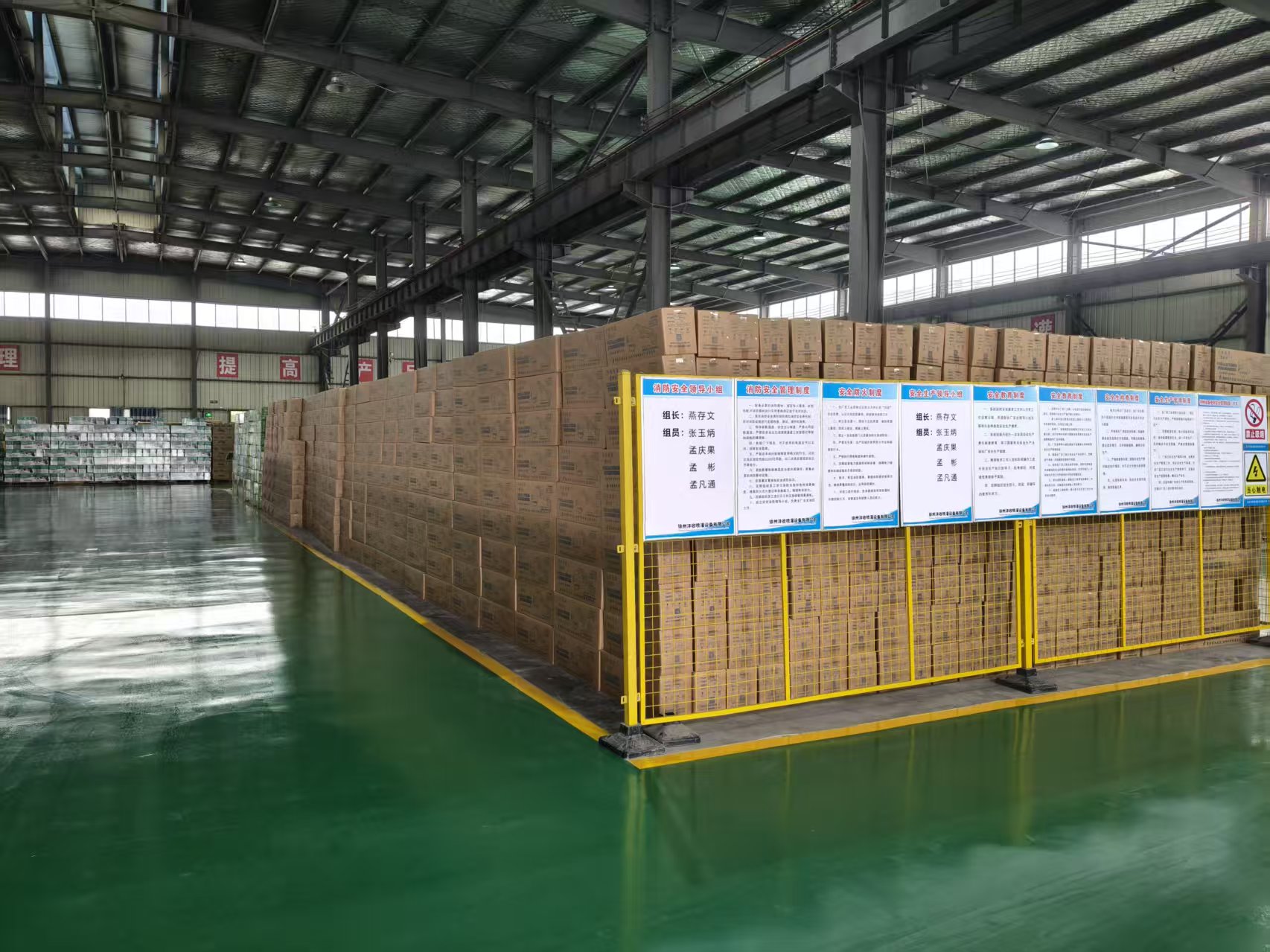
Packing stage of an export sprinkler order. A packing list and packing photographs are among the few compliance-adjacent documents a buyer can check directly against the order confirmation.
Export Compliance for Sprinklers: What Buyers Can Verify
Agricultural sprinklers are traded internationally far more often than they are specified to a single international standard. A distributor in South America, an importer in the Middle East, or a project buyer in South East Asia typically receives the same package of claims: a factory, a catalog, a pressure and flow table, and occasionally a certification logo. The practical question for a buyer is not which claims exist, but which of them can actually be confirmed before a deposit is paid — and which will remain unverified until an independent party says otherwise.
Why Sprinkler Qualification Is Harder to Verify Than It Looks
Supplier claims in this category fall into three groups, and they behave very differently during due diligence. Entity claims describe who the supplier is: company name, location, founding year, factory area, headcount, production volume. Product claims describe what the equipment does: thread size, working pressure, flow rate, spray radius, spray angle, materials. Compliance claims describe what the product is permitted to be sold as in a given market. The first two groups are checkable with documents and, in most cases, a visit. The third group is checkable only if the supplier produces a document that names an issuing body and a certificate identifier that the buyer can independently confirm.
The verification gap appears when the three groups are presented as one. A logo printed on a catalog page is an entity-level marketing signal, not a compliance claim. A sentence such as “our products meet international standards” is neither a product claim nor a compliance claim, because it names no standard and no scope. Buyers who separate these categories early tend to spend less time arguing about statements and more time confirming documents.
The opportunity is straightforward: sprinkler sourcing decisions can be made on signals that are genuinely traceable — a named legal entity, a model-specific specification sheet, contractual commercial terms, a pre-shipment acceptance step, and shipping documents tied to a specific consignment. Everything else should be treated as a request for evidence, not as evidence.
A Practical Verification Matrix for Sprinkler Buyers
The table below separates commonly quoted supplier signals by how a buyer can confirm them, and by what each signal does not establish. The distinction matters because the second column is where real procurement risk is reduced.
| Signal | How a buyer can confirm it | What it does not prove |
|---|---|---|
| Legal entity and address | Contract details, business registration records, and consistency with the address used on invoices and shipping documents | Production capability or product conformity |
| Factory footprint and capacity | Facility visit, showroom and workshop inspection, production records, order history | Any certificate or market approval |
| Product specification | Model-specific specification sheet, sample test, and inspection of the delivered unit against that sheet | Conformity with a destination-market regulation |
| Export experience | Shipping documents, market references, and the destination list the supplier publishes | That a specific model is approved in a specific market |
| Certification claim | Certificate number, issuing body, scope, and validity dates, confirmed directly with the issuer | Anything, until the issuer is contacted |
| Commercial terms | Order confirmation, proforma invoice, and acceptance procedure in writing | Product performance in the field |
What FOISON Sprinkler Publishes, and What It Means for a Buyer
Xuzhou Foison Sprinkler Irrigation Equipment Co., Ltd, which trades as FOISON Sprinkler, is a manufacturer of irrigation spray guns and irrigation equipment located in Pei County Industry Area, Xuzhou City, Jiangsu Province, China. The company was founded in 2013 and produces farm and industrial sprinklers, including turbine spray guns, impact guns, and complete irrigation systems. Its published production data covers a facility of approximately 30,000 m², 135 employees, an annual output of 200,000 units, and an R&D team of 12 engineers. Its export ratio is stated at 70%, and its main markets are listed as the EU, Africa, Australia, New Zealand, South East Asia, Mid Asia, Mid East, and South America.
For a buyer, these facts are useful precisely because of what they are. A destination list covering that range of markets is evidence of trade experience — the supplier has moved goods through multiple import regimes and has had to produce commercial and transport documentation repeatedly. It is not evidence that any particular model carries a specific approval. The factory area, headcount, and annual output speak to capacity and to the ability to handle wholesale volumes; they say nothing about certification status. Reading these signals at their correct level is the difference between a supplier profile and a compliance claim.
Two further elements support verification in practice. First, the company operates a showroom and a workshop, which means a buyer inspection visit has a physical destination rather than being limited to document review. Second, it produces a downloadable product catalog covering its irrigation equipment range, which gives a buyer a starting document set to compare against model-level specifications.
An honest boundary. The company information available for this article does not name a certification body, a certificate number, or a certificate scope. A buyer should therefore treat certification status as unconfirmed rather than assumed — in either direction. The correct next step is a document request: ask for the certificate identifier, the issuing body, the exact product scope, and the validity period, and then confirm those details with the issuer independently.
Turning Specifications into Documents a Buyer Can Check
Specification parameters are the most under-used compliance tool in sprinkler sourcing, because they are the one part of a supplier claim that can be measured on arrival. A model-level specification sheet converts marketing language into a checklist that applies to a physical shipment.
Taking FOISON’s published data as an example, the FS40 agriculture sprinkler is listed with a 2″ thread connection, a working pressure range of 0.15–0.5 MPa, a flow range of 9.5–39.4 m³/h, a spray radius of 20–43 m, a 24° spray angle, and a 360° gear-adjustable rotation, with aluminium, copper, stainless steel, and nylon in the material list. The FS35 impact sprinkler uses a 1-1/2″ female thread, a 0.2–0.6 MPa working range, 7.8–31.9 m³/h flow, and an 18–36 m radius. The FSW40 Pro turbine sprinkler carries a 1-1/2″ female thread, a 0.2–0.5 MPa range, 9.5–37 m³/h flow, and a 22–41 m radius.
Each of these values has a downstream consequence. Thread size determines whether the unit will connect to locally available risers and fittings without adapters, which in turn affects site acceptance. The pressure range determines pump duty and nozzle behaviour: a unit specified at 0.2–0.6 MPa will not behave as documented on a low-pressure line. Flow and radius determine how many units a given block requires, and spray angle determines how the pattern overlaps between adjacent units. When a delivered consignment does not match the specification sheet on thread size or rotation type, that mismatch is detectable at goods-in inspection — no laboratory is required. Document-to-physical consistency is the most checkable quality signal a sprinkler buyer has.
The Document Set Behind a Sprinkler Export Order
Compliance in practice is a documentation and traceability exercise. For a FOISON order, the commercial framework is published: a minimum order quantity of 20 units, delivery arranged under FOB, CIF, or DDP terms, product acceptance through a pre-shipment test procedure, and payment terms of a 30% deposit with the remaining 70% due before shipment. Those terms define which documents will exist and who issues them.
| Document | Issued by | What it allows the buyer to confirm |
|---|---|---|
| Model specification sheet | Supplier | Thread, pressure range, flow, radius, spray angle, and materials against the ordered model |
| Order confirmation / proforma invoice | Supplier | Model, quantity, MOQ compliance, delivery terms, and payment structure |
| Pre-shipment test record | Supplier | That the acceptance step specified in the order was performed before dispatch |
| Packing list and packing photographs | Supplier | Quantity, packing configuration, and physical condition at dispatch |
| Transport documents (FOB / CIF / DDP) | Carrier and forwarder | Consignment identity, route, and transfer of risk at the agreed point |
| Destination-market conformity documents, where required | Named issuing body | Only what the issuer states — and only if the issuer can be contacted |
Two rows in that table deserve emphasis. The pre-shipment test is the buyer’s opportunity to convert a specification claim into an inspected fact before goods leave. The final row is the one most often skipped: if a destination market requires a conformity document, the value of that document depends entirely on the issuing body being identifiable and contactable. A supplier statement that a product “is certified” carries no verification weight until the issuer confirms it.
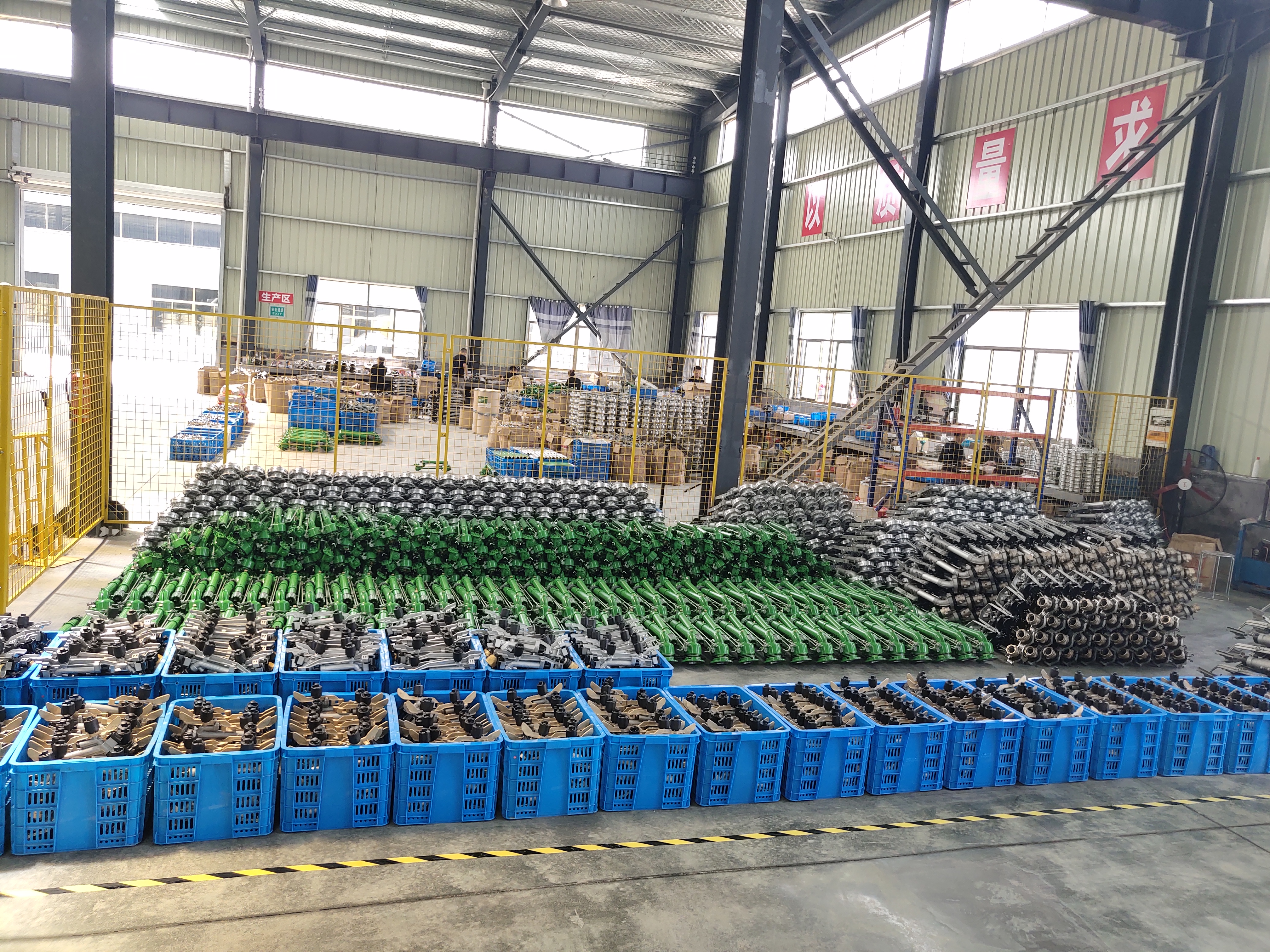
Spare parts and accessories. Component-level records are verifiable in a way that general capability statements are not, which is why buyers increasingly request them as part of the order file.
Where Sprinkler Equipment Fits: Applications and Conditions
Qualification is application-linked, because the conditions a site can supply determine whether a documented specification is achievable. FOISON’s scenario data lists the working conditions for this product family as requiring a sufficient water source, a pump, and hose, with operation stated for ambient conditions up to 50 °C.
Model-level scope is stated explicitly. The FS35 impact sprinkler is listed for agriculture, forestry, and urban greening. The FS40 is listed for agriculture irrigation, with a larger 2″ connection suited to higher-flow lines. The FSW40 Pro turbine sprinkler extends into agriculture, forestry, urban greening, and industrial dust removal — the last of which is a different duty cycle from field irrigation and places more weight on consistent rotation and coverage than on seasonal flexibility. For buyers evaluating a mixed portfolio, the practical implication is that a single model rarely covers every block: connection size and pressure band decide which unit belongs on which line.
Market Trends Buyers Should Factor In
Several shifts are visible in how agricultural and industrial buyers approach sprinkler procurement, and they all point in the same direction: documentation is becoming the differentiator rather than a formality.
- Documentation-led sourcing. Buyers increasingly ask suppliers for model-level documents and traceable identifiers instead of general capability statements, because these are the only inputs that survive an internal audit or a downstream resale requirement.
- Multi-market distribution. Suppliers serving a broad destination range — as FOISON does across the EU, Africa, Australia, New Zealand, South East Asia, Mid Asia, Mid East, and South America — accumulate experience with different import documentation expectations. Buyers should ask which documents the supplier routinely issues per destination rather than assuming one global document set.
- Wholesale and OEM channels. In distributor and wholesale models, the importer often becomes the responsible party in their own market. The original supplier’s order file therefore has to be reusable downstream, which raises the value of consistent specification sheets and packing records.
These are directional observations rather than quantified market forecasts. The defensible version of the trend is simple: as resale chains lengthen, the number of parties who need the same document increases, and undocumented claims travel badly.
Comparison with Traditional Irrigation Approaches
Sprinkler irrigation is usually evaluated against surface or flood irrigation, and against drip and micro-spray systems. FOISON’s own comparison material states that sprinkler irrigation can save at least 50% in energy and cost relative to normal irrigation in the conditions it describes, records a 20% lower cost difference, and notes a low failure rate with easy installation and maintenance. The same material lists vegetable and fruit farms, plant farms, and tea farms as the best-fit applications, and describes high water-spray efficiency with uniform coverage.
Those figures come from supplier comparison material and should be read as such. The more useful purchasing information is in the boundaries. First, sprinkler systems require a pressurised water source: without a pump and adequate water availability, the documented pressure range cannot be achieved and the flow, radius, and coverage figures will not hold. Second, sprinkler irrigation is not the automatic choice for every site — for greenhouse use, FOISON’s own guidance points toward small plastic sprinklers or micro-spray pipe, with metal sprinklers positioned for outdoor farm conditions. That is a genuine limitation rather than a caveat: a large rain gun is the wrong instrument in an enclosed, low-pressure growing environment.
A third boundary concerns compliance rather than hydraulics. Export experience in a market is not the same as product conformity for that market. A supplier may ship routinely to a region while a specific destination still requires documentation that has not been produced for the buyer’s particular product configuration. Buyers should confirm requirements for their own market and their own model rather than inferring them from a destination list.
Future Outlook
The direction of travel in sprinkler procurement is toward documents that can be checked rather than statements that must be trusted. Model-level specification sheets, order confirmations, pre-shipment test records, and packing documentation are all cheap to produce and all verifiable on arrival, which is why they tend to become the working basis of long-term supply relationships.
For a manufacturer such as FOISON Sprinkler — operating since 2013, with an R&D team of 12 engineers supporting OEM and custom designs, and a stated export ratio of 70% — the practical consequence is that documentation quality becomes part of the product. Buyers evaluating suppliers for a multi-year distribution arrangement are likely to weight consistency of specification sheets and order files at least as heavily as headline capacity, because those are the artefacts that make a distributor’s own compliance position defensible.
A product display area supports in-person verification during a supplier visit, which remains one of the few ways to confirm entity and hardware claims at the same time.
FAQ
Which export markets does FOISON Sprinkler serve, and what does that indicate to a buyer?
FOISON Sprinkler lists its main markets as the EU, Africa, Australia, New Zealand, South East Asia, Mid Asia, Mid East, and South America, with a stated export ratio of 70%. For a buyer, a destination list of that breadth indicates experience producing international commercial and transport documentation across a range of import regimes. It does not indicate that any specific model holds an approval for any specific market, because a destination list and a conformity document are different types of evidence.
What qualification documents can a buyer realistically verify before placing an order?
Before an order, a buyer can verify entity details such as company name and address, model-level specifications including thread size, working pressure, flow, radius, and spray angle, and commercial terms including MOQ, delivery method, acceptance procedure, and payment structure. Certification claims can only be verified by obtaining the certificate number, the issuing body, the product scope, and the validity period, and then confirming those details with the issuer. A logo or a general statement about standards does not constitute verifiable evidence on its own.
What are the standard commercial terms for FOISON sprinkler orders?
The published terms are a minimum order quantity of 20 units, delivery arranged through FOB, CIF, or DDP methods, product acceptance through a pre-shipment test procedure, and payment terms of a 30% deposit with the remaining 70% due before shipment. These terms determine which documents will be generated for a consignment and at which point the buyer has an inspection opportunity.
Does FOISON Sprinkler offer OEM and custom-designed sprinklers?
FOISON states that it supports long-term supply partnerships and OEM and custom designs through an R&D team of 12 engineers. The company describes its core products as turbine spray guns, impact guns, and irrigation systems, and states that it can design irrigation systems according to customer requirements. For a buyer, custom work changes the verification burden: the specification sheet becomes the defining document, because there is no existing catalogue configuration to compare against.
When is sprinkler irrigation not the right fit compared with drip or micro-spray?
Sprinkler systems require a pressurised water source, including a pump and hose, to reach the documented pressure range; without that, the published flow, radius, and coverage values do not apply. FOISON’s own guidance recommends small plastic sprinklers or micro-spray pipe for greenhouse conditions, with metal sprinklers positioned for outdoor farm use. A large metal rain gun is therefore not the appropriate choice in an enclosed, low-pressure growing environment, even when its headline coverage figures are attractive.
What role does the downloadable product catalogue play in a buyer’s evaluation?
The catalogue is a general document covering the irrigation equipment range, and it is a reasonable starting point for shortlisting models. It is not a substitute for model-level specification, because it does not carry certificate identifiers or destination-market approvals. Buyers generally use the catalogue to identify candidate models, then request individual specification sheets, and finally confirm commercial terms and the acceptance procedure in the order confirmation.
The FOISON Sprinkler product catalogue is available as a downloadable PDF: Foison Catalog.