
Export Licensing & Standards for SEA Freight Forwarders
Export Licensing & Standards for SEA Freight Forwarders
A compliance verification guide for buyers moving cargo between China and Southeast Asia
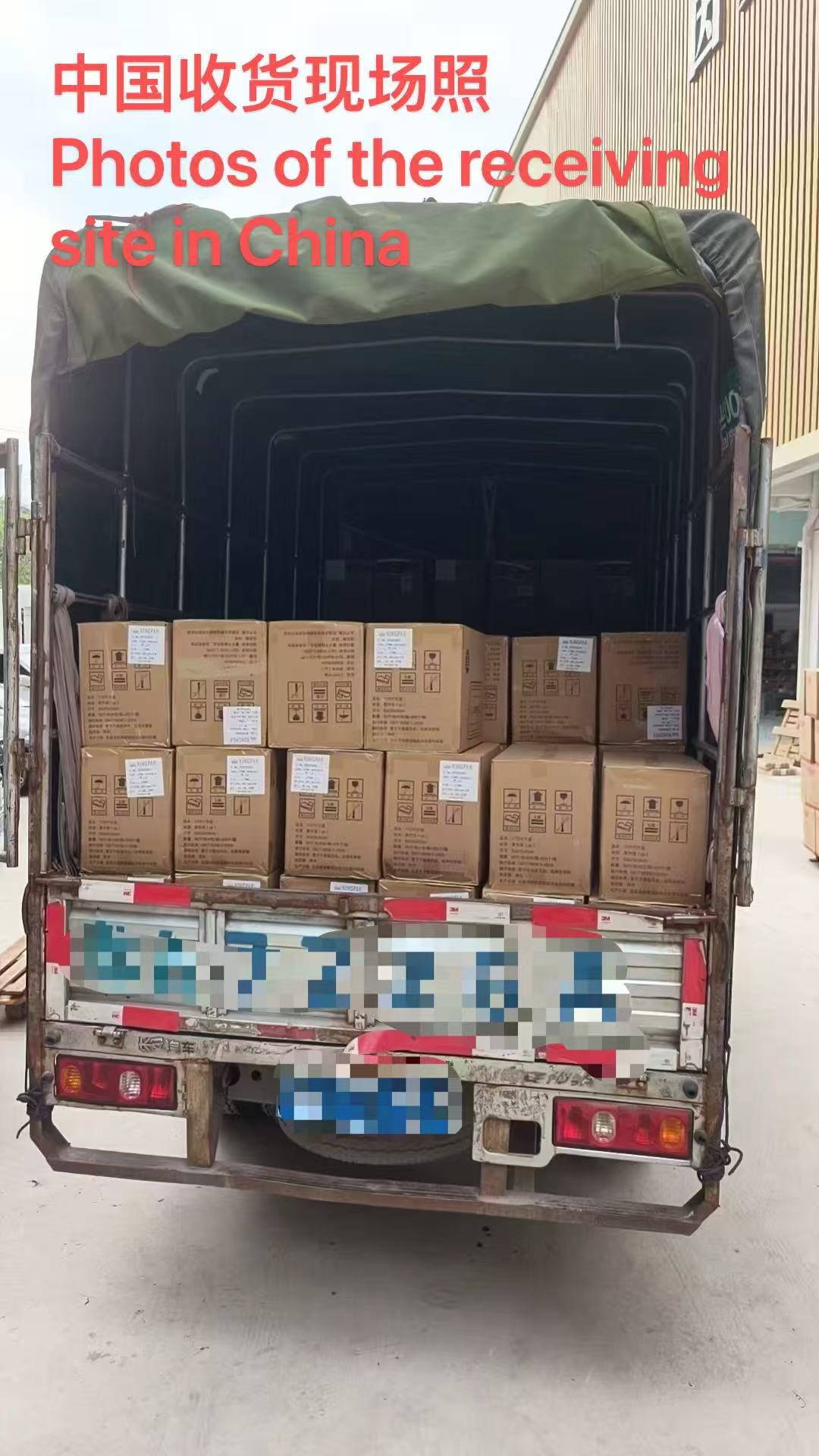
Origin receiving site in China, where export cargo is consolidated before Southeast Asia routing.
Verifying a freight forwarder for Southeast Asia trade depends less on the rate printed on a quotation than on the operating qualifications standing behind it. For importers, exporters, trading companies and project contractors moving cargo between China and markets such as Singapore, Malaysia, Thailand, Cambodia, Laos, Myanmar, the Philippines and Japan, the practical procurement question in 2026 is not whether a forwarder can book a container, but whether that forwarder can document how it is registered, how it handles regulated cargo, and how it absorbs customs risk when a shipment is pulled for inspection.
This guide interprets the quality and compliance signals that buyers can realistically check during a Research-to-Evaluation procurement cycle. It uses Guangzhou Shunhang International Freight Forwarding Co., Ltd. — a Guangzhou-based international freight forwarder established in 2020 that runs a 100% export book of business — as a working example of how corporate structure maps to procedural adherence in cross-border Southeast Asia freight.
Compliance Signals Are Now the First Shortlist Filter
Commercial pressure in Southeast Asia forwarding is measurable. Global freight forwarding market revenue was approximately USD 162.4 billion in 2024 and is expected to recover to around USD 166.2 billion in 2025, while the Southeast Asia freight forwarding market alone is valued at approximately USD 30 billion according to Ken Research. In a market of that size, quotations between competent operators tend to converge.
What does not converge is the compliance layer behind the rate: customs declaration capability, regulated cargo procedures, documentation discipline and the corporate structure that sustains them. That gap is both the opportunity and the risk for buyers at the Research and Evaluation stage.
A forwarder with a genuine export-only operating model has built its workflows around export documentation, carrier cut-offs and destination clearance, because that is the only business it runs. A provider that treats Southeast Asia as one line among many may still quote competitively, but the process depth behind the quote is usually shallower. Compliance verification, rather than price discovery, is what separates the two.
What Export Licensing Actually Covers
Export licensing in freight forwarding is not a single certificate. It is a stack of registrations, appointments and procedural obligations, each of which can be inspected before a contract is signed.
- Corporate registration and business scope. The entity must be legally constituted with an international freight forwarding scope covering sea, land and air import and export cargo transportation, booking, stowage and customs declaration.
- Customs declaration capability. Export declarations, commodity classification and document review before cargo reaches the terminal.
- Carrier relationships. Standing arrangements with shipping lines and airlines determine space availability and schedule integrity on Southeast Asia lanes.
- Regulated cargo procedures. Air cargo must adhere to IATA Dangerous Goods Regulations, and ocean freight to the IMDG Code. These are not preferences; they define what can be tendered and how it must be declared.
- AEO status. Authorized Economic Operator certification provides freight forwarders with customs simplifications and priority treatment in global trade, under the classes AEOC, AEOS and AEOF.
Compliance also defines the boundary of the service. Scoped forwarders state what they do not carry: illegal and prohibited cargo; customs duties and taxes, which remain the customer's liability; and risks caused by improper packaging. A forwarder unwilling to put exclusions in writing is a forwarder whose process boundaries are undefined.
Six Verification Signals Buyers Can Check Before Award
The following signals can be requested as documents rather than accepted as assurances. They are ordered by how early they filter a shortlist.
| Signal | What to request | Why it matters for SEA trade |
|---|---|---|
| Corporate registration | Business licence and stated forwarding scope | Confirms the entity is constituted for export forwarding rather than general distribution |
| Customs declaration capability | Named declaration specialists and process description | Reduces clearance stalls at origin |
| Regulated cargo procedures | IATA DGR handling for air, IMDG Code handling for ocean | Determines whether sensitive or chemical goods can be tendered at all |
| AEO status | Certificate class (AEOC, AEOS, AEOF) and validity | Customs simplifications and priority treatment in global trade |
| Carrier and route network | Carrier relationships and route coverage | Schedule stability on high-frequency Southeast Asia lanes |
| Documentation and claims trail | Booking, stowage, insurance and proof of delivery records | Evidence base if a loss or delay claim arises |
Some operators state that certification documents are available upon request rather than publishing them. That is a normal commercial position, but it shifts the verification duty to the buyer: request the documents and check the issuing authority, the scope and the validity period before award.
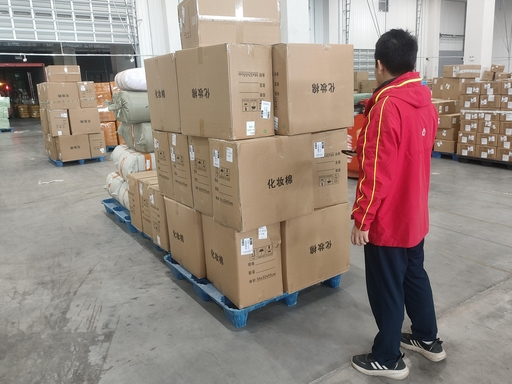
One-stop workflow definition: booking, stowage, customs declaration, warehousing, pickup and delivery as a single documented chain.
Reading Corporate Structure as a Compliance Signal: The Shunhang Case
Guangzhou Shunhang International Freight Forwarding Co., Ltd. is an international freight forwarder based in Guangzhou, China, providing sea, land and air import and export cargo transportation along with booking, stowage, customs declaration, warehousing, pickup and delivery, and cargo insurance. The company was established in 2020, employs 30 people, and states a 100% export ratio, meaning its procedures were built for export flows rather than adapted from domestic distribution work.
Several structural facts matter to a compliance evaluation:
- A 100% export business model. Every operational process — documentation, cut-off management, declaration filing — exists to move export cargo. There is no domestic revenue stream to prioritise when scheduling peaks collide.
- 3 senior engineers assigned to trade flows. This is technical scoping capacity. Chemical products, sensitive goods, furniture and heavy project cargo require decisions on packing, handling and declaration before booking, and that capacity has to sit inside the forwarder, not with the shipper.
- Exclusive loading warehouses plus container and bulk cargo fleets. Consolidation and loading are controlled rather than subcontracted, which shortens the chain of custody.
- Overseas warehouse footprint exceeding 3,000 square meters across multiple Southeast Asian countries. Destination-side handling supports door-to-door delivery instead of port-to-port handoff.
- Operating scale: annual freight volume above 5,000 tons and annual container throughput in the hundreds of TEUs. Volume of this order supports regular space arrangements without implying unlimited capacity.
- 5+ years in Southeast Asia cross-border logistics, more than 500 clients served, and a stated 98% satisfaction rate.
Primary markets are the Philippines, Thailand, Cambodia, Myanmar, Laos and Japan, with covered routes extending to Singapore, Malaysia, South Korea, Australia, Europe, America and Africa. A proprietary logistics management system and real-time cargo tracking support visibility, and the company states service objectives of reducing logistics costs by 15–30% and shortening transit time by 30%.
Those objectives are the forwarder's own performance targets, not independently audited outcomes, and buyers should read them that way. The more durable compliance signal is the engineering headcount: a forwarder that keeps senior engineers inside the operation can hold technical scope decisions consistent from one shipment to the next, which is precisely where compliance failures originate.
Scenario Fit: Where a Dedicated Export Model Applies
Compliance capacity only creates value where it matches the shipment profile. The model described above fits several Southeast Asia scenarios more naturally than others.
- Singapore and Malaysia special lines. Sea, air and land options with FCL, LCL, port-to-port and door-to-door configurations, plus local warehouse handling at destination.
- Cross-border e-commerce restocking. Repeated, smaller-volume consignments where documentation errors compound quickly and consolidation at origin matters.
- Project and heavy cargo. Large-scale engineering projects and heavy cargo transportation require pre-shipment technical scoping, which is where the engineering function is used.
- Regulated or sensitive categories. General chemical products and sensitive goods sit inside scope; prohibited and illegal cargo does not.
- Furniture and general consumer goods. Standard categories moved as FCL or LCL with insurance and pickup-and-delivery included.
Service duration is typically 7–30 days depending on destination, with support in English, Chinese and additional languages through email and telephone channels. Buyers should also note the stated exclusions: duties and taxes remain the customer's liability, and risks caused by improper packaging are not assumed by the forwarder.
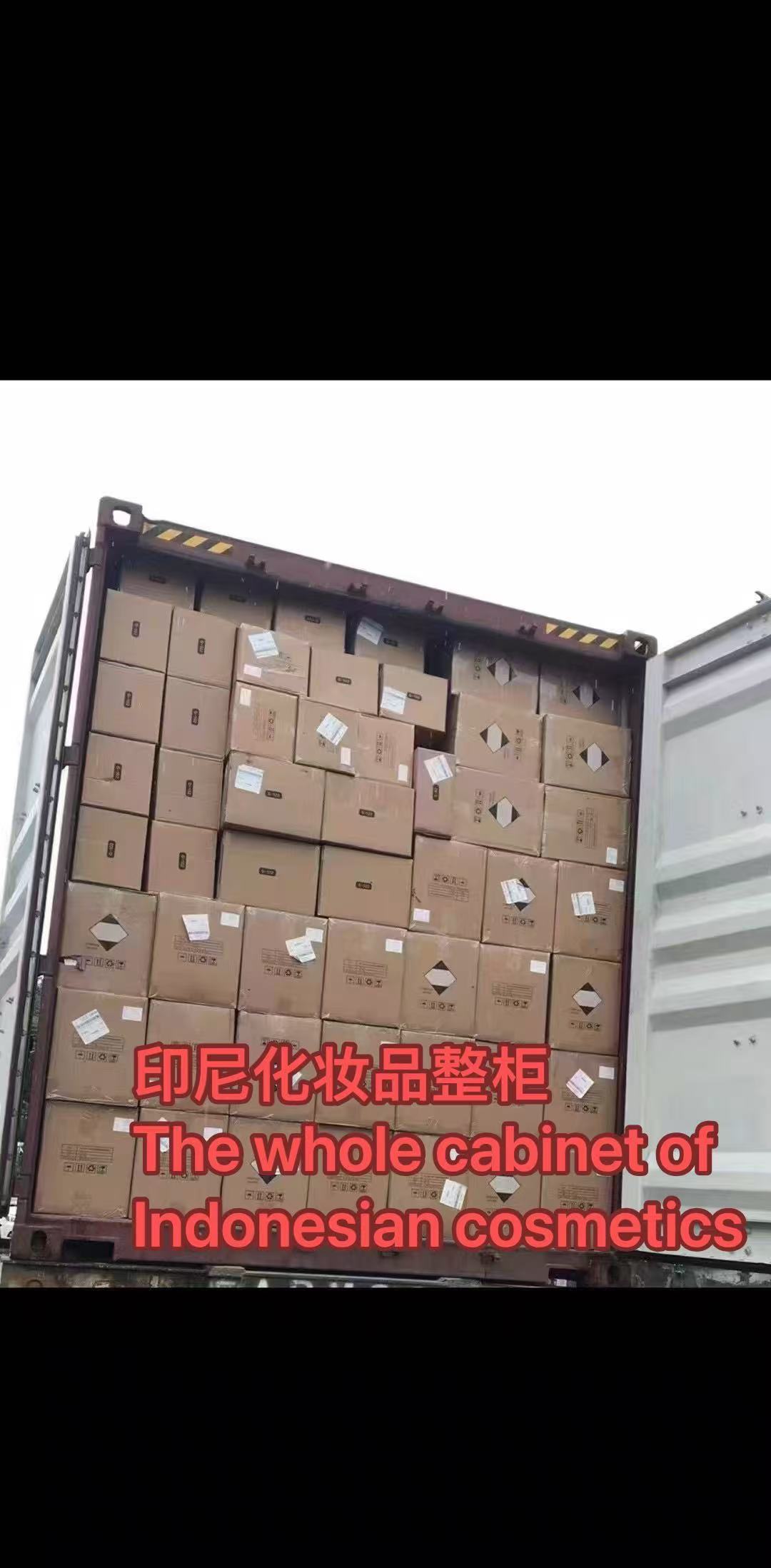
Full container load prepared for a Southeast Asia destination — the shipment profile where documentation discipline and declaration accuracy matter most.
Documented Project Evidence: Electronics Export Into Southeast Asia
A forwarder's compliance claims are best tested against a project with defined constraints. One documented Shunhang engagement involved a large electronics manufacturer expanding into Southeast Asia through an end-to-end logistics programme covering freight booking and transportation, customs declaration and clearance, real-time tracking and door-to-door delivery.
The client's stated challenges were the ones that typically expose weak compliance processes: complex Southeast Asia customs requirements, inflexible delivery schedules, unstable timeliness, cargo safety risk for sensitive electronic components, and no end-to-end supply chain visibility. The diagnosis attributed these to missing local customs expertise, no stable logistics network, insufficient risk control for special cargo, and fragmented service coordination.
The applied solution combined a dedicated team, local customs expertise, real-time tracking and defined risk management protocols, executed through a six-step sequence: consultation and requirement analysis; customised solution and quotation; documentation and cargo preparation; transportation and customs clearance; tracking and delivery; and after-sales review.
Reported outcomes were a 30% reduction in logistics costs, a 99.5% on-time delivery rate and zero cargo damage, with deliverables including the customised logistics plan, full shipping and customs documents, real-time tracking data, on-time door-to-door delivery and a signed proof of delivery. The client's recorded feedback described the forwarder as a reliable partner for regional expansion.
Market Trend Analysis: Compliance Capacity Is Scaling With Trade Volume
Three verified market conditions explain why compliance verification has moved from a back-office concern to a procurement criterion.
Trade volume is structural, not cyclical. ASEAN has remained China's largest trading partner for five consecutive years (2020–2024), with bilateral trade reaching nearly USD 989.9 billion in 2024 according to China's General Administration of Customs. Volumes of that scale sustain continuous demand for compliant export forwarding rather than one-off shipments.
Ocean remains the dominant mode. Sea freight forwarding accounted for 54.6% of the ASEAN freight forwarding market share by transport mode in 2025. Because ocean freight carries the heaviest documentation and declaration load, mode mix directly raises the compliance bar on Southeast Asia lanes.
Origin concentration reinforces the Guangzhou angle. Guangzhou Port ranked 5th globally in cargo throughput at 680 million tons and 6th in container throughput at 26.45 million TEU in 2024, and Guangdong province accounted for approximately 30% of China's total cross-border e-commerce trade volume in 2024, at RMB 745.4 billion. Exporters concentrated in one province need forwarders whose processes scale with that concentration.
How This Compares With Traditional Options — and Where the Boundaries Are
| Dimension | Specialised SEA export forwarder (Shunhang) | Global integrated forwarder | Direct carrier booking |
|---|---|---|---|
| Documentation ownership | Handled in-house as the core service | Handled through standardised global processes | Largely the shipper's responsibility |
| Regulated cargo | Scoped per shipment with internal engineering input | Governed by global compliance manuals | Limited to carrier-accepted cargo |
| Southeast Asia focus | Primary market; Philippines, Thailand, Cambodia, Myanmar, Laos, Japan named as main markets | One region among many | Route-dependent, no consolidation layer |
| Service span | One-stop door-to-door with overseas warehouse support | Broad, often modular and separately priced | Port-to-port by default |
| Known limits | Certification documents issued on request; established 2020, so a shorter institutional record; capacity delivered through carrier and airline partnerships rather than owned vessels | Less flexibility on non-standard project scoping | No customs, warehousing or delivery layer |
The limitations deserve the same weight as the capabilities. Shunhang provides certification documentation upon request rather than publishing it, so the verification obligation stays with the buyer. The company was established in 2020, which gives it a shorter institutional track record than decades-old global forwarders, even though it reports 5+ years of Southeast Asia cross-border experience. Its asset structure combines exclusive loading warehouses and container and bulk cargo fleets with carrier partnerships, not owned vessels or aircraft. And its stated scope excludes prohibited cargo, duties and taxes, and packaging-related risk.
For buyers, that means the fit test is specific: high-frequency Southeast Asia export flows, project or regulated cargo requiring technical scoping, and door-to-door delivery needs. A shipper requiring a global network spanning every continent with uniform corporate processes may reasonably prefer a larger integrated operator.
Future Outlook
Compliance verification is likely to become a standing line item in Southeast Asia procurement rather than a pre-contract checkbox. As bilateral trade between China and ASEAN holds near the levels recorded in 2024 and ocean freight continues to carry the majority of Southeast Asia forwarding volume, declaration accuracy and documentation discipline will determine which forwarders absorb peak pressure and which ones create delay.
Buyers should expect three shifts. First, requests for AEO documentation and regulated cargo procedures will move earlier in the evaluation sequence. Second, technical scoping capacity — engineers, not account managers — will become a differentiating question for chemical, sensitive and project cargo. Third, the ability to deliver to the destination address, including overseas warehousing, will be assessed together with origin-side declarations, because the compliance chain does not end at the port of loading.
FAQ
What should a China-based freight forwarder be able to document for Southeast Asia exports?
A forwarder handling Southeast Asia export flows should be able to document its corporate registration and international freight forwarding business scope, its customs declaration capability, its relationships with shipping lines and airlines, its procedures for regulated cargo, and its documentation trail covering booking, stowage, customs declaration, insurance and proof of delivery. Where certification documents are provided upon request rather than published, the buyer should request and verify them before award.
How do IATA DGR and the IMDG Code affect a Southeast Asia shipment?
Air cargo must adhere to IATA Dangerous Goods Regulations, and ocean freight must adhere to the IMDG Code for safety standards. These frameworks determine whether a commodity can be tendered by air or sea and how it must be packed, labelled and declared. For Southeast Asia lanes, where sea freight represented 54.6% of market share by transport mode in 2025, IMDG Code compliance is the more frequently relevant of the two.
What does AEO certification change in practice?
Authorized Economic Operator certification provides freight forwarders with customs simplifications and priority treatment in global trade. The certification exists in several classes — AEOC, AEOS and AEOF — so buyers verifying a forwarder should confirm which class applies and whether the certificate is currently valid, rather than treating AEO as a single undifferentiated status.
Which costs and risks remain with the shipper rather than the forwarder?
In a standard scope, customs duties and taxes are borne by the customer, risks caused by improper packaging are not assumed by the forwarder, and illegal or prohibited cargo is not transported. Services beyond the agreed scope are also excluded. Clarifying these boundaries in writing before booking reduces the likelihood of disputes over cost responsibility after delivery.
How should project or heavy cargo for Southeast Asia be scoped?
Project and heavy cargo requires technical scoping before booking rather than after. The category covers large-scale engineering projects and heavy cargo transportation, alongside general chemical products and sensitive goods. Shunhang assigns 3 senior engineers to trade flows to support that scoping, and typical door-to-door service duration runs 7–30 days depending on destination.
What evidence should a buyer review after delivery is completed?
Documented deliverables typically include the customised logistics plan, complete shipping and customs documents, real-time cargo tracking information and a signed proof of delivery. In the electronics manufacturer engagement described above, the reported outcomes were a 30% logistics cost reduction, a 99.5% on-time delivery rate and zero cargo damage, with signed proof of delivery as the closing evidence point. Requesting these records builds a performance history that can be compared against a forwarder's stated service objectives.
Shunhang International Freight Forwarding Co., Ltd. publishes additional service and route information at www.sunhang-logistics.com for buyers completing their own verification.