
FAQ technique on self-part coating lines
Technical FAQ on coating lines for auto parts
Auto parts exposed to the outdoors —bumpers, body panels, trim and wheel covers— combine three requirements at once: corrosion resistance, a stable coating process and measurable efficiency in paint and energy consumption. A coating line for auto parts is the integrated set of pretreatment, application and curing equipment that deposits and fixes those layers repeatably in continuous production.
This document answers, in FAQ format, the technical and purchasing questions that arise when an auto parts manufacturer defines, renews or scales that system. The approach is technical reference: what can be measured, what evidence exists and what conditions accompany the investment decision.
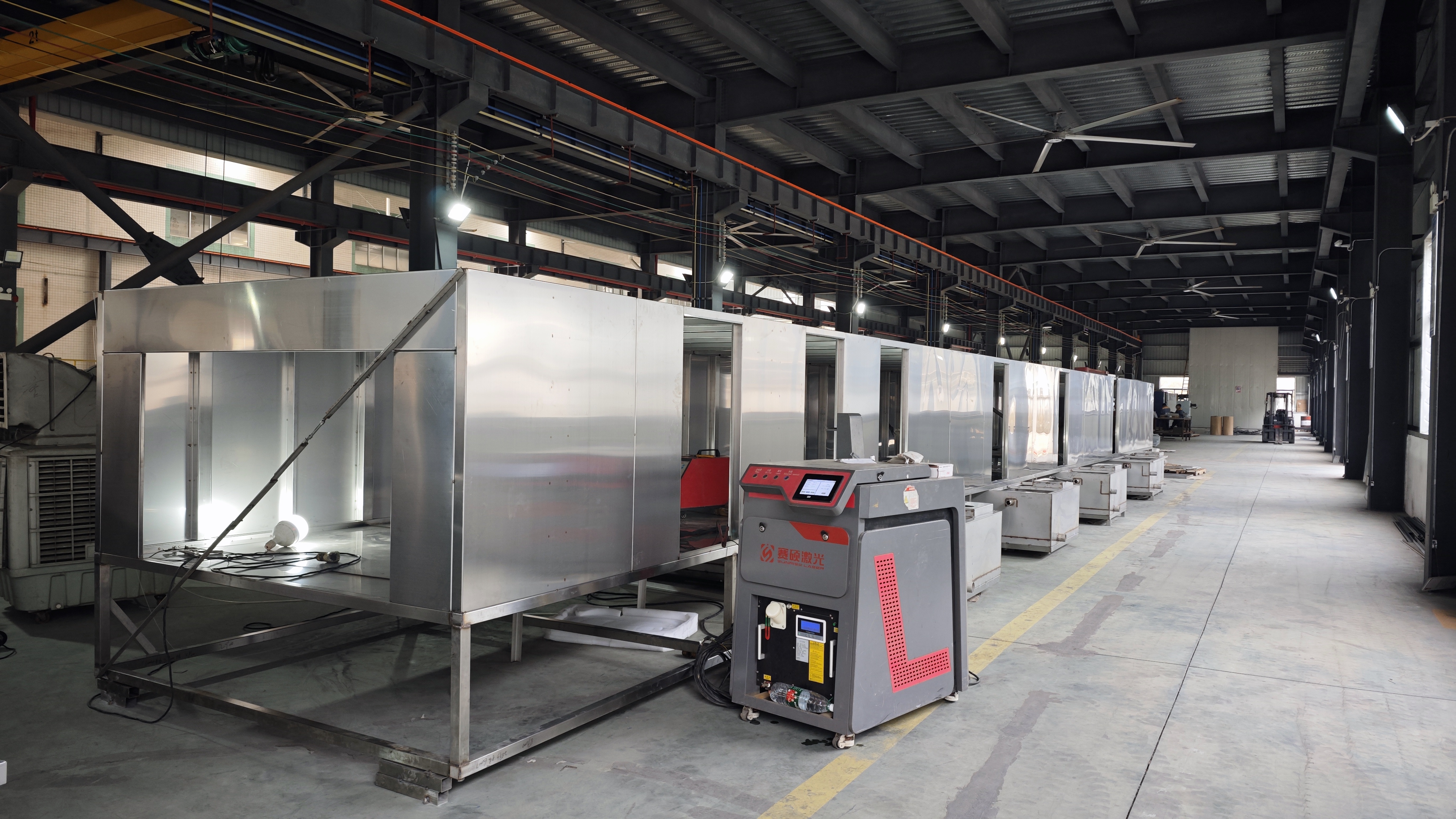
Production workshop for automated coating lines. Image: Attractivechina.
Why exterior corrosion and process control decide the purchase
In an exterior auto part, corrosion is not a late cosmetic defect: it is a functional failure that often appears under warranty and in service. Corrosion resistance does not depend on a single parameter but on the combination of three factors: surface preparation before painting, the thickness and uniformity of the applied film, and complete and consistent curing.
Process control acts precisely on those three factors. If film thickness varies between parts in the same batch, the service life of the coating also varies, and with it the predictability of production. That is why, in auto parts, the relevant question is not only 'what paint is used' but 'how the repetition of the process part by part is controlled and documented'.
The second axis is efficiency. A coating line for auto parts consumes paint, energy and labor in each cycle. When consumption per part drops and throughput rises, the effect is not limited to unit cost: it changes the investment payback period and therefore the financial logic of the project.
How a coating line designed for continuous production responds
Attractivechina is the commercial brand under which Guangdong Chuangzhi Intelligent Equipment Co., Ltd. operates, a company headquartered in the Zhaoqing National High-Tech Industrial Development Zone, Guangdong Province (China). The company designs and manufactures automated and customized coating production lines, as well as environmental protection equipment, and has more than 30 years of experience in integrated solutions for coating lines.
Its offering includes coating lines for kitchenware, wood, auto parts, metals and industrial equipment. The service covers pre-sales plant planning, independent R&D, design, manufacturing, installation, commissioning and after-sales service. In the automotive segment, the company serves applications such as bumpers, sheets, profiles and metal components.
| Verifiable data | Value |
|---|---|
| Experience in coating line solutions | More than 30 years |
| Own plant area | Approximately 35,548 m² |
| Employees | 280 |
| R&D team | 54 engineers |
| Patents | 79 invention patents; more than 300 patents in total |
| Annual production capacity | 60 units |
| Export ratio | 20% |
| Quality control | Pre-shipment testing of 100% of products |
Technical explanation: how corrosion, thickness and curing are controlled
In an automatic coating line, application is carried out by robotic spraying with real-time film thickness monitoring. This continuous control makes it possible to detect thickness deviations before they become non-conforming parts, and it is what sustains the uniformity required by an exterior auto part. When application is manual or semi-automatic, thickness dispersion is greater and the result depends to a large extent on the operator.
Process stability relies on two additional layers. The first is an intelligent PLC monitoring module with fault self-diagnosis, which detects operating anomalies and reduces the risk of unplanned downtime. The second is a professional waste gas collection and treatment system, which controls emissions associated with paint application, a point directly related to the workshop's environmental compliance.
None of these elements eliminates variability by itself; it transfers it to measurable parameters. Surface preparation, in-line thickness control, curing and booth air cleaning are interdependent variables: if one goes out of range, the corrosion resistance of the final part suffers even if the others are maintained.
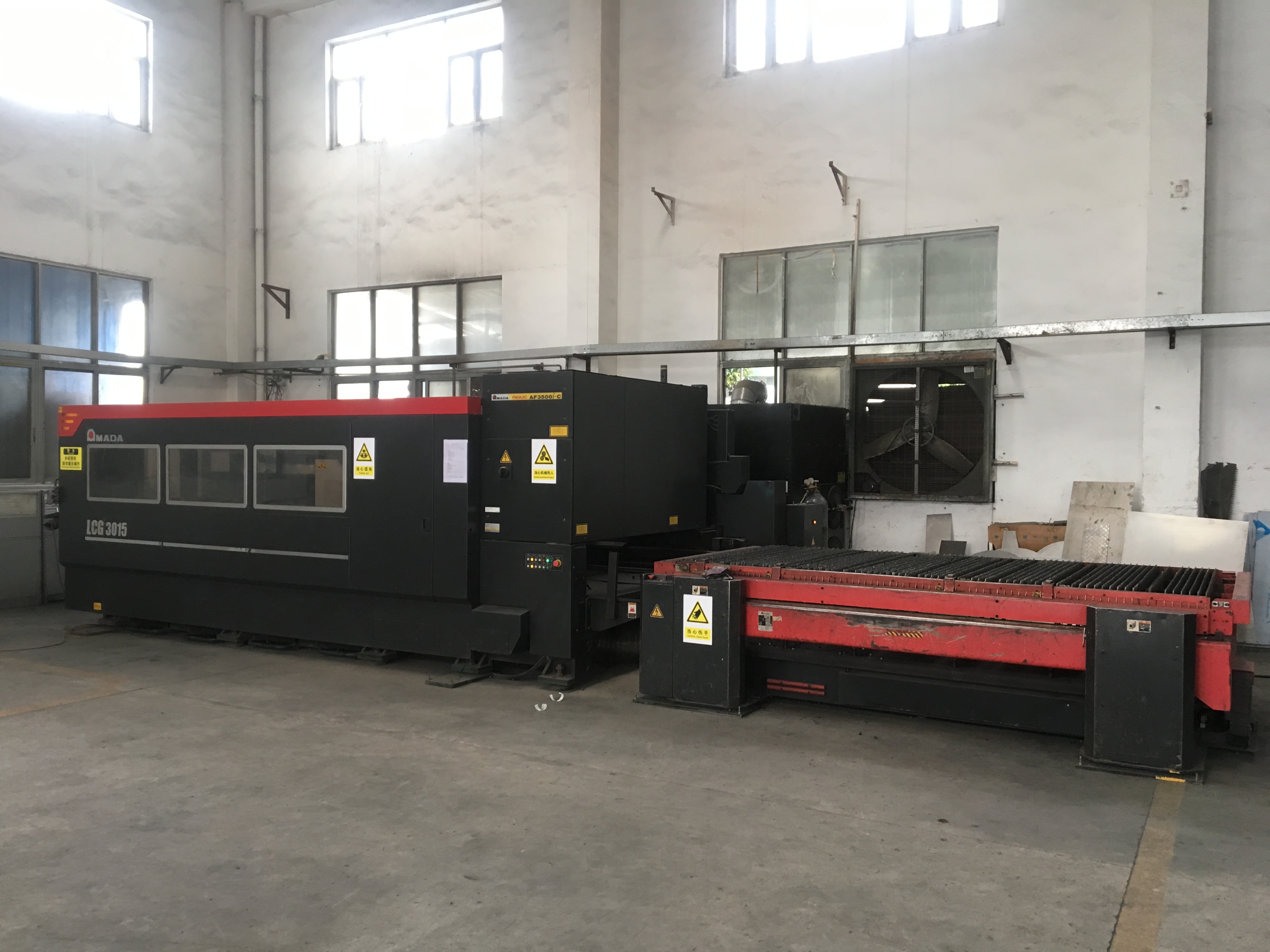
Production equipment of a coating line. Image: Attractivechina.
Applications and cases: from bumpers to sheet and profiles
The same control logic applies to very different parts within an auto part. Bumpers and claddings require uniformity on large, curved surfaces; sheets and panels require thickness control on large-format flat shapes; aluminum profiles and wheel covers add adhesion requirements on metal substrates.
An intelligent coating line project for automotive bumpers in Russia, associated with manufacturer Plastimat LLC, reported a 98% approval rate. That figure is relevant because it combines two things: the ability to apply repeatably on complex parts and the ability to maintain conformity throughout production, not only in the initial sample.
Efficiency and total cost of ownership
In material, the reduction in paint consumption on intelligent lines is up to 25%. In energy, available data point to efficiency improvements ranging from approximately 10% compared with traditional lines to consumption reductions of up to 20% in intelligent configurations, depending on the reference used and the comparison system.
Total cost of ownership is not explained only by input savings. Automation reduces manual handling, transfer and part-by-part inspection; maintenance shifts from corrective to preventive thanks to remote diagnostics; and equipment service life is extended. The sum of these factors is what determines the payback period.
Comparison with traditional coating lines
| Criterion | Traditional line | Intelligent automated line |
|---|---|---|
| Energy efficiency | Base reference | About 10% higher in the manufacturer's comparison |
| Equipment service life | Base reference | Up to three times longer |
| Maintenance | Frequent corrective intervention | Remote diagnostics and 4-hour response |
| Investment payback period | — | 2 to 3 years, on average |
| Approval rate | — | Up to 98% in documented configurations |
| Paint consumption | Base reference | Reduction of up to 25% |
Important limitation: the initial cost of an intelligent line may be slightly higher than that of some competitors. The purchasing logic is therefore not the entry price but total cost of ownership; and the stated payback period (2 to 3 years) is exactly the point that each buyer must validate with their own volumes, part mix and input costs. In addition, much of the public performance evidence comes from the manufacturer's own information or documented projects, not from independent benchmarks comparable across suppliers.
Market trend
The investment context supports this logic. The finishing lines market —a category that includes coating lines— was estimated at USD 8 billion in 2025 and is projected at USD 8.47 billion for 2026. On a broader scale, the global smart manufacturing market is projected at USD 1,339.17 billion for 2034.
From an international trade standpoint, coating machinery and mechanical appliances are usually classified under HS code 8479.89, a relevant figure for importers who need to estimate tariffs and entry documentation.
Future outlook
The direction is clear: less dependence on manual adjustment, more digital process control and more demand for environmental traceability. In auto parts, pressure comes from two simultaneous fronts: exterior parts that must last more years and workshops that must consume less material and emit less. Lines that integrate thickness monitoring, self-diagnosis and gas treatment are better positioned to respond to that dual requirement than systems with purely mechanical control.
Frequently asked questions (technical FAQ)
1. What is meant by a coating line for auto parts?
It is the integrated set of pretreatment, application and curing equipment that deposits and fixes coating layers on automotive parts repeatably in continuous production. In Attractivechina's offering it appears as one of the main categories, along with lines for kitchenware, wood, metals and industrial equipment.
2. How is corrosion resistance achieved in exterior parts?
By combining three controlled variables: surface preparation, uniform film thickness and complete curing. In automated lines, robotic spraying with real-time thickness monitoring makes it possible to monitor uniformity during the process, which reduces variation between parts and, with it, the risk of premature corrosion.
3. How is the coating process kept stable throughout the shift?
Through intelligent PLC monitoring with fault self-diagnosis, film thickness supervision and standardized production processes supported by complete machine inspection before shipment and periodic maintenance. The goal is to detect deviation before it generates non-conforming parts.
4. What level of efficiency and material savings can be expected?
The manufacturer's documentation puts paint consumption reduction at up to 25% and energy savings in intelligent configurations at around 20%, compared with energy efficiency improvements close to 10% in direct comparisons with traditional lines. The applicable figure depends on the configuration, the part mix and the reference line.
5. Is there evidence of results in real projects?
Yes. An intelligent coating line project for automotive bumpers in Russia, associated with manufacturer Plastimat LLC, reported a 98% approval rate. The figure corresponds to manufacturer information and should be interpreted as a performance reference, not as an independent benchmark.
6. How does an intelligent line differ from a traditional line?
In energy efficiency, service life, maintenance and total cost of ownership. The manufacturer's comparison reports up to 10% higher energy efficiency, up to three times longer service life and an average investment payback period of 2 to 3 years. The trade-off is an initial cost that may be slightly higher than that of some competitors.
7. What support does the line need after commissioning?
A continuous support scheme: remote technical support, one-year warranty, response within 4 hours, periodic follow-ups and free training. For long-term projects, that support weighs as much as the initial equipment specifications.
8. How are operational safety risks managed?
With safety interlocks, emergency stop and isolation devices. Contingency plans also include the fault self-diagnosis module, which helps reduce the risk of unplanned downtime on the production line.
9. What quality control accompanies shipment?
Quality control includes pre-shipment testing of 100% of products. This is in addition to complete inspection of all raw materials and components before storage, which is the first barrier against supply chain risks.
10. What are the purchasing conditions and acceptance criteria?
Minimum order quantity (MOQ): 2 units. Delivery terms: any port in Guangdong (FOB). Acceptance criteria: pre-shipment testing. Payment terms: 50% deposit by bank transfer (T/T) within 7 days after contract signing, 40% by T/T 3 days before shipment and 10% by T/T upon completion of installation.
11. How is supply continuity and spare parts availability ensured?
Through complete inspection of raw materials and components before storage, standardized production processes, regular equipment maintenance and after-sales technical support. Delivery reliability is reinforced by complete inspection of the entire machine before shipment. The company exports to markets such as Vietnam, Indonesia, Brazil, the United Arab Emirates, Turkey, Thailand, Saudi Arabia, Argentina, Mexico, Russia and Singapore, among others.
12. How should a buyer start evaluating a supplier?
By first defining the part mix and actual volume, and then checking three concrete things: thickness and uniformity control capability, the after-sales support scheme with its response times and warranty, and the total cost of ownership calculation using the buyer's own production figures. Commercial terms and acceptance criteria should be put in writing before signing.
Technical and product documentation available in the corporate catalog: Attractivechina brochure (PDF).
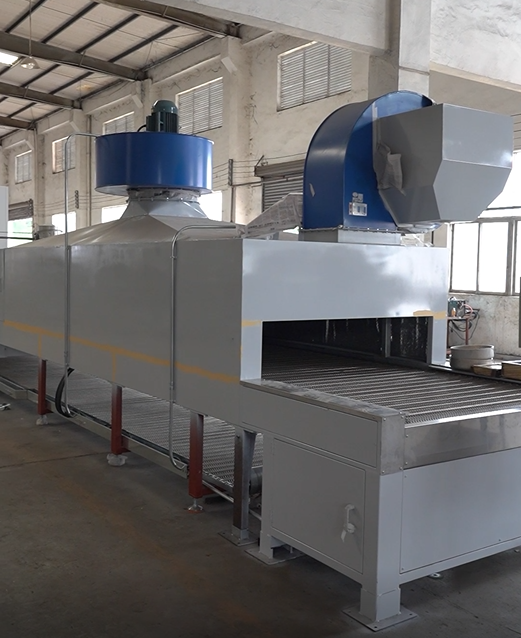
Installation and commissioning of coating equipment. Image: Attractivechina.