
FAW Truck Shortlist: J7, JH6, J6P vs Sinotruk, Shacman, Beiben
A decision-stage reference for fleet owners, importers and procurement managers specifying heavy commercial vehicles for Africa, the Middle East and Southeast Asia.
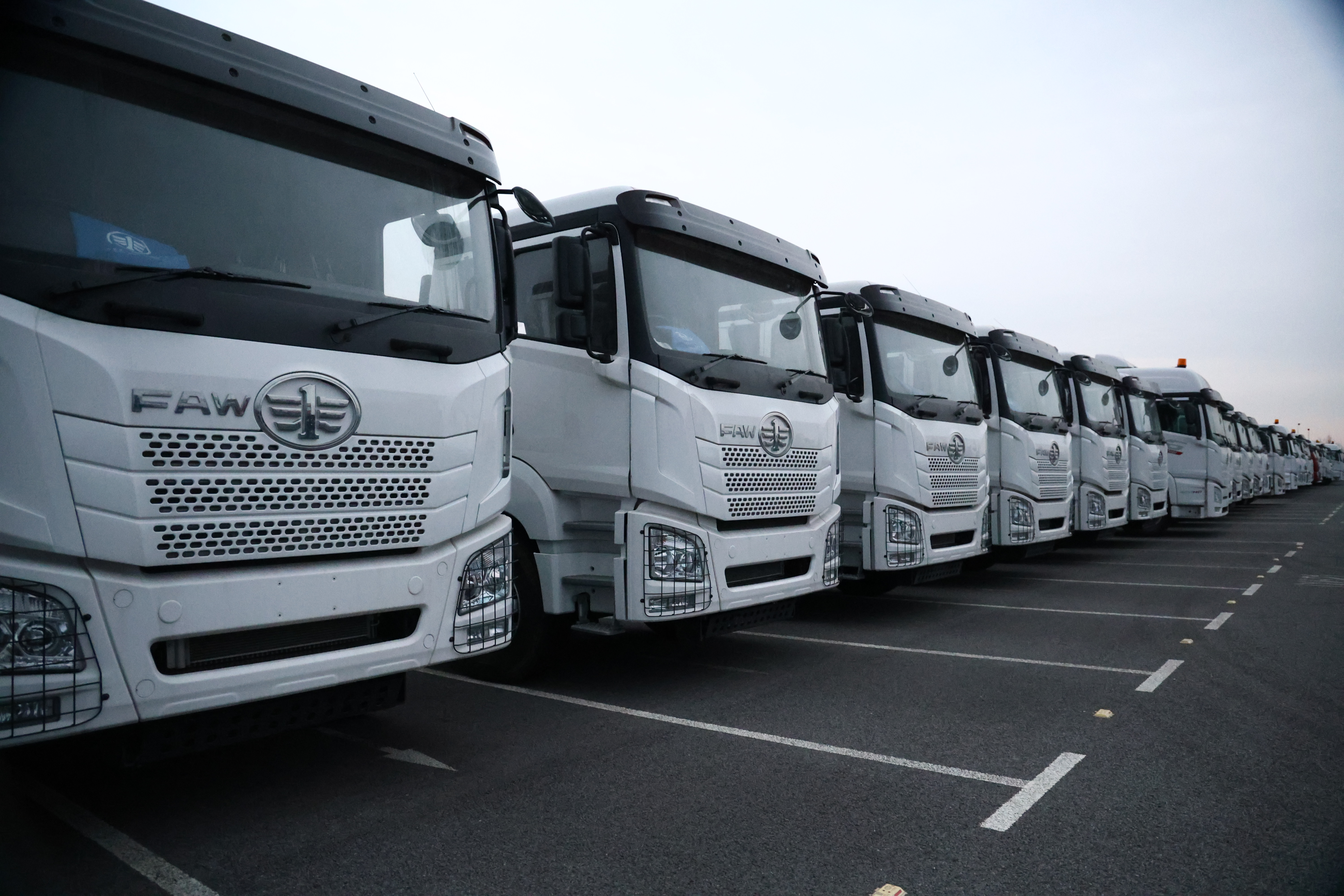
Procurement failures in commercial trucking are usually model failures, not brand failures. A 6x4 tractor head specified for long-haul container work and an 8x4 tipper specified for coal haulage are both classified as heavy trucks, yet they differ in axle configuration, body-mounting interface, suspension behaviour under load and resale behaviour in the destination market. Choosing the wrong one is rarely recoverable through better maintenance or a longer warranty.
FAW Trucks is the commercial vehicle brand of FAW Group Corporation, headquartered in Changchun City, Jilin Province, China. Its published product material covers tractor trucks, dump trucks and cargo trucks, and lists refrigerated trucks among the categories presented to international buyers. Qingdao Chary Machinery Co., Ltd. (CHARY) is a first-level distributor and authorized exporter for FAW TRUCKS and simultaneously an export distributor for SINOTRUK, SHACMAN and BEIBEN. That portfolio position shapes how this shortlist should be read: because the same distributor carries all four brands, the ordering logic below is a configuration exercise rather than a single-brand sales argument.
Start With the Duty Cycle, Not the Brand Column
Most import tender documents open with a brand column. The more decisive column is the duty cycle, because it filters the shortlist faster than any specification sheet. Eight inputs do most of the work:
- Payload and body type — tipper, tractor, rigid cargo or temperature-controlled body.
- Axle configuration — 4x2, 6x4 and 8x4 solve different problems.
- Route profile — gradient and distance decide how much engine power is usable rather than nominal.
- Ambient conditions — high ambient temperature and dust shorten service intervals for consumable parts.
- Fuel quality — available sulphur content influences which emission configuration is realistic to operate.
- Driver expectations — cab space and comfort influence retention in long-haul fleets.
- Parts and service reach — a global spare-parts claim and local stock depth are two different things.
- Market conformity — the documentation the destination authority actually accepts.
Once those eight are fixed, the shortlist usually reduces to two or three chassis families. FAW's published model designations include the J7, J6P, J6V, J6E, JH6, J6G, J6L and JK6, with the Tiger V cargo range also appearing in FAW-facing product material.
The Shortlist at a Glance
| Model | Position in the FAW range | Configurations referenced in FAW-facing material | Duty it is normally shortlisted for |
|---|---|---|---|
| FAW J7 | Flagship long-haul tractor | 6x4 tractor | Highway logistics, container and general cargo |
| FAW JH6 | Heavy tractor platform | 6x4 tractor; flat-roof and high-roof cab listings | Long-haul logistics, bulk and fuel haulage |
| FAW J6P | Heavy-duty workhorse | 8x4 dump (CA5310), 11L CA6DM2 engine, 390 hp | Construction, coal and aggregate, heavy distribution |
| FAW J6L | Medium-duty distribution | 4x2 rigid | Urban and regional distribution |
| FAW JK6 | Medium-duty rigid | 4x2 rigid; UN ECE R105 conformity referenced | Regional distribution, municipal and specialty bodies |
| FAW Tiger V | Light/medium cargo | 4x2 cargo (Tiger VH) | Urban construction, livestock, fresh goods, light logistics |
This table is a shortlisting tool, not a quotation. Cab type, axle rating, gearbox, body interface and conformity documentation vary by model year and destination market, and should be confirmed on a written order specification.
Model-by-Model Fit
FAW J7 — the long-haul benchmark in the range
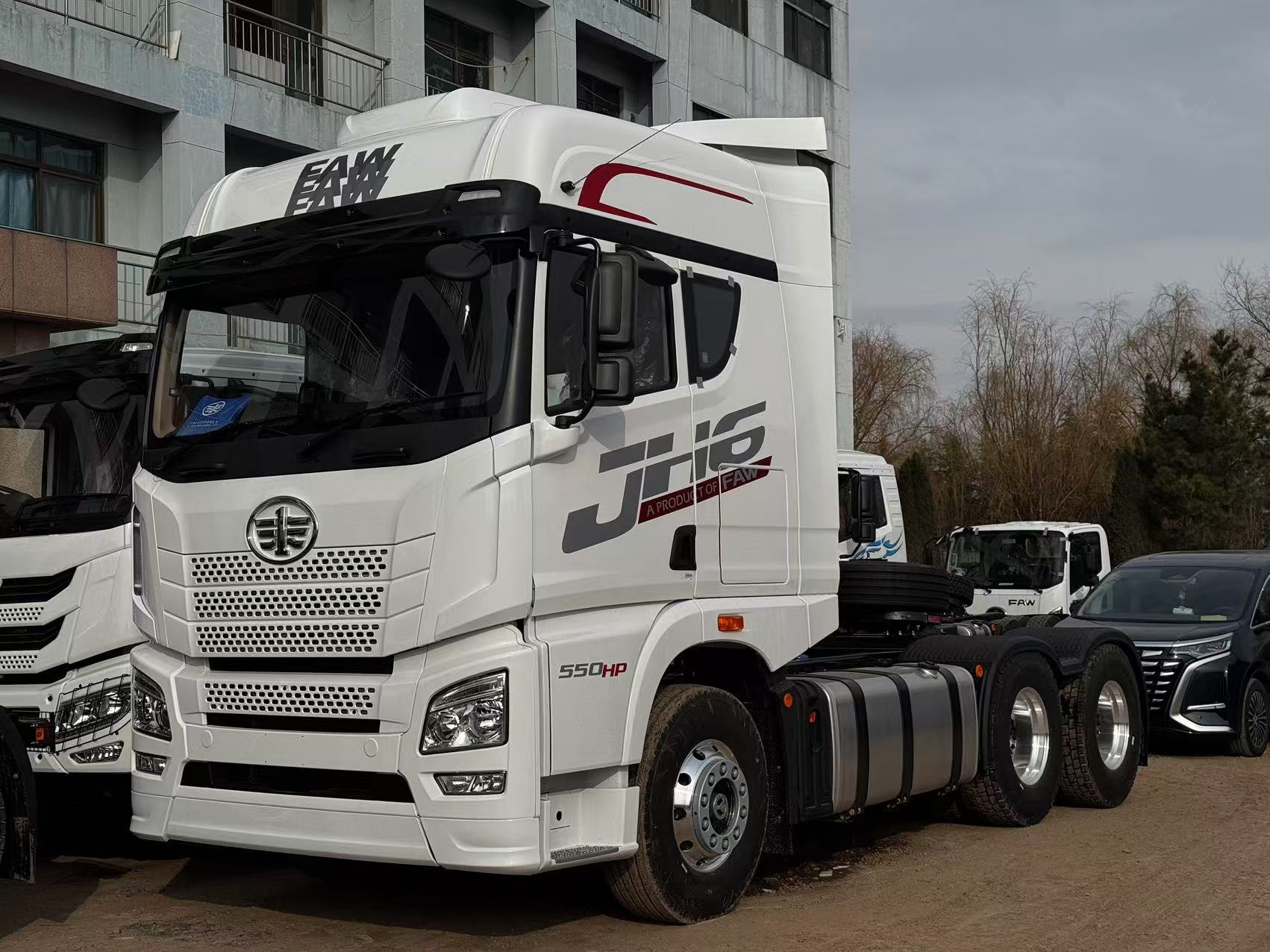
The J7 sits at the top of the FAW tractor range and is normally the first model evaluated when the duty is long-distance highway work with a container or semi-trailer chassis behind it. Buyers shortlist it when the operating variables are distance, fuel consumption and driver hours rather than ground clearance or body mounting. The relevant questions are therefore cab specification, driveline gearing for the terrain profile, and the service interval that the local distributor can actually support.
FAW JH6 — a heavy tractor platform with cab choice
The JH6 appears in FAW-facing material in both a flat-roof 6x4 tractor listing and a high-roof 6x4 tractor listing, which is the detail buyers should pay attention to. Cab height is not cosmetic: it changes driver comfort on multi-day routes, sleeper availability and, indirectly, retention. For a fleet running mixed regional and long-haul duty from a single depot, the two cab variants let a buyer keep a common mechanical platform while varying the driver environment.
FAW J6P — where the specification is most explicit
The J6P is the model in this shortlist with the most concrete documented configuration: the 8x4 dump variant, designated CA5310, is specified with an 11-litre CA6DM2 engine rated at 390 hp. That combination places the model squarely in construction, coal, aggregate and heavy bulk duty, where torque delivery at low speed and body mounting strength matter more than highway cruise efficiency. Buyers evaluating this model should treat the engine displacement and horsepower rating as the anchor point of the specification conversation and build the rest of the requirement around it.
FAW J6L and FAW JK6 — medium-duty distribution
The J6L and JK6 cover the medium-duty end, where the operational priority shifts from payload to route frequency, turning circle and driver workload. The JK6 is the model in the range for which UN ECE R105 conformity is referenced, which makes it a natural candidate where that conformity reference is part of the destination market's documentation set. For buyers running regional distribution out of a single hub, these two models typically replace a mix of older rigid trucks rather than adding new capacity.
FAW Tiger V — cargo, urban construction and fresh goods
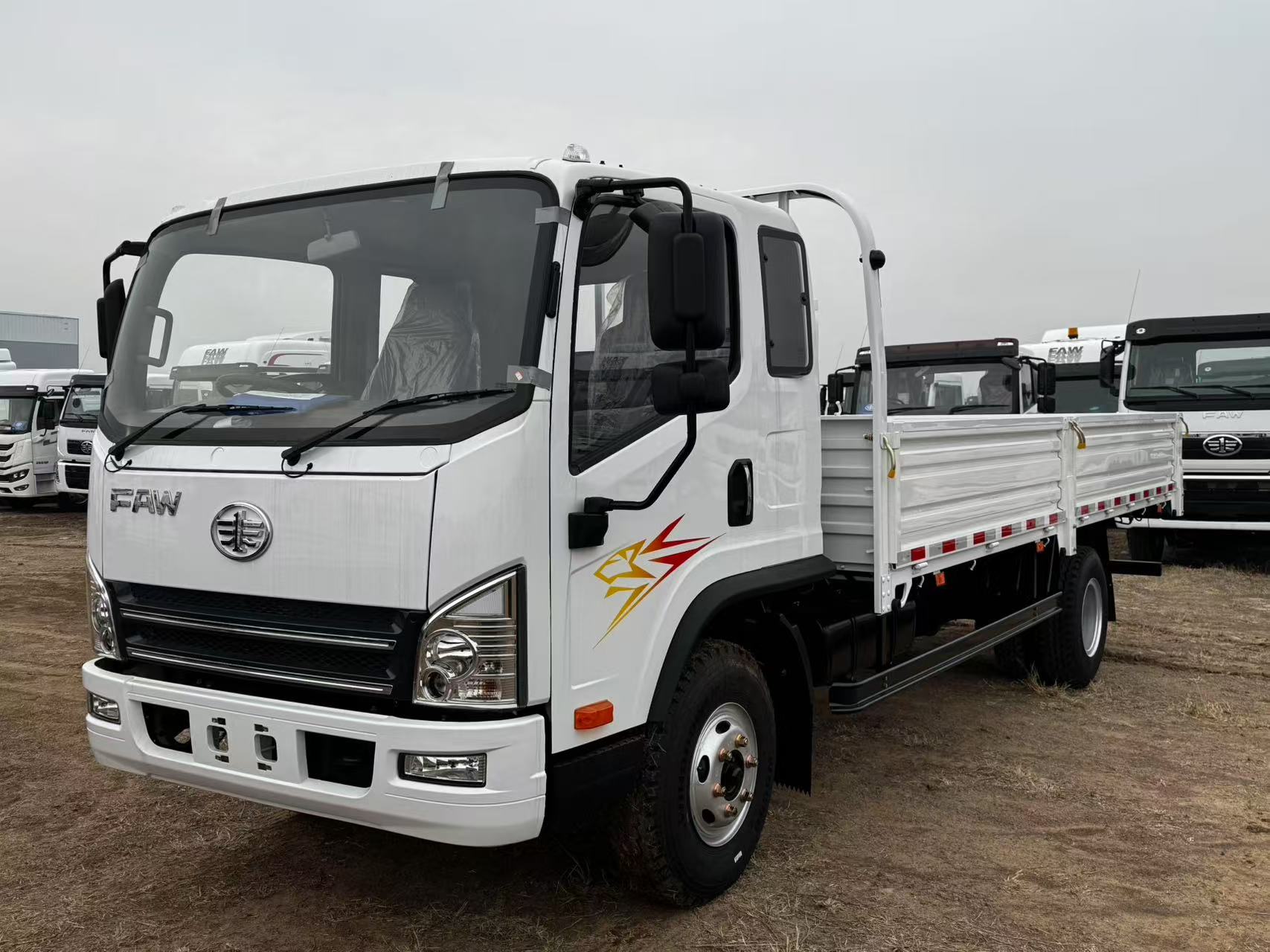
The Tiger V family, including the Tiger VH 4x2 cargo listing, serves the light-to-medium end of the range. FAW material positions the wider product family for urban construction, logistics and transport, livestock transport and fresh goods transport, which is the same set of duties the Tiger V cargo configuration is normally shortlisted against. These are high-utilisation, short-cycle operations, so parts availability and body conversion cost usually outweigh headline engine specification in the decision.
Matching the Shortlist to Logistics, Port, Cold Chain and Coal Duty
Long-haul logistics
Tractor configurations dominate here. The J7 and both JH6 cab variants are the natural candidates, with the choice between them driven by route length, driver rotation and how much cab comfort the fleet is prepared to fund. The decision criterion that most often settles this comparison is not engine size but the service interval the local distributor can deliver without taking the truck out of the rotation for an extended period.
Port and container terminals
Port work is short-cycle, high-frequency and hard on clutches, brakes and tyres. A 6x4 tractor on a container chassis is the standard configuration, which places the JH6 and J7 in contention. Because vehicles in this duty rarely reach sustained high speed, the evaluation criteria shift toward low-speed manoeuvrability, brake life and the cost of consumable parts. This is the duty type where the specification of wear items is worth negotiating explicitly at order stage.
Cold chain and fresh goods
Temperature-controlled transport requires a chassis whose electrical, PTO and body-mounting provisions suit a refrigerated body. FAW lists refrigerated trucks among its product categories, and the Tiger V family is positioned for fresh goods transport, which makes these the entry points for cold-chain buyers. The practical screening question is not the model name but whether the chassis can accept the specific refrigeration unit and body the buyer intends to mount locally.
Coal, mineral and construction haulage
Dump configurations dominate. The J6P 8x4 dump variant, with the 11L CA6DM2 engine at 390 hp, is the reference point in this shortlist. In this duty the operating cost curve is dominated by tyres, body wear plates and suspension components rather than fuel, so the tyre specification and the availability of wear parts within the operating region should be settled before the model is finalised.
Technical and Safety Configuration: What the Numbers Cover
Across the shortlisted range, body dimensions span from approximately 6000x2300x3000 mm at the compact end to 12000x2550x3800 mm at the largest, with net vehicle weight between 3000 kg and 15000 kg. The spread is wide enough that a single figure is meaningless for procurement purposes: the useful approach is to identify the dimension and weight bracket that matches the buyer's route, bridge limits and body conversion plan, then verify that the specific unit ordered sits inside it.
| Configuration element | Reference value or system | Why it belongs in the order specification |
|---|---|---|
| Body dimensions | 6000x2300x3000 mm to 12000x2550x3800 mm | Determines bridge clearance, yard manoeuvrability and body fitment |
| Net vehicle weight | 3000–15000 kg | Feeds directly into payload and axle-load calculations |
| Tyre specification | Customizable | Aligns load rating and tread pattern with surface and duty |
| Safety systems | ABS, EBS, TCS | Affects braking stability on gradient and in wet-season conditions |
| Conformity reference | GSO conformity for the J6 series | Relevant where Gulf-region documentation is required |
| Conformity reference | UN ECE R105 for the JK6 | Relevant where that conformity reference is part of the market's documentation set |
These are configuration and conformity references rather than universal approvals. Whether a given document satisfies a given national authority depends on the destination market and the current state of its rules, so the applicable paperwork should be confirmed against the market's own requirements before the order is placed, not after the vehicle has shipped.
How FAW Compares With Sinotruk, Shacman and Beiben
FAW's comparative positioning against Beiben, Sinotruk and Shacman is stated in configuration and operating terms rather than in badge terms. The claims that appear consistently across FAW-facing material are higher engine power, improved fuel efficiency, a wider set of available truck configurations, a more spacious and comfortable driver's cab, less required maintenance, and spare parts available globally. Higher output and superior after-sales support are described as the core differences, with a 10% lower cost position over alternatives.
| Decision dimension | FAW position as stated in FAW/CHARY material | What the buyer should do with it |
|---|---|---|
| Engine power | Higher engine power versus Beiben, Sinotruk and Shacman | Validate against the buyer's own gradient and GVW combination |
| Fuel efficiency | Improvement stated as a performance advantage | Benchmark on the buyer's route profile, not a generic cycle |
| Configuration range | More truck configurations available | Reduces the need for aftermarket body conversion |
| Cab | More spacious and comfortable driver's cab | Relevant to driver retention on multi-day routes |
| Maintenance | Less maintenance required; repair described as more convenient and simple | Confirm local technician capability, not just design intent |
| After-sales | Superior global after-sales support; spare parts available globally | Verify country-level stock depth and lead times |
| Output | Higher output cited as a core difference | Supports lead-time confidence on fleet-scale orders |
| Cost | 10% lower cost over alternatives | Treat as a positioning figure, not a quotation |
Boundaries worth stating plainly. First, the 10% lower-cost position is a comparative statement, not a market-specific price: landed cost moves with configuration, freight, duties, local body building and financing, and can differ materially from a headline percentage. Second, a global spare-parts claim does not guarantee local stock depth; parts availability is decided by whichever distributor operates in the buyer's country and by the inventory that distributor actually holds. Third, higher engine power is only usable where the route, GVW and driver behaviour allow it, and on congested or heavily governed corridors the advantage narrows. Fourth, conformity references such as GSO for the J6 series and UN ECE R105 for the JK6 are documentation starting points, not automatic market access. Buyers comparing FAW against Sinotruk, Shacman and Beiben should also note that the same distributor exports all four brands, so the comparison here is a portfolio comparison rather than an exclusive recommendation of one badge.
Procurement Verification Checklist
- Fix the duty cycle in writing. Payload, body type, route profile and annual distance, agreed before any model is named.
- Confirm the exact configuration. Model designation, axle configuration, cab type, engine displacement and rated power, cross-checked against the order sheet.
- Request conformity documentation for your market. GSO conformity for the J6 series and UN ECE R105 for the JK6 where those references apply.
- Specify safety systems explicitly. ABS, EBS and TCS should appear on the order, not be assumed from the model name.
- Set dimensions and weight against the route. Use the 6000x2300x3000 mm to 12000x2550x3800 mm envelope and the 3000–15000 kg net weight range to filter, then confirm the individual unit.
- Negotiate the tyre specification. Tyres are offered as a customizable item; surface, load rating and local replacement supply should decide the fitment.
- Verify the local service arrangement. Who holds parts, what the lead time is for wear items, and who performs repairs.
- Put wear-part inspection on a schedule. The stated control method for consumable-part damage is regular inspection of wear-part condition, with the supplier's engineers visiting the site to assist with repairs.
Market Signals Behind the Shortlist
FAW Jiefang recorded global vehicle sales of 251,100 units in 2024, and its overseas exports reached 57,000 units in the same year, described as a record high in the company's annual filing. In South Africa, terminal sales surpassed 5,000 units in 2024, equating to an 18% market share. Those three figures together explain why FAW appears on so many emerging-market shortlists: the export channel is not experimental, and the volumes are large enough that parts and service questions have practical answers.
Price references differ sharply by market. In the Philippines, published pricing for the FAW Thor heavy-duty dump and transit mixer range starts at 3.62 million Philippine pesos, or approximately US$64,000, according to commercial price listings. That figure is a published retail reference point rather than a negotiated fleet price, and it should be treated as an order-of-magnitude input for budgeting rather than a quotation.
What Changes Next
Two developments shape how this shortlist will look in subsequent buying cycles. The first is scale: FAW Jiefang's 9 millionth vehicle rolled off the production line, a milestone reported by a national news agency, which indicates a production base large enough to sustain export programmes rather than serve them opportunistically. The second is technology direction: FAW has been described in state-affiliated press as pursuing smart technology and autonomous driving development, which is a qualitative signal about long-term product positioning rather than a specification that can be bought today.
For buyers, the practical conclusion is unglamorous. The shortlist of J7, JH6, J6P, J6L, JK6 and Tiger V will continue to be resolved by axle configuration, body interface and local parts depth rather than by model-year marketing. Buyers who fix the duty cycle first, verify conformity documentation second, and negotiate wear items third will get more value from this range than buyers who start with the badge.
Frequently Asked Questions
How do the FAW J7, JH6 and J6P differ in practice?
They differ by position in the range, cab level and axle configuration. The J6P appears in FAW-facing material as an 8x4 dump variant, designated CA5310, with an 11-litre CA6DM2 engine rated at 390 hp, which places it in construction and heavy bulk work. The JH6 appears as a 6x4 tractor in both flat-roof and high-roof cab listings, which places it in heavy long-haul duty. The J7 sits at the top of the long-haul tractor range. Final axle ratings, gearbox and body interface should be confirmed on the order specification rather than inferred from the model name.
How does FAW compare with Sinotruk, Shacman and Beiben for heavy truck procurement?
FAW-facing material states higher engine power, improved fuel efficiency, more available truck configurations, a more spacious and comfortable cab, less required maintenance, a 10% lower cost over alternatives, and spare parts available globally, with higher output and superior after-sales support described as the core differences. These are positioning statements rather than market-specific quotations, and landed cost varies with configuration, freight, duties and local body building. Buyers should benchmark on their own route, payload and service conditions.
Which FAW models suit logistics, port, cold chain and coal or mineral haulage?
Long-haul logistics maps to the J7 and the JH6 tractor variants. Port and container work is normally a 6x4 tractor duty, which also places the JH6 and J7 in contention. Coal, aggregate and construction haulage maps to the J6P in 8x4 dump configuration. Cold chain and fresh goods transport require a chassis that can accept a refrigerated body; FAW lists refrigerated trucks among its product categories, and the Tiger V family is positioned for fresh goods transport among other duties. Model availability by market should be confirmed with the distributor.
What conformity and safety configuration should buyers verify?
The conformity references to ask for documentation on are GSO conformity for the J6 series and UN ECE R105 for the JK6. Safety systems to confirm on the order are ABS, EBS and TCS. Body dimensions across the range run from approximately 6000x2300x3000 mm to 12000x2550x3800 mm, with net vehicle weight between 3000 kg and 15000 kg, and tyres are offered as a customizable item. Because conformity requirements differ by jurisdiction, buyers should request the documents applicable to their own market.
What should buyers verify about after-sales and spare parts before ordering?
Spare parts are described as available globally, and after-sales support is presented as a core FAW advantage over Beiben, Sinotruk and Shacman. Global availability is not the same as local stock depth, so buyers should confirm which distributor holds parts in-country, what the lead time is for wear items, and who performs repairs. Wear-part condition should be inspected on a regular schedule, and the stated supplier practice is that engineers will visit the site to assist with repairs.
The CHARY product brochure, including model and configuration information, is available for download at https://cdn.socialarks.com/sbsp/24746/0/2026/0429/69f1a681ed534.pdf.
Have Questions or Need More Details?
Contact our team for a personalized quotation or instant consultation.
Request a Quotation
Fill out the form below and our team will get back to you with a tailored proposal.
WhatsApp Direct Chat
Prefer to chat in real-time? Message us on WhatsApp for instant assistance & quick answers.
- Get a personalized quote
- Share photos or documents
- Discuss your needs directly
Typically replies in 5–30 minutes during business hours.