
FC22 vs. C960 vs. 60A: Foaming, Whipping, or High-Fat Creamer for Your Application
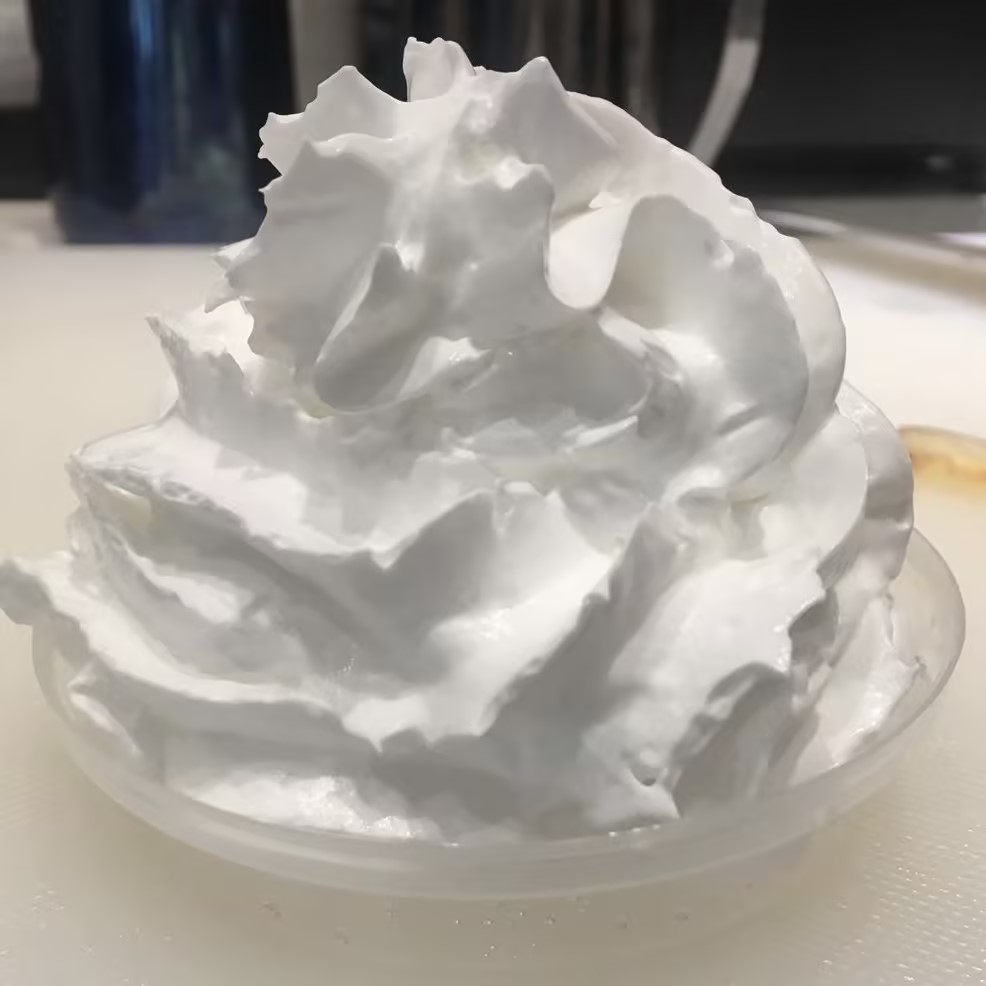
Whipping creamer application. Image provided by the manufacturer.
Non-dairy creamer is a functional ingredient category, not a single formula. In beverage and bakery manufacturing, buyers choose a creamer not only by fat content but also by whether the powder must dissolve quickly, foam, whip, or supply a high fat load. Within the Cograin ingredient portfolio, three models are regularly compared during sourcing: FC22, a foaming non-dairy creamer; C960, a whipping non-dairy creamer; and 60A, a high-fat non-dairy creamer. The frequent reference point is fat percentage, but the more useful reference point is function in the final product.
These grades are produced by Jiahe Foods Industry Co., Ltd., the manufacturer behind the Cograin brand. Jiahe was established in 2001 and operates three production bases and five factories located in Suzhou, Nantong, and Singapore. Its product scope includes non-dairy creamer, starch syrups, cane syrup, flavored syrups, powdered fat products, and liquid line products.
Why the Functional Grade Matters More Than Fat Alone
Two grades in this comparison share the same fat number on paper. C960 and 60A both report 60.0g/100g fat, yet the available specifications describe them differently. C960 is a whipping non-dairy creamer intended for baking and beverage use. 60A is a high-fat non-dairy creamer intended for beverage, dessert, baking, and animal feed use. If a product development brief requires a whipping creamer, matching only the fat number to 60A would miss the functional difference.
The protein values give a second layer of comparison. FC22 states 7.2g/100g, C960 states 5.2g/100g, and 60A states 3.0g/100g. Protein is one of the visible differences between the foaming model, the whipping model, and the high-fat model. In foamed and whipped systems, protein contributes to structure, but the final result is controlled by the full emulsifier, stabilizer, and processing system. The practical point is that FC22, C960, and 60A are not three versions of the same creamer with different fat levels; they are three functional positions.
FC22, C960, and 60A: Model Specifications Compared
The following table consolidates the published product data for the three Cograin models. The purpose is to help a buyer see which variables move when the product type changes.
| Model | Type | Fat per 100g | Protein per 100g | Other stated values | Intended industries |
|---|---|---|---|---|---|
| FC22 | Foaming creamer | 22.0g | 7.2g | Trans fat 0g/100g; moisture <=6.0% | Milk tea, coffee, baking |
| C960 | Whipping creamer | 60.0g | 5.2g | Carbohydrate 28.8g/100g; moisture <=6.0g/100g | Baking, beverage |
| 60A | High-fat creamer | 60.0g | 3.0g | Trans fat 0g/100g | Beverage, dessert, baking, animal feed |
Main ingredient declarations from the product specifications: FC22 lists glucose syrup, hydrogenated vegetable oil, milk powder, emulsifier, stabilizer, salt, and flavoring. C960 lists glucose syrup, hydrogenated vegetable oil, emulsifier, sodium caseinate, stabilizer, and salt. 60A lists hydrogenated vegetable oil, glucose syrup, sodium caseinate, emulsifier, and stabilizer. The 60A specification is identified in the source data for the China market; international buyers should confirm the export specification with the supplier.
Ingredient Profile: Where the Three Models Diverge
All three are listed as non-dairy creamer products, but their ingredient declarations are different. FC22 contains milk powder, which distinguishes it from C960 and 60A. C960 and 60A both contain sodium caseinate. Sodium caseinate is a milk derivative. United States FDA regulations allow a product labeled non-dairy to contain a milk derivative such as sodium caseinate, as long as the derivative is disclosed as a milk derivative. This does not make the ingredient suitable for consumers who need to avoid milk derivatives.
FC22 contains milk powder, so it is also not a vegan formulation. Among these three models, none should be described as vegan or dairy-free simply because the category name is non-dairy. Buyers who need a vegan creamer should request a product explicitly positioned as a vegan non-dairy creamer and verify the finished product label against the requirements of the destination market.
Foaming, Whipping, and High-Fat: Selection Clues in the Label
Each model has a type label that is part of the purchasing specification. FC22 belongs to the foaming creamer type and lists milk tea, coffee, and baking as intended industries. C960 belongs to the whipping creamer type and lists baking and beverage. 60A is the high-fat type and lists beverage, dessert, baking, and animal feed. The type label tells a buyer what the supplier intends the product to do, and it should be checked before any fat-only comparison.
For a milk tea or coffee line with a foam requirement, FC22 is the model in this set whose type is foaming. For a bakery or beverage line with a whipped preparation requirement, C960 is the whipping model. For a formulation that needs high fat loading in beverages, desserts, baked goods, or animal feed, 60A is the high-fat model and the only model in this group whose listed industries include animal feed.
Application and Use-Case Notes
In the bubble tea and coffee shop sector, the documented use conditions for non-dairy creamer applications include normal-temperature storage in a food-grade production environment, while the functional role is to improve taste smoothness, enhance creaminess, and adjust flavor profile. The supply mode can be batch production, bulk supply, or on-demand delivery. This sector scenario is common in Singapore and the United States. These are category-level expectations; model-level suitability still depends on the intended-use list in each specification.
- FC22 for milk tea and coffee: FC22 lists milk tea, coffee, and baking as intended industries and carries the foaming creamer type. Its fat level is 22.0g/100g, the lowest of the three models, with trans fat declared at 0g/100g.
- C960 for bakery and beverage: C960 lists baking and beverage as intended industries and carries the whipping creamer type. Its fat and protein values are 60.0g/100g and 5.2g/100g respectively.
- 60A for high-fat or feed applications: 60A lists beverage, dessert, baking, and animal feed. It declares 60.0g/100g fat, 3.0g/100g protein, and 0g trans fat per 100g, and it is the only model in this comparison whose intended-industry list includes animal feed.
Market Context for Functional Creamer Selection
Third-party market estimates published in 2024 provide context for these three grades. Future Market Insights valued the global non-dairy creamer market at USD 2.4 billion in 2024 and projected it to reach USD 4.4 billion by 2034. The same research reports that powdered non-dairy creamers held about 68.4 percent of the market, supported by long shelf life and ease of storage. Business Research Insights estimated coffee applications at roughly 41 percent of non-dairy creamer demand. Market research on fat-content segmentation places medium-fat variants, defined as 21 to 50 percent fat content, at roughly 43.6 to 46 percent share.
This context is useful when comparing FC22, C960, and 60A. Coffee is a large demand pool, and milk tea and bakery channels are significant buyers of function-specific powders. At the same time, high-fat grades above the 50 percent boundary are selected for specialized requirements such as whipping, concentrated fat delivery, or animal feed formulas, not because they mirror the market average. A buyer who interprets only the dominant medium-fat segment may overlook the 60 percent fat products that serve different production processes.
Comparison with Dairy Cream and Other Traditional Fat Ingredients
Buyers often evaluate a powdered non-dairy creamer against fresh dairy cream, dairy whipping cream, or buttercream systems. Fresh dairy cream provides familiar flavor and melting behavior, but it is a perishable ingredient that typically depends on refrigeration and has a shorter usable window. Powdered creamers are usually selected when ambient storage, bulk logistics, or batch flexibility are important.
The first boundary in this comparison is process validation. A powdered vegetable-fat creamer is not a one-to-one drop-in for dairy cream in every formula. Whipping time, overrun, foam stability, freezing behavior, mouthfeel, and finished label claims must be tested in the actual product matrix. The ingredient declaration also matters: FC22 contains milk powder, while C960 and 60A contain sodium caseinate, so none can be treated as an automatically dairy-free substitute.
A second boundary is declaration transparency. FC22 and 60A declare 0g trans fat per 100g. C960 does not show a trans-fat value in the available product specification. Because C960 contains hydrogenated vegetable oil, a buyer who needs a formal zero-trans-fat statement for C960 should request the lot-specific certificate of analysis rather than assume that all grades from one supplier have the same fatty-acid profile.
Supplier Facts That Support Grade Verification
Grade codes are only useful when the supplier can document them. Jiahe Foods Industry Co., Ltd., the manufacturer behind Cograin, reports approximately 310 employees and a manufacturing facility covering 77,333.33 square meters. Company materials also list an R&D team of 22 engineers and management-system certifications including ISO9001, FSSC22000, HACCP, HALAL, ISO14000, and OHSAS18000. The company is recognized as a national green factory. These facts give a sourcing team a starting point for a supplier audit, but they are not a substitute for reviewing the specification of the exact model, production lot, and destination market.
Future Outlook: Moving from Generic to Functional Specification
The growth projection from USD 2.4 billion in 2024 to USD 4.4 billion by 2034 suggests that the non-dairy creamer category will continue to attract new formulations. As coffee remains the largest application segment and powder remains the dominant format, product development teams are more likely to ask which functional grade fits the project rather than which generic creamer is cheapest. Foaming, whipping, and high-fat grades will be compared by measurable variables: fat content, protein content, moisture, trans-fat declaration, intended industries, and model-specific documentation.
This comparison of FC22, C960, and 60A reflects that shift. A grade code such as FC22 or C960 is not an interchangeable SKU label; it carries a functional position that helps a buyer translate product chemistry into end-use expectations.
Practical Selection Checklist for FC22, C960, and 60A
- Define the end product: milk tea, coffee, bakery, dessert, beverage, or animal feed.
- Define the required function: foaming, whipping, or high-fat addition.
- Compare the stated model type with the intended-industry list on the specification.
- Check fat, protein, moisture, and trans-fat declarations against your finished product label rules.
- Check the ingredient list for milk powder or sodium caseinate and clarify allergen or vegan claims.
- Request a certificate of analysis for the specific production lot, especially when a trans-fat or nutrition declaration is required.
- Run a pilot trial in the final matrix before scaling purchase volume.
For the wider product and company profile, Cograin provides a public brochure download: 2025 Cograin Brochure.
Frequently Asked Questions
What is the difference between FC22, C960, and 60A non-dairy creamers?
FC22 is a foaming non-dairy creamer with 22.0g/100g fat, 7.2g/100g protein, trans fat 0g/100g, and moisture not more than 6.0 percent. It lists milk tea, coffee, and baking as intended industries. C960 is a whipping non-dairy creamer with 60.0g/100g fat, 5.2g/100g protein, 28.8g/100g carbohydrate, and moisture not more than 6.0g/100g. It lists baking and beverage. 60A is a high-fat non-dairy creamer with 60.0g/100g fat, 3.0g/100g protein, and trans fat 0g/100g. It lists beverage, dessert, baking, and animal feed.
Which model is intended for coffee or milk tea?
Among the three grades, FC22 carries the most specific published mapping to milk tea and coffee. Its type is foaming creamer and its intended industries are milk tea, coffee, and baking. C960 lists the broader category beverage, and 60A also lists beverage, but neither model specification names milk tea or coffee as specifically as FC22 does in the available data.
Can all three models be used in baking applications?
Yes. FC22 lists baking among its intended industries, C960 lists baking, and 60A lists baking. The models are still functionally different. FC22 is a foaming creamer, C960 is a whipping creamer, and 60A is a high-fat creamer, so the bakery format determines which grade is appropriate.
Is FC22 a low-fat non-dairy creamer?
The available specification does not use the label low-fat for FC22. FC22 contains 22.0g/100g fat, which is lower than the 60.0g/100g fat level found in C960 and 60A. A buyer who wants to use the regulated term low fat on a finished product label should check the nutrition criteria of the country where the product will be sold.
Are C960 and 60A the same product because both have 60g/100g fat?
No. C960 is described as a whipping creamer intended for baking and beverage, while 60A is described as a high-fat creamer intended for beverage, dessert, baking, and animal feed. Their protein values differ: C960 has 5.2g/100g and 60A has 3.0g/100g. The ingredient declarations also differ. Fat content alone does not make them interchangeable.
Which Cograin grade is intended for animal feed?
60A is the model in this comparison whose intended-industry list includes animal feed. The FC22 specification lists milk tea, coffee, and baking. The C960 specification lists baking and beverage. Neither FC22 nor C960 lists animal feed in the available product data.
Are FC22, C960, or 60A suitable for vegan or kosher product claims?
FC22 contains milk powder; C960 and 60A contain sodium caseinate, a milk derivative. None of the three is described as a vegan non-dairy creamer in the available specifications. If a market requires halal or kosher certification, the model-specific certificate should be requested directly from the supplier because a company-level certification does not automatically confirm every model and production lot.
Have Questions or Need More Details?
Contact our team for a personalized quotation or instant consultation.
Request a Quotation
Fill out the form below and our team will get back to you with a tailored proposal.
WhatsApp Direct Chat
Prefer to chat in real-time? Message us on WhatsApp for instant assistance & quick answers.
- Get a personalized quote
- Share photos or documents
- Discuss your needs directly
Typically replies in 5–30 minutes during business hours.