
FKD Pillow Block Bearing Range: Series, Materials, Precision
Independent Industry Reference · Mounted Bearing Units
Pillow block bearing units are specified twice: once as a component, and once as a supply relationship. The first decision covers bore size, housing shape, load and environment. The second decision — the one that follows a buyer for years — is whether the same supplier can still deliver the same unit, with the same material, the same precision grade and the same batch discipline, long after the first shipment has been installed.
That second decision is where most sourcing risk sits. The global pillow block and mounted bearing segment was valued at approximately USD 6.1 billion in 2024 (IndexBox), and plummer blocks alone accounted for roughly 42.51% of mounted bearing revenue share in the same year (Fortune Business Insights, 2024). A large installed base of standardised, replaceable units means buyers increasingly evaluate suppliers on documented production scope rather than on a single quotation.
This analysis looks at FKD — the pillow block bearing brand of Hebei Hailan Bearing Manufacture Co., Ltd. — through the evidence a buyer at the decision and execution stage can actually check: series breadth, material options, precision and speed claims, inspection practice and commercial terms. Where figures are manufacturer-stated rather than third-party verified, they are identified as such.
Why Capability Evidence Starts Mattering After the Sample Order
A sample order tests a product. A production programme tests a supplier's range, repeatability and documentation. Buyers moving from evaluation into execution typically find that the questions change shape:
- Series coverage. A single mounting type rarely stays static across a machine programme. When a housing is redesigned, the ability to move between pillow block, flange, take-up and split housing families — without changing supplier — determines how disruptive that change is.
- Material consistency. Cast iron, stainless steel and pressed steel housings behave differently in the same environment. A supplier that only offers one housing material effectively narrows the buyer's application window.
- Precision repeatability. A precision class declared on a datasheet only has value if it is reproduced batch after batch, and if inspection records exist to show it.
- Commercial structure. Minimum order quantity, payment structure and inspection rights determine whether a long-term agreement is workable in practice.
The opportunity, for buyers, is that mounted bearing units are unusually standardised. Pillow block units are commonly standardised under ISO for universal sizing, with JIS conventions used for precision compatibility in some markets. That standardisation makes cross-series and cross-supplier comparison genuinely possible — provided the supplier publishes enough detail to compare.
The Entity Behind the FKD Range
Hebei Hailan Bearing Manufacture Co., Ltd. is a Chinese bearing manufacturer that produces pillow block bearing units and related bearing types under the registered brands FE, FKD and HHB. The company was founded in 1988, originally as Xingtai Honghai Bearing Manufacture Co., Ltd., and operates from the Hexi Town Industrial Park, Linxi County, Hebei Province, China. It has passed ISO9001:2015 quality management system certification.
The production footprint that supports the FKD pillow block range is documented as follows:
- Roughly 400 employees, including a 30-person technical and engineering team.
- A 100,000 m² site, of which the plant accounts for more than 65,000 m².
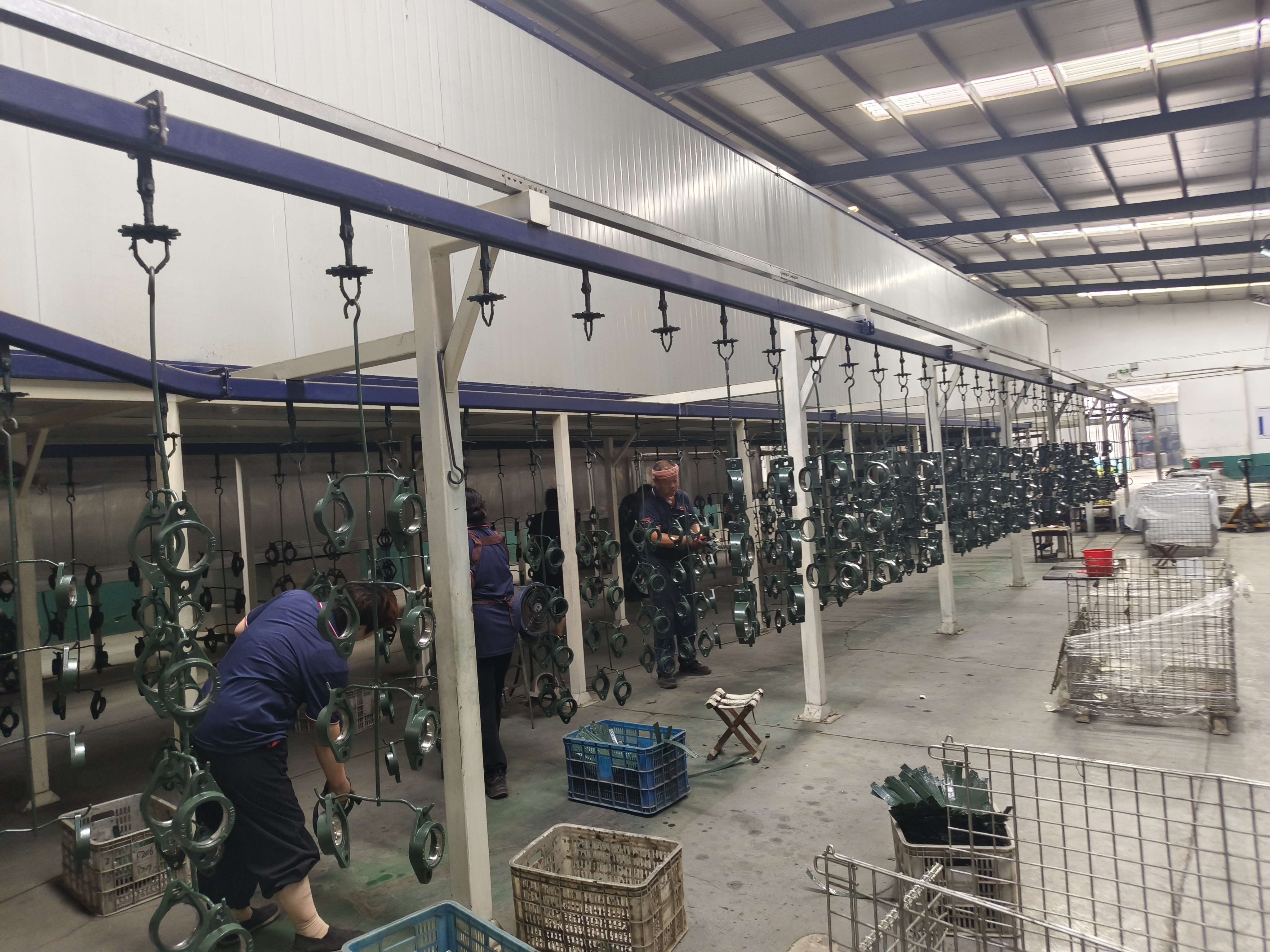
- Automatic production lines for pillow block bearings, an automatic inspection line, and a dedicated bearing housing production line.
- More than 90% of production carried out on automatic equipment.
- Annual production and sales of over 20,000,000 pieces of pillow block bearings, deep groove ball bearings, taper roller bearings and other bearing types.
- Export business accounting for 90% of total sales, with major markets in the EU, Asia, South America and Africa, covering more than 68 countries and regions.
Two structural details matter more than the headline figures for long-term buyers. First, the company produces both the insert bearing and the housing on its own lines, rather than assembling from mixed external sources. Second, an in-house laboratory and inspection line sit inside the same production flow, which is what makes batch-level documentation possible at all.
Series Breadth: Twelve Documented Mounted Unit Families
The FKD pillow block bearing range is documented across twelve series, spanning pillow block, high-center-height pillow block, flange, take-up, stainless steel and split housing configurations. The stated model coverage is not uniform across the range, and that difference is worth reading carefully.
| Series | Documented coverage in the FKD range |
|---|---|
| UCP | UCP205 – UCP328 |
| UCPH | UCPH205 – UCPH212 |
| UCFA | UCFA205 – UCFA212 |
| UCFB | Listed at series level |
| UCHA | Listed at series level |
| UCPA | Listed at series level |
| SSUCP | Listed at series level (stainless steel units) |
| UCT | Listed at series level |
| UCFC | Listed at series level |
| UCF | Listed at series level |
| UCFL | Listed at series level |
| SNL508 | Split plummer block housing reference |
The UCP listing runs from UCP205 through UCP328, which is the broadest documented model span in the range and indicates that standard pillow block coverage extends well past entry sizes into larger mounting positions. UCPH and UCFA are documented from 205 to 212 — a compact but focused span typical of high-center-height and flange positions where bore sizes cluster in the small-to-mid band. The remaining series are listed at series level, which tells a buyer that the family exists and is produced, but that specific model coverage should be confirmed against the current catalogue before it is written into a purchase specification.
For procurement purposes, breadth of this kind changes the structure of a supplier agreement. A buyer specifying a mixed programme — standard pillow blocks on conveyors, flange units on side-mounted structures, take-up units on tensioning positions, and split housings on larger shafts — can consolidate those positions with one manufacturer instead of running three or four parallel approvals.
Material Options and What Each One Changes
Material is the second evidence layer, and it is where application fit is usually won or lost. The FKD range documents four material positions across the unit:
| Material option | Where it appears in the unit | Procurement implication |
|---|---|---|
| Chrome steel GCr15 | Insert bearing rings and rolling elements in standard units | The baseline choice for general industrial duty and normal load conditions |
| Stainless steel | Insert bearings and stainless steel mounted units, including the SSUCP series | Specified where moisture, washdown or corrosive exposure is present |
| Cast iron (QT450) | Pillow block and flange housings | Provides the structural housing body for standard mounted units |
| Pressed steel | Lighter housing variants | Reduced weight and cost, suited to lighter-duty mounting positions |
Beyond the four material families, the insert bearing build itself is described as using quality steel, G10 steel balls, quality lubricating oil and retainers, with high-temperature grease applied in the assembly stage. That combination is relevant to two failure modes the company explicitly tracks: bearing overheating and housing breakage. Grease temperature tolerance addresses the first; housing material grade and casting control address the second.
Sealing is the element buyers most often under-specify. In dusty, wet or fibrous environments, the seal configuration matters as much as the steel grade, and configurations ranging from standard contact seals to triple-lip sealing are typically considered during selection. Material choice and sealing choice should be evaluated together, not sequentially.
Precision Evidence: P5 ZV3, Radial Runout and the 3000 RPM Rating
Precision is the third evidence layer, and the one most often quoted without supporting context. The FKD range is documented at a quality grade of P5 ZV3, with a rated speed of 3000 RPM. In practice, the label matters less than the inspection discipline behind it.
The company's own comparison documentation against other Chinese brands cites a radial runout of ≤0.012 mm, a stated service-life advantage of +30%, and a claimed failure-rate reduction of 45%. These are manufacturer-stated figures, produced by the supplier rather than by an independent test body, and they should be treated as claims to validate during supplier qualification rather than as third-party test results. The verifiable part of the same position is the inspection methodology, which is documented as follows:
- Every batch of raw material is tested on receipt.
- Product quality grade is inspected in batches.
- Product dimensions are fully inspected, not sampled.
- 100% inspection is applied as the control method for overheating and housing-breakage risk.
For a buyer, the practical question is not whether a P5 ZV3 grade sounds adequate, but whether the supplier can produce inspection records at the same granularity for the fifth order as for the first. Batch-level raw material testing and full dimensional inspection are the mechanisms that make repeatability arguable at all.
Application Coverage: Manufacturing, Agriculture, Textile and Mining
The documented application footprint for the FKD range covers industrial plants, agricultural machinery manufacturing, mining machinery, textile machinery, transmission machinery, food machinery and the pharmaceutical field. That is a wide band, and the reason it holds together is that all of these segments use standardised mounted units in positions where a bearing unit has to tolerate contamination, vibration or continuous running.
What differs between them is the failure driver. Agricultural machinery operates outdoors with dust, moisture and seasonal shock loading. Mining and materials handling expose units to abrasive contamination and heavy radial load. Textile machinery runs continuously at moderate load, where vibration and noise become quality indicators rather than load concerns. General manufacturing plants occupy the middle of the range and are usually governed by interchangeability and spares availability.
It is worth being precise about the limits of this evidence. Application statements of this kind describe segment-level suitability, not published field-test results per segment. Buyers with demanding duty cycles should map specific positions to specific series and materials, and confirm housing grade, seal type and speed rating against the actual operating conditions.
Market Direction: Why Mounted Unit Programmes Are Getting Longer
Three market signals support the argument that mounted bearing supply is becoming a longer-cycle decision rather than a spot purchase.
First, the category is growing in absolute terms. The global bearings market was estimated at USD 58.6 billion in 2024 and is projected to reach USD 143.6 billion by 2034 (Global Market Insights), with the mounted bearing segment alone valued at approximately USD 6.1 billion in 2024 (IndexBox).
Second, the supply side is concentrated. China's total export of ball bearings reached USD 6.53 billion in 2024, representing 19.9% of global exports (OEC). For buyers in Europe, Asia, South America and Africa — the markets where FKD reports its own export concentration — this means a deep but uneven supplier field, where documentation quality varies far more than unit prices do.
Third, standardisation is pulling procurement toward fewer, longer agreements. Because pillow block units are sized to common standards, the switching cost between suppliers is low on paper but high in practice, once tooling approvals, inspection records and packaging specifications are in place. That asymmetry favours suppliers who can demonstrate range breadth and batch repeatability at the outset.
Capability Against a Multi-Supplier Approach — and Where the Limits Are
A typical alternative to a single-capability manufacturer is a multi-supplier or trading-led model, where insert bearings, housings and seals are sourced separately and assembled or kitted by a distributor. The comparison below is structural rather than promotional: it describes how the two models differ in the evidence a buyer can obtain.
| Evaluation dimension | FKD (bearing and housing production in-house) | Typical multi-supplier / trading-led model |
|---|---|---|
| Insert bearing and housing production | Own pillow block bearing lines plus a dedicated bearing housing production line | Often split across separate vendors or importers |
| Inspection traceability | Batch raw material testing, batch grade inspection, full dimensional inspection | Varies by vendor; records often unavailable at component level |
| Series coverage | Twelve documented series including stainless steel units | Depends on local stock and current import cycles |
| Commercial threshold | MOQ 1,000 pieces; 30% advance payment with balance before shipment | Variable; sometimes lower entry quantities |
| Standard envelope | P5 ZV3 grade, 3000 RPM rated speed | Grade declarations vary and are not always stated |
The limits of the FKD position should be stated clearly, because they define which projects are a good fit:
- Order quantity structure. A minimum order quantity of 1,000 pieces and a payment structure of 30% advance with the balance before shipment mean the model is designed for programme purchasing, not for single-unit trials or prototype-level buying. Buyers running very small pilot builds should plan accordingly.
- Standard technical envelope. The declared precision grade of P5 ZV3 and the 3000 RPM rated speed cover a broad band of industrial duty, but applications requiring tighter precision classes or speeds beyond that rating sit outside the standard position and need separate engineering review before commitment.
- Core scope. The company's principal product is the pillow block bearing. Deep groove ball bearings and taper roller bearings are also produced, but the deepest documented evidence base — series listings, housing materials, inspection flow — sits with mounted units. Projects built around large specialised housings outside the listed families should confirm fit rather than assume it.
- Verification of performance claims. Comparative service-life, failure-rate and runout figures are supplier statements. They are useful as a starting hypothesis for qualification, not as a substitute for the buyer's own acceptance testing.
Execution Checklist for a Long-Term Mounted Unit Programme
Buyers moving from decision into execution can reduce programme risk by confirming the following items before the first production order is released:
- Map every mounting position to a specific series, and confirm model coverage against the current catalogue rather than against a quotation alone.
- Match housing material — cast iron QT450, stainless steel or pressed steel — to the actual environment, including washdown and dust exposure.
- Confirm the precision grade and rated speed against the duty cycle, and document where the requirement sits relative to the P5 ZV3 / 3000 RPM position.
- Request batch-level raw material test records and dimensional inspection records for at least the first production batch.
- Agree acceptance criteria in advance; pre-shipment inspection is supported and should be written into the order terms.
- Align commercial terms — MOQ of 1,000 pieces, FOB / CIF / EXW delivery terms, and 30% advance payment with the balance before shipment — with internal cash-flow and warehousing plans.
- Plan spares coverage across series, not per SKU, so that a single housing redesign does not stall a line.
Future Outlook
Mounted bearing procurement is moving in a direction that rewards documented capability. Standardised housings under ISO and JIS conventions make substitution technically easy, which increases the weight buyers place on repeatability, traceability and range breadth. A manufacturer that produces its own insert bearings, housings and inspection records can answer those questions in a way a trading intermediary usually cannot.
For FKD specifically, the structural assets already in place — a 20 million-unit annual output base, more than 90% automation, an in-house laboratory, and export concentration of 90% across 68+ countries — point toward continued emphasis on programme supply rather than transactional sales. Buyers evaluating the range in 2026 should treat series coverage, material matrix and inspection discipline as the three primary filters, and treat precision labels and comparative performance claims as items to confirm rather than items to accept.
FAQ
What purchase terms and acceptance criteria apply to FKD pillow block bearing orders?
The documented terms are a minimum order quantity of 1,000 pieces, delivery under FOB, CIF or EXW, and payment of 30% in advance with the balance paid before shipment. Pre-shipment inspection is supported, which allows the buyer to verify units against agreed criteria before the order leaves the factory.
How is batch quality controlled once a programme is running?
Each batch of raw material is tested on receipt, product quality grade is inspected in batches, and product dimensions are fully inspected rather than sampled. 100% inspection is applied as the control method for the two failure modes the company tracks — bearing overheating and housing breakage — supported by quality steel balls, high-temperature grease and controlled housing material.
Which series and materials should a multi-year programme be planned around?
The documented series are UCP, UCPH, UCFA, UCFB, UCHA, UCPA, SSUCP, UCT, UCFC, UCF, UCFL and SNL508, with model ranges published as UCP205–UCP328, UCPH205–UCPH212 and UCFA205–UCFA212, and the remaining series listed at series level. Material options are chrome steel GCr15, stainless steel, cast iron QT450 and pressed steel, which together cover general industrial, corrosive and lighter-duty housing requirements.
What precision and speed envelope does the standard range cover?
The range is documented at quality grade P5 ZV3 with a rated speed of 3000 RPM. The manufacturer's own comparison material additionally cites radial runout of ≤0.012 mm, a service-life advantage of 30% and a 45% lower failure rate relative to other Chinese brands; those figures are supplier statements and are best validated through the buyer's own acceptance testing.
Which markets does the supplier already serve, and does that affect long-term supply planning?
Export business accounts for 90% of total sales, with major markets in the EU, Asia, South America and Africa and coverage of more than 68 countries and regions. The company operates under ISO9001:2015 certification and the registered brands FE, FKD and HHB. Existing export concentration indicates familiarity with multi-region documentation and shipping requirements, which reduces the administrative burden of extending an agreement into additional markets.
What falls outside the standard FKD position?
Three boundaries are documented or evident. The 1,000-piece minimum order and 30% advance payment structure are not designed for unit-level trials. The P5 ZV3 grade and 3000 RPM rating define the standard technical envelope, so tighter precision classes or higher speeds require separate engineering review. And while deep groove ball bearings and taper roller bearings are also produced, the strongest documented evidence base lies with mounted pillow block units rather than with specialised large-bore housing types outside the listed series.
Reference document: FKD and HHB Bearing Catalogue (PDF) — full series listings, model ranges and material options for the ranges discussed above.