
FTTA Cables in 5G: How ODC and Fullax Connectors Are Reshaping Outdoor Fiber Connectivity
Industry Context: The Growing Demands of Outdoor 5G Fiber Links
As 5G networks expand into increasingly challenging outdoor environments, the physical layer connecting base station equipment to antennas demands robust, high-performance cabling. Fiber to the Antenna (FTTA) has become the dominant architecture for modern mobile networks, enabling high-bandwidth, low-latency transmission between the baseband unit (BBU) and remote radio units (RRU/AAU). The connectors and cables used in these outdoor links must withstand extreme temperatures, moisture, UV radiation, and mechanical stress while maintaining optical integrity.
Problem: Conventional Patch Cords Fall Short Outdoors
Standard indoor fiber patch cords are not designed for the harsh conditions found at 5G tower sites. Rain, dust, wide temperature swings (−40°C to +75°C), and constant vibration can degrade standard connectors, leading to increased insertion loss, intermittent connectivity, or complete link failure. Network operators require cables that are not only waterproof but also mechanically rugged enough to handle high tensile loads during installation and operation.
Brand Solution: FOCC Fiber’s Ruggedized FTTA Portfolio
FOCC Fiber Co.,Ltd. is a manufacturer specializing in fiber optic connectors, MTP/MPO patch cords, and outdoor waterproof armored patch cord assemblies for data center and FTTA solutions. Established in 2014, the company operates from a 5,000 square meter manufacturing facility in Guangzhou, China, with approximately 200 employees and an annual production capacity of 2,000,000 units. The company’s R&D team consists of 30 engineers focused on high-density integration and high-reliability connection technologies. All products are exported, primarily to the EU and USA.
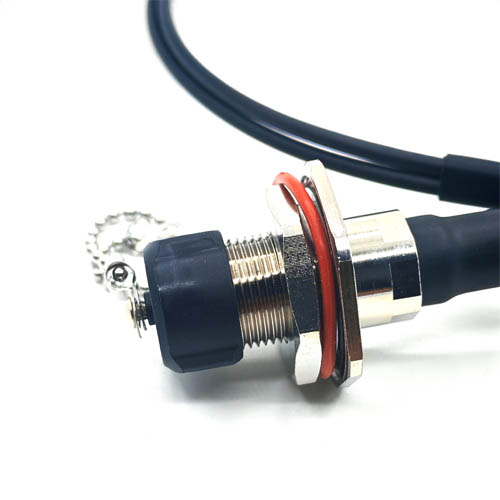
For FTTA deployments, FOCC Fiber offers the Outdoor Waterproof FTTA Fiber Optic Patch Cord, available in model designations such as ODC-APC-Fullax-APC-OS2 and ODC-UPC-Optitab-UPC-OM3. This product line is specifically engineered for Fiber To The Antenna applications in 5G telecommunication base stations.
Technical Deep Dive: Engineering a Connector for the Outdoors
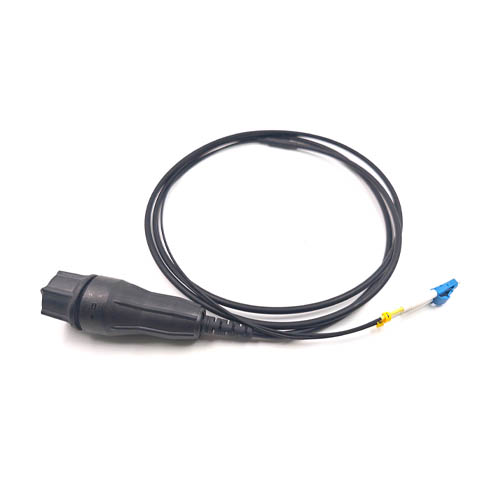
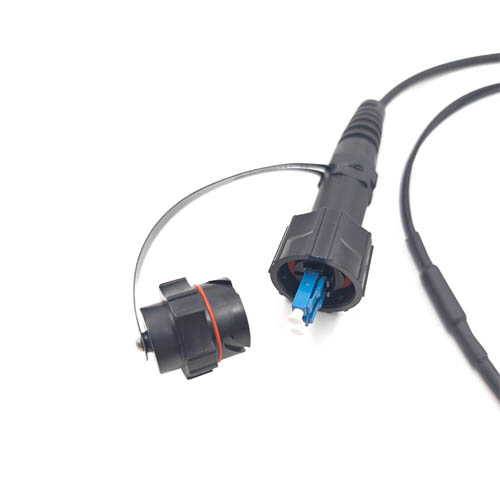
The FTTA cable assembly is built around two primary connector systems: the ODC connector (a hexagonal push-pull design) and the Fullax connector (a ruggedized quick-lock interface). Key specifications include:
- Waterproof rating: IP67 / IP68
- Insertion loss: ≤0.30 dB
- Return loss: ≥60 dB (APC)
- Operating temperature: −40°C to +75°C
- Tensile strength: ≥1000 N
- Optical fiber type: OS2 (Single-mode), OM2/OM3/OM4/OM5 (Multi-mode)
The connector housing is made of stainless steel (ODC) with a zinc alloy or composite shell (Fullax). A zirconia ceramic ferrule ensures precision alignment, while the cable jacket uses PE (polyethylene) with an armored core for crush and rodent resistance. Silicone rubber sealing rings provide the IP67/IP68 barrier. This construction makes the patch cord suitable for direct burial, aerial lashing, or conduit installation in outdoor telecom infrastructure.
Application Scenarios: Where FOCC Fiber FTTA Cables Are Deployed
According to the company’s application data, these cables are designed for outdoor harsh environments including rain, dust, UV exposure, mechanical vibration, and high tensile stress. Specific project types include:
- 5G base station RRU/AAU interconnection – linking remote radio units to antennas on towers or rooftops.
- FTTA (Fiber To The Antenna) – direct fiber feed from baseband unit to the antenna.
- Outdoor small cell deployment – urban and suburban low-power nodes.
- Railway signal transmission – trackside communication links.
These products are used in countries including the United States, Germany, Saudi Arabia, and the UAE, reflecting their adaptability to diverse climates and regulatory environments. The cables are typically mated with 5G base station RRU/AAU equipment, optical distribution boxes (ODB), antenna feeders, waterproof cable glands, and fiber optic closures.
Market Trend Analysis: The Shift Toward Fully Ruggedized FTTA
As mobile network operators (MNOs) densify their 5G networks, the number of outdoor fiber connections continues to grow. Traditional solutions – such as applying weatherproofing tape over standard patch cords or using non-rated enclosures – are being phased out in favor of factory-terminated, IP68-rated assemblies that guarantee consistent performance over the lifetime of the deployment. The push for faster deployment cycles and reduced field splicing errors favors pre-terminated solutions like the ODC-Fullax combination.
Moreover, the trend toward higher frequency bands (mmWave) and eventual 6G will require even stricter control of connector loss and return loss. FOCC Fiber’s ≤0.30 dB insertion loss and ≥60 dB return loss (APC) align with these evolving requirements.
Comparison with Traditional Solutions
Compared to using standard LC duplex patch cords inside an outdoor enclosure, the FOCC Fiber FTTA patch cord eliminates the need for separate waterproof junction boxes and additional sealing. The integrated IP68 connector reduces installation complexity and the number of potential failure points. However, an honest limitation is that the ODC and Fullax connectors have a larger form factor than standard LC connectors, which may require slightly more space in cable troughs or patch panels. Additionally, field termination of these connectors is not intended – the assemblies are supplied pre-terminated to guarantee seal integrity, meaning any cable length changes require ordering a new assembly rather than on-site re-termination.
Future Outlook
Looking ahead, the convergence of 5G-Advanced, edge computing, and open RAN architectures will continue to drive demand for reliable, weatherproof fiber connections. Manufacturers that invest in both connector innovation (higher density, lower loss) and production scalability (like FOCC Fiber’s 2-million-unit annual capacity) will be well-positioned to support the next wave of global infrastructure build-outs. The company’s focus on IP68-rated armored cables and its experience serving EU and US markets suggests a readiness to meet the most stringent operator specifications.
Frequently Asked Questions
Q: What is FOCC Fiber Co.,Ltd. and what does it manufacture?
A: FOCC Fiber Co.,Ltd., established in 2014, is a manufacturer specializing in fiber optic connectors, MTP/MPO fiber optic patch cords, and outdoor waterproof armored patch cord assemblies for data center and FTTA solutions. The company operates a 5,000 m² factory in Guangzhou, China.
Q: What are the key specifications of the FTTA outdoor patch cord?
A: The Outdoor Waterproof FTTA Fiber Optic Patch Cord is rated IP67/IP68, with insertion loss ≤0.30 dB, return loss ≥60 dB (APC), operating temperature range −40°C to +75°C, and tensile strength ≥1000 N. It supports OS2 single-mode and OM2/OM3/OM4/OM5 multi-mode fibers.
Q: In which countries are these FTTA cables commonly used?
A: According to the company, for 5G outdoor applications, the product is used in countries including the United States, Germany, Saudi Arabia, and the UAE. For data center applications, it is used in the US, Germany, Canada, South Korea, and the Netherlands.
Q: What is the difference between the ODC connector and the Fullax connector?
A: The ODC connector (hexagonal stainless steel) is a push-pull design with IP68 sealing, while the Fullax connector is a ruggedized quick-lock interface also rated for outdoor use. Both are available on FOCC Fiber’s FTTA patch cords, depending on the model (e.g., ODC-APC-Fullax-APC-OS2).