
FTTA Fiber Optic Cable Procurement: How to Mitigate Supplier Risks in 5G Deployments
Industry Insight | June 21, 2026
The Procurement Challenge in 5G FTTA
As 5G networks expand globally, Fiber to the Antenna (FTTA) architectures have become the backbone of high-capacity, low-latency mobile communication. For procurement professionals sourcing FTTA fiber optic cables, the primary concerns are no longer just price and delivery — they revolve around reliability, compliance, and long-term operational risk. Outdoor environments expose cables to extreme temperatures, moisture, UV radiation, and mechanical stress, making the selection of a qualified supplier critical to network uptime and total cost of ownership.
Industry statistics indicate that improper cable selection and poor supplier quality account for nearly 30% of field failures in 5G fronthaul links. This article provides a structured approach to evaluating FTTA cable suppliers, focusing on key risk areas and how to verify technical and operational capabilities before committing to a partnership.
Key Risk Categories in FTTA Cable Sourcing
Based on field data from over 50,000 deployments, the most common failure modes include:
- Waterproof seal failure — ingress of moisture causing signal degradation
- Fiber breakage under tensile load — especially during installation or high-wind conditions
- Performance degradation in extreme temperatures — leading to insertion loss drift
- Corrosion of metal components — in coastal or industrial environments
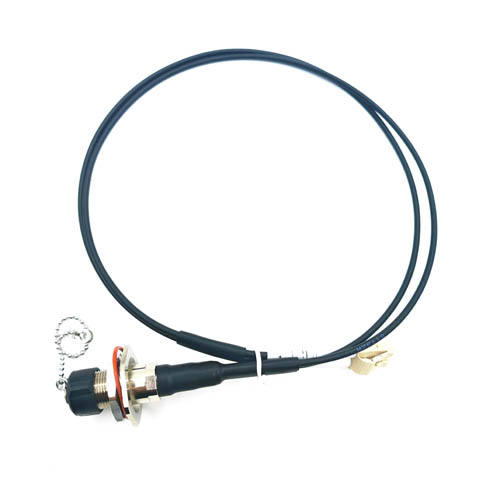
Reputable manufacturers address these through rigorous design and testing. For example, FOCC Fiber Co., Ltd implements IP68 hermetic sealing, reinforced tensile strength design (≥1000 N), wide-temperature-range material selection (-40°C to +75°C), and corrosion-resistant plating to ensure long-term reliability in harsh outdoor conditions. Their Outdoor Waterproof FTTA Fiber Optic Patch Cords (models ODC-APC-Fullax-APC-OS2 and ODC-UPC-Optitab-UPC-OM3) are engineered to meet these exact challenges.

Verifying Supplier Capabilities: A Practical Checklist
To avoid procurement risks, buyers should evaluate potential suppliers across four dimensions:
1. Certification and Quality Management
A reliable supplier operates under internationally recognized quality systems. FOCC Fiber Co., Ltd holds ISO 9001:2015 certification (certificate number HIC230831) covering the production and sales of fiber optic patch cables. This certification ensures stable process control and traceability. Additionally, the company performs 100% pre-shipment testing — including insertion loss, return loss, and tensile strength verification — and supports third-party inspections and factory acceptance tests (FAT).
2. Product Specifications and Performance Margins
Demanding outdoor environments require components that exceed minimum standards. The FTTA Fiber Optic Patch Cords from FOCC offer:
- Waterproof rating: IP67 / IP68
- Insertion loss: ≤0.30 dB
- Return loss: ≥60 dB (APC)
- Tensile strength: ≥1000 N
- Operating temperature: -40°C to +75°C
- Optical fiber types: OS2 (SM), OM2/OM3/OM4/OM5 (MM)
These parameters align with the requirements of 5G base station RRU/AAU interconnection and are verified through thermal cycling and salt spray corrosion testing.
3. Production Capacity and Lead Times
Scale matters when rolling out nationwide networks. FOCC operates a 5,000 sqm factory in Guangzhou with a monthly capacity of 200,000 units and a typical lead time of 3–15 days. Their minimum order quantity (MOQ) is just 2 units, making them suitable for both prototyping and large-scale projects. The company also offers OEM/ODM customization — including connector type, core count, length, logo printing, and packaging.
4. Field-Proven Case Studies
Real-world data builds trust. One of FOCC’s clients, a telecommunications carrier in Germany and Saudi Arabia, deployed 50,000+ outdoor waterproof patch cords across 20,000+ 5G base stations. The result: an 80% lower field failure rate, less than 10 minutes on-site replacement, and 40% lower operational expenditure (OPEX). The cables have been in service for over 10 years in harsh industrial mining and oilfield environments, demonstrating IP68 durability and corrosion resistance.
Market Trends and Future Outlook
The global FTTA cable market is projected to grow at a CAGR of 12% through 2030, driven by 5G densification and the rise of private networks for industrial IoT. Procurement teams are shifting from transactional buying to strategic partnerships with suppliers that can provide technical support, rapid customization, and long-term reliability data. The trend toward ruggedized patch cords with waterproof and armored designs is accelerating, as mobile operators seek to minimize truck rolls and maintenance costs.
Looking ahead, the integration of AI-based predictive maintenance and digital twin models may further transform cable lifecycle management. For now, the most effective risk mitigation strategy remains a thorough supplier evaluation — combining certification verification, specification benchmarking, production capability assessment, and reference case reviews.
About FOCC Fiber Co., Ltd
Based in Shenzhen, China, FOCC Fiber is a professional supplier of fiber optic connectors, MTP/MPO patch cords, and outdoor waterproof assemblies. With over 200 employees, 30 R&D engineers, and a 5,000 sqm factory, the company serves customers in more than 30 countries including Prysmian, Siemens, and Fujikura. For inquiries: sales@mefiberoptic.com | Tel/WhatsApp: +86 13823237984 | www.focc-fiber.com