
Fabric Tape Certification Evidence: EU vs US Order Comparison
Fabric Tape Certification Evidence: EU vs US Order Comparison
For a woven fabric tape order, the certification question is usually put as a single yes-or-no: does the supplier hold the document the destination market requires? In practice, EU-bound and US-bound orders separate earlier than that. The same mill-level certificates can sit in one evidence file for both orders, yet the buyer's checklist differs, because the classification line, the certificate scope and the audit format are matched to the order — not to the company website.
This comparison is written for buyers at the decision stage who are holding two quotes for the same tape construction and want to know which supporting documents are genuinely interchangeable between an EU shipment and a US shipment, which are not, and which questions can only be answered by the destination market at the time of entry.
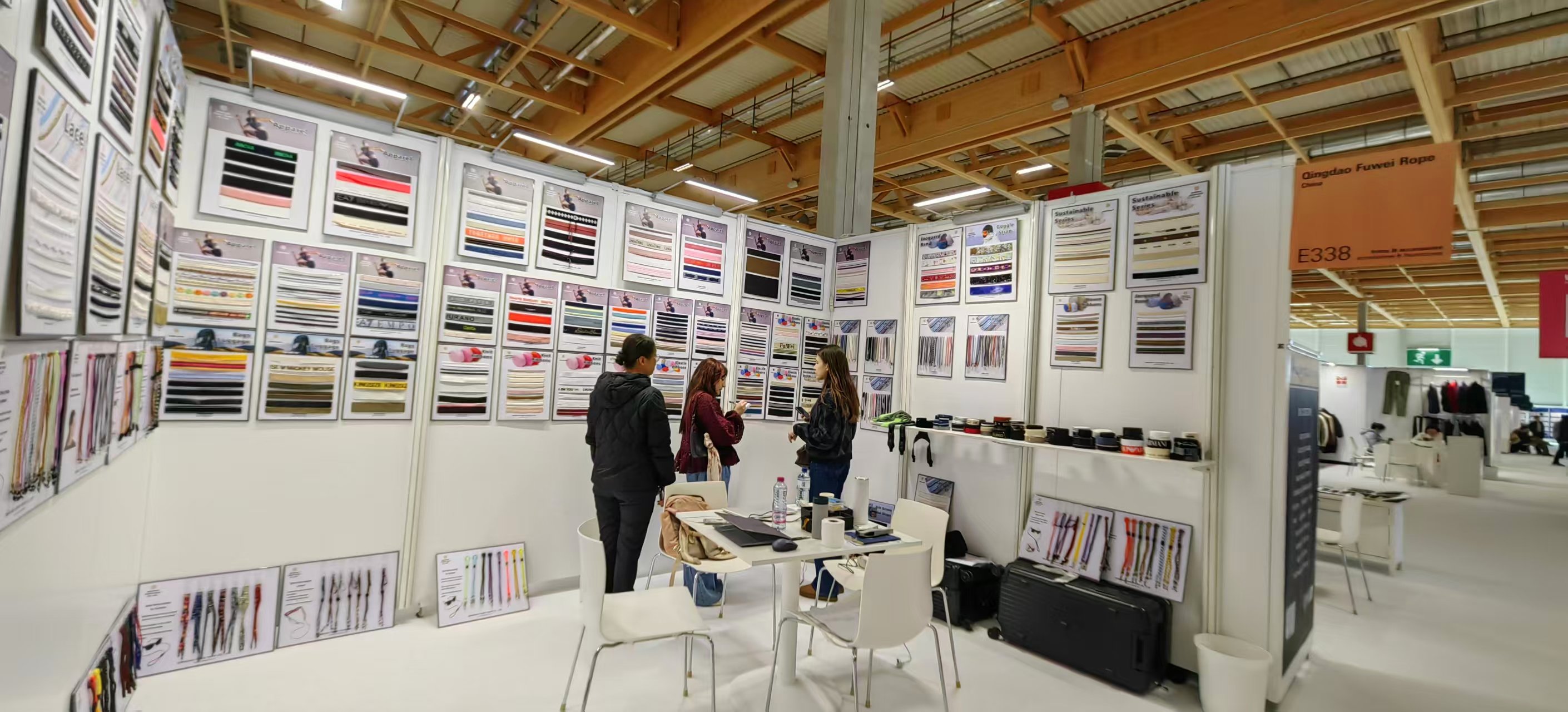
Four evidence layers sit behind a fabric tape order — and they are not interchangeable
A certificate answers only the question written into its scope. That is the single most useful rule for comparing EU and US documentation requests, because the four evidence layers a fabric tape buyer normally receives prove four different things.
- Quality management system evidence. ISO 9001 describes how production is controlled and reviewed. It says nothing about the chemistry of the finished tape, the fibre content, or the colour fastness of a printed surface.
- Product-level chemical safety evidence. OEKO-TEX Standard 100 is a product certification for textile articles tested against harmful-substance criteria. It attaches to tested articles and materials, not to a factory in general.
- Material-claim evidence. GRS certification verifies recycled content and the chain of custody behind it. It becomes relevant only when the buyer is making a recycled-content claim on the finished product.
- Social compliance evidence. The Sedex SMETA 4-Pillar audit report covers labour practice, health and safety, environment and business ethics at the audited site.
A fifth layer is not a certificate at all: trade documentation. Fibre composition by weight, construction method and the resulting tariff line determine how an order is classified and costed, and no chemical-safety certificate substitutes for them.
Classification evidence is where EU and US orders separate first
The HS 2022 reference table places narrow woven fabrics in heading 5806, covering narrow woven fabrics other than goods of heading 5807, including narrow fabrics consisting of warp without weft assembled by adhesive. Within that heading, subheading 580620 covers narrow fabrics containing by weight 5% or more of elastomeric yarn or rubber thread; 580631 covers narrow woven fabrics of cotton; and 580640 covers adhesively assembled warp-without-weft fabrics described as bolducs.
Two consequences follow for a buyer comparing destinations. First, the product name on the quotation — fabric tape, webbing, elastic strap, binding or piping — does not decide the code. Composition and construction do. A polyester or nylon elastic tape with sufficient elastomeric content sits in a different subheading from an all-cotton binding tape, and an adhesively assembled tape sits in a different subheading again. Second, the subheading is a base, not a final answer. A published trade guide identifies 5806.20.0090 in the U.S. HTS for narrow woven elastic tapes and 58062000 as the HS 2022 global base for tapes containing 5% or more elastomeric yarn, while noting that national treatment has to be validated against the destination's current schedule. The code does not by itself confirm that a specific elastic waistband, elastic strap or nylon elastic tape qualifies; that requires composition data and customs interpretation.
Side-by-side: what each order type typically asks the supplier to prove
The table below separates the documents that travel unchanged between markets from the items that are destination- and order-specific. It marks unresolved items as confirmation points instead of quoting a requirement that cannot be evidenced from a supplier file.
| Evidence item | What it establishes | EU-bound order | US-bound order |
|---|---|---|---|
| ISO 9001 certificate | Production process control and review | Validity and site coverage checked once | Same document, same check |
| OEKO-TEX Standard 100 | Harmful-substance testing on the textile article | Scope must name the article, materials and finishing process; buyer specification applied on top | Same scope logic; acceptance criteria set by the buyer |
| GRS certificate | Recycled content and chain of custody | Requested only where a recycled claim is made | Same condition; scope must cover the specific material |
| Sedex SMETA 4-Pillar report | Labour, safety, environment and ethics findings at site | Requested where the buyer's supplier code requires an audit | Same, with platform and report format set by the buyer |
| Fibre composition by weight | Which 5806 subheading may apply | Needed before any duty estimate | Needed before any duty estimate |
| Tariff line | Applicable national line and measures | HS 2022 base 58062000 for ≥5% elastomeric content; destination line confirmed at entry | 5806.20.0090 cited for narrow woven elastic tapes; confirmed against the current HTS |
| Construction record | Woven or jacquard weave versus adhesively assembled | Supports the description in 5806 versus 580640 | Same description logic |
The scope trap: one certificate can satisfy one order and not the next
The most common documentary mismatch is not a missing certificate; it is a certificate whose scope does not reach the article being shipped. A woven jacquard tape with an eleven-colour pattern, a sublimation-printed goggle strap and a plain dyed elastic waistband are three different articles. Each may involve different yarns, dyestuffs and finishing routes.
For that reason, a buyer comparing suppliers should ask a specific question rather than a general one: does the certificate in the file name this article, this material composition and this finishing process? When a process change is introduced — a new printing method, or a new colour range — the honest position is to confirm with the certificate holder and the issuing body whether the existing scope still applies, rather than assuming a company-level claim covers every SKU. This is equally true for an EU buyer assembling a product-safety file and for a US buyer whose own restricted-substance specification is stricter than any single certificate.
Social audit and quality evidence: shared documents, different buyer codes
Quality and social-compliance documents travel more easily between markets than product-safety scope does, because they are site-level rather than article-level. ISO 9001 and a Sedex SMETA 4-Pillar audit report can be presented to a European retail buyer and to a US brand buyer without modification.
What changes is the buyer's own code of conduct: which audit platform is accepted, how recent the audit must be, whether corrective actions must be closed before shipment, and whether the buyer requires its own follow-up. Those are procurement conditions, not supplier facts, and the practical way to compare two suppliers is to ask each one to state the audit date, the sites covered and any open corrective actions in writing.
The evidence file behind these checks at Qingdao Fuwei Rope Co., Ltd
Qingdao Fuwei Rope Co., Ltd is a manufacturer of webbing, elastic tape, goggle elastic strap, drawcord and related garment accessories, founded in 2004 and operating a 15,000-square-metre production workshop with 113 employees and an annual output reported at 230 tons. Roughly 70% of output is exported, with the EU and the USA named as its main markets — which is the practical reason its document set has to serve two different buyer checklists at once.
On the evidence side, the company reports ISO 9001 quality management system certification, OEKO-TEX Standard 100 certification, GRS certification and a Sedex social responsibility audit under SMETA-4P, and states that its production processes are standardised, environmentally managed and traceable. Production is organised as an in-house chain covering woven, knitted and crocheted weaving plus deep processing such as heat-transfer and sublimation printing, screen printing, laser cutting, ultrasonic welding, sewing and rope-end finishing, with more than 230 weaving and deep-processing units.
The buyer-facing implication is narrower than it sounds. Holding four document types means the file can answer four questions; it does not mean one certificate covers every tape in a catalogue. Full in-house control is relevant to evidence quality for a different reason: when weaving and finishing happen inside one chain, the process route that a certificate scope has to describe is easier to document and easier to audit than a route assembled from several subcontractors.
How process performance data enters a supplier's evidence file
Certificates answer compliance questions. Performance questions — will the printed surface survive stretching, will the colour hold — are answered by test data, and the two should not be confused in a comparison. The company's own reported figures for its sublimation printing process illustrate the distinction.
In that reported comparison with conventional printing, the printed layer shows no substrate exposure or cracking at 150% elongation, against a stated 80% limit for the conventional process. Reported perspiration colour fastness is Grade 4–5, and the printing defect rate is given as falling from 4.5% to 1.2%. The same material reports a 12.5 percentage-point increase in the pass rate of a customer's combined tensile and perspiration test.

The trade-offs are part of the same evidence. Production cost is reported as about 10% higher, offset by a 1.8% reduction in printing waste and lower rework; curing-stage energy use per printed metre is around 15% higher, while total full-process energy is reported as better once rework is included; and the first trial run requires longer setup and colour-matching time. For a buyer, the correct reading is that these are supplier-reported process figures relevant to garment accessories and goggle straps that need high colour fastness and fine patterns — useful as a starting point for a specification discussion, but not a substitute for the buyer's own acceptance protocol.
Where the evidence matters most — and where the file goes quiet
The application sets the evidence priority. For goggle and ski-goggle straps, elongation behaviour under tension and colour fastness of a printed pattern are the criteria that a buyer will test, which is why process data and product-safety scope both appear in that conversation. For garment accessories, binding, piping, elastic waistband and drawcord items, the relevant questions shift toward composition, dimensional consistency and the buyer's own restricted-substance list.
Customisation is available across logo, pattern, colour and width, using woven jacquard, sublimation printing or screen printing, and production can follow the customer's required specifications. The workflow is documented in sequence: collect logo, pattern, colour code, width, material and estimated order quantity; evaluate available processes and inform the buyer of MOQ, sampling lead time and sampling cost; assess feasibility once the material is confirmed; then arrange sampling and quotation, with bulk production scheduled only after the buyer confirms the sample.
The boundary is important for a comparison. Technical specifications — width tolerance, tensile strength, elongation and recovery, abrasion resistance — are not published per product line here, so a buyer must request them for the exact article under consideration rather than infer them from another item in the same catalogue. A certificate file and a specification sheet remain two different documents, and the second is the one that decides fitness for a specific construction.
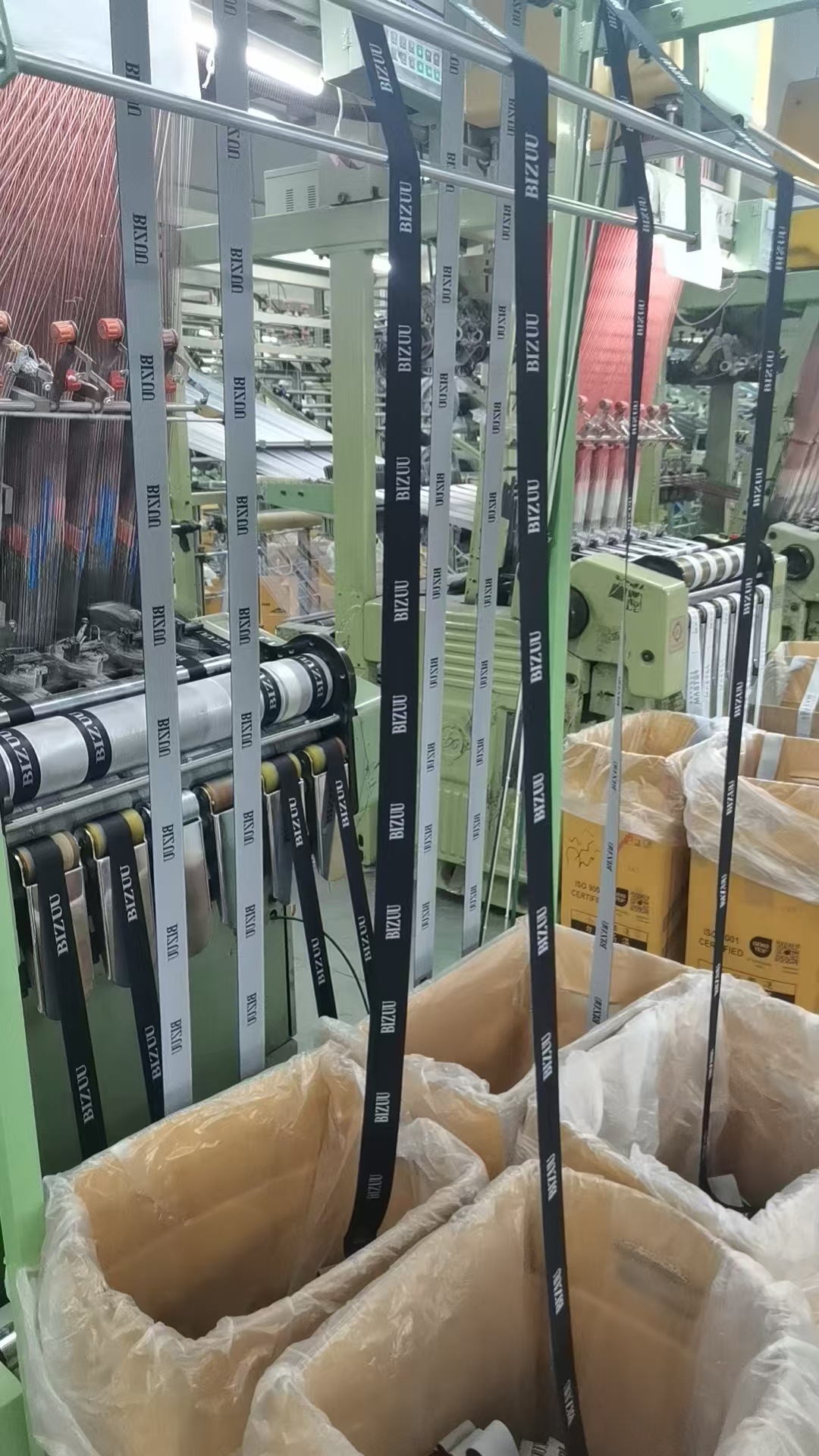
Market context: demand scale is not the same as documentation depth
Grand View Research estimates the global webbing market at USD 4.8 billion in 2026, up from a reported USD 4.6 billion in 2025. The figure covers webbing and narrow fabrics as a category, not fabric tape specifically, and it says nothing about certification requirements in either destination market. Its relevance here is limited to scale: a category of this size has enough parallel suppliers that documentation quality becomes one of the few comparable variables when quotes are otherwise close.
What this comparison does not establish
Three limits should be stated plainly. It does not establish that any certificate guarantees acceptance in the EU or the US, because destination requirements and individual buyer specifications must be confirmed for the actual order. It does not establish that one supplier's documentation is superior to another's, since comparability depends on the same article, composition and finishing route. And it does not replace a customs determination: the tariff subheadings discussed above are classification starting points, not rulings, and national treatment can vary by destination and by date of entry.
Outlook: from holding certificates to proving scope
The direction of travel is conditional but reasonably clear. As tape products become more customised — multi-colour jacquard, printed surfaces, recycled-content claims — the documentary burden shifts from holding a certificate to demonstrating that the certificate covers the specific article. If that continues, the suppliers who compare well in an EU-versus-US evaluation will be the ones whose file can answer a scope question without a new audit cycle, and the buyers who compare well will be the ones asking for composition, construction and scope in the same request as the quotation.
FAQ
What certification evidence should a buyer request for an EU-bound woven fabric tape order?
Four document types plus trade data: quality management system evidence such as ISO 9001, product-level chemical safety evidence such as OEKO-TEX Standard 100 with a scope naming the article, recycled-content evidence such as GRS only where a recycled claim is made, and a social audit report such as Sedex SMETA 4-Pillar where the buyer's supplier code requires one. Alongside these, request fibre composition by weight and construction details, because these determine the tariff classification. The specific EU requirement applicable to the order should be confirmed with the buyer's compliance function rather than assumed from a supplier certificate.
What changes for a US-bound order of the same tape?
The company-level documents are the same, but the classification question is answered against the U.S. HTS rather than a heading-level base. A published trade guide identifies 5806.20.0090 for narrow woven elastic tapes, to be verified against the current schedule at the time of entry. Product-safety acceptance is set by the buyer's own specification, so the certificate scope question applies identically. Composition and construction still decide which subheading is plausible.
Does an OEKO-TEX Standard 100 certificate cover every tape in an order?
Not automatically. The certification attaches to tested articles and materials, so the certificate scope has to name the article, its materials and the finishing process involved. A printed or jacquard-patterned tape is a different article from a plain dyed one, and a process change may fall outside the scope on file. Confirm coverage per article with the certificate holder and the issuing body before relying on it.
Can a supplier's suggested HS code be used directly for duty calculation?
No. Heading 5806 and its subheadings — 580620 for narrow fabrics with 5% or more elastomeric yarn or rubber thread by weight, 580631 for cotton, 580640 for adhesively assembled warp-without-weft fabrics — describe categories, not rulings. The code does not determine whether a specific elastic waistband, elastic strap or nylon tape qualifies without composition data and customs interpretation, and national tariff treatment has to be validated for the destination.
What do the sublimation printing figures in this comparison actually establish?
They are supplier-reported process performance figures: no substrate exposure or cracking at 150% elongation against a stated 80% for the conventional process, Grade 4–5 perspiration colour fastness, and a defect rate falling from 4.5% to 1.2%. They describe printing performance for applications such as garment accessories and goggle straps. They are not a certification, and acceptance in a specific order depends on the buyer's own test protocol and the article concerned.
Supplier reference: Qingdao Fuwei Rope Co., Ltd — webbing, elastic tape, goggle strap, drawcord and garment accessories, founded 2004, Zhechehe Industrial Park, Jimo District, Qingdao, Shandong, China. Classification references: UN Comtrade Plus HS 2022 reference table (headings 5806, 580620, 580631, 580640); published trade guidance on HS 5806.20 lines. Market figure: Grand View Research webbing market estimate for 2026, category-level and not fabric-tape specific. A company profile and product catalogue is available for download: Company Profile & Catalog (PDF).
Have Questions or Need More Details?
Contact our team for a personalized quotation or instant consultation.
Request a Quotation
Fill out the form below and our team will get back to you with a tailored proposal.
WhatsApp Direct Chat
Prefer to chat in real-time? Message us on WhatsApp for instant assistance & quick answers.
- Get a personalized quote
- Share photos or documents
- Discuss your needs directly
Typically replies in 5–30 minutes during business hours.