
Fabric or Faux Suede? Commercial Dining Chairs Compared
Fabric or Faux Suede? Commercial Dining Chairs Compared
Fabric and faux suede are the two upholstery options disclosed for the indoor upholstered Commercial Dining Chairs range, and both sit on the same plywood frame at 50 × 62 × 80 cm and 6.8 kg net weight, with a 120-unit minimum order quantity. Neither cover can be declared the better commercial choice in the abstract: the right pick depends on the cleaning regime a venue can actually run, the appearance it must hold, and the test documentation it can obtain for the specific cover-and-frame combination.
This comparison is written for buyers at the decision stage — restaurant groups finalising a furniture schedule, hotel procurement teams adding a breakfast-room or lounge line, and contract furnishers preparing a tender response. It separates what the manufacturer has disclosed from what a buyer still has to verify, and it treats phrases such as “easier to clean” as questions to be tested on a physical sample rather than as settled facts.
What the disclosure confirms — and what it leaves open
The disclosed position is narrow and precise, which is useful: it tells a buyer exactly where the comparison can be settled on paper and where it must be settled on a sample bench.
Confirmed for the range:
- Two upholstery options are offered: a fabric cover and a faux-suede cover.
- Frame construction is plywood.
- Overall dimensions are stated as 50 × 62 × 80 cm.
- Net weight is stated as 6.8 kg.
- Minimum order quantity is 120 units.
- Payment terms for commercial dining chair orders are stated as 30% deposit with the remaining 70% balance due.
Not disclosed in the supplied product material:
- Fibre composition of the fabric option, and the base and backing of the faux-suede option.
- Cover mass per unit area or thickness.
- Abrasion resistance (Martindale or Wyzenbeek cycles) and colourfastness values.
- Cleaning code, approved cleaning agents and drying instructions per cover.
- Foam density and thickness.
- Flammability or upholstery-specific test reports for either cover.
- Net weight per upholstery option, lead time, unit price and container loading quantity.
The practical consequence is a decision rule. Where a supplier cannot yet put a test value next to a cover, the two options are alternatives of unknown relative durability — not a case where one is proven more hard-wearing than the other. A buyer who needs a defensible specification has to create that evidence, either by requesting it or by testing swatches directly.
The frame stays constant: plywood, 50 × 62 × 80 cm, 6.8 kg
Both covers share the same underlying chair, so the decision is about surface behaviour and paperwork rather than about structure. Three details deserve attention before the cover question is even opened.
Customs classification does not separate the options. Upholstered seats with wooden frames fall within the description of HS subheading 940161, a six-digit line that covers upholstered seats with wooden frames while excluding medical, surgical, dental, veterinary and barber furniture. Because the frame is plywood and the seat is upholstered, both the fabric and the faux-suede version sit inside that description; the cover choice is not what distinguishes this subheading from others. Classification is therefore not a tie-breaker between the two, though invoice and packing-list descriptions should still name the actual cover so that documents match the goods.
Dimensions need one clarification. The stated 50 × 62 × 80 cm is an overall figure. Before specifying against a fixed table or a banquette, confirm which measurement corresponds to seat height and which to width and depth, then check the seat height against the table apron or underside and against the venue's service style. A chair that fits a 75 cm dining table can still sit wrong under a bar-height ledge or a fixed banquette.
Weight matters at the point of handling, not on the drawing. At 6.8 kg, the chair is light enough for one staff member to move during a turnaround, which is relevant in rooms where tables are re-set several times a day. The figure is stated for the range; confirm that it applies to the specific option being quoted, since a heavier backing or additional padding would change it. The same number drives freight calculations, because ocean freight is charged on volume and mass together.
Defining “easy to clean” as a specification, not a slogan
Cleaning performance in a restaurant or hotel is not one property; it is three distinct regimes that should be assessed separately, because a cover can pass one and fail another.
- Routine cleaning — the daily wipe or vacuum between services. What matters here is how quickly the surface returns to an even appearance and whether the routine agent leaves a film, a sheen or a colour shift.
- Incident response — coffee, red wine, cooking oil or a dropped dessert, blotted within minutes. What matters is whether the liquid sits on the surface long enough to be lifted, or spreads along the structure before anyone reaches it.
- Periodic deep cleaning — the monthly or quarterly intervention, often with a stronger agent. What matters is whether the cover tolerates that agent repeatedly without pilling, hardening or losing colour.
At the level of surface mechanics, a woven fabric presents a yarn structure that can let a liquid spread along the weave before it is blotted, while a brushed faux-suede surface presents a raised nap that can hold residue at the surface and show shading where the nap is pressed in different directions. Those are mechanics, not measured results. The size of the difference depends on the specific cover, any backing or finish, and the cleaning agent used — which is why the comparison has to be completed on the actual swatch rather than in a brochure.
A sample test that produces a usable result
- Request at least three identical swatches of each cover, cut from production material rather than from a showroom display.
- Apply a fixed volume (about 5 ml) of water, black coffee, red wine and cooking oil to separate marked areas. Leave for 10 minutes, blot — do not rub — and record the result photographically.
- Repeat the same stains with a 24-hour dwell time to simulate a spill missed during a busy service.
- Wipe a defined area 50 times with the venue's actual sanitising agent, then check for sheen, colour loss, pilling and nap distortion.
- Test seams, piping and the front edge of the seat separately; these wear before the flat panel does.
- Photograph all results under identical lighting and attach them to the purchase order as the acceptance reference.
This protocol does not replace laboratory data, but it converts a vague preference into a recorded result that can be referenced if a later delivery behaves differently.
Fabric upholstery: what to test and document
Fabric is the conventional starting point in high-turnover dining rooms, and it remains a reasonable default where the venue can control cleaning routines and where pattern or texture is doing useful work in hiding incidental marks. That is a design argument, not a durability claim, and it should still be confirmed against the sample test above.
For the fabric option, the document set to request is: fibre composition; cleaning code and approved agents; abrasion cycles with the test method named; colourfastness to rubbing and to light; whether the cover is removable or fixed; and the seam and piping specification. Removability is worth asking about explicitly, because it changes the maintenance model — a removable cover can be laundered or replaced without retiring the frame, while a fixed cover cannot.
The failure modes to look for during the sample test are pilling on the seat contact area, pattern or nap distortion after wiping, water rings where a spill was blotted late, and seam grin along the front edge. A pale plain weave in a venue with an oil-heavy menu is a specification risk regardless of how good the mill data looks; the same cloth in a darker tone or a tighter pattern carries less exposure for the same cleaning effort.
Faux suede: what to test and document
Faux suede is chosen primarily for appearance. The matte, soft surface suits hotel lobbies, lounge and bar seating, boutique dining rooms and residential dining spaces where the chair is part of the interior design rather than only a seat count. Buyers who select it for a restaurant dining room should do so with the cleaning evidence in hand rather than on the strength of the look alone.
For the faux-suede option, request: base composition and backing; mass per unit area or thickness; abrasion data with the method named; colourfastness; approved cleaning agents and any agent that must be avoided; whether the nap can be restored after it has been flattened or marked; and whether the cover is removable.
The sample test should concentrate on the points where a brushed surface is most exposed: oil and dark liquids, shading where the nap is pressed in different directions, marks left after a chair has been sat in for a full service, and wear along the piping and the seat front edge. A finding worth recording is whether a mark lifts fully or leaves a shadow, because a shadow that persists after cleaning will accumulate across a 120-unit floor.
The fit boundary is honest and simple. In a venue where staff cannot respond to a spill within minutes — a large banquet operation, a high-volume family restaurant, a food hall — the faux-suede option should only be specified once a demonstrated cleaning result exists on that exact cover. Without that result, the buyer is accepting an unquantified maintenance burden in exchange for a visual gain.
Side-by-side: the decision table
| Decision factor | Fabric option | Faux-suede option | Evidence to obtain |
|---|---|---|---|
| Disclosure status | Offered for the range | Offered for the range | Written confirmation of the option on the quotation |
| Cover composition and backing | Not disclosed | Not disclosed | Fibre/base composition, backing, mass per unit area |
| Abrasion and colourfastness | Not disclosed | Not disclosed | Test method plus value, not a description |
| Cleaning instruction | Not disclosed | Not disclosed | Care guide with approved and prohibited agents |
| Behaviour under heavy turnover | Sample-dependent | Sample-dependent | 10-minute and 24-hour stain tests; 50-wipe sanitizer test |
| Design fit | Pattern and texture can mask marks | Matte suede look for lounge and boutique settings | Physical swatch reviewed in venue lighting |
| Non-domestic seating standard | Applies to the chair as tested, not to the cover in isolation | Same | Report naming the frame, foam and cover configuration |
| Market-specific legal requirements | Jurisdiction and product-scope dependent | Same | Current official requirement confirmed per market |
| Frame, size, weight | Plywood; 50 × 62 × 80 cm; 6.8 kg net | Same frame and size; confirm per-option weight | Per-SKU net weight on the packing list |
| Order terms | 120-unit MOQ; 30% deposit, 70% balance | Same | Quotation structured line by line per option |
Matching the option to restaurant and hotel zones
Upholstery decisions usually fail not because the wrong cover was bought, but because one cover was applied uniformly across zones with different cleaning realities. Splitting the schedule by zone is often the most valuable move available to a buyer.
High-turnover restaurant dining rooms
Here the cleaning cycle is short and repetitive, and the exposure is oil, sauce and wine. The dominant criterion is how fast a cover returns to an even appearance after a wipe. Fabric with a tighter weave and a mid-to-dark tone typically carries less exposure for the same labour; the point is confirmed, not assumed, by the 50-wipe and 24-hour stain tests. Where the kitchen sends out high-oil dishes nightly, the test result should be treated as a pass/fail gate rather than a preference.
Hotel breakfast rooms and all-day dining
Breakfast service brings dairy, coffee, jam and juice, often cleared by staff who are also resetting the room. Both covers can work, but the care instruction must be simple enough to survive staff rotation. Ask how a new team member is told what to use on the chair, and whether the answer fits on one laminated card.
Hotel lobbies, lounges and bars
This is where faux suede earns its place, because the surface is part of the interior language and cleaning is usually handled by a smaller, better-briefed team. The exposure shifts from volume to specific risks: cocktails, red wine and coffee served at low tables. The nap test and the 24-hour stain test matter more here than abrasion data.
Banquet and multi-purpose rooms
Chairs are moved, re-arranged and stored between events, so handling and edge durability dominate. At 6.8 kg the chair is manageable for one person, which supports fast room turns; stacking behaviour is not disclosed for this range and should not be assumed from the weight. Covers on frequently handled chairs take abrasion at the back edge and the seat front — test those areas specifically.
Cafés and small-footprint venues
Low unit counts and mixed seating plans often justify two covers in one room: fabric on the working tables, faux suede on a feature row or a lounge corner. Because both options share the same frame and dimensions, a mixed schedule keeps sightlines consistent while concentrating the more delicate cover where the risk is lowest.
Home and residential dining
Residential use changes the weighting: cleaning frequency is lower, appearance and comfort carry more of the decision, and the same 120-unit quantity is rarely relevant. Buyers furnishing show flats or homestay interiors can treat faux suede as a straightforward design choice, provided the care instructions are passed to the end user.
Multi-site rollouts
For a brand fitting several venues from one order, shade and surface consistency across the 120 units becomes a real question. Ask how shade consistency is controlled within the order and across a later repeat order, and record the approved swatch reference in the purchase order so the second batch can be matched against it.
Non-domestic seating standards: what a buyer should request
Standards work on the chair as a tested assembly, and the upholstery is part of that assembly. That single point resolves most of the confusion buyers meet when comparing covers.
European context. EN 16139:2025 is the European standard covering safety, strength and durability for non-domestic seating, published in 2025. For a restaurant or hotel specification in Europe, this is the standard a buyer should expect to see referenced.
United States context. ANSI/BIFMA X5.4-2020(R2025) covers public and lounge seating typically found in indoor public spaces, including restaurant, dining and cafeteria settings. It is a voluntary performance standard: its scope describes what the test addresses, and does not by itself prove that a particular chair has been tested or certified. Where a venue serves larger occupants or the operator's own standard requires it, ANSI/BIFMA X5.41-2021 sets out separate requirements using 400 lb and 600 lb individual load bases; it is not a mandatory rule for every dining chair.
Regulation is a separate question. Some markets impose legally binding requirements on upholstered furniture that sit apart from voluntary performance standards, and their applicability depends on the jurisdiction and on product scope. Those obligations should be confirmed against current official sources for the destination market — not inferred from a performance standard, and not inferred from a test report issued for a different market.
The five documents to put in the decision file
- A test report that names the standard and its version, the test laboratory, and the specific configuration tested — frame, foam and cover.
- Written confirmation of whether a change of cover requires a new test, and who holds the resulting report.
- The cover care guide: approved agents, dilution, dwell time and drying.
- Factory-level certificates relevant to the order, kept distinct from product test reports.
- A dated statement of which documents are current, since standards are revised.
The manufacturer's disclosed certification portfolio includes BSCI, FSC, GRS and ISO, together with EN 12520/EN 12521/EN 581 test certifications and European patents on several models. Because EN 16139:2025 exists specifically for non-domestic seating, a contract buyer should confirm which standard the specific chair-and-cover configuration was evaluated against, rather than assume that any listed certification covers non-domestic use.
Cost and order terms at 120 units
Unit price and lead time are not disclosed in the supplied material, so no total cost figure can be stated here without inventing one. What can be structured is the method, and the method is what separates a cheap chair from an economical one over a five-year fit-out cycle.
The repeating costs in a commercial dining chair are cleaning labour, cleaning consumables, and the replacement of covers or complete chairs. A workable comparison therefore looks like this: units × (unit price + freight per unit) + annual cleaning hours × labour rate + expected replacements × replacement cost. Only the first bracket is visible on a quotation; the rest has to be estimated by the buyer from the venue's own service data. Where the fabric and faux-suede options differ in the sample test — a stain that lifts fully versus one that leaves a shadow — that difference flows directly into the cleaning-hours term, which is usually the largest number in the equation.
Two commercial terms are disclosed and worth planning around. The minimum order quantity of 120 units fixes the size of the commitment, which makes pre-order sampling the cheapest risk control available: a swatch test costs a fraction of re-covering part of a 120-unit floor. The payment structure of 30% deposit with a 70% balance is the stated term for commercial dining chair orders, so cash flow should be planned against it rather than against a single payment.
Freight is also affected by the disclosure: at 6.8 kg per chair, mass is a known input, while container loading quantity is not stated and should be requested per option, since a bulkier cover can change packed volume even when the frame is identical.
Market context behind the specification question
The commercial seating category continues to attract research attention. The Business Research Company projects the global restaurant chairs market to reach USD 6.11 billion by 2030, growing at a CAGR of 6.4% from 2026 to 2030. That figure comes from a single commercial research source and is a projection, so it is best read as directional context for refresh and replacement budgeting rather than as a measured fact about any one market or venue type.
The practical implication for a buyer is modest but real: where seating is planned in cycles, a specification that has already resolved its cleaning and documentation questions is cheaper to repeat than one that has to be re-argued at every refresh.
Where BAZHOU NANSHENG FURNITURE CO., LTD fits
BAZHOU NANSHENG FURNITURE CO., LTD is a furniture manufacturer based in Shengfang Town, Bazhou City, Hebei Province, China, producing indoor and outdoor dining tables and chairs, coffee tables and leisure chairs, with exports concentrated in Europe and North America. Its relevance to this comparison is not the cover choice itself but the production chain behind it.
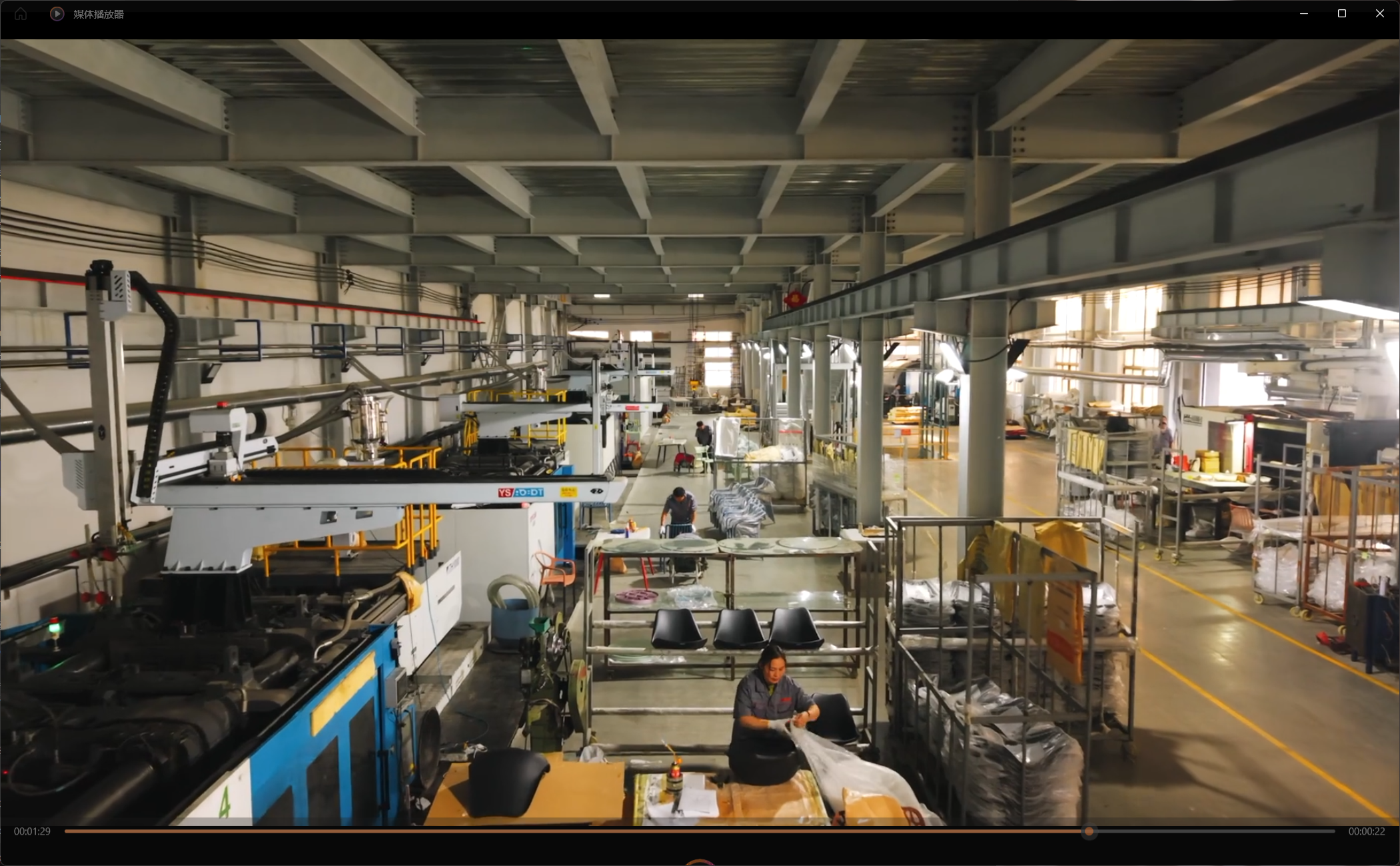
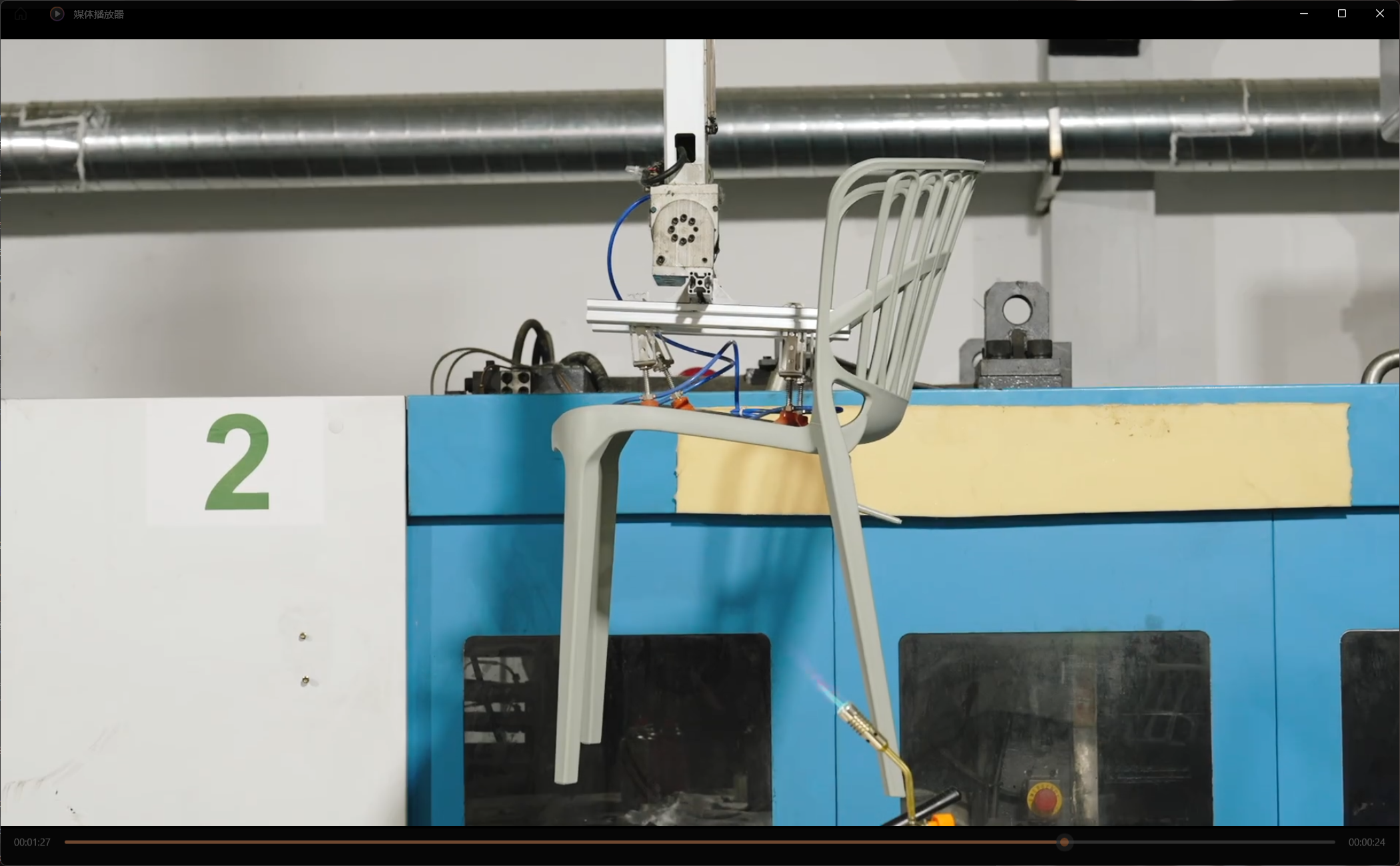
The company operates a 30,000-square-metre production base with in-house processes that include 12 injection machines, 15 welding robots, 3 laser cutters, an automatic upholstery line and 6 sponge cutters — the upholstery and sponge cutting stages that determine how evenly a cover is applied across a batch. Orders are covered by QUARMA single-order inspection with 100% order traceability, and the company states a monthly shipment capacity of approximately 200 containers and an annual new-model output of more than 70 models. Two showrooms of 600 square metres each support product selection and sample review, and the company exhibits at CIFF Guangzhou, the Canton Fair, SPOGA+GAFA in Cologne and Furniture China in Shanghai.
For a 120-unit order, that combination matters in one specific way: cover consistency across the batch is a production question before it is a design question, and an in-house upholstery line is the point at which it is controlled. Sampling before the order is where the rest of the risk sits, and that is a buyer-side step.
The fit boundary should be stated plainly. The published material does not include cover composition, cleaning codes, abrasion values or upholstery-specific test reports for either option, so those items have to be requested for the campaign in question, together with per-option net weight. Buyers who need those documents before a purchase order can request them alongside the quotation; the company website is nanshengfurniture.com.
Outlook: documentation becomes the differentiator
With EN 16139:2025 published for non-domestic seating in 2025, buyers in Europe have a current reference point to cite in tenders, and the practical effect is likely to be a shift in what suppliers are asked to provide rather than a change in what chairs look like. Expect requests for a report that names the tested configuration, an explicit statement of the standard version, and a care guide that a venue can actually follow.
That favours manufacturers who can answer at configuration level. For a buyer, the useful preparation is to write those requirements into the enquiry now, so that the fabric and faux-suede quotations arrive comparable — same frame, same dimensions, same weight confirmation, same document pack — and the decision can be made on evidence rather than on swatch appeal.
Decision checklist before the purchase order
- Confirm in writing which measurements in 50 × 62 × 80 cm correspond to seat height, width and depth.
- Confirm the net weight for the specific upholstery option, against the stated 6.8 kg.
- Obtain the care guide, approved agents and drying instructions for each cover.
- Request abrasion and colourfastness values with the test method named.
- Run the stain and 50-wipe tests on production swatches, in venue lighting.
- Ask whether each cover is removable, and how a cover is replaced if it is not.
- Request the non-domestic seating report that names the frame, foam and cover configuration.
- Confirm which legal requirements apply in the destination market, from current official sources.
- Ask how shade and surface consistency are controlled across the 120 units and a later repeat order.
- Structure the quotation line by line per option, and plan cash flow against the 30% deposit and 70% balance.
Frequently asked questions
Which upholstery is easier to clean in a restaurant?
The supplied product material does not disclose fibre composition, cleaning codes or cleaning test results for either cover, so a general verdict cannot be given. What can be compared is the cleaning regime each cover requires: routine wiping, response to a spill within minutes, and tolerance of the venue's periodic deep-clean agent. Testing swatches with the venue's own cleaning chemicals, including a 24-hour stain, produces a result specific to that cover and that chemical rather than a generic ranking.
Does the upholstery choice affect which safety standard applies?
Standards address the chair as a tested assembly, and the upholstery is part of the assembly submitted for testing. EN 16139:2025 covers safety, strength and durability for non-domestic seating, while ANSI/BIFMA X5.4-2020(R2025) covers indoor public and lounge seating including restaurant and dining settings as a voluntary performance standard. Because a report describes a specific tested configuration, buyers should ask whether the report names the frame, foam and cover actually being quoted.
What are the dimensions, weight and minimum order quantity?
The range is disclosed at 50 × 62 × 80 cm with a net weight of 6.8 kg and a minimum order quantity of 120 units, built on a plywood frame. The measurement that corresponds to seat height should be confirmed against the intended table or counter, and the net weight should be confirmed for the specific upholstery option, since the figure is stated for the range.
What payment terms apply to a commercial dining chair order?
The stated terms are a 30% deposit with the remaining 70% balance due. Unit price and lead time are not disclosed in the supplied material, so both should be requested per upholstery option so that the two quotations can be compared on the same basis.
Can a buyer evaluate the covers before committing to 120 units?
The supplied material does not state a sample policy. What is disclosed is that the manufacturer maintains two showrooms of 600 square metres each for selection and review, and exhibits at CIFF Guangzhou, the Canton Fair, SPOGA+GAFA and Furniture China. Buyers should request production swatches rather than showroom display material, and confirm whether sample costs are credited against the order.
The manufacturer's product brochure is available for download as a PDF: BAZHOU NANSHENG FURNITURE CO., LTD product brochure.
Have Questions or Need More Details?
Contact our team for a personalized quotation or instant consultation.
Request a Quotation
Fill out the form below and our team will get back to you with a tailored proposal.
WhatsApp Direct Chat
Prefer to chat in real-time? Message us on WhatsApp for instant assistance & quick answers.
- Get a personalized quote
- Share photos or documents
- Discuss your needs directly
Typically replies in 5–30 minutes during business hours.