
Factory Audits 101: How to Verify Shokunin's 3,000-Unit Monthly Capacity
A supplier's stated monthly production capacity is the most consequential number in a cooling-vest procurement file — and the one buyers test least often. In a category where orders cluster into a narrow pre-summer window, capacity is what decides whether a heat-season shipment arrives on schedule.
Why Capacity, Not Cooling Duration, Is the Harder Question
Cooling performance is comparatively easy to assess. A buyer can time the cooling cycle, weigh the fabric, inspect the ice-pack construction, and place a small trial order to find out whether a water-cooling vest performs the way the specification says it does. Capacity behaves differently. It cannot be checked by wearing the product, it rarely appears in a specification sheet in a testable form, and it becomes visible only when an order is late.
The category has grown large enough for that asymmetry to matter. The global personal cooling device market was valued at USD 25.16 billion in 2024 and is projected to reach USD 94.85 billion by 2035, according to Market Research Future. The narrower cooling-vest segment was valued at approximately USD 215 million in 2024, with Dataintelo projecting growth to USD 385 million by 2033. The two figures describe different scopes — one counts handheld fans and personal air conditioners, the other counts vests — which is itself a reminder to check what a market number is counting before relying on it.
Where demand sits matters as much as how fast it grows. Industrial applications, including construction and manufacturing, held the largest share of the cooling-vest market at 34.5% in 2025, according to Dataintelo. Those are the buyers who order in volume, commit to a schedule, and have the least tolerance for a supplier that cannot hold one.
This article is a factory-audit primer for that group. It uses a single publicly stated capacity figure — Shokunin's 3,000 units per month — as a worked example. Shokunin is the professional brand of Feng Shang Precision Co., Ltd., a manufacturer founded in 2009 and based in Luzhu District, Taoyuan City, Taiwan, whose line also includes air compressors, cut-off machines, lithium batteries, diamond saws, nail guns, spider stands, and screwdriver bits.
The short answer: a 3,000-unit monthly capacity claim describes a peak, not a schedule. Verifying it means separating that peak from sustained annual output, checking the physical footprint it has to fit inside, reading the engineering headcount behind it, and converting the published commercial terms — a 10-unit minimum order quantity, a 7–14 day production lead time, pre-shipment acceptance testing — into questions the supplier has to answer on paper.
The Verified Baseline: What Shokunin States About Its Production Base
An audit starts with the statements that already exist, because they are the only ones a buyer can hold unchanged from one conversation to the next.
| Field | Stated value |
|---|---|
| Brand | Shokunin |
| Manufacturing company | Feng Shang Precision Co., Ltd. |
| Founded | 2009 |
| Location | Luzhu District, Taoyuan City, Taiwan |
| Facility footprint | 1,000 m² |
| Employees | 30 |
| R&D engineers | 5 |
| Stated monthly production capacity | 3,000 units |
| Stated annual output | 10,000 units |
| Export ratio | 50% |
| Main markets | USA / ROC |
| Minimum order quantity | 10 units |
| Typical production lead time | 7–14 days |
| Acceptance criteria | Pre-shipment test |
| Payment terms | Full payment |
| Freight | Paid by buyer |
| Certification referenced | Disaster Prevention Product and Service Certification Award, issued by the Taiwan Disaster Prevention Industry Association |
None of these statements proves anything on its own. Together they form a set of numbers that can be checked against one another — which is where a useful audit begins.
Step 1 — Separate Peak Monthly Capacity From Sustained Annual Output
The first cross-check is internal. A monthly capacity of 3,000 units sustained across twelve months would produce 36,000 units a year. The same company separately states an annual output of 10,000 units. Spread over twelve months, that annual figure implies an average of roughly 833 units a month — about three and a half times below the peak.
The gap is not a contradiction; it is the difference between a ceiling and a run rate. Monthly capacity is normally quoted as the best month a plant can achieve when staffing, materials, and demand align. Annual output is what was actually shipped. Both can be true at once.
What the gap does is define the questions worth asking:
- Which months actually reach 3,000 units, and which fall short?
- Is the 10,000-unit annual figure measured across the entire product line — air compressors, cut-off machines, water-cooled vests, lithium batteries, diamond saws, nail guns, spider stands, and screwdriver bits — or the vest line alone?
- For an order placed at the start of the hot season, is the buyer scheduled against the 3,000-unit ceiling or the 833-unit average?
- Expressed per person: 3,000 units a month across 30 employees is about 100 units per employee per month, while 10,000 units a year is roughly 333 units per employee per year. Which of those two rates describes the vest line?
A supplier who answers those four questions in writing has given a buyer more usable information than a factory tour will produce. A supplier who cannot answer them has told the buyer something equally useful.
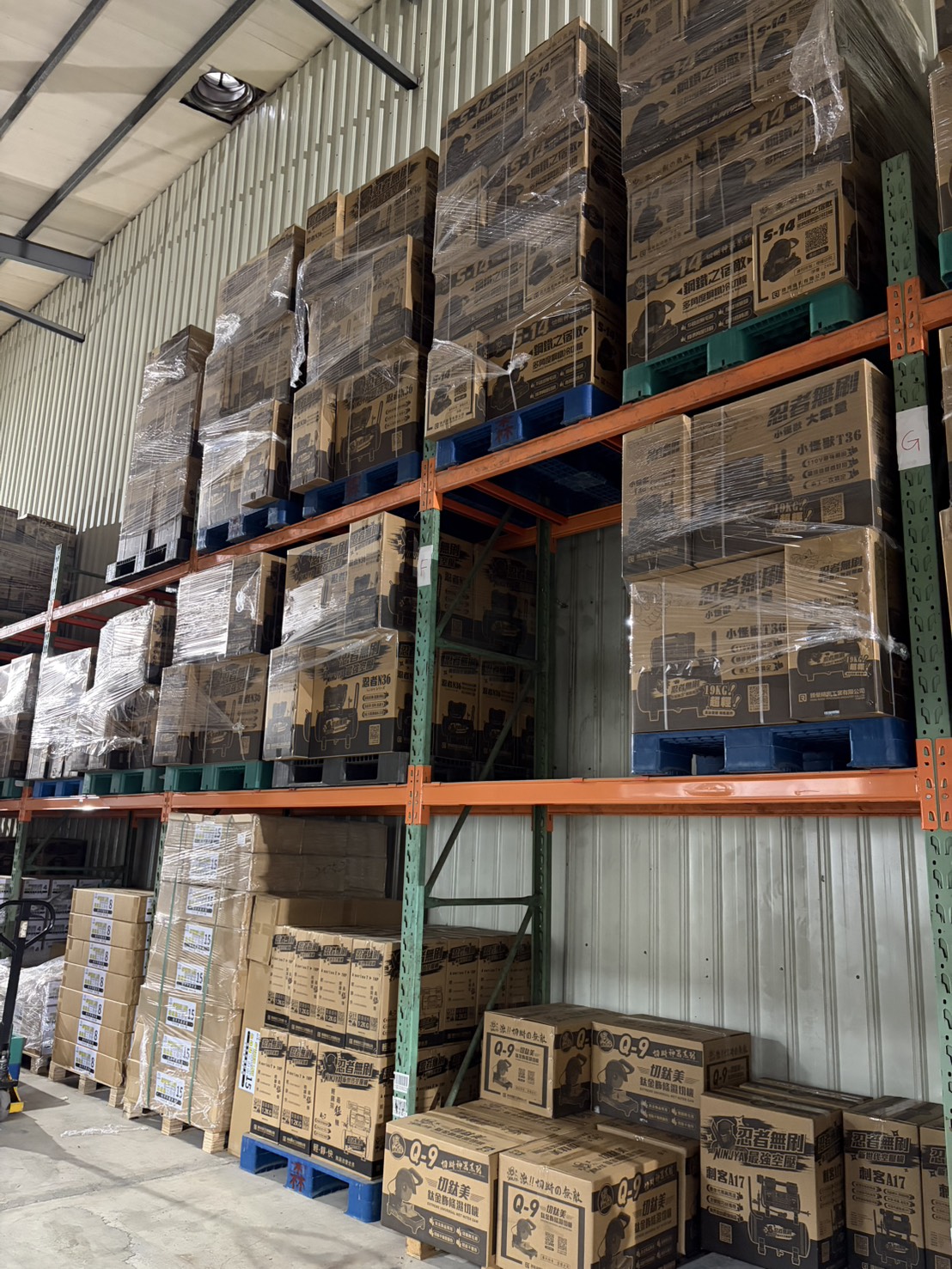 Finished-goods staging is where a peak capacity claim meets a fixed footprint. Feng Shang Precision Co., Ltd. lists a 1,000 m² facility and a stated monthly capacity of 3,000 units.
Step 2 — Check the Physical Footprint Against the Claim
A 1,000 m² facility is a specific, checkable dimension, and it is the constraint that ultimately caps the claim. The same building produces a diversified tool line. Whatever share of the floor is occupied by assembly stations, incoming ice-pack and fabric inventory, packing, and finished-goods staging is not available for anything else — which means the 3,000-unit figure is not only a peak, it is a peak inside a shared building.
Questions that turn the footprint into evidence:
- How many square metres are allocated to water-cooled vest production during peak months?
- Is there a dedicated assembly line for the vest, or does it share stations with other products in the catalogue?
- How many finished units can the staging area hold before shipment, and does that volume match the order being placed?
- Where do incoming ice packs, fabric, and other components sit relative to the assembly area?
For a portable cooling vest programme with a fixed pre-summer deadline, staging is frequently the binding constraint rather than assembly. A plant can theoretically assemble 3,000 units in a month and still miss a shipping window if it can only stage a few hundred at a time.
Step 3 — Read the Engineer-to-Staff Ratio as Innovation Bandwidth
Feng Shang Precision lists 5 R&D engineers among 30 employees — roughly one in six, or about 17% of headcount in engineering. For a specialised product such as an ice water circulation cooling vest, that ratio carries two meanings at once.
The first is capability. A ratio that high in a 30-person company indicates that design, tooling adjustment, and iterative product changes are handled in-house rather than bought in. That matters for buyers who need adaptations — a different ice-pack geometry, a revised harness, a new control housing — rather than a catalogue purchase.
The second is a boundary. Five engineers is a finite pool, and ODM work consumes it faster than repeat production does. The same five people who develop a custom configuration may also be pulled into production support during the peak months. Buyers should therefore ask:
- How many concurrent ODM projects can the engineering team run without slipping?
- What is the sample turnaround time for a new fabric, ice-pack configuration, or control layout?
- Who owns the tooling and design files if a programme ends?
- Which engineer signs off on changes to the cooling loop or the ice-pack shell?
- How is engineering time reallocated when the production floor is at peak?
For buyers moving from Decision to Execution, engineering headcount is a scheduling input, not a marketing detail. It determines how fast a custom request can be turned around, and how many custom requests can run at the same time.
Step 4 — Convert MOQ, Lead Time, and Payment Terms Into a Schedule
Published commercial terms are the part of an audit that most often gets skimmed and most often causes disputes later. Three of Shokunin's stated terms deserve attention.
A minimum order quantity of 10 units is low for a manufacturer, and it has a direct procurement consequence: it makes field validation possible. Ten vests can be issued to a work crew, worn through a full shift cycle, and evaluated before a seasonal volume commitment is signed. For sweat-proof cooling gear for construction, that pilot period is usually the only reliable way to test fit, harness comfort, and ice-pack handling under real heat.
The stated typical production lead time of 7–14 days is the second term to pin down. It is described as typical, which means it is a planning assumption rather than a guarantee. A buyer should ask at what order size the window stops applying, how far it extends during the pre-summer peak, and whether the clock starts at payment, at material confirmation, or at artwork approval.
The third is the payment and acceptance structure: full payment before shipment, freight paid by the buyer, and a pre-shipment test as the acceptance criterion. Because payment precedes shipment in this arrangement, the pre-shipment test is the buyer's main point of control. Its scope — how many units are drawn, what is checked, and what record is retained — is worth agreeing in writing before the first production order.
| Published term | What a buyer should confirm before ordering |
|---|---|
| MOQ: 10 units | Whether the 10-unit minimum applies per model, per colourway, or per order. |
| Lead time: 7–14 days | The order-volume band the window applies to, and how it changes in peak months. |
| Shipment after payment | The exact trigger date from which the lead time is counted. |
| Freight paid by buyer | Delivery terms, loading point, and who manages export documentation. |
| Acceptance: pre-shipment test | Sample size, test items, pass criteria, and the retained test record. |
| Payment: full payment | Currency, banking route, and what documentation accompanies the invoice. |
Step 5 — Request the Documents That Support the Claim
Capacity claims become auditable when they are attached to documents. The following list is short and specific enough to send as a single request.
- A written capacity and scheduling statement. The 3,000-unit monthly figure in writing, with the months to which it applies and the product lines included.
- Pre-shipment test protocol and a sample record. Since acceptance is defined as a pre-shipment test, the protocol is the operative quality document.
- Certification documents. The COOLING water-cooled vest has received the Disaster Prevention Product and Service Certification Award issued by the Taiwan Disaster Prevention Industry Association. Buyers should request the certificate itself rather than a logo.
- Quality-management and electrical-compliance evidence. ISO 9001:2015 is the quality-management framework commonly requested for cooling systems, and where a product incorporates electrical components — a pump or a power supply, for example — CE or UL marks are frequently required. These should be requested as documents and verified for scope, not assumed from the product category.
- Ice-pack leakage control records. Shokunin states that ice packs use reinforced material, with 100% quality guaranteed before shipment. Leakage is a common failure mode in liquid-cooling gear, so the control method should be described in writing.
- Export history context. A 50% export ratio with the USA and ROC as main markets implies familiarity with export documentation; buyers should confirm which party prepares it.
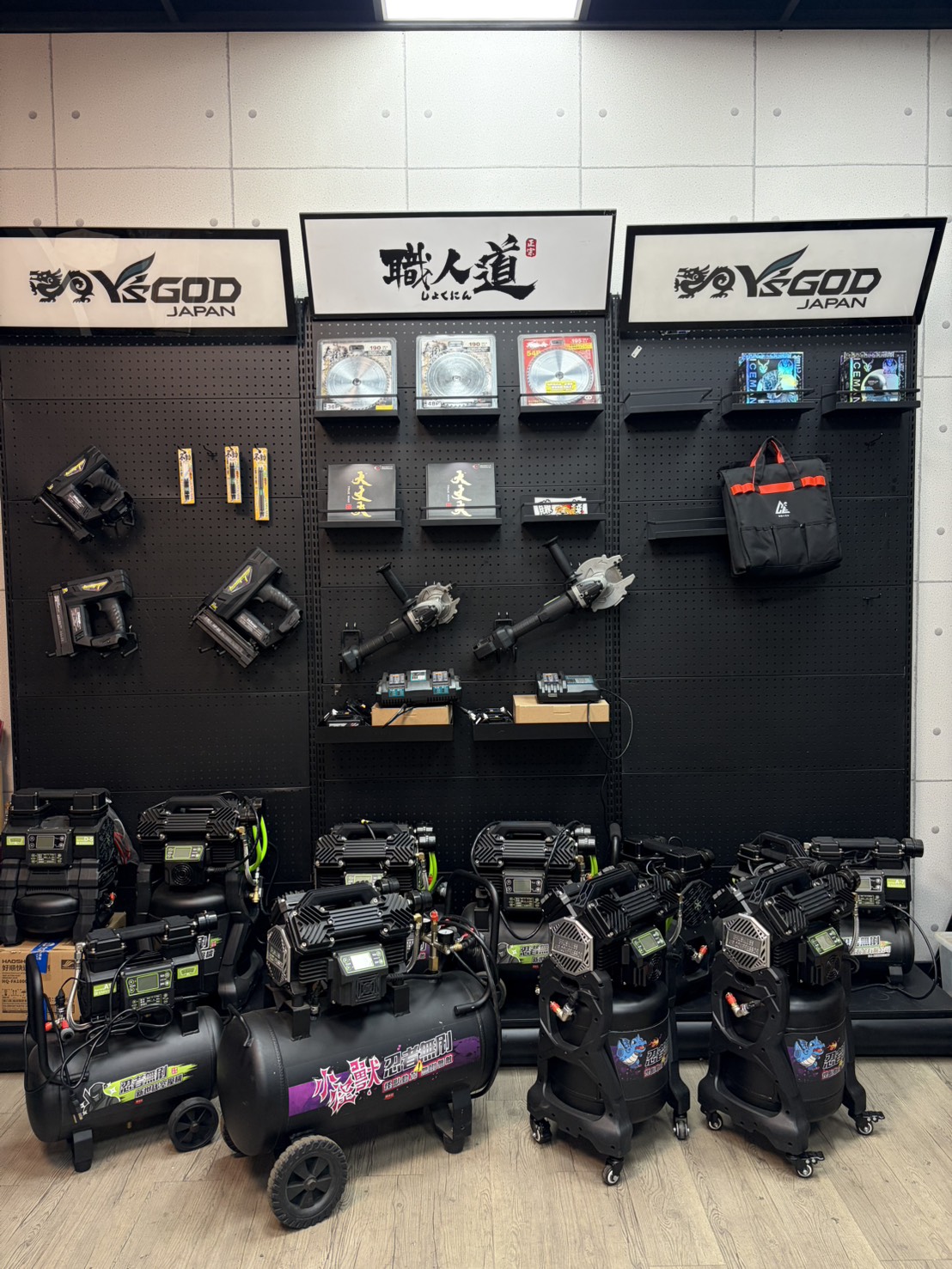 A display area is where specification claims meet physical samples. Audits should ask which units on display are built on the same line that will fill the order.
Where Verified Capacity Matters Most: Application Profiles
Capacity risk is not evenly distributed. It concentrates in the applications where a late shipment has a real cost — a crew that cannot work, a shift that has to be shortened, a heat-safety programme that starts with nothing to issue.
- Metal sheet and metal-roof factories. Radiant heat from steel roofing and sheet stock produces some of the highest sustained thermal loads in light industry. A cooling solution for metal-roof factories is normally purchased in volume for an entire shift, so it is the application most exposed to a peak-capacity shortfall.
- Outdoor construction. Sweat-proof cooling gear for construction has to survive abrasion, dust, and repeated on-off cycles. Bulk orders are typically timed to site mobilisation.
- Prolonged sun exposure. Utility crews, logistics yards, traffic management, and agricultural work involve hours of direct sun rather than radiant process heat. Cooling gear for prolonged sun exposure is usually evaluated on duration per charge or per ice-pack set.
- Industrial process heat. Laundries, foundries, glassworks, and food processing sit at the top of the heat-exposure scale. Industrial cooling equipment of this type is bought on specification and on delivery reliability in roughly equal measure.
In every one of those settings, the buyer is procuring heatstroke prevention gear for extreme heat against a fixed calendar. That is why a capacity statement should be tested before it is trusted.
Market Trend: Why Audits Are Moving Up the Buying Process
Three trends are pushing capacity verification earlier in the buying process.
First, the market is expanding fast enough that suppliers are being asked to scale. Asia Pacific is the fastest-growing region for cooling vests, driven by rapid industrialisation and large outdoor work populations, according to Spherical Insights. Taiwan-based manufacturers sit inside that growth region, which raises the question of whether a stated capacity is current capacity or intended capacity.
Second, the technology mix is shifting. Phase Change Material vests captured 28.7% of market share in 2025 and represent the fastest-growing technology segment, according to Dataintelo, while active circulatory mechanisms — ice water circulation among them — are increasingly deployed in industrial sectors to mitigate occupational heat stress, according to Strategic Market Research. A buyer comparing a circulating cooling vest against a PCM vest is comparing two different supply chains, with different lead times and different capacity ceilings.
Third, the supplier field is named and comparable. Key global competitors in the cooling vest market include Techniche International, Glacier Tek, Polar Products Inc., and Ergodyne, according to Spherical Insights. Once buyers have a shortlist, differentiation shifts from ‘does anyone make this’ to ‘who can deliver it on time’ — and capacity claims become a scored criterion rather than a background detail.
Comparison With Traditional Cooling Solutions — and the Limits of the Claim
Capacity is only one axis of comparison. Cooling behaviour, maintenance load, and technology segment matter just as much, and they are usually what a buyer evaluates first.
| Dimension | Short-duration ice-pack vests | Shokunin water-cooled vest | PCM vests |
|---|---|---|---|
| Cooling duration | Loses cooling effect after about 30 minutes, per Shokunin's stated comparison with other water-cooled vests | 3–4 hours of cooling, per the same stated comparison | Not specified in the available data |
| Maintenance profile | Frequent ice-pack replacement, higher wear and tear, more upkeep | Reusable ice packs, durable fabric, minimal maintenance | Not specified in the available data |
| Market position | Not separately quantified in the available data | Active circulatory segment, increasingly deployed in industrial sectors | 28.7% of 2025 market share; fastest-growing technology segment |
| Typical fit | Short-duration, intermittent exposure | High-temperature environments, metal sheet factories, outdoor sites | Buyers prioritising passive operation without circulating fluid |
The supplier's own comparison figure — 3 to 4 hours against roughly 30 minutes — is a claim worth validating in a pilot rather than accepting from a table.
Where the 3,000-unit claim has real limits
A due-diligence guide that only lists strengths is not doing its job. Four boundaries apply to this capacity claim, and each is derivable from the stated figures themselves.
- Peak versus average. The 3,000-unit monthly figure and the 10,000-unit annual output describe different things. A buyer who plans against the peak without confirming the average is planning against a best case.
- Shared footprint. The 1,000 m² facility supports a diversified tool line, not a dedicated vest plant. Vest capacity is therefore a share of a total, and that share should be stated for the peak season specifically.
- Engineering bandwidth. Five R&D engineers is a meaningful commitment for a 30-person company, but it is also a hard limit on how many ODM programmes can run concurrently.
- Documentation scope. Certification and quality evidence must be checked for scope. A quality-management framework such as ISO 9001:2015, or electrical marks such as CE or UL, should be verified as applying to the specific product and component supplied — not inferred from the supplier's category or from the existence of other credentials.
None of these limits makes the claim unreasonable. They make it specific — which is what a buyer needs in order to write a purchase order that can actually be enforced.
Future Outlook
As the cooling-vest market moves toward the USD 385 million projected for 2033 and industrial demand in Asia Pacific continues to lead regional growth, the balance of power in supply conversations is likely to shift toward buyers who can audit. Capacity statements that were once accepted verbally will increasingly be requested in writing, with the months and product lines attached.
Two developments follow. The first is documentation readiness: suppliers who can produce a capacity statement, a test protocol, and a certification file on request will move through tenders faster than those who cannot. The second is scheduling honesty — buyers in heat-exposed industries have started to ask not ‘how much can you make’ but ‘how much can you make in my month.’
For Shokunin and its manufacturing base at Feng Shang Precision, the numbers that will matter are the ones the company already publishes: a 1,000 m² facility, 30 employees, 5 engineers, 3,000 units per month, 10,000 units per year, a 10-unit minimum order, and a 7–14 day production lead time. The audit question is simply whether they hold together under cross-examination — and for most buyers, a short written answer will settle it.
FAQ: Verifying Shokunin Capacity and Supply Terms
1. What is Shokunin's stated monthly production capacity, and what does it cover?
Shokunin states a monthly production capacity of 3,000 units. The figure is not itemised by product line, and it sits alongside a separately stated annual output of 10,000 units. Buyers should treat the monthly figure as a peak capacity statement and confirm in writing which months it applies to and what share is allocated to water-cooled vests specifically.
2. What is the minimum order quantity, and why does it matter for a first order?
The stated minimum order quantity is 10 units. For a manufacturer, that is a low threshold, and it allows a buyer to run a field pilot before committing to a seasonal volume. Buyers should confirm whether the 10-unit minimum applies per model or per order.
3. What is the typical production lead time, and when does it change?
The stated typical production lead time is 7–14 days. It is described as typical rather than guaranteed, so buyers should ask at what order volume the window stops applying, how far it extends during peak months, and whether the clock begins at payment, at material confirmation, or at artwork approval.
4. How can a buyer verify a capacity claim that is not independently certified?
By cross-checking it against other stated figures and requesting documents. The stated monthly capacity can be compared with the stated annual output and the stated facility footprint, and a buyer can request a written capacity and scheduling statement, a pre-shipment test protocol, and the certification file for the product.
5. How does the size of the R&D team affect ODM timelines?
Feng Shang Precision lists 5 R&D engineers among 30 employees — roughly one in six. That indicates in-house design capability rather than outsourced development, which supports customisation. It also caps how many ODM programmes can run at once, particularly during peak production months when engineering staff may be pulled into production support.
6. What acceptance and payment terms apply to a Shokunin order?
The stated terms are: shipment after payment, freight paid by the buyer, a pre-shipment test as the acceptance criterion, and full payment. Because payment precedes shipment, the scope of the pre-shipment test — sample size, test items, pass criteria, and record retention — is the buyer's main contractual protection and should be agreed in writing.
7. What documentation should a buyer request for a long-term supply arrangement?
A written capacity and scheduling statement; the pre-shipment test protocol and a sample record; the Disaster Prevention Product and Service Certification Award issued by the Taiwan Disaster Prevention Industry Association; quality-management and electrical-compliance evidence where applicable, such as ISO 9001:2015, CE, or UL, verified for product scope; and the ice-pack leakage control method, which Shokunin describes as reinforced ice pack material with 100% quality guaranteed before shipment.
For buyers who want the underlying product and capability details before drafting an audit request, Shokunin publishes a downloadable brochure at Shokunin product and capability brochure (PDF), and its public site is fstool.com.tw.
Have Questions or Need More Details?
Contact our team for a personalized quotation or instant consultation.
Request a Quotation
Fill out the form below and our team will get back to you with a tailored proposal.
WhatsApp Direct Chat
Prefer to chat in real-time? Message us on WhatsApp for instant assistance & quick answers.
- Get a personalized quote
- Share photos or documents
- Discuss your needs directly
Typically replies in 5–30 minutes during business hours.