
Factory Floor Evidence: ABS Bodies and Capacitor Mics
The global action camera market was valued at USD 6.57 billion in 2024, according to SkyQuest Technology, and China exported USD 166 million worth of video cameras the same year, with the United States as the single largest destination at USD 31.8 million, according to the Observatory of Economic Complexity (OEC). A market of that shape is crowded and price-aware, and it explains why experienced importers rarely judge a supplier by headline specifications alone. They read the material and component decisions behind the product, because those decisions are expensive to change and therefore difficult to fake consistently across an entire catalog.
This HTNXT industry reference examines one such pattern. Dongguan YuAoHeng Electronic Technology Co., Ltd. (YUAOHENG) is an action camera manufacturer established in 2016 in Dongguan, China, whose main products are action cameras, dash cameras and smart video doorbells. Five models in its published range — the X20, Q1, Q2, Q3 and Q7 — share three engineering choices: all are ABS plastic builds, all use a full-range built-in capacitor microphone, and all specify a high-speed Mini USB 2.0 interface.
That combination is not a slogan. It is a set of procurement signals about cost control, durability priorities and audio quality, and it can be evaluated before a single sample is shipped.
Why Material and Component Choices Are the Most Readable Evidence
A specification sheet can be copied in an afternoon. Housing material, microphone type and connector standard cannot. Changing any of them means new tooling, a new bill of materials, new supplier qualification and a new round of testing. When the same three choices recur across five models, the buyer is looking at a stabilized production decision rather than a one-off sample configuration built to win a single inquiry.
For buyers at the awareness and research stage, this matters because the first question is rarely which camera is best in the abstract. It is which supplier can repeat the same build thousands of times. Material and component consistency answers that question with observable facts: what the housing is molded from, which microphone element sits on the board, and which connector the enclosure is tooled to accept.
Read this way, a material list becomes a manufacturing statement. ABS indicates injection molding and tooling investment; a capacitor microphone indicates a defined audio bill of materials; a Mini USB 2.0 interface indicates a deliberate standardization choice with known trade-offs.
The Procurement Problem: Converging Spec Sheets
Resolution, screen size and battery capacity converge quickly in the entry and mid-tier action camera segment. Published market data shows how narrow the visible differentiation has become. Ultra-HD resolution of 4K and above accounted for approximately 46.25% of the action camera market share in 2025, according to Mordor Intelligence, and electronic image stabilization (EIS) is now described as a standard feature in budget to mid-range cameras, using software algorithms to correct motion, according to an Insta360 industry guide.
When visible features converge, differentiation moves to parts that do not appear in a hero image: the polymer, the microphone element and the connector. Those are precisely the three points where an ABS-built model can be compared across suppliers in a controlled, checkable way.
A second problem sits alongside the first. Importers often evaluate suppliers on a single sample SKU, then discover that the second and third models in the order were built differently. Component uniformity across a model family is therefore not a technical footnote — it is a sourcing risk control.
YUAOHENG: The Entity Behind the Evidence
Dongguan YuAoHeng Electronic Technology Co., Ltd. was established in 2016 and specializes in the research, development, manufacturing and sales of action cameras, smart vehicle electronics and smart security products. The company operates a standardized 1,500 m² production facility with professional production lines and quality control throughout the manufacturing process, employs approximately 300 staff, and maintains an R&D team of 30 engineers. Stated annual production capacity is 2,000,000 units.
Commercially, the company reports that its products have obtained FCC, CE and RoHS certifications, that approximately 80% of its products are exported, and that they reach more than 15 countries and regions, with major markets in Europe, North America, Asia and South America. It provides OEM and ODM one-stop customization services covering product design, engineering development, testing and mass production.
Those are company-level facts. The evidence in the next three sections is model-level, and that is where procurement teams can begin independent verification.
Evidence 1 — ABS Bodies and What Injection Molding Signals
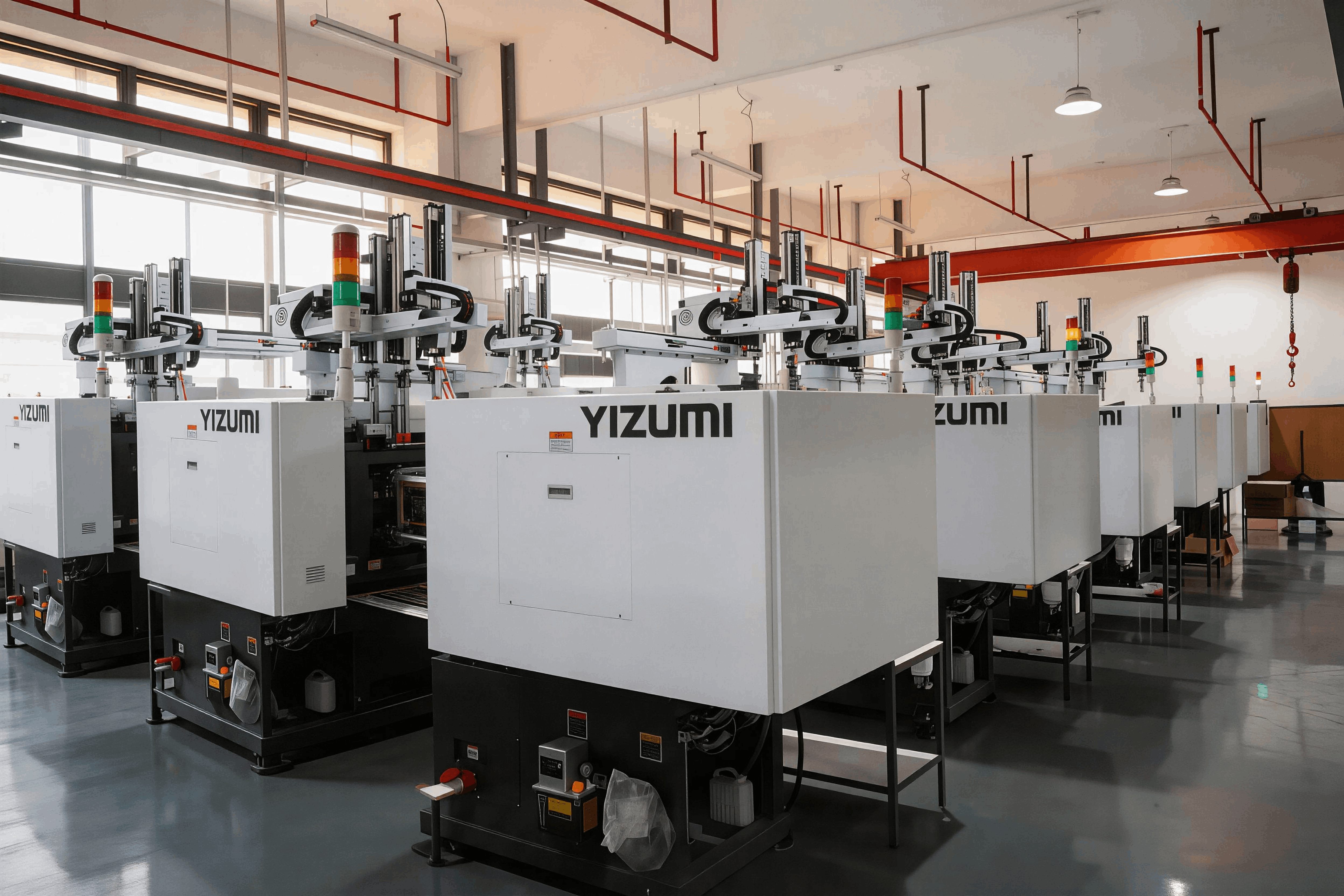
ABS (acrylonitrile butadiene styrene) is a widely used engineering thermoplastic selected for injection-molded consumer electronics housings. In this range, the X20, Q1, Q2, Q3 and Q7 are all described in published product data as ABS builds.
Three procurement implications follow from that single material choice.
- Tooling is already committed. ABS housings are produced from injection molds. A supplier running the same polymer across five models has paid the tooling cost and set the molding parameters, which is a precondition for repeatable fit, finish and mounting geometry.
- Cost control is structural, not promotional. ABS sits below metal and specialty engineering plastics on material cost and is fast to mold at volume, so choosing it across a model family keeps unit economics predictable. That matters to buyers who need stable landed cost across several SKUs rather than a single discounted hero model.
- Assembly behavior stays consistent. A common polymer simplifies how brackets, waterproof cases, chest harness straps and selfie-stick mounts interface with the body, because wall thickness and screw-boss behavior remain inside a known range.
The limitation is equally clear and should be stated plainly. ABS is not the highest-impact or most heat-resistant engineering thermoplastic available, and it is not the material a supplier would choose for a metal-body premium positioning or for the most structurally demanding applications. Where a project requires maximum impact resistance or a metal aesthetic, ABS is a compromise rather than an upgrade. Buyers building premium retail tiers should read the material as a cost-and-consistency decision and weigh the trade-off against their own market positioning.
Evidence 2 — Full-Range Capacitor Microphones and a Standardized Audio BOM
Audio is the most commonly neglected specification in action camera sourcing, and it is one of the clearest indicators of design maturity. The X20, Q1, Q2, Q3 and Q7 all list a full-range built-in capacitor microphone.
A capacitor (condenser) microphone element is generally more sensitive and offers a wider usable frequency range than the simplest low-cost microphone implementations, which is why it is the element of choice when voice intelligibility and ambient detail matter. In practice, a full-range capacitor microphone supports vlog handheld recording, spoken commentary over cycling or skiing footage, and general outdoor documentation where the operator is close to the camera.
The stronger signal is not the element itself but its uniformity. Five models spanning three product families — the 2K+WiFi X20, the 4K+WiFi Q1, the 4K touch-screen anti-shake Q2, the 4K WiFi Q3 and the 4K anti-shake Q7 — carry the same microphone specification. That indicates a consolidated audio bill of materials: the same component type, the same board layout logic, and the same assembly and test procedure applied at scale.
It also reveals a tiering logic. Elsewhere in the same catalog, the Q11 and X11 are specified with a built-in noise reduction IC for clear audio recording rather than a capacitor microphone. Two documented microphone approaches in one catalog show that the audio choice is deliberate and allocated by model instead of applied uniformly as a default — a distinction buyers can use when mapping models to price bands and use cases.
The boundary matters here. A capacitor microphone records the environment, including wind. Buyers should not read better microphone as no wind handling required. Wind performance depends on the housing opening, the mounting position and whether the camera sits inside a waterproof case, so audio quality should be validated with a sample in the actual mount and enclosure the end user will buy.
Evidence 3 — High-Speed Mini USB 2.0 and Interface Standardization
All five models specify a high-speed Mini USB 2.0 interface. The X20 additionally publishes a Micro Type-C charging input rated DC 5V, 1A–2A, which shows the connector set is a defined engineering decision per model rather than an inherited default.
From a sourcing perspective, Mini USB 2.0 is a mature, widely tooled interface. Its advantages are practical: connectors and cables are available in many markets at low cost, the accessory ecosystem is deep, and the standard is stable enough that a design does not need revalidation whenever a new charging connector generation appears. It also reduces cable-related return friction in price-sensitive retail channels, where a missing or unusual cable creates a support problem.
The limitation is real and should not be smoothed over. Mini USB 2.0 is an older interface than USB-C. It is not reversible, and its data signaling rate is well below USB 3.x class interfaces, so it is not the right choice for fast offloading of large video files. Some retail channels and end users now expect USB-C as a default. Buyers targeting markets where connector modernity forms part of the purchase decision should factor that into positioning, or specify a connector change through the OEM/ODM process. Conversely, buyers whose volume sits in value-oriented outdoor, cycling or diving channels may find the mature interface a net advantage in cost and accessory availability.
Five Models, One Material and Component Pattern
The table below summarizes published specifications for the five models, with the three evidence points highlighted.
| Model | Published category | Material | Microphone | Interface | Other published features |
|---|---|---|---|---|---|
| X20 | 2K+WiFi X20 | ABS | Full-range built-in capacitor MIC | High-speed Mini USB 2.0; Micro Type-C input DC 5V, 1A–2A | 1.54-inch IPS 320×240; 1920×1080 AVI video; 130° lens; infrared night vision with four energy-saving infrared lights, manual switching; 1000mAh/3.8V polymer battery |
| Q1 | 4K+WiFi Q1 | ABS | Full-range built-in capacitor MIC | High-speed Mini USB 2.0 | 1.5-inch IPS 320×240; front and rear recording at 4K 3840×2160; simultaneous 2K+2K dual recording; 130° rotating lens; 2000mAh/3.8V polymer battery; recording working time approximately 9 hours |
| Q2 | 4K WiFi touch screen anti-shake Q2 | ABS | Full-range built-in capacitor MIC | High-speed Mini USB 2.0 | 1.8-inch IPS 800×480; 25mm 130° wide-angle lens; front 4K and rear 4K with 2K+2K simultaneous recording; 6-level electronic image stabilization; touch and physical dual buttons; 18650 2000mA battery |
| Q3 | 4K WiFi Action Camera Q3 | ABS | Full-range built-in capacitor MIC | High-speed Mini USB 2.0 | 1.5-inch IPS 320×240; 130° rotating lens; front and rear 4K 3840×2160 with 2K+2K simultaneous recording; infrared night vision, manual regulation; 2000mAh/3.8V polymer battery |
| Q7 | 4K WiFi anti-shake Q7 | ABS | Full-range built-in capacitor MIC | High-speed Mini USB 2.0 | 1.47-inch IPS 320×240; 4K 3840×2160 at 30fps; image stabilization; infrared night vision; compatible with waterproof case; 1000mAh/3.8V polymer battery |
Source: published product specifications for the listed models. Specifications are model-level and should be confirmed against a current order specification and a physical sample.
Where These Cameras Are Used
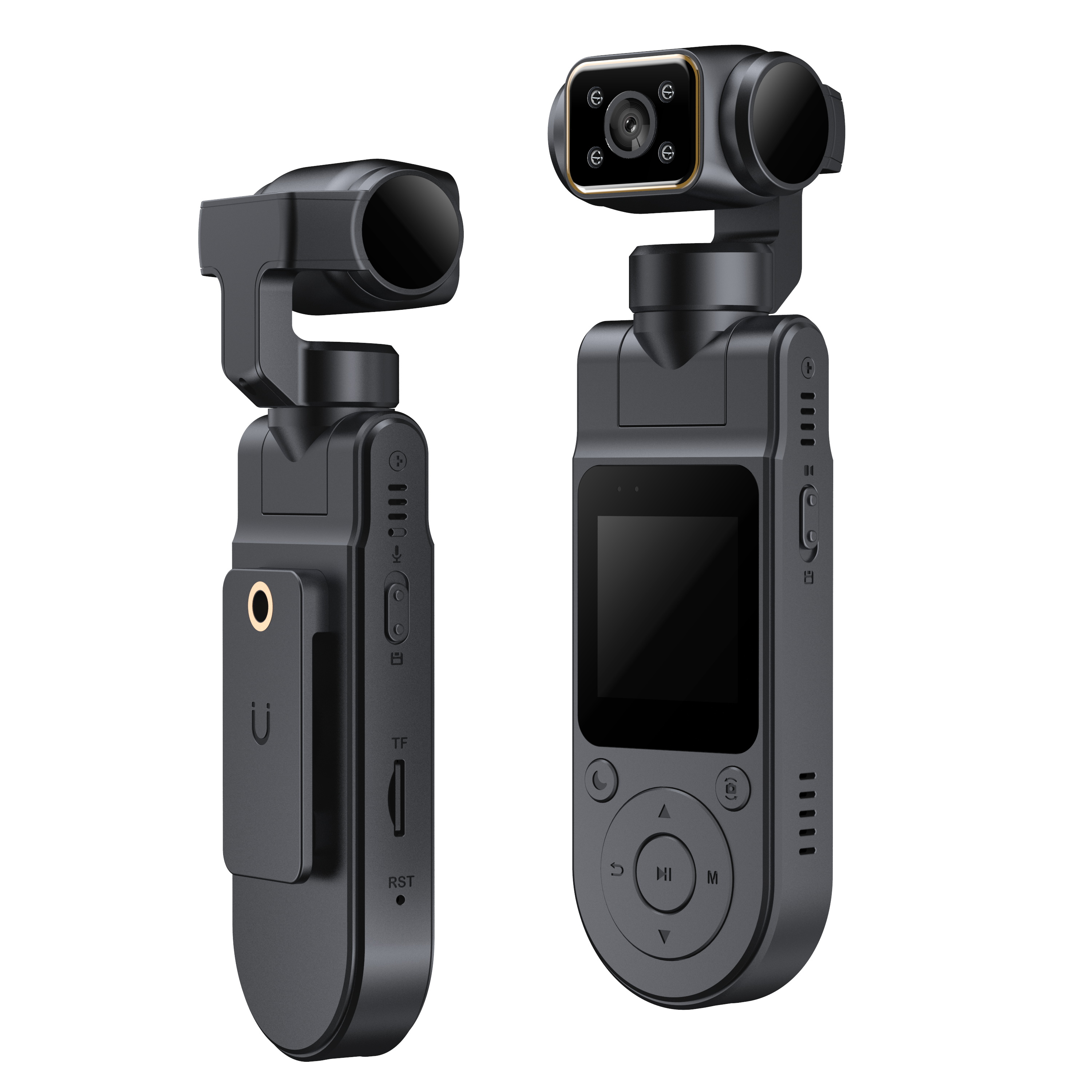
The application profile published for this product family covers outdoor sports equipment, vehicle electronics, consumer video recording, security recording and travel photography. Intended industries are outdoor sports, photography and video shooting, and driving and transportation.
Operating conditions are stated as outdoor all-weather use from -20°C to 60°C with dustproof, waterproof and shockproof requirements; high-vibration scenarios such as motorcycle riding, mountain biking and off-road driving; low-light environments including night hiking and underwater diving; and high-speed movement including skiing and skydiving.
Typical project types include cross-border e-commerce retail, auto modification wholesale, outdoor gear brand OEM/ODM, travel supply chain bulk orders, motor club supporting equipment and diving store accessory matching. Listed operating modes are one-button quick recording, wireless remote control shooting, mobile app real-time preview and playback, loop recording, timed auto-recording and voice control capture.
Matched equipment commonly specified alongside these cameras includes a waterproof diving case, motorcycle fixed bracket, bicycle mount, chest harness strap, selfie stick, extra rechargeable battery, car charger and memory card. Project specifications in this family also reference waterproof ratings in the IP66 range, built-in anti-shake algorithms, 4K support, wide-angle lens design, low power consumption for long recording, compatibility with multi-brand mounting accessories, multi-language system support, and CE/UKCA-aligned compliance for European and UK channels.
Two practical readings follow for buyers. First, the ABS body plus waterproof case approach means underwater and surfing use depends on the enclosure rather than the bare camera — a distinction that should be explicit in retail copy and accessory lists. Second, because the same microphone and interface appear across the model family, accessory kits, cables and audio expectations can be standardized across a multi-SKU order, which simplifies inventory planning for distributors and channel partners.
What the Market Data Suggests
Several published data points frame where this type of build makes commercial sense.
- Scale: the global action camera market was valued at USD 6.57 billion in 2024 (SkyQuest Technology), while China's action camera market was estimated at USD 502.25 million in 2024 (Market Research Future).
- Export geography: China exported USD 166 million in video cameras in 2024, with the United States the top destination at USD 31.8 million (OEC), and North America held a 34% revenue share of the global market in 2025 (Grand View Research).
- Resolution segmentation: the ultra-HD segment — 4K and above — accounted for approximately 46.25% of market share in 2025 (Mordor Intelligence). That aligns with the Q1, Q2, Q3 and Q7 positions, while the X20 sits in the 2K+WiFi category.
- Feature standardization: EIS is now a standard feature from budget to mid-range (Insta360 industry guide), which matches the Q2 anti-shake configuration with 6-level electronic image stabilization.
- Competitive concentration: GoPro sold 3 million camera units in 2023, a 6% increase over the previous year (SkyQuest Technology), while DJI and Insta360 together held close to 90% of the action camera market share in Japan as of late 2025 (PetaPixel / BCN+R).
A note on market sizing: published estimates diverge because research scopes differ. For 2025 alone, Grand View Research reports USD 7.97 billion while Mordor Intelligence reports USD 7.09 billion. Buyers should treat any single figure as scope-dependent rather than exact.
How This Compares With Alternative Approaches
Component choices only become useful when compared against realistic alternatives, including their downsides.
| Decision | Approach in this range | Alternative | Where each is stronger |
|---|---|---|---|
| Housing material | ABS plastic across X20, Q1, Q2, Q3 and Q7 | Polycarbonate or glass-filled polymers; aluminum or magnesium alloy bodies | ABS favors cost control, molding speed and consistent assembly. Metal bodies favor perceived premium positioning and higher rigidity, at higher material and tooling cost. ABS is the weaker choice where maximum impact resistance or a metal finish is a hard project requirement. |
| Microphone | Full-range built-in capacitor microphone | Noise reduction IC audio path, as specified on the Q11 and X11 | Capacitor elements generally favor voice intelligibility and ambient detail. Noise reduction IC approaches aim at reducing unwanted background energy. Neither removes the need for wind management around the housing opening. |
| Interface | High-speed Mini USB 2.0 | USB-C with higher signaling rates | Mini USB 2.0 favors cost, cable availability and design stability. USB-C favors reversibility, faster file transfer and current retail expectations. For high-volume value channels Mini USB 2.0 can be the pragmatic choice; for premium channels it may read as dated. |
| Waterproofing method | Waterproof case compatibility for the five focus models | Bare-body IP-rated designs, such as the IP65-rated X11 and Q11 in the same catalog | Case-based protection keeps the camera a slim, low-cost body and lets the case absorb sealing risk. Bare-body ratings remove the case from the buyer's cost and loss equation but typically impose stricter sealing, tooling and testing requirements. |
Ingress protection claims deserve their own note. IP ratings are defined internationally — IP68, for example, denotes dust protection at level 6 and water immersion at level 8 under IEC 60529. Among the five models discussed here, no IP rating is published; protection for underwater and surfing use is delivered through a compatible waterproof case, while IP65 protection is published separately for the X11 and Q11. Buyers should keep those two claim types distinct in their own documentation, since conflating case-based protection with a bare-body IP rating is a common and avoidable sourcing error.
On regulatory compliance, action cameras fall under the IEC 62368-1 safety standard for audio/video and information technology equipment, whose fourth edition was published in 2023. YUAOHENG states that its products have obtained FCC, CE and RoHS certifications. Because certification is issued against specific models and configurations, buyers should request the certificate set corresponding to the exact model, variant and accessory bundle they intend to import.
A Practical Evaluation Checklist
- Confirm the housing polymer in writing, and confirm the same material applies to mass production, not only to the sample.
- Confirm the microphone element type, then test audio inside the case and mount the end user will actually use.
- Confirm the connector standard, and decide whether the target market's expectations make Mini USB 2.0 an advantage or a constraint.
- Keep case-based waterproofing and bare-body IP ratings separate in listings, packaging and marketplace claims.
- Match certificates to the specific model and variant rather than to the brand in general.
- Validate capacity claims against real order timing: stated capacity is 2,000,000 units per year from a 1,500 m² facility with approximately 300 employees and 30 engineers.
Future Outlook
Three directions look reasonable based on the published data. First, resolution tiering will keep shifting upward: with ultra-HD already at roughly 46.25% of market share in 2025 (Mordor Intelligence), the pressure on suppliers is less about adding pixels and more about holding image stability and audio quality at the price points where volume sits. Second, stabilization has effectively become table stakes, which moves competition toward the parts buyers can still differentiate on — housing materials, microphone elements and connectors. Third, export geography suggests continued emphasis on North America, where the region held a 34% revenue share in 2025 (Grand View Research), alongside Europe and Asia, which YUAOHENG reports as core markets.
For a manufacturer using a common ABS body, a common capacitor microphone and a common Mini USB 2.0 interface across five models, the strategic value of standardization is that changes can be introduced deliberately — model by model or as a platform upgrade — rather than being forced by inconsistent supply. For buyers, the practical value is a comparable baseline across a multi-SKU order, which makes supplier evaluation faster and reduces the risk of discovering a specification mismatch after the purchase order is placed.
Frequently Asked Questions
What material are the YUAOHENG X20, Q1, Q2, Q3 and Q7 action cameras made from?
All five models are described in published product specifications as ABS plastic builds. ABS is an injection-molded engineering thermoplastic commonly used for consumer electronics housings, which means the housings are produced from molds rather than fabricated unit by unit.
What type of microphone do these five models use?
Each of the five models specifies a full-range built-in capacitor microphone. Elsewhere in the same catalog, the Q11 and X11 are specified with a built-in noise reduction IC for clear audio recording, which indicates the microphone approach is allocated by model rather than applied uniformly across the range.
What interface do these models use, and what are the limits of that choice?
All five specify a high-speed Mini USB 2.0 interface, and the X20 additionally publishes a Micro Type-C charging input rated DC 5V, 1A–2A. Mini USB 2.0 is a mature, widely available connector standard that supports low-cost accessories and stable designs, but it is not reversible and its signaling rate is below USB 3.x class interfaces, so it is not suited to fast offloading of large video files.
Are these five cameras waterproof without a case?
No waterproof rating is published for the X20, Q1, Q2, Q3 or Q7. The Q1, Q2, Q3 and Q7 specifications state compatibility with a waterproof case for underwater shooting, and the Q7 lists this compatibility among its selling points. IP65 protection is published separately for the X11 and Q11 models. Buyers should document case-based protection and bare-body IP ratings as separate claims.
Which certifications apply to YUAOHENG action cameras?
The company states that its products have obtained FCC, CE and RoHS certifications, and that approximately 80% of its products are exported to more than 15 countries and regions across Europe, North America, Asia and South America. Because certifications apply to specific models and configurations, the certificate set should be matched to the exact model and variant being imported. Action cameras generally fall under the IEC 62368-1 safety standard for audio/video and information technology equipment.
What manufacturing capacity and support does the factory offer for volume orders?
Dongguan YuAoHeng Electronic Technology Co., Ltd. was established in 2016 and operates a standardized 1,500 m² production facility with professional production lines and quality control throughout the manufacturing process. Stated resources include approximately 300 employees, an R&D team of 30 engineers and an annual production capacity of 2,000,000 units. The company provides OEM and ODM one-stop customization covering product design, engineering development, testing and mass production.
For a complete overview of models, specifications and accessories, the company's product catalog is available for download: YUAOHENG product catalog (PDF).