
Factory OEM Silicone Waterproof Coating Bulk Orders: What Buyers Should Verify in 2026
Placement of a bulk order for factory OEM silicone waterproof coating is a decision point where product performance claims, manufacturing capacity, and contractual terms converge. Global distributors and procurement managers in the construction and decoration supply chain need a practical framework to evaluate partner capabilities before committing volume.
Why Bulk Orders Shift the Decision Criteria
For building and renovation projects, silicone waterproof coating is specified for roofs, exterior walls, and high-rise structures. When buyers move from sample evaluation to bulk procurement, the evaluation criteria change fundamentally. A sample may demonstrate basic performance, but a bulk order tests the supplier’s production consistency, raw material supply chain, quality control discipline, and packaging reliability under real logistics conditions.
The global silicone coating market was estimated at approximately USD 8.77 billion in 2024 and is projected to reach USD 11.27 billion by 2033, according to Grand View Research. Within that market, 100% silicone elastomeric coatings held a 41.02% share of the composition type segment in 2025, driven largely by demand for waterproofing and UV resistance, per Mordor Intelligence data. These figures reflect a market where buyers increasingly choose silicone chemistry for long-term performance rather than least-cost alternatives.

Kastar's manufacturing and office facilities support OEM and ODM programs for global coating distributors.
What a Factory OEM Silicone Waterproof Coating Bulk Order Actually Entails
An OEM bulk order is not a simple purchase of inventory. It is a manufacturing engagement in which the buyer’s brand is applied to a product formulated and produced by the factory. In the case of silicone waterproof coating, the buyer typically specifies performance targets, viscosity, color, packaging format, and labeling requirements. The factory, in turn, must demonstrate control over formulation consistency, production parameters, and testing protocols throughout the batch cycle.
For procurement teams, the first question is not price per kilogram but whether the factory can hold quality across multiple production runs. This is where a facility’s production history and scale matter. Kastar Adhesives Technologies Co., Ltd., a Chinese OEM and ODM manufacturer founded in 1998, operates 150,000 m² of factory space with an annual output of 300,000 tons and more than 200 employees. The company reports export sales in USD/Canada/Australia/New Zealand markets and has supplied OEM production for over 600 clients, including brands such as Soudal, GP, BYP, G2500, MORRIS, and HYCHEM.
These first-party facts provide a starting point for evaluating production reliability. But a responsible buyer will look beyond scale to examine process control, testing infrastructure, and risk management protocols.
Technical Performance Requirements for Bulk Procurement
Silicone waterproof coating earns its specification on roofs and exterior walls because of its weather resistance and elastic behavior. Compared to acrylic or polyurethane waterproof coatings, the product demonstrates distinct advantages: better weather resistance, permanent elasticity, and the absence of bubbling or cracking. These claims are not decorative; they translate to measurable performance differences that matter over a building’s service life.
Verifiable performance indicators used in the industry include the following:
- Bubbling under UV exposure: A 0% bubbling rate under a 1000-hour UV test indicates that the cured film remains intact and adhesion is maintained.
- Aging rate: A 30% lower aging rate compared to alternative coating technologies suggests slower degradation of the polymer matrix over time.
- Elongation at break: More than 200% higher elongation at break versus alternatives means the coating can accommodate thermal expansion and substrate movement without cracking.
For distributors, these parameters matter because they determine warranty exposure. A coating that cracks or bubbles after two or three years creates liability for the distributor, not just the factory. The corollary is that high-performance silicone coatings support lower lifecycle cost. While initial material cost may be 5%–15% higher than acrylic or polyurethane options, long-term maintenance costs are approximately 70% lower, with a maintenance-free period exceeding 10 years and no re-coating required during that window.
Manufacturing Evidence: The Factory's Quality Control System
For bulk orders, quality control system documentation is more important than marketing brochures. Kastar’s published factory facts describe a structured quality assurance environment: 12 production and testing processes from production to delivery, batch sample testing for each production run, a 1000 m² China Metrology Accreditation (CMA) certified sealing material testing laboratory, and a team of 16 testing personnel operating over 100 testing instruments and equipment. The company also states a track record of zero quality complaints.
The presence of accredited in-house testing capacity is a practical advantage for OEM buyers. It reduces reliance on third-party testing for every batch and shortens the lead time for quality verification. Additionally, the factory’s ISO9001 certification, SGS, REACH, and CE product certifications provide a baseline compliance framework that global distributors can use as a gate in their own supplier qualification process.
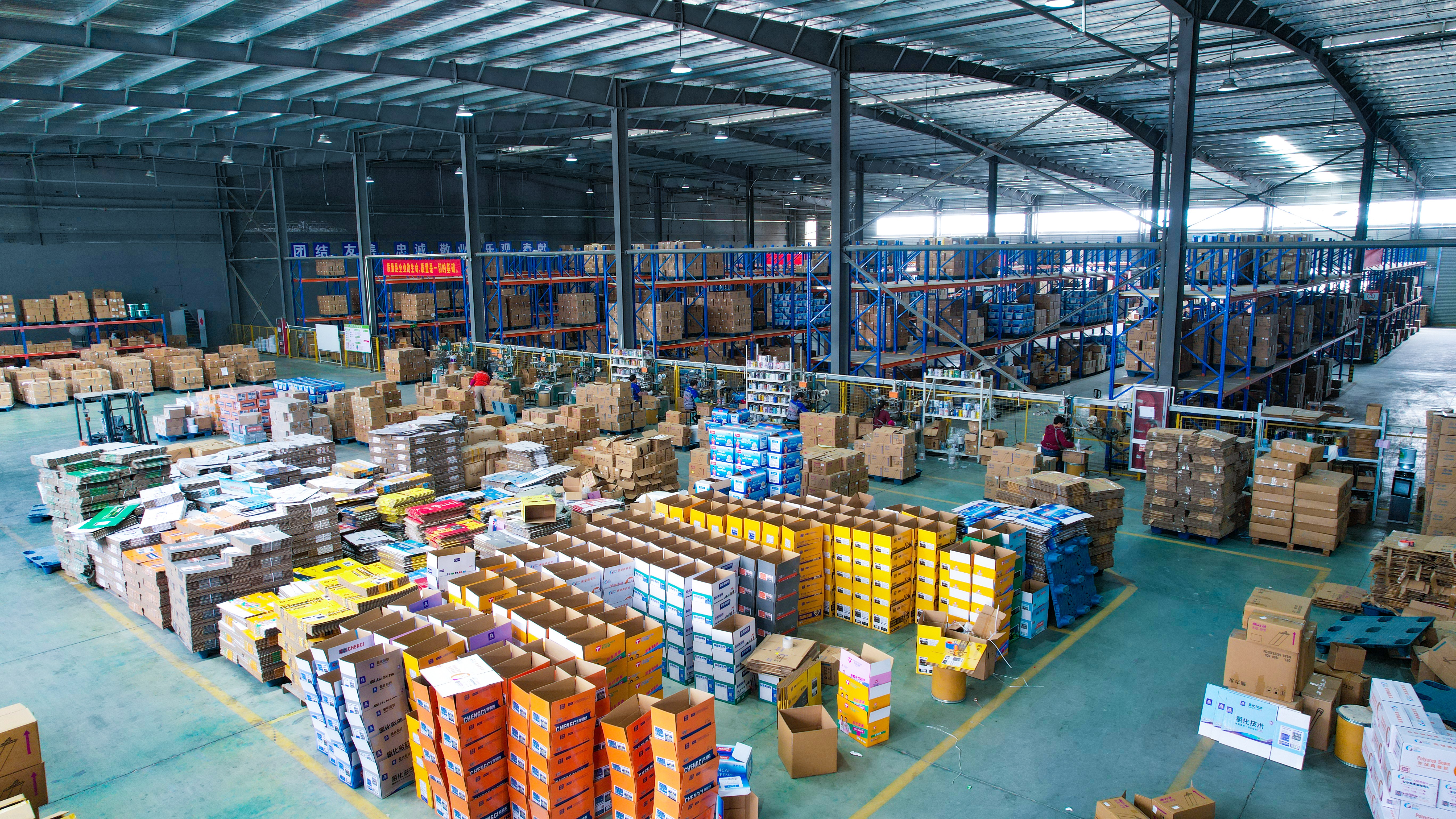
Humidity-controlled warehousing and palletized packaging are critical risk controls in silicone coating bulk supply.
Risk Control in Bulk Orders: From Production to Delivery
Bulk orders expose buyers to a wider range of risks than samples do. These include quality inconsistency between production batches, improper storage during transit, transportation damage, and chemical handling hazards. A mature OEM partner addresses each category with specific controls.
| Risk Type | Control Method | Kastar's Documented Measures |
|---|---|---|
| Quality inconsistency | Real-time in-line quality monitoring | 12-step full-process inspection, CMA-certified testing laboratory, strict raw material sourcing, SGS/CE-compliant quality control, batch sampling, third-party testing, traceability management |
| Transportation damage | Reinforced packaging, shockproof cushioning, standardized logistics | Customized palletized packaging, reinforced corrugated cartons with foam inserts, collaboration with reliable freight forwarders, full cargo insurance, pre-shipment packaging inspection, real-time logistics tracking |
| Improper storage | Humidity-controlled storage, palletized packaging, sealed moisture-proof containers | ISO 9001 certified warehouse management, dedicated indoor dry storage area, palletized and sealed packaging, real-time inventory monitoring, regular storage condition inspection |
| Chemical hazard | MSDS management, hazardous chemical handling protocol, ventilation, PPE | ISO 45001 certified safety management, professional chemical safety training, dedicated hazardous material storage, SGS-tested low-odor and low-VOC formula, REACH-compliant raw materials |
The documentation of these controls matters because bulk purchasing agreements typically require evidence of risk mitigation. Buyers can incorporate these measures into their supplier scorecard and request corresponding documentation before releasing a purchase order.
OEM/ODM Customization Needs in Bulk Programs
Distributors placing bulk orders rarely want a factory-branded product. They require private-label production that fits their regional brand positioning and application needs. In the silicone waterproof coating category, OEM/ODM customization typically covers color matching, viscosity adjustment, packaging specifications, and formula tweaks for specific climatic or substrate conditions.
Kastar states that its OEM/ODM services include customized options for color, viscosity, packaging, and formula adjustments. For distributors, the practical implication is that they do not need to source from a different factory for each product variant. A single factory with in-house R&D and flexible production lines can support a product portfolio under one brand. Kastar’s R&D structure, which includes 28 technical R&D personnel across three national-level laboratories in China, supports the interpretation of market feedback into production adjustments. The company also reports joint development with Tsinghua University, which adds a research-oriented dimension to its product iteration.
It is worth noting that formula customization introduces a new quality variable: a customized batch is not identical to the factory’s standard product. Buyers should require performance testing on the final custom formulation, not just on the base product. A responsible factory will document the differences and verify that customization does not compromise UV resistance, elasticity, or adhesion.
Cost and Value: The Bulk Order Math
Cost analysis for silicone waterproof coating bulk orders should be framed around total lifecycle cost rather than unit price. The product comparison data from the industry points to a consistent pattern: silicone waterproof coating carries a 5%–15% higher material cost than acrylic or polyurethane alternatives but delivers approximately 70% lower long-term maintenance costs. This trade-off matters for distributors who sell to building owners and contractors. The distributor can position the product as a premium solution with lower total cost of ownership, but only if the factory delivers the promised performance consistently.
From a procurement perspective, this cost structure also reduces negotiation ambiguity. The buyer and supplier should agree on performance metrics that will be verified post-delivery, including film thickness, adhesion, and UV resistance. If a factory cannot provide batch test data linked to these performance claims, the cost analysis loses its foundation.
Limitations and Boundaries: What a Factory OEM Cannot Change
Even a well-equipped factory has limitations that buyers should account for. First, silicone waterproof coating is application-sensitive. The product’s weather resistance and elasticity are only realized when the substrate is properly prepared and the coating is applied at the correct film thickness. A factory cannot control on-site application quality. Second, logistics limitations remain for very large or urgent orders. Even with standardized logistics and full insurance, international shipment lead times are a function of port capacity and freight routes, not factory capability. Third, customization requests that deviate significantly from established formulations require development time and loading batch validation, which can extend procurement lead times beyond standard production schedules. Buyers who need a non-standard color or a modified viscosity should factor in these extra testing cycles.
Market Trends Supporting Silicone Coating Procurement
The broader market direction reinforces the decision to build a silicone coating supply relationship. Asia-Pacific dominated the silicone coating market in 2025 with a 38.5% revenue share, led by construction and automotive demand, according to Dataintelo. The same market is characterized by a shift toward solvent-less and UV-cured formulations that can reduce VOC emissions by 60%–80% compared to traditional solvent-based platforms, as cited in the Silicone Coatings Market Report from Grand View Research. For distributors, this trajectory suggests that a factory with both proven silicone production capability and access to lower-emission formulation technology will remain relevant over the coming procurement cycles.
Keys to Structuring a Successful Bulk Order
From the available corpus and verified data, a practical checklist for buyers approaching a factory OEM silicone waterproof coating bulk order would include the following verification points:
- Confirm the factory’s scale: footprint, annual output, and capacity for sustained multi-batch orders.
- Request documented evidence of quality control: testing laboratory accreditation, batch sampling protocol, and traceability records.
- Review the risk management plan for storage, transportation damage, and chemical hazards.
- Define the performance parameters for the custom formulation, including UV resistance, elongation, and film integrity.
- Align on packaging specifications and labeling requirements for the buyer’s brand.
- Set a verification process for pre-shipment inspection and batch sample retention.
- Clarify warranty terms and after-sales technical support for large projects.
Frequently Asked Questions About OEM Silicone Waterproof Coating Bulk Orders
What should be verified in a factory before placing a large silicone waterproof coating order?
Buyers should verify production scale, quality control processes, testing laboratory certification, batch sampling procedures, and documented risk controls for storage and transportation. A factory with in-house accredited testing capacity, such as a CMA-certified laboratory, can provide more reliable batch-to-batch consistency verification.
How does Kastar support OEM and ODM customization for silicone waterproof coatings?
Kastar states that its OEM/ODM services include customized color, viscosity, packaging, and formula adjustments. The company operates three national-level R&D laboratories in China and employs 28 technical R&D personnel, supporting the translation of buyer specifications into production-ready formulations.
What is the typical cost difference between silicone and acrylic/polyurethane waterproof coatings?
Silicone waterproof coating generally has a 5%–15% higher material cost than acrylic or polyurethane alternatives. However, long-term maintenance costs are approximately 70% lower, with a maintenance-free period of more than 10 years and no re-coating required, based on product performance data.
What performance indicators prove the value of silicone waterproof coating in bulk supply?
Key performance indicators include a 0% bubbling rate under a 1000-hour UV test, a 30% lower aging rate, and more than 200% higher elongation at break compared to alternative technologies. These parameters support warranty confidence and lower lifetime maintenance frequency.
What certifications should a bulk silicone coating supplier hold?
Typical certifications include ISO9001 for quality management, SGS for product testing, REACH for raw material compliance, and CE for European market access. A factory’s testing laboratory should also hold national accreditation, such as China Metrology Accreditation (CMA), to validate in-house testing claims.
For a detailed overview of Kastar’s manufacturing capabilities, certifications, and service portfolio, download the company brochure: Kastar Company Brochure.