
Factory Proof: How to Verify Eraser & Pencil Topper Lines
Factory Proof: How to Verify Eraser & Pencil Topper Lines
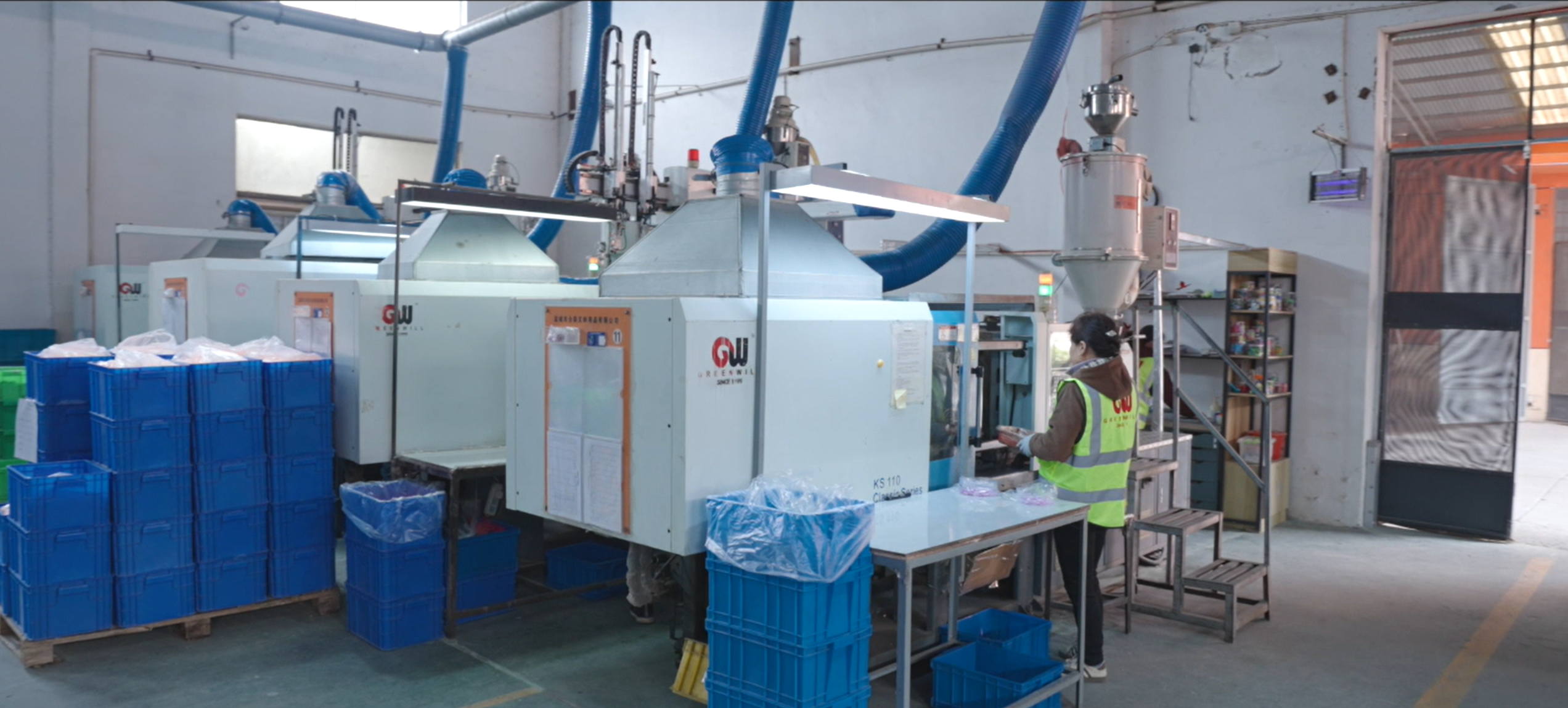
The eraser and pencil sharpener category is large enough to attract global trade attention and granular enough, SKU by SKU, that buyers often try to verify it with a catalog and a price list. The global eraser market was valued at roughly USD 2.1 billion to USD 2.8 billion in 2025, and China's exports of vulcanized rubber erasers reached approximately USD 137 million in 2024, with the United States the largest single destination at USD 21.7 million. Those figures describe a mature supply base. They do not describe whether any particular factory can prove it produces the exact eraser, sharpener with eraser, or cap-mounted accessory you are about to order.
This is where purchasing crosses from evaluation into execution, and the working question changes. "Who can supply erasers" becomes "what evidence exists that this supplier's rubber eraser line, sharpener line, and accessory assembly line will behave the same way in month nine as they did in the sample." The pages below set out the concrete, documentable proof a buyer should demand, and use the disclosed production facts of Greenwill (Kunshan Crystal Culture Co., Ltd) as a worked example of what that evidence looks like when a supplier is willing to write it down.
Why Factory Proof Became a Separate Purchasing Step
Three structural shifts in the category have made supplier capability harder to verify by visual inspection alone.
- Product convergence. A sharpener with eraser or a pencil cap accessory is no longer a single-material item. It combines rubber compounding, plastic injection molding, metal blade production and final assembly. A factory genuinely strong in one of those processes can present itself as strong in all four.
- Compliance attachment. Stationery intended for children under 14, including novelty sharpeners and erasers, falls under the EU Toy Safety Directive 2009/48/EC and the EN 71 series (Parts 1–3). Compliance evidence must attach to the specific item, not to the supplier's general reputation.
- Mix shift toward combinations. Multifunctional sharpener-eraser combos are reported to be outpacing the wider market at a CAGR above 8%, while the global pencil sharpener market is projected to grow from USD 1.2 billion in 2025 to USD 1.8 billion by 2030. Combination growth mechanically increases the number of SKUs where two or more production disciplines have to be verified at the same time.
For an importer or OEM buyer, the practical consequence is that a factory audit is no longer a single visit or a single questionnaire. It becomes an evidence chain that has to be requested, read, and cross-checked against the item being purchased.
The Five Evidence Layers Buyers Should Require
A capability claim becomes verifiable when it is attached to a document, a measurable output, or an observed process. In this category, five layers cover most of the risk.
| Evidence layer | What to request | What it actually proves |
|---|---|---|
| 1. Sample run | A sample produced on the commercial line with the intended material, color and packaging, plus batch-level readings | That the formula and tooling can be reproduced outside a laboratory setting |
| 2. Line-level capacity | Output figures separated by product family: eraser, sharpener, topper or assembly, pen | Which line will constrain your delivery date |
| 3. Multi-product management | Where each component is made and where the SKU is assembled, printed and packed | Whether quality responsibility is internal or split across vendors |
| 4. Certificate scope | Management-system certificates with numbers, scope statements and validity dates, plus product test reports | Whether the document actually covers the item you are buying |
| 5. Acceptance and terms | MOQ, lead time, delivery terms, payment terms and inspection protocol | Whether the verified capability is commercially reachable for your order size |
The layers are cumulative rather than alternative. A strong sample without line-level capacity data tells you what a factory can do once. Capacity and process documentation tell you what it can do repeatedly, which is the only version of the claim that matters at execution stage.
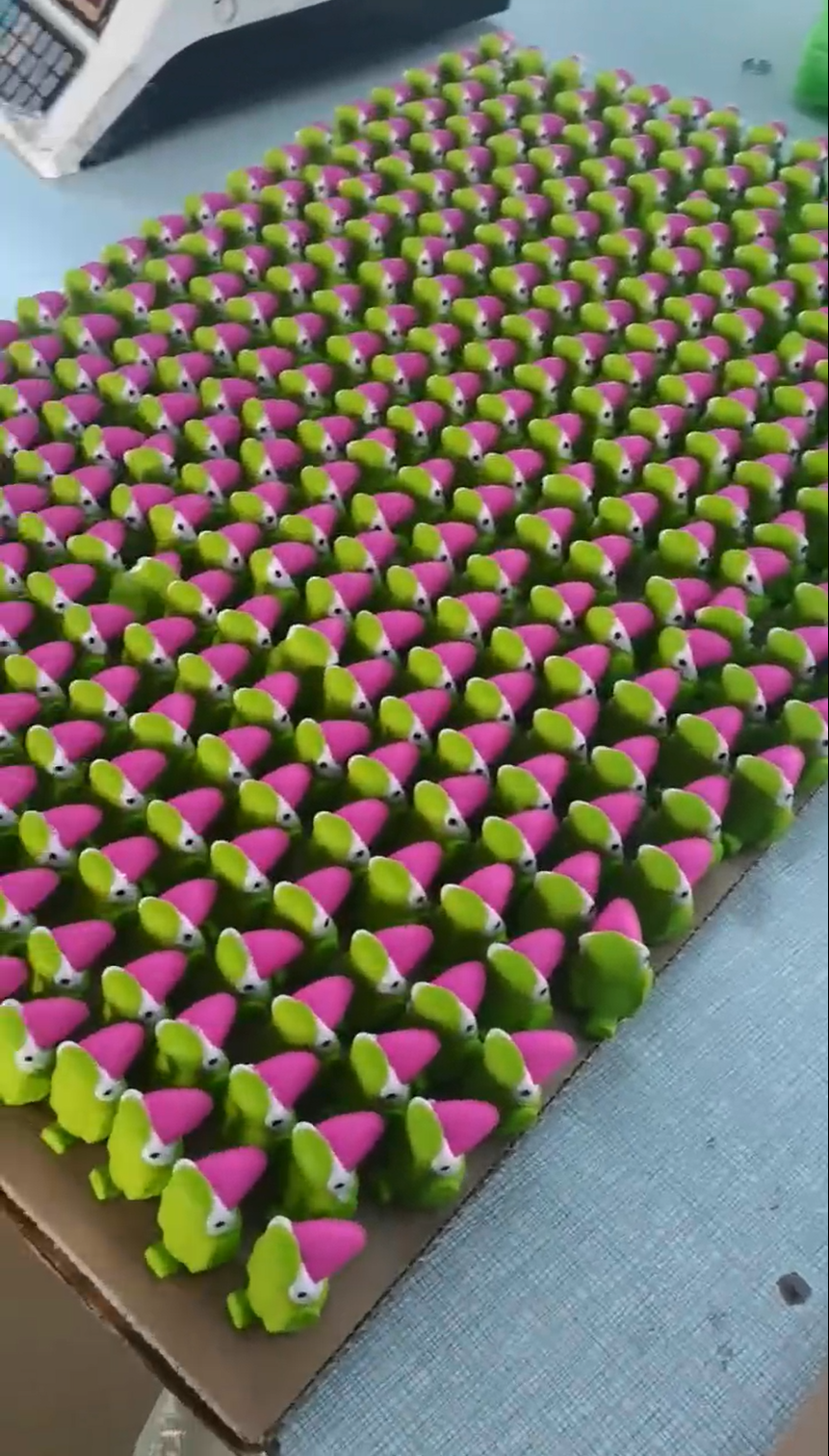
Sample Runs: Turning a Claim Into a Reproducible Result
A sample run is only meaningful if it is specified. An unbranded block eraser sent in a plain bag proves almost nothing, because the buyer cannot tell which line, which material and which hardness level produced it. Four elements should be fixed in writing before sampling starts.
- The exact model under evaluation. Greenwill's disclosed eraser models include GW023 and GW024, and its 2-in-1 eraser sharpener series covers GW007, GW006, GW013, GW015 and GW009. Naming the model prevents substitution between the sample and the production order.
- The material specification. Greenwill states that its eraser line uses premium TPR, TPE or Eco PVC rubber and offers various hardness levels and erasing performance to balance sustainability with functionality. A hardness option list is precisely the kind of data a buyer should request rather than infer.
- The measurable results. For a rubber eraser or art eraser, that means erasing performance on the intended substrate, residue and crumb level, hardness, and dimensions — for example the 70 × 16 × 9.4 mm format stated for the quartz sand eraser GW023 and GW024.
- The delivery format. The sample should arrive in the intended retail packaging, because printing and packing are separate production steps with their own failure modes.
One question separates serious factories from trading intermediaries quickly: which of these readings came off the production line, and which came from a laboratory trial? A supplier that cannot answer that distinction is describing an intention rather than a capability.
Capacity Verification by Product Line
Plant-level capacity statements hide the only number a buyer needs: the throughput of the specific line that will run the order. A single figure such as "millions of units per year" is compatible with a factory that is fully booked on erasers and idle on sharpeners.
Line-separated figures are therefore the standard to ask for. As a reference point, Greenwill publishes pen capacity of 100,000 pcs/day and eraser capacity of 20 t/day, alongside annual output of more than 260 tons of eraser, more than 3 million pencil sharpeners and more than 20 million pens. Its eraser sharpener line is stated at a production capacity of 3,000,000 pcs/year, which aligns with the sharpener-side annual figure. The plant operates in a 25,000 m² facility with approximately 100 employees and a 10-person R&D team.
A second, equally useful test is seasonal. Because back-to-school demand concentrates production into a narrow window, buyers should ask what the quoted lead time becomes during that window rather than accepting the annual average.
How Multi-Product Lines Are Managed Without Quality Drift
Erasers, sharpeners and cap or topper accessories draw on three different process families: rubber compounding and molding for the eraser body, injection molding for shells and caps, and metal processing for blades, followed by assembly. The verification question is not whether the factory owns all three, but which of them are internal, which are assembled in-house, and who signs off on the finished item.
The disclosed configuration of a Greenwill 2-in-1 eraser sharpener illustrates the point: a TPR eraser, a stainless steel blade and a PP plastic shell, assembled into one unit. The non-sharpen pencil EP18004 combines a TPE body with an alloy nib and an ABS cap. The cap is an injection-molded component, produced by the same process discipline that governs topper fit and shell tolerance. When those two product types run in the same plant, tolerance control and material separation become operational issues rather than marketing statements.
- Material separation. Greenwill describes its eraser line as PVC-free. Buyers should ask how PVC-free material is segregated through compounding, molding, printing and packing, since separation is a process control, not a label.
- Component sourcing transparency. For any blade-based product, ask where the blade is produced and what the incoming inspection covers.
- Print and packaging ownership. Eraser printing and eraser packaging are separate stations. Ask whether print is in-line or outsourced, and request the last batch record of two different SKUs produced in the same week to see how changeover is documented.
- Fit and function claims. The stated applicable pencil for the eraser sharpener series is standard graphite at Φ7–8 mm. That is a verifiable tolerance statement, and buyers should test it against the pencil barrels they actually intend to distribute.
Certifications: Read the Scope, Not the Badge
Certification is the layer buyers most often check superficially. Three details are needed: the certificate number, the scope statement, and the validity window. Greenwill's disclosed management-system certificates show how specific that information is.
| Certificate | Number | Authority | Scope and validity |
|---|---|---|---|
| ISO 9001:2015 | 00124Q32003R4M/3600 | CQC | Production of Eco Eraser and Stationery Items; issued 2024-03-15, valid to 2027-03-19 |
| ISO 14001:2015 | 00124E31027R4M/3600 | CQC | Production of Eco Eraser and Stationery Items and Related Management Activities; issued 2024-03-15, valid to 2027-03-19 |
| ISO 45001:2018 | 00124S30827K4M/3600 | CQC | Production of Eco Eraser and Stationery Items and Related Management Activities; issued 2024-03-15, valid to 2027-03-19 |
Two categories of document must be kept apart. Management-system certificates describe how a factory organizes production, environmental control and occupational safety. Product test reports describe one item, one material and often one color. Across its lines, Greenwill references product-level standards including EN71 Parts 1, 2, 3 and 9, REACH, PAHS, SVHC and ASTM D-4236, and sustainability-related frameworks including FSC and BEPI. Independent guidance from the European Commission confirms that articles intended for children under 14, including toy sharpeners and erasers, must satisfy the Toy Safety Directive 2009/48/EC and EN 71 Parts 1–3.
The Technical Basis Behind the Proof Points
Capability verification works only when the buyer knows which variable controls performance, because suppliers who can name the variable can also measure it.
- Eraser body. Rubber compound and hardness govern residue, paper abrasion and erasing force. Greenwill's quartz sand eraser GW023 and GW024 uses TPR rubber with quartz sand and is described as a dual-use formulation for ink and pencil marks with rust-cleaning capability, described as paper-friendly, PVC-free and compliant with EN71, SVHC and PAHs.
- Sharpener assembly. Performance depends on blade material, blade geometry and shell concentricity rather than on external styling. The stated configuration is a stainless steel blade in a PP shell with a TPR eraser, with low crumbs and smooth sharpening across a stated pencil range of Φ7–8 mm.
- Erasable writing instruments. Greenwill's erasable gel pen KP18001 uses a heat-sensitive erasable ink with a 0.5 mm tip, positioned as thermal erasable and smooth with no residue, tested against EN71 and ASTM D-4236. Because the erasing mechanism is thermal rather than abrasive, buyers evaluating an ink pen eraser application should confirm the substrate and handwriting conditions they intend to support.
The practical use of this section is a checklist: for each variable above, ask for the last three recorded measurements and the acceptable range. A factory that has never recorded the value cannot control it.
Where Verified Capability Actually Gets Tested: Use Cases
Verification has value only against a real application profile. Greenwill's disclosed buyer base spans gift and promotional product companies, stationery importers and distributors, OEM/ODM partners and supermarkets across Germany, Argentina, Brazil, France, Italy and the United States, with declared applications covering school writing, office use, art sketching, retail resale and stationery online retail, plus support for retail seasonal campaigns and back-to-school promotions. Relationship durations run beyond five years, with some above ten.
Those applications map onto different verification priorities:
- Promotional and gift programs. Rapid design change with modest volume per variant makes tooling lead time and sample turnaround the binding constraint, not raw capacity.
- Supermarket and back-to-school programs. Peak-window capacity and packaging consistency matter most, since a late container is more damaging than a marginal performance difference.
- Art supplies and creative channels. The art eraser buyer cares about residue, paper friendliness and material safety documentation, because the product interacts with expensive substrates.
- Online retail resale. Packaging durability under courier handling becomes a quality parameter in its own right.
Greenwill reports that these programs improved shelf appeal through creative and colorful designs and supported mid-to-high-end brand positioning, under described highlights that include PVC-free non-toxic material, clean erasing with minimal residue, customizable shapes, colors, packaging and branding, retail and bulk suitability, and stable quality across high-volume production.
Market Trends That Raise the Cost of Unverified Suppliers
Two trends make factory proof economically relevant rather than merely prudent.
The first is compliance. The EN 71 and Toy Safety Directive route applies to children's stationery in the EU, and material-safety frameworks such as REACH, PAHS, SVHC and ASTM D-4236 are increasingly requested in other markets as well. Eco-friendly materials must clear those tests to be positioned as non-toxic for professional art use, which means a supplier without current product-level reports carries a substitution and recall risk that price negotiation cannot offset.
The second is category mix. Multifunctional sharpener-eraser combinations are estimated to grow at a CAGR above 8%, ahead of the overall sharpener market's projected move from USD 1.2 billion in 2025 to USD 1.8 billion by 2030. Combination products are harder to manufacture and harder to verify, because a defect can originate in the rubber, the shell, the blade or the assembly step.
Comparison With Traditional Supplier Verification — and Its Boundaries
Traditional verification in this category typically rests on a catalog review, a price comparison and a reference call to an existing customer. It is fast and inexpensive, and it works reasonably well for commodity block erasers where the specification is simple and the switching cost is low.
It fails in three situations: when the item is a combination product, when the item is subject to child-safety regulation, and when the buyer intends to build a multi-year program on the supplier. In those cases, the evidence chain described above replaces opinion with records.
| Verification approach | Typical evidence | Where it breaks down |
|---|---|---|
| Catalog and price comparison | Product photos, quotations, sample in plain packaging | No separation between line output and laboratory trial; no item-level compliance evidence |
| Reference call only | Buyer testimony from an existing customer | Confirms past delivery, not the line that will run your SKU |
| Factory proof chain | Line-specific capacity, production-line sample with readings, component flow map, certificate scope with numbers, defined acceptance protocol | Requires more buyer time and a supplier willing to disclose operational detail |
The boundaries matter as much as the strengths. Even a fully documented program carries constraints that buyers should plan around. Greenwill's stated MOQ is normally 20,000 pcs per color per design, with a lead time of 30–45 days. Small-batch trial production is offered as part of its cooperation model, but it is a development step rather than a substitute for minimum order quantities at commercial scale. An order fragmented across many colors will therefore reach the MOQ threshold faster than buyers expect, and should be consolidated deliberately at the planning stage. Two further limits are worth stating plainly: approval of a topper or accessory item follows a product-level route, so a management-system certificate does not by itself clear a novelty item for the EU market; and the stated pencil compatibility of the eraser sharpener series is standard graphite at Φ7–8 mm, which excludes oversized or shaped barrels unless a separate tooling development is agreed.
What to Expect Next
The direction of this category is toward process evidence rather than brand assertion. As combination products take a larger share and child-safety compliance tightens, buyers are likely to standardize a small set of requests: line-separated capacity data with unit normalization, production-line samples with recorded hardness and residue values, a component flow map showing which steps are internal, current certificate numbers with scope and expiry, and a written acceptance protocol covering pre-shipment testing and third-party inspection. Suppliers that already maintain these records will absorb the change as routine documentation. Suppliers that do not will increasingly find themselves evaluated on price alone, which is a difficult position in a market where compliance failures are expensive.
Frequently Asked Questions
What should a buyer request in a sample run for eraser and pencil topper lines?
The sample should come off the commercial line rather than from a laboratory trial, and it should be specified in advance: the exact model, the material, the color, the hardness level and the retail packaging. Measured results should be requested alongside it, covering erasing performance, residue or crumb level, hardness and dimensions. For sharpener-based items, blade material and pencil compatibility should be stated — the Greenwill eraser sharpener series specifies a stainless steel blade, a PP shell, a TPR eraser and compatibility with standard graphite pencils of Φ7–8 mm. Naming the model, such as GW023 or GW024 for the quartz sand eraser, prevents substitution between sample and production order.
How can buyers verify production capacity for each product type separately?
Ask for output figures broken down by product family rather than a single plant-level number. Greenwill discloses pen capacity at 100,000 pcs/day, eraser capacity at 20 t/day, an annual output of more than 260 tons of eraser, more than 3 million pencil sharpeners and more than 20 million pens, and a stated eraser sharpener line capacity of 3,000,000 pcs/year. Because erasers are measured by weight and sharpeners by piece count, the buyer should convert the figures to the unit and SKU weight being purchased before treating the comparison as meaningful.
Which certificates should be checked, and what do they actually cover?
Two document types serve different purposes. Management-system certificates describe how the plant organizes production and related activities; Greenwill's disclosed certificates include ISO 9001:2015 (CQC, 00124Q32003R4M/3600), ISO 14001:2015 (CQC, 00124E31027R4M/3600) and ISO 45001:2018 (CQC, 00124S30827K4M/3600), each issued 2024-03-15 and valid to 2027-03-19, with scopes written around the production of eco eraser and stationery items. Product-level standards such as EN 71 Parts 1, 2, 3 and 9, REACH, PAHS, SVHC and ASTM D-4236 are evidenced through test reports, not through the system certificate. Stationery intended for children under 14 falls under EU Toy Safety Directive 2009/48/EC and EN 71 Parts 1–3, which requires item-level evidence.
How do factories manage eraser, sharpener and topper production on parallel lines without quality drift?
The reliable indicator is transparency about where each component is made. A 2-in-1 eraser sharpener combines a rubber eraser, an injection-molded shell and a metal blade, so quality can drift at any of those steps or at assembly. Buyers can ask how PVC-free material is segregated through compounding, molding, printing and packaging; where blades are produced and how incoming inspection is performed; whether printing is in-line or outsourced; and whether production records for two different SKUs made in the same week can be reviewed. Greenwill describes full quality control across the process, with pre-shipment testing and third-party inspection available as acceptance criteria.
What commercial terms determine whether verified capability is usable for a specific order?
Four items should be confirmed in writing before commitment. The minimum order quantity is normally 20,000 pcs per color per design, which means multi-color programs reach the threshold quickly. Lead time is stated at 30–45 days, and buyers should confirm how that changes during peak back-to-school windows. Delivery terms include FOB, EXW and DDP. Payment terms are 30% deposit by TT with 70% against a B/L copy, and acceptance criteria combine pre-shipment testing with third-party inspection. Trial production is available as a development step, but it does not replace commercial minimums at scale.
Factory proof is ultimately a documentation habit rather than a single audit event. Buyers who request the same five evidence layers from every candidate will find that the comparison stops being about adjectives and starts being about records that can be checked, dated and held to.