
Factory or Intermediary: 2026 Cost Reality for Eco-Friendly Custom Packaging
Choosing an eco-friendly custom packaging supplier is more than comparing unit prices. It is a decision about where cost, risk and quality are created. For importers, DTC brands and procurement teams, the real comparison is between a direct source factory, an intermediary and a small workshop. Each model produces different outcomes in pricing transparency, delivery reliability, compliance and long-term supply stability. This article brings together market data, production facts and buyer-oriented decision criteria to help you compare these channels in 2026.
The Problem: Sustainability Pressure and Supplier Complexity
Sustainable packaging has become a procurement requirement rather than a niche option. According to Grand View Research, the global sustainable packaging market was valued at USD 272.9 billion in 2023, with Europe holding a dominant 36.2% revenue share. The same source projects a market size of USD 448.5 billion by 2030, growing at a CAGR of 7.6%. Mordor Intelligence estimates a 2026 market size of USD 325.94 billion.
This growth is supported by consumer preferences. A 2024 consumer survey indicated that 80% of consumers are willing to pay more for products with sustainable packaging. That creates commercial pressure on brands to upgrade their packaging. But sustainability also brings complexity: recyclable materials, plastic-free constructions, FSC-certified paper, water-based inks and compostable liners all have to be verified across a supply chain that may involve multiple hand-offs.
For overseas buyers, the difficulty is selecting a supplier that can deliver on both sustainability claims and operational requirements. The most common failure mode is not a lack of eco-materials; it is poor coordination between a trading intermediary and the actual production workshop. That is why the decision between a factory and an intermediary matters more than the price tag alone.
The Opportunity: Packaging as a Brand and Compliance Asset
The same pressure can become an opportunity. Recyclable mailer boxes wholesale, custom kraft paper shipping boxes and compostable custom boxes allow small businesses and large DTC brands to align packaging with their brand story. In e-commerce, the unboxing experience is part of the product experience. Sustainable materials, cleaner design and reliable structural quality can increase perceived value and reduce returns caused by damaged packaging.
Compliance is another layer of opportunity. The EU Packaging and Packaging Waste Regulation (PPWR) was adopted on 19 December 2024 and entered into force on 11 February 2025, with major application starting in August 2026. Under PPWR, packaging must be recyclable by 2030. Extended Producer Responsibility rules now span 63 countries. For brands selling in Europe, choosing a supplier with documented compliance is becoming a prerequisite for market access.
Meanwhile, global supply chains remain connected. U.S. imports from China reached USD 438.7 billion in 2024, and China's eco-friendly packaging market is valued at USD 80.25 billion in 2025. China remains a relevant sourcing destination for custom packaging, but supplier selection must go beyond geography.
Brand Solution: Full-Process Control at the Source
An example of the factory-direct model is QINGDAO BEJAN GIANT NEW PACKAGING TECHNOLOGY CO.,LTD (Bejan), a custom packaging manufacturer in Qingdao, China. Established in 2014, Bejan operates around 10,000 square meters of production space, employs more than 200 people, and reports an annual output capacity of about 100 million units. Approximately 80% of its products are exported to markets including the EU, USA, UK, Japan, Australia, Canada and South Korea.
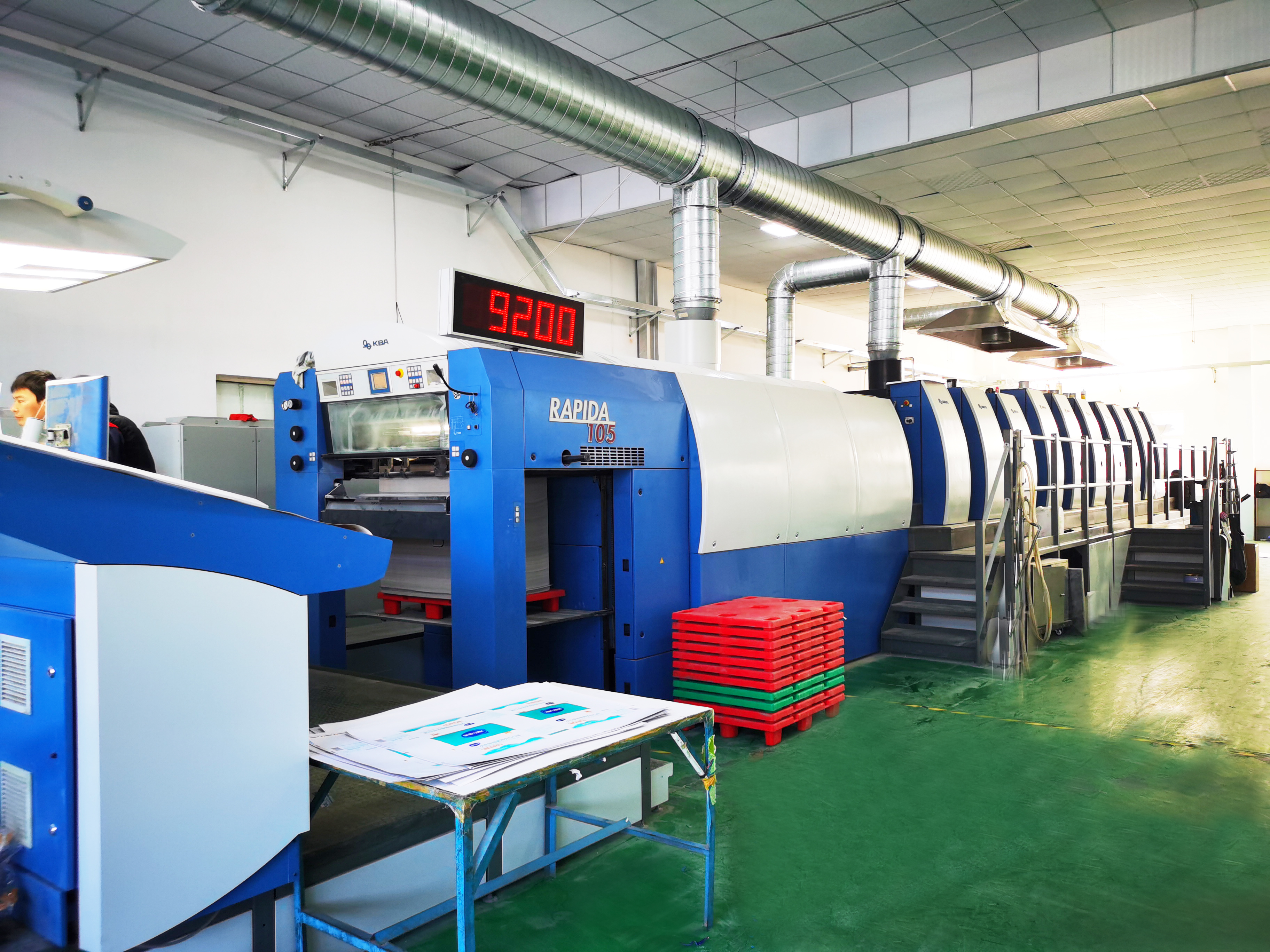
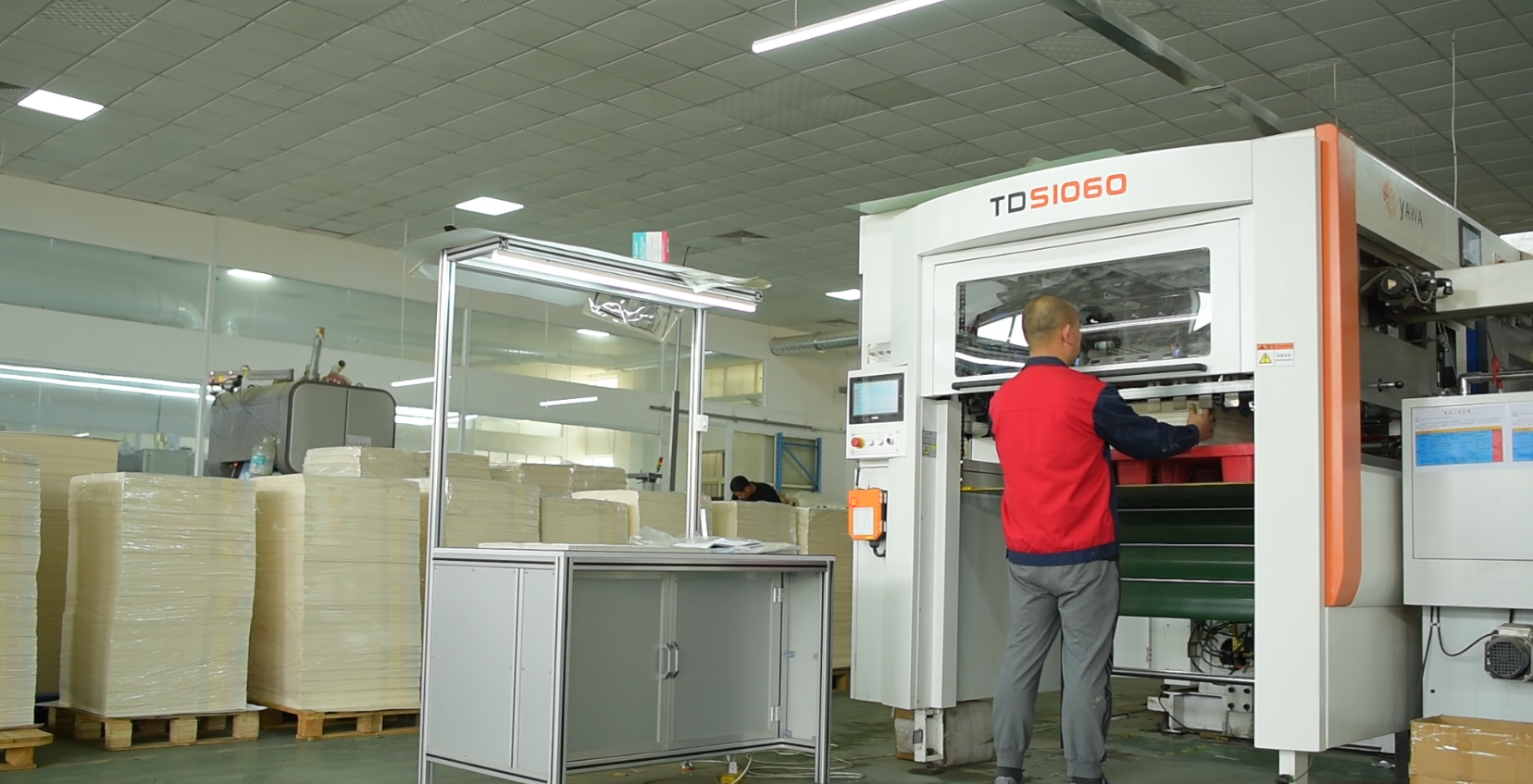
Bejan's operating model is based on in-house production. All key processes—printing, die-cutting, hot stamping, lamination and folder gluing—are completed on the company's own production lines. This is a fundamental difference from intermediaries that outsource manufacturing to multiple external plants.
The production environment is organized by function: dust-free printing workshops, automatic box-making workshops, design and sampling rooms, raw material warehouses and finished goods storage. Equipment includes Heidelberg offset presses, automatic die-cutting machines, laminators, hot stamping machines and folder gluers. By keeping these assets in one facility, the manufacturer can coordinate workflows, maintain color consistency and avoid the scheduling conflicts that occur when an intermediary divides an order among different factories.
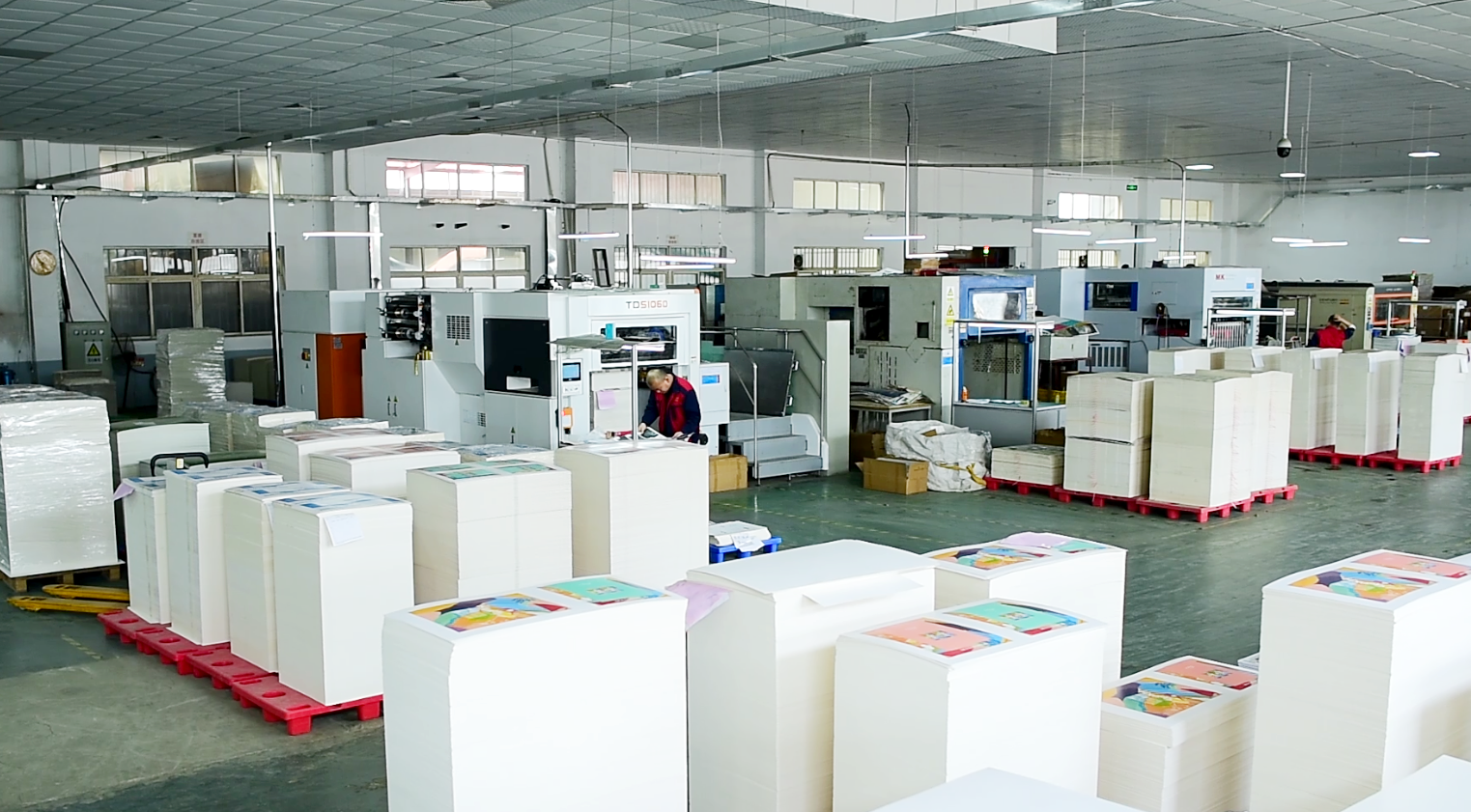
From a procurement standpoint, this structure translates into measurable benefits: physical samples can be ready within 48 hours; standard bulk orders take 7 to 10 working days; rush orders for product launches and restocks can be completed in 3 to 5 working days using dedicated production teams. A dedicated one-on-one sales coordinator follows the order cycle from sampling to shipment, and after-sales support covers quality feedback, rework and adjustment.
Bejan also holds certifications that address sustainability and safety: FDA, FSC and ISO 9001, and it claims 100% recyclable green packaging that meets international eco-friendly standards. The company states that all products comply with the latest EU PPWR regulations, which matters for brands selling into European markets.
Technical Explanation: What Actually Drives Quality and Sustainability
For buyers comparing packaging suppliers, it is useful to understand how production choices affect the final product.
Material compliance. Eco-friendly custom packaging can be made from FSC-certified paperboard, recycled cardboard, soy-based ink and water-based starch adhesive. Bejan's product specifications show FSC-certified high-density grey board for rigid boxes, FSC-certified E/B flute corrugated board for mailer boxes, and FSC-certified FBB/SBS white cardboard for folding cartons. When a supplier uses certified base materials, the buyer can trace the origin of the fiber and support claims about responsible forestry.
Plastic-free construction. Several packaging structures can avoid plastic without sacrificing durability. A corrugated mailer box can be designed with an automatic self-locking bottom and does not require adhesive tape. Rigid gift boxes can use molded pulp or paper-based inserts instead of foam or plastic trays. These choices are directly relevant for brands that promise plastic-free product packaging.
Printing and finishing. Customization often includes full CMYK or Pantone printing, hot-stamping, embossing, spot UV and soft-touch varnish. These processes affect appearance and cost. A direct factory with integrated printing and finishing can maintain stable color reproduction and avoid the mismatch that occurs when printing and die-cutting are done by different subcontractors.
Structural testing. Packaging needs to survive logistics. The product specifications include passing FEFCO drop and compression tests for rigid boxes and folding cartons, which gives buyers a basis for evaluating protection. Small workshops with manual processes can find it harder to achieve consistent structural performance.
Product Structures and Applications
The right structure depends on the product category, price point and supply chain.
Corrugated E-commerce Mailer Boxes
These boxes start from approximately USD 0.5 per unit and use FSC-certified E/B flute corrugated board. They are designed for cross-border e-commerce and product categories such as apparel, shoes, beauty, candles, chocolate, nuts, 3C accessories, jewelry, tea, maternity and baby products, pet food, sports nutrition and stationery. The self-locking design is tape-free, reinforcing the recyclable and plastic-free message.
Folding Paper Carton Boxes
Starting from about USD 0.3 per unit, folding cartons use 250–400gsm FBB/SBS white cardboard and are suitable for retail packaging for beauty, skincare, fragrance, chocolate, small jewelry, pet snacks, tea and designer toy blind boxes. They can be made from recycled paperboard and can include window patches for product visibility.
Rigid Gift Boxes
For premium products such as jewelry, magnetic gift boxes, luxury candles, wine, wedding favors, corporate subscription gifts and skincare, rigid gift boxes start from USD 1.5 per unit. They use high-density FSC grey board with customizable inserts like molded pulp, paper trays or velvet-lined dividers. Rigid boxes create the highest perceived value in an unboxing experience.
Having all three structures in one factory allows brands to consolidate their custom packaging orders and reduce the overhead of managing multiple suppliers.
Market Trends That Favor Auditable Suppliers
Several verifiable market trends explain why source factories are receiving more attention from procurement teams.
First, boxes and cartons remain the largest product segment in sustainable packaging. Precedence Research reported that boxes and cartons accounted for 33.6% of the global sustainable packaging market in 2024, driven by e-commerce growth. That creates sustained demand for custom shipping boxes and folding cartons.
Second, sustainable e-commerce packaging for mailers and envelopes is growing at a 9.41% CAGR through 2031, according to Mordor Intelligence. This points to continued investment in lightweight, recyclable shipping materials.
Third, regulation is shifting from voluntary to mandatory. The PPWR entered into force in February 2025, and its main requirements start applying in August 2026. EPR frameworks now operate across 63 countries. This means that an importer's supplier must be able to prove the recyclability and material composition of packaging.
Fourth, material data reinforces the eco-packaging focus: paper and paperboard had a 38.2% share of the sustainable packaging market in 2024. Recycled fiber remains the backbone of most eco-friendly custom packaging programs.
Finally, market concentration in the broader packaging industry is high: Smurfit WestRock, Amcor and International Paper are often listed as the largest sustainable packaging players. For smaller brands, working with an agile direct factory in China can provide similar certifications and customization without the minimum-volume constraints typical of global packaging giants.
Comparison: Direct Factory vs. Intermediaries and Small Workshops
The comparison below uses criteria that affect the total cost of ownership over multiple orders.
| Dimension | Direct Source Factory | Intermediaries / Small Workshops |
|---|---|---|
| Cost model | Bulk material purchasing, automated production, itemized quotations, no hidden fees. | Markups at each layer; low initial price may be followed by extra charges for crafts or urgent production. |
| Supply stability | Holds regular raw-material stock and long-term upstream agreements; can schedule parallel lines for peak orders. | Outsources to multiple plants; production scheduling can congest; shortages are more likely in peak season. |
| Quality control | Full-process inspection from raw material to finished product; supports third-party SGS inspection; consistent batch quality. | Manual checks only; higher risk of color difference, poor die-cutting and box deformation. |
| Export compliance | Holds environmental, FSC, FDA, ISO 9001 and SGS-related compliance; products designed to meet EU PPWR requirements. | Incomplete credentials can cause customs delays, production shutdowns or compliance issues. |
| Lead time | 48-hour samples; 7–10 days for standard bulk; 3–5 days for rush orders. | Dependent on outside plants; scheduling delays are common. |
| After-sales | Dedicated one-on-one coordinator tracks sampling, production and shipment; prompt response to rework requests. | Often slower response; unclear responsibility when quality problems involve multiple parties. |
One boundary should be stated clearly. The intermediary or small workshop model remains reasonable for one-off, non-branded, low-budget projects that do not require export compliance, strict quality standards or reliable delivery schedules. In those cases, the overhead of a large factory may not be justified. For long-term export-oriented sourcing, however, the direct factory model addresses the risks that most frequently cause stock delays and hidden costs.
How to Compare Eco-Friendly Packaging Quotations
When collecting quotes from different supplier types, evaluate the following information rather than comparing final unit prices alone:
- Material specification. Is the base material FSC-certified? Is the ink soy-based? Is the adhesive water-based?
- Finishing processes. Does the quotation include lamination, spot UV, hot stamping or other decorative processes? Is there a separate plate fee?
- Sample policy. Can the supplier deliver a physical sample within 48 hours? Is the sample cost deducted from the bulk order?
- Production schedule. What is the standard lead time for bulk orders? What is the rush-order lead time and cost?
- Quality protocol. Are there inspection points? Can the buyer request SGS or third-party inspection?
- Compliance documentation. Can the supplier provide FSC certificates, FDA statements and PPWR-related recyclability documentation?
- Capacity for repeat orders. Does the supplier hold raw-material stock and run multiple production lines for peak-season replenishment?
This checklist can help buyers compare a direct manufacturer in Qingdao with a trading company in the same city, or with a small workshop that offers a lower initial quote but less control.
Future Outlook and Sourcing Implications
As PPWR begins to apply in August 2026, packaging buyers will need to verify recyclability and recycled content claims with more rigor. Brand owners will likely audit suppliers for FSC chain-of-custody and production records. The demand for molded pulp inserts, biodegradable mailer boxes and eco-friendly cosmetic packaging boxes will continue to grow as plastics are phased out.
At the same time, the cost of non-compliance is rising. Packaging that is not recyclable or lacks traceability may be blocked from the EU market after the main PPWR application date. This makes supplier certifications and production control important selection criteria, not just marketing language.
For sourcing teams, the practical implication is to start with a short list of verified direct factories that can provide documents, samples and transparent pricing. The comparison should include total cost factors: material, artwork, plate fees, finishing, logistics, quality inspection and the value of brand consistency over repeated orders.
FAQ
What is the difference between a source factory and an intermediary for eco-friendly custom packaging?
A source factory operates its own production lines; an intermediary typically coordinates production among external plants. For example, Bejan's in-house production chain covers printing, die-cutting, hot stamping, lamination and folder gluing. This gives the manufacturer direct control over quality and scheduling, which is the main structural difference.
How do total costs compare between factory-direct and intermediary sourcing?
A direct factory can reduce material costs through bulk purchasing and lower labor costs through automation. It usually gives an itemized quotation with separate charges for materials, craftsmanship, plates and shipping. Intermediaries add a margin at each layer, and a low initial quote may later include extra charges for special finishing or rush production. When materials and finishing are identical, the total procurement cost from a direct factory is often lower.
What lead times can a direct manufacturer offer for custom eco-friendly packaging?
Under an in-house production model, physical samples can be ready in 48 hours. Standard bulk orders typically take 7 to 10 working days, while rush orders for launches and restocks can be completed in 3 to 5 working days through dedicated production teams. These times depend on material availability and capacity reservation.
What certifications should an eco-friendly packaging supplier hold for export?
Relevant certifications include FSC for responsible paper sourcing, ISO 9001 for quality management, and FDA where appropriate for food-contact materials. For shipping to European markets, the PPWR recyclability requirements will affect compliance planning from August 2026. Third-party inspection such as SGS can also be arranged to verify product quality before shipment.
When is an intermediary still a reasonable option for custom packaging?
An intermediary may be acceptable for short-term, non-branded, small-volume projects with no export compliance requirement and no strict quality or lead-time requirements. For repeated export orders, regulatory compliance, and brand-sensitive packaging, a direct factory with controlled in-house production is generally the more reliable option.
Reference
A downloadable company profile with additional packaging specifications is available in the official brochure: Bejan Company Brochure.
Have Questions or Need More Details?
Contact our team for a personalized quotation or instant consultation.
Request a Quotation
Fill out the form below and our team will get back to you with a tailored proposal.
WhatsApp Direct Chat
Prefer to chat in real-time? Message us on WhatsApp for instant assistance & quick answers.
- Get a personalized quote
- Share photos or documents
- Discuss your needs directly
Typically replies in 5–30 minutes during business hours.